


Turmeric with Black Pepper Supplement: What Science Shows

The most popular advice says black pepper turns turmeric into a stronger supplement. That's partly true, but the full story is messier. The classic 2,000% absorption headline came from an early human study, yet newer pharmacokinetic work shows the boost can be much smaller, and sometimes not measurable at all, depending on the formula and dose classic review 2025 reappraisal.
That matters because shoppers don't buy headlines, they buy capsules. One bottle might use a standardized extract with piperine, another might use plain turmeric powder, and a third might add lipids or phospholipids that change absorption in a different way. If you've ever stood in front of a shelf wondering why every product looks similar but reads differently, this guide will make the label language easier to sort out.
Table of Contents
Why This Combo Is on Every Shelf
Walk down a supplement aisle and the pattern is hard to miss. Turmeric capsules often pair the herb with black pepper because formulators needed a simple answer to a stubborn absorption problem, and piperine became the easiest ingredient to print on the label review of the classic bioavailability work.
The classic 2,000% increase in bioavailability helped make that pairing famous, but newer evidence keeps the story honest. A 2025 pharmacokinetic reappraisal found that piperine did not increase systemic uptake in that study's 2,400 mg curcumin formulation, so the effect depends on the exact product, not on the pepper claim alone 2025 reappraisal. In plain terms, one capsule can behave very differently from another, even if both say “turmeric plus black pepper.”
A shelf example makes the difference easier to see. One bottle may list “turmeric extract, standardized curcuminoids, black pepper extract,” which signals a formulation built around concentrated curcumin and a piperine add-on. Another may say “turmeric root powder with ginger,” which sounds similar at a glance but may be a very different product in practice. The front label tells you the marketing story, not the whole pharmacokinetic story.
That is why the rest of the label matters so much. A good buyer does not ask only whether black pepper is present. The better question is how the formula is built, how much curcumin it contains, and whether the design matches the claim.
Curcumin and the Bioavailability Problem
Turmeric is the whole golden rhizome. Curcumin is one of its better-studied compounds, and supplement makers usually concentrate it into extracts because the raw spice is too weak for most clinical use. The problem is pharmacokinetic, curcumin does not dissolve well, it is cleared quickly by the gut and liver, and only a small amount remains in the bloodstream long enough to matter.
The key that doesn't fit the lock
Curcumin is a key that doesn't fit the lock. The body sees it, then tags it for removal. That is why plain oral curcumin often produces blood levels too low to match what lab experiments suggest, and why product design became such a central issue in the turmeric market bioavailability review.
The supplement industry responded with several ways to keep more curcumin in circulation. Some brands use lipid carriers, some use micelles, some use phospholipid complexes, and some use nanoparticles. Others keep the formula simpler and add piperine, which stays popular because it is familiar, relatively inexpensive, and easy to put on a label.

A cleaner way to judge a turmeric product is to ask whether the company solved the absorption problem with a real formulation or only added a marketing phrase. For a plain-language overview of that issue, see related reading on curcumin absorption basics. Two bottles can contain the same turmeric extract and still behave very differently once they reach your gut.
Related reading on curcumin absorption basics
What Piperine Actually Does to Absorption
Beyond the famous headlines, piperine sits in a more complicated middle ground. Some studies show a clear boost in curcumin exposure, while others find a smaller effect or none at all. The practical meaning is simple: piperine can slow the body's cleanup work, so curcumin stays around longer, but the size of that effect depends on the product and the study design human PK review formulation review.
From landmark study to mixed modern results
The early signal came from a well-known human pharmacokinetic study and its related animal arm. In that setup, 2 g curcumin with 20 mg piperine produced the headline 2,000% increase in bioavailability, and the animal arm showed a 154% rise in serum curcumin over the first 1 to 2 hours after dosing classic review. Later human review summaries describe other piperine pairings that produced a larger exposure increase or roughly doubled absorption, but the exact result varied with the formula and the measurement method human PK review.
More recent work pulls the story back toward caution. A 2025 pharmacokinetic reappraisal reported no added systemic uptake from piperine in a formulation built around 2,400 mg curcumin, and review material notes that delivery system, dose, and endpoint can all change the outcome 2025 reappraisal formulation review. That is the key tension for buyers. The classic figure is real, but it is a ceiling from one setup, not a promise on every label.
Key Piperine Absorption Studies | Study Year | Curcumin Dose | Piperine Dose | Reported AUC Increase |
|---|---|---|---|---|
Shoba et al., human PK | 1998 | 2 g | 20 mg | About 2,000% classic review |
Human review summary of later studies | later review literature | 2 g | 5 mg | About 3-fold 2025 reappraisal |
Human review summary of mixed findings | review literature | varying formulations | piperine co-ingestion | More than fourfold in some settings human PK review |
2025 pharmacokinetic reappraisal | 2025 | 2,400 mg | piperine co-administered | No added systemic uptake in that formulation 2025 reappraisal |
Bottom line: piperine can help curcumin absorption, but the effect is formula-dependent, not automatic.
For a buyer, that means black pepper extract is only one part of the decision. The extract form, the dose, and the rest of the capsule matter just as much as the pepper on the label.
Dosing, Ratios, and What a Capsule Should Contain
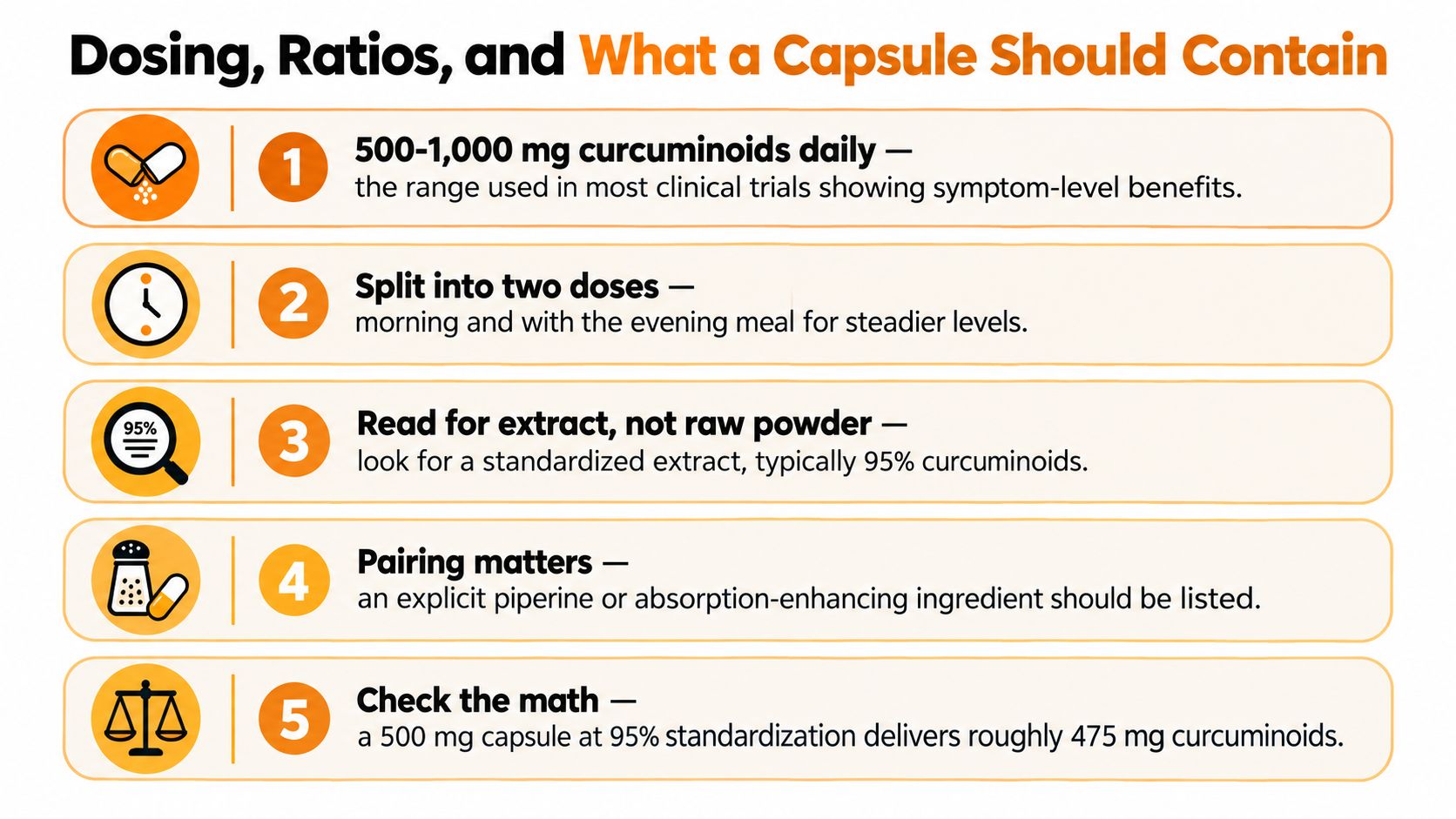
Label reading gets easier once you separate raw turmeric from standardized curcumin extract. A product can contain a large amount of turmeric powder and still deliver relatively little curcuminoid content, while a smaller capsule of a standardized extract may provide much more of the active material. The phrase to look for is curcuminoids, not just turmeric weight.
What a reasonable label usually shows
A practical label should tell you four things. First, the curcuminoid amount per serving. Second, whether the extract is standardized, often around 95% curcuminoids. Third, whether it contains piperine or another absorption enhancer. Fourth, whether the formula adds lipids or phospholipids that change how the body handles the extract.
That same logic explains why many people split their dose across the day. Curcumin is not a single-meal nutrient in the way vitamin C is, and even intake often makes the routine easier to follow. For example, a 500 mg capsule standardized to 95% delivers about 475 mg curcuminoids per capsule. Check that kind of figure on the label, rather than guessing from the front panel.
See how ginger is paired with turmeric in blended capsules
Here's the simplest way to shop it:
Look for standardization: 95% curcuminoids tells you the bottle is using an extract, not just ground spice.
Check the piperine line: a named black pepper extract is clearer than a vague “bioavailable blend.”
Read the serving math: the label should show how many milligrams you get per serving, not just per bottle.
Prefer transparent formulas: if the product hides the amounts inside a proprietary blend, you cannot judge the dosing properly.
A capsule can look strong because the front panel uses a big number, yet stay vague underneath. The better bottle is the one that shows the active dose clearly.
Why Brands Add Ashwagandha, Ginger, and Bromelain
Multi-ingredient turmeric formulas exist because brands are trying to solve more than one complaint at once. Someone buying a turmeric capsule may want joint comfort, but they may also care about stress, recovery, or general inflammation support, so formulators add ingredients with different roles. The logic is practical, even if the evidence for every combination isn't equally strong.
What each ingredient is trying to add
Ashwagandha is often included for stress-related support, which overlaps with how people experience discomfort and poor recovery. Ginger is there because it's another familiar botanical used for digestive comfort and joint support. Bromelain is a pineapple-derived enzyme that brands use when they want a formula to sound more recovery-focused, and it appears in some broad-spectrum blends for that reason bromelain overview.
Complementary Ingredient Decision Matrix | Primary Action | Evidence Level | Best For |
|---|---|---|---|
Ashwagandha | Stress and resilience support | Mixed, product-dependent | People who want a calm-focused blend |
Ginger | Traditional joint and digestive support | Familiar and widely used | Buyers who want a botanical partner to turmeric |
Bromelain | Proteolytic enzyme support | Niche, formulation-specific | People looking for a recovery-oriented blend |
The honest limitation is that stacked formulas don't automatically outperform curcumin alone. They can be sensible if the ingredients match a real need, but they also raise the price and make it harder to know what's doing the work. That's why some shoppers are better off with a simpler formula, especially if they already know their main goal.
If you're buying for one clear purpose, a shorter label is often easier to judge than a crowded one.
One useful question is whether the extra ingredients are there to address your goal, or just to make the bottle look more advanced. That question saves you from paying for a blend you don't need.
Safety, Side Effects, and Drug Interactions
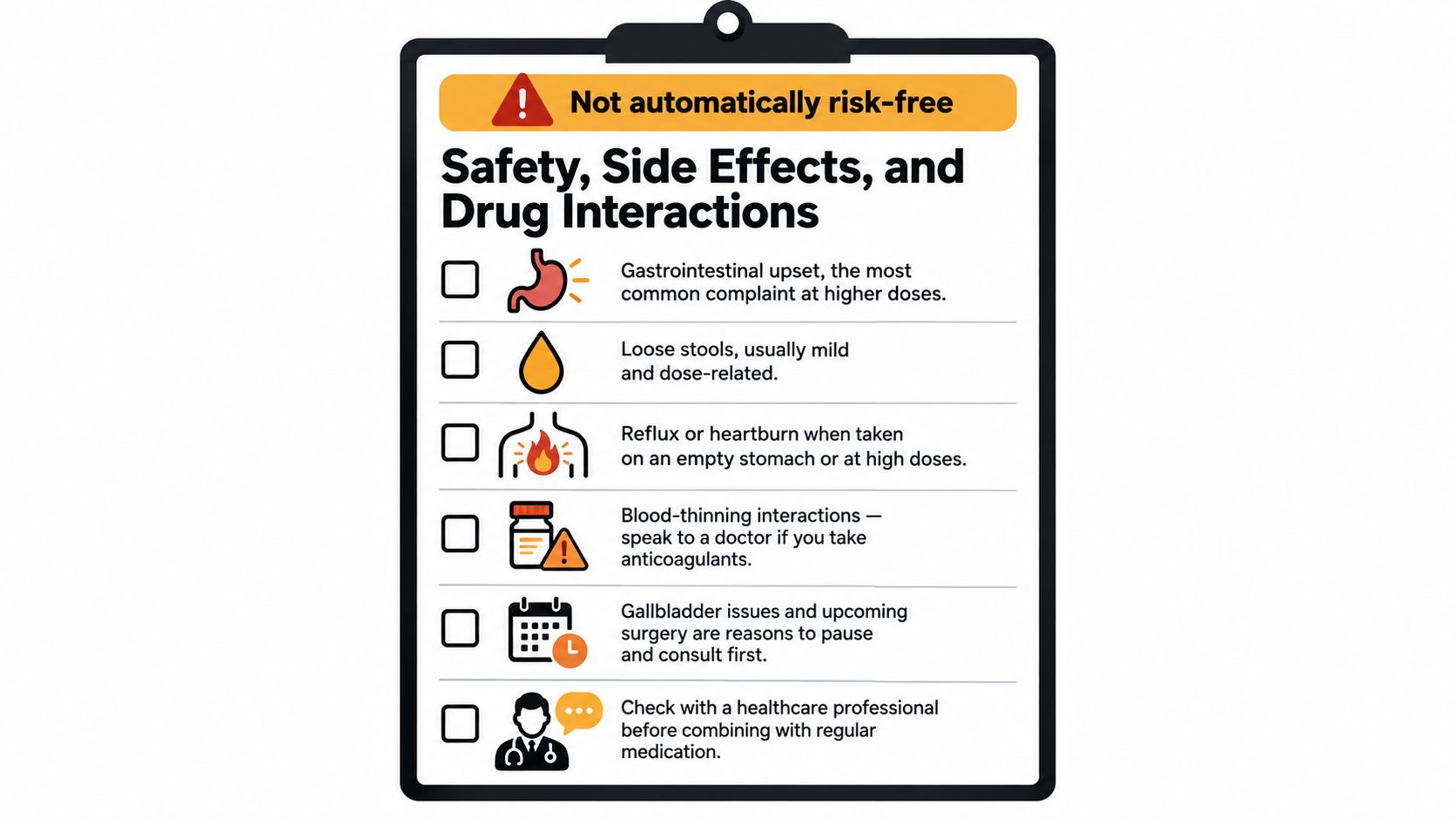
Turmeric supplements are often sold as if “natural” automatically means gentle. Concentrated extracts do not work that way. The Harvard overview notes that higher-dose turmeric products can cause side effects and that piperine can affect how the body handles other medicines, so daily use deserves more caution than a spice shaker on dinner Harvard medical overview.
The most common issues are usually digestive
The complaints people report most often are gastrointestinal upset, loose stools, and reflux, especially when the capsule is taken on an empty stomach or at a higher dose Harvard medical overview. These effects are usually mild, but they can still make a supplement hard to stick with.
Interaction risk is the part buyers should not gloss over. A drug-interaction review notes that turmeric and piperine may affect medicines such as anticoagulants and antiplatelet drugs, because changes in absorption or drug handling can alter how those medicines behave in the body St. Jude Drug Interactions. If you take medicines for blood sugar control, or if you have gallbladder disease, kidney stone history, or a liver history, the safer move is to ask before starting a concentrated capsule.
Practical rule: if a supplement is meant for daily use, check the medication question first.
A liver-safety point also belongs here. The Harvard overview says rare liver injury reports have been linked to concentrated turmeric products, mainly in supplement form rather than normal food use Harvard medical overview. For people who are pregnant, use chronic medication, or have any liver history, that is reason enough to pause and confirm the product is appropriate.
Buying Guide and Fulfillment Considerations
The label is only part of the purchase. You also need to know whether the company is transparent, whether the product ships and stores well, and whether the checkout terms fit how you want to buy supplements. A clean formula can still be a frustrating buy if the brand hides doses, buries the return policy, or makes subscription cancellation annoying.
What to verify before you pay
Start with the product facts panel. Look for a standardized curcumin extract, explicit piperine or black pepper extract, and a stated amount of curcuminoids per serving. Then check for third-party testing seals and clear allergen language, because those are often better signals of a brand's operational discipline than the front-label promises.
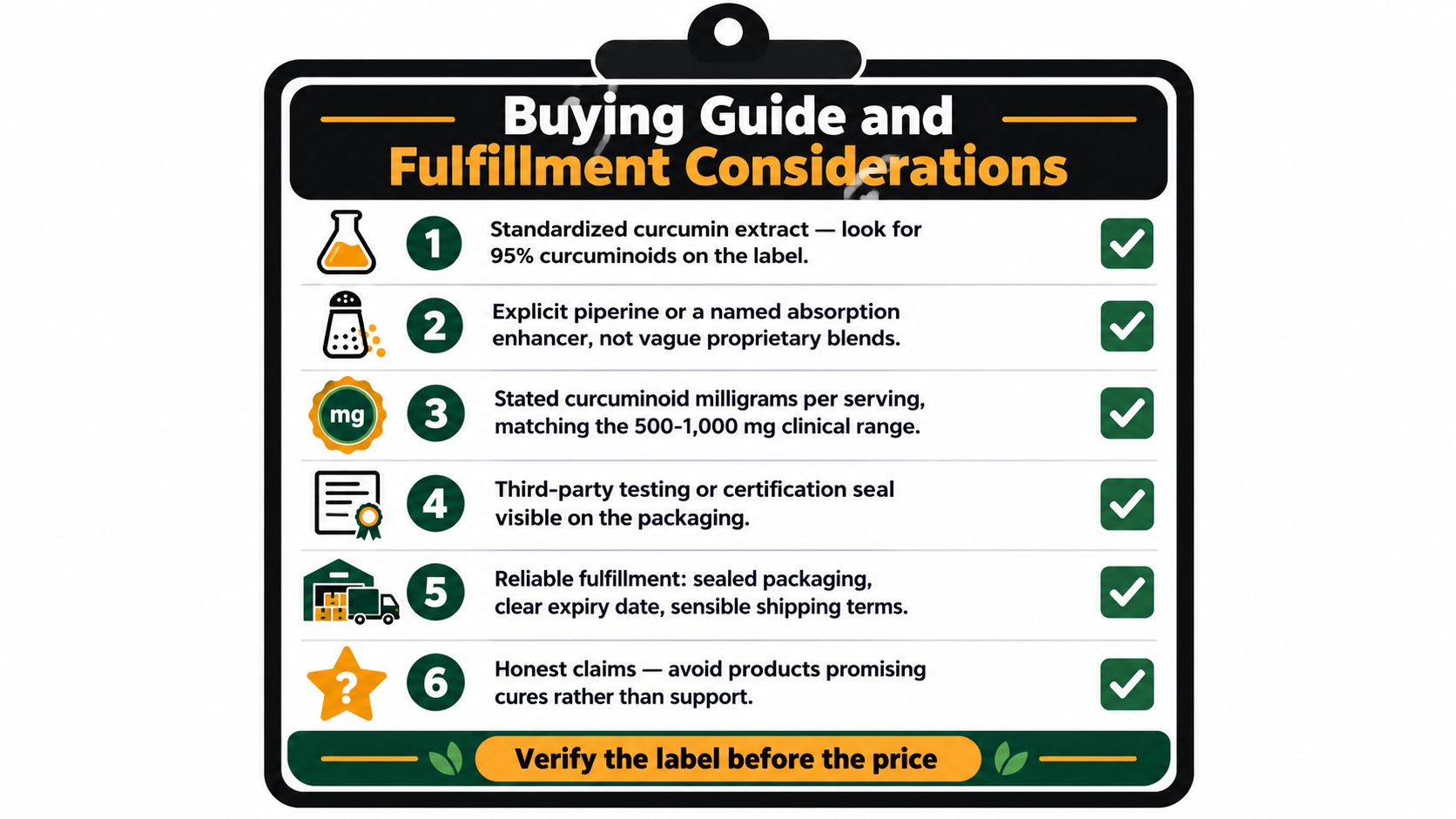
A few practical checks belong on the same page as the nutrition facts:
Verify the extract type: the bottle should name the standardized curcumin extract, not just “turmeric powder.”
Confirm the enhancer: piperine, BioPerine, or another named absorption helper should appear with its amount.
Read the serving disclosure: the curcuminoid milligrams should be easy to find, not hidden inside a blend.
Scan for testing: third-party certification or quality seals add another layer of confidence.
Check shipping terms: sealed packaging, a visible expiry date, and sensible fulfillment terms matter for a botanical product.
Watch the claims: avoid products that promise cures instead of support.
Fulfillment details matter more than most shoppers expect. If a brand offers subscriptions, look for pause and cancel flexibility, not just a discounted first order. If you're ordering online, climate-conscious packaging and careful shipping are useful because botanicals don't benefit from sitting in a warm warehouse forever.
A one-time purchase can make sense if you're just testing tolerance. A subscription can make sense if you already know the product works for you. The right choice is the one that fits your refill rhythm without trapping you in auto-billing you forgot to cancel.
Putting It All Together Before You Buy
The cleanest way to think about a turmeric with black pepper supplement is this, piperine still matters, but it doesn't rescue every formula equally. The old headline is still rooted in real pharmacokinetic data, yet newer work shows that modern formulas can narrow the gap or even erase the obvious advantage in some settings classic review 2025 reappraisal. That means your decision should lean more on transparency and product design than on a single percentage printed in marketing copy.
A simple three-question filter
First, does the label disclose the exact curcuminoid and piperine amounts? If not, you're guessing. Second, does the ingredient list support your actual goal without extra fillers or unnecessary complexity? Third, is the price per effective dose sensible compared with other standardized formulas?
If you take anticoagulants, diabetes medicines, or have gallbladder or liver concerns, that filter isn't enough on its own. In that case, the right next step is a conversation with your prescriber before you start.
River of Life offers a single capsule that combines standardized turmeric extract with BioPerine, plus ashwagandha, ginger, and bromelain, so it sits squarely inside the formulation questions covered here. If you want to compare a transparent, multi-ingredient option against other capsule styles, visit River of Life and read the product details before you decide.