

Bromelain Pineapple Enzyme Benefits and How It Works

You've just finished a workout, and your knees feel stiff. Or perhaps a meal has left you uncomfortably full, and a supplement label promising “pineapple enzyme support” has caught your attention. The word bromelain sounds familiar, but it raises practical questions: Is it the enzyme behind pineapple's tingling sensation? Does it survive digestion? Does the source, stem or fruit, make a difference? And what happens when it's combined with herbs or medicines in a daily supplement stack?
Bromelain is more interesting than a generic digestive aid. It's a complex of protein-digesting enzymes with research focused on inflammatory signaling, pain control, wound care, and digestive support. Yet the evidence isn't equally strong for every use, and a label that says “bromelain” doesn't automatically tell you how the ingredient was sourced, standardized, or tested.
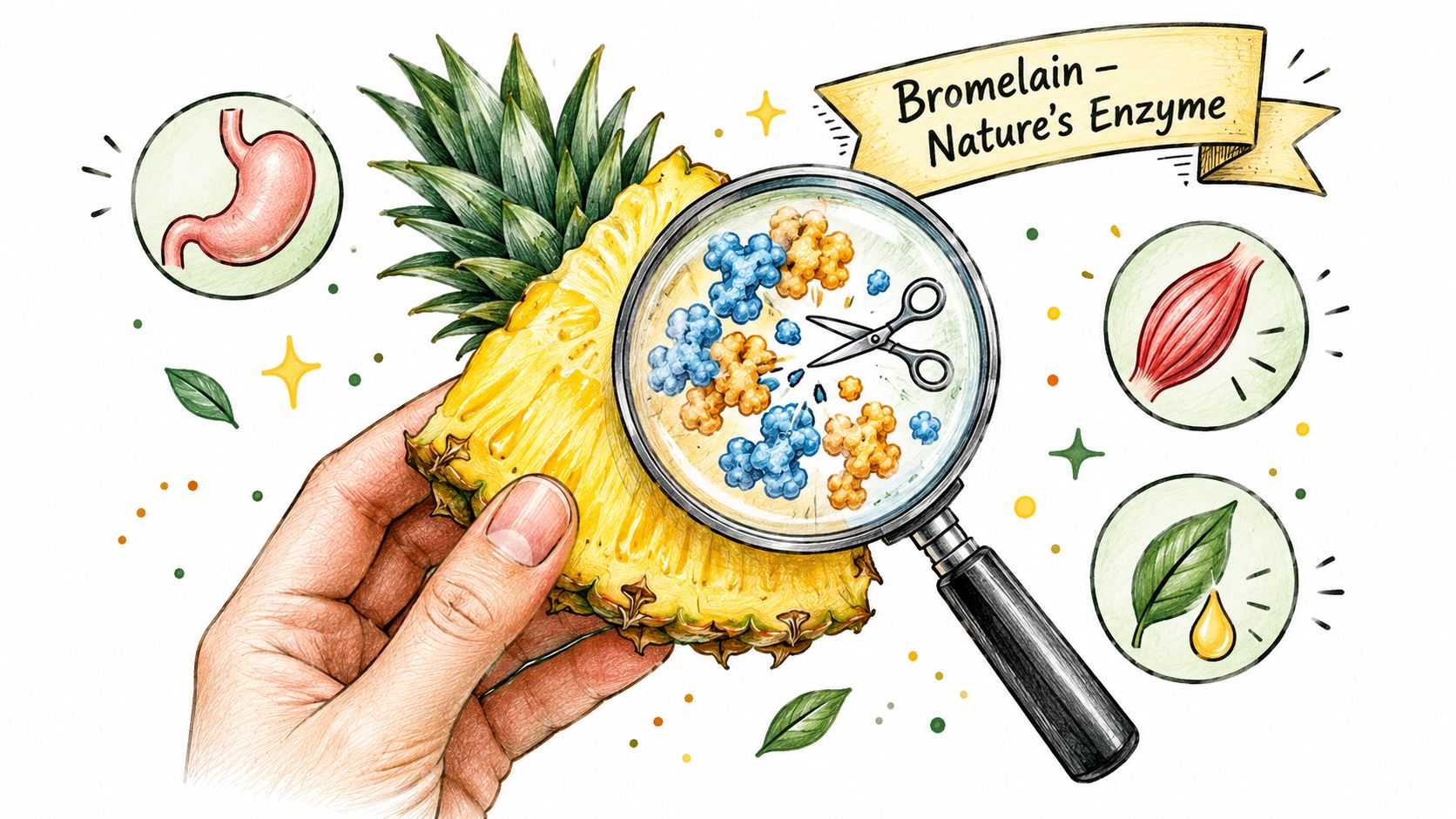
Table of Contents
What Clinical Research Actually Shows for Inflammation and Recovery
Food Versus Supplement Forms and Choosing the Right Bromelain
Introduction to Bromelain and Why It Matters Today
Fresh pineapple can make your tongue tingle. That sensation isn't mysterious. Pineapple contains enzymes that act on proteins, including proteins on the surface of your mouth. Saliva and digestion quickly reduce that effect, but the experience gives you an intuitive glimpse of what bromelain does: it helps break larger protein structures into smaller pieces.
That same basic chemistry has attracted interest in nutrition, sports recovery, joint-comfort formulas, and clinical research. Bromelain isn't one isolated molecule, and it shouldn't be treated as a universal solution for every inflammatory or digestive complaint. Its effects depend on the preparation, the source tissue, the enzyme activity, the delivery format, and the purpose for taking it.
A person eating pineapple with lunch is using the fruit as food. Someone taking a standardized capsule between meals may be seeking a different kind of support. Those two experiences overlap, but they aren't interchangeable. The amount and activity of the enzymes can vary across pineapple tissues and processing methods, while a supplement label may provide more control over consistency.
A useful starting point: Ask not only whether bromelain works, but which bromelain was used, for what purpose, and with what human evidence.
This distinction matters in a multi-ingredient capsule, too. Bromelain may sit alongside botanical extracts intended for joint comfort, stress resilience, or recovery, while the user may also be taking an antacid, an anti-inflammatory medicine, or an anticoagulant. Understanding the ingredient means understanding its biology and its place in real life.
The path from pineapple to practical use is straightforward. First, identify what bromelain is and where manufacturers obtain it. Then look at how protein digestion connects with inflammatory signaling, examine the strongest clinical findings, compare food with supplements, and finish with the safety questions that deserve attention before adding it to a daily routine.
What Bromelain Really Is and Where It Comes From
Bromelain is a proteolytic enzyme complex, meaning it contains protein-digesting enzymes rather than a single uniform compound. It occurs in multiple parts of the pineapple plant, including the fruit and stem, with related material also discussed in connection with the core and processing by-products. A helpful analogy is to think of bromelain as a toolkit of molecular scissors. The tools share a general function, but each preparation can differ in its specific components and activity.
Modern references distinguish fruit bromelain from stem bromelain using separate Enzyme Commission classifications. Fruit bromelain is identified as EC 3.4.22.33, while stem bromelain is EC 3.4.22.32, as described in this review of bromelain's chemistry, history, production, and applications. These codes aren't marketing grades. They're scientific identifiers that help researchers describe which enzyme category they're discussing.
Why plant tissue changes the label
The plant part used for extraction can affect yield, composition, standardization, and sustainability claims. Fruit-derived material may appeal to consumers who associate bromelain with fresh pineapple, while stem and by-product sources can support more efficient use of plant material. That doesn't mean one source automatically produces a better supplement. It means the label should provide enough information to show what the manufacturer used and how the finished ingredient was controlled.
Bromelain has a long story behind its modern supplement use. Historical identification began in 1876, followed by further purification and characterization work in the late nineteenth century, according to the same historical and scientific review. Pineapple also has a medicinal history in Central and South America, where traditional uses included digestive support and inflammation-related purposes.
From pineapple crop to manufactured ingredient
Bromelain is now produced commercially in countries including Taiwan, Thailand, Brazil, and Puerto Rico, rather than remaining a niche botanical extract. Manufacturers are also exploring more efficient purification and recombinant approaches to produce larger quantities of highly purified material at lower cost, as reported in the same scientific review.
The practical lesson is simple. “Bromelain” names a broad ingredient family, not a guarantee of identical performance from one bottle to the next. Look for the source tissue, the form of standardization, and evidence that relates to the intended use.
How the Pineapple Enzyme Works Inside Your Body
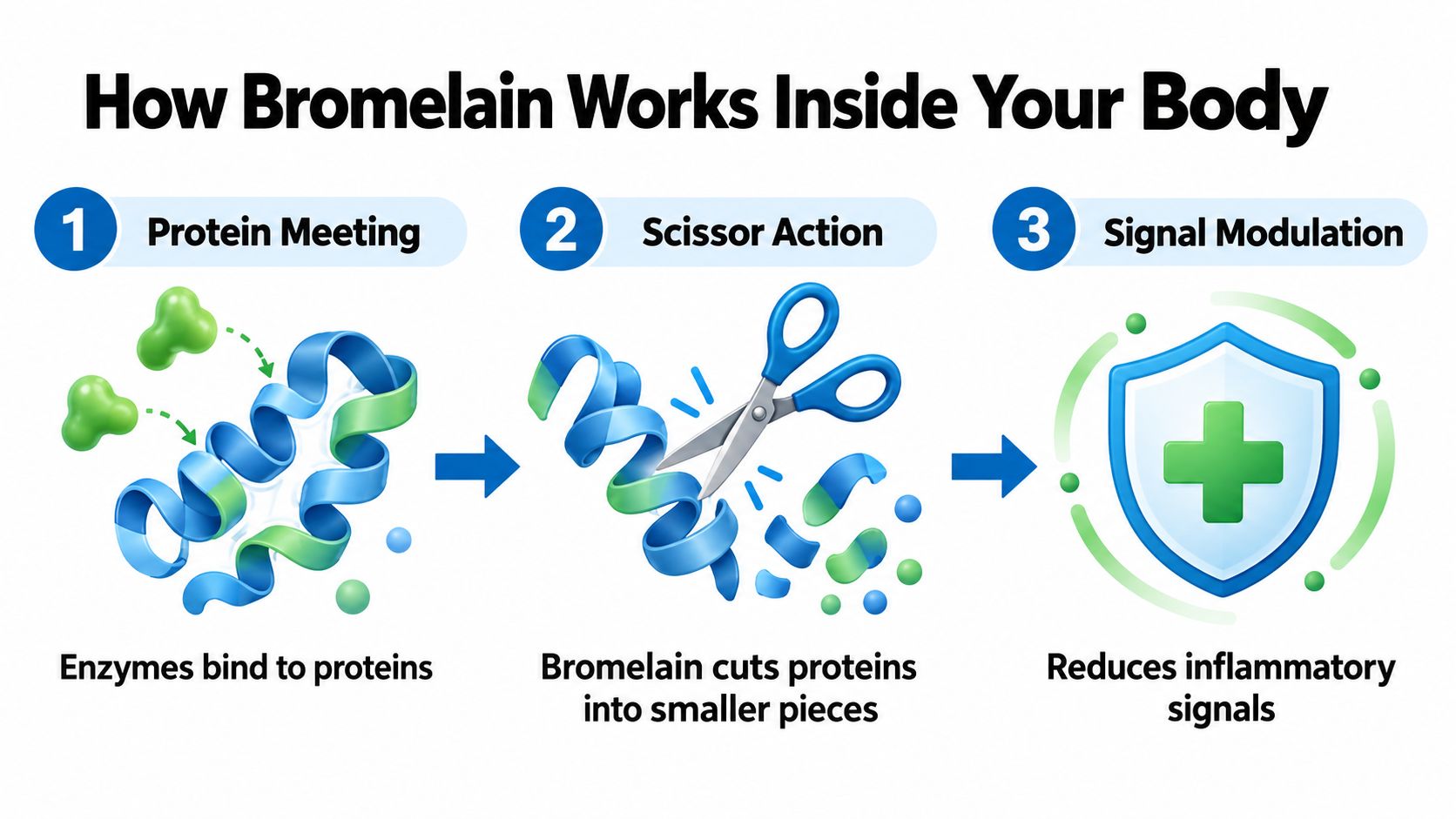
Proteolytic enzymes act by cutting proteins into smaller fragments. In everyday terms, bromelain behaves less like a painkiller that switches off a sensation and more like a set of molecular scissors that changes the material involved in a biological process. The result depends on which proteins it encounters and how much active enzyme reaches the relevant tissues.
Inflammation is not one single substance. It involves a network of signals and responding cells. Reviews and NIH-indexed material describe bromelain's effects on inflammatory mediators including IL-1β, IL-6, and TNF-α, along with prostaglandin-related pathways and the activity of leukocytes and macrophages. In stimulated immune-cell models, bromelain reduced secretion of those inflammatory signaling molecules, as summarized in this PubMed-indexed review.
Why mediator-level activity matters
A signal-modulating ingredient may influence the conversation between immune cells rather than covering up discomfort. That's why researchers have considered bromelain for situations involving post-exercise soreness, joint comfort, sinus symptoms, and tissue recovery. The mechanism is biologically plausible, but a plausible mechanism doesn't automatically prove a meaningful clinical outcome.
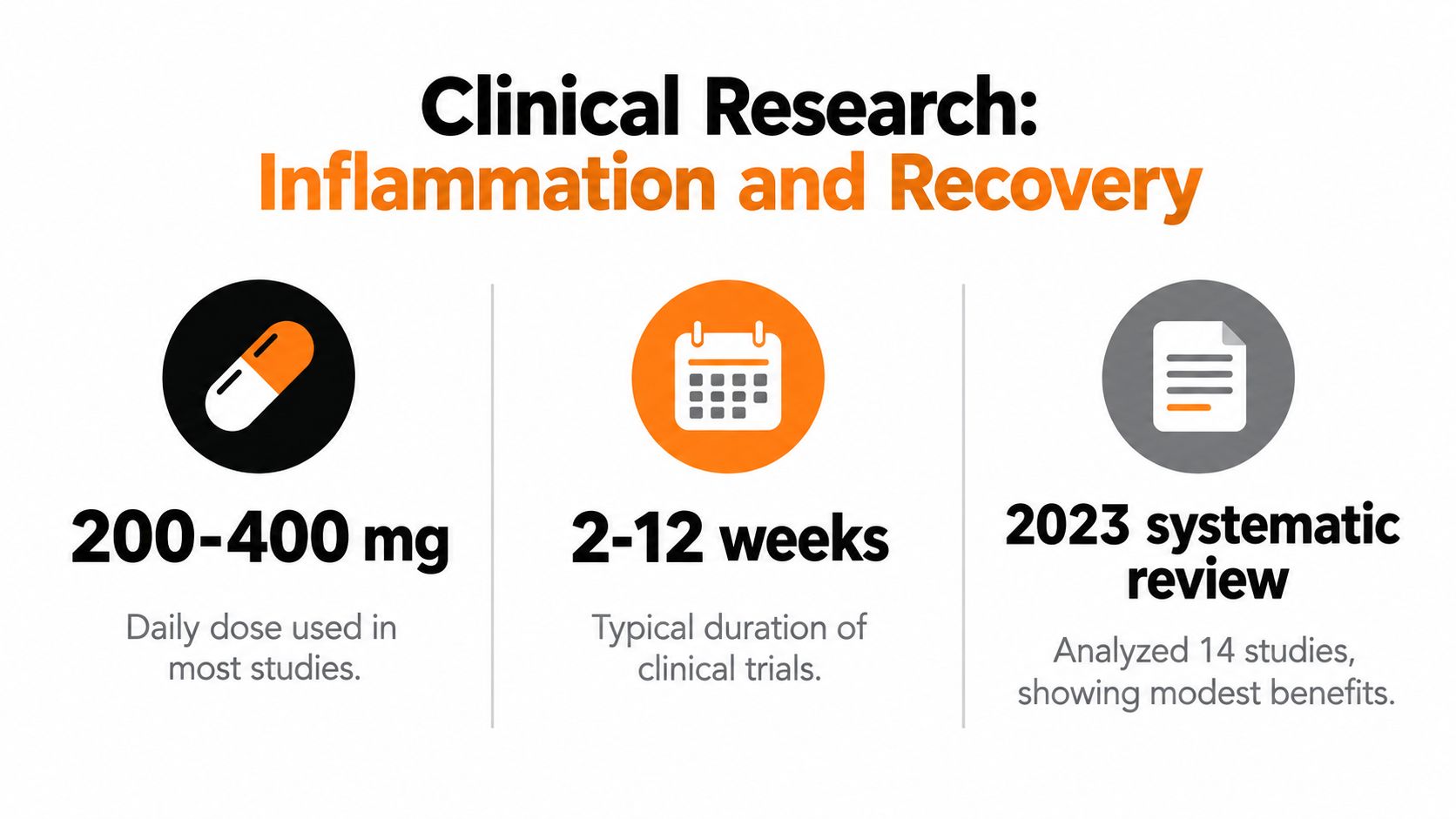
Oral absorption adds another layer of interest. The 2023 systematic review reported that bromelain appeared in serum after oral administration with retained proteolytic activity, a notable finding because many proteins are extensively broken down before they reach circulation. The observation supports the possibility that orally consumed bromelain can have effects beyond the digestive tract, though it doesn't mean every product delivers the same amount of active enzyme.
For digestive use, the enzyme's presence in the gastrointestinal tract is the main focus. For recovery or joint support, the question becomes whether sufficient active material survives processing, digestion, and absorption to influence the body's signaling environment. Formulation and standardization therefore matter as much as the ingredient name.
Someone comparing bromelain with other digestive ingredients can also review this guide to digestive enzymes and probiotics. The key distinction is purpose. Enzymes taken with food are generally considered in relation to the meal, while research on systemic inflammatory support asks a different pharmacological question.
Bromelain is best understood as an adjunct, not a standalone cure. It may contribute to a broader recovery or joint-support approach that also includes sleep, movement, adequate nutrition, and medical care when needed.
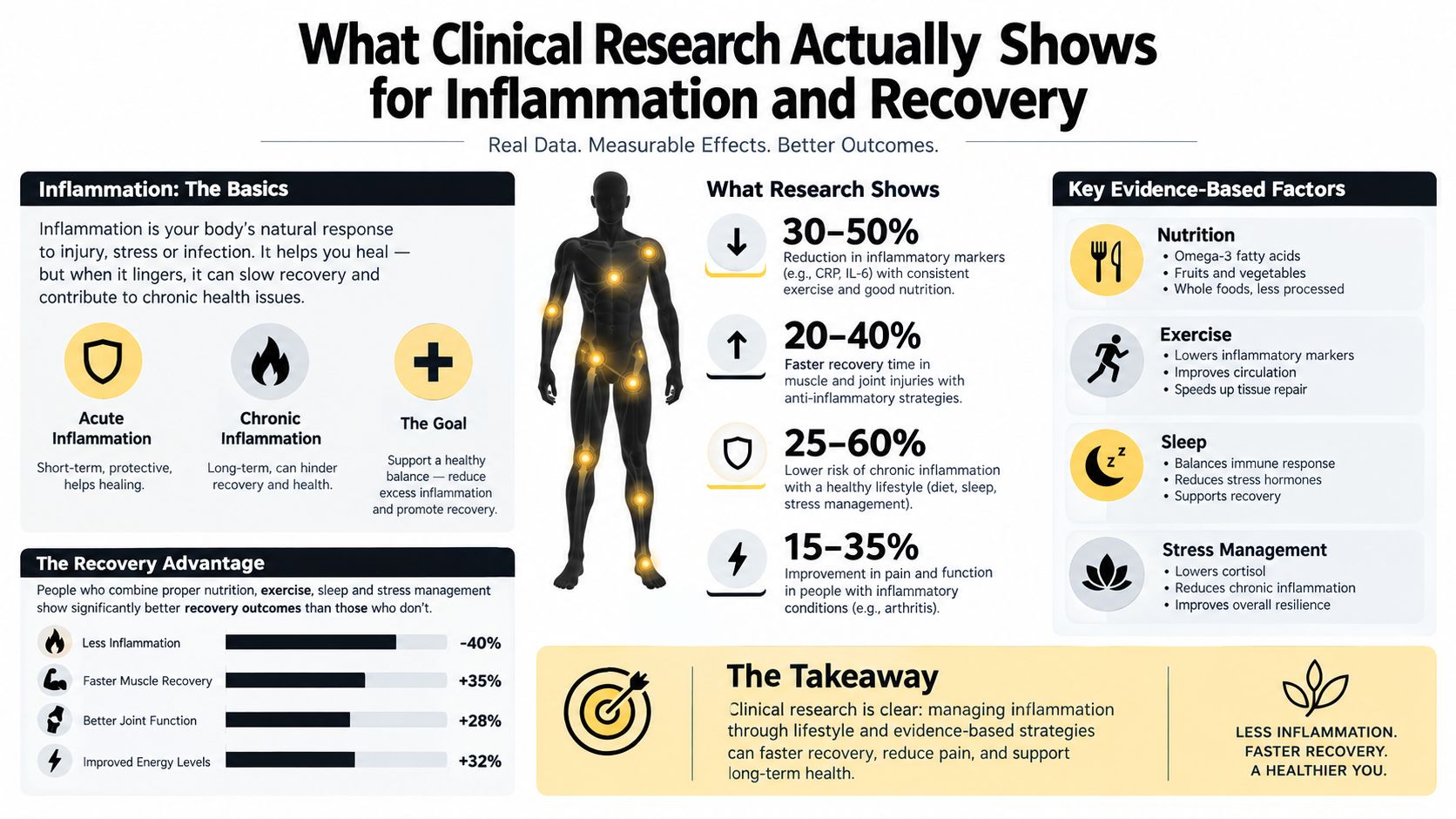
What Clinical Research Actually Shows for Inflammation and Recovery
The human evidence is more specific than many supplement pages suggest. A 2023 systematic review and meta-analysis found moderate-quality evidence supporting oral bromelain for pain control and topical bromelain for wound debridement, while other applications remained mixed or insufficiently supported. The review is available through this published systematic analysis of bromelain's clinical effects.
For oral pain control, bromelain reduced pain slightly but significantly compared with controls. Across 9 studies, the reported mean difference was -0.27 on pain scores, with low-to-moderate heterogeneity, represented by I² = 29% in the review. That result points toward a modest effect, not a dramatic transformation, and it doesn't justify broad claims that bromelain treats every source of pain.
Stronger evidence in a specific topical application
The same review found a clearer result for topical bromelain in wound care. Across 4 studies, topical treatment shortened the time to complete debridement by an average of 6.89 days compared with comparators, with very low heterogeneity, represented by I² = 2% in the analysis. This is a specialized clinical application and shouldn't be used as evidence that an oral dietary supplement will produce the same result.
The evidence also has clear boundaries. A separate independent review reported potential usefulness in sinusitis and pain control, but not for cardiovascular disease, and it documented adverse events including flatulence, nausea, and headache. Many broader therapeutic claims still rely on laboratory or animal work rather than large human trials, as noted in this critical review of bromelain research and its limitations.
How to translate the evidence into expectations
A reasonable interpretation is that bromelain may offer incremental support in selected contexts, particularly where pain control, inflammatory signaling, or tissue support is relevant. It shouldn't replace diagnosis, rehabilitation, prescribed treatment, or urgent care.
For a broader discussion of plant-based options and their limitations, see this guide to supplements described as anti-inflammatory. Use the evidence to narrow the claim. “May support comfort during recovery” is more defensible than “treats inflammation throughout the body.”
Food Versus Supplement Forms and Choosing the Right Bromelain
Fresh pineapple is a nutritious food and a natural source of bromelain, but food and supplement forms serve different purposes. The fruit provides water, carbohydrates, fiber, and flavor along with enzyme activity that can vary by plant tissue, ripeness, storage, and preparation. A capsule can offer a more controlled serving, but only if the manufacturer identifies the source and explains how activity is standardized.
Juice and fresh fruit may fit a meal-based digestive routine. Core and stem material may be used as extraction sources, including processing by-products. That approach can improve the use of agricultural material, but sustainability language shouldn't distract from the questions that affect efficacy: Is the source disclosed? Is the extract consistent? Does the label describe enzyme activity rather than relying only on weight?
Form | Potency and Consistency | Best Use Case |
|---|---|---|
Fresh pineapple | Variable enzyme content and activity, influenced by tissue and handling | Whole-food nutrition and culinary use |
Pineapple juice | Convenient food form, but activity depends on processing and storage | Meal accompaniment and flavor |
Pineapple core or stem extract | Source material can support concentrated extraction, with quality depending on processing and standardization | Ingredient manufacturing and standardized formulas |
Standardized supplement | More controlled serving than food, provided the label discloses meaningful quality information | Targeted digestive or recovery routines |
What to inspect on a supplement label
A supplement facts panel should tell you more than the phrase pineapple enzyme. Source tissue, extract identity, enzyme activity, serving instructions, capsule materials, and testing information all help distinguish a transparent product from a vague one. Milligrams alone may not communicate how active an enzyme preparation is, so ask whether the manufacturer reports a recognized activity measure and explains its testing approach.
You can use this guide to reading supplement facts labels to evaluate the rest of a multi-ingredient formula. Two products with the same listed weight may not contain equivalent enzyme activity or equivalent supporting evidence.
Label-reading rule: A generic ingredient name is the beginning of your questions, not the end of them.
People choosing between pineapple and a capsule don't necessarily need to make an either-or decision. Pineapple can remain part of a balanced diet, while a standardized supplement may be considered when someone wants consistent intake for a defined purpose. The choice should match the goal, the person's health situation, and the quality of the product.
Practical Dosing Safety and Interaction Guidance
Bromelain use becomes more complicated when it enters a real supplement stack. People may combine it with turmeric, ginger, herbal extracts, digestive products, antacids, prescription medicines, or over-the-counter pain relievers. The safety question is therefore not only “Can I take bromelain?” but also “What else am I taking, and what outcome am I trying to support?”
Timing should follow the intended purpose and the product's directions. Taking an enzyme with food may make sense when the goal is digestive support, while products marketed for systemic recovery may provide different instructions. Don't assume that an empty stomach, a meal, or a particular schedule is universally correct. Follow the label and ask a pharmacist or clinician if the directions conflict with your medicines or medical conditions.
The interaction check comes first
Independent safety resources emphasize clinically relevant concerns, especially bleeding risk with anticoagulant or antiplatelet medicines and the need to stop bromelain before surgery. The evidence base is limited and often depends on small studies or mechanism-based reasoning, so uncertainty is a reason for caution rather than reassurance. Review the bromelain interaction and safety guidance before starting.
Use this checklist if you're considering a capsule:
Blood-thinning medicines: Ask a clinician or pharmacist before combining bromelain with anticoagulant or antiplatelet treatment.
Upcoming surgery: Tell the surgical team that you use bromelain and follow their instructions about stopping it before the procedure.
Older age or arthritis treatment: Review the complete medication list, especially if prescription blood thinners are involved.
Digestive tolerance: Watch for flatulence, nausea, headache, or other new symptoms, and pause the product if symptoms are concerning.
Multi-ingredient formulas: Evaluate the full label rather than treating bromelain as an isolated ingredient.
Persistent symptoms: Seek medical assessment instead of increasing a supplement when pain, swelling, or digestive discomfort continues.
A conservative trial means starting only when the product's directions are clear, avoiding unnecessary stacking, and tracking whether the intended benefit is noticeable and tolerable. Don't use a supplement to delay care for an injury, severe pain, unusual swelling, or symptoms that could indicate a serious condition.
Safety priority: Medication review matters more than finding the most aggressive enzyme routine.
Bromelain in the River of Life Formula and Final Takeaways
Bromelain makes the most sense when you connect four questions: what it is, where it comes from, how active it remains, and whether it fits your health context. It's a pineapple-derived proteolytic enzyme complex, not a single interchangeable ingredient. Fruit and stem bromelain have separate scientific classifications, and extraction choices can affect consistency and traceability.
The clinical evidence supports measured expectations. Oral bromelain has moderate-quality support for a modest reduction in pain in the reviewed studies, while topical bromelain has stronger evidence for a specific wound-debridement application. Laboratory findings involving IL-1β, IL-6, TNF-α, prostaglandin-related pathways, and immune-cell activity help explain the interest, but they don't turn a supplement into a treatment for broad disease.
For people considering a combination product, River of Life Capsules include bromelain alongside standardized turmeric extract with BioPerine, ashwagandha root, and ginger in a vegan capsule. That formulation places bromelain within a broader approach to joint comfort, stress resilience, sleep quality, mental clarity, and recovery, rather than presenting it as a single-ingredient solution. The company also provides educational material through The ROL Journal and includes regulatory language about health claims.
Before trying bromelain, identify your goal, read the complete label, check medicines and surgery plans, and track your response. If you use anticoagulant or antiplatelet medication, involve a qualified healthcare professional before adding it.
River of Life offers a vegan, multi-ingredient capsule containing bromelain with turmeric extract, BioPerine, ashwagandha, and ginger for people building a daily joint-comfort and recovery routine. Visit River of Life to review the formula, purchase options, and educational resources before deciding whether it fits your needs.