


Turmeric and Black Pepper Capsules: A Practical Guide

You're standing in front of a shelf of turmeric supplements, comparing labels that all seem to promise the same thing. One bottle lists turmeric extract. Another adds black pepper. A third says BioPerine, followed by a large claim about absorption. The natural question is simple: if turmeric has been used in food and traditional health practices for generations, why does a capsule need a partner?
The answer begins with curcumin, the yellow polyphenol most closely associated with turmeric research. Curcumin is poorly absorbed by itself because the digestive tract and liver process it quickly. Black pepper's main alkaloid, piperine, can slow some of those clearance processes, but the size of the effect depends on the formulation, dose, food, and person taking it.
That distinction matters. The famous 2,000% bioavailability claim comes from a real human study, but newer evidence suggests that the headline doesn't automatically describe the blood levels a typical capsule user will achieve. This guide separates what piperine can do from what it can't, then turns that evidence into practical advice about choosing, taking, and evaluating turmeric and black pepper capsules.
Table of Contents
Why Turmeric Capsules Need a Friend
You open a bottle labeled turmeric and another labeled curcumin, then notice a third that adds black pepper. The names sound interchangeable, but they describe different ingredients and different formulation choices.
Turmeric is the whole rhizome or a preparation made from it. Curcumin refers to a group of closely related compounds within turmeric, and those compounds receive much of the scientific attention. Ordinary turmeric powder contains only a small fraction of curcuminoids, commonly described as 2–6% of the root in supplement discussions. Products built around concentrated curcumin therefore use an extract rather than kitchen spice.
Curcumin has another limitation after ingestion. It does not dissolve readily in water, and enzymes in the intestinal wall and liver quickly transform it into compounds that the body can remove. A capsule may pass through digestion without delivering an equivalent amount of free curcumin to the bloodstream.
The classic human pharmacokinetic study found that 2 g of curcumin alone produced very low or undetectable serum levels, as reported in the original piperine and curcumin study. A simple analogy helps: curcumin is a package sent through several checkpoints. Before it reaches general circulation, digestive conditions and metabolic enzymes can open, alter, or redirect much of the shipment.
The practical question isn't whether a capsule contains turmeric. It's how much usable curcumin, or another active turmeric compound, reaches the body after digestion.
Piperine, black pepper's main alkaloid, can temporarily interfere with some enzymes and transport processes involved in this early clearance. That may keep more curcumin in circulation for a period, but it does not guarantee a clinical benefit or make turmeric a medicine. The mechanism explains why the two ingredients are commonly paired.
The rest of the label matters too. A capsule may use whole turmeric, a standardized curcuminoid extract, a specialized delivery system, or several botanicals. These options can create different exposure patterns, so “with black pepper” describes one formulation feature, not a complete quality score.
How Black Pepper and BioPerine Help Curcumin Stick Around
Curcumin is rapidly conjugated by UGT and SULT enzymes in the gut and liver, which helps the body process and remove it. Glucuronidation is one part of this first-pass processing, and it helps explain why free curcumin can disappear quickly after oral dosing.
Piperine, the pungent alkaloid in black pepper, can slow parts of that process. In the classic human study, adding 20 mg of piperine to 2 g of curcumin increased curcumin bioavailability by 2000% in healthy volunteers, with much higher concentrations measured within 0.25 to 1 hour after dosing, according to the review of turmeric and piperine delivery research. The investigators reported no adverse effects at the doses used in that study.
That finding describes a change in measured blood exposure under specific study conditions. It does not establish that every capsule will produce the same result, or that a higher blood level automatically creates a noticeable benefit.
BioPerine is a branded, standardized black pepper extract commonly used to supply piperine in supplement formulas. The label distinction matters. “Black pepper” may mean ground spice, while BioPerine identifies a standardized extract. In a capsule, the purpose is usually bioavailability support, not seasoning.
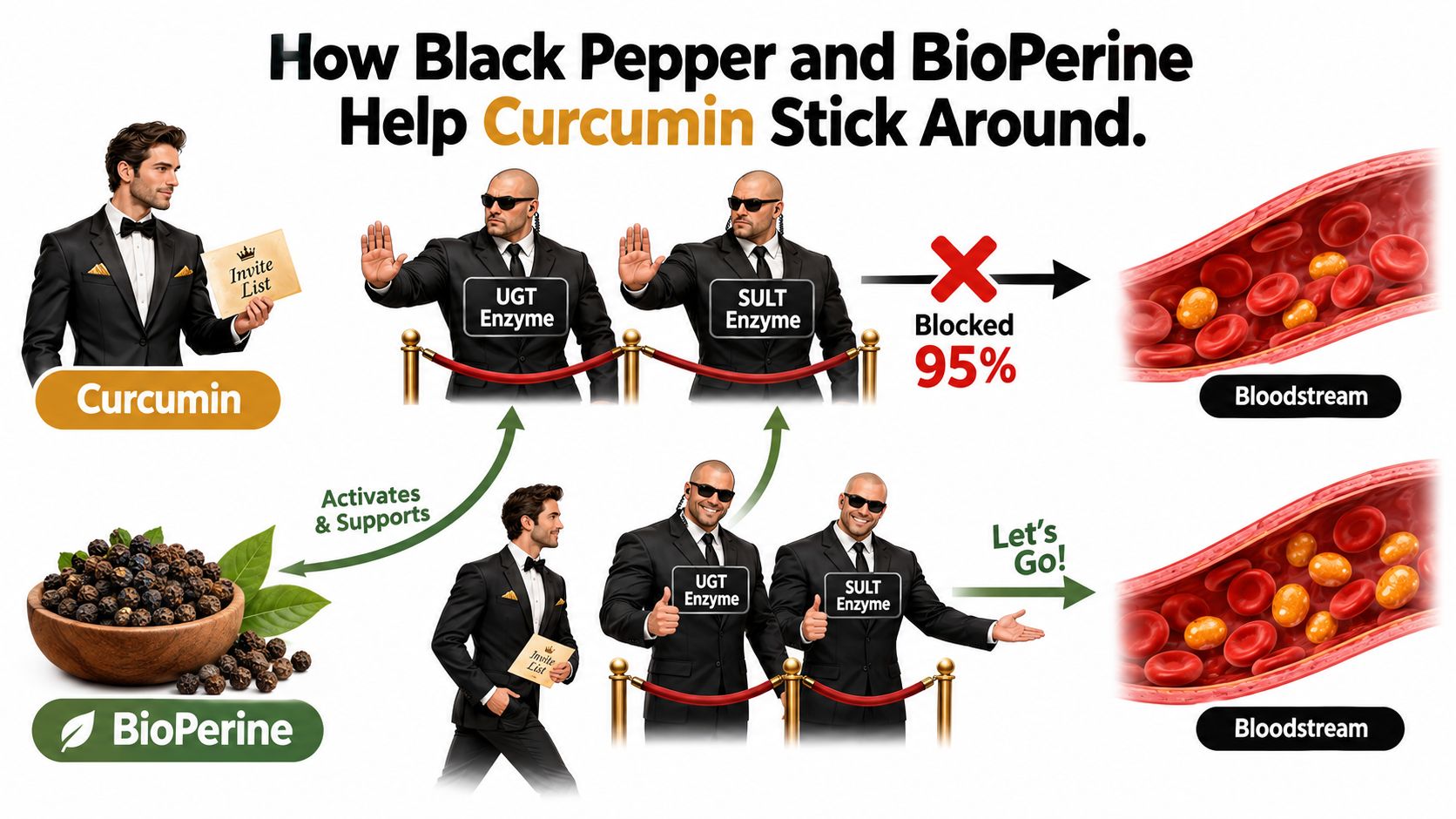
Piperine may also affect intestinal permeability and gastric handling, but these mechanisms do not make absorption uniform across people. Results vary with the formulation, dose, meal, and experimental setting. Some animal findings were much smaller than the original human result, so the pairing should be viewed as a formulation choice rather than a guaranteed outcome. A consumer-friendly explanation is available in this guide to turmeric with piperine.
The practical takeaway is simple: piperine may help curcumin remain available longer by reducing some early clearance. It is a delivery aid, not the ingredient that defines turmeric. That distinction matters when comparing a conventional capsule with a specialized curcumin delivery system.
The 2,000% Absorption Claim and What Newer Studies Say
A shopper sees “up to 2,000% absorption” on a turmeric label and may reasonably expect the same change in their own bloodstream. The 2,000% figure is real, but narrow. It comes from a 1998 human pharmacokinetic study in which healthy volunteers took 2 g of curcumin, either alone or with 20 mg of piperine. Curcumin alone produced very low or undetectable serum levels, while piperine led to much higher concentrations soon after dosing. The result established the original piperine rationale, as documented in the historical study record.
That experiment answered a specific question: can piperine increase measured curcumin exposure under those conditions? Yes. It did not establish that every turmeric capsule will produce the same blood levels, or that a higher level will automatically create a noticeable benefit. Food, formulation, dose, and the type of curcumin preparation can all change the result. Our analysis of curcumin bioavailability explains why the percentage should be read in context.
Newer human research makes the marketing shorthand less certain. In a crossover study, an enhanced curcumin formulation with added piperine left unconjugated curcumin below 2 nM in most cases, while piperine added no measurable benefit in that trial, according to the 2025 human study. This does not erase the earlier finding. It shows that piperine's effect depends on the formulation and study conditions, rather than transferring automatically to every product.
Study / Era | Curcumin Dose | Piperine / Enhancer | Reported Absorption Increase | Real-World Relevance |
|---|---|---|---|---|
1998 human study | 2 g | 20 mg piperine | 2000% | Established the original piperine rationale, but used a specific research setup |
2025 crossover study | Enhanced formulation | Added piperine | No measurable piperine benefit in that trial | Raises questions about whether the headline transfers to newer formulations and ordinary users |
A 2024 review also describes substantial variation by species, formulation, and experimental context. It includes an animal comparison showing roughly 154% increased systemic bioavailability, far below the original human headline, as summarized in the 2024 review of curcumin bioavailability.
Piperine is one route for changing curcumin exposure. Liposomal systems, micelles, and phospholipid complexes use different approaches to improve dispersion or transport, and may perform as well as or better than a piperine pairing in particular tests.
Read “up to 2,000%” as a historical result under defined conditions, not as a promise about your blood levels.
Compare the curcumin type, standardized extract amount, clearly listed piperine, and human evidence for the intended outcome. Those details offer a more useful basis for judging a capsule than a large absorption number on its front label.
What the Evidence Shows for Joints, Stress, Sleep, and Focus
Turmeric and black pepper capsules are often sold for several goals at once. The evidence isn't equally mature across those goals, and improved absorption doesn't automatically prove an improved outcome. A product can raise measured exposure without producing a noticeable change in comfort, sleep, or concentration.
Joint comfort and mobility
Joint comfort is the most practical reason many people consider curcumin. Research has examined standardized curcumin preparations for osteoarthritis-related discomfort and function, sometimes with piperine and sometimes with other delivery technologies. The useful interpretation is modest: a person may notice easier movement or less day-to-day discomfort over consistent use, but the response varies and shouldn't be treated as a replacement for diagnosis, strength work, physical therapy, or prescribed care.
Functional change also takes longer to judge than a blood-level change. A pharmacokinetic result can appear within hours, while perceived mobility depends on activity, sleep, body weight, joint structure, and the starting severity of symptoms.
Inflammation markers
Curcumin can influence laboratory measures related to inflammation and oxidative stress in some research settings. A marker shift is not the same as relief, however. If a capsule changes a blood test while stiffness and function remain unchanged, the user may not experience a meaningful benefit.
Stress and mood
Ashwagandha-containing blends are often positioned for perceived stress, while turmeric contributes a different botanical profile. Evidence for mood and stress support depends on the full formula, the extract used, and the outcome measured. Someone looking for calmer evenings shouldn't assume that a turmeric-plus-piperine capsule alone has the same evidence as a multi-ingredient product that includes a standardized ashwagandha extract.
Sleep and cognitive performance
Sleep quality, sleep timing, and working memory are more individualized endpoints. Early research is interesting, but these outcomes remain less settled than the joint-use case. A person who sleeps poorly because of pain may respond differently from someone whose main issue is irregular scheduling or medication-related fatigue.
Benefit Area | Typical Curcumin Dose | Trial Length | Key Finding | Evidence Strength |
|---|---|---|---|---|
Joint comfort and mobility | Varies by formulation | Varies by trial | Some studies support improvements in discomfort or function | Strongest of these areas, but formulation-specific |
Inflammation markers | Varies by formulation | Varies by trial | Some studies report changes in selected markers | Moderate and not identical to symptom relief |
Perceived stress and mood | Depends on the complete formula | Varies by trial | Evidence is more relevant to blends than isolated turmeric alone | Emerging |
Sleep quality | Depends on the complete formula | Varies by trial | Findings are not consistent enough to promise a predictable sleep effect | Emerging |
Focus and working memory | Depends on the complete formula | Varies by trial | Cognitive findings remain preliminary and outcome-specific | Emerging |
The likely responder is someone with a clearly defined goal, a suitable formulation, realistic expectations, and enough consistency to assess a gradual change. Someone expecting a dramatic result from the absorption claim alone may be disappointed.
Practical Dosing, Timing, and Pairing Tips
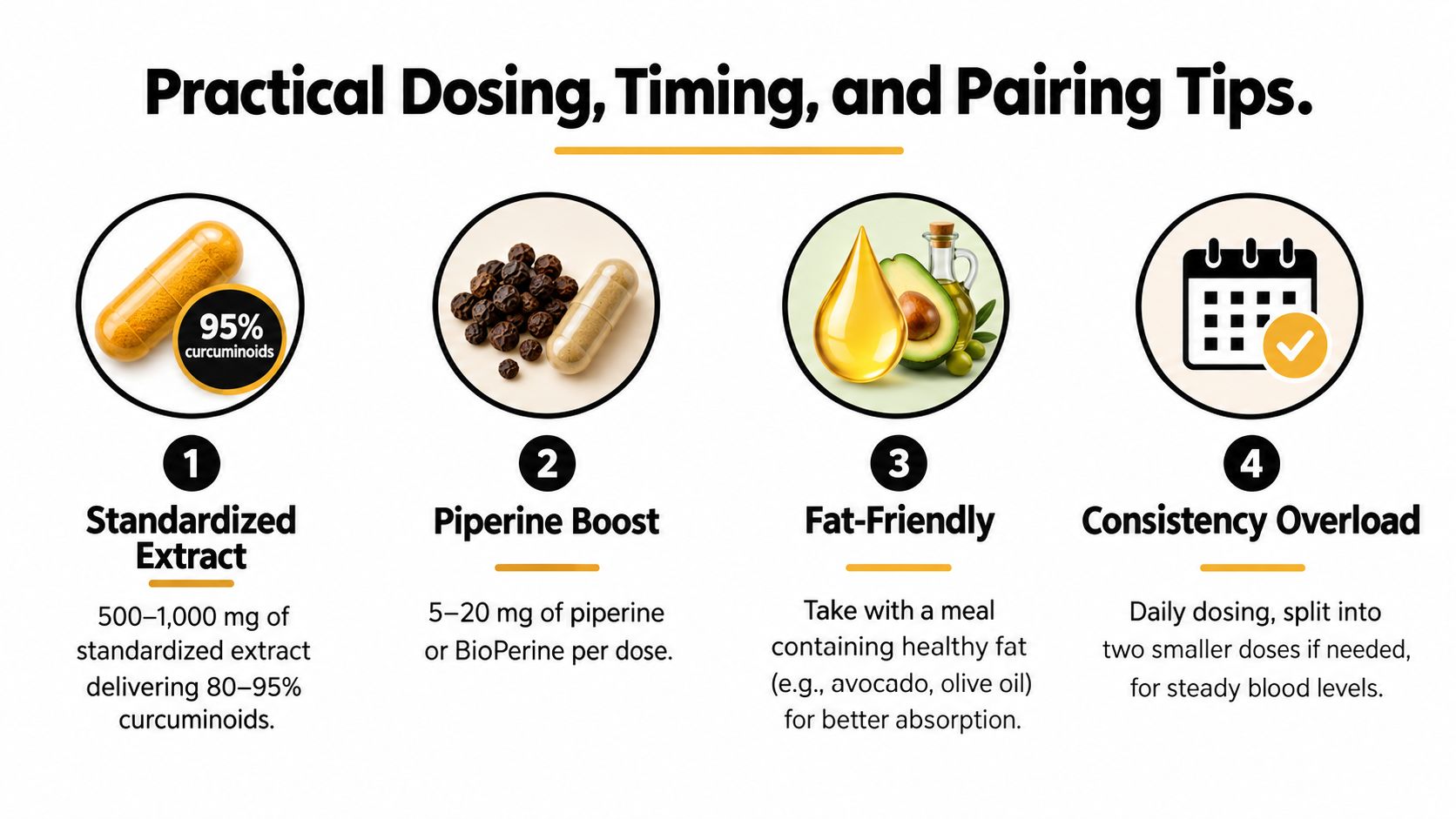
A label should answer two questions before you buy: how much curcuminoid-rich extract is in each serving, and how much piperine or BioPerine is paired with it? Many products use standardized extracts instead of plain turmeric powder. The amount that matters depends on both the extract's standardization and the serving size.
Product guidance commonly describes 500–1,000 mg of standardized curcumin extract delivering 80–95% curcuminoids, with 5–20 mg of piperine or BioPerine in many formulations. Treat these as formulation ranges, not universal instructions. A higher amount is not automatically a better choice, because piperine can change how the body processes some substances.
Make the routine easier to tolerate
Take the capsule with a meal if an empty stomach causes nausea or reflux. A meal containing some dietary fat may fit curcumin's fat-soluble character, but there is no need to turn the supplement into a high-fat experiment. Follow the product label instead of adding extra pepper, particularly if you use prescription medicines.
Start with the labeled serving: Begin with the amount the manufacturer lists and assess how you respond.
Consider split dosing: If one serving feels heavy, dividing it between meals may be easier than taking it all at once.
Choose consistency: A repeatable routine helps separate a genuine change from an unusually good or bad day.
Track the outcome: Use a simple personal scale for joint comfort, movement, sleep quality, or focus.
For a first trial, take the labeled serving with the main meal and track one outcome for several weeks. If you already use several supplements, add only one new product at a time, check for overlapping ingredients, and ask a pharmacist or clinician to review the full list.
The practical dosing video may help with label reading, but it does not replace medical advice or the product's specific directions.
Safety, Side Effects, and Medication Interactions
“Natural” doesn't mean pharmacologically neutral. Curcumin-piperine products were generally well tolerated in short- to medium-term trials reviewed in recent literature, but reported problems included mild gastrointestinal symptoms such as nausea and dyspepsia, and those trials don't settle interaction risks for people taking several medications. The recent systematic review and safety discussion also highlights concern about piperine's effects on drug-metabolism enzymes and transporters.
Piperine can affect pathways involving CYP3A4 and P-glycoprotein, while curcumin may influence other metabolic processes. That creates a plausible interaction issue for medicines with a narrow safety margin or complex clearance. The practical concern isn't that every combination will cause harm. It's that a capsule can change exposure in ways a shopper can't predict from the front label.

Who should pause before buying
Get professional guidance before using a concentrated product if you take anticoagulants, antiplatelet medicines, diabetes medicines, or other prescriptions that depend on controlled metabolism. Extra caution is sensible for older adults taking several medications, people with gallbladder or bile-duct problems, those with a history of liver concerns, and anyone who is pregnant or breastfeeding.
Stop the supplement and seek medical advice if you develop unusual fatigue, dark urine, yellowing of the skin or eyes, persistent abdominal discomfort, or a significant allergic reaction. Don't restart it just because the symptoms seem mild.
Ask a prescribing clinician:
Could piperine change the way any of my medicines are absorbed or cleared?
Should I stop the supplement before a procedure or surgery?
Does my medical history make concentrated turmeric unsuitable?
Which symptoms would mean I should stop immediately?
This conversation is especially important for anyone using warfarin, clopidogrel, aspirin, certain antidepressants, antidiabetic medicines, or cancer treatments. A pharmacist can often perform a practical interaction check using the exact product label.
How Multi-Ingredient Blends Build on the Turmeric Base
A turmeric-and-piperine capsule has a narrow formulation logic. It focuses on curcumin delivery. A blend adds several intended outcomes, but it also makes it harder to identify which ingredient is responsible for a benefit or side effect.
Ashwagandha is commonly included for stress-related support and sleep-oriented formulas. Ginger brings its own pungent compounds, including gingerols, and may make sense in a joint or digestive-support blend. Bromelain, a group of pineapple-derived proteolytic enzymes, is often chosen for exercise recovery or swelling-focused formulas.
Partner Ingredient | Main Added Benefit | Typical Range Per Serving | Watch Out For |
|---|---|---|---|
Ashwagandha | Stress resilience and sleep-oriented support | Depends on extract strength | May not suit everyone, especially with certain medicines or thyroid concerns |
Ginger | Complementary botanical support for comfort and digestion | Depends on the preparation | Can aggravate reflux or add to bleeding concerns in some situations |
Bromelain | Enzyme support often used in recovery formulas | Depends on enzyme activity, not just weight | May interact with medicines affecting bleeding or digestion |
The table's missing numbers are intentional. A milligram value alone doesn't tell you whether an ashwagandha extract is concentrated, whether ginger is standardized, or whether bromelain has meaningful enzyme activity. A transparent label should identify the plant part, extract type, and amount for each active ingredient.
A longer ingredient list isn't automatically a stronger formula. It's a more complicated formula that deserves closer label scrutiny.
Choose a blend when every listed ingredient has a clear reason to be there and a disclosed dose. Choose a simpler turmeric-plus-piperine product when your goal is limited to curcumin delivery and you want fewer variables. Also consider capsule burden, dietary preferences, potential sensitivities, and the interaction profile of the whole combination.
Choosing a Quality Capsule and Buying With Confidence
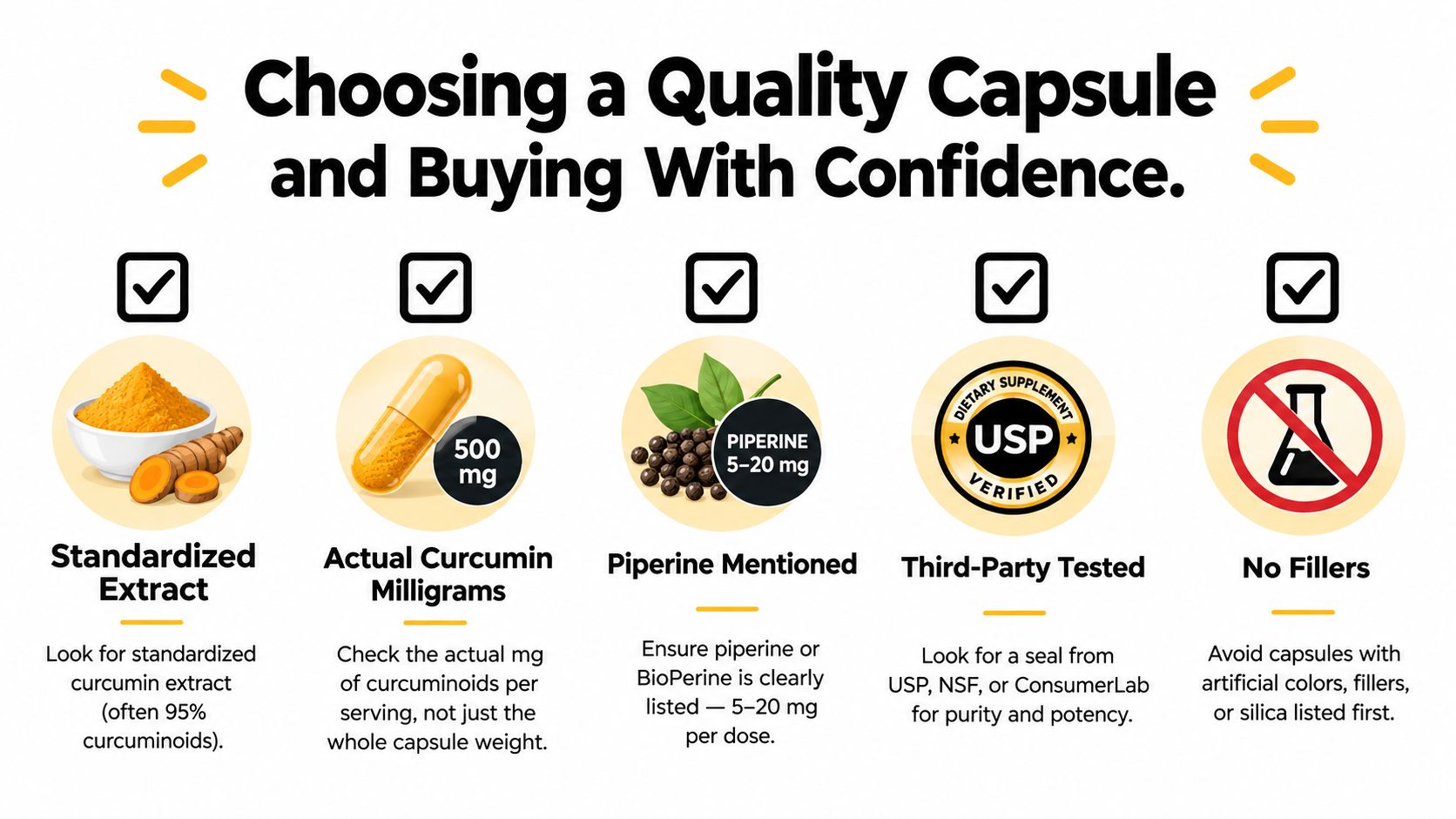
A credible supplement label lets you evaluate the formula without guessing. Start with the turmeric ingredient. Look for the actual extract type, standardization, and amount of curcuminoids per serving, rather than relying on a dramatic total-weight figure.
Next, inspect the piperine line. It should clearly state whether the product uses piperine or BioPerine and how much is provided. A proprietary blend that hides every individual amount makes it difficult to compare products or discuss interactions with a clinician.
A label-first checklist
Check the active amounts: Confirm the curcuminoid quantity and piperine amount per serving.
Look for independent testing: Seals from organizations such as USP, NSF, or ConsumerLab can provide additional quality information when applicable.
Read every ingredient: Note capsule material, allergens, colors, flow agents, and hidden blends.
Match the formula to your goal: A joint-focused single formula differs from a product built around stress, sleep, or recovery.
Review the company policy: A return window and clear contact information matter if the product doesn't suit you.
The guide on how to read supplement facts can help you compare labels without letting the front-panel claim make the decision for you.
Subscriptions may be convenient for people who already know they tolerate a product, while a one-time purchase gives a first-time buyer more flexibility. Check whether the subscription can be paused or canceled, and avoid accumulating bottles before you know whether the formula fits your routine.
FAQ
Are turmeric capsules vegan? Some are, but capsule materials vary. Confirm that the label says vegan or vegetarian if that matters to you.
How long do they last? Use the expiration date and storage instructions on the bottle. Heat, light, and moisture can affect supplement quality.
Can capsules replace culinary turmeric? No. A standardized capsule and turmeric used in food serve different purposes. Cooking with turmeric can remain part of a varied diet, while a supplement provides a concentrated, defined formula.
River of Life offers vegan capsules combining standardized turmeric extract and BioPerine with ashwagandha, ginger, and bromelain, available through one-time or subscription purchasing. If that multi-ingredient approach matches your goals, review the full label and visit River of Life to compare the formula and buying options.