


Equate Pain Reliever 500 Mg: What It Is and How to Use It

Equate Pain Reliever 500 mg is a Walmart store-brand acetaminophen caplet sold over the counter for temporary relief of minor aches, pains, and fever. The standard adult direction is 2 caplets every 6 hours, with a maximum of 6 caplets in 24 hours unless a doctor says otherwise.
It's 9 p.m., the kitchen lights are humming, and you're holding a mug of tea in one hand and the familiar orange-and-white bottle in the other. A tension headache has followed you through the evening, and you're wondering whether two caplets will help you settle down before bed.
That everyday decision deserves more than a quick glance at the front of the bottle. The important questions are practical: what's inside an Equate Pain Reliever 500 mg caplet, how do you count doses safely, what happens when it shares a medicine cabinet with cold remedies or supplements, and which non-drug comfort measures make sense alongside short-term use?
Table of Contents
Reaching for the Equate Bottle at Home
At the kitchen counter, the useful question is not whether the bottle says Equate. Check what the product contains, how much is in each caplet, and what else you have taken today. Equate Pain Reliever is Walmart's store-brand acetaminophen product. The DailyMed label lists acetaminophen at 500 mg per caplet and identifies it as an over-the-counter pain reliever and fever reducer for temporary relief of common minor aches and pains in the official DailyMed label.

The same basic 500 mg acetaminophen format may appear in different package sizes and presentations. DailyMed lists marketed NDC codes including 79903-174-05, 79903-174-25, and 79903-174-50. Separate commercial drug listing information documents large-count packaging, including a 500-caplet bottle and a 100-tablet package in the FDA/NDC listing. Counts and package details can vary, so read the current label rather than relying on the bottle's appearance.
Before taking a caplet, use four quick checks. Confirm the active ingredient and strength. Add up acetaminophen from every medicine used today, especially cold, flu, or sleep products. Review liver-related risks, alcohol use, and other medicines with a pharmacist or clinician when needed. Then consider whether water, rest, stretching, or a warm compress may address the discomfort without another dose.
Practical rule: The bottle in your hand matters, but so does every other bottle you've used today.
That habit also helps place supplements in context. Turmeric, ashwagandha, ginger, and bromelain may enter the conversation around natural support, but “natural” does not automatically mean risk-free or interaction-free. The sections ahead connect label directions with liver safety, duplicate acetaminophen, warning symptoms, and sensible non-drug comfort measures.
What Equate Pain Reliever 500 mg Actually Is
Suppose you have a headache and are comparing the bottle with another pain reliever in your cabinet. Start with the panel marked Active ingredient. Equate Pain Reliever 500 mg contains acetaminophen, with 500 mg in each caplet as listed by DailyMed. Acetaminophen reduces pain and fever by affecting the body's pain and temperature regulation pathways. It is different from ibuprofen and naproxen, which are NSAIDs and also provide anti-inflammatory action.
The purpose panel translates into two everyday uses: pain reliever and fever reducer. The labeled uses include temporary relief of minor aches and pains related to the common cold, headache, backache, minor arthritis pain, toothache, muscular aches, and premenstrual or menstrual cramps. It also temporarily reduces fever, according to the product's DailyMed labeling.
Read the directions as a schedule
For adults and children 12 years and older, the label says 2 caplets every 6 hours, with no more than 6 caplets in 24 hours unless a doctor directs otherwise. Treat that instruction like a boundary, not an invitation to continue indefinitely. Pain that keeps returning deserves attention to its cause.
Inactive ingredients fill out the rest of the caplet. They do not provide pain relief, yet they matter if you have allergies, sensitivities, dietary restrictions, or swallowing concerns. Compare that panel with the exact package you hold, since formulations can differ across products and presentations.
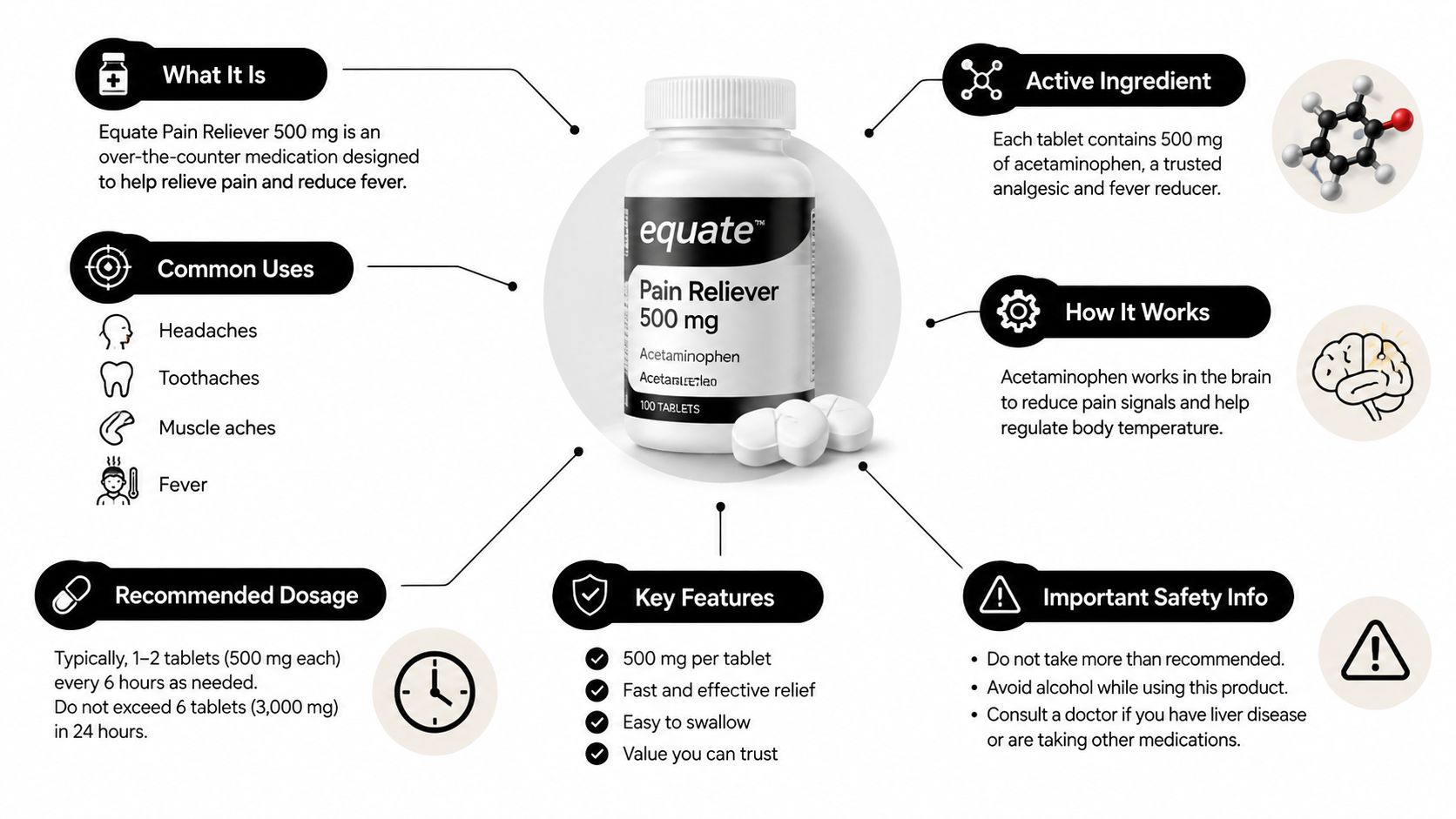
Equate is a private-label retail brand, not a separate kind of medicine. Compare the active ingredient, strength, directions, warnings, and inactive ingredients. That same careful reading matters when other acetaminophen products or supplements such as turmeric, ashwagandha, ginger, and bromelain are part of the conversation. Natural support still requires attention to safety and possible interactions.
How to Dose Equate Pain Reliever 500 mg Safely
You reach for the bottle after a long day, read “500 mg,” and still need to know how many caplets fit the label. Start with the active ingredient and the schedule. Each caplet contains 500 mg of acetaminophen. For adults and children 12 years and older, the label directs 2 caplets every 6 hours, or 1,000 mg per directed dose, with no more than 6 caplets in 24 hours, or 3,000 mg, unless a doctor directs otherwise. That is the bottle's ceiling, not a target to reach, as stated in the DailyMed label.
Dose Element | Standard Adult Direction | Caplet Count | Milligrams |
|---|---|---|---|
Single directed dose | Every 6 hours while symptoms persist | 2 caplets | 1,000 mg |
Labeled daily ceiling | Unless a doctor directs otherwise | 6 caplets | 3,000 mg |
Active ingredient per caplet | Acetaminophen | 1 caplet | 500 mg |
A broader acetaminophen discussion can cause confusion because some adult references mention a 4,000 mg daily maximum, equal to 8 caplets of 500 mg. This Equate label gives consumers a lower limit of 3,000 mg, or 6 caplets, so do not transfer an “8 tablets a day” instruction from another product to this bottle. For a broader overview, see this guide to acetaminophen use.
The liver breaks down acetaminophen through several pathways. With an overdose, those usual routes can become overwhelmed. A reactive metabolite may increase while protective glutathione is depleted, which helps explain why too much acetaminophen can cause liver toxicity. Clinical references identify hepatotoxicity as a concern when adult intake exceeds 4 g and describe untreated severe risk after single ingestions of 12 to 15 g, or 24 to 30 500 mg tablets in this clinical reference.
Count every source
Suppose you take Equate in the evening, then use a nighttime cold-and-flu medicine. If that product also contains acetaminophen, both amounts belong in the same daily count. Prescription combination pain medicines can create the same trap. Check each active ingredient panel for acetaminophen or APAP, rather than relying on brand names.
Ask a pharmacist or clinician about a lower limit if you have liver disease, drink heavily, are malnourished, are over 65, take warfarin, or have another condition affecting medication safety. Keep doses spaced as directed, take caplets with water, and stop when the symptom resolves. Do not crush or split a caplet unless the exact package says it can be altered.
Side Effects and Interactions Worth Knowing
Acetaminophen is widely used, but “over the counter” doesn't mean interaction-free. At ordinary label use, some people may notice mild nausea or an occasional rash. A rare but serious skin reaction can begin with a rash or other skin changes, so stop the product and seek medical advice promptly if you develop concerning skin symptoms.
The most common mistake isn't usually a dramatic decision. It's adding small amounts from several places without keeping a running total.
The medicine-cabinet traps
Alcohol deserves particular caution. Alcohol and acetaminophen both place demands on the liver, and regular or heavy alcohol use can make a standard self-care decision less appropriate. If you drink regularly, have liver disease, or aren't sure whether your use counts as risky, ask a pharmacist before taking the product.
Cold, flu, sinus, and prescription pain products may contain acetaminophen under the abbreviation APAP or under the full ingredient name. Read the active ingredient panel on every product, including a medicine you've used for years. Never assume that a different brand name means a different pain reliever.
Warfarin is another reason to check first. Acetaminophen may affect anticoagulation management, particularly with repeated use, so anyone taking warfarin should ask the prescribing clinician or pharmacist how to handle short-term pain.
Isoniazid and some seizure medicines can also complicate acetaminophen safety because they may affect liver metabolism or add to liver-related concerns. That doesn't mean a pharmacist will always tell you to avoid the product, but it does mean the medication list matters.
For a broader discussion of alcohol and pain-reliever choices, see this guide to pain relievers and alcohol.
Supplements belong on the list too
Botanicals aren't automatically neutral. Turmeric and ashwagandha may affect liver enzymes or bleeding risk in some circumstances. Ginger and ginkgo can add antiplatelet effects, which matters especially when someone already takes an anticoagulant or antiplatelet medicine. Supplement formulas also differ, so the product name alone may not tell a clinician everything they need to know.
Substance | Type | Risk With Acetaminophen |
|---|---|---|
Alcohol | Beverage or regular alcohol use | Can add liver stress and makes self-dosing less straightforward |
Cold and flu products | Combination OTC medicines | May duplicate acetaminophen without an obvious brand match |
Opioid-acetaminophen products | Prescription combination medicines | Can quietly raise the daily acetaminophen total |
Warfarin | Prescription anticoagulant | May require monitoring and professional guidance with repeated use |
Isoniazid or seizure medicines | Prescription medicines | May raise medication-specific liver or metabolism concerns |
Turmeric, ashwagandha, ginger, or ginkgo | Botanical supplements | May affect liver enzymes, bleeding risk, or platelet activity |
A complete medication list includes prescriptions, OTC products, vitamins, teas, powders, and capsules.
Before combining products, write down the name, strength, and time of every dose. Show that list to a pharmacist or prescriber, especially if you're adding a supplement to a regimen that includes warfarin, seizure medicine, or another long-term prescription.
Why More Is Not Better and When to Call a Doctor
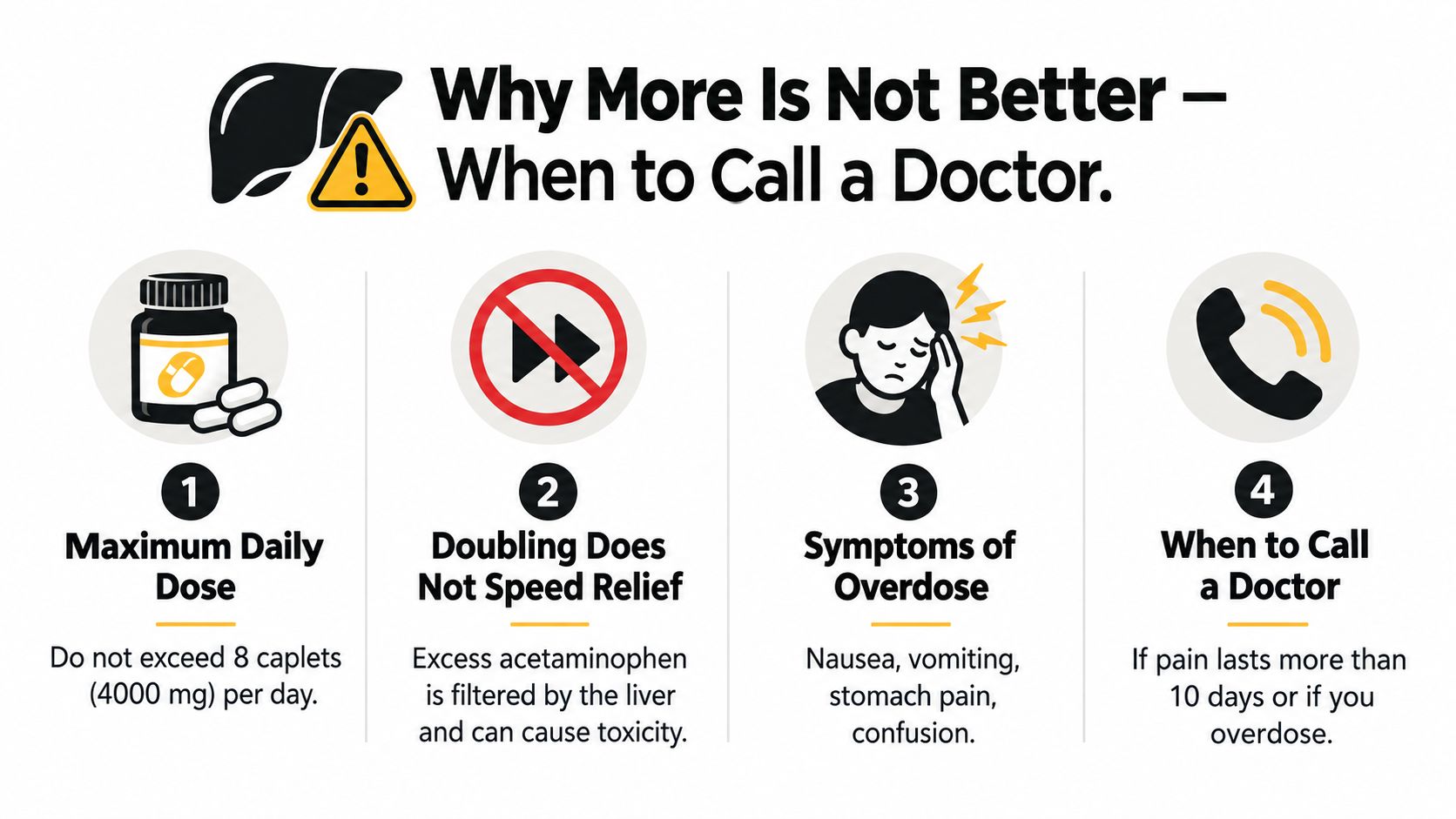
You take a caplet, wait for relief, and wonder whether another one will work faster. Usually, extra acetaminophen does not speed relief. The body must process every caplet through the liver, and excessive amounts can produce toxic metabolites that injure the liver. The label's limit is therefore a safety boundary, not a suggestion to “catch up” with pain.
Duplicate products make the arithmetic easy to miss. One Equate caplet contains 500 mg, while the directed pair contains 1,000 mg. Some clinical references discuss an adult maximum of 4,000 mg per day, equal to 8 caplets of this strength. The Equate consumer label sets a lower limit: no more than 6 caplets, or 3,000 mg, in 24 hours unless a doctor directs otherwise. Check the DailyMed product directions, and count acetaminophen from every product, not just the Equate bottle.
Symptoms that change the plan
An overdose may begin with symptoms that resemble an ordinary stomach illness. Nausea, vomiting, unusual fatigue, upper-right abdominal pain, or confusion can signal trouble. Yellow skin or eyes and dark urine are especially concerning liver-related signs.
If you may have taken too much, seek guidance immediately rather than waiting for symptoms to become severe. Contact poison control, urgent medical services, or an emergency department.
Call a clinician the same day if pain lasts more than 10 days, fever continues beyond 3 days, symptoms worsen, or swelling appears. Pain with confusion or vomiting also needs prompt attention. Ongoing symptoms call for evaluation, not repeated redosing.
Seek urgent help for severe symptoms, suspected overdose, yellowing skin or eyes, dark urine, marked confusion, or severe abdominal pain. Bring the bottle and a list of everything you took, including supplements.
Natural Support Options That Pair With Smart OTC Use
Non-drug measures can make a short episode of discomfort easier to manage, but they don't replace evaluation of severe, worsening, or unexplained pain. Think of them as supportive tools that may reduce the need to reach for another caplet while you watch how the symptom develops.
For a practical overview of natural pain relief approaches, start with the type of discomfort rather than the most popular ingredient. Heat may relax tight muscles, while cold can feel more comfortable after a minor strain or when swelling is present. Gentle movement and stretching can help stiffness, but stop if movement sharply increases pain.
Match the option to the situation
Turmeric and curcumin are commonly discussed for inflammatory discomfort. They can still affect medication decisions, including bleeding risk or liver-related concerns, so list them for your pharmacist rather than treating them as harmless food ingredients.
Ashwagandha is often used in conversations about stress, tension, and sleep. It isn't an instant replacement for an analgesic, and people taking regular medicines should check for interactions before adding it.
Ginger may be useful in a comfort routine for nausea or mild soreness. It can also affect platelet activity, so caution matters when someone takes blood-thinning medicines.
Bromelain is discussed for swelling and sinus discomfort, while magnesium is often considered when muscle tightness is part of the picture. Omega-3 supplements are another option people consider for joint comfort. Each has its own dosing rules, contraindications, and interaction profile.
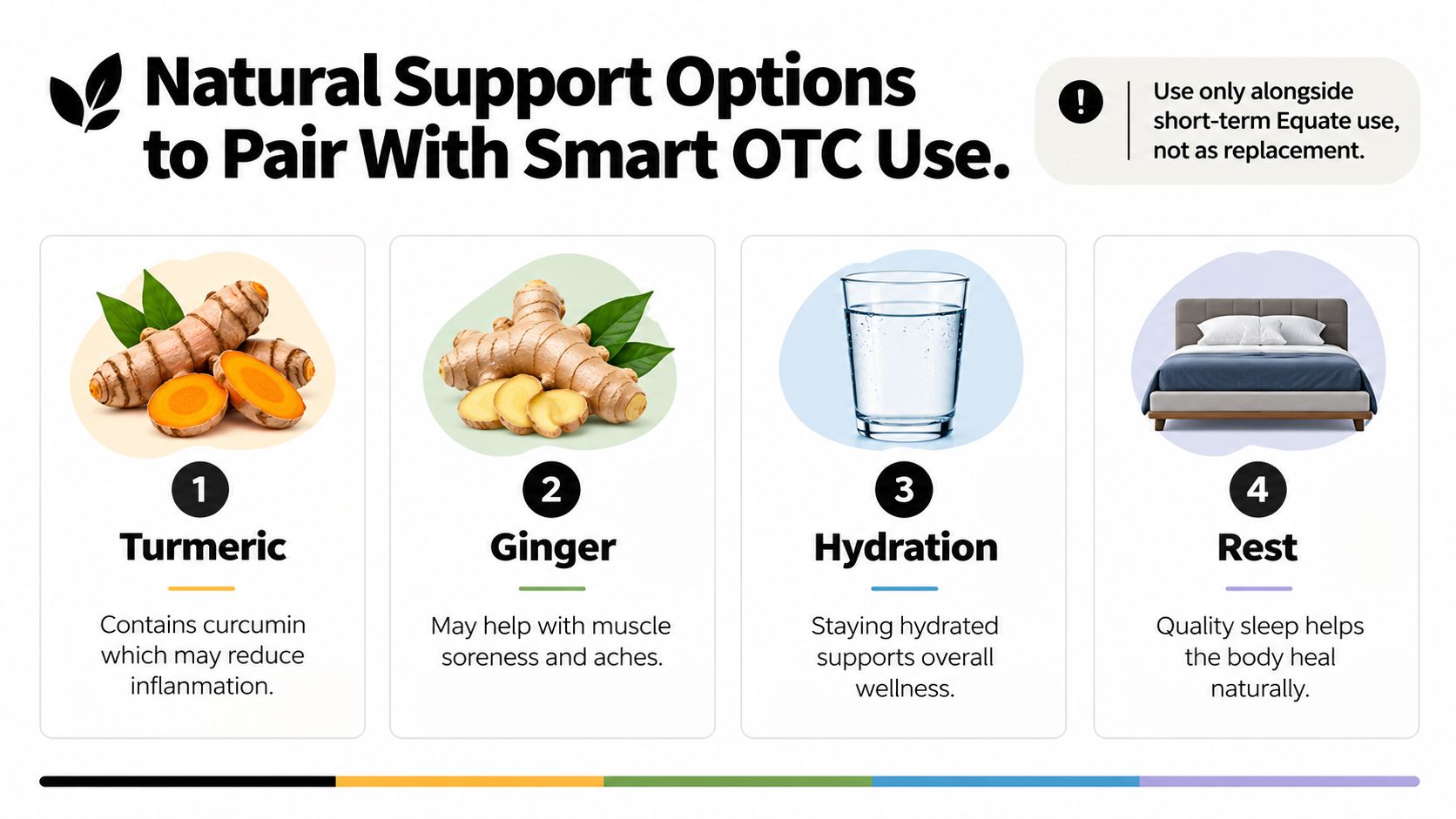
Daily habits can be just as relevant as an ingredient list. Drink enough fluid for your normal needs, protect your sleep routine, use a warm shower or compress for tightness, and take brief movement breaks if sitting contributes to the ache. If you choose a combination supplement, River of Life Capsules is one example of a vegan capsule formula containing turmeric extract with BioPerine, ashwagandha root, ginger, and bromelain. Tell your clinician about it or any other supplement before combining it with medicines.
A Simple Playbook for Safer Everyday Pain Relief
You are tired, your head hurts, and the bottle is already in your hand. Use this quick check before taking a caplet:
Read the front and back. Confirm that the active ingredient is acetaminophen and that each caplet contains 500 mg, as shown on the DailyMed label.
Follow this package's directions. For adults and children 12 years and older, the label says 2 caplets every 6 hours, with no more than 6 caplets in 24 hours unless a doctor directs otherwise.
Count every source. Review cold and flu remedies, prescription pain medicines, and products labeled APAP. Stacking acetaminophen can raise the risk of liver toxicity before you realize how much you have taken.
Pause and ask first if you have liver disease, drink alcohol regularly or heavily, are older, have poor nutrition, or use warfarin, isoniazid, seizure medicines, or supplements. A pharmacist can check the combination.
Support comfort in other ways. Heat or cold, gentle movement, stretching, hydration, rest, and sleep may fit alongside appropriate OTC use.
Treat ongoing symptoms as a signal. Pain lasting more than 10 days, fever beyond 3 days, worsening symptoms, swelling, confusion, or vomiting calls for medical advice instead of continued self-treatment.
The practical goal is a visible total acetaminophen amount and a clear limit for self-care. Turmeric, ashwagandha, ginger, and bromelain may enter a supplement discussion, but they do not replace label directions or an interaction check.
River of Life offers educational resources and a capsule formula featuring turmeric, BioPerine, ashwagandha, ginger, and bromelain. Visit River of Life to review the formulation, then speak with a pharmacist or clinician before adding it to your medication routine.