

Supplements for Hormone Balance: What the Evidence Actually

“Balance your hormones” sounds reassuring, but it isn't a useful treatment plan. Hormones don't form one uniform pool that a capsule can gently level out. Cortisol, thyroid hormones, insulin, estrogen, progesterone, and testosterone operate through different pathways, and the same symptom can arise from very different causes.
That's why the most credible approach to supplements for hormone balance starts with the driver, not the label. Stress-related sleep disruption calls for a different strategy than PCOS-related insulin resistance, thyroid disease, or menopausal symptoms. The goal isn't to make every hormone “normal” with one blend. It's to choose a mechanism, set a realistic expectation, and avoid treating an undiagnosed condition with guesswork.
Table of Contents
Why Most Hormone Balance Claims Miss the Mark
Generic hormone-balance marketing usually bundles unrelated complaints, including fatigue, acne, poor sleep, mood changes, irregular cycles, weight changes, and low libido. That list is broad enough to describe stress, inadequate nutrition, medication effects, thyroid dysfunction, PCOS, perimenopause, or several conditions at once.
A supplement can support a pathway without correcting the underlying diagnosis. Ashwagandha, for example, has its clearest human signal around stress-related endocrine activity, while inositol is more directly relevant to metabolic and reproductive outcomes in PCOS. Those are not interchangeable uses, even though both may appear on the same “hormone balance” list.
Start with the likely driver
A practical first screen looks like this:
Stress and sleep disruption: Consider whether persistent pressure, poor sleep continuity, or irritability point toward the stress-response system.
Irregular cycles, acne, or unwanted hair growth: These may justify clinical assessment for PCOS or another reproductive-endocrine issue.
Cold intolerance, constipation, or marked fatigue: Thyroid evaluation is more appropriate than automatically adding a thyroid-support blend.
Hot flashes, cycle changes, or vaginal symptoms: Perimenopause and menopause require life-stage-specific discussion, not a generic promise to restore youthful hormone levels.
Changes after starting medication: Medication effects belong in a conversation with the prescribing clinician.
Practical rule: Match the ingredient to a measurable pathway or a clearly defined symptom goal. Don't buy a formula simply because its label lists every hormone you've heard of.
Women are a major consumer audience for this category, but popularity doesn't prove that a product works for every complaint. The Australian Bureau of Statistics dietary supplements release reports that supplement use is common among adults and higher among adult females than adult males. The historical NCBI Bookshelf review of supplement use also describes longstanding routine use among women, which helps explain why the market is crowded.
The evidence is more selective than the marketing. A major systematic review on ashwagandha and hormonal modulation included 23 trials and 1,706 patients, yet its findings varied by pathway and sex. That's the central lesson: a broad evidence base can still produce narrow conclusions.
How Your Hormone System Works
The endocrine system operates through separate but interacting pathways. Each axis has its own signals, yet changes in one pathway can affect another. A supplement that influences the stress response may support sleep or perceived resilience without directly changing estrogen. An ingredient that supports insulin signaling may affect reproductive symptoms indirectly.
The HPA axis and stress response
The hypothalamic-pituitary-adrenal axis, or HPA axis, coordinates the body's response to stress. The brain signals the adrenal glands, which produce cortisol and other stress-related hormones. Cortisol follows a daily rhythm and interacts with sleep, mood, immune activity, and energy regulation.
Persistent stress does not mean cortisol remains “high” all day. A more useful clinical question is whether stress, poor sleep, and recovery demands are disrupting that normal pattern. Adaptogenic herbs such as ashwagandha are generally discussed in this context. They are better understood as pathway modulators than universal hormone balancers. For a focused explanation of this area, see adrenal support supplements.
The HPT axis and thyroid control
The hypothalamic-pituitary-thyroid axis, or HPT axis, regulates thyroid hormone production. The pituitary releases thyroid-stimulating hormone, or TSH, which signals the thyroid gland to produce thyroid hormones, including T4 and T3. Feedback helps keep the system within an appropriate range.
A supplement marketed for thyroid support should not replace clinical treatment for hypothyroidism. If symptoms suggest thyroid dysfunction, laboratory assessment and clinical interpretation should come before experimentation. Products that affect thyroid-related markers may also complicate treatment or make symptoms harder to interpret.
The HPG axis and reproductive hormones
The hypothalamic-pituitary-gonadal axis, or HPG axis, coordinates reproductive hormones. Depending on sex and life stage, it involves ovarian or testicular hormone production, including estrogen, progesterone, and testosterone. Menstrual cycling, fertility, libido, and reproductive transitions depend on communication across this axis.
Insulin has its own metabolic role and can influence each of these hormonal pathways. In PCOS, insulin resistance may contribute to increased ovarian androgen production and cycle irregularity. An ingredient aimed at insulin sensitivity may therefore be more relevant than a product claiming to directly “balance” ovarian hormones.
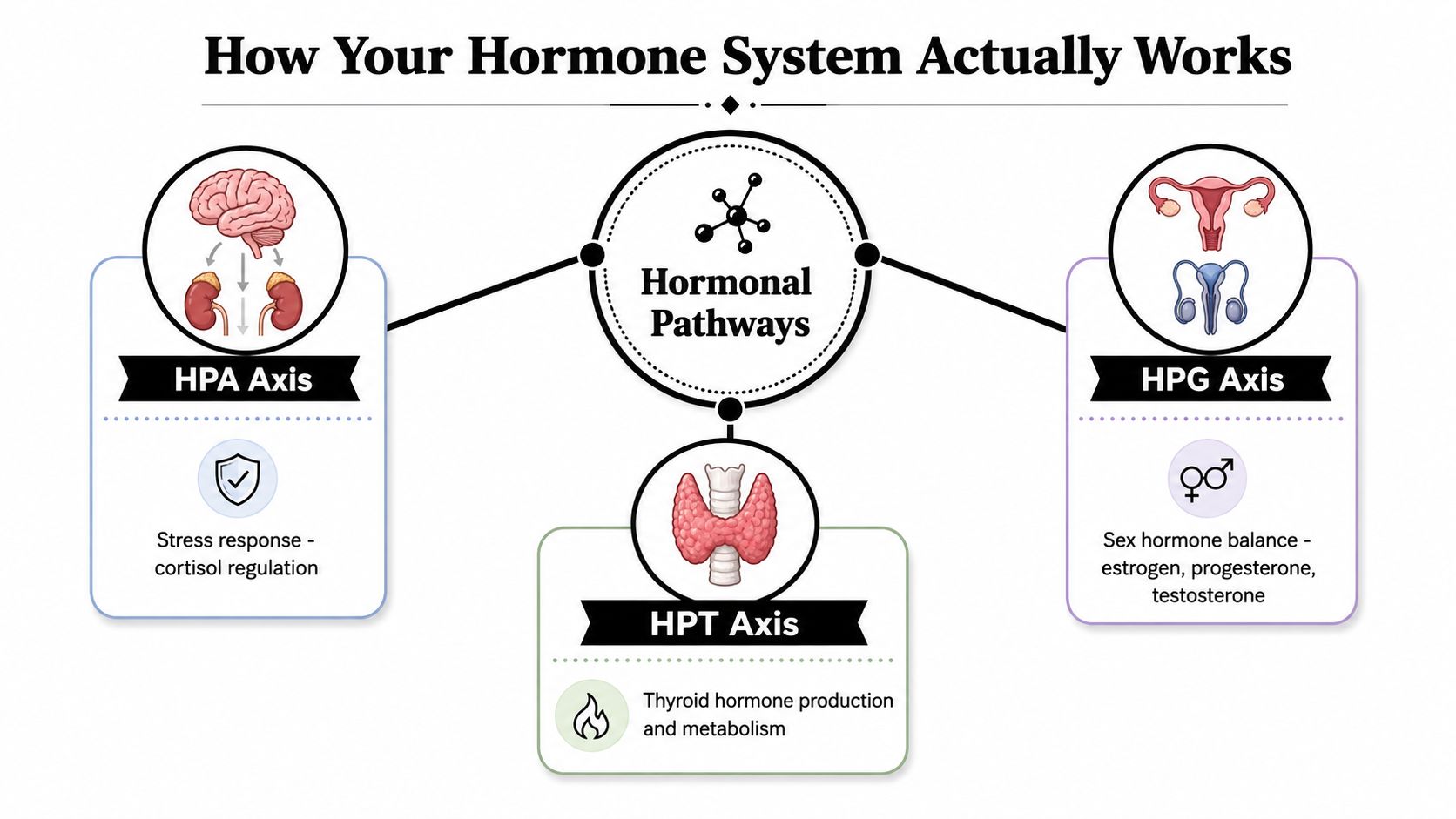
This pathway model makes supplement selection more rational. Ashwagandha fits most naturally into a stress-axis discussion, inositol into a PCOS and metabolic discussion, and vitamin D or magnesium into a broader nutritional plan when a person's needs justify them. Multi-ingredient products such as River of Life may fit that plan, but their value depends on whether the formula addresses a defined pathway rather than listing many hormone-related ingredients.
The Best-Supported Supplements and What They Do
The strongest supplement is usually the one matched to a defined problem. Some ingredients have human evidence for a specific pathway, while others remain popular because they sound compatible with “hormone wellness.” A long ingredient panel does not compensate for an unclear target.
Ashwagandha
Ashwagandha has the clearest role here as an HPA-axis modulator. In the systematic review linked above, it significantly reduced cortisol, with an SMD of -1.18 and p < 0.04, and increased serotonin, with an MD of 31.75 ng/ml and p < 0.01. It also produced a modest T4 increase, with an MD of 0.61 µg/dL and p = 0.02, but showed no effect on TSH or T3. Those findings support a selective effect on stress-related and some thyroid markers, not broad endocrine correction.
The same review reported that testosterone increased in men by 57.43 ng/dl, but not in women, where the reported increase was 5.09 ng/dl. It found no effect on estradiol in either sex. Set the expectation accordingly: ashwagandha may support stress regulation and recovery, but it is not a general reproductive-hormone normalizer. People with thyroid conditions or medication use should review it with a clinician before starting. For a closer look at its stress-related use, see adaptogens for anxiety.
Inositol
Inositol is a more targeted choice for people with PCOS features, especially when insulin resistance and ovulatory dysfunction are part of the presentation. Its role is metabolic and reproductive. It should not be marketed as a generalized hormone reset.
A 2025 systematic review of supplements used alongside PCOS care discusses inositol and other ingredients in relation to metabolic and reproductive health. That makes it a better fit for a defined PCOS-related goal than for nonspecific fatigue, mood changes, or cycle concerns without further assessment.
Magnesium and omega-3 fatty acids
Magnesium makes the most sense when the goal involves dietary adequacy, muscle function, sleep support, or premenstrual symptoms. It is not a universal progesterone booster. Form, amount, kidney health, medications, diet, and gastrointestinal tolerance all affect whether supplementation is appropriate.
Omega-3 fatty acids are better framed around inflammation, cardiometabolic health, and mood-related support than direct hormone balancing. They may help when those aims overlap with menstrual discomfort or general wellness, but persistent or severe symptoms still require evaluation rather than substitution with a supplement.
Vitamin D, vitex, DIM, and probiotics
Vitamin D can matter when intake or status is inadequate and may intersect with reproductive and thyroid health. Testing provides a better basis for use than assuming everyone needs a high-dose product.
Vitex, or chasteberry, is commonly chosen for cyclical premenstrual concerns and possible luteal-phase support. Vitex affects prolactin and luteal-phase signaling. It interacts with hormonal contraception and fertility medications, so review both before use.
DIM alters estrogen metabolism pathways. More estrogen clearance is not automatically better, and DIM is not appropriate for patients on tamoxifen or other estrogen-modulating drugs.
Probiotics may support gut health, which can influence hormone metabolism, but the strain and intended outcome determine whether a product is relevant. A generic probiotic should not be presented as a guaranteed estrogen-balancing intervention.
Supplement | Primary pathway | Evidence strength | Best fit |
|---|---|---|---|
Ashwagandha | HPA axis and stress response | Human evidence, selective endocrine effects | Stress-linked sleep and resilience concerns |
Inositol | Insulin signaling and ovarian function | Targeted PCOS evidence | PCOS-related metabolic and cycle concerns |
Magnesium | Nutritional, neuromuscular, and stress-related support | Context-dependent | Sleep, dietary insufficiency, and premenstrual symptoms |
Omega-3 fatty acids | Inflammation and cardiometabolic support | Goal-dependent | Inflammatory or general metabolic support |
Vitamin D | Nutritional and reproductive support | Strongest when deficiency is present | Low status and broader health needs |
Vitex | Reproductive signaling | Specific but not universal | Selected cyclical symptoms |
DIM | Estrogen metabolism | More limited and context-specific | Clinician-guided, individualized use |
Probiotics | Gut ecosystem and hormone metabolism | Strain- and outcome-dependent | Gut health with a defined rationale |
A multi-ingredient formula such as River of Life can fit a broader plan when its ingredients match the person's identified goals. Once you have identified the right ingredient for that goal, the next question is how to build and time the regimen.
Dosing, Timing, and Building a Smart Supplement Stack
A sensible supplement plan starts with fewer variables. If you begin five products at once, you won't know which one helped, which caused a side effect, or whether the improvement came from a lifestyle change happening at the same time.
Build the stack in layers
Define one primary goal. Choose stress resilience, sleep support, PCOS-related metabolic support, premenstrual symptoms, or another specific outcome.
Check the label. Prefer standardized botanical extracts that disclose active compounds, such as defined withanolide content for ashwagandha, rather than relying only on raw herb weight.
Start with one change. Keep the rest of your routine stable long enough to observe tolerance and response.
Add only a justified second ingredient. For example, a person addressing PCOS-related insulin concerns might evaluate inositol separately from an ashwagandha product aimed at stress.
Track the outcome. Record sleep quality, cycle patterns, mood, energy, gastrointestinal tolerance, and any symptom that prompted the purchase.
Timing should serve tolerance
Many calming products fit better later in the day, while supplements that feel activating may work better earlier. Fat-soluble nutrients are generally easier to tolerate with a meal containing fat, while other products can be taken according to label instructions and personal digestion.
There's no universal morning or evening schedule for every ingredient. Consistency and tolerability matter more than forcing a routine that disrupts sleep or causes nausea.

Multi-ingredient formulas can simplify a foundational routine when their ingredients have complementary purposes. A capsule combining ashwagandha with turmeric, ginger, bromelain, and BioPerine, for example, may be positioned around stress resilience, inflammation, and recovery rather than as a precise treatment for PCOS or thyroid disease. That distinction protects the user from expecting a general wellness formula to perform the job of a targeted intervention.
Standardized extracts also make comparison easier. A transparent label tells you what you're taking, while a proprietary blend can make it difficult to assess whether the formula matches your goal.
Sex-Specific and Life-Stage Considerations
Hormone support cannot be separated from sex, reproductive status, and life stage. Menstrual cycling, pregnancy, perimenopause, menopause, and postmenopause each change the context in which symptoms should be interpreted. Men may be more concerned about testosterone, recovery, libido, or cortisol, but those concerns still require attention to sleep, energy balance, medications, and medical conditions.
The ashwagandha findings illustrate why sex-specific interpretation matters. The systematic review found a testosterone increase in men, but not in women, and no estradiol effect in either sex. A marketing page that turns this into “raises hormones” erases the most important part of the evidence, which is that the result differed by hormone and by sex.
Women's life stages need different questions
During the reproductive years, irregular cycles, acne, or androgen-related symptoms may point toward PCOS or another condition. In that setting, inositol may be more logically matched to the mechanism than a broad estrogen-support blend. The PCOS review also identifies potential roles for ingredients such as curcumin, chromium, selenium, vitamins D and E, and probiotics, but potential benefit doesn't mean every person needs every ingredient.
Perimenopause brings fluctuating symptoms rather than a single stable deficiency. Sleep disturbance, hot flashes, mood changes, and cycle changes can overlap with thyroid disease, medication effects, anxiety, or other health issues. Menopause treatment decisions are increasingly individualized by age, symptom type, formulation, route, dose, and timing, as discussed in recent medical commentary on changing menopause treatment guidance.
Men aren't simply the same protocol with different packaging
Men's hormone concerns often center on testosterone, stress, sleep, body composition, and recovery. That doesn't justify assuming that any testosterone-marketed product will work. A person with fatigue may need assessment for sleep disorders, thyroid problems, depression, under-fueling, medication effects, or other causes before trying an adaptogen.
The best formula is therefore not “for women” or “for men” in the abstract. It's the one that matches the person's physiology, life stage, symptoms, and measurable goal.
Safety, Interactions, and When to See a Clinician
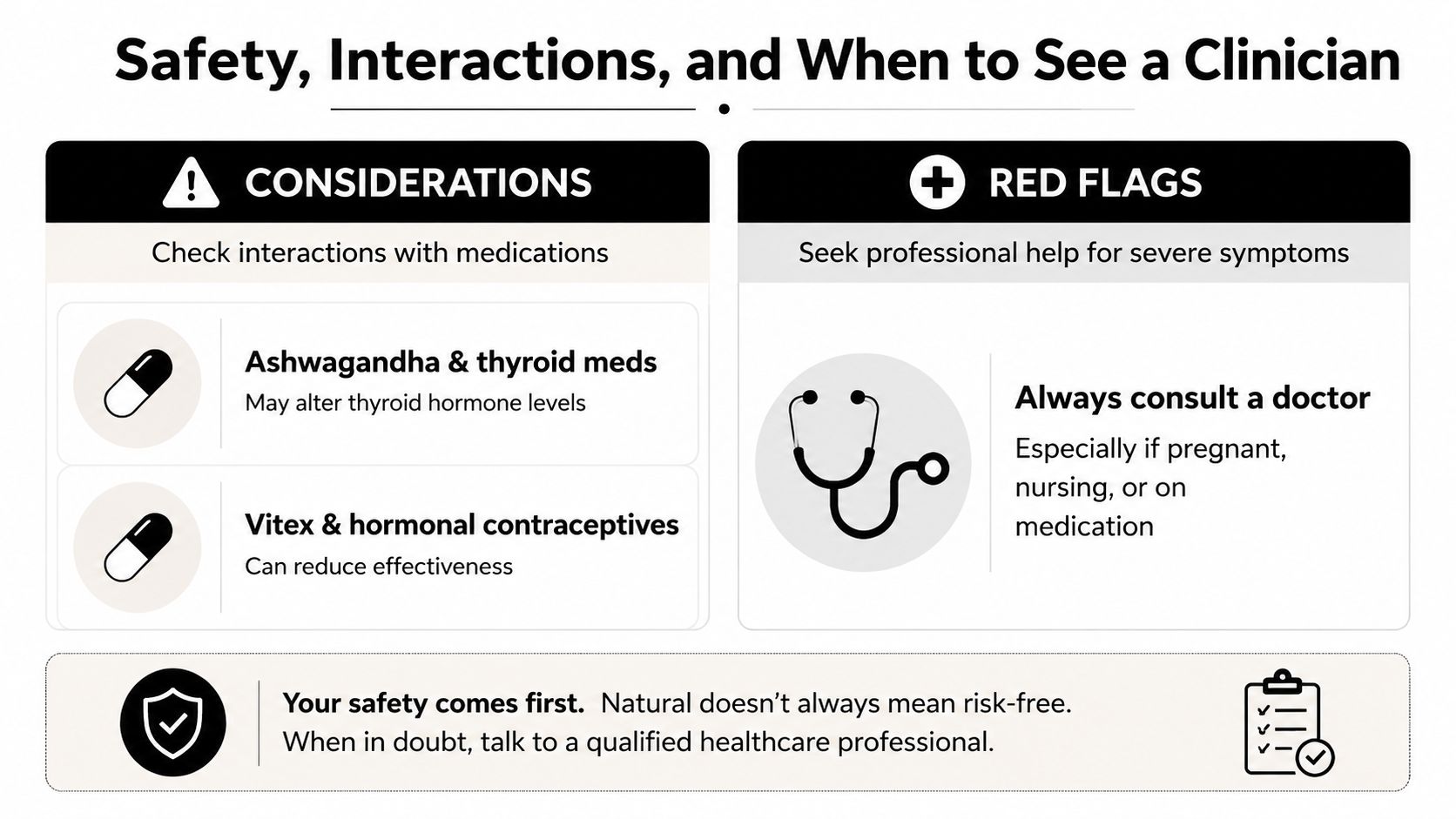
Treat supplements as biologically active products. “Natural” does not mean inert. Ingredients that affect thyroid activity, neurotransmission, estrogen metabolism, or blood glucose can alter the effects of prescription medicines or create new risks when combined.
Ashwagandha warrants particular caution with thyroid disease or thyroid medication. Available evidence includes a change in T4, although the review found no effect on TSH or T3. Vitex may be unsuitable with hormonal contraception or fertility treatment, while DIM may conflict with estrogen-modulating medication. These concerns do not rule out every supplement. They make a medication and health-history review with a pharmacist or clinician a sensible first step.
Test when symptoms point to a condition
Seek clinical guidance before self-treatment if you have:
Persistent or severe fatigue: Ask whether thyroid testing, anemia evaluation, sleep assessment, or another workup is appropriate.
Marked cycle irregularity or androgen symptoms: Discuss PCOS assessment and metabolic markers instead of assuming estrogen imbalance.
New palpitations, tremor, or heat intolerance: Get evaluated before using products marketed for thyroid or energy support.
Unexpected bleeding or severe pelvic symptoms: Do not mask the problem with a menstrual-support blend.
Pregnancy, breastfeeding, or prescription medication use: Review every ingredient before starting a new product.
Changing several supplements before lab testing can also make results harder to interpret. Give the clinician a complete list, including herbs, powders, gummies, and combination formulas. For a focused review, read this guide to ashwagandha interactions.
Use a conservative process: test when indicated, start one variable, track symptoms, and reassess after an appropriate trial window, often 8 to 12 weeks for a hormonal goal. If nothing meaningful changes, stop adding products indefinitely. Reconsider the diagnosis and whether the supplement matches the suspected mechanism. Multi-ingredient formulas can fit a broader plan, but only when each ingredient has a clear purpose and its interactions have been checked.
Lifestyle Foundations That Make Supplements Work
A patient can take a carefully selected supplement and still feel unwell if sleep remains fragmented, meals are inconsistent, and stress never falls. The supplement may be addressing one pathway while daily habits keep activating another.
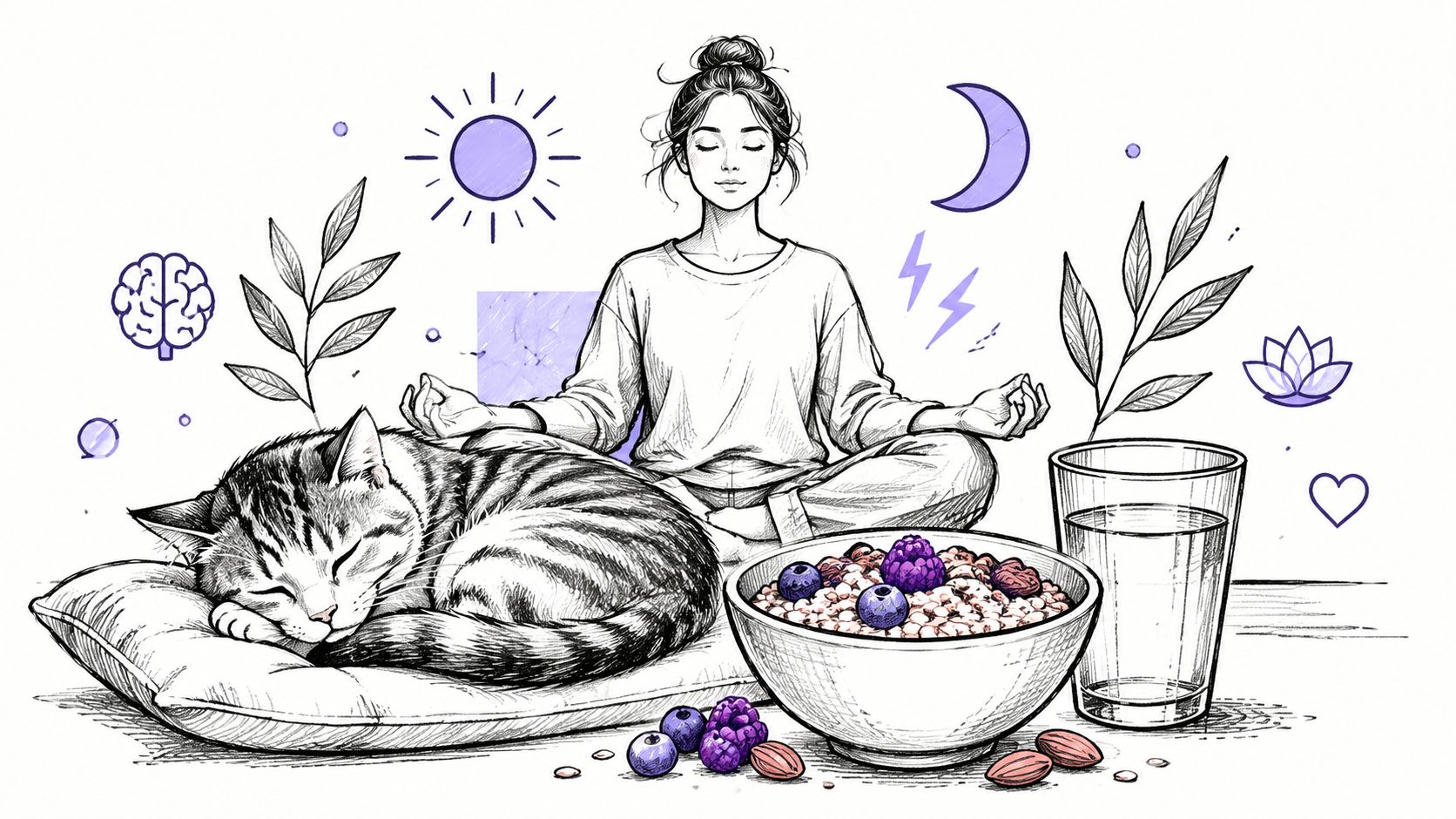
Sleep is the first foundation I'd examine. Irregular sleep can worsen perceived stress, appetite regulation, mood, and recovery, making it difficult to judge whether an adaptogen is helping. A consistent sleep schedule, morning light exposure, a calmer evening routine, and treatment for suspected sleep disorders often provide a stronger base than another capsule.
Movement supports the metabolic side of the picture. Resistance training helps preserve muscle, while regular walking can make daily activity more consistent. For someone with PCOS-related metabolic concerns, these habits complement rather than compete with a targeted supplement strategy. For someone focused on testosterone or recovery, under-eating and excessive training can undermine the goal.
Food supplies the raw materials and signals that hormonal systems need. Prioritize adequate protein, fiber-rich plants, healthy fats, and regular meals that support stable energy. Correcting a genuine nutrient gap is more rational than taking a high-dose formula because its marketing mentions multiple hormones.
Use the following video as a practical reminder that stress regulation is a daily behavior, not only an ingredient category:
A foundational multi-ingredient capsule can fit into this plan when its purpose is stated transparently. A formula containing ashwagandha, turmeric, ginger, bromelain, and BioPerine may support a broader routine around stress resilience, inflammation management, recovery, and sleep quality. It still won't diagnose PCOS, replace thyroid treatment, or provide a universal solution for menopausal symptoms.
The most useful question isn't “Which supplement balances hormones?” Ask instead, “What pathway is most likely involved, what outcome will I track, and what will I do if the plan doesn't work?”
River of Life offers a vegan capsule formula combining standardized turmeric extract with BioPerine, ashwagandha root, ginger, and bromelain for a broader wellness routine focused on stress resilience, recovery, sleep quality, and everyday comfort. Visit River of Life to review the formulation and choose a one-time or subscription option that fits your routine.