
Adaptogens for Anxiety: Science & Safe Supplements

Your mind feels busy before your feet hit the floor. You wake up tired, your chest feels tight, your patience is thinner than it used to be, and small problems land like big ones. By afternoon, you're running on caffeine and willpower. By night, you're exhausted but still wired.
That's usually when people start looking for something natural that might help. Not something that knocks them out. Not another short-term coping trick. They want steadier nerves, better stress tolerance, and a little more room to breathe.
That's where adaptogens come in. They're often described as calming herbs, but that description is too simple. The better way to think about them is this. They help your body practice handling stress better. They don't sedate your nervous system on command. They help train it over time.
If you've been curious about adaptogens for anxiety, it helps to know two things up front. First, some have meaningful human data behind them. Second, they aren't a cure-all, and they aren't right for every person in every phase of stress. If your system is depleted, overstimulated, or medically complicated, the same herb that helps one person can feel off for another.
Table of Contents
Feeling Overwhelmed? An Introduction to Adaptogens
The search for adaptogens typically doesn't begin on a good day. It starts when stress has become a normal setting. Individuals are getting through work, family, errands, and responsibilities, but the cost is showing up as irritability, shallow sleep, tension, and a nervous system that never seems to power down.
In practice, I find that many people want the same thing. They don't just want to feel less anxious for an hour. They want to become less reactive overall. That's a different goal. It calls for a different kind of tool.
Adaptogens are herbs used to support stress resilience. That's the key phrase. They aren't a quick sedative. They don't erase the source of stress. What they may do is help your body respond to stress with less wear and tear over time.
If you've seen them framed as miracle cures, keep your guard up. Good adaptogen use is usually boring in the best way. It's consistent. It's measured. And it works best when the person using it also respects sleep, nutrition, and recovery.
Adaptogens make more sense when you stop expecting an instant calming effect and start thinking in terms of nervous system training.
If you're new to the category, this practical look at the rise of adaptogens and ashwagandha is a useful starting point. The important part is to approach these herbs with realistic expectations. The right one can be helpful. The wrong one, or the right one used poorly, can leave you disappointed or overstimulated.
What Are Adaptogens and How Do They Work
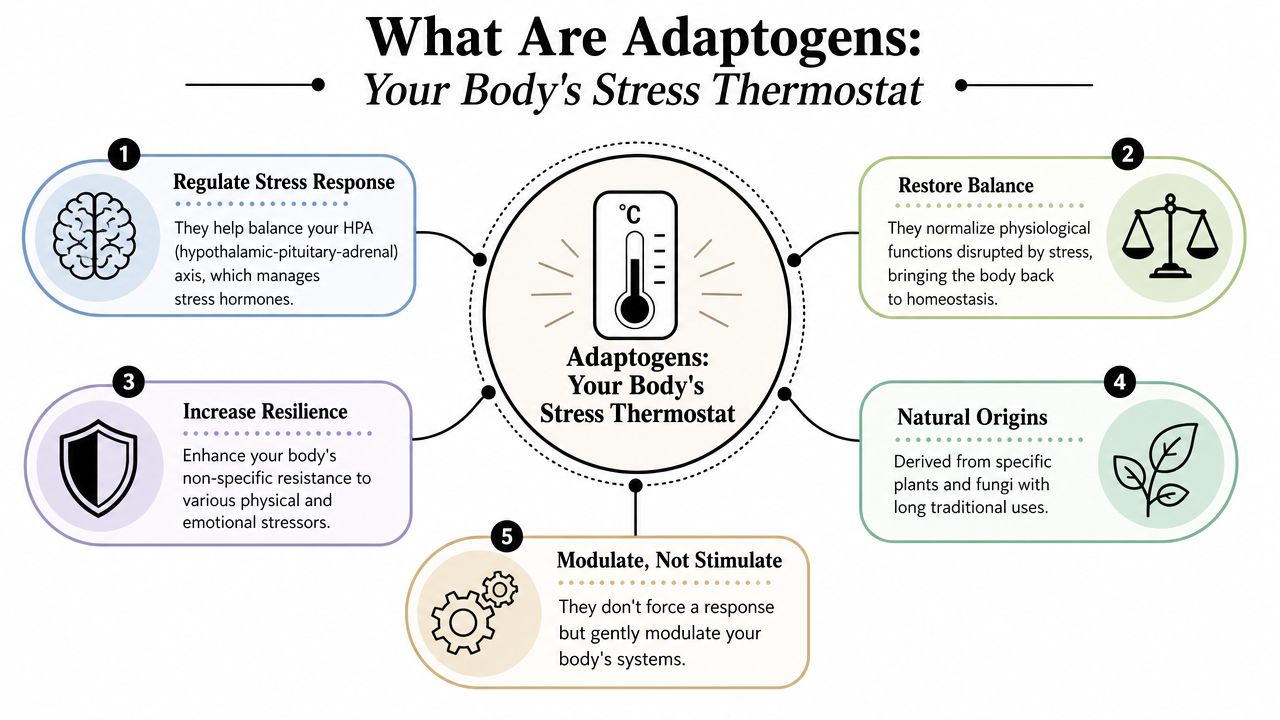
Adaptogens are best understood as regulators, not blunt-force relaxants. They work through the body's stress-response network, especially the HPA axis, which stands for the hypothalamic-pituitary-adrenal axis. That system helps control how you react to stress, how much cortisol you release, and how quickly you recover after pressure hits.
A thermostat, not a tranquilizer
The easiest analogy is a thermostat. A good thermostat doesn't just shut the system off. It senses when things are too high or too low and helps move the system back toward balance.
That's how adaptogens are often used. Not to force your body in one direction, but to help it regulate more appropriately. If stress has your system running hot, the goal is better control, not numbness.
This is why people sometimes get confused by their effects. They expect a sleep-medication feeling and instead notice something subtler. Less shakiness under pressure. Better recovery after stressful days. More emotional steadiness. Better focus when stress would usually scatter attention.
The mechanism paradox
Here's the nuance many articles skip. Adaptogens act as stress-mimetics, which means they mildly activate the stress system as part of how they build resilience. That mild signal can help the body adapt. But in a person with a very dysregulated HPA axis, that same effect can feel like too much.
According to this clinical discussion of adaptogens and mental health, adaptogens can paradoxically aggravate anxiety in some people with existing HPA axis dysregulation, and this may be especially relevant for the estimated 20% of adults with chronic stress who may have exhausted adrenal reserves.
That doesn't mean adaptogens are bad for anxiety. It means context matters.
A few practical signs that an herb may be too stimulating for you, at least right now:
You feel more wired than calm: Your thoughts race more, not less.
Your body feels activated: You notice palpitations, restlessness, or irritability.
Sleep gets worse: You're more tired but less able to settle.
The dose looked reasonable on paper, but not in your body: This happens often enough that starting low makes sense.
Practical rule: If an adaptogen makes you feel speedier, tenser, or less grounded, don't force it. Reassess the herb, the dose, the timing, or whether your body needs recovery before stimulation.
The Science of Adaptogens and Anxiety Relief
When adaptogens help anxiety, they usually do it through stress regulation rather than sedation. That distinction matters because anxious people often need better stress handling during the day, not just a way to switch off at night.
Why cortisol matters
Cortisol isn't the enemy. It's a stress hormone you need. The problem starts when the pattern is off. Too much stress signaling can leave you tense, reactive, and mentally frayed. Poor regulation can also leave you feeling wrung out and edgy at the same time.
The strongest human evidence in this category is for ashwagandha. A 2019 randomized controlled trial summarized here found that 600 mg of standardized ashwagandha extract daily significantly reduced perceived stress by 44% and lowered morning cortisol by 27.9% over eight weeks. The same summary notes that anxiety symptoms on the GAD-7 improved significantly, with a 31% greater reduction than placebo.
That tells us something useful in clinic terms. When stress chemistry becomes more stable, people often feel less on edge, less overwhelmed, and less likely to spiral from a manageable stressor into a full anxious cascade.
Mood, focus, and mental stamina
Cortisol isn't the whole story. Some adaptogens also influence neurotransmitter systems involved in mood and focus. Rhodiola rosea, for example, has been described as supporting mental and physical fatigue by boosting ATP production in mitochondria and influencing serotonin and norepinephrine pathways, as noted in this review of adaptogenic plants.
That mechanism fits what many people want from adaptogens for anxiety. Not only fewer stress surges, but a cleaner mental state under pressure. Better stamina. Less “fried but functional.”
A helpful way to think about the science is this:
Biological target | What it may support in real life |
|---|---|
Cortisol regulation | Less stress reactivity, steadier energy, fewer peaks and crashes |
Serotonin and norepinephrine pathways | Better mood regulation and mental focus under stress |
Cellular energy support | Less stress-related fatigue and burnout feeling |
The best results usually don't feel dramatic. They feel like you're handling your life with less internal friction.
A Guide to the Best Adaptogens for Anxiety
Not all adaptogens do the same job. Some fit a tense, overthinking pattern better. Others are more useful when stress shows up as exhaustion, brain fog, or pressure-related fatigue. When considering adaptogens for anxiety, I typically start by matching the herb to the symptom pattern.
Ashwagandha
Ashwagandha has the strongest human trial data for stress-related anxiety. That's why it gets the most attention.
A review and meta-analysis of 12 clinical studies involving over 1,000 adults found that ashwagandha significantly reduced anxiety and stress scores with a standardized mean difference of -0.58, which indicates a moderate therapeutic effect. That same analysis reported that benefits typically emerge after 30 to 60 days of consistent use, with 75% of participants reporting measurable reductions in anxiety symptoms by the 60-day mark. The same source also describes a smaller pilot study in generalized anxiety disorder in which 340 mg daily for 10 weeks led to a 24% reduction in anxiety symptoms.
What I like about ashwagandha is that it often suits the person who feels both mentally overactivated and physically depleted. They're tired, but not restful. Drained, but still tense.
When choosing it, pay attention to the extract. The best-supported trial used standardized ashwagandha extract containing 5% withanolides at 600 mg daily. That's more useful than vague labels that only say “ashwagandha blend.”
A few practical notes:
Best fit: Stress-related anxiety, constant mental tension, feeling “on” all day.
What doesn't work well: Random use. Taking it for two days, stopping, then deciding it failed.
What to watch: If you feel more activated instead of calmer, reassess.
If you want a product-focused breakdown, this guide to ashwagandha for stress and anxiety explains what to look for in more detail.
Rhodiola rosea
Rhodiola is a different tool. I think of it as the adaptogen for the person whose anxiety is tangled up with fatigue, low resilience, and mental drag. They're not just worried. They're worn down.
Its appeal lies in that fatigue-stress overlap. The available review literature describes Rhodiola as helping with mental and physical fatigue through effects on cellular energy and mood-related neurotransmitter pathways. In practice, that can make it appealing for stress that feels heavy, foggy, or performance-sapping.
It's usually a poorer fit for someone who already feels overstimulated, jittery, and unable to settle. Those people often need a steadier hand.
Holy basil
Holy basil, also called tulsi, has a long traditional reputation as a calming and clarifying herb. It's often chosen by people who want a gentler herbal option and who resonate with the idea of daily nervous system support rather than a stronger push.
I reach for holy basil conceptually when someone says, “I feel emotionally cluttered.” It may fit the person who gets stress tension, mild agitation, or that scattered feeling where their brain has too many tabs open.
The key caveat is evidence strength. Compared with ashwagandha, the human anxiety data discussed here is much thinner. So I describe holy basil as promising and often well-liked, but not the first herb I'd call best-supported for anxiety symptoms.
Adaptogen comparison for anxiety symptoms
Adaptogen | Primary Use Case | Best For | Feeling |
|---|---|---|---|
Ashwagandha | Stress-related anxiety with persistent tension | People who feel wired and worn down at the same time | Grounding, steadying |
Rhodiola rosea | Stress linked to mental and physical fatigue | People with burnout-style stress and brain fog | Brighter, more resilient |
Holy basil | Gentle daily stress support | People who want a softer, traditional herbal approach | Centering, clarifying |
How to Choose and Use Adaptogens Safely
Choosing the right herb matters. Choosing the right product matters just as much. A good adaptogen can underperform, or cause problems, when the extract is sloppy, the dose is too aggressive, or the timing makes no sense for your symptoms.
What to look for on the label
The first thing I check is standardization. That tells you the product has a defined amount of active compounds, rather than an unclear powder with unpredictable strength.
For ashwagandha, that matters a lot because the better clinical data used a standardized extract with 5% withanolides. If the label only says “ashwagandha root” with no standardization, you know much less about what you're getting.
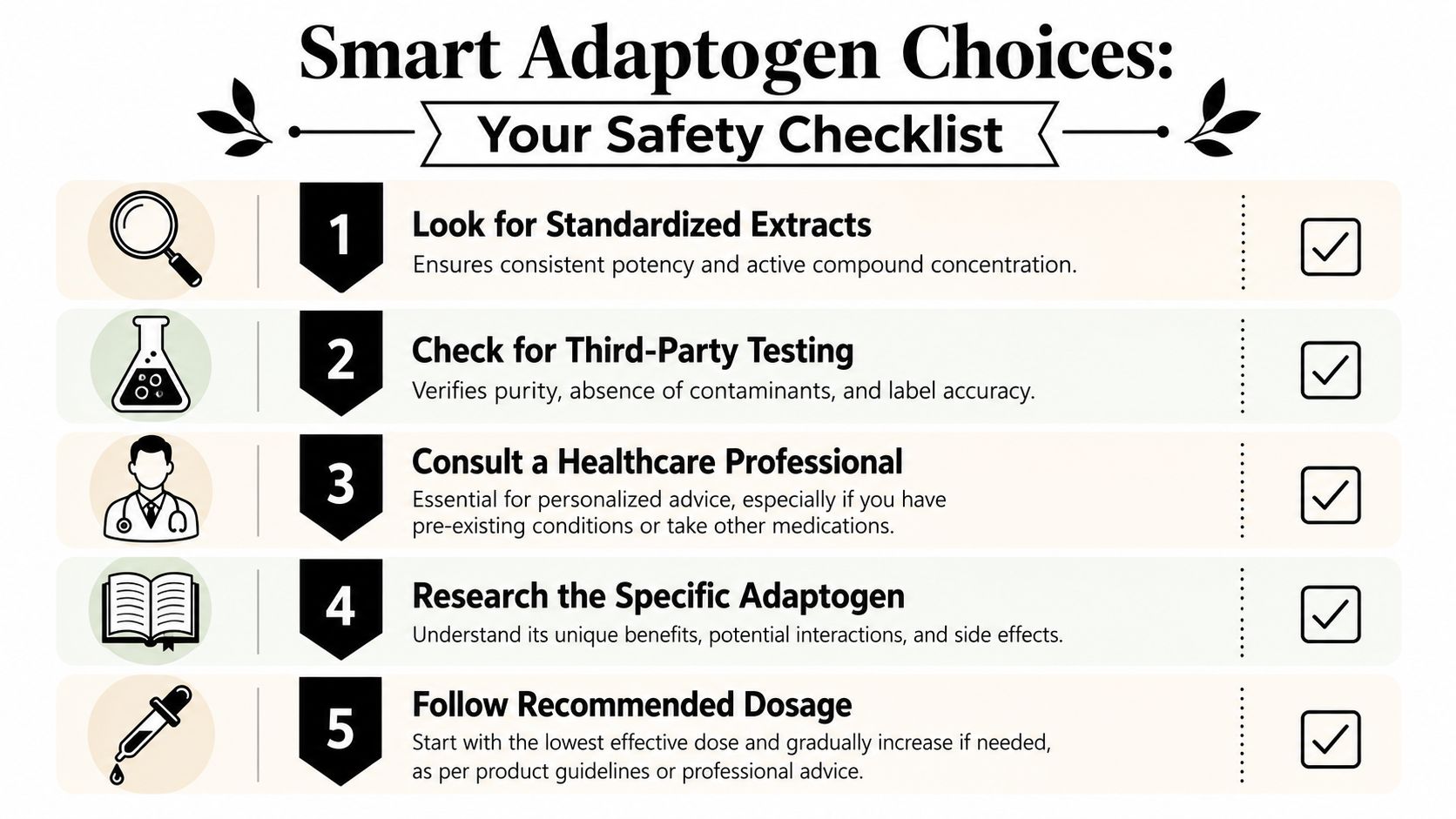
I'd also look for these basics:
Third-party testing: You want some evidence of purity and label accuracy.
Clear dosing instructions: Vague “take as needed” language isn't good enough.
Simple formulas when you're starting: If you react badly, you'll want to know which ingredient caused it.
Absorption support where relevant: Some formulations use ingredients such as black pepper extract to improve uptake of certain botanicals.
This short video gives a useful overview before you buy:
If you're concerned about combining herbs with prescriptions or existing conditions, this overview of ashwagandha interactions is worth reading before you start.
How to start without overdoing it
Often, people run into difficulty. They read that an herb helps stress, take a full dose immediately, combine two or three products, and then can't tell whether they're improving or just activated.
A safer approach looks like this:
Start with one adaptogen only. Don't stack products on day one.
Begin low. If your system is sensitive, lower is smarter.
Take notes. Track energy, mood, sleep, irritability, and body sensations.
Respect timing. A more activating herb may not belong late in the day.
Cycle use. Evidence discussed in the adaptogen literature suggests these herbs may work best for short durations of less than six months, with cyclical use helping maintain effect, as described in the earlier linked review on Rhodiola and adaptogens.
If an herb helps anxiety but worsens sleep, that's not a clean win. The plan needs adjustment.
There's also a practical safety issue with Rhodiola. Because it may feel more energizing, it can be a poor bedtime choice for some people. Good herb selection is less about popularity and more about fit.
Beyond Supplements Holistic Strategies to Calm Your Mind
Adaptogens work best when they join a system that already supports recovery. If your days are fueled by missed meals, poor sleep, constant stimulation, and no physical decompression, even the best herb has to fight uphill.
Build a calmer baseline
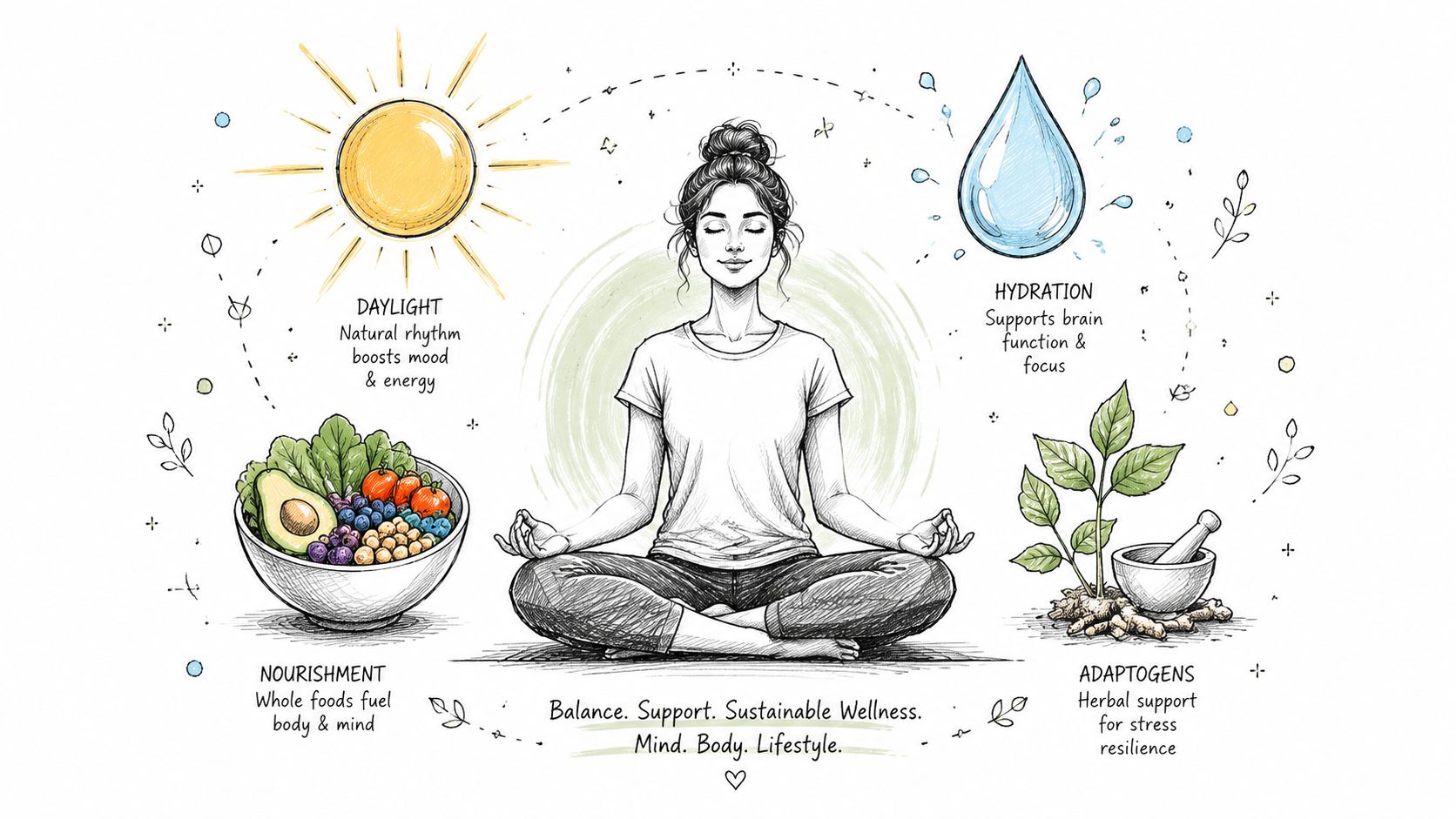
Start with the basics that regulate the nervous system every day:
Eat in a way that steadies you: Long gaps without food can make some people feel more shaky and reactive.
Protect sleep like treatment: An anxious brain rarely improves when sleep stays fragmented.
Move your body regularly: Walking, resistance work, mobility training, and gentle cardio all help discharge stress.
Use short calming practices: Slow breathing, quiet time, prayer, meditation, or journaling all help create a recovery signal.
I also encourage people to reduce input. Less doom-scrolling. Less late-night stimulation. Less multitasking when the brain is already overloaded. Anxiety often improves when life gets quieter at the edges.
Supplements should support your routine, not compensate for a routine that keeps injuring your nervous system.
The people who do best usually build a simple rhythm. They wake at a consistent time, eat enough, move most days, and create at least one predictable period of calm. Adaptogens can support that pattern well. They can't replace it.
Frequently Asked Questions About Adaptogens
How long do they take to work
Not instantly. For the best-studied option, benefits typically emerge after 30 to 60 days of consistent use, as noted earlier in the linked meta-analysis on ashwagandha. That's why adaptogens for anxiety aren't good “panic moment” tools. They're better used as steady support.
Can you combine them with medication
Sometimes, but you shouldn't assume it's safe just because something is herbal. Adaptogens can interact with medications, and that matters even more if you take antidepressants, anti-anxiety drugs, blood pressure medicine, thyroid medication, or anything for a chronic condition.
Ask a qualified healthcare professional before combining them. That step is especially important if you've ever had a strong response to supplements.
Which adaptogen should you start with
For stress-related anxiety, ashwagandha usually has the strongest case because the human evidence is stronger than for most other options discussed here. If your stress shows up more as fatigue and mental burnout, Rhodiola may be a better conceptual fit. If you want a gentler daily herbal option, holy basil may appeal.
Start with one. Don't mix several at once.
Can adaptogens make anxiety worse
Yes, they can in some people. That's the mechanism paradox discussed earlier. Because adaptogens can mildly activate the stress system as part of how they build resilience, a dysregulated or depleted stress system may react poorly.
If you feel more agitated, wired, restless, or unable to sleep, stop and reassess.
When should you see a doctor
See a doctor if anxiety is intense, persistent, or getting worse. Also get help if you're having panic attacks, chest pain, significant insomnia, depressed mood, thoughts of self-harm, or trouble functioning at work or home.
Herbs can be useful. They are not a substitute for proper evaluation when symptoms are severe.
If you're looking for a simple capsule that fits into a broader wellness routine, River of Life offers a multi-ingredient formula with ashwagandha root, turmeric extract with BioPerine, ginger, and bromelain, along with educational resources through The ROL Journal to help you make informed supplement decisions.