

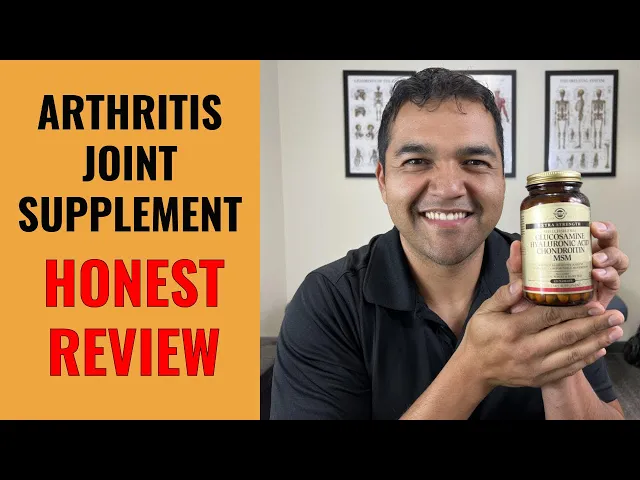
Dietary Supplements for Joint Pain: Evidence-Based Guide

Shopping for dietary supplements for joint pain assumes the crowded shelf works like a menu. Pick glucosamine, pick turmeric, pick something with a joint on the label, and relief should follow. In practice, that advice fails more often than it helps, because the gap between popular ingredients and clinically meaningful results is wide.
The harder truth is that many products are built to look active without being built to perform. They use weak doses, poor absorption formats, or vague blends that hide what's inside. A supplement can sound natural and still be too underpowered to matter.
Table of Contents
Why Most Joint Pain Supplements Disappoint
The joint supplement aisle is full of products that promise comfort but don't match the science behind the label. That mismatch starts with the ingredients people recognize, especially glucosamine, chondroitin, and basic turmeric powders. These are familiar names, but familiarity doesn't guarantee a useful result.
The market sells confidence faster than it sells evidence
The strongest caution comes from the large osteoarthritis evidence base. In the GAIT trial, a landmark NIH-sponsored study launched in 2006, glucosamine, chondroitin, and the combination did not beat placebo overall for pain or joint-space narrowing, even though a more symptomatic subgroup had a stronger response (BMJ). That matters because it shows how easily marketing can flatten nuance into a universal claim.
A lot of commercial products also rely on underdosing. If a formula contains too little active ingredient, or uses generic plant powder instead of a standardized extract, the label can be technically honest and practically useless. That's one reason many shoppers feel they “tried a supplement” without ever really testing a therapeutic formula.
Practical rule: If a joint supplement can't tell you exactly what's inside, and in what amount, it usually isn't designed around outcomes.
Bioavailability is not a bonus, it's the difference between exposure and guesswork
Curcumin is the clearest example. Standardized turmeric extract has the best practical evidence when the formulation delivers about 1,000 mg/day of curcumin-equivalent for 8 to 12 weeks (systematic review). Native curcumin is poorly absorbed on its own, so products without absorption support often fail to reproduce trial conditions. The supplement may look impressive on the bottle, while the body sees very little of it.
That's why a product can contain the “right” ingredient and still underperform. If the delivery system is weak, if the dose is too small, or if the formula is hiding behind a proprietary blend, the user is paying for optimism. A more honest approach starts with dosage, extract quality, and absorption, not brand familiarity.
How Key Supplement Ingredients Target Joint Pain
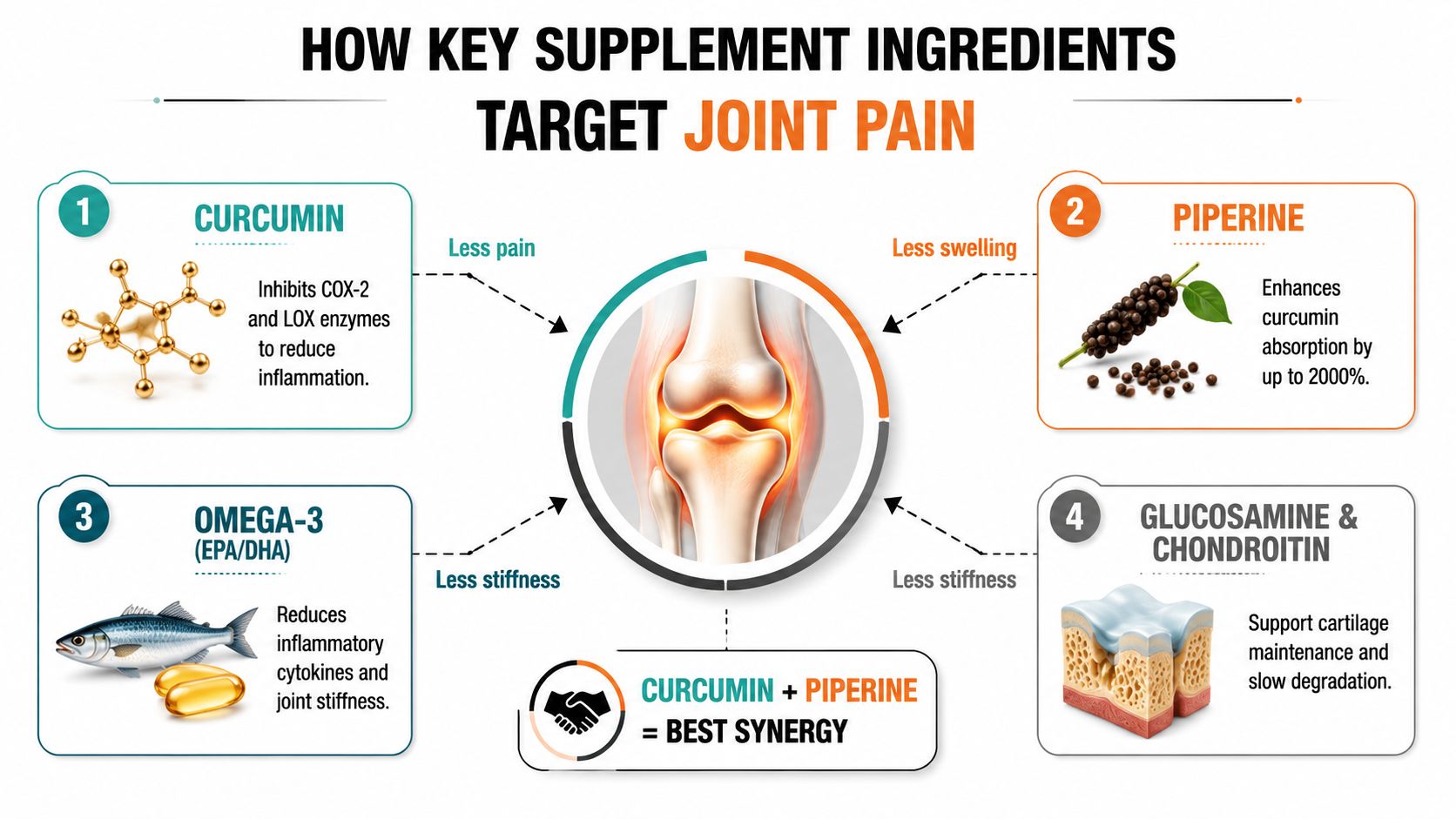
Different supplements work through different biological routes, and that's exactly why generic “joint support” labels can be misleading. Joint pain isn't one pathway, so one ingredient rarely solves every case. Think of inflammation as an overactive alarm system, and these ingredients as different ways of turning the volume down.
Curcumin and piperine work as a delivery system plus a signaling modulator
Curcumin targets inflammation pathways tied to pain and swelling, while piperine helps the body absorb it more effectively. The point isn't just that turmeric is “natural.” The point is that the active compound has to reach the bloodstream in useful amounts, which is why formula design matters so much.
The evidence behind turmeric is stronger when the product uses a standardized extract rather than plain spice powder. In a systematic review and meta-analysis, the clinically useful dose was around 1,000 mg/day of curcumin-equivalent for 8 to 12 weeks, with symptom improvements similar to ibuprofen and diclofenac in the included trials (review). That makes curcumin one of the more practical options for people who want a botanical with a realistic joint-pain signal.
Omega-3s help by shifting the inflammatory environment
Omega-3 fatty acids, especially EPA and DHA, don't act like a painkiller. They work more like a background correction to inflammatory signaling. By competing with arachidonic-acid pathways, they can help calm the biochemical conditions that keep joints irritated.
The clinical trade-off is simple. Omega-3s may be useful, but joint-specific formulas need meaningful EPA and DHA content, not a token sprinkle in a “wellness blend.” If a product doesn't clearly identify the omega-3 amount, it's hard to expect a real anti-inflammatory effect.
Glucosamine and chondroitin are structural, but their effects are modest
Glucosamine and chondroitin are often described as cartilage-support ingredients because they're associated with connective-tissue structure. That makes sense biologically, but clinical outcomes have been inconsistent. A 2010 BMJ network meta-analysis of 10 randomized trials involving 3,803 patients found no clinically relevant pain relief or joint-space benefit versus placebo (PMC review).
Still, the story isn't empty. In the moderate-to-severe pain subgroup of GAIT, about 79% of people taking the glucosamine-chondroitin combination achieved at least a 20% pain reduction versus about 54% on placebo (BMJ). That's not universal effectiveness, but it does explain why some patients report a meaningful response while others feel nothing.
Enzyme and herbal formulas aim at swelling and tissue stress
Bromelain is used for its proteolytic activity, which is why it shows up in recovery-oriented formulas. Boswellia targets inflammatory signaling through a different pathway, and that gives it a place in symptom-focused protocols. For a practical example of a multi-ingredient product built around absorption-aware design, see this collagen-related resource, especially if you're comparing ingredients rather than looking for a single magic pill.
In real practice, combination formulas make sense only when each ingredient has a job. Otherwise, you just get more capsules, not better results.
What the Clinical Evidence Shows
The evidence is uneven across popular joint supplements. Some ingredients have a real symptom-reduction signal, some show small or inconsistent effects, and some are kept alive mostly by marketing momentum. That distinction matters if you are trying to spend money on something that might help.
Stronger signals come from formulation-specific curcumin
Curcumin is one of the more credible options when the product is standardized and absorption-enhanced. Review data support symptom reduction when the dose and duration resemble the trial conditions, not when the product is used casually at low exposure (review). In practical terms, curcumin is only as good as the formulation behind it.
Glucosamine and chondroitin stay controversial
The glucosamine-chondroitin literature is still mixed. A meta-analysis reported that glucosamine or chondroitin alone reduced knee-osteoarthritis pain by about 7.41 mm and 8.35 mm on a visual analog scale, while the combination added no clear WOMAC advantage. Cochrane also found chondroitin may improve pain slightly in the short term, with about an 8-point gain on a 0 to 100 pain scale and a 2-point improvement on Lequesne's index, without a clear increase in serious adverse events (PubMed review).
That sounds promising until you compare it with the larger pattern. The better-quality studies still tend to show modest gains at best, not dramatic change. For many people, glucosamine and chondroitin remain a reasonable trial, but not a dependable answer.
The quieter ingredients often deserve more attention
A systematic review found that mainstream supplements such as glucosamine and chondroitin were either ineffective or only produced small, clinically unimportant effects, while shorter-term signals looked better for ingredients like curcuma longa extract, Boswellia serrata extract, collagen hydrolysate, and pycnogenol (PubMed review). A newer network meta-analysis also found that different supplements ranked differently for pain, stiffness, and function in knee osteoarthritis, with Passion fruit peel extract, Lanconone, collagen, Aflapin, and NEM standing out in certain outcomes rather than one universal winner (2025 analysis).
The practical takeaway is simple. The supplement market likes simple winners. The evidence points to outcome-specific choices.
Ingredient | Evidence Strength | Typical Effective Dose | Key Findings |
|---|---|---|---|
Curcumin with absorption support | Moderate to strong | About 1,000 mg/day curcumin-equivalent for 8 to 12 weeks | Reduced arthritis symptoms, with trial results similar to NSAIDs in some studies |
Glucosamine | Mixed | Trial-dependent | Small pain changes in some analyses, no consistent broad benefit |
Chondroitin | Mixed | Trial-dependent | Slight short-term pain improvement in some reviews |
Glucosamine plus chondroitin | Mixed | Trial-dependent | Combination did not show clear added benefit in major analyses |
Boswellia | Emerging | Not standardized across studies | Promising symptom relief, but evidence is still developing |
Collagen-related formulas | Emerging | Product-specific | Some outcome signals, especially in newer comparative reviews |
Reading Labels for Bioavailability and Quality
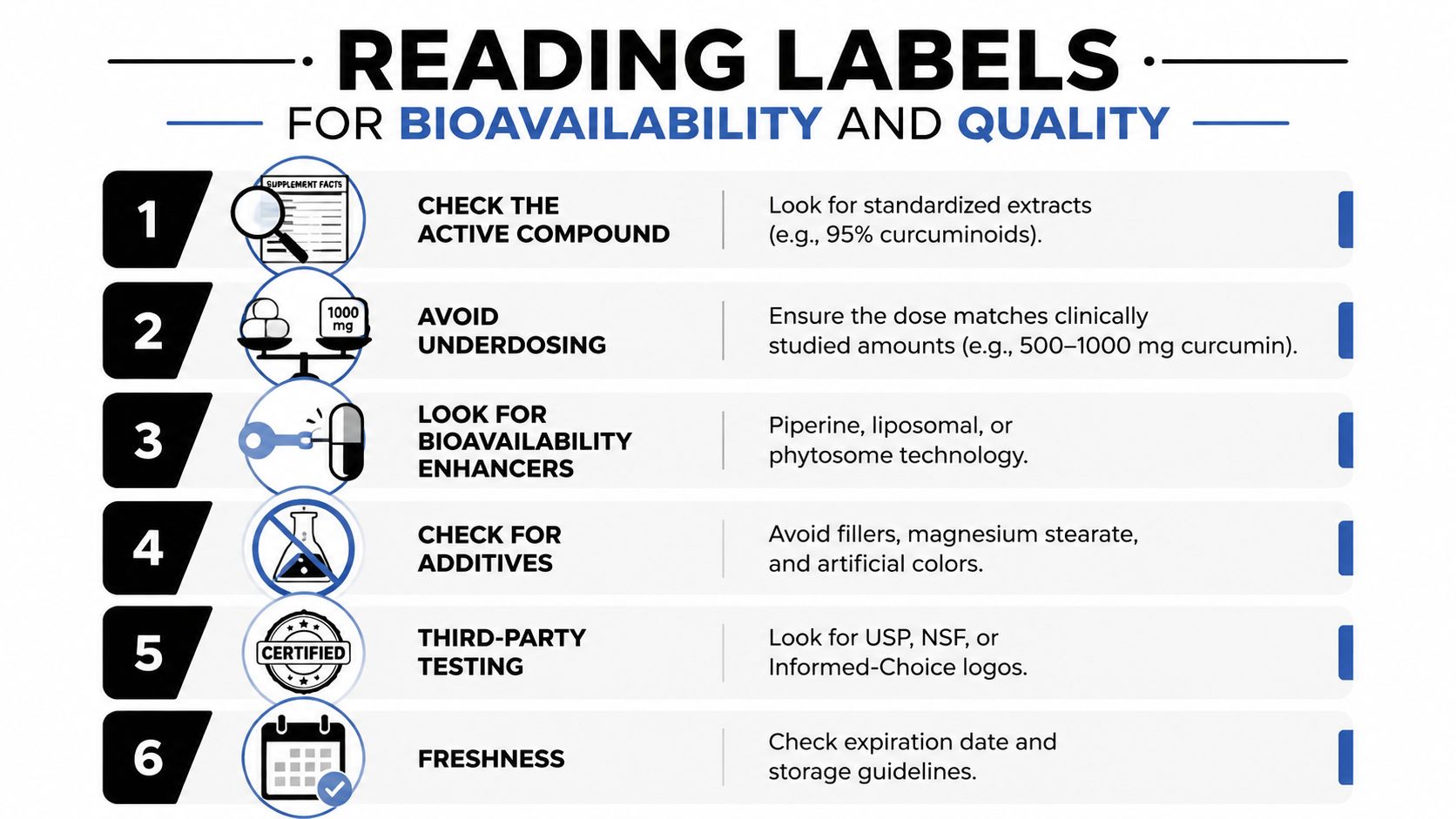
A good joint supplement isn't just about the ingredient list. It's about whether the body can use what's inside the capsule, and whether the dose resembles what's been studied. That's why label reading is more important than brand recognition.
Standardized extracts beat vague plant powders
If you want turmeric, look for standardized curcumin rather than plain root powder. If you want boswellia, the same logic applies. Standardization tells you the product is designed around an active compound, not just a raw botanical with inconsistent chemistry.
The same goes for delivery. Curcumin often needs piperine, liposomal delivery, or another absorption-enhancing system to make a meaningful difference. I've seen plenty of products that are technically “turmeric supplements” but are closer to culinary add-ons than therapeutic formulas.
Use the label as a filter, not a guess
A practical label check starts with the active compound, then the amount, then the absorption support. If the bottle hides its ingredients in a proprietary blend, that's a warning sign. If it lists a long menu of extras but not the amount of the core ingredient, that's another warning sign.
Label rule I use in clinic: if I can't quickly identify the active ingredient, the dose, and the delivery method, I assume the formula was designed for marketing first.
For a real-world example of a formulation approach that pairs turmeric with BioPerine, ashwagandha, ginger, and bromelain, you can review this curcumin and black pepper guide. The useful lesson isn't that one brand solves everything. It's that thoughtful formulation usually looks specific, not vague.
Quality signals matter as much as ingredient choice
Third-party testing from groups such as USP, NSF, or ConsumerLab can help reduce uncertainty. That doesn't guarantee benefit, but it does lower the odds that you're buying a product that's badly made or inconsistently filled. Freshness and storage matter too, especially for oils and botanicals that can degrade over time.
Safety Considerations and When to See a Clinician
Joint supplements may be gentler than prescription drugs, but they're not automatically harmless. The biggest safety mistakes happen when people combine them casually with blood thinners, thyroid medication, surgery prep, or an undiagnosed inflammatory condition. That's where caution matters more than enthusiasm.
Interactions are common enough to ask before starting
Turmeric and omega-3s can matter for people on anticoagulants because of bleeding concerns. Glucosamine has also been associated with warfarin interaction risk in clinical practice, so that combination deserves a prescriber's review. Ashwagandha needs extra care with thyroid medications and immunosuppressants because it can complicate how those treatments are managed.
Shellfish-derived glucosamine also matters for anyone with shellfish allergy. And if a product causes stomach upset, that's not a sign of detox. It's a sign the formula may not suit the person taking it.
Supplement | Key Interactions | Precautions |
|---|---|---|
Turmeric or curcumin | Anticoagulants | Review bleeding risk with a clinician |
Omega-3s | Blood thinners | Use caution before surgery or with anticoagulant therapy |
Glucosamine | Warfarin | Ask before combining with prescription blood thinners |
Ashwagandha | Thyroid medications, immunosuppressants | Avoid self-starting without medical guidance |
Shellfish-derived glucosamine | Shellfish allergy | Choose a non-shellfish source or avoid entirely |
Know the symptoms that should not be self-treated
Sudden joint swelling, visible deformity, unexplained weight loss with pain, or pain that does not respond to several weeks of consistent use all deserve evaluation. Those signs can point to inflammatory arthritis, advanced osteoarthritis, or another problem that supplements won't fix. Self-treating can delay the right diagnosis.
Practical threshold: if joint pain is changing shape, affecting multiple joints, or showing up with systemic symptoms, it's time for an exam, not another bottle.
People already taking biologics, DMARDs, or multiple antihypertensives should be especially careful. The same applies to anyone considering supplements before surgery. If you're also using an NSAID such as ibuprofen, review the interaction and bleeding picture first by reading the clinician guidance in this ibuprofen reference.
Building a Joint Health Routine That Works
Supplements work best when they sit inside a routine, not when they're treated like a rescue plan. I've seen far better adherence and steadier symptom control in people who pair the right product with movement, sleep, and a sane dosing schedule. The goal is consistency, not complexity.
Start with the basics, then layer the supplement
Movement protects joints more than passive waiting does. Low-impact exercise, strength work, mobility drills, and good sleep all support pain control by reducing stiffness and improving how the joint is loaded. Supplements can help, but they shouldn't be asked to carry the whole plan.
Timing helps too. Omega-3s are usually better tolerated with food, especially a fat-containing meal. Curcumin tends to make more sense when taken consistently across the day, and bromelain is often used between meals when the goal is systemic enzyme activity rather than digestion support.
Use a routine you can actually keep
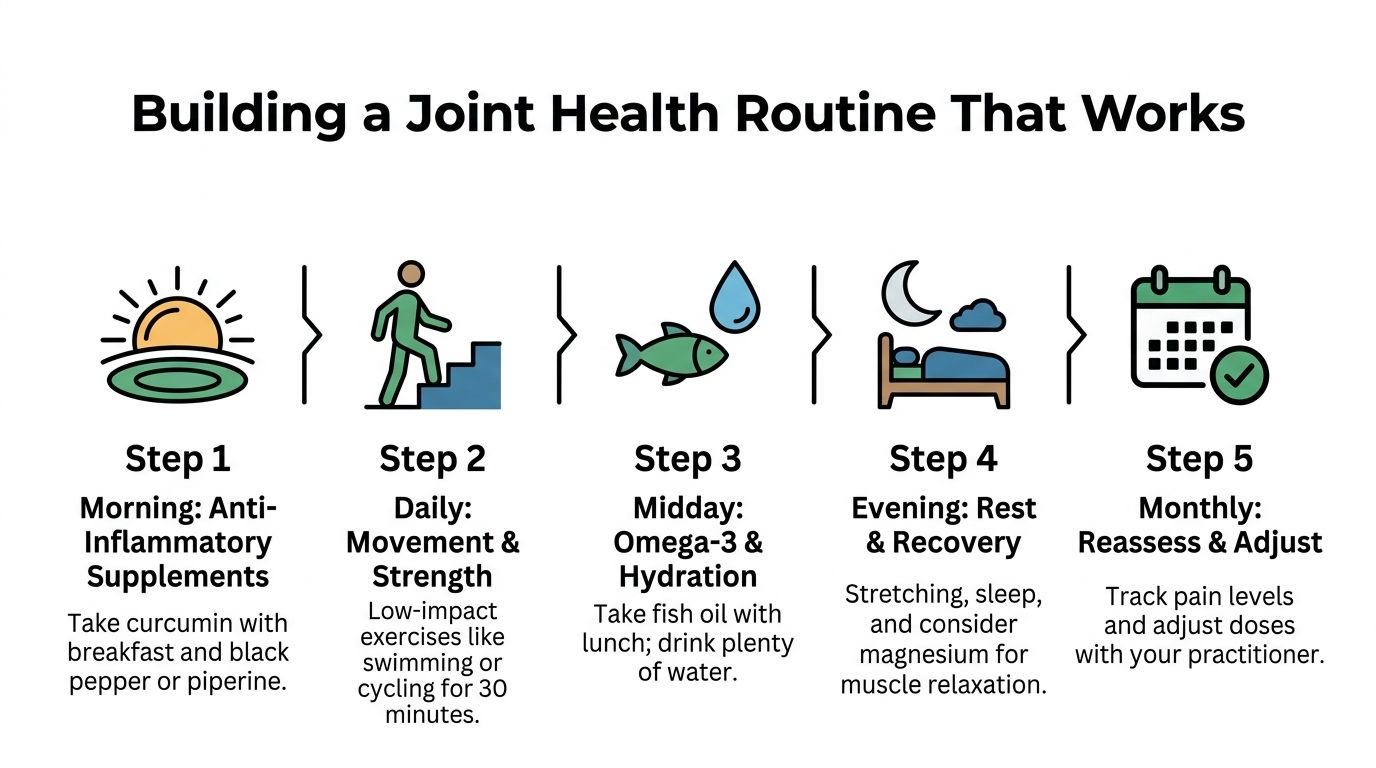
A simple schedule works better than a complicated one people abandon in ten days. Take the anti-inflammatory formula with breakfast, move your body during the day, and use the evening for recovery habits like stretching and sleep hygiene. Most evidence-based supplement trials run on the order of weeks, not hours, so patience is part of the treatment plan.
Here's a straightforward template many patients can follow:
Morning anchor: take your curcumin-containing formula with breakfast.
Midday anchor: pair omega-3s with lunch and keep hydration steady.
Movement anchor: use low-impact exercise, such as walking, cycling, or swimming, most days.
Evening anchor: stretch, wind down, and protect sleep.
Monthly reset: review pain, stiffness, and activity limits, then adjust with your practitioner if needed.
Making Confident Supplement Choices
A good decision about dietary supplements for joint pain comes down to three filters. First, the ingredient has to have a real evidence base. Second, the formula has to deliver that ingredient in a form the body can use. Third, the product has to be transparent about what's inside.
That's why thoughtful formulations matter more than generic “joint support” branding. A capsule that combines turmeric with BioPerine, along with ingredients like ashwagandha, ginger, and bromelain, reflects a bioavailability-conscious design. It still isn't a guarantee, but it's a more intelligent starting point than a vague blend with no clear dosing logic.
A practical buyer's rule
Choose the ingredient first, then the dose, then the delivery method, then the testing standard. If a product can't satisfy all four, it's probably better to keep looking. That approach is less glamorous than buying the loudest label, but it's a lot more useful.
River of Life offers a joint-focused capsule built around turmeric extract with BioPerine, plus ashwagandha, ginger, and bromelain, which fits the kind of formulation logic covered here. If you want to compare that approach with your current routine and see whether it matches your goals, visit River of Life and review the ingredient profile before you buy.