
Adrenal Support Supplements: An Evidence-Based Guide

Most advice about adrenal support supplements starts with the wrong promise. It treats “adrenal fatigue” like a settled diagnosis, then sells a bottle as if the adrenals themselves had stopped working. That framing is misleading, and it's not the safest way to think about fatigue, stress, sleep disruption, or low energy.
A better approach is simpler. Your adrenal glands are real, but many shoppers for adrenal support are looking for help with the stress-response system, not a proven way to “repair” the adrenals. The market is already mainstream, valued at $4.2 billion in 2025 and projected to reach $7.8 billion by 2034, with capsules and herbal extracts leading the category (MarketIntelo). That scale alone is a reason to understand what's in these products, what evidence exists, and where the hype starts.
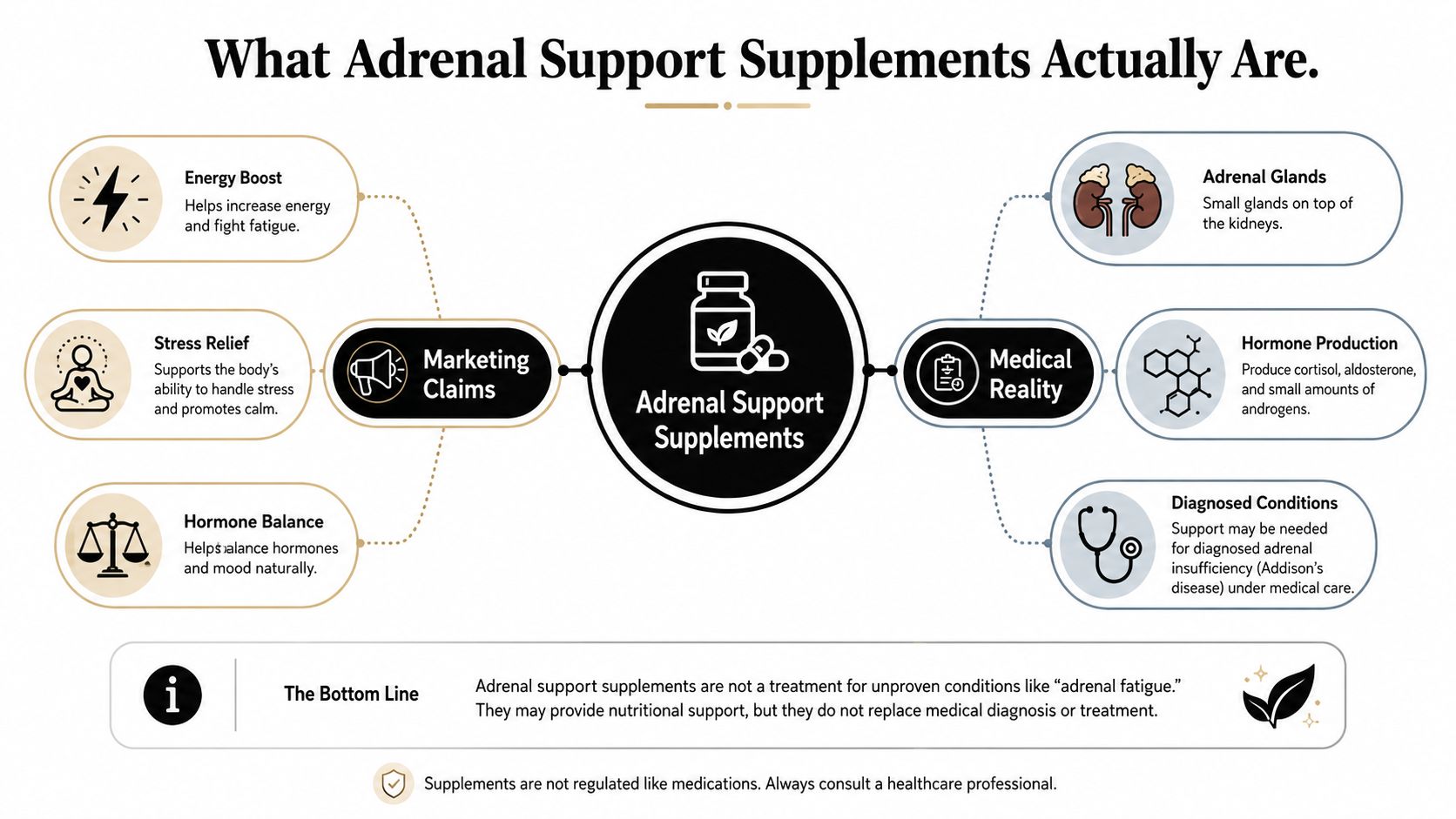
Table of Contents
What Adrenal Support Supplements Actually Are
Adrenal support supplements are usually blends of herbs, vitamins, minerals, and phospholipids marketed for stress, energy, resilience, sleep, and “hormone balance.” The trouble is that those promises often blur together. The adrenals are endocrine organs sitting on top of the kidneys, but a supplement label can make a broad stress formula sound like a treatment for a specific gland problem.
The medical reality behind the label
The phrase adrenal fatigue is widely used in marketing, but it isn't a recognized medical diagnosis. That matters because symptoms such as low energy, brain fog, poor sleep, and irritability can come from many different causes, not just stress. If a product claims to “restore adrenal function,” it's usually leaning on a metaphor more than a diagnosis.
That's why it helps to think of this category as stress-response support. Some formulas focus on botanicals that may influence perceived stress or sleep quality, while others add nutrients that support normal energy metabolism. Those are different goals, and they should be judged differently.
Practical rule: If a product sounds like it can diagnose your fatigue from the label alone, it's probably overselling what it does.
What this guide will help you sort out
The useful questions are more concrete. Which ingredients have the best human evidence? Which ones are mostly filler? Which labels are transparent, and which ones hide doses inside a proprietary blend? And which products deserve extra caution because of safety issues or undisclosed compounds?
The short version is this. Some adrenal support supplements are better understood as wellness tools for stress adaptation, not gland restorers. The rest are marketing-first products that deserve skepticism, especially if they hide their doses or make bold hormone claims without clinical context.
How the HPA Axis and Cortisol Actually Work
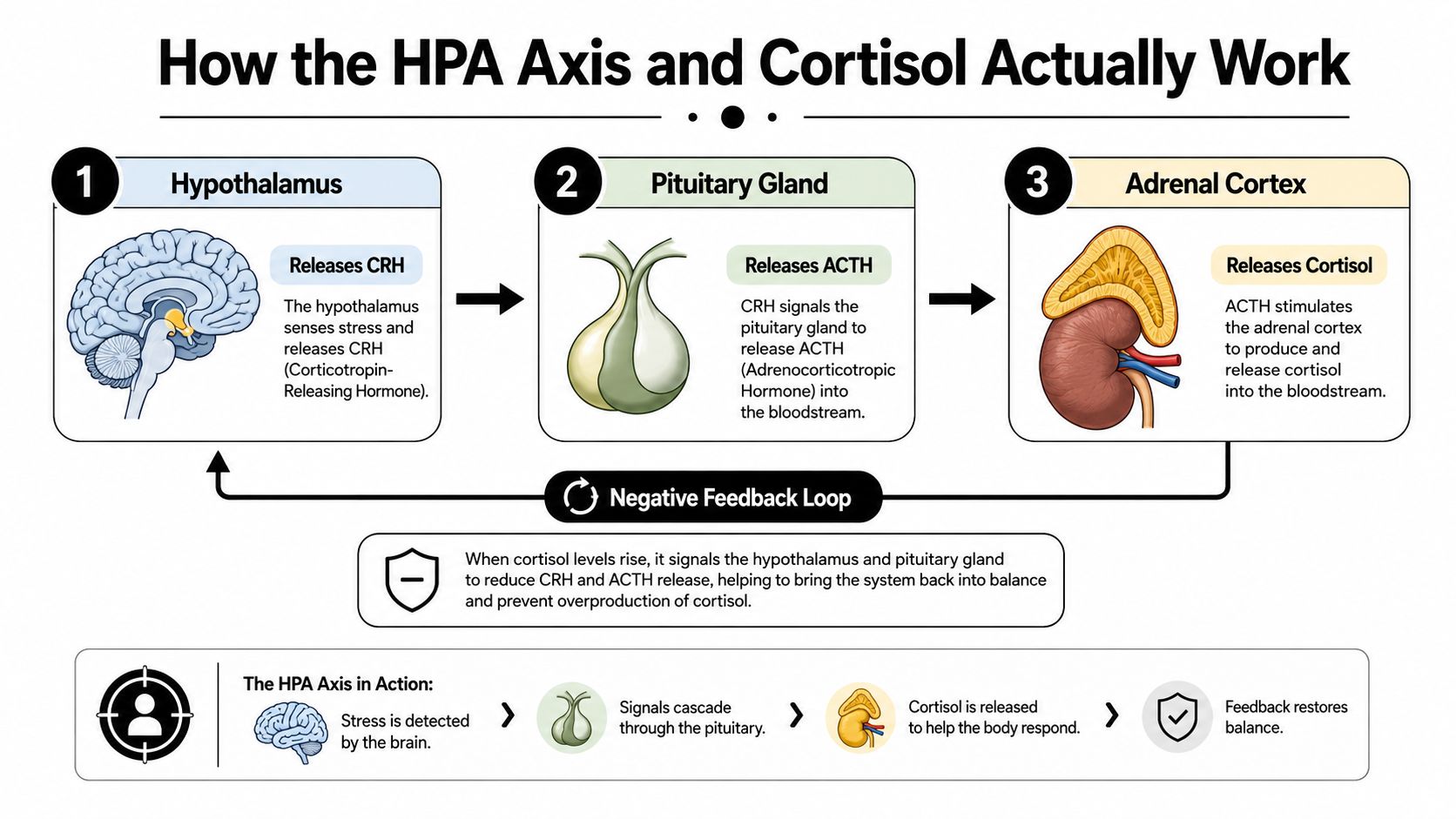
Your stress response isn't a mystery switch. It's a loop involving the hypothalamus, pituitary gland, and adrenal cortex, often called the HPA axis. A simple way to think about it is a thermostat. The brain senses pressure, sends a signal, and the adrenals release cortisol to help the body respond.
Why cortisol isn't the enemy
Cortisol gets blamed for everything, but that's too crude. In the short term, it helps you mobilize energy, stay alert, and meet demands. The problem is persistent strain, where the signal doesn't settle back down the way it should. That's when people start to notice disturbed sleep, poor recovery, jittery energy, and a sense of being tired but wired.
The adrenal glands don't usually “run out” in the dramatic way social media suggests. What tends to happen is dysregulation. Chronic stress, poor sleep, inflammation, and nutrient gaps can all make the whole stress-response loop less efficient, so the body feels off even when no single lab value tells the whole story.
What is actually measurable
If someone wants objective feedback, the most useful markers are things like morning cortisol, diurnal rhythm, and validated stress scales. Those tools don't solve everything, but they're more grounded than guessing from symptoms alone. They also keep the conversation tied to biology instead of internet folklore.
Useful distinction: A supplement may help you feel calmer or sleep better without “fixing” the adrenals themselves. That's a real outcome, and it's more honest than pretending the gland is the only issue.
The biggest confusion point is this. People hear “adrenal support” and assume they need a stimulant-free hormone repair kit. In reality, the goal is often gentler, more stable stress signaling, plus better sleep and recovery habits that let the HPA axis settle.
The Seven Core Ingredients Ranked by Evidence
Not every ingredient in this category deserves equal trust. The strongest human evidence among common “adrenal support” ingredients belongs to ashwagandha, while some others are better viewed as supportive add-ons. A few should trigger extra caution, and some should make you pause if the label gets vague.
Ingredient | Evidence Strength | Primary Benefit | Watch For |
|---|---|---|---|
Ashwagandha | Strongest among common ingredients | Stress, sleep, fatigue support | Pregnancy, thyroid overactivity, liver concerns |
Rhodiola rosea | Moderate | Mental fatigue and resilience | Sensitive users may find it stimulating |
Holy basil | Moderate | Calm and stress support | Evidence is less robust than ashwagandha |
Eleuthero | Moderate | Stress resilience | Product quality varies |
Phosphatidylserine | Supportive | Stress response modulation | Best used in targeted formulas |
B-complex vitamins | Supportive | Energy metabolism support | Not a fix for unresolved fatigue |
Magnesium | Supportive and foundational | Helps if low intake is part of the picture | Can cause GI upset in some people |
Licorice root | Conditional | Cortisol-modulating effect | Blood pressure and potassium concerns |
Adrenal cortex extracts | Weakest | Marketed as gland support | Little evidence, plus contamination concerns |
The ingredients worth prioritizing first
Ashwagandha has the clearest human data in this category. Randomized trials and reviews report roughly 20 to 30% cortisol reductions along with better perceived stress, fatigue, and sleep quality over about 6 to 8 weeks in adults under chronic stress (PubMed). That makes it the best-studied anchor for a stress-response formula.
Rhodiola rosea, holy basil, and eleuthero are often grouped as adaptogens, and that label isn't meaningless. They're generally used for resilience and mental fatigue, but the evidence is less consistent than for ashwagandha. Think of them as plausible supports, not miracle ingredients.
The ingredients that should be treated as supporting players
Phosphatidylserine is most interesting when the goal is a more measured stress response, especially around demanding work or exercise. B-complex vitamins and magnesium matter because low intake can feel a lot like stress. That doesn't mean they'll solve every energy problem, but if someone is low in magnesium, a fancy adaptogen blend won't outperform fixing that gap.
Clinical takeaway: Don't judge adrenal formulas by how many ingredients they contain. Judge them by whether the ingredients match a clear goal, use transparent doses, and avoid safety traps.
The ingredient to be most cautious with
Licorice root can be useful in specific contexts, but it's not a casual add-on. It can affect blood pressure and potassium balance, so it deserves respect. Adrenal cortex extracts are the weakest choice here, because evidence for improving adrenal function is thin, and the contamination issue covered later makes them even harder to justify.
If you want a deeper look at one of the best-known stress adaptogens, see this analysis of ashwagandha and stress management. It's a good companion piece if you're comparing single-ingredient options with blends.
The 2018 Contamination Study You Should Know About
A lot of people buy adrenal support supplements assuming they are only herbs and vitamins. A 2018 U.S. laboratory study showed why that assumption can be risky. The researchers tested over-the-counter products sold as adrenal support and found that all of the tested products contained detectable triiodothyronine (T3), at 63 to 394.9 ng per tablet.
Study Findings
The concern did not stop with thyroid hormone. 42% of the products contained pregnenolone. 25% contained budesonide. 17% contained androstenedione. 8% each contained 17-hydroxyprogesterone, cortisone, and cortisol. The authors concluded that every product studied contained a small amount of thyroid hormone and that most contained at least one steroid hormone. You can review the study details in PubMed.
That matters because hidden hormones change the risk profile completely. A bottle can look like a simple stress-support blend and still expose someone to ingredients that may interact with thyroid disease, medications, blood pressure, or hormone-sensitive conditions. The label no longer tells the full story, and that makes safe use much harder.
Why this matters for real-world shoppers
The study did not prove that every adrenal supplement on the market is contaminated. It did show that this category can include products with hidden pharmacologic ingredients, which is why buyers became more cautious after the findings were published. If a formula is meant to support stress response, the label should make the contents clear instead of forcing the user to guess.
That is also why third-party testing matters so much. A transparent formula can still fall short of its promise, but an opaque one can create avoidable safety problems. Those are different concerns, and shoppers should treat them separately.
A good next step is to compare any formula against a plain, evidence-first anti-stress supplement checklist rather than assuming the word “adrenal” means the product is gentle or well designed.
Buyer rule: If a product promises gentle stress support but hides its exact contents, treat that as a red flag, not a minor labeling issue.
How to Choose a Quality Formulation
A good adrenal support formula should be easy to audit. You shouldn't need to decode marketing copy to understand what you're taking. Start with the label, then work outward to testing, manufacturing quality, and whether the formula's goal matches your need.

What to look for on the bottle
Standardized extracts: Look for the active compound percentage, not just the plant name. Standardization makes the product easier to compare.
Third-party testing: Independent verification from groups such as USP, NSF, or ConsumerLab adds confidence that the label matches the contents.
Transparent dosing: You want the daily amount of each ingredient, not a vague proprietary blend.
Manufacturing standards: GMP certification is a practical quality baseline.
Clean-label details: Vegan, non-GMO, or gluten-free claims can matter if they match your needs.
No hidden blends: If the label hides individual doses, you can't judge whether the formula is useful or underdosed.
A simple example of a formulation strategy that makes sense is pairing botanicals with a known bioavailability enhancer when absorption is a concern. BioPerine, a black pepper extract, is commonly used for this reason and is cited on product pages as increasing turmeric absorption by up to 2,000%. That kind of statement should still be read carefully, but the formulation logic is clear, which is more than you can say for many blends.
If you want to compare a broader supplement shopping framework, this anti-stress supplement guide can help you assess label quality without getting distracted by hype.
What a premium price should actually buy
Higher price can make sense when it reflects testing, standardization, and cleaner formulation choices. It doesn't make sense when it mostly pays for branding, oversized claims, and a long ingredient list with no transparent dosing. A shorter, better-disclosed formula is often easier to trust than a crowded one.
Who May Benefit and Who Should Avoid Them
Adrenal support supplements are not for everyone, and the best candidates are usually pretty easy to spot. Adults dealing with chronic stress, sleep complaints, or persistent fatigue are common users. Athletes going through heavy training blocks and older adults wanting more stable daily energy also tend to look at these formulas, especially when they're trying to avoid stimulant-heavy products.
People who may be reasonable candidates
Chronically stressed adults: These are the people most likely to look for gentler stress-response support.
Athletes and active people: Training stress can overlap with sleep disruption and recovery problems.
Perimenopausal and menopausal women: Hormonal shifts can make stress feel harder to buffer.
Older adults: Mild support for energy and cognition may be appealing when the formula is transparent and conservative.
The key is expectation-setting. These products work best when they sit inside a bigger plan that includes sleep, meals, movement, and recovery. They're not a substitute for those basics.
Who should be more cautious
Pregnant and breastfeeding people should be careful, especially with ashwagandha, which is generally avoided in those settings. People with thyroid overactivity, autoimmune thyroid conditions, or unexplained liver enzyme elevation should also be cautious. Licorice-containing products deserve extra scrutiny if blood pressure or medication interactions are part of the picture.
If you take prescription drugs or have a diagnosed medical condition, don't guess. Talk with a clinician first, especially if your symptoms haven't been properly evaluated. You may need something other than a supplement, and that's a good thing to know early.
For a focused safety discussion around one of the most common ingredients, this ashwagandha interaction guide is worth reading before you start a bottle.
Decision rule: If your fatigue is new, severe, unexplained, or tied to another health condition, get it checked before you buy a stress formula.
Practical Next Steps and When to See a Clinician
Start with the boring but useful step. If you're tired, wired, or sleeping badly, rule out common medical causes first with a clinician visit and basic bloodwork. The usual suspects include iron, B12, vitamin D, thyroid status, and blood sugar, because fatigue is often a symptom, not a diagnosis.
A simple order of operations
Check the basics first. Make sure there isn't an untreated medical cause behind the symptoms.
Tighten the foundation. Sleep, nutrition, movement, and caffeine timing matter more than any capsule.
Try one targeted supplement. Use a quality formula for a defined 8 to 12 week window, not forever by default.
Track the right signals. Morning energy, sleep quality, and a validated stress scale are more useful than vague impressions.
That sequence keeps you from making two common mistakes at once, buying too early or blaming the wrong problem. It also gives the supplement a fair trial without turning it into a life-long crutch.
Red flags that deserve a doctor's visit
Unexplained weight loss: This can point to something more serious than stress.
Persistent insomnia: If sleep is consistently broken, don't just mask it.
Chest pain: This needs medical attention, not a supplement swap.
Severe mood changes: Depression, panic, or major irritability deserve evaluation.
Daily life disruption: If symptoms are affecting work, relationships, or safety, get help.
The honest answer to the question “Do adrenal support supplements work?” is “sometimes, for the right person, with the right formula, for the right reason.” That's a much safer answer than the one usually sold online. It also gives you a smarter way to choose: ignore the adrenal fatigue hype, focus on stress-response support, and use evidence, transparency, and safety as your filter.
If you want a clean, clinician-minded place to start, visit River of Life and explore a formulation built around transparency, absorption, and daily consistency. If you're comparing stress-support supplements, look for the same things we covered here, clear doses, thoughtful ingredients, and no mystery blend trying to pass as science.