

Supplement Berberine: Evidence, Dosage, and Safety

If supplement berberine is being sold as a shortcut to fat loss, why do the strongest human trials keep pointing back to glucose, lipids, and inflammation instead of a dramatic scale change? That gap between marketing and measured biology is exactly where a careful reader should start.
Berberine is a yellow plant alkaloid found in plants such as barberry and goldenseal. It isn't a prescription drug, and it isn't a whole-herb extract either, it's a specific compound people isolate and put into capsules for targeted metabolic support.
The practical question isn't whether it sounds natural. It's whether the human data justify taking it, how to use it sensibly, and who should be cautious. The answer is more nuanced than the internet headlines, because berberine's best evidence sits in metabolic health, not in miracle weight-loss promises.
Table of Contents
What Berberine Is and Why Everyone Is Talking About It

People often hear berberine described as “nature's Ozempic,” then assume it must be a weight-loss supplement with a trendy name. That framing misses the bigger point. Berberine is a plant-derived compound that's been studied most seriously for metabolic support, especially blood sugar, insulin resistance, and blood lipids.
It comes from several traditional medicinal plants, including barberry and goldenseal, and has long roots in Chinese and Ayurvedic medicine. What makes it different from a general wellness botanical is that modern research has focused on measurable markers, not vague vitality claims. In other words, scientists have been asking whether it changes fasting glucose, HbA1c, and other lab markers that matter to clinicians.
A botanical with a narrow, useful lane
Berberine crossed into mainstream supplement aisles because the evidence base got stronger, especially around metabolic syndrome and glucose control. A 2023 umbrella meta-analysis of randomized trials reported measurable improvements in fasting blood glucose, HbA1c, HOMA-IR, insulin, and inflammatory markers such as IL-6, TNF-α, and CRP, which is a very different story from “it might help everything” marketing PubMed review.
That's why it makes more sense to think of berberine as a metabolic-focused botanical than as a broad wellness add-on. It's not a replacement for prescription therapy, and it's not a promise of rapid body recomposition.
Practical rule: if a product description talks mostly about dramatic slimming, it's probably emphasizing the least defensible part of the story.
The guide to use is simple. First, understand what it is. Second, understand what it changes in humans. Third, decide whether your situation is one where a clinician would consider it reasonable. That order matters, because a supplement that gets praised online can still be a poor fit for a specific person.
How Berberine Works Inside the Body
Berberine behaves less like a single-purpose tool and more like a multi-tool. Instead of acting on one pathway and stopping there, it appears to influence several metabolic levers at once, which is why researchers describe it as multi-target metabolic modulation Nutrition Reviews.
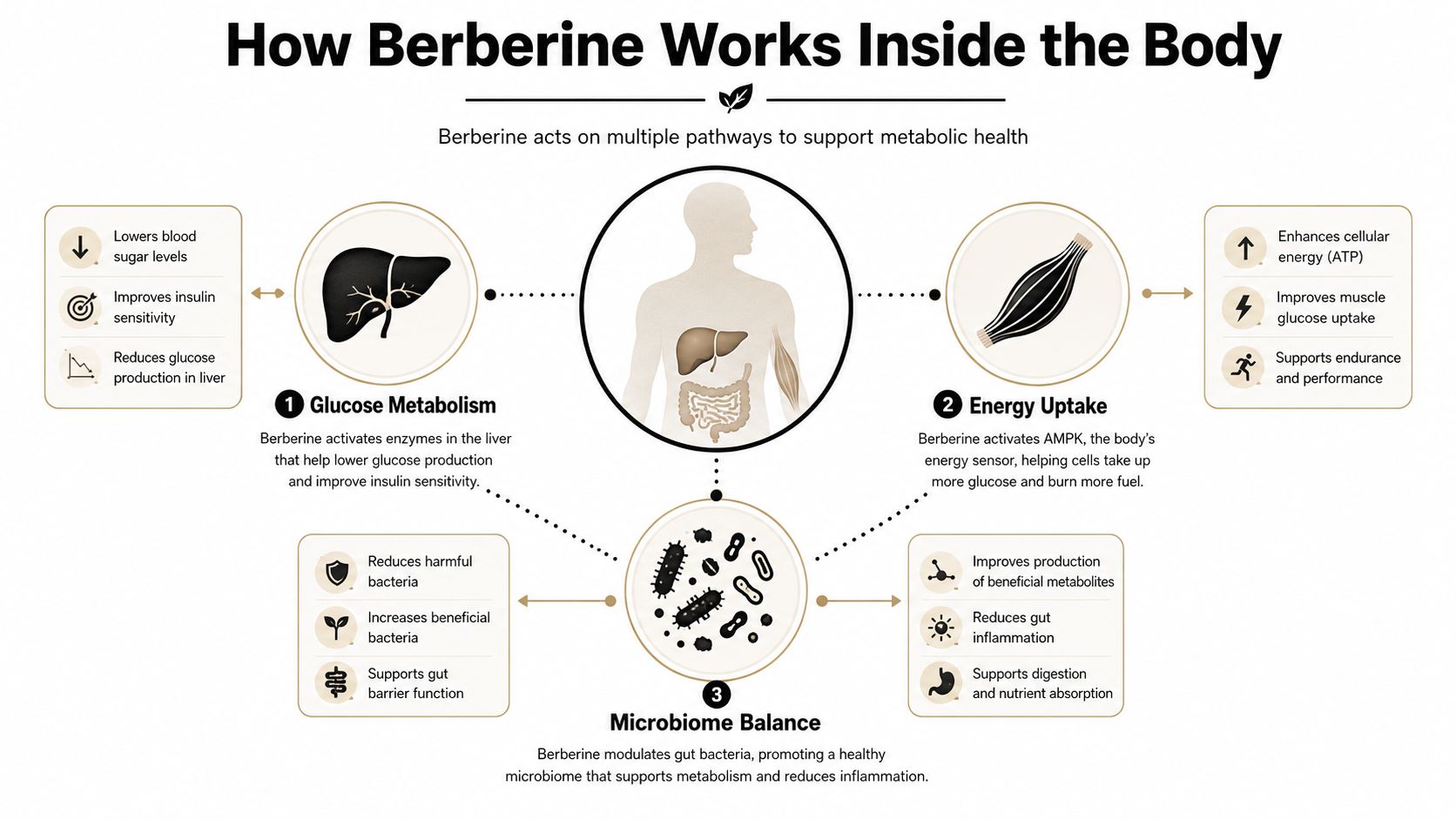
At a plain-language level, the body seems to use berberine in a few connected ways. It may help cells respond to insulin more efficiently, it may slow the liver's production of new glucose, and it may encourage the liver to clear more LDL cholesterol from the bloodstream. The same body of clinical literature also ties it to lower inflammatory signaling, including IL-6, TNF-α, and CRP.
The five levers that matter most
Think of metabolism like a control panel in a clinic lab, not like a single switch in a cartoon. Berberine appears to touch several controls at once, which is why its effects can show up in both glucose and lipid markers.
Insulin handling: it may improve how the body uses insulin, which helps explain changes in fasting glucose and HbA1c.
Liver glucose output: it may reduce hepatic gluconeogenesis, meaning the liver makes less new glucose when the body doesn't need it.
LDL clearance: it appears to upregulate hepatic LDL receptors, which can support healthier cholesterol handling.
Inflammation: it's been linked to lower inflammatory cytokines, including IL-6, TNF-α, and CRP.
Antioxidant defenses: reviews describe enhancement of endogenous antioxidant systems, which fits the broader cardiometabolic picture Nutrition Reviews.
The useful takeaway is not that berberine is magical. It's that it's biologically broad enough to affect several markers that often move together in metabolic syndrome.
The infographic below helps connect the dots between the liver, muscle, and gut, because readers usually understand these outcomes better when they can see the pathway.
Berberine's value comes from pattern-level metabolic support, not from one dramatic mechanism that solves everything.
That's why the evidence reads the way it does. The strongest human outcomes cluster around glucose, triglycerides, LDL-related markers, and inflammation, which is exactly what a multi-target compound should affect if the biology is real.
What the Human Evidence Actually Shows
The cleanest way to judge supplement berberine is to ignore the hype and ask what pooled human trials measured. The answer is encouraging, but it's modest and specific. A 2023 umbrella meta-analysis of randomized controlled trials found that berberine supplementation produced measurable improvements in fasting blood glucose, HbA1c, HOMA-IR, insulin, IL-6, TNF-α, and CRP PubMed review.
A 2025 systematic review and meta-analysis went further in metabolic syndrome, reporting significant reductions in triglycerides, LDL-C, total cholesterol, BMI, waist circumference, fasting plasma glucose, and 2-hour OGTT, with a favorable safety profile Frontiers in Pharmacology. That combination matters because it shows the signal isn't limited to one lab value.
Pooled effects you can actually interpret
Marker | Weighted Mean Difference | Health Relevance |
|---|---|---|
Fasting blood glucose | −0.77 | Better fasting glucose control |
HbA1c | −0.57 | Lower average blood sugar over time |
HOMA-IR | −1.04 | Improved insulin resistance |
Insulin | −1.00 | Lower insulin burden |
IL-6 | −1.23 | Less inflammatory signaling |
TNF-α | −1.04 | Less inflammatory signaling |
CRP | −0.62 | Lower systemic inflammation |
Those are pooled effects, so they're more meaningful than a single small trial. They still don't mean every person will respond the same way, and they don't translate into a guaranteed outcome on the scale.
A reasonable clinician-level way to read the evidence is that berberine's typical benefit is clinically meaningful but not dramatic. Some clinical discussions describe average HbA1c reductions near 0.6% and LDL reductions of roughly 15 to 25 mg/dL in common regimens, which helps frame the scale of effect without promising a transformation. That kind of change can matter, especially when someone is already working on diet, activity, or medication adherence.
But the evidence also has limits. At least one newer meta-analysis found no significant effect on blood pressure or HDL-C, and some outcomes look better in shorter treatment windows than in longer ones PMC review. That matters because it tells you not to expect every cardiometabolic number to improve in lockstep.
Clinical read: berberine is most defensible as a metabolic adjunct for adults with elevated glucose, dyslipidemia, or central adiposity, not as a general wellness supplement.
The bottom line from the human data is straightforward. Berberine has real effects, but the effects are concentrated in the markers that define metabolic risk. That's more credible than the “burn fat fast” story, and it's also more useful for deciding whether it belongs in a real health plan.
Typical Dosages, Timing, and How to Start
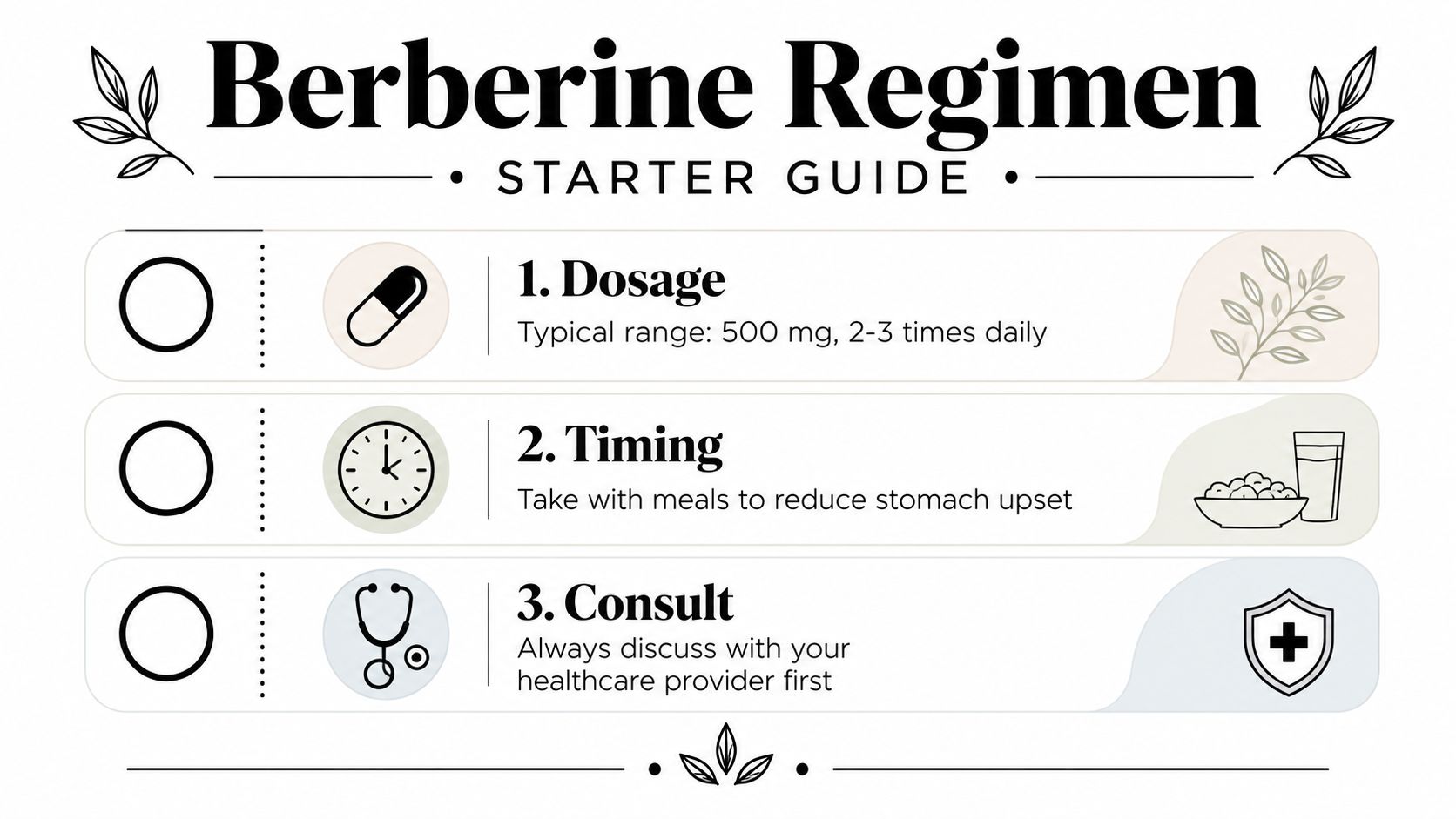
Most clinical use centers on divided doses rather than a single large dose. A common trial-style approach is 500 mg two to three times daily, which puts total daily intake around 1,000 to 1,500 mg per day. The reason people split it is practical as much as pharmacologic, because berberine's effects line up better with meal-related glucose handling when it's taken in smaller amounts across the day.
The timing rule is simple. Take it with meals or just before meals, not on an empty stomach. That approach tends to fit the post-meal metabolic window and is also easier on the stomach, which matters because digestive upset is one of the main reasons people stop.
A simple four-week on-ramp
A cautious start is usually smarter than jumping straight to the full amount. A practical ramp might look like this:
Week 1, test tolerance. Start with a lower single dose so you can see how your stomach handles it.
Week 2, split it. Move to twice-daily dosing with meals if you're tolerating it well.
Week 3, match trial patterns. If needed and if tolerated, use the common three-times-daily schedule.
Week 4, reassess. Pay attention to glucose, digestion, and whether the routine is realistic for you long term.
That stepwise approach isn't about being timid. It's about avoiding a common mistake, which is assuming a supplement that looks simple on the shelf will feel simple in the body.
Most of the better human data sits in the 8 to 12 week range, so that's the most honest window to judge whether it's doing anything useful. If a person notices nothing after that period, especially when the dose is split correctly with meals, continuing indefinitely probably isn't worth it.
For readers who like comparing supplement habits, a similar “start low, assess, then adjust” logic applies to other botanicals as well, including the kind of decision-making discussed in this ashwagandha daily dosage guide. The principle is the same, even though the ingredients are different.
A good candidate for a trial run is usually an adult with high fasting glucose, central adiposity, or unfavorable lipids who is already tracking labs and lifestyle. A poor candidate is someone trying to use it as a substitute for care they already know they need.
Start with the goal, not the bottle. If you can't name the marker you're trying to improve, you're more likely to keep taking it by habit than by evidence.
Side Effects, Drug Interactions, and Who Should Avoid It
The most common side effects are gastrointestinal, not dramatic systemic problems. People report constipation, diarrhea, abdominal discomfort, nausea, and bloating, and those issues are more likely if the dose rises too fast or is taken without food Nutrition Reviews. That's one reason meal timing and gradual titration matter.
The higher-stakes issue is combination use. Berberine can lower glucose, so pairing it with prescription glucose-lowering drugs can push blood sugar too low. That includes metformin, sulfonylureas, and insulin, which means this is a coordinate, do not stack casually situation.
The main risk groups to think about first
People on diabetes medication: the overlap can increase hypoglycemia risk, so a clinician should review the full regimen before adding anything.
People taking immunosuppressants such as cyclosporine: caution matters because berberine may affect the same liver enzymes involved in drug clearance.
Pregnant or breastfeeding people: evidence is too limited to recommend routine use.
People with liver conditions: extra caution makes sense because metabolism and drug handling may already be altered PMC review.
Mayo Clinic-style consumer guidance also flags medication interactions and limited evidence for some popular uses, which matches the broader medical caution around this supplement Mayo Clinic overview via cited review context. That's not a reason to panic. It's a reason to check the full medication list before a bottle gets opened.
The same logic applies to people who already have episodes of low blood sugar, even if they aren't on a complex regimen. If a supplement can nudge glucose down, you need a plan for what happens if it nudges too far.
For readers who are comparing interaction risk across botanicals, the caution style here is similar to the practical concerns discussed in this ashwagandha interaction guide. The details differ, but the habit is the same, check the medication context first.
If you're on prescription therapy, the question isn't “is berberine natural.” It's “does it fit safely with what I already take?”
A calm, adult approach beats the internet version every time. Bring the supplement label, the medication list, and recent lab work to the appointment, then let the clinician decide whether the risk-benefit balance is reasonable for your situation.
Quality, Bioavailability, and Choosing a Product
Berberine is poorly absorbed on its own, so the format on the shelf matters. Most clinical trials use berberine hydrochloride in divided doses, which is a good sign that the plain, standard format has the strongest research support. Some products add ingredients like piperine or lipid-based delivery systems to try to improve absorption, but those blends also introduce more variability.
The choice usually comes down to three buckets. Standard berberine HCl capsules are the most studied. Enhanced-absorption blends may appeal to people who want convenience, but they can make the formula harder to evaluate. Combination products can be useful when a clinician wants multiple metabolic ingredients in one place, but they're less transparent if you're trying to see what berberine itself is doing.
What to look for on the label
Exact berberine content: the label should state how much berberine is in each capsule, not hide behind a proprietary blend.
Third-party testing: look for USP, NSF, or independent lab verification when possible.
Certificate of analysis: responsible manufacturers should be willing to show quality data.
No disease-treatment claims: products that sound like medication substitutes are usually overreaching.
The reason this matters is simple. If you're using a supplement to test a metabolic hypothesis, you need to know the dose is present. A fuzzy label creates fuzzy results.
A lot of shoppers also want to know whether a more complex formula is automatically better. It isn't. Some absorption enhancers can be helpful, but they also make it harder to compare one bottle to another. That tradeoff is worth thinking about before paying for a “premium” blend that's harder to interpret.
If you're already comparing combination products, the logic is similar to evaluating other paired ingredients, like the black pepper-enhanced turmeric concepts discussed in this curcumin with black pepper guide. The same rule applies, added enhancers can help, but they can also complicate quality comparisons.
The best product is the one you can evaluate. For berberine, that usually means a straightforward formula, a clear label, and a manufacturer that treats testing as part of the product, not as an afterthought.
Realistic Expectations and Talking With Your Doctor
Berberine is best viewed as a metabolic adjunct, not a weight-loss shortcut and not a replacement for lifestyle or first-line therapy. The pooled evidence supports modest but real changes in glucose, lipids, and inflammation, and that's valuable when someone needs help moving labs in the right direction.
Before bringing it up with a clinician, have a short checklist ready. Bring your current medications and supplements, your most recent fasting glucose, HbA1c, and lipid panel, plus any history of hypoglycemia. Mention pregnancy planning, liver or kidney issues, and whether you're expecting to use it alongside anything else that affects blood sugar.
If you try it, give it a fair trial of 8 to 12 weeks with meals and split dosing. If nothing meaningful changes in the marker you care about, continuing indefinitely probably isn't a good use of time or money. Berberine can be useful, but it works best when it's treated like a monitored metabolic tool, not a hype-driven habit.
If you want supplement guidance that respects the science instead of chasing trends, explore River of Life. You'll find a practical, education-first approach to supplements, plus products and resources built for people who want clear ingredients, clear expectations, and smarter conversations with their healthcare provider.