

Ibuprofen for Period Pain: A Practical Guide to Real Relief

Ibuprofen usually tops the list for over-the-counter period pain relief. It zeroes in on the prostaglandins driving painful uterine contractions. When you catch it early and dose correctly, it tends to beat acetaminophen for primary dysmenorrhea.
Why Ibuprofen Works So Well for Period Pain
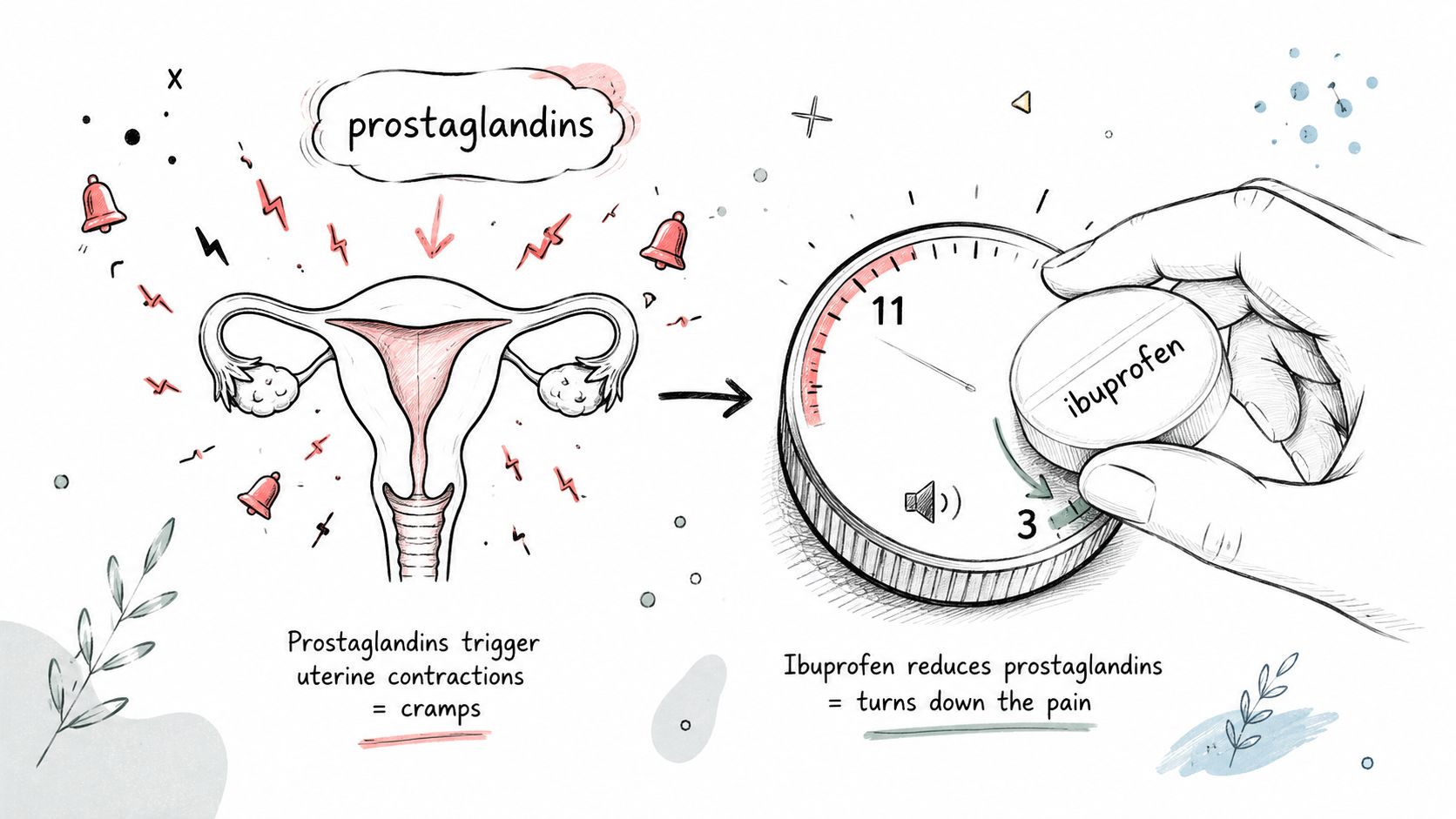
Think of cramps as chemical messengers—prostaglandins—forcing your uterus to clench like a tightly wound spring. As an NSAID, ibuprofen shuts down the machinery building those messengers. It calms contractions right at the source. Picture prostaglandins as an overzealous smoke alarm; ibuprofen is the hand hitting the mute button while you deal with the actual problem.
It’s not just a hunch. More than 80% of people who menstruate deal with cramping, and doctors have favored NSAIDs for years. Clinical trials consistently show they outshine basic painkillers. This track record means advice comes from decades of real-world results, not just clever marketing.
"Target the driver, not just the symptom" — lower prostaglandins to dial down cramp intensity alongside nausea and back pain.
Key advantages of ibuprofen explained simply:
Rapid action: Relief often kicks in within 20–30 minutes, nipping pain before it spirals.
Anti-inflammatory effect: It tackles the root trigger, not just the sensation of pain.
Flexible dosing: 200–400 mg doses are available over the counter, perfect for short courses during your cycle.
How This Plays Out in Real Life
Start early: Taking it at the first twinge usually stops pain from escalating.
Example: If cramps peak on the morning of day one, take 400 mg the night before, then repeat every 4–6 hours as needed.
Ease of access: Most people can try a short, scheduled course without a prescription.
Quick Practical Checklist
Check for contraindications like active ulcers, serious kidney issues, or NSAID-sensitive asthma.
Stick to OTC guidelines: typically 200–400 mg every 4–6 hours, staying under the daily max unless a doctor says otherwise.
Pop it with food if your stomach runs sensitive to avoid irritation.
Want to dig deeper into appropriate uses and product specifics? Check out our guide on ibuprofen for dosage and safety tips. Read also: How Ibuprofen Works and Safe Use
Table of Contents
How Ibuprofen Actually Works in the Body
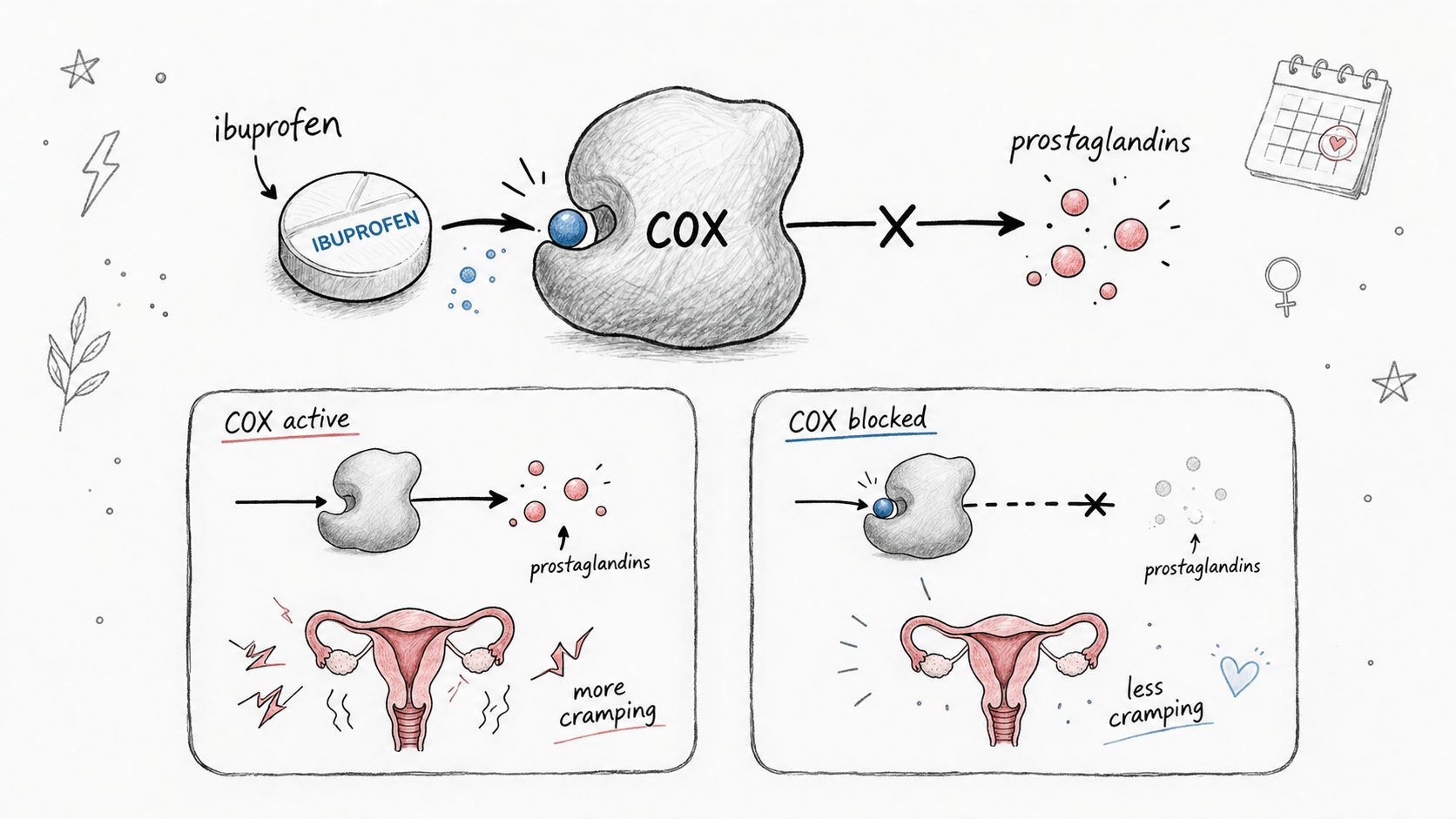
Ibuprofen falls under the nonsteroidal anti-inflammatory class. It puts the brakes on enzymes known as cyclooxygenase, or COX.
By blocking COX, you cut off the raw material your body needs to make prostaglandins—the very chemicals cranking up your uterine contractions and pain. Picture prostaglandins as a volume knob turned all the way up to 11, making the uterus squeeze painfully hard. Ibuprofen is the hand that dials it back down to a manageable 3, meaning gentler contractions and duller pain signals.
"Target the driver, not just the signal." Cutting prostaglandins gets to the root of the cramping instead of just masking the ache.
Feeling better happens on two fronts. First, fewer prostaglandins mean the uterus contracts with less force, dialing down those sharp cramps. Second, inflammation in the surrounding tissues drops, easing the back and pelvic pain that often tags along during your period.
H3 Onset Duration and Practical Impact
You can usually expect ibuprofen to kick in within 20–30 minutes, with many folks feeling real relief by the 30-to-60-minute mark. That faster start is exactly why ibuprofen often beats acetaminophen in dysmenorrhea trials.
Example timeline:
Take 200–400 mg at the first twinge.
Expect initial relief in 20–30 minutes.
Repeat every 4–6 hours as directed.
H3 Why Ibuprofen Beats Simple Analgesics
Acetaminophen dials down your perception of pain, but it doesn't stop prostaglandin synthesis. Think of acetaminophen as muting the radio while the alarm keeps blaring—ibuprofen actually shuts the alarm off.
The practical takeaway here is simple: start ibuprofen early, either the day cramps are due or at the very first sign of pain, for the best control. Pair it with heat, some gentle movement, or a good hydration routine to amplify the relief and reduce your chances of needing something stronger.
Recommended Dose and Timing for Best Results
Here's what most clinicians will tell you: over-the-counter ibuprofen usually means 200–400 mg every 4–6 hours, capping out around 1,200 mg per day unless your doctor says otherwise. That range hits the sweet spot between actually helping and keeping things safe for a few days of period pain.
Timing matters more than people think. If you know your cramps hit hard the morning of day one, try taking 400 mg the night before or the moment you feel that first twinge. Getting ahead of the pain can seriously blunt the worst of it the next morning.
"Start before the storm to reduce the worst part of the storm" — early dosing often cuts peak pain intensity significantly
How to Plan Doses Across Your Cycle
Identify your pattern: figure out when cramps usually kick in and when they peak
Schedule a first dose: take ibuprofen at the earliest sign of cramping, or a few hours before you expect the peak
Maintain spacing: repeat every 4–6 hours as needed, but don't blow past the daily max
Miss a dose? Just take it when you remember and get back on track — don't double up. Doubling up sends your blood levels spiking and raises your odds of side effects.
Food, Stomach Sensitivity, and Timing
Ibuprofen's rough on the stomach, so grabbing a light snack or some milk with it cuts nausea and lowers ulcer risk if you're sensitive. Fair warning though: food slows absorption a bit. If you need relief fast, take it at the first twinge and lean on gentle heat or movement while it kicks in.
Practical Examples and Troubleshooting
Morning peak example
Night before: 400 mg
Morning: if pain comes back, 400 mg on waking, then repeat every 4–6 hours as needed
Intermittent pain example
Take 200 mg at the first twinge, bump to 400 mg if it gets worse, and stick to the schedule
Short-term use guidance
Taking ibuprofen for a few days around your period is usually fine for most people, but loop in a clinician if you need it every cycle, have chronic conditions, or take blood thinners
Table for Quick Reference
Scenario | First Dose | Repeat Interval | Daily Max |
|---|---|---|---|
Typical cramps | 200–400 mg at onset | Every 4–6 hours | 1,200 mg OTC |
Severe predictable cramps | 400 mg night before | Every 4–6 hours | Consult clinician |
Getting the dose right, starting early, and following a few simple safety steps — that's how you make ibuprofen actually work for period pain.
Comparing Ibuprofen With Other Pain Relief Options
Got a period cramp emergency and staring at the medicine cabinet wondering what to grab? Let's break down how ibuprofen stacks up against the other common options—acetaminophen and naproxen—so you can make a smart, fast choice.
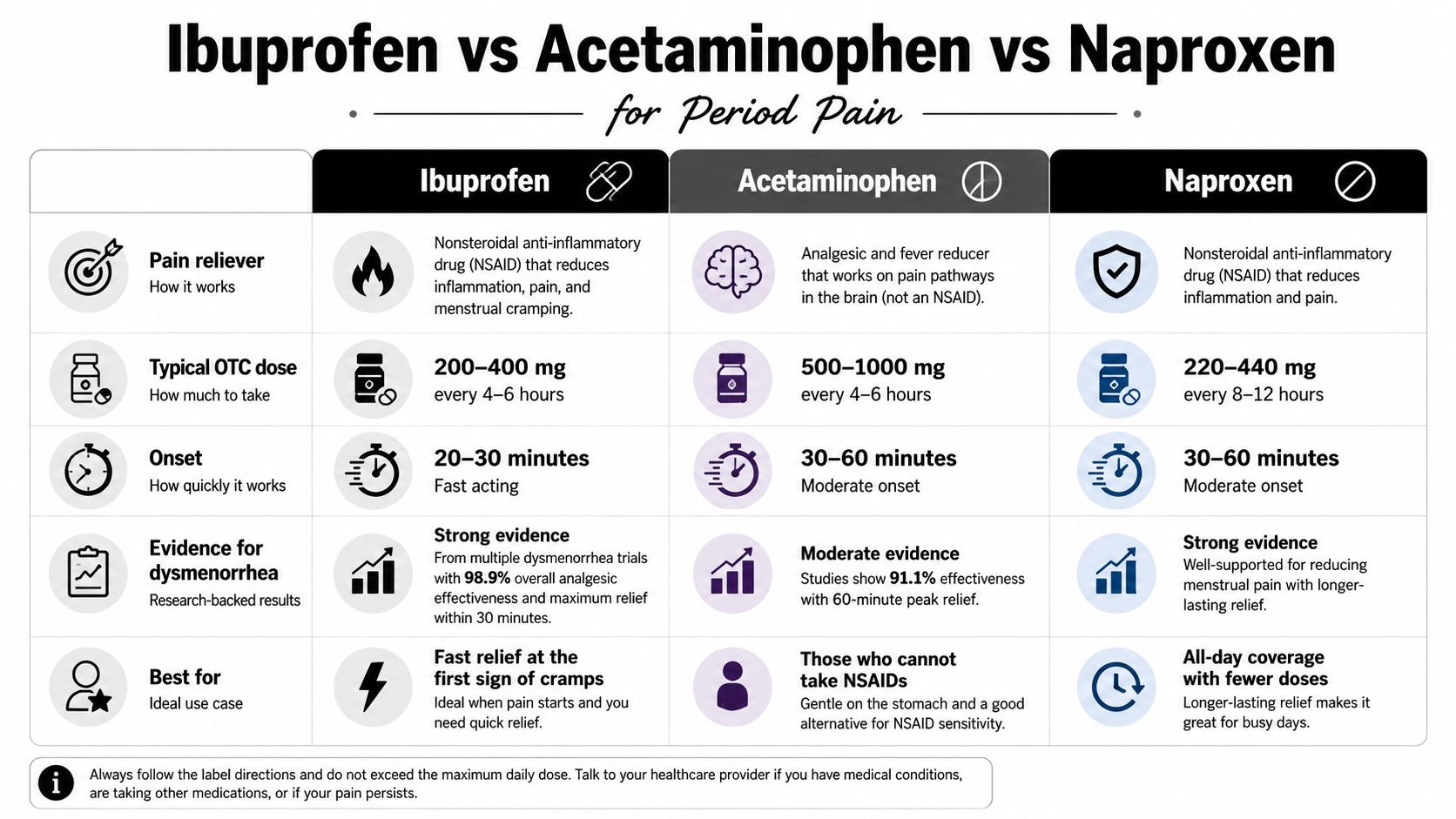
The chart above lays out typical over-the-counter doses, how quickly each kicks in, and what the evidence says about dysmenorrhea relief for all three.
So what's the real story? Ibuprofen hits peak relief faster—many people feel max benefit in roughly 30 minutes with a reported 98.9% overall analgesic effectiveness. That makes it your go-to when cramps ambush you and you need them gone now. Acetaminophen comes in at 91.1% effectiveness with a slower 60-minute peak, but it's a safer pick if NSAIDs are off the table for you. Naproxen sits in the middle—slightly slower onset, but it sticks around for 8–12 hours, meaning fewer doses when you want all-day coverage.
Here's a side-by-side look to make the decision even clearer:
Ibuprofen vs Acetaminophen vs Naproxen for Period Pain
Pain reliever | Typical OTC dose | Onset | Evidence for dysmenorrhea | Best for |
|---|---|---|---|---|
Ibuprofen | 200–400 mg | 20–30 minutes | Strong | Fast cramp relief |
Acetaminophen | 500–1000 mg | 45–60 minutes | Moderate | When NSAIDs aren't safe |
Naproxen | 220–440 mg | 30–60 minutes | Strong | All-day, longer-lasting control |
Quick Comparative Takeaways
Ibuprofen works by lowering prostaglandin production—so it actually treats what's causing the cramps instead of just numbing the pain.
Acetaminophen reduces pain perception but doesn't touch prostaglandins, which is why relief can feel slower and sometimes less complete.
Naproxen is another NSAID with solid evidence for dysmenorrhea, and the 8–12 hour dosing window is a real win when you don't want to think about pills all day.
Key insight: Ibuprofen is typically best for fast-onset cramps; naproxen is best for sustained relief; acetaminophen is best when NSAIDs are contraindicated.
Practical Examples For Real Life
Fast onset needed: Take 200–400 mg ibuprofen at the first twinge. Most people feel relief in 20–30 minutes, and you can repeat every 4–6 hours as needed.
All-day coverage: Use 220–440 mg naproxen for fewer doses and steadier control across the day—no clock-watching.
NSAID contraindication: Choose 500–1000 mg acetaminophen if you have ulcers, certain kidney issues, or NSAID-sensitive asthma. Just know it might not hit as hard.
How to Pick What's Right for You
If rapid relief matters, grab ibuprofen and start early—don't wait for cramps to peak.
If you're tired of dosing every few hours, naproxen gives you longer action with fewer pills.
If NSAIDs are unsafe for you, stick with acetaminophen and chat with your clinician about other options.
Read also: Curious about when acetaminophen makes more sense? Check out our full guide on acetaminophen for pain management.
Safety, Side Effects, and When to Skip It

Ibuprofen works great for cramps, but you've got to respect the fine print. Most people get nothing more than a little stomach upset, some heartburn, or mild nausea — annoying but manageable.
That said, there's a darker side if you push it too hard. Sticking with high doses or using it long-term can open the door to gastrointestinal bleeding and ulcers. Not fun.
Key risk: NSAIDs put extra pressure on your kidneys. If you're dehydrated or already dealing with reduced kidney function, that's a real problem.
Who Should Avoid Ibuprofen
Got an active gastric ulcer or a history of GI bleeding? Steer clear of NSAIDs entirely.
Significant kidney disease or severe liver issues? You need a doctor's green light first.
Asthma that flares up with NSAIDs? Ibuprofen can trigger bronchospasm — just don't.
Third trimester of pregnancy? That's a hard no. NSAIDs pose risks to the baby and can complicate delivery.
Interactions and Special Situations
Blood thinners and ibuprofen don't mix well — the bleeding risk climbs.
Some blood pressure medications lose their punch when NSAIDs enter the picture.
Regular drinking plus NSAIDs is a recipe for ulcers and bleeding. If you're wondering about mixing pain relievers and alcohol, our guide breaks it down.
When to Call a Clinician Instead of Self-Treating
Bleeding that soaks through a pad or tampon fast, or a period that suddenly looks nothing like your normal.
Pain that laughs at one or two standard doses of ibuprofen and keeps going.
New pelvic pain after age 25 that feels off compared to your usual cramps.
Black stools, fainting, or dizziness — possible signs of internal bleeding.
Tip 1: Stick to OTC dosing — 200–400 mg every 4–6 hours, capping at 1,200 mg daily unless your doctor says otherwise.
Tip 2: Sensitive stomach? Take it with a light snack or milk to cushion the blow.
Tip 3: If you're reaching for NSAIDs every month or for days on end, talk to your clinician about alternatives like prescription options or hormonal management.
Takeaway: Safety isn't a drawback — it's part of what makes ibuprofen work for you. Use it confidently when it fits, but respect the red flags and get medical input when bleeding, severe pain, or new symptoms show up.
Beyond Ibuprofen Habits That Boost Relief
Popping ibuprofen for cramps? Smart move. But here's the thing—it works way better when you pair it with a few daily habits that dial down inflammation and calm your nervous system.
Picture ibuprofen as a pressure washer blasting away at a dirty spot. Lifestyle habits are like the regular cleaning that keeps the mess from piling back up.
Heat therapy is a no-brainer, fast complement. A heating pad or a warm bath works wonders to relax that uterine muscle—think of it like oil loosening a rusted hinge. Slap on a heating pad for 15–20 minutes right when you take your first dose of ibuprofen to kickstart relief.
Get moving, but keep it gentle. Light yoga or a short walk gets your blood flowing and releases endorphins, your body's own painkillers. The result? Fewer sharp pain peaks and a smoother ride overall.
Don't underestimate the basics: water and sleep. Even being a little dehydrated can make cramps feel way worse, and poor sleep? It cranks up your pain sensitivity. Aim for solid sleep and steady water intake throughout your whole cycle, and ibuprofen will hit harder when you actually need it.
What you eat matters—not just the day of your period, but over weeks and months. Anti-inflammatory patterns, like loading up on vegetables, omega-3 rich foods, and cutting back on processed sugar, can ease prostaglandin-driven cramping over time. Tossing flaxseeds into your yogurt or having fatty fish twice a week is a solid play for long-term relief.
Supplements can lend a hand, but they're not a cure-all. A lot of people experiment with omega-3s, magnesium, or blends featuring turmeric, ginger, ashwagandha, and bromelain with BioPerine for absorption. Always run it by your clinician before starting something new, especially if you're on other meds.
"Small habits stack up into noticeably better cycles" — daily choices change your inflammatory baseline and the way ibuprofen performs.
Practical Routine To Try
Morning: Drink a big glass of water (250–500 ml) and do some light stretching to shake off morning stiffness.
Day before heavy flow: Eat a balanced meal with omega-3 rich foods and grab a magnesium-rich snack.
At first twinge: Apply heat, take ibuprofen per dosing guidance, then walk for 10 minutes.
Ongoing: Prioritize 7–9 hours of sleep and ease up on processed sugars during the week before your period.
Stick with these steps, and you'll likely find that each dose of ibuprofen works better, you need it less often, and you feel way more in control of your cycle.
Common Misconceptions and Your Top Questions Answered
Here's the thing — a lot of folks think ibuprofen just masks period pain. That's not really how it works. Ibuprofen actually dials down prostaglandins, those chemical messengers that tell your uterus to contract like crazy. So it's going after the source, not just covering up the feeling.
Then there's the "save it for the worst cramps" crowd. Honestly? Starting early usually works way better. Pop a dose at the first twinge or right before things typically hit their peak, and you'll stay ahead of the pain instead of chasing it.
And yeah, people worry about taking it every month. Short bursts at the right dose are well-studied and fine for most adults. But if you're reaching for painkillers every single cycle without fail, that's your body waving a flag — get checked out for stuff like endometriosis or fibroids.
H3 Quick Evidence Summary
How it works: Ibuprofen blocks COX enzymes, which means fewer prostaglandins, weaker uterine contractions, and less inflammation.
Does it actually help?: NSAIDs beat out plain painkillers for period cramps in study after study.
The real-world win: Taking it early and on schedule tends to knock down peak pain and means you swallow fewer pills overall.
"Get ahead of the storm before it hits" — early dosing can seriously cut how bad the worst part feels
H3 FAQ Style Answers
Can I take ibuprofen on an empty stomach? You can, but your stomach might not thank you. A light snack or some milk goes a long way toward keeping things calm down there. If you need relief fast, pair it with a heating pad while it kicks in — just don't make an empty-stomach habit if your gut's sensitive.
How soon before cramps should I take it? First twinge or a few hours before your usual peak is the sweet spot. If mornings are brutal, try a dose the night before and another when you wake up — it takes the edge off. Standard OTC doses run 200–400 mg every 4–6 hours, keeping under 1,200 mg a day unless your doctor says otherwise.
Is it safe to use every month? Short runs each month are common and generally fine for most adults. But leaning on it every cycle for months on end, taking high doses long-term, or using it daily? That's worth a conversation with your clinician. If you've got ulcers, kidney issues, NSAID-sensitive asthma, or you're on blood thinners, don't make it a routine without medical input.
How does ibuprofen compare with hormonal options like the pill or IUD? Hormonal methods thin the uterine lining or stop ovulation, which lowers prostaglandin production over the long haul. They're playing the long game. Ibuprofen, on the other hand, tackles acute pain fast but doesn't change your cycle. For severe or recurring pain, hormonal therapy might be worth discussing with your doctor as a preventive move rather than a quick fix.
H3 Practical Takeaways
Start early: catching pain at the first sign beats waiting for the full-blown misery.
Stack your tools: heat, water, gentle movement, and decent sleep all boost ibuprofen's effect.
Know the red flags: weirdly heavy bleeding, pain that laughs at standard doses, or brand-new symptoms — all worth a clinician visit.
Bullet Points For Fast Reference
Take 200–400 mg at the first twinge; repeat every 4–6 hours as needed.
Food protects your stomach; absorption slows a hair but it's worth it.
Needing pills every cycle or for days on end? Get some medical advice.
Heads up: If ibuprofen stops working or you notice black stools, fainting, or bleeding that seems off, reach out to a healthcare provider right away.
For trusted supplements that support inflammation management and cycle wellbeing, check out River of Life at https://riveroflifecapsules.com