

Curcumin with Black Pepper: Boost Absorption 2000%

If you're looking at a turmeric bottle right now, you're probably trying to solve something practical. Stiff knees in the morning. Post-workout soreness that lingers. Brain fog when stress runs high. Maybe you've heard that adding black pepper turns turmeric into a much stronger supplement, and now you're wondering whether that famous absorption claim is real or just marketing.
The short answer is that curcumin with black pepper can be a smart combination, but the full story matters. Curcumin is the main active compound in turmeric, and on its own it doesn't absorb well. Black pepper extract, specifically piperine, can change that dramatically. At the same time, the same mechanism that improves absorption can also interfere with how your body handles medications. That's the part many guides leave out.
A good practitioner view holds both truths at once. This combination has a real scientific rationale, and it also demands caution. If you understand where it works, where claims get overstated, and who should avoid it, you can make a much better decision.
Table of Contents
The Golden Spice and Its Hidden Flaw
You buy a turmeric supplement for aching knees or stubborn post-workout soreness, take it for a few weeks, and feel almost nothing. In practice, that often has less to do with turmeric being overhyped and more to do with curcumin being hard for the body to absorb and keep available.
Curcumin is the best-studied active compound in turmeric, which is why it gets so much attention for inflammation support, joint comfort, and broader wellness goals. The catch is simple. Taken on its own, curcumin does not move through the body very efficiently. A meaningful amount may never make it into circulation before the gut and liver break it down and clear it.
That is the hidden flaw behind many disappointing turmeric products. The label can look impressive while the actual delivery falls short.

Why curcumin gets stuck at the gate
Curcumin faces three practical problems. It does not dissolve well, it is absorbed poorly through the gut, and the body processes it quickly once it gets in. For someone hoping for steady support, that combination matters a lot.
A simple comparison helps here. Curcumin behaves like a useful passenger trying to board a train with the wrong ticket. Some of it gets through, but much of it is turned away or rushed out before it reaches the places you want it to act.
Here is what that means in real life:
Absorption is limited in the gut, so only a small share gets through.
The liver and intestinal enzymes process it quickly, which shortens how long it stays available.
Results can be inconsistent, especially with plain turmeric powders or low-quality capsules.
Practical rule: If a turmeric supplement does not explain how it improves absorption, be careful with your expectations.
Food turmeric and therapeutic curcumin are not the same thing
Turmeric in food still has value. It adds flavor, contributes helpful plant compounds, and fits well into an overall anti-inflammatory eating pattern. I often tell people to keep using turmeric in the kitchen if they enjoy it.
But food turmeric and a concentrated curcumin supplement serve different jobs. Cooking with turmeric is a daily wellness habit. A curcumin supplement is a more targeted tool, usually chosen for joint stiffness, recovery, or other situations where people want a stronger and more reliable effect.
That distinction matters because the popular story is incomplete. People hear that black pepper can raise absorption dramatically, then assume more is always better. The more useful view is this: better absorption can make curcumin more effective, but it also raises the stakes for quality, dosing, and safety, especially for anyone taking medications.
How Black Pepper Unlocks Curcumin's Power
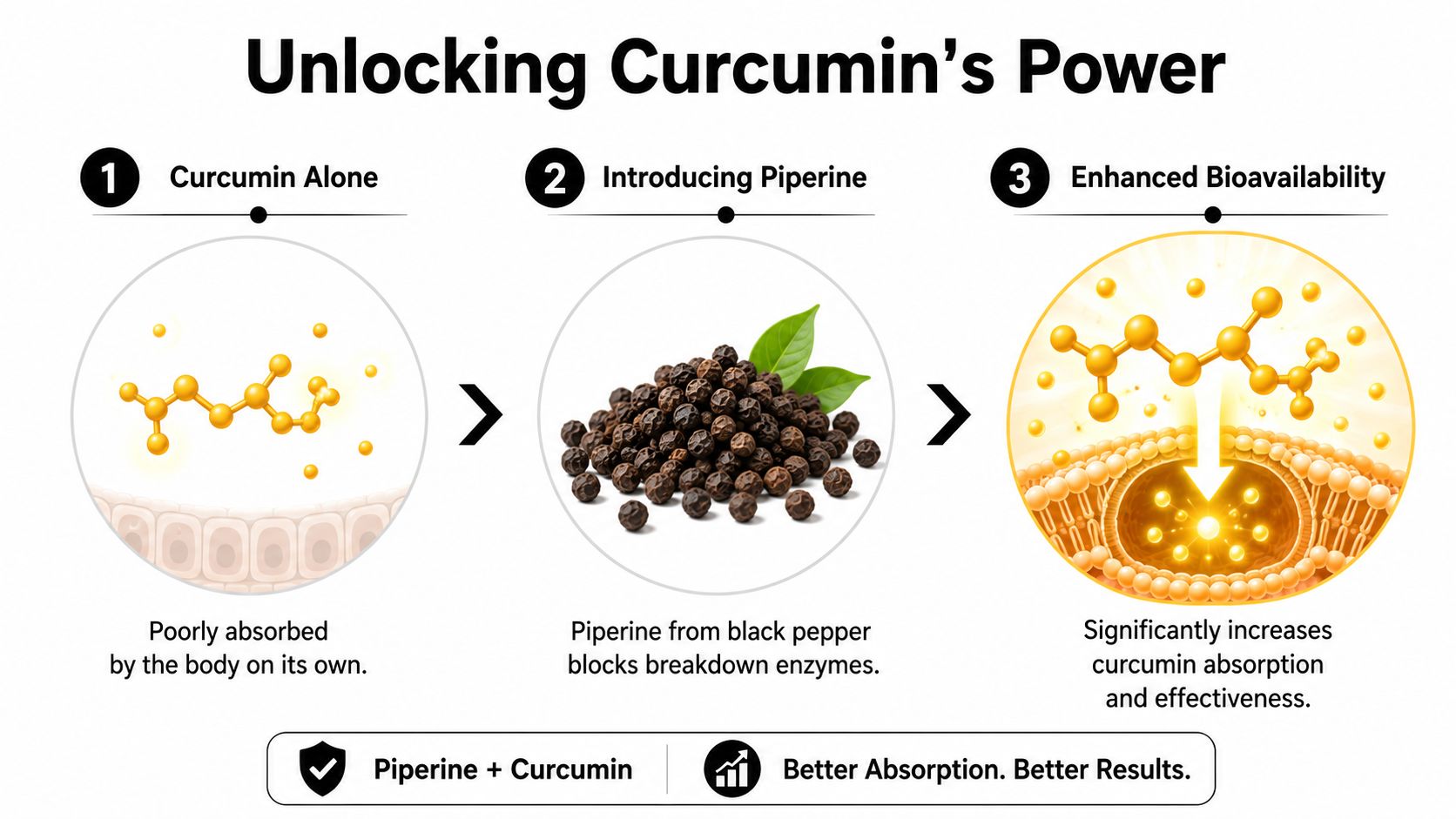
Black pepper's active compound is piperine, and in supplement design it's often treated as a bioenhancer. That's the practical term for an ingredient that helps another ingredient get absorbed and stay available longer.
The best-known evidence comes from a landmark human study published in 1998. In that study, combining 2,000 mg of curcumin with 20 mg of piperine increased curcumin's oral bioavailability by up to 2,000% in human subjects, as described in the clinical summary of the Shoba et al. study.
What the landmark human study actually showed
That 2,000% figure is why you see bold claims on so many labels. It matters because it shows curcumin with black pepper can move from poorly absorbed to meaningfully detectable in the bloodstream. In plain terms, piperine helped turn curcumin from a compound with weak delivery into one with much better odds of getting into circulation.
There are two points worth keeping straight:
What the result means | What it does not mean |
|---|---|
Curcumin levels in the body can rise sharply when paired with piperine | Every person will feel dramatically better |
Formulation matters, not just ingredient names | A kitchen sprinkle always reproduces supplement-level effects |
Absorption can improve enough to support therapeutic use | Higher plasma levels guarantee better pain, mood, or cognition outcomes |
The study is important. It is also often oversimplified.
Why piperine works
Piperine acts like a bodyguard for curcumin. Instead of letting curcumin get rushed out of the system, it slows the processes that would normally break it down and clear it too quickly.
The verified data supports several mechanisms:
Enzyme inhibition: Piperine inhibits glucuronidation and affects drug-metabolism pathways in the intestine and liver.
Longer exposure: By slowing metabolism, it delays curcumin clearance and allows higher plasma levels.
Gut transport support: It can also increase intestinal epithelial permeability, which helps more curcumin cross the gut barrier.
The mechanism isn't just theoretical. The UK Committee on Toxicity review also notes an in vitro Caco-2 model showing a 2.5-fold increase in curcumin absorption with piperine, supporting the idea that piperine improves intestinal uptake through more than one route, as summarized in the COT review on piperine and curcumin absorption.
Piperine doesn't make curcumin stronger by changing curcumin itself. It changes the body's handling of curcumin.
That distinction matters because it's also where the safety concern begins. If piperine can slow the breakdown of curcumin, it can also affect the handling of some medications. We'll get to that directly in the safety section.
Joint, Brain, and Mood Benefits Backed by Science
Individuals don't buy curcumin because they care about bioavailability charts. They buy it because something hurts, something feels inflamed, or something feels off. The appeal is practical: move more comfortably, recover better, think more clearly, feel steadier.
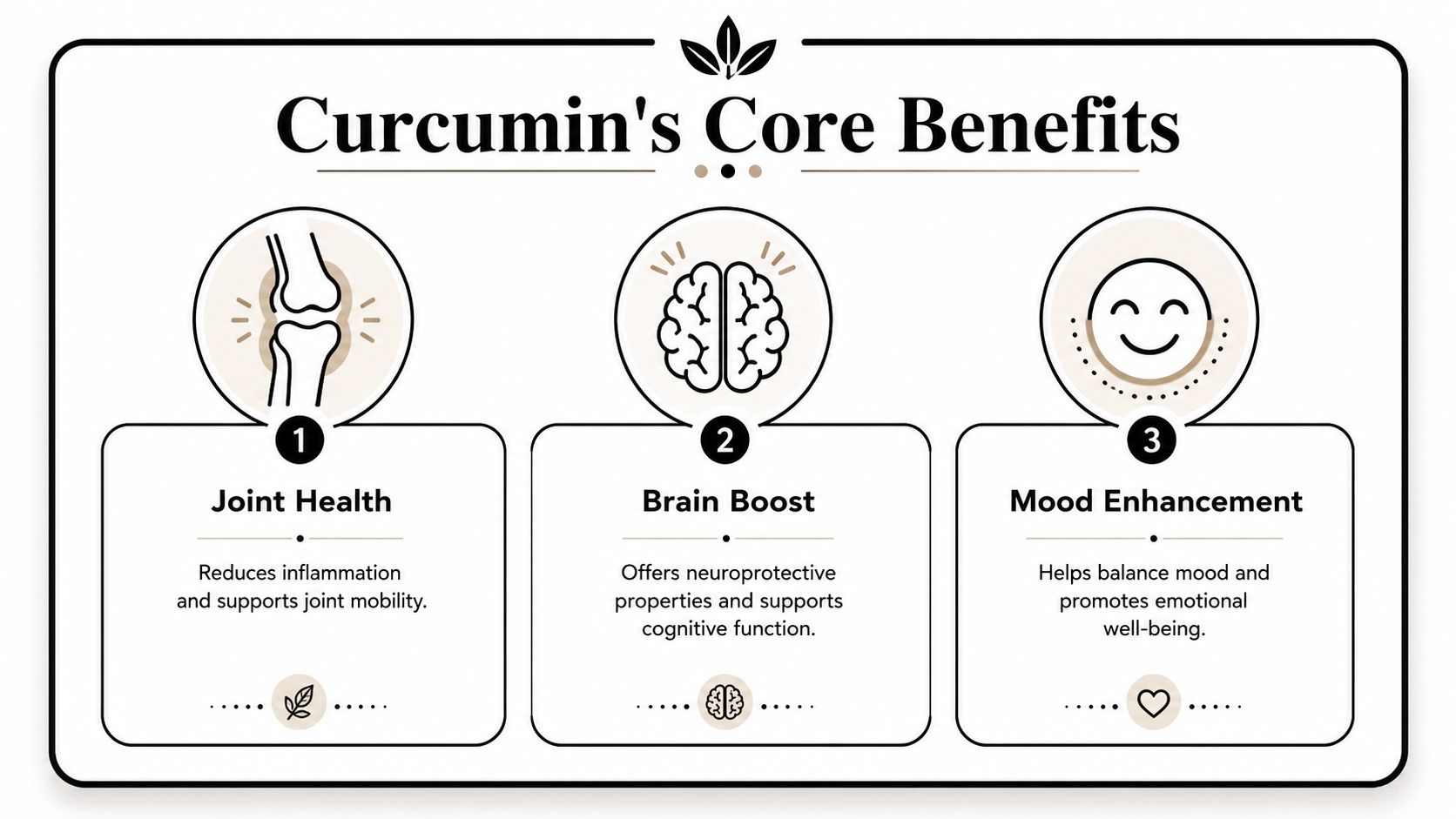
Curcumin's broad reputation comes from its anti-inflammatory and antioxidant activity. That's why it's commonly used in formulas aimed at joint health, cognitive support, and mood balance. Those are reasonable targets. The mistake is assuming that the absorption headline tells you exactly how much better you'll feel.
What people usually want from curcumin
For joints, the goal is usually less day-to-day friction. People want easier stairs, less stiffness after sitting, and a smoother return to activity after exercise. For the brain and mood side, the interest is often more subtle. Better mental steadiness, less stress-related fog, and support for overall resilience.
That pattern makes sense because inflammation rarely stays in one lane. When the body is under physical stress, mental fatigue often tags along.
A helpful way to frame expectations is by use case:
Joint comfort: Often the first reason people try a curcumin formula.
Exercise recovery: Useful when soreness and inflammation are part of an active routine.
Mental clarity and mood support: More gradual, usually best seen as part of a wider lifestyle plan that includes sleep, movement, and stress management.
If joint support is your main reason for considering it, this guide on how turmeric curcumin helps with arthritis and joint pain gives a more condition-specific look at that use.
Why more absorption does not guarantee more symptom relief
This is the nuance most articles skip.
A 2,000% increase in bioavailability sounds like it should produce an equally dramatic jump in pain relief or mobility. That's not how biology works. Blood levels and lived outcomes are related, but they are not identical.
A 2024 human trial found that turmeric with black pepper reduced self-reported pain, but it was not significantly better than turmeric alone in that specific real-world dietary context, according to the open-access 2024 human trial summary. That's an important corrective to supplement marketing.
Better absorption improves the chance that curcumin can do useful work. It doesn't guarantee a dramatic symptom change in every setting.
This doesn't make piperine pointless. It means readers should separate two claims that often get blended together:
Absorption claim: Curcumin with black pepper can raise curcumin availability in the body.
Outcome claim: More availability may help, but the effect on pain, comfort, mood, or cognition can still be modest and context-dependent.
Where curcumin fits best in real life
Curcumin works best when you treat it like a support tool, not a rescue tool. It's not like taking something for immediate relief and feeling a switch flip. It's better suited to people building a steady routine around inflammation management.
That usually means it fits into a broader pattern:
anti-inflammatory eating habits
regular movement
sleep support
reduced reliance on short-term fixes when possible
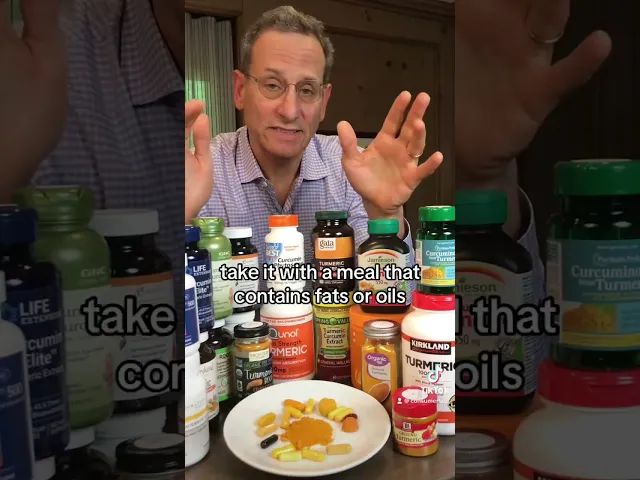
It also helps to take it with food because curcumin is fat-soluble. Pairing it with a meal that contains dietary fat gives it a better absorption environment. For some people, newer phospholipid or micellar forms may be worth considering when they want improved uptake without relying on piperine.
Safe Dosing and Critical Drug Interaction Warnings
This is the section that matters most if you take any medication.
The same piperine that helps curcumin stay in the body longer can also slow the metabolism of certain drugs. Verified data notes that piperine inhibits UGT and CYP enzymes, which can raise levels of common over-the-counter and prescription medications in the body, including examples such as blood thinners, statins, and antidepressants, as described in this review discussing piperine interaction concerns.
The dose range most people will see
Expert guidance summarized in the verified data describes standardized formulas with 500 to 2,000 mg curcumin paired with 5 to 20 mg piperine per daily dose as a common target range for balancing absorption and practicality. Verified BioPerine information also states that 5 mg per dose is typically recommended, with a maximum daily intake not exceeding 13.32 mg for that patented extract when used as directed.
You don't need to memorize every number on a label. You do need to notice whether the formula includes black pepper extract and whether the manufacturer clearly states the amount.
A simple safety screen looks like this:
No medications and generally healthy: You're still wise to start cautiously and follow the label.
Taking prescriptions or frequent OTCs: Talk with your clinician or pharmacist before starting.
Older adult with multiple medications: Do not self-prescribe a piperine-containing formula based on internet hype.
Who needs medical guidance first
If you're using blood thinners, cholesterol medication, antidepressants, or any medicine with a narrow safety window, this is not optional. You need an individualized review.
People sometimes assume a supplement is automatically gentler than a pain reliever because it comes from a plant. That's not a reliable rule. Natural compounds can still alter metabolism in meaningful ways. If you're comparing supplement strategies with conventional relief options, this article on ibuprofen and what to consider before relying on it can help frame the bigger picture.
Safety checkpoint: If piperine changes how your body processes curcumin, it may also change how your body processes your medication.
Other groups that should slow down and ask questions first include people with chronic conditions, those using several supplements at once, and anyone with a history of medication sensitivity. In practice, the safest move is simple: bring the supplement label to your appointment and ask for a medication interaction review.
How to Choose a High-Quality Curcumin Supplement
You stand in front of a shelf full of turmeric bottles. Several say “high potency.” Several mention black pepper. One promises absorption support, another hides the actual amounts in tiny print. The label decides whether you are buying a useful formula or an expensive spice capsule.

A quick label-reading checklist
Start with the turmeric itself. A better formula tells you whether it uses turmeric root powder, turmeric extract, or a standardized curcumin extract. If your goal is a stronger curcumin-focused product, look for clear standardization to high curcuminoid content instead of vague wording like “turmeric complex.”
Then look at the absorption method. Piperine is the reason many products advertise that headline-grabbing absorption boost, but a key question is whether the label tells you exactly what form and amount it uses. Named black pepper extracts such as BioPerine® are easier to evaluate than a generic “black pepper blend.” As noted earlier, piperine can raise absorption in a meaningful way. It can also raise interaction risk, which is why a transparent dose matters.
Use this checklist:
Standardized curcumin or curcuminoids: Clear percentages and ingredient forms are easier to judge than broad marketing terms.
A named absorption ingredient: BioPerine® or another clearly identified delivery system is easier to assess than unspecified pepper powder.
Exact amounts per serving: You should be able to see how much curcumin and how much piperine you get in one dose.
Simple ingredient panel: Fewer fillers, dyes, and unnecessary extras usually make the formula easier to evaluate.
A formula that matches your goal: Some products focus only on curcumin absorption, while others add ingredients for joint comfort, digestion, or recovery.
What to avoid on a supplement label
A flashy front label can hide a weak formula.
The most common problem is poor transparency. If a brand uses a proprietary blend, you cannot tell whether the active ingredients are present in useful amounts or just sprinkled in for marketing.
Here are the red flags I tell people to watch for:
Red flag | Why it matters |
|---|---|
“Proprietary blend” with no clear amounts | You cannot judge dose, value, or interaction risk |
Raw turmeric powder only | It may contribute color and plant compounds, but it does not solve curcumin delivery by itself |
No stated absorption strategy | The product may leave curcumin's main limitation unaddressed |
Black pepper listed without a defined extract amount | You cannot tell how aggressive the absorption effect may be |
No medication caution language | That suggests weak safety communication for an ingredient that can affect drug handling |
If you want to compare multi-ingredient options, this guide to ginger and turmeric capsule formulas for joint and recovery support shows how brands combine turmeric with other ingredients.
A practical buying mindset
The best choice depends on the person using it.
If you do not take medications and want the standard curcumin plus piperine approach, choose a product with a clearly labeled curcumin extract and a stated amount of black pepper extract. If you take prescriptions, use several supplements, or have reacted strongly to supplements before, a piperine-free delivery system may be the better starting point. Phytosome and other enhanced-delivery forms can make more sense in that situation because the goal is not just absorption. The goal is absorption you can use safely.
This short video gives a helpful visual overview before you buy:
A good curcumin supplement has three things: a form you can identify, a delivery method you can understand, and a label that does not hide the details that matter.
A Smart Approach to Natural Wellness
Curcumin with black pepper earned its reputation for a reason. Curcumin has genuine potential, and piperine can solve the absorption problem that limits curcumin on its own. That combination is why it remains a popular option for people focused on joint comfort, recovery, and broader inflammatory balance.
The smarter view is more balanced than the average ad. The 2,000% figure speaks to bioavailability, not a guaranteed life-changing result. Some people notice meaningful support. Others get a smaller effect than marketing led them to expect. And if medications are part of the picture, piperine deserves real caution.
Choose a formula that is standardized, transparent, and appropriate for your health status. Take it with food. Respect the interaction risk. Ask your clinician when prescriptions or chronic conditions are involved.
Natural wellness works best when it stays evidence-aware, not hype-driven.
If you want a simple way to apply these principles, River of Life offers a capsule formula built around turmeric extract with BioPerine®, plus ginger, bromelain, and ashwagandha for people focused on joint comfort, stress resilience, sleep quality, and mental clarity.