
Stress and Resilience Guide to Calmer Days Ahead

You wake up already tired, check your messages before getting out of bed, rush through breakfast, and carry a tight feeling in your chest into the first meeting. By evening, a small disagreement at home feels much bigger than it should. You may be functioning, but you're not recovering.
That pattern is where stress and resilience meet. Stress can sharpen attention during a short challenge, yet prolonged activation can affect sleep, mood, thinking, behavior, and physical health. The World Health Organization defines stress as a state of worry or mental tension caused by a difficult situation, and reports that more than 1 billion people worldwide are living with mental health conditions (World Health Organization).
Resilience offers a more useful question than “How can I become tougher?” It asks, “How can my body, mind, routines, and relationships help me adapt, recover, and keep functioning when pressure rises?” This guide connects that question to the HPA axis, cortisol, sleep, movement, social support, cognitive skills, and carefully considered supplements.
Resilience isn't pretending that nothing hurts. It isn't working endlessly without rest, either. It's a trainable process of responding flexibly, restoring balance, and knowing when support is needed.
Table of Contents
Introduction to Stress and Resilience in Everyday Life
A demanding day rarely arrives as one dramatic event. Pressure can gather through an urgent email, a difficult commute, a missed meal, unfinished work, a child who needs attention, and a restless night. By the final problem, your body may already be responding as if danger is nearby.
That response serves a purpose. Stress can direct energy and attention toward a challenge. The problem is prolonged activation, when the alarm remains switched on after the situation has become safer. Faster thoughts, irritability, muscle tension, poor sleep, reduced patience, and withdrawal from supportive people can all signal that recovery is falling behind demand.
The issue reaches far beyond individual routines. The World Health Organization reported a 25% increase in the global prevalence of anxiety and depression during the first year of COVID-19 (World Health Organization). The same source reported that 470 million people worldwide had an anxiety disorder in 2023, with anxiety disorders affecting an estimated 5.8% of the global population.
These figures do not mean that every stressful day becomes a mental disorder. They do show why stress deserves more than casual advice. It can shape sleep, work, relationships, decision-making, and the point at which someone seeks care.
Resilience gives us a practical way to understand recovery. The American Psychological Association describes resilience as the process and outcome of successfully adapting to difficult experiences through mental, emotional, and behavioral flexibility (American Psychological Association). This view moves resilience away from willpower alone. It treats it as a trainable biological and behavioral system, supported by the HPA axis, sleep, movement, social connection, and routines that help regulate inflammation and recovery.
Adaptogens and supplements may fit into that picture, but they do not replace sleep, nourishment, or professional care. Their evidence and suitability vary, so they deserve careful context rather than broad promises.
You do not need to change your whole life in a week. Start by noticing what keeps your stress response active, then choose one routine that helps your system return to a steadier state. Resilience isn't a personality test you either pass or fail.
What Stress and Resilience Really Mean
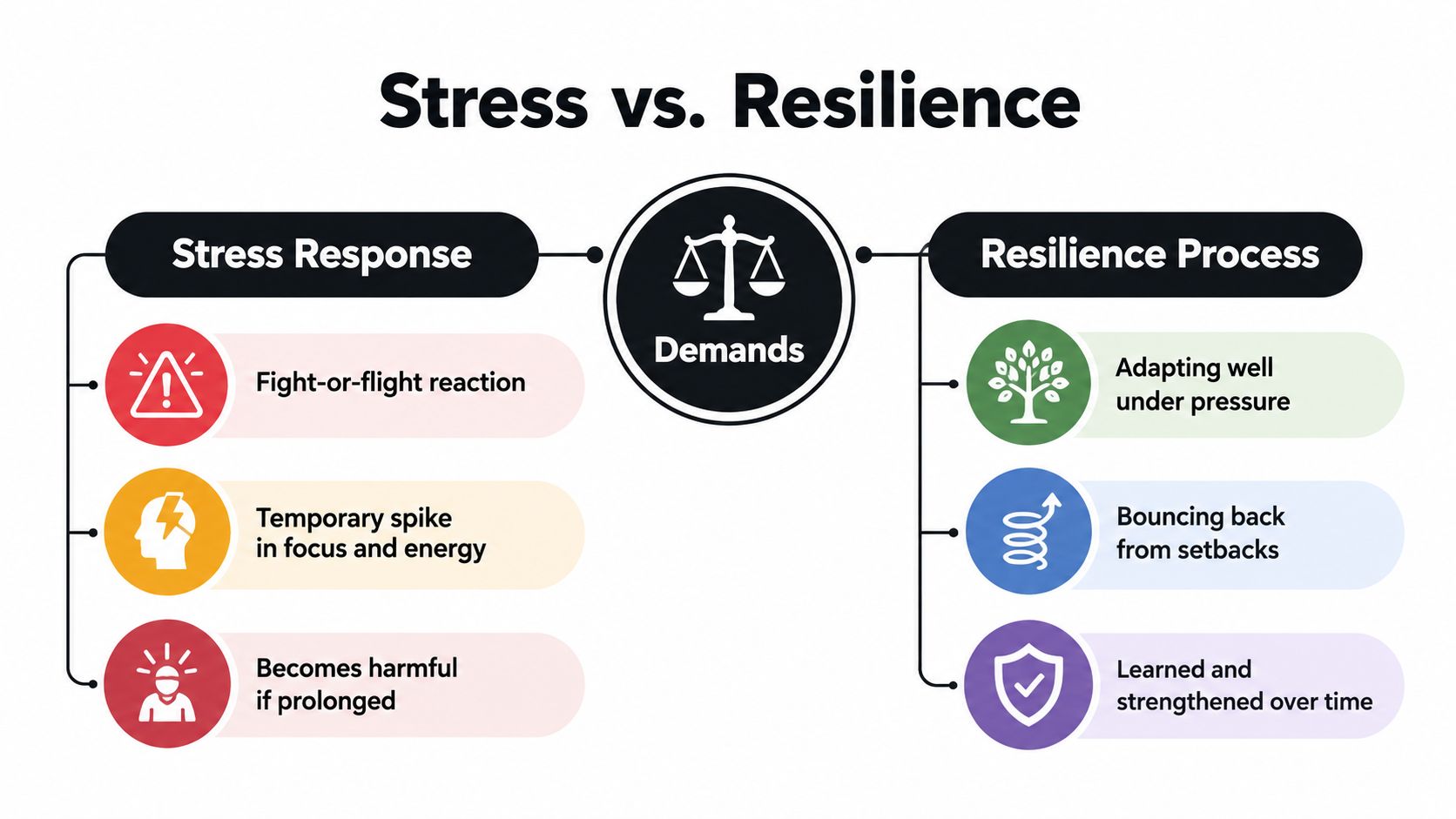
You receive a tense message just before an important meeting. Your shoulders tighten, attention narrows, and you begin planning what to say. That chain is stress: a response to a demand, whether the demand is physical, emotional, social, or mental. The body shifts alertness, energy, attention, and behavior to help you respond.
The response is useful when it matches the situation and settles afterward. Like a thermostat that raises the heat during a cold spell and stops once the room is comfortable, your stress system should increase activation for a challenge and reduce it as safety returns. If a difficult conversation ends but your body remains keyed up for hours, the issue is not the demand. Recovery has not fully started.
Resilience describes the adjustment process around that challenge. It includes adapting during difficulty, recovering afterward, and changing your approach when the first response is not working. Resilience is therefore not a fixed personality trait or a test of willpower. It is a trainable system shaped by mental and behavioral flexibility, sleep, daily routines, and the biological pathways that coordinate stress and recovery, including the HPA axis and processes related to inflammation.
Stress is not always harmful
A short burst of stress can sharpen attention, raise energy, and direct you toward the next useful action. Once the demand passes, eating, sleeping, gentle movement, slower breathing, and contact with safe people can help the body recognize that the situation has ended.
Chronic stress follows a different pattern. Repeated demands leave less time for the system to return to baseline. You may keep completing tasks while recovery becomes shallow, leaving you restless, forgetful, emotionally flat, or constantly alert.
Resilience is not the same as toughness
Toughness often means enduring more without changing course. Resilience means noticing what is happening and making a useful adjustment. That may involve asking for help, setting a boundary, taking a restorative break, changing an interpretation, or seeking professional care.
Practical rule: A resilient response does not always mean pushing forward. Sometimes it means reducing the load so recovery can begin.
Stress will not disappear from life. The aim is a flexible system that can meet pressure, recover afterward, and avoid remaining trapped in alarm.
How Stress Affects Your Body and Brain
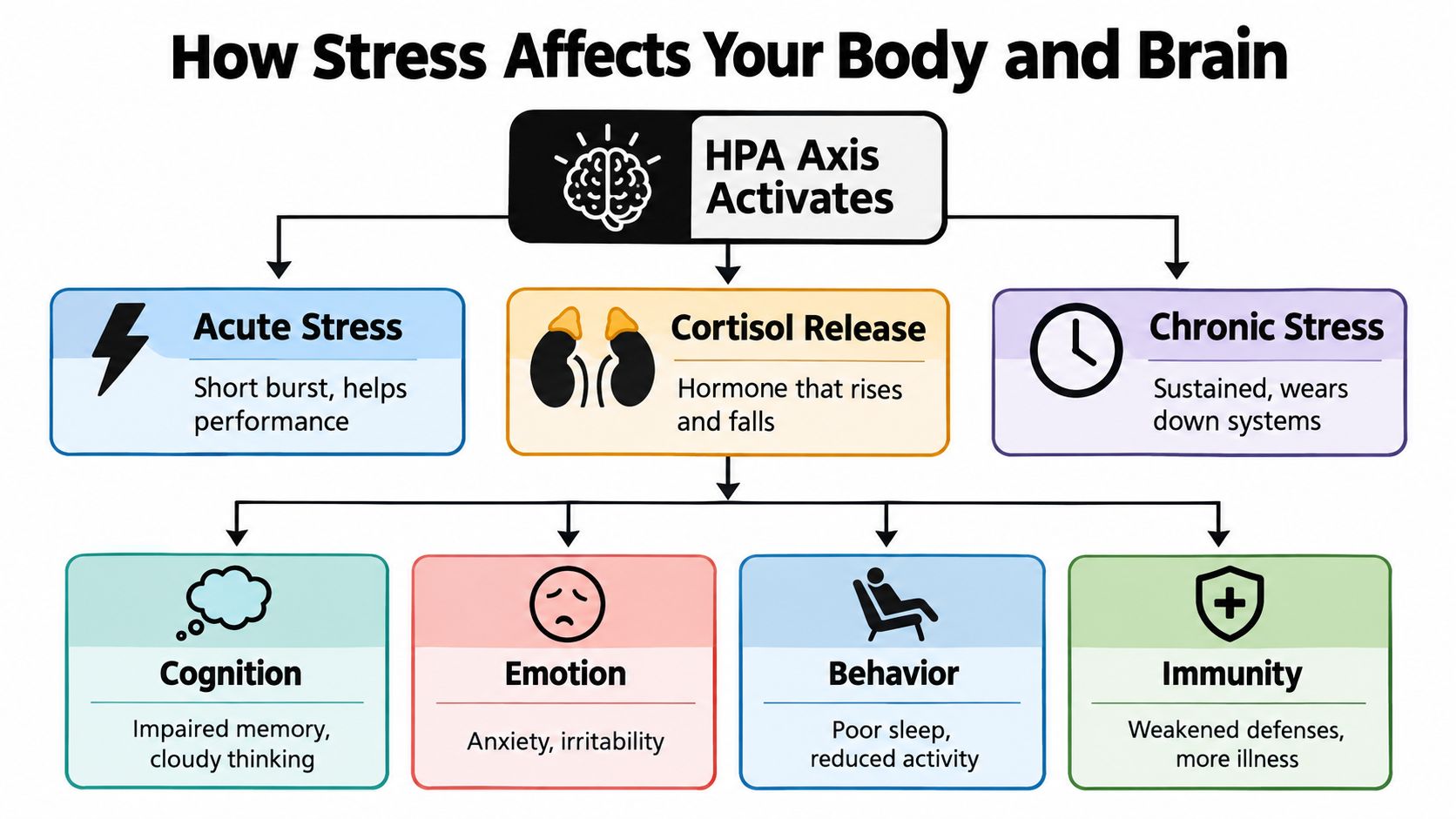
When your brain interprets a situation as threatening or demanding, it can activate the hypothalamic-pituitary-adrenal axis, commonly called the HPA axis. This system links brain signaling with the adrenal glands, helping coordinate the release of cortisol.
Cortisol isn't a “bad” hormone. It helps organize energy and alertness when you need to act. In a short-term challenge, that rise can support performance. Afterward, the body should reduce the signal and return toward a calmer state.
A body-wide response
The stress response doesn't stay inside your thoughts. Prolonged activation can influence cognition, emotion, behavior, sleep, and immune functioning. You may find it harder to concentrate, become more irritable, sleep poorly, or reduce activities that usually support your health.
A useful cause-and-effect chain looks like this:
Demand: Your brain identifies pressure, uncertainty, conflict, or threat.
Activation: The HPA axis helps coordinate a stress response.
Cortisol changes: The body adjusts energy and alertness.
Daily effects: Sleep, mood, thinking, activity, and relationships may shift.
Recovery need: The system requires safety, rest, nourishment, and support.
Acute stress is a short burst. Chronic stress is sustained activation that can wear down several systems when recovery remains limited. The experience may feel psychological, but the response involves physiology as well.
Resilience is biological as well as behavioral. It involves how the body adapts, restores balance, and manages repeated demands.
A newer systems view also looks beyond the central nervous system. A 2025 review describes resilience as a multifaceted capacity to adapt, recover, and grow after adversity, while a 2025 editorial discusses gut-vascular barrier function and metabolic states as part of the expanding resilience field (International Journal of Molecular Sciences review). This perspective helps explain why a single coping tip rarely solves chronic overload.
Watch the video below for a visual explanation of stress physiology and the HPA axis.
Daily Foundations That Build Resilience
Daily habits work best as a connected recovery system. Sleep supports emotional regulation, movement helps discharge tension and maintain physical capacity, nourishing meals provide steady fuel, and social connection reminds the nervous system that you don't have to handle every demand alone.
You don't need a perfect routine. Choose actions that are easy enough to repeat on demanding days.
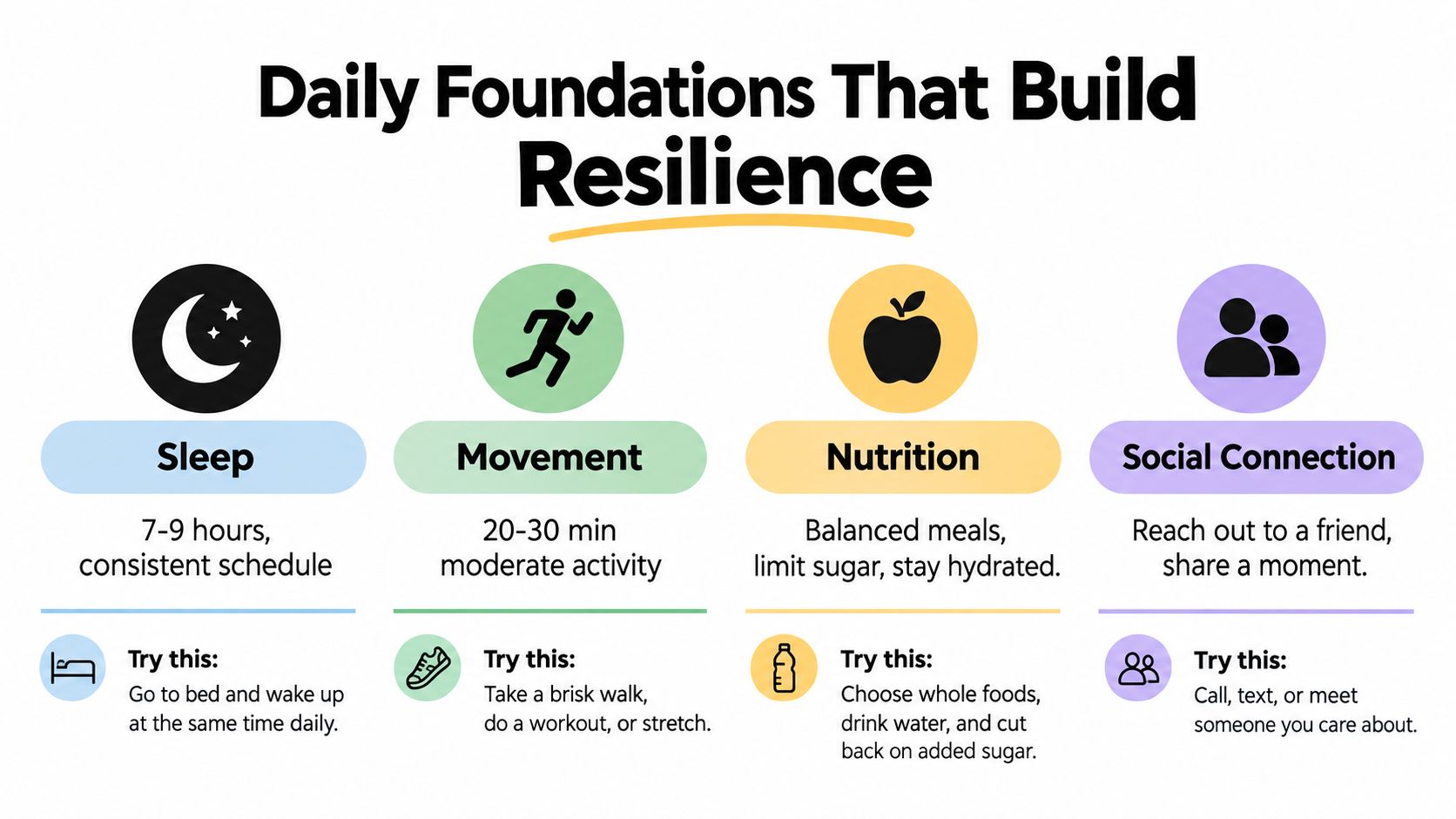
Sleep gives the system time to reset
Protect a consistent sleep and wake pattern where possible. A regular wind-down routine, dimmer light in the evening, and a phone-free transition can make bedtime feel less like an abrupt stop after a demanding day.
If your mind races, write down tomorrow's tasks before getting into bed. This doesn't solve every sleep problem, but it can reduce the pressure to keep rehearsing reminders mentally.
Movement changes the context of stress
Movement doesn't have to mean an intense workout. A walk after work, gentle mobility practice, cycling, dancing, or a few minutes of stretching can create a clear transition between work and home.
Use the activity you'll repeat. Someone who dislikes gyms may benefit more from a brisk walk with a friend than from an ambitious program that quickly becomes another obligation.
Food and hydration support steadier energy
Build meals around a combination of nourishing carbohydrates, protein, healthy fats, and fiber-rich foods. Keep water available, especially during busy periods when thirst can feel like fatigue or irritability.
A simple meal plan can reduce decision fatigue. Prepare one dependable breakfast, keep a practical lunch option available, and avoid letting long gaps between meals become your default.
Connection helps regulate pressure
Send a message to someone you trust. Share a meal without multitasking. Ask for a short conversation instead of waiting until stress becomes a crisis. Connection doesn't require a dramatic disclosure, it can begin with “Today has been a lot.”
The River of Life guide to reducing stress naturally can offer additional education, but your first step can remain very small.
Try this checklist:
Sleep: Set one consistent evening cue, such as preparing tomorrow's clothes before starting your wind-down.
Movement: Take a short walk or stretch during a natural transition in your day.
Nutrition: Plan one balanced meal before hunger and fatigue narrow your choices.
Connection: Contact one person who helps you feel safe, understood, or encouraged.
Start with repeatability: The routine you can practice imperfectly is more useful than the routine you can follow only on an easy day.
Cognitive and Social Strategies for Stronger Resilience
A stressful thought can feel like a fact. Cognitive reframing creates a small gap between the event and the meaning you assign to it.
Suppose your manager sends a brief message saying, “Can we talk?” Your first interpretation might be, “I'm in trouble.” A more balanced version could be, “I don't know what this means yet. I can prepare for several possibilities.” The second thought doesn't deny uncertainty. It prevents your brain from treating one interpretation as settled reality.
Train the pause before the response
Mindful breathing can help you notice activation without immediately obeying it. Try placing both feet on the floor, relaxing your jaw, and making your exhale comfortable and unforced. Then name the experience plainly: “I feel overwhelmed,” or “I'm anticipating conflict.”
This practice isn't about forcing calm. It's about creating enough space to choose the next action. During a family disagreement, that might mean asking for a pause rather than raising your voice. During work pressure, it might mean identifying the most important task instead of reacting to every notification.
Social support adds a second layer. A trusted friend can help you reality-check a frightening assumption, share practical help, or sit with you while the pressure settles. Support also includes professional relationships, peer groups, mentors, and clinicians.
A 2025 app-based resilience trial found no significant direct improvement in resilience among healthy participants, with p = 0.278, but participants did experience better stress regulation and psychosomatic symptoms (2025 resilience trial). That finding matters because feeling and functioning better may not always appear as a large change on a resilience questionnaire.
Seek professional support if stress feels unmanageable, interferes with daily functioning, disrupts sleep persistently, or brings thoughts of self-harm. You don't need to wait until you've reached a breaking point. For readers interested in how emotional safety and close relationships affect wellbeing, this resource on intimacy and connection provides a related perspective.
Adaptogens and Supplements in Context
補充品應放在日常基礎之後,而不是取代睡眠、活動、飲食、連結與適當照護。這些習慣會影響壓力反應、睡眠恢復與發炎調節。適應原可以是額外工具,但不能取代對持續焦慮、失眠、憂鬱或其他健康問題的評估。
Ashwagandha 在提供的研究中,對壓力相關結果有較清楚的證據。一項針對長期承受壓力成人進行的隨機、雙盲、安慰劑對照試驗發現,標準化萃取物使用 60 天後,血清皮質醇下降 27.9%,安慰劑組則下降 7.9%(ashwagandha cortisol trial)。這項試驗使用的情境約為每天 600 毫克標準化萃取物。結果不能直接套用到所有產品或劑量。
美國國衛院膳食補充品辦公室整理的資料指出,Ashwagandha 相較安慰劑,可能降低經驗證的壓力分數、失眠、疲勞與血清皮質醇(NIH Office of Dietary Supplements)。同一份資料也整理了一項睡眠統合分析,納入 5 項隨機對照試驗與 400 名參與者。研究發現整體睡眠品質有小幅但具統計意義的改善,標準化平均差為 -0.59,95% 信賴區間為 -0.75 至 -0.42。在失眠成人中,每天至少 600 毫克、持續至少 8 週的研究顯示較強效果。
Outcome | What research reported | Dosing context |
|---|---|---|
Serum cortisol | A standardized extract reduced cortisol more than placebo in chronically stressed adults | Approximately 600 mg per day in the cited trial |
Validated stress measures | Meta-analytic evidence summarized by NIH reported lower stress scores | Product standardization and study design matter |
Sleep quality | A sleep meta-analysis found a small, significant improvement | At least 600 mg per day and at least 8 weeks showed stronger effects in the analyzed studies |
Sleeplessness and fatigue | NIH's evidence summary reported reductions versus placebo | Results shouldn't be generalized to every formulation |
River of Life Capsules 是其中一種配方選擇,含有Ashwagandha 根部、薑黃萃取物、BioPerine 黑胡椒、薑與鳳梨蛋白酶。選擇時,應比較標籤、標準化資訊、使用目的與個人安全考量,因為不同配方不能視為完全相同。
使用 Ashwagandha,或將補充品與藥物一起使用前,請先諮詢合資格的醫療專業人員。懷孕、既有疾病、過敏、正在服用的藥物與手術安排,都會影響適合的選擇。持續症狀也可能需要直接接受醫療評估。想進一步了解適應原與焦慮的相關資訊,可閱讀 River of Life 適應原與焦慮指南,但它不能取代個人化建議。
Putting Your Resilience Plan Into Action
Build a plan small enough to use on a difficult day. Choose one action from each area:
Body: Set a consistent sleep cue or take a short walk.
Mind: Practice a brief breathing pause before responding to pressure.
Food: Prepare one dependable, balanced meal.
Connection: Contact someone you trust.
Support: Consider professional guidance or a supplement review if symptoms persist.
Track what changes without turning recovery into another performance test. Note your sleep quality, energy, mood, tension, and ability to handle ordinary demands. Look for patterns over time rather than expecting one routine to create an instant transformation.
A useful decision filter for any new practice is simple. Is it safe for your situation? Is the evidence relevant to the exact product, dose, and goal? Can you use it consistently? What will you do if symptoms continue? Those questions keep optimism grounded.
Resilience develops through repeated practice and access to support. You may still have mornings when the inbox feels overwhelming. The difference is that you'll have more ways to recognize activation, lower the load, restore your body, and ask for help before the pressure takes over the day.
River of Life offers vegan, capsule-based dietary supplements that include ashwagandha alongside turmeric extract with BioPerine, ginger, and bromelain, with one-time and subscription purchasing options. Visit River of Life to review the formulation and educational resources, then discuss whether it fits your personal health needs with a qualified clinician.