

Best Pain Reliever a Practical Guide to Choosing One

You're standing in the pharmacy aisle with a headache, a sore back, or a knee that's suddenly swollen. One bottle says acetaminophen, another says ibuprofen, a third says naproxen, and topical gels promise relief without another pill. The obvious question is, “Which one is the best pain reliever?” The useful question is different: What kind of pain do you have, how long has it lasted, and what risks come with your medical history?
There isn't one universal winner. Acetaminophen can be sensible for pain without swelling, while an anti-inflammatory such as ibuprofen may work better when inflammation drives the problem. A topical product can be a smarter choice when pain is confined to one joint, and persistent or unexplained pain may need diagnosis rather than another dose.
Table of Contents
Why There Is No Single Best Pain Reliever
A tension headache, a swollen ankle, and burning pain down the leg can all send you to the same pharmacy shelf. They still need different answers. Acetaminophen may suit the headache, ibuprofen may help when swelling follows an injury, while nerve pain often responds poorly to either.
Pain can come from irritated tissue, inflammation, nerve pressure, muscle spasm, or a mechanical problem in a joint or spine. A medication can reduce the sensation without fixing the cause, so short-term relief does not prove that the medicine is the right long-term plan.
Match the medicine to the pain
Ordinary activity-related aching differs from a hot, swollen arthritis flare. Nerve pain may burn, tingle, stab, or feel like an electrical shock. Standard over-the-counter pain relievers often provide limited relief for that pattern. Mechanical pain from a strained back or irritated joint may improve more when medication is paired with movement guidance, heat, cold, or physical therapy.
Duration changes the decision too. A headache that resolves quickly and pain that keeps returning for weeks may feel similar on one afternoon, but recurring pain needs a clearer evaluation and plan.
Practical rule: Don't ask which bottle is strongest. Ask which option targets the mechanism most likely producing your pain.
Your risk profile changes the answer
The same tablet may be reasonable for one person and unsafe for another. Check these factors before choosing:
Stomach history: Ulcers, gastrointestinal bleeding, or significant irritation make oral NSAIDs a poor choice.
Kidney and heart health: NSAIDs can cause problems with kidney disease, cardiovascular conditions, or poorly controlled blood pressure.
Liver health and alcohol use: Acetaminophen calls for extra caution when liver function is impaired or alcohol intake is significant.
Age and other medicines: Older adults and people taking warfarin, corticosteroids, or several prescriptions should review regular NSAID use with a clinician or pharmacist. Geriatric pain guidance describes the added gastrointestinal, kidney, and cardiovascular concerns in these situations.
Pregnancy: Confirm medication choices with a clinician or pharmacist instead of relying only on the package label.
If pain is severe, unexplained, repeatedly returning, or failing to improve, stop switching products and arrange medical advice. The goal is to identify the pain pattern, duration, and personal risks before choosing a remedy.
Consumer demand does not identify a universal winner. The global pain management drugs market was valued at about USD 80.1 billion in 2023 and is projected to reach USD 120.9 billion by 2033, according to Market.us pain management market coverage. That growth shows a large need for pain relief, not proof that one product works best for everyone.
The Four Main Types of Pain Relievers Explained
Pain relievers work through different routes. Think of them as tools in a drawer, not interchangeable versions of the same tool.
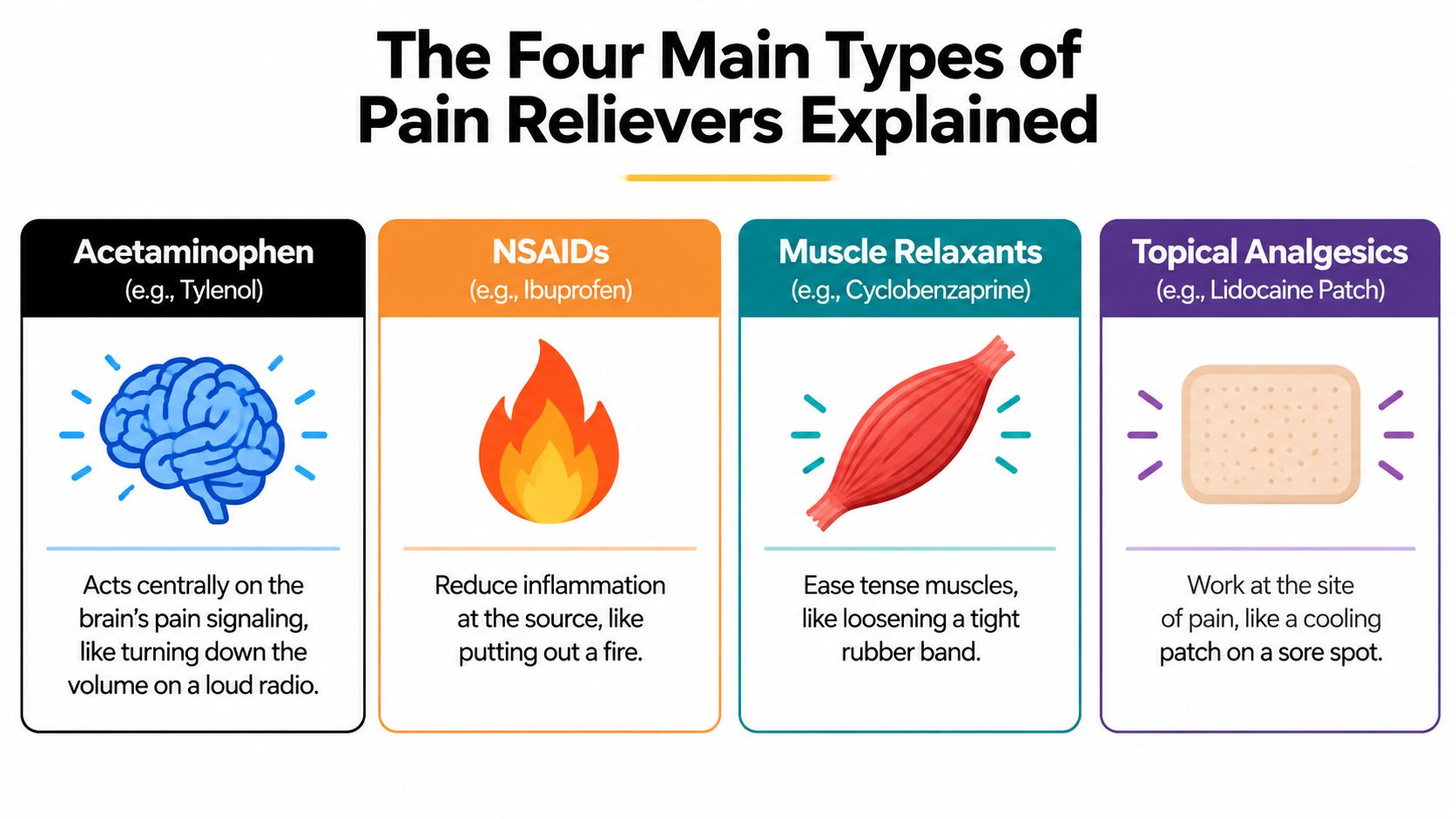
Acetaminophen turns down the signal
Acetaminophen, sold under brand names such as Tylenol, mainly changes how the central nervous system processes pain. The easiest analogy is a loud radio. It may turn the volume down, helping with headaches, fever, and general aches, but it doesn't meaningfully put out the inflammatory “fire” causing visible swelling.
That distinction matters for arthritis, sprains, and other conditions where inflammation is central. Professional guidance still often considers acetaminophen a practical option for older adults when NSAIDs pose safety concerns, yet osteoarthritis guidance increasingly describes its pain benefit as limited or conditional. A review of pain treatment in older adults explains why acetaminophen remains useful when NSAIDs aren't tolerated, despite modest arthritis relief.
NSAIDs cut fuel to inflammation
Nonsteroidal anti-inflammatory drugs, or NSAIDs, include ibuprofen, naproxen, and aspirin. They reduce substances involved in pain and inflammation, which makes them more logical for a swollen ankle, inflamed joint, menstrual cramps, or an acute strain with tenderness and swelling.
The trade-off is safety. NSAIDs can irritate the digestive tract and affect kidney function, blood pressure, and cardiovascular risk, particularly in vulnerable people or with repeated use. “Anti-inflammatory” doesn't mean harmless.
Topicals work at the painful spot
Topical analgesics include lidocaine, menthol, capsaicin, and diclofenac gel. They're applied to the skin over a localized sore area, so they can be useful when a single knee, elbow, muscle, or small joint is bothering you.
Lidocaine dulls local nerve signaling. Menthol creates a cooling sensation, capsaicin gradually changes pain signaling in the treated area, and diclofenac gel provides a topical NSAID option. Follow the product directions, avoid applying products to damaged skin, and wash your hands after use when the label instructs you to do so.
Opioids blunt severe pain perception
Opioids act on receptors in the nervous system and can be appropriate for carefully selected severe acute pain, including some post-surgical situations. They aren't a first-line over-the-counter choice, and they carry risks such as sedation, constipation, impaired driving, dependence, and overdose.
Muscle relaxants are a separate prescription category that may be used for selected spasms, but they can also cause drowsiness and falls. Neither opioids nor muscle relaxants should be treated as a stronger version of routine self-care.
Acetaminophen vs Ibuprofen How They Actually Compare
Acetaminophen and ibuprofen are the two products most often compared, but they solve different problems. Ibuprofen has the edge when inflammation is obvious. Acetaminophen has the edge when avoiding NSAID-related stomach, kidney, or cardiovascular concerns is the priority.
An adult with a headache and no swelling may reasonably start with acetaminophen, assuming there's no liver-related contraindication and no other acetaminophen-containing product in the regimen. Someone with a swollen ankle, dental inflammation, menstrual cramps, or an arthritis flare may get more useful relief from ibuprofen if their health history allows it.
Factor | Acetaminophen | Ibuprofen |
|---|---|---|
Main action | Reduces pain signaling and fever | Reduces pain and inflammation |
Best fit | Headache, fever, and non-inflammatory aches | Swelling, sprains, strains, cramps, and inflammatory joint pain |
Stomach effect | Generally easier on the stomach than oral NSAIDs | Can irritate the stomach and increase bleeding risk |
Main caution | Liver injury from excessive total intake or product stacking | Kidney, stomach, blood pressure, and cardiovascular concerns |
Common mistake | Taking multiple products that contain acetaminophen | Combining NSAIDs or using them repeatedly without review |
For practical acetaminophen information, see this acetaminophen safety and use guide. Read every label, especially cold, flu, sleep, and combination pain products. A product may contain acetaminophen even when the front label emphasizes another symptom.
The safety trade-off is the deciding factor
A historical FDA analysis of the 2003 U.S. National Health and Nutrition Examination Survey found acetaminophen use in the prior month among adults aged 65 to 74 was reported by 23.3% of men and 32.3% of women, compared with ibuprofen use reported by 11.5% of men and 15.9% of women. These figures appear in the FDA medical review, and they show that both medicines were already mainstream choices among older adults more than two decades ago.
Don't interpret that history as a recommendation to take either medicine automatically. If you have liver disease, review acetaminophen with a clinician. If you have ulcers, kidney disease, heart disease, take warfarin or steroids, or have been told to avoid NSAIDs, review ibuprofen before using it.
Beyond the Pill Bottle Topicals Opioids and Natural Options
Oral tablets aren't the whole pain-relief toolbox. For a sore knee or tight shoulder, applying treatment directly to the area may be more sensible than exposing your entire body to a medicine. Topicals are particularly attractive when the painful area is small and well defined.

Topicals deserve a serious look
Lidocaine can help numb a localized area. Menthol offers a cooling or counter-irritating sensation that some people find useful for muscle soreness. Capsaicin can be considered for certain persistent localized pain patterns, but it often causes an initial burning sensation and needs consistent, careful application.
Diclofenac gel is a topical NSAID option for certain joint pain problems. It may be useful when the pain is close to the skin, such as in a hand, knee, or other accessible joint. “Topical” doesn't mean you can apply it without limits, so follow the package directions and ask a pharmacist whether it fits with your oral medicines. This guide to topical pain relief cream offers additional product-focused context.
Opioids are a narrow tool
Prescription opioids can have a legitimate role after surgery or during severe acute pain, but they're not an upgrade for ordinary aches. They can impair alertness, interact dangerously with sedatives, and create dependence even when a person starts with good intentions.
If a clinician prescribes one, take it exactly as directed, don't share it, and don't drive while impaired. Persistent pain that keeps demanding opioid treatment needs a broader assessment, not just a refill.
Natural options require realistic expectations
Curcumin, ginger, omega-3 fatty acids, magnesium, and SAMe are commonly discussed for joint comfort, muscle recovery, or specific pain patterns. Their effects, if they help, are usually more gradual and less predictable than an analgesic taken for an acute flare. They should complement exercise, sleep, physical therapy, and appropriate medical care rather than replace them.
Heat can relax tight muscles, while cold may reduce discomfort after an irritating activity. Stretching should be gentle, and TENS may help some people manage localized pain. Stop any approach that worsens symptoms, and don't use a supplement without checking for interactions, particularly if you take blood thinners, have surgery planned, are pregnant, or manage a chronic condition.
Supplements are background support, not emergency treatment. Severe, sudden, or progressive pain needs a clinical answer.
Matching the Right Pain Reliever to Your Situation
Choose by pain pattern, duration, and personal risk, not by brand name. A headache without swelling differs from a hot, swollen joint. Numbness, tingling, burning, or pain shooting along a limb suggests that standard OTC medicines may miss the main mechanism.
Pain Type | First-Line OTC | Stronger or Topical Option | Non-Drug Add-On |
|---|---|---|---|
Headache without swelling | Acetaminophen, if appropriate for you | Arrange an evaluation if recurrent or unusually severe | Hydration, rest, reduced screen or light exposure |
Post-workout soreness | Acetaminophen or an NSAID, based on your risk profile | Menthol or another localized topical for one sore area | Gentle movement, heat, sleep |
Menstrual cramps | Ibuprofen when NSAIDs are safe for you | Discuss alternatives if cramps are severe or persistent | Heat on the lower abdomen |
Arthritis flare with swelling | Ibuprofen or another suitable NSAID, if medically appropriate | Diclofenac gel for a localized joint | Movement within tolerance, cold after aggravating activity |
Back strain | Acetaminophen or an NSAID matched to your risks | Menthol or lidocaine for localized discomfort | Gentle activity, heat, avoid heavy twisting |
Burning or electric nerve pain | Do not keep escalating OTC doses | Clinician-directed treatment may be needed | Assessment, targeted exercise, nerve-focused care |
For acute pain, evidence summarized in geriatric pain guidance found that ibuprofen 400 mg can outperform acetaminophen 1,000 mg in some situations. Combining the two can also provide better relief than either medicine alone for selected acute pain. That does not make the combination safe for everyone. Gastrointestinal bleeding, kidney dysfunction, and cardiovascular complications matter, particularly for older adults and people taking warfarin or corticosteroids. The EMRA geriatric pain resource explains the comparison and its safety context.
Use a combination or alternating schedule only with a clear plan. Check active ingredients, follow package directions, and never combine NSAIDs such as ibuprofen and naproxen. Ask a pharmacist or clinician before combining medicines if you have liver, kidney, stomach, heart, or bleeding risks.
For recurring pain, record what triggers it, which medicine helps, and how long relief lasts. That information gives a clinician something useful to assess instead of another reason to keep changing tablets.
When OTC Pain Relievers Stop Being Enough
Repeatedly reaching for another tablet can hide the underlying problem. Ohio State guidance says OTC pain medicines are intended for use for a couple of weeks at a time, while FDA advice emphasizes following the label and using the lowest effective dose for the shortest time. Read Ohio State's OTC pain medicine guidance before treating recurring pain as a permanent self-care project.
Set a limit for self-treatment
If pain keeps returning, worsens, or requires escalating doses, arrange an evaluation. Recurrent back pain, persistent joint swelling, and pain that interferes with sleep or ordinary movement deserve more than repeated symptom suppression.
Check combination products carefully. Cold remedies, sleep products, and prescription medicines may contain acetaminophen, and accidental stacking can injure the liver. Taking multiple NSAIDs, such as ibuprofen plus naproxen, increases risk without creating a sensible treatment plan.
Know the warning signs
Seek prompt medical care for:
Chest pain or breathing difficulty
A sudden, severe, or unusual headache
Weakness, numbness, or loss of coordination
Black stools or vomiting blood
Unexplained weight loss or fever
Rapidly worsening joint swelling
Pain that repeatedly wakes you at night
Loss of bladder or bowel control
Pain after a significant fall or injury also deserves medical attention, as does pain accompanied by progressive weakness or symptoms traveling down a limb. Don't use a higher dose to push through a red flag.
Escalating pill use is a signal to reassess the diagnosis, not proof that you need a stronger pill.
Your Daily Pain Support Plan and Where Supplements Fit
Build your routine in layers. Use an appropriate OTC medicine for an occasional flare, not as an automatic daily habit. Pair that with sleep, hydration, gentle movement, strength work suited to your ability, and meals that regularly include vegetables, protein, fiber, and healthy fats.
A daily multi-ingredient supplement can fit as nutritional support, but it won't diagnose arthritis, repair an injury, or replace prescribed care. River of Life Capsules is a 25-in-1 plant-based supplement formulated with ingredients including turmeric extract with BioPerine, ashwagandha, ginger, and bromelain. Treat it as a routine option alongside the core pain plan, not as a substitute for an analgesic when you need short-term relief or for an evaluation when symptoms persist. You can read more about natural pain relief approaches.
Use a simple weekly check-in:
Track the pattern: Note where the pain appears, what triggers it, and whether swelling, numbness, or weakness occurs.
Review medication use: Check whether you're relying on acetaminophen or an NSAID more often than planned.
Reassess function: Ask whether sleep, walking, work, and exercise are improving.
Escalate when needed: Persistent or worsening pain needs clinician input rather than indefinite self-treatment.
River of Life offers plant-based capsules for people who want routine nutritional support for joint comfort and everyday wellness alongside sensible pain-management habits. Visit River of Life to review the formula and choose a one-time or subscription option.