

Post Workout Inflammation Weight Gain

You finish a hard leg session, drink some water, eat a proper meal, and step on the scale the next morning. The number is higher than yesterday, so your first thought is probably, “Did that workout make me gain fat?”
Usually, no. Post workout inflammation weight gain often reflects a temporary shift in body water, not a change in body fat. Three contributors can overlap: fluid held around muscle tissue during repair, water stored with replenished glycogen, and food or drinks that haven't yet moved through your digestive system.
The important question isn't merely whether the scale rose. It's what caused the increase, how long it should last, and what your next action should be. Let's separate those causes so you can respond calmly instead of cutting food, skipping recovery, or treating a normal training response as failure.
Table of Contents
The Morning After a Hard Workout
Jordan trained legs harder than usual on Tuesday. The session included heavy squats, lunges, and a conditioning finisher that left the thighs shaky. On Wednesday morning, Jordan stepped on the scale and saw a number two to four pounds higher than the previous day.
The immediate reaction was panic. Had the workout somehow backfired? Was the extra dinner responsible? Should the next meal be smaller?
A single morning reading can't answer those questions. The scale measures everything present in the body at that moment, including water, glycogen, digestive contents, and tissue undergoing repair. It doesn't label each component as fat, muscle, inflammation, or food.
The three short-term contributors
Water around repaired muscle is the first possibility. Exercise can create microscopic muscle damage, particularly when the session includes unfamiliar movements, high force, or a strong lowering phase. The body starts an inflammatory repair response and retains fluid around the affected tissue. Cleveland Clinic's consumer health explanation describes this as a short-lived fluid shift that commonly fades within about a day (Cleveland Clinic explanation of post-exercise weight gain).
Glycogen refill is another contributor. Your muscles use stored carbohydrate during training. Afterward, eating carbohydrate helps restore that fuel, and glycogen is stored alongside water. The scale can therefore rise even while your training plan is working exactly as intended.
Food and fluid in the gut may account for the rest. A larger meal, extra drinks, more sodium, or weighing before digestion has progressed can change the reading without changing body fat.
Practical rule: Treat one post-workout weigh-in as a body-water snapshot, not a verdict on your program.
Jordan's best next step isn't compensation. It's to observe the trend, keep normal meals, drink consistently, and allow the trained muscles to recover. The rest of this guide will help you estimate which factor is most likely responsible and identify the signs that call for medical advice.
How Exercise Triggers Inflammation in the First Place
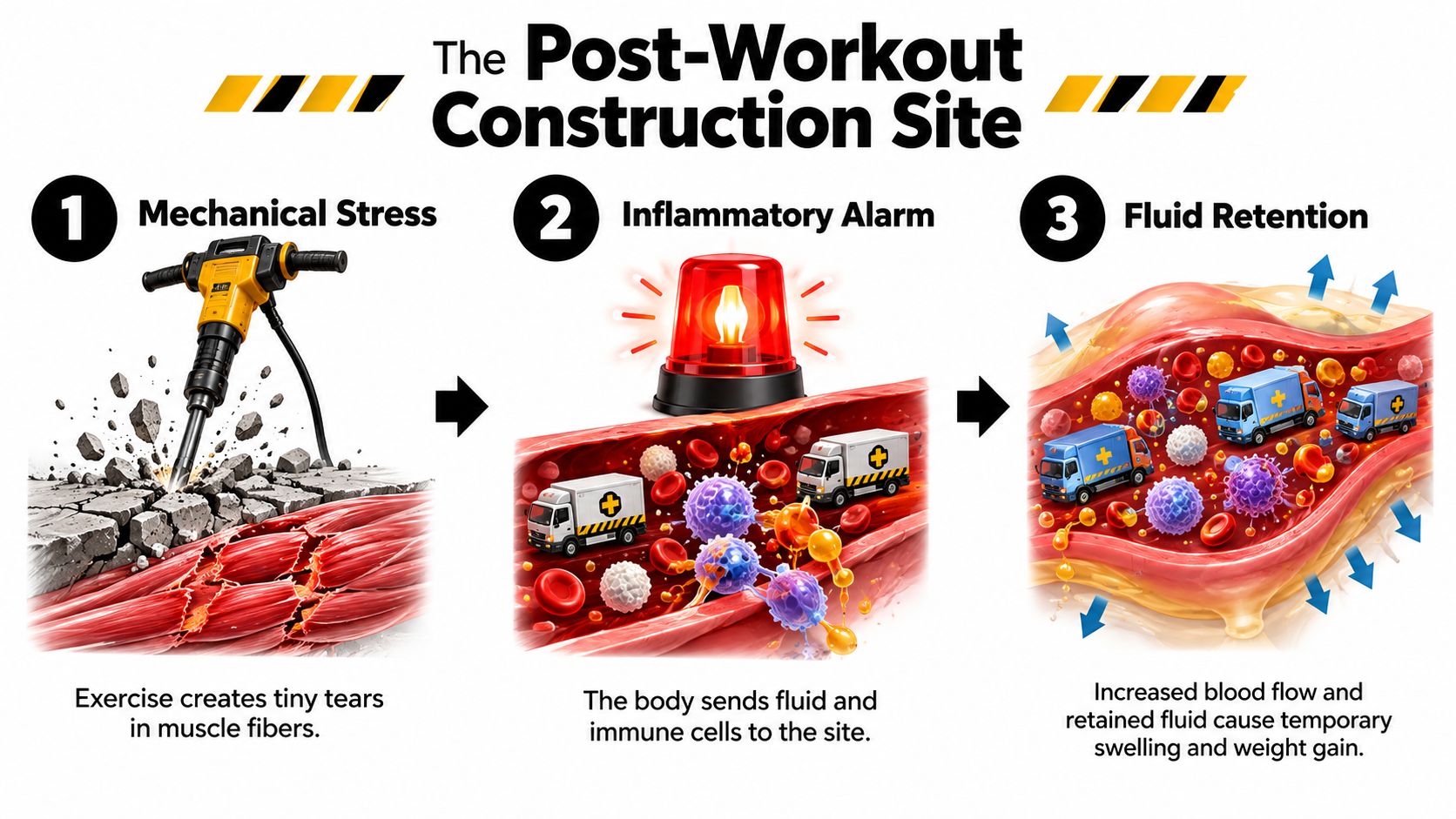
Think of a hard workout as a controlled construction project. The exercise provides the stress that creates a repair request, and the body sends workers, supplies, and extra fluid to the site.
During high-force contractions, especially when muscles lengthen while producing force, individual fibers can experience microscopic tears. The body recognizes the disrupted tissue and begins a localized response. Immune cells help clear damaged material and coordinate repair, while chemical signals increase blood flow and change how easily fluid moves through nearby capillaries.
That process explains why a trained muscle may feel full, tender, tight, or slightly swollen. The extra fluid isn't automatically a problem. It's part of the environment the body creates while it delivers nutrients and manages tissue repair.
What normal recovery swelling feels like
Normal exercise-related swelling tends to match the muscles you trained. Both thighs may feel full after a demanding squat session, or both shoulders may feel stiff after a new pressing routine. The discomfort is usually a mild ache or tenderness that gradually improves rather than intensifies.
You may also notice soft tissue that feels puffy. If gentle pressure leaves a shallow mark that rebounds quickly, that can fit with temporary fluid movement, although a home check can't diagnose the cause. Medical and fitness explanations describe exercise-related water retention as lasting one to four days, with more intense sessions sometimes producing localized swelling for up to about five days (GoodRx overview of weight gain while exercising).
A key distinction is direction. Recovery discomfort should begin to settle as the tissue repairs. A worsening one-sided swelling pattern, severe pain, heat, or systemic symptoms deserves a different response.
If you're considering an anti-inflammatory medicine, don't treat it as an automatic recovery tool. Read about potential concerns in this guide to ibuprofen and exercise-related decisions, and speak with a clinician or pharmacist if you have a health condition or take other medicines.
Inflammation vs Glycogen vs Fat Gain
A scale jump after training is easier to understand when you stop treating it as one substance. It's a combination of compartments that change at different speeds.
Inflammatory edema comes from fluid entering tissue involved in repair. Glycogen-associated water comes from restoring usable fuel. Digestive contents reflect what you consumed and what your body hasn't eliminated yet. Fat gain is a separate process that requires a sustained energy surplus, not merely a demanding workout followed by a heavier morning reading.
The available evidence supports the mechanism of short-term fluid retention, but it doesn't provide a reliable universal split between inflammation, glycogen water, and gut contents. That's why precise personal attribution from a bathroom scale isn't possible. A two-pound increase might be mostly tissue fluid in one situation, mostly food and drinks in another, or a mixture of all three.
Where the post-workout scale jump comes from
Source | Mechanism | Typical Added Weight | Duration |
|---|---|---|---|
Inflammatory fluid | Repair-related fluid remains around stressed muscle | Varies by session and person | Often short-lived, with recovery-related retention commonly resolving within about a day according to Cleveland Clinic's explanation, while more intense swelling may last several days |
Glycogen-associated water | Restored carbohydrate fuel is stored with water | Varies with prior depletion and carbohydrate intake | Persists while glycogen stores remain replenished |
Food and fluid | Material remains in the stomach and intestines, while body water shifts | Varies with meal size, drinks, sodium, and timing | Changes as digestion and fluid balance continue |
Body fat | Sustained energy surplus is stored as fat tissue | Not identifiable from one reading | Changes over a longer trend, not an overnight snapshot |
A useful personal estimate
Start with context rather than arithmetic. If the session was unfamiliar and the trained muscles are sore, inflammation is more plausible. If you trained hard after eating fewer carbohydrates than usual and then had a carbohydrate-rich recovery meal, glycogen refill may contribute. If you weighed after a late, salty dinner and several drinks, gut contents and fluid balance may dominate.
Exercise can measurably affect inflammatory markers, and recovery conditions can alter body-water balance. A medical review describes considerable effects of exercise on inflammation markers, while a PubMed-indexed dehydration study found that a sodium drink increased fluid retention during a three-hour recovery window compared with water (exercise inflammation and fluid-balance evidence).
The most honest conclusion is often, “I can identify the likely mixture, but I can't assign an exact percentage.” That's more accurate than pretending a household scale can distinguish edema from glycogen water.
What the Timeline Actually Looks Like
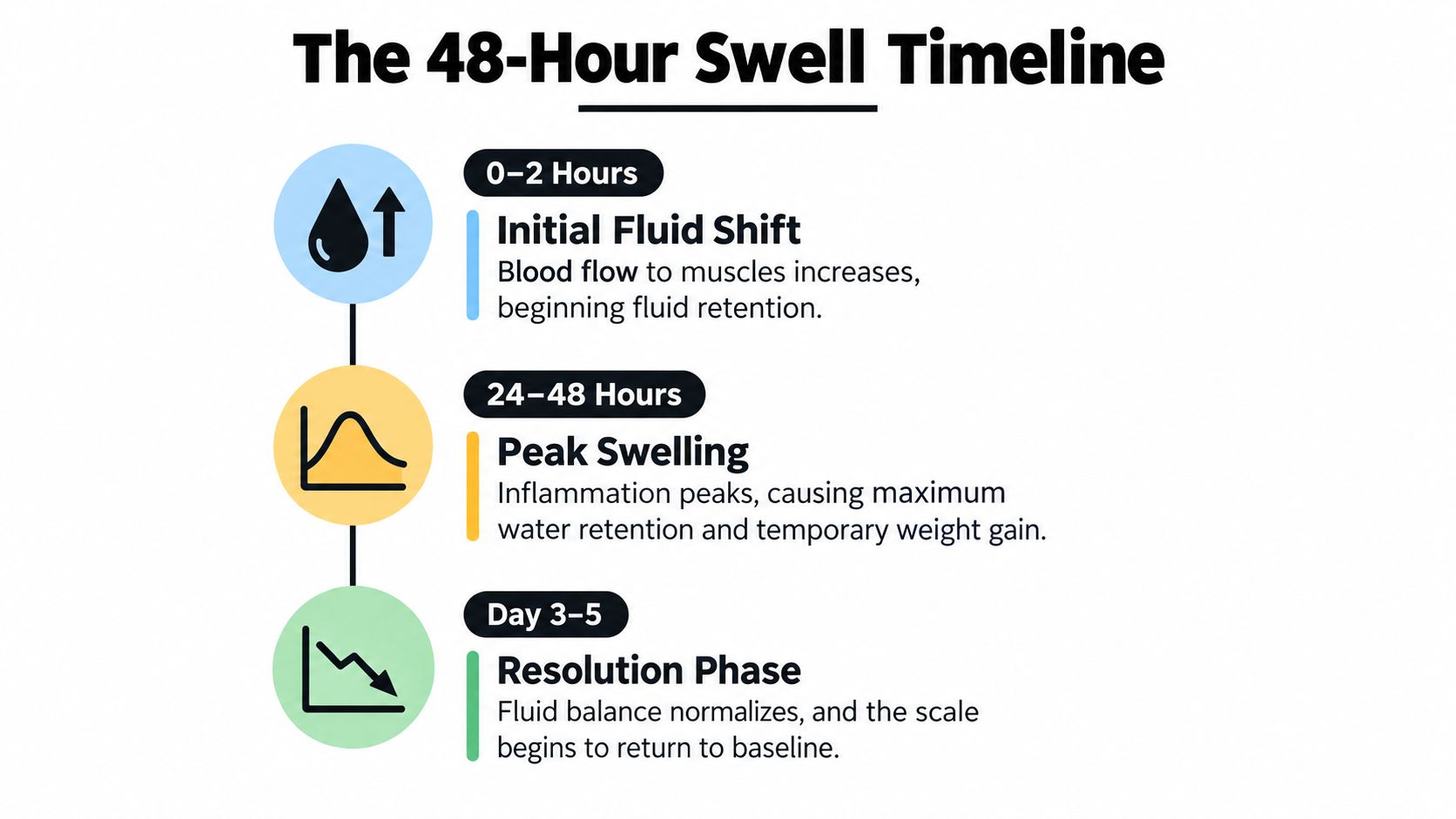
The scale usually feels mysterious because the workout ends long before the body finishes responding. Fluid shifts can begin during recovery, while soreness and fullness may become more noticeable later.
In the earliest phase, increased blood flow and the start of repair can alter how the trained area feels. You may notice warmth, tightness, or reduced comfort when moving through a deep range. Those sensations don't prove that inflammation is the only cause of a heavier reading, because hydration, sodium, meals, and glycogen refill can happen at the same time.
The response often becomes more noticeable during the next day or two. The broader evidence describes inflammatory markers rising after moderate-to-high intensity exercise, while clinical explanations describe temporary edema that can remain for several days (medical discussion of exercise inflammation and fluid retention).
Read the pattern, not the single number
A normal pattern tends to look like this:
Early recovery: The muscles feel worked, tight, or warm, and movement may feel less fluid.
Later recovery: Fullness or soreness may be more obvious, especially after an unfamiliar or strenuous session.
Resolution: Tenderness and puffiness soften, movement improves, and the scale begins moving back toward its usual range.
Cleveland Clinic notes that an early post-training scale increase commonly disappears within about a day, while other medical coverage describes one to four days of water retention and, after more intense sessions, localized swelling lasting up to about five days (GoodRx recovery timeline). These ranges overlap because workout intensity, training history, muscle groups, meals, and hydration all differ.
A first intense session after a long break may feel more disruptive than a familiar workout. Monitor the direction over several mornings under similar conditions. If swelling and pain are easing, the pattern is reassuring. If they're worsening, becoming one-sided, or accompanied by unusual symptoms, stop treating it as ordinary soreness.
A Recovery Protocol That Respects the Biology
The best recovery plan doesn't try to erase every inflammatory signal. It supports circulation, restores fuel, and gives the body enough time to complete repair.
The first hour
Start with a gradual cool-down rather than stopping abruptly. Easy walking keeps you moving without adding another demanding training stimulus. Follow it with fluids according to thirst and your usual sweat losses. Electrolytes may be useful after heavy sweating, but adding sodium just because the scale rose can increase short-term fluid retention, as the recovery research described earlier illustrates.
A snack containing protein and carbohydrate can support normal recovery and begin glycogen restoration. Keep it practical: yogurt with fruit, a bean-and-rice meal, or a sandwich with a protein filling can work. You don't need an aggressive supplement routine to make the first hour productive.
The next day
Use light movement as a circulation tool, not a test of toughness. An easy walk, gentle mobility, or a low-effort recovery session can help you avoid staying rigid without creating fresh tissue stress. Keep the range comfortable, and don't force a painful stretch into a swollen muscle.
Sleep is the primary repair window. Protect a consistent bedtime, limit distractions, and make the room cool and dark. The right amount varies by person, so focus on getting enough uninterrupted sleep to wake feeling functional rather than chasing a perfect recovery ritual.
Recovery principle: The goal isn't to make soreness disappear immediately. It's to help the body finish the job without adding unnecessary damage.
Experienced athletes may use contrast showers or brief cold exposure, but these tools aren't mandatory. Aggressive icing immediately after every strength session may interfere with some training adaptations, so use caution and ask a sports professional whether it fits your goals. Gentle self-massage and light compression can feel useful for swollen limbs, but neither should cause sharp pain, numbness, color change, or increased symptoms.
For a broader look at supportive products and recovery habits, explore this supplement guide for muscle recovery. Consistency matters more than intensity. Repeating manageable sessions, eating adequately, and sleeping well will serve you better than alternating extreme workouts with extreme recovery measures.
Eating to Calm the Fire
Food can support recovery, but it can't make normal exercise inflammation vanish on command. Build meals around ingredients that provide protein, fiber, vitamins, minerals, and unsaturated fats rather than reacting to a temporary scale increase by under-eating.
A simple plate can include colorful vegetables or leafy greens, a protein source, a carbohydrate source, and a small portion of healthy fat. Berries, legumes, nuts, seeds, olive oil, and fatty fish fit naturally into that pattern. Ginger and turmeric can add flavor while contributing plant compounds, but the meal still needs enough energy and protein to support tissue repair.
Hydration deserves equal attention. Drink consistently across the day rather than alternating between restriction and forced water intake. Sodium and potassium both influence fluid movement, but your needs depend on sweating, climate, food intake, medications, and health status. A salty meal can temporarily raise scale weight without representing fat gain, while excessive water without appropriate electrolyte intake can also be unsafe.
Supplement choices in context
Popular options include turmeric with piperine, ginger, bromelain, omega-3 fish oil, and tart cherry. Evidence varies by ingredient and outcome, and research doses aren't universal instructions for personal use. Casual trainees can usually begin with food, sleep, adequate protein, and sensible programming before adding a supplement.
Supplement | Typical Research Dose | Evidence Strength | Key Caution |
|---|---|---|---|
Turmeric with piperine | Varies by extract and study | Mixed and formulation-dependent | May interact with medicines, including blood thinners |
Ginger | Varies by preparation and study | Some supportive evidence for discomfort, but not a guarantee | Can cause digestive symptoms and may affect clotting |
Bromelain | Varies by product and study | Limited to moderate, depending on the outcome studied | Use caution with blood thinners and before procedures |
Omega-3 fish oil | Varies by product and study | Better established for some cardiovascular and inflammatory contexts than acute soreness | May interact with anticoagulant medicines |
Tart cherry | Varies by juice or extract and study | Mixed for recovery outcomes | Check sugar content and medication considerations |
The table intentionally avoids a single “correct” dose because products and studies differ. Speak with a clinician or pharmacist before combining anti-inflammatory supplements with blood thinners, NSAIDs, or prescription medicines. This River of Life inflammation supplement resource discusses a capsule formula containing turmeric extract with BioPerine, ashwagandha, ginger, and bromelain. Treat it as one dietary supplement option, not a substitute for medical care, sleep, protein, or training adjustments.
Why Short-Term Scale Jumps Are Usually a Good Sign
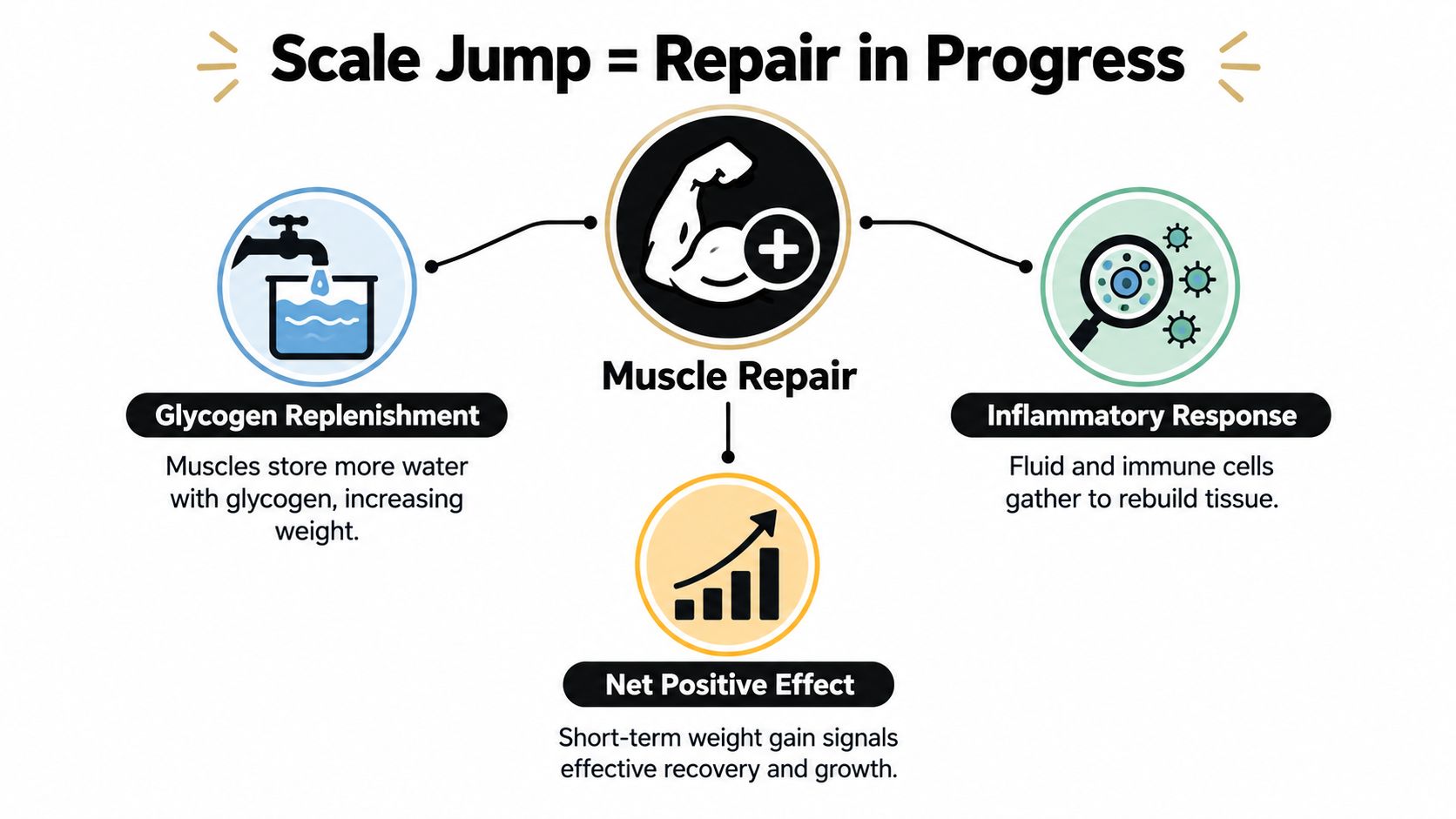
A higher number after training can feel like evidence that you made a mistake. In many cases, it shows that several normal processes are happening at once: stressed tissue is being repaired, stored fuel is being restored, and body water is moving into and around working muscles.
The construction-site analogy helps here. After demolition, workers need materials, access routes, and supplies. The body's repair response similarly changes local circulation and fluid distribution. That temporary increase can make a muscle feel fuller before the tissue settles.
Adaptive swelling isn't the same as chronic inflammation
A brief, localized response that follows a demanding workout and gradually improves is different from persistent inflammation linked to illness, injury, or another medical issue. The scale alone can't make that distinction. Your symptoms, recovery direction, training history, and overall health provide the context.
Daily weigh-ins can still be useful if you view them as observations rather than judgments. Record the conditions, such as morning timing, bathroom status, previous meal pattern, and training load. Then look for a broader trend alongside strength, energy, clothing fit, and movement quality.
The goal isn't to keep body weight perfectly flat. A responsive body will shift. Trust the process when the soreness follows a familiar pattern, your performance gradually develops, and the temporary rise gives way to your usual range.
Red Flags and When to Check In With a Clinician
Most post-workout scale changes are harmless fluid or digestive shifts, but not every swollen or painful muscle belongs in the normal-recovery category. The pattern matters more than the mere presence of soreness.
Contact a clinician for advice if swelling remains clearly high beyond five to seven days, especially if it doesn't improve with rest and ordinary movement. A persistent symptom may reflect an injury or another condition that a home scale can't evaluate.
Seek urgent medical attention for symptoms such as:
Marked asymmetry: One limb becomes significantly larger, tighter, or more painful than the other.
Hot or shiny skin: The area feels hot, looks unusually red, or appears tightly stretched.
Worsening pain: Discomfort intensifies instead of easing, or you can't move the joint or limb normally.
Urine changes: Urine becomes unusually dark or output is reduced after strenuous exercise.
Breathing symptoms: Shortness of breath, chest tightness, faintness, or sudden weakness occurs.
Systemic illness: Fever, chills, or red streaks accompany the swelling.
Unexplained rapid gain: Your weight rises by several pounds in a day without an obvious change in food, drinks, or training.
These signs can overlap with serious problems. Dark urine and severe muscle symptoms can occur with rhabdomyolysis. One-sided swelling can require evaluation for a clot, while heat, redness, fever, or streaking may point toward infection. Breathing or chest symptoms can signal a cardiovascular or clot-related emergency. Don't try to diagnose these conditions from an article.
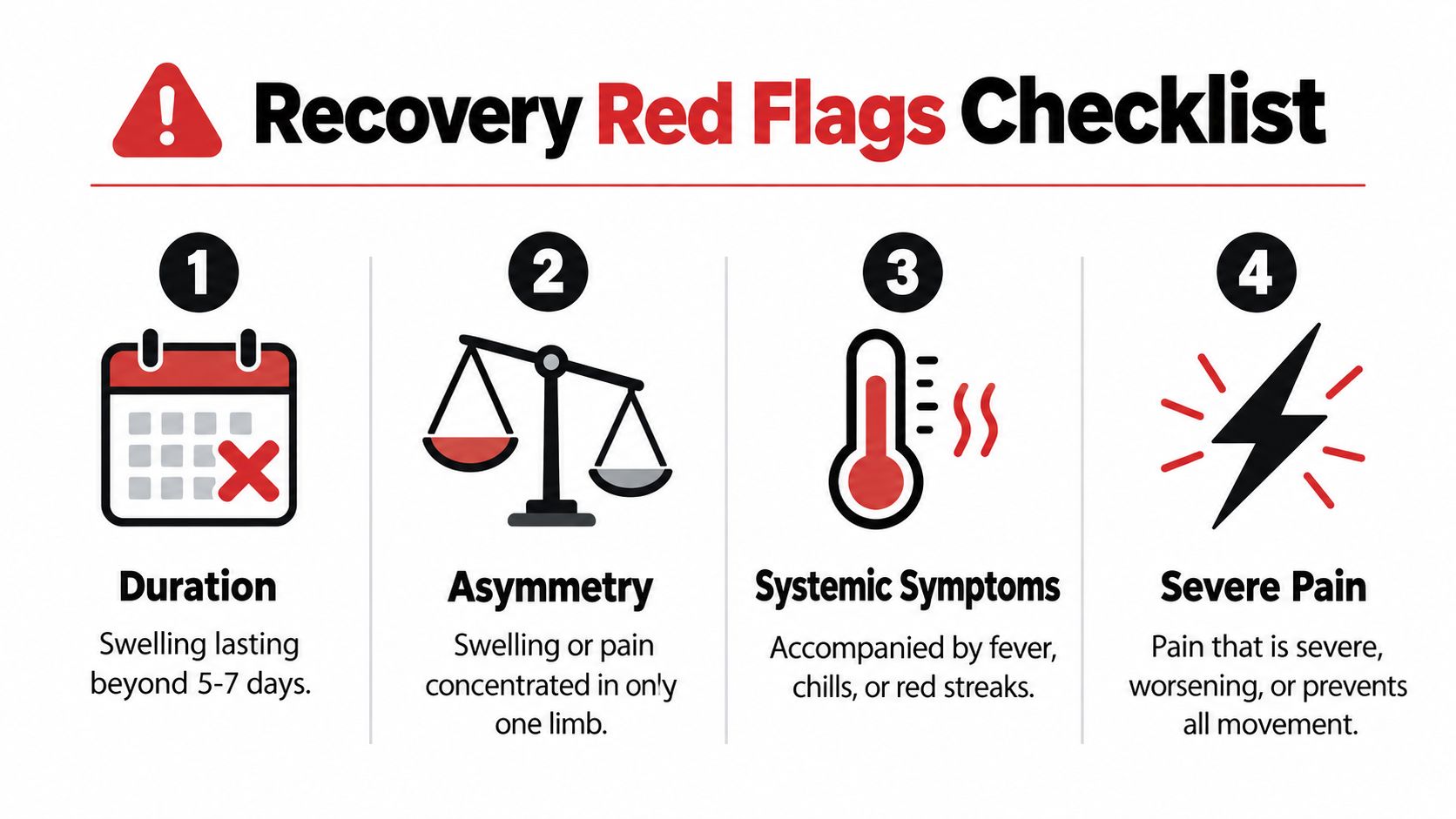
A simple decision guide
Monitor at home when swelling is mild, symmetrical, connected to the muscles you trained, and steadily improving. Keep normal hydration, choose light movement, and avoid repeating the hard session until movement feels comfortable.
Schedule a clinician visit when symptoms linger, recur after modest exercise, or interfere with normal activity. Bring your training details, medication list, supplement list, and a record of scale readings and symptoms.
Use urgent care or emergency services for severe or rapidly worsening pain, one-sided swelling, dark or reduced urine, chest tightness, shortness of breath, faintness, or fever with spreading redness.
Your body isn't failing because the scale rises after a hard session. Read the trend, support recovery, and take unusual symptoms seriously.
River of Life offers a vegan, capsule-based formula containing turmeric extract with BioPerine, ashwagandha, ginger, and bromelain for adults exploring dietary support for post-activity soreness and everyday mobility. Review the formulation and purchase options at River of Life, and discuss any supplement with a clinician if you take blood thinners, NSAIDs, or other medicines.