
Supplement for Muscle Recovery Guide with Dosing and Timing

You finish a demanding workout feeling accomplished, then wake up stiff enough that stairs, sitting down, or lifting a bag feels like a separate training session. The soreness may be temporary, but it can still interrupt your next workout and make everyday movement uncomfortable.
Choosing a supplement for muscle recovery isn't as simple as picking the most popular tub or capsule. Recovery can mean less delayed-onset muscle soreness, faster strength rebound, reduced exercise-related muscle damage, or better endurance restoration. Different ingredients appear to serve different outcomes, so the useful question isn't “Which supplement is universally best?” It's “What part of recovery is limiting me?”
Table of Contents
Introduction to Muscle Recovery Supplements
After a new training block, a recreational lifter may mainly want less soreness. A strength athlete may instead need force to return before the next session, while an older adult may want to stay active without joint discomfort becoming a barrier. The same search for a supplement for muscle recovery can therefore lead to different choices.
Research supports matching the supplement to the outcome. A 2026 systematic review and network meta-analysis of 35 randomized controlled trials involving 1,211 trained athletes found omega-3 fatty acids ranked highest for recovery outcomes, creatine for muscle strength, and protein for endurance performance (2026 network meta-analysis). The findings show why recovery needs a specific definition. Less soreness, restored strength, and renewed endurance are related goals, but they are not interchangeable measures.
Practical rule: Choose the target first, then choose the ingredient.
The guide examines supplements by how they may work and what result they are meant to support. You'll compare anti-inflammatory, enzymatic, and adaptogenic ingredients, review evidence for commonly discussed options, and consider how timing relates to training and sleep. Safety checks and personal health factors also shape a sensible choice.
A supplement works best as one tool in a larger routine. It cannot replace adequate food, sufficient sleep, appropriate training loads, rehabilitation, or care for an untreated injury. A focused plan usually makes more sense than adding ingredients without a defined purpose.
Understanding Recovery Mechanisms
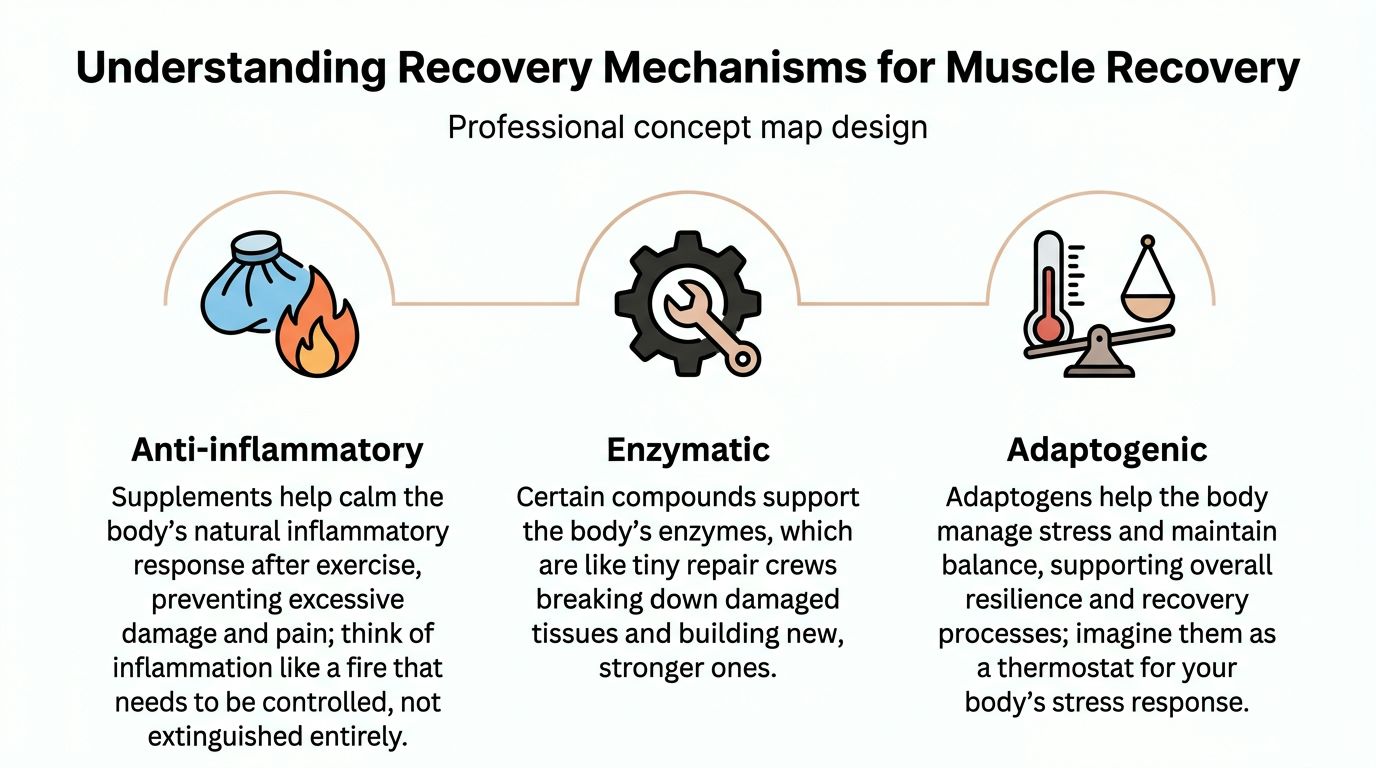
After a hard session, recovery resembles a coordinated repair project. Exercise creates demand for repair, while the body manages local inflammation, clears cellular debris, rebuilds tissue, and regulates the wider stress response. Supplements may influence parts of this process, but each ingredient follows a different route. The right choice depends on the outcome you want, such as less soreness, restored strength, or better endurance.
Anti-inflammatory support
Inflammation helps coordinate repair after exercise. It works like a controlled fire: enough activity signals that repair is needed, while excessive or prolonged activity may contribute to soreness and discomfort. Anti-inflammatory ingredients aim to calm an overactive response rather than erase every inflammatory signal.
Omega-3 fatty acids provide a clear example in athlete research. The 2026 review cited earlier found omega-3s had the strongest pooled recovery benefit, with SMD = 0.40 and SUCRA = 88.7% (Nutrients review). A separate 2026 meta-analysis covering 41 randomized controlled trials reported moderate reductions in inflammatory markers and delayed-onset muscle soreness. Its standardized mean differences ranged from -0.4 to -0.7, with findings that included diverse groups such as older adults (omega-3 meta-analysis).
Enzymatic activity
Enzymes function like a cleanup and maintenance crew. They help process biological material, manage damaged proteins, and support normal tissue turnover. Bromelain is often discussed through this mechanism, while curcumin and tart cherry compounds are more commonly associated with inflammatory or oxidative pathways.
The analogy has limits. A supplement does not direct repair crews to one sore muscle, and enzyme activity alone cannot promise faster functional recovery. The practical question is whether the finished product provides a well-characterized ingredient in a form the body can use.
Adaptogenic regulation
Adaptogens are often compared with stress shields or thermostats. Certain botanicals may help the body respond to physical and psychological demands without forcing the system sharply in one direction. Ashwagandha is commonly placed in this category, particularly for routines affected by heavy training, poor sleep, or mental strain.
This pathway addresses recovery conditions rather than soreness alone. If stress and disrupted sleep are weakening the routine, improved resilience may support recovery as a whole. Persistent fatigue, weakness, or pain still calls for medical evaluation.
Key Ingredients and Clinical Evidence
Ingredient popularity does not equal evidence strength. A 2022 systematic review of post-exercise recovery found the strongest support for tart cherry and omega-3 fatty acids among the nutritional compounds examined. BCAAs, HMB, creatine monohydrate, curcumin, and pomegranate showed possible benefits, but their evidence was weaker.
Curcumin needs a more careful reading than “turmeric works.” Stanford's recovery supplement summary reports that 1.5–5 g/day of turmeric extract may reduce perceived muscle soreness, particularly with piperine, although findings remain conflicting. The extract, dose, and absorption strategy can change the practical result.
Ingredient | Mechanism | Dose | Outcome-specific role |
|---|---|---|---|
Omega-3 fatty acids | Inflammatory-response modulation | Use a product-specific dose and clinician guidance | Stronger evidence for post-exercise recovery |
Curcumin or turmeric extract | Inflammatory and oxidative-signaling support | 1.5–5 g/day of turmeric extract in Stanford's summary | May reduce perceived soreness, with conflicting literature |
Tart cherry | Polyphenol and anthocyanin support | Use the labeled preparation and clinician guidance | Likely beneficial in the 2022 review |
Creatine monohydrate | High-intensity energy and strength support | Use a product-specific plan | More relevant when restoring strength is the priority |
Protein | Amino-acid supply for tissue repair | Match intake to your diet and goals | Supports tissue repair and endurance-related needs |
The key question is the outcome you want. Omega-3 and tart cherry may suit a soreness-focused plan. Creatine and protein fit strength or training-support goals more closely. A supplement can support one recovery need without addressing every other one.
Bromelain and ashwagandha may fit a broader formula, but their roles differ from those ingredients. Bromelain is generally considered for enzymatic support, while ashwagandha relates more to stress resilience and sleep-linked recovery. Neither belongs in a formula merely because its name is familiar.
Formulation also affects curcumin's usefulness. Unstandardized turmeric powder and a standardized extract with an absorption aid are different products. This explanation of curcumin bioavailability describes why those differences matter.
Dosing Timing for Workouts and Sleep
A runner finishes a demanding session with sore legs and wonders whether a capsule taken beforehand would have changed the outcome. Timing can matter, but it works more like setting a training routine than pressing an instant recovery button. Consistent use, suitable ingredients, meals, and tolerance usually matter more than a narrow pre-workout window.
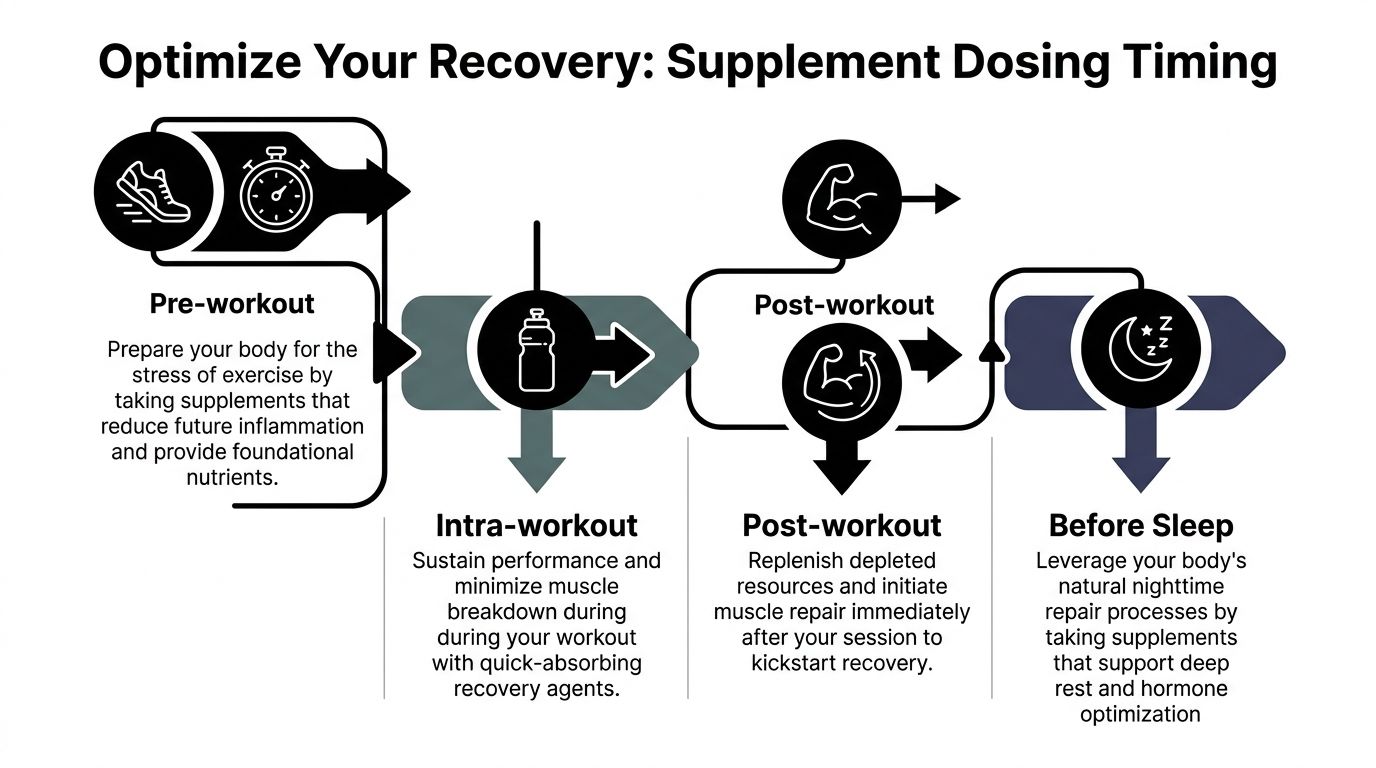
Use this sequence as a practical starting point. The product label and professional guidance should take priority when your health situation requires individual advice.
Pre-workout: Take ingredients intended for regular inflammatory or stress support according to the label. Food may improve tolerance when a product upsets your stomach. Taking a capsule immediately before training does not guarantee less soreness afterward.
Intra-workout: Prioritize fluids and the nutrition your session requires. During prolonged or demanding exercise, a recovery supplement cannot replace adequate energy intake.
Post-workout: Choose a balanced meal or snack with protein and foods that match your training demands. This supports restoring nutrition without treating recovery as a minute-by-minute countdown. The best timing also depends on the outcome you need, whether that is less soreness, restored strength, or support for endurance.
Before sleep: Keep the evening routine predictable. A supplement that makes you alert, unsettled, or nauseated does not suit bedtime. Sleep provides the overnight setting for repair, so a product should support rather than disrupt it.
Tart cherry products illustrate why timing alone cannot guide a choice. Select a tested preparation and use it consistently, rather than assuming every cherry-flavored product has the same ingredients. This tart cherry gummies guide explains why format and ingredient disclosure deserve attention.
The 2022 review found the strongest support for tart cherry and omega-3s among the compounds it assessed, while other ingredients had weaker or possible support (post-exercise recovery review). That difference should shape expectations. No universal recovery window turns every supplement into an immediate repair switch.
Safety Interactions and Contraindications
A recovery supplement can be reasonable for one person and inappropriate for another. Medication use, surgery plans, pregnancy, allergies, blood pressure, thyroid conditions, liver or kidney disease, and digestive sensitivity all change the safety conversation.
Omega-3 products deserve particular caution when someone uses anticoagulant or antiplatelet medication, has a bleeding disorder, or is preparing for a procedure. The concern isn't that omega-3s are automatically unsafe. It's that their effects may matter when combined with other agents that influence bleeding, so a clinician should review the complete list.
Botanical and digestive checks
Curcumin, turmeric, ginger, and bromelain may irritate the digestive tract in some users, especially when taken on an empty stomach or combined in concentrated formulas. Stop and seek medical guidance for signs such as unusual bleeding, severe abdominal pain, persistent vomiting, facial swelling, breathing difficulty, or a widespread rash.
Piperine can alter absorption and may affect how the body handles certain medicines. That makes a high-bioavailability formula more complicated than a simple food ingredient. Ask a pharmacist to screen the combination if you take prescription drugs with a narrow therapeutic range.
Stress-support ingredients
Ashwagandha requires extra care for people with thyroid disorders, autoimmune conditions, liver concerns, or those taking medicines that affect thyroid function, blood pressure, blood sugar, or sedation. “Natural” doesn't mean pharmacologically inactive, and a multi-ingredient formula can make it harder to identify which ingredient caused a reaction.
Use this safety check before starting:
List everything: Include prescriptions, over-the-counter pain relievers, vitamins, herbs, and performance products.
Check the timing: Tell your clinician about planned surgery, dental procedures, or periods of intense medication changes.
Start selectively: Introduce one new product at a time so you can recognize intolerance.
Read the label: Look for exact ingredient amounts, serving instructions, allergens, and batch or quality information.
Stop for red flags: Seek professional help for breathing problems, swelling, fainting, severe pain, black stools, or unexplained bleeding.
Persistent soreness, weakness, swelling, dark urine, or pain that changes your movement isn't a supplement-selection problem. Those symptoms deserve medical assessment.
Criteria for Choosing a Recovery Supplement
Choose by the problem you need to solve, then inspect the label. Soreness, strength loss, and endurance demands are different recovery targets, so one formula cannot serve as a universal answer. For example, a runner restoring fuel after a long session may need adequate protein and overall energy, while someone limited by post-workout soreness may be considering an anti-inflammatory or polyphenol-focused option.
A 2026 network meta-analysis reported different leading options for different outcomes: omega-3s ranked highest for recovery outcomes, creatine for muscle strength, and protein for endurance performance (outcome-specific supplement analysis). These findings help define what to evaluate. They do not mean every person needs all three products.
A practical label audit
Read the label as a testable recipe, not a slogan. Check whether:
A botanical extract states its standardization, rather than naming only the plant.
Each ingredient has a listed amount. Proprietary blends that hide individual doses prevent useful comparison.
The form matches the proposed purpose. Curcumin with piperine may be more specific than an unspecified turmeric powder, although piperine can affect medicine handling.
The product fits your diet, allergies, and routine. Vegan capsules, plant-based proteins, and clear allergen information can determine whether you use it consistently.
The claims stay within reasonable limits. A supplement should not suggest that it repairs an injury, replaces rehabilitation, or guarantees performance.
The manufacturer provides traceability through manufacturing details, testing information, lot identification, and an expiration date.
Suppose a label lists “muscle recovery complex” but gives no amounts for its extracts. You cannot tell whether the formula matches the evidence or compare it fairly with a single-ingredient product. A shorter label with clear doses may therefore be easier to assess than a longer list of ingredients.
A transparent label lets you compare a formula with the evidence instead of comparing one slogan with another.
Cost and convenience still shape adherence. Choose a product with a clear purpose that fits your routine, and introduce one targeted formula at a time so its effects and unwanted reactions are easier to judge.
Integrating Supplements with Nutrition Rest and Rehab
Supplements work best as attachments to a recovery system. The system begins with enough food to support training, regular protein-containing meals, hydration, and a training plan that allows adaptation. A capsule can't repair a gap created by chronically under-eating or repeatedly training through worsening pain.
Build the day around meals first. For example, place a protein-rich meal after training, add carbohydrate-containing foods when your session demands fuel restoration, and take a tolerated botanical product with the meal if its label recommends food. Omega-3-rich foods can also be part of the diet, while a supplement may fill a practical gap when dietary intake is limited.
Match the intervention to the problem
For ordinary post-workout stiffness: Use gentle movement, an easy walk, mobility work, and a gradual return to loading. Foam rolling may feel useful for short-term comfort, but it isn't a replacement for appropriate programming.
For repeated training stress: Add a lighter session or rest day. Track whether soreness is improving before increasing volume again.
For joint discomfort: Reduce aggravating movements, use a clinician-guided rehabilitation plan, and don't treat persistent swelling as routine DOMS.
For poor sleep: Keep a regular bedtime, dim bright light in the evening, limit stimulating training close to bed, and address snoring or repeated waking with a healthcare professional.
Compression garments, massage, and mobility drills can complement a plan when they improve comfort or movement. Their role is supportive, not magical. The same principle applies to adaptogens. If stress is high, a mindfulness practice, a calmer evening routine, and realistic scheduling may make an ashwagandha-containing product more useful than adding another stimulant-heavy formula.
For a practical discussion of sleep habits and ashwagandha, see sleep and recovery strategies. Keep the experiment measurable: record soreness, sleep quality, training performance, and unwanted effects using simple notes rather than relying on memory.
Personalized Plans for Athletes Older Adults and Joint Pain
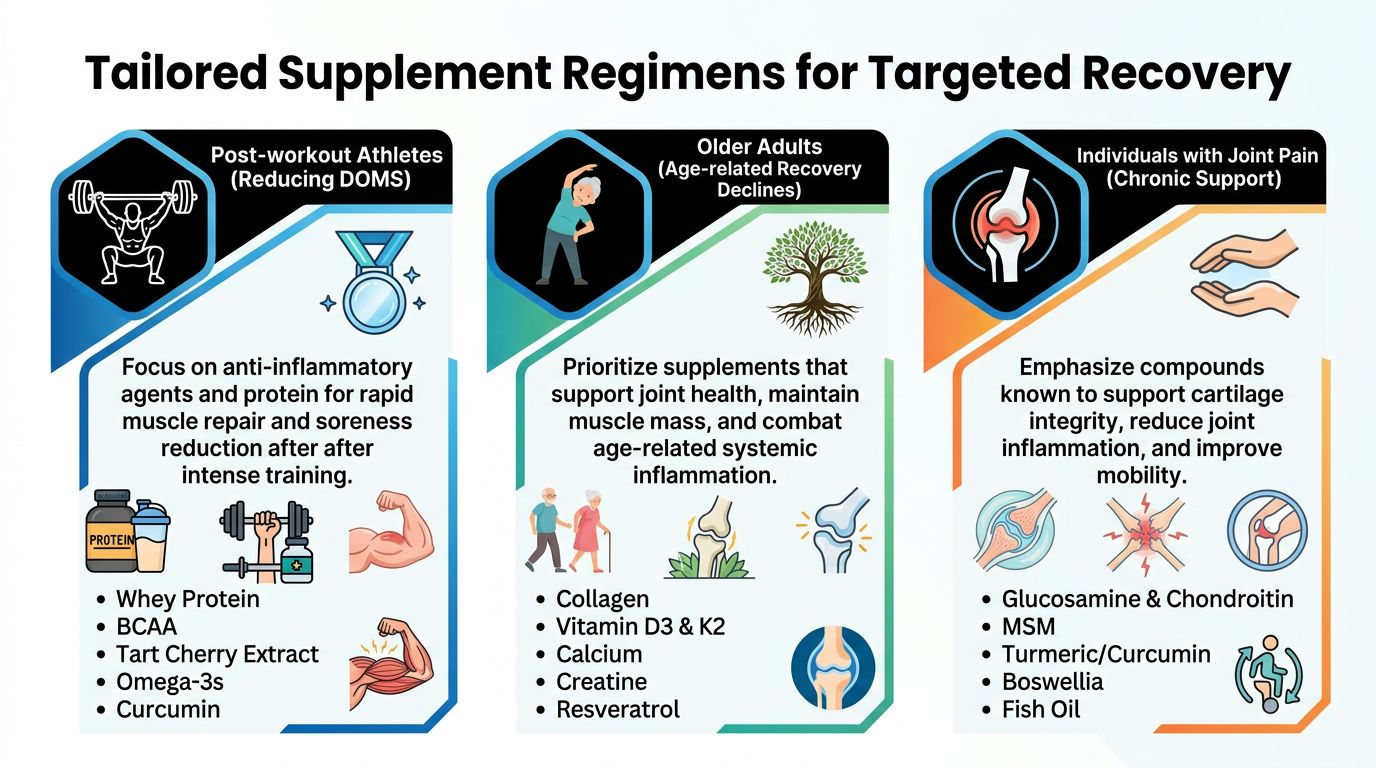
The right supplement plan depends on the problem limiting you. An athlete unable to repeat a hard session because of soreness needs a different approach from an older adult recovering more slowly, or someone whose joint pain continues between workouts. Start with the outcome: reduce soreness, restore strength, preserve mobility, or support regular training.
Post-workout athletes managing DOMS
First identify the pattern. Soreness after a new exercise may call for a different response than soreness after a sudden increase in volume or repeated high-load sessions. Omega-3s and tart cherry have comparatively strong support among the compounds discussed in the recovery evidence review. Curcumin may also be considered when the product identifies its extract clearly and uses an appropriate absorption strategy, as noted in the recovery evidence review.
Primary target: Reduce soreness without trying to remove the normal training adaptation.
Possible options: Omega-3 fatty acids, tart cherry, or a standardized turmeric extract.
Timing approach: Follow the label consistently, take irritating botanicals with food, and use post-workout meals to provide protein and energy.
Safety note: Ask a clinician about omega-3s and piperine if you take medicines that affect bleeding or drug metabolism.
Older adults focused on recovery and mobility
For older adults, success may mean staying capable throughout the week rather than completing one especially demanding workout. Omega-3 research, including findings from an omega-3 meta-analysis, suggests possible support for inflammatory markers and delayed-onset muscle soreness, including among older adults. The practical question is whether reduced discomfort helps you keep walking, completing strength work, and handling daily tasks.
Primary target: Preserve activity, manage soreness, and support consistent strength work.
Possible options: Omega-3s when appropriate, adequate dietary protein, and clinician-guided treatment for documented deficiencies.
Timing approach: Attach supplements to a meal or daily routine that already occurs reliably.
Safety note: Review medicines with a clinician, especially when several prescriptions are involved.
People with ongoing joint pain
Chronic joint pain and exercise-related muscle soreness are different problems. A supplement may support comfort, but swelling, instability, trauma, or a progressive loss of function needs medical assessment rather than continued self-treatment.
Primary target: Support mobility while identifying the cause of pain.
Possible options: A standardized turmeric product, with attention to piperine, digestive tolerance, and medication interactions.
Timing approach: Follow the label consistently and assess function over time, not only how pain feels on one day.
Safety note: Discuss botanicals with a clinician if gallbladder, liver, bleeding, thyroid, or autoimmune concerns apply.
River of Life Capsules provide one vegan capsule-based option combining turmeric extract with BioPerine, ashwagandha, ginger, and bromelain. The multi-ingredient formula may suit someone seeking several botanical ingredients in one product, but it still requires the same label review, medication check, and tolerance assessment as any supplement.
Conclusion and Next Steps
The most useful supplement for muscle recovery depends on the outcome you want to change. Omega-3s and tart cherry have comparatively strong recovery support, curcumin requires attention to formulation and dose, creatine is better aligned with strength, and protein supports the building blocks of repair and endurance.
Choose one target, check the label, review interactions, and track soreness, sleep, function, and training quality. If symptoms persist or your medical history is complex, speak with a qualified healthcare professional before starting.
River of Life offers vegan capsules built around turmeric extract with BioPerine, ashwagandha, ginger, and bromelain for people considering a multi-ingredient approach to recovery, joint comfort, stress, and sleep support. Visit River of Life to review the formulation and explore its educational resources before deciding whether it fits your routine.