

Pain Reliever for Gout Arthritis: A Complete Guide

You wake up with your big toe throbbing or your knee hot enough to feel alarming, and every step feels like a bad idea. That's the moment to search for a pain reliever for gout arthritis, because resting it and waiting rarely feels like enough. What helps most depends on whether you need fast anti-inflammatory relief, whether your kidneys or stomach can tolerate it, and whether the problem is really gout or something that needs urgent medical attention.
Table of Contents
When a Gout Flare Hits and What Relief Looks Like
A gout flare doesn't feel like ordinary soreness. It often arrives suddenly, with a joint that becomes hot, swollen, tender, and hard to touch, then quickly turns into pain that can make even a bedsheet feel unbearable. That pattern matters because gout flares are a major reason adults seek short-term treatment for severe joint pain, and the medicine that helps has to calm inflammation, not just dull discomfort (AAFP review).
What people usually try first
Most readers start with whatever is nearby, rest, ice, elevation, or an over-the-counter pill. Those steps can help, but they can also feel frustratingly slow when the joint is already inflamed. A flare is one of those times when the problem is not just pain, but an immune response that is already in motion.
A useful way to think about it is this. The joint is signaling fire, and you need something that helps put out the fire, not just cover the smoke alarm. That is why acute gout treatment usually centers on anti-inflammatory medicine, while long-term control focuses on lowering urate so the next flare is less likely.
Practical rule: if the joint is red, hot, and rapidly worsening, home comfort measures are supportive, but they're not a substitute for anti-inflammatory treatment when it's safe to use it.
What relief should actually look like
Relief doesn't always mean the pain disappears right away. It usually means the attack stops escalating, walking becomes less miserable, and the joint starts to settle over the next day or two. The goal is to shorten the flare and reduce how hard it hits, not to mask it and keep going as if nothing's wrong.
That's also where confusion starts. A person may assume a pain reliever should work like a headache tablet, but gout is not a simple pain problem. It's an inflammatory joint attack, so the right medicine has to match the biology of the flare.
Why Gout Hurts and Why Anti-Inflammatory Medicine Works
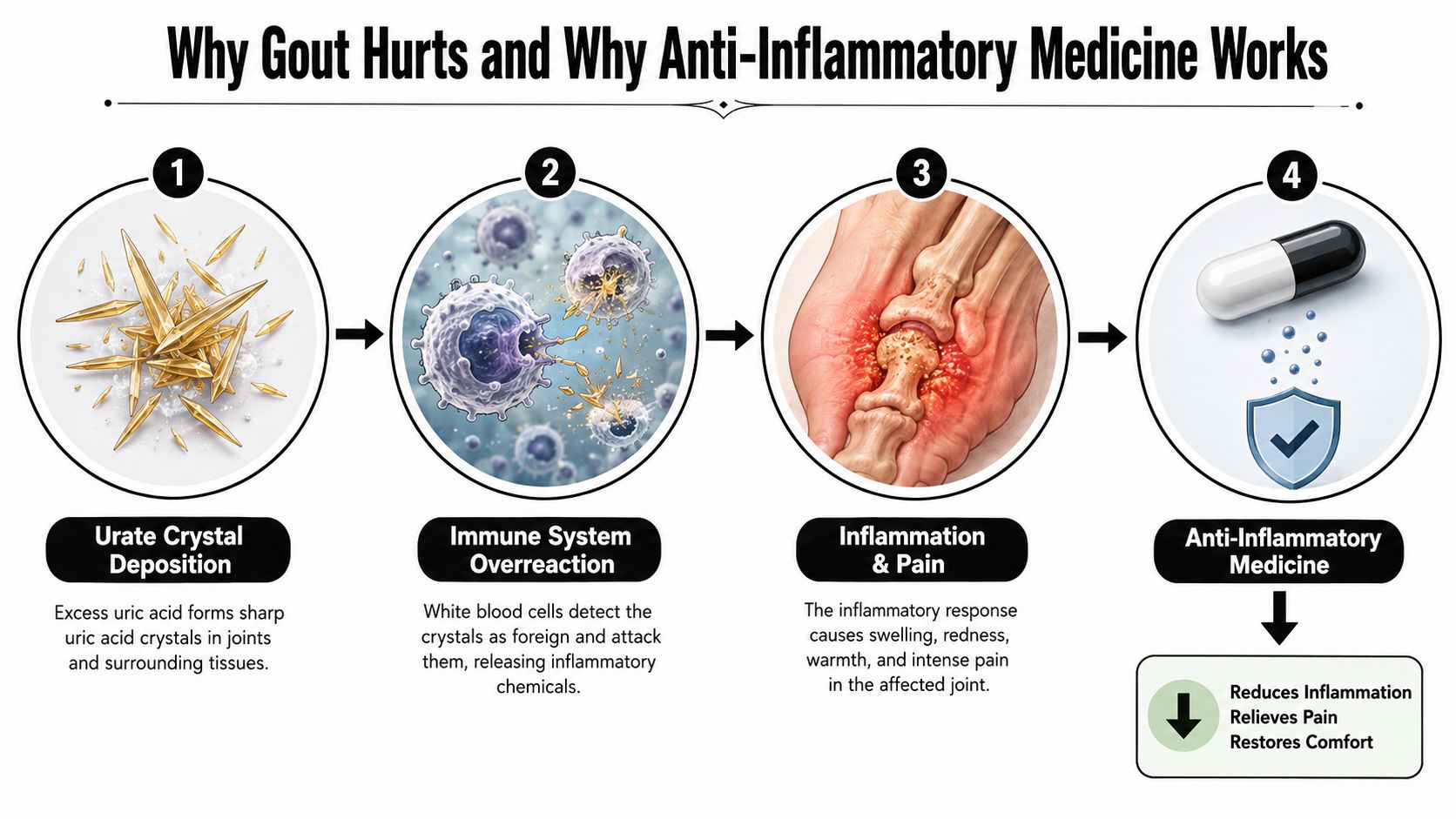
A gout flare begins when urate crystals settle in a joint. A simple way to understand it is to picture tiny shards of glass inside the joint space, except the injury is driven by your own immune system as well as the crystals themselves. White blood cells rush in, the area becomes swollen and hot, and the joint turns tender and hard to move. This immune reaction is part of the process described in the mechanism review (mechanism review).
The pain is the immune response
That is the point many readers miss. The crystals start the problem, but the severe pain comes largely from the inflammatory cascade that follows. Once that is clear, it makes sense why a flare responds to anti-inflammatory medicine instead of a urate-lowering drug alone.
NSAIDs, colchicine, and glucocorticoids all calm the flare by interrupting inflammation at different points. NSAIDs block COX-2 mediated prostaglandin synthesis, colchicine interferes with neutrophil movement and tubulin-dependent microtubules, and glucocorticoids reduce phospholipase A2 activity upstream of other inflammatory signals. These medicines do not work the same way, but they are all aimed at quieting the same storm.
That is also why the choice is not just about pain. A person with kidney disease, stomach ulcer risk, heart disease, or diabetes may need a different option, because the safest pain reliever is the one that matches the whole person, not only the joint.
Why this matters for long-term thinking
A flare can improve even while the underlying urate problem remains untouched. NSAIDs ease inflammation and pain, but they do not lower serum urate, so long-term prevention still depends on urate-lowering treatment such as xanthine oxidase inhibition with allopurinol or oxypurinol (NCBI Bookshelf).
The short-term job is to calm the fire in the joint. The long-term job is to lower the crystal burden so the fire is less likely to start again.
Comparing NSAIDs Colchicine and Steroids for Acute Pain
A gout flare can make a joint feel hot, swollen, and hard to move, and the first question is often which medicine fits best. For acute relief, the usual choices are NSAIDs, colchicine, or glucocorticoids. The right option is not only the one that sounds strongest. It depends on how early the flare is being treated and on the person's other conditions, especially kidney disease, stomach ulcer risk, heart disease, and diabetes.
The evidence base generally favors NSAIDs for acute gout pain. In a placebo-controlled trial, 11 of 15 people on NSAIDs reached at least a 50% reduction in pain at 24 hours, compared with 4 of 15 on placebo, with a risk ratio of 2.7 and an absolute improvement of 47% (evidence review). Broader reviews also found that NSAIDs reduced pain in acute gout, and COX-2 inhibitors were generally comparable to traditional NSAIDs for pain relief (evidence review).
Medication | How It Works | Typical Onset | Main Cautions |
|---|---|---|---|
NSAIDs | Block COX-2 mediated prostaglandin synthesis | Often used for fast flare relief | Can be a poor fit with kidney disease, stomach ulcers, or heart risk |
Colchicine | Suppresses gouty inflammation by blocking neutrophil migration and disrupting tubulin-dependent microtubules | Works best when taken early in the flare | Needs careful use with kidney impairment and drug interactions |
Glucocorticoids | Decrease phospholipase A2 activity upstream of prostaglandins and leukotrienes | Often chosen when NSAIDs or colchicine are not appropriate | Can raise glucose and affect blood pressure |
What each option is good at
NSAIDs are often the most familiar choice because they are widely used and can ease pain quickly. They suit a person who can take them safely and who does not have major reasons to avoid them. If you want a plain-language look at one common over-the-counter option, this discussion of naproxen use explains why some people reach for that type of medicine first.
Colchicine works differently. It is most useful when started early, because it targets the inflammatory cell response already building inside the joint. Steroids become the practical fallback when NSAIDs or colchicine are not a good fit, especially when a clinician needs a strong anti-inflammatory option without using an NSAID.
How Clinicians Choose
The decision usually comes down to fit, not loyalty to one drug. A patient with a straightforward flare and no major medical conflicts may do well with an NSAID. Someone with kidney concerns, stomach problems, diabetes, heart disease, or several ongoing medications may need a different first-line choice, because each option carries a different safety profile. That is why the best pain reliever for gout arthritis changes from person to person.
Over-the-Counter Options Beyond the Prescription Aisle
A flare often sends people straight to the medicine cabinet, and that reaction makes sense. Ibuprofen and naproxen sodium are the familiar over-the-counter choices here because they belong to the NSAID group, which lowers inflammation as well as pain. For gout, that anti-inflammatory effect is the part that matters most, since the joint pain is being driven by inflammation, not just soreness.
What OTC medicine can and can't do
Acetaminophen comes up often because it is easy to find and many people already have it at home. During a true gout flare, though, it usually falls short. It may soften the discomfort a little, but it does not calm the inflammatory process that makes the joint hot, swollen, and sharply painful. In practice, that is why it often feels incomplete.
Topical diclofenac gel is another option readers ask about. It can help some forms of localized musculoskeletal pain, yet a gout flare usually involves inflammation deeper in the joint, so a gel may not reach far enough to do the job on its own. A clinician may still suggest it as part of a comfort plan, especially if oral medicine is a poor fit or needs to be limited.
What to avoid with store-bought pills
The main over-the-counter mistake is combining NSAIDs or using an old prescription without checking whether the medicines overlap. One NSAID plus another NSAID adds risk without giving much more relief. That risk rises further when someone has stomach sensitivity, kidney disease, heart disease, or takes other medicines that affect bleeding or fluid balance.
A simple rule helps.
Use one anti-inflammatory plan at a time, and do not guess when the label is unclear. If the box, bottle, or leftover prescription is hard to interpret, a pharmacist can usually sort it out quickly.
The right choice also depends on the rest of the person, not just the flare. A person with kidney concerns may need to avoid an NSAID even if it is sold on the shelf. Someone with stomach problems may need to be more careful about irritation and bleeding. Heart disease, diabetes, and other ongoing medicines can also change the safest option, which is why the same pain reliever for gout arthritis is not the best answer for everyone. For a broader look at supportive measures, this natural pain relief guide can help separate comfort measures from treatments that do not belong in that category.
Non-Drug Strategies That Genuinely Help During a Flare
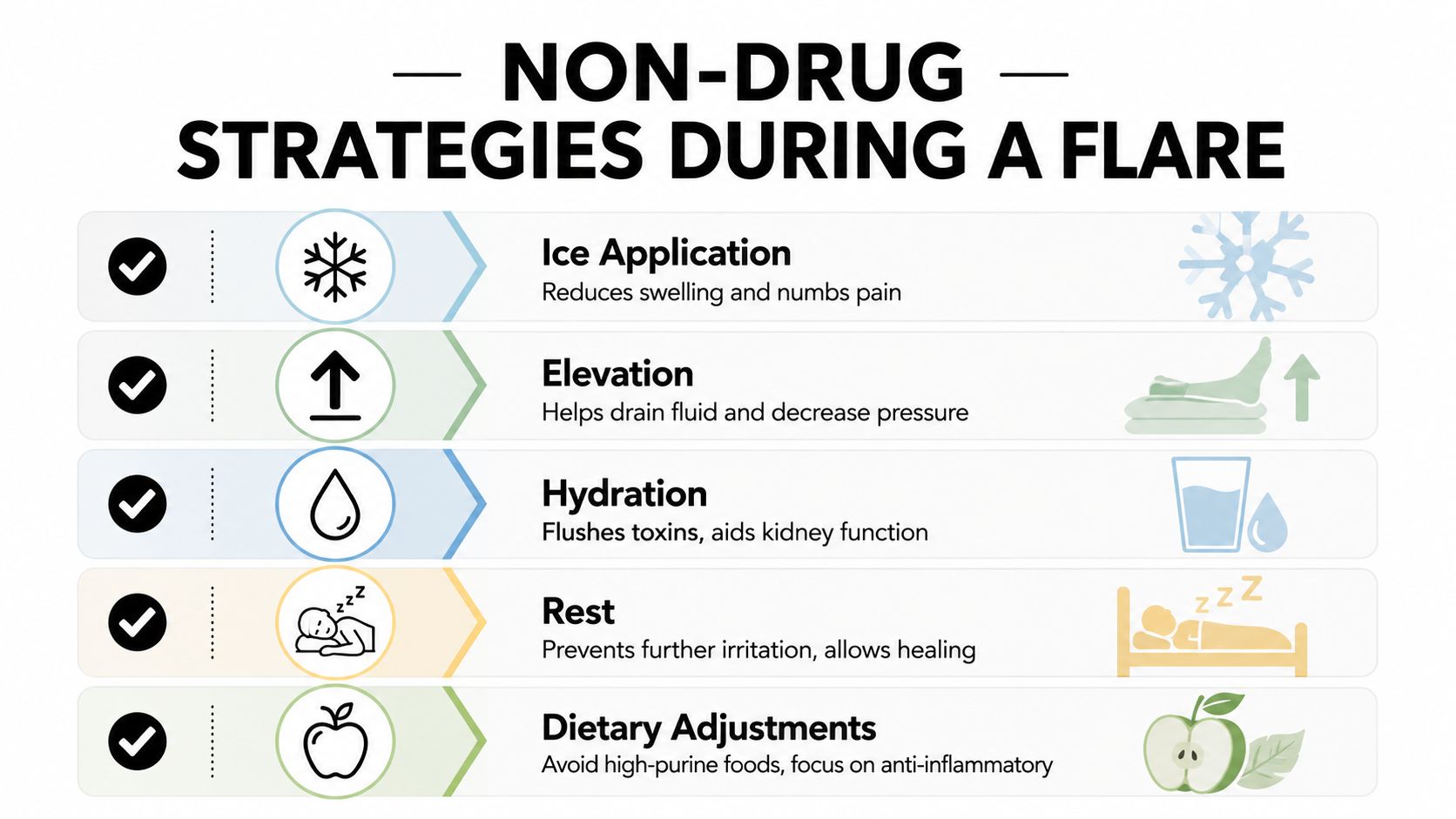
A flare can make a joint feel hot, tight, and impossible to ignore. In that moment, non-drug steps can make the day easier, but they work best as support alongside medicine rather than as a replacement for it. Ice, elevation, hydration, rest, and diet changes are the support crew. They reduce strain, calm swelling, and help the body settle, yet they do not shut off the inflammatory process on their own.
How to use the basics well
Ice helps when it is used in short sessions with breaks in between. Left on too long, it can irritate the skin and make the area feel worse instead of better. Elevation works because it lets fluid drain away from the joint, which can reduce pressure and throbbing.
Rest matters for the same reason. Every extra step, twist, or squeeze across the joint can add more irritation to tissue that is already inflamed. Hydration helps too, but it is not a rescue treatment. Drinking enough water supports kidney function and helps the body handle uric acid better, yet it will not stop a severe attack by itself.
Diet changes can also take some pressure off the body during a flare. Keeping meals gentler and avoiding obvious trigger foods may help some people feel less burdened while the joint is hot and swollen. For readers who want a broader overview of comfort measures, this natural pain relief guide explains how supportive habits fit into a larger care plan.
What counts as a helpful day-of plan
A practical flare plan stays simple and specific.
Ice Application: use it for short periods to calm swelling and numb pain.
Elevation: keep the joint raised when you can.
Hydration: sip water regularly unless a clinician has told you to limit fluids.
Rest: avoid pounding the joint while it is actively inflamed.
Dietary Adjustments: keep meals light and avoid obvious trigger foods.
The safest plan also depends on the rest of the person. Someone with kidney disease may need to be careful about fluid goals, and someone with heart failure may already be following a fluid limit. People with diabetes may need to think about how food choices and reduced activity affect blood sugar, while anyone with stomach sensitivity can still benefit from gentler meals even though diet alone will not treat the flare. These steps are like lowering the volume in a noisy room. They make the flare more tolerable, but they do not turn off the alarm.
Gentle movement can return once the worst pain starts to settle. Full immobility is usually not the goal, because joints stiffen when they are held still for too long.
If the joint becomes increasingly red, the pain spreads, fever appears, or the person cannot bear weight or use the joint, home care has reached its limit and medical evaluation is needed.
The Honest Truth About Turmeric BioPerine and Other Supplements
Supplements are popular because they feel like a gentler answer, and some people do use them as part of a daily comfort routine. The most common question in this category is turmeric, especially formulas that pair curcumin with BioPerine. That pairing exists because curcumin on its own has absorption limits, and black pepper extract is often added to improve bioavailability.
Where supplements fit and where they don't
The honest position is that supplements can be adjuncts, not rescue remedies. A flare that is already red, hot, and severe usually needs an anti-inflammatory medicine with known acute gout effects. Turmeric blends may be better suited to day-to-day joint comfort than to stopping a painful attack in progress.
Other botanicals come up often too. Ginger, ashwagandha, and bromelain are commonly discussed because they're associated with inflammation, stress, or recovery support, and many people prefer them as part of a broader routine. The problem is not that they're worthless, it's that they shouldn't be confused with acute flare treatment.
River of Life Capsules is one supplement option in this general category. Its formula combines turmeric extract, BioPerine, ashwagandha, ginger, and bromelain, which makes it relevant to readers who want a supplement-based support routine rather than a drug-centered one.
A good way to think about the evidence
Supplements are most reasonable when your goal is comfort support over time, not crisis relief. That distinction protects readers from overpromising what an herbal product can do during a severe gout attack. It also keeps the conversation honest, because a supplement stack can sit alongside medical care, but it doesn't replace the anti-inflammatory medicines that guidelines place at the center of acute treatment.
If you want a deeper look at curcumin and pepper-based absorption strategies, this curcumin with black pepper guide is a useful companion read.
Matching Pain Relief to Kidney Stomach Heart and Diabetes
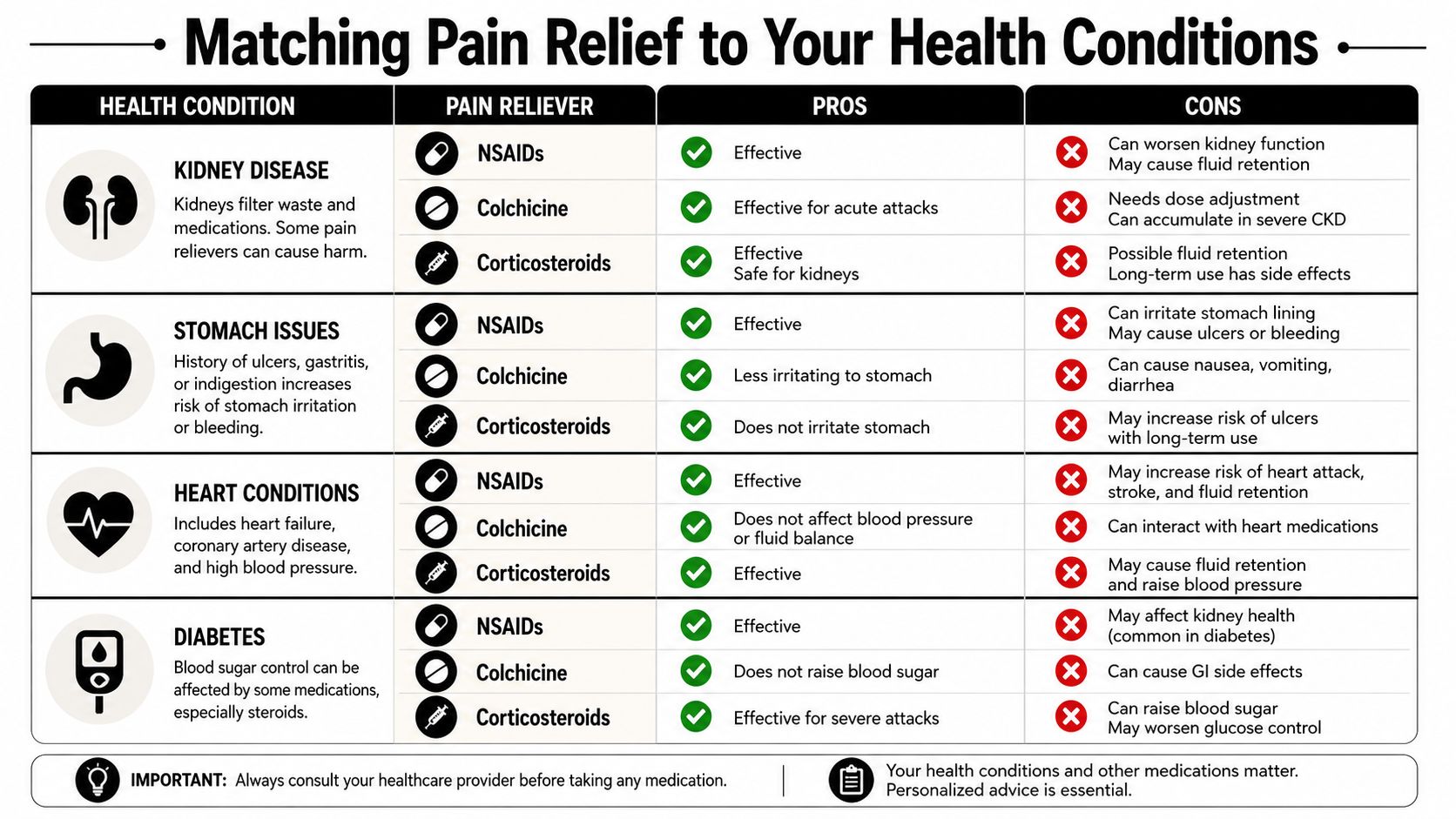
Generic advice often proves insufficient. The question isn't just, “What relieves gout pain?” It's, “What relieves it safely if I also live with kidney disease, stomach ulcers, heart disease, or diabetes?” High-quality reviews stress that gout treatment has to be individualized, and first-line choices commonly include NSAIDs, colchicine, or systemic glucocorticoids depending on contraindications (individualized treatment review).
A safety-first way to think about the options
NSAIDs can work well for pain, but they're often the least forgiving choice when the kidneys, stomach lining, or cardiovascular system are already under strain. Colchicine can be a better fit in some people, yet it needs careful attention in kidney impairment because dosing and drug interactions matter. Steroids can be useful when the other two aren't a good match, but they bring their own trade-offs, especially for glucose control and blood pressure.
The point is not to memorize a one-size-fits-all rule. It's to know which questions to ask before you take the first dose. If your kidneys are vulnerable, if ulcers or reflux are part of your history, if your heart is already a concern, or if you manage diabetes, the safest anti-inflammatory choice may not be the most obvious one.
Questions worth asking before you choose
Kidney disease: ask whether an NSAID is a poor fit and whether colchicine needs adjustment.
Stomach ulcers or reflux: ask how much stomach risk an oral NSAID adds.
Heart disease: ask whether fluid retention, blood pressure, or cardiovascular risk changes the choice.
Diabetes: ask whether a steroid could spike glucose enough to matter for you.
A clinician or pharmacist can help sort these trade-offs fast. That conversation is often more important than the brand name on the box.
When to Seek Medical Care and How to Use This Guide
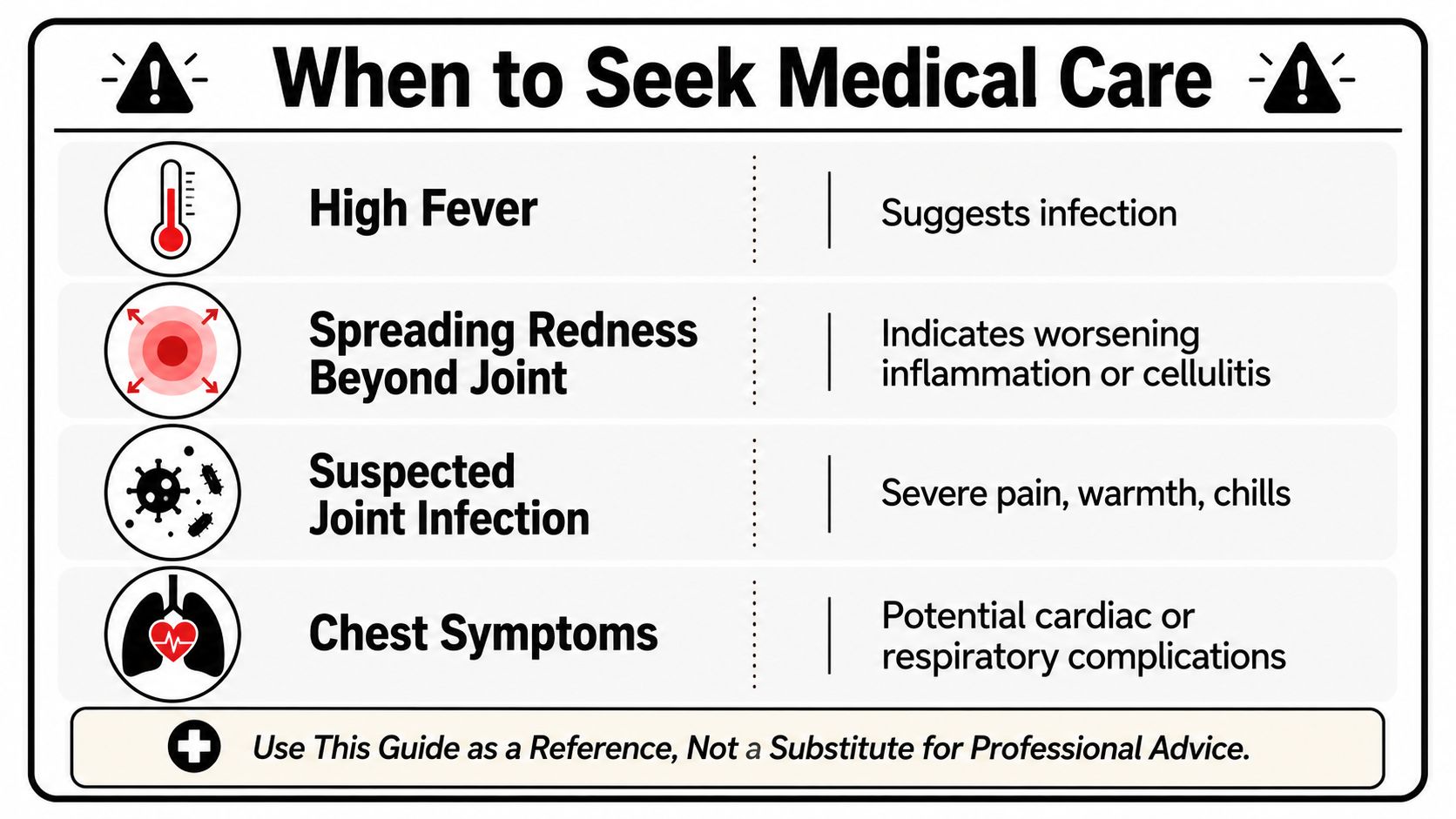
A gout flare shouldn't be managed at home if the picture stops looking like a routine flare. High fever, spreading redness beyond the joint, suspected joint infection, chest symptoms, severe dehydration, or pain that lasts more than a week all deserve prompt medical attention. A sudden hot swollen joint can sometimes be something other than gout, and infection is the situation you never want to miss.
A simple action checklist
Identify whether the joint pattern fits a flare.
Choose an anti-inflammatory option that matches your health profile.
Add ice, elevation, hydration, and rest.
Treat supplements as support, not as emergency therapy.
Escalate care fast if warning signs show up.
Use this guide as a reference, not a substitute for professional advice.
If you're sorting through gout pain, kidney concerns, stomach sensitivity, or questions about supplement support, River of Life can help you think through the comfort side of the picture with a joint-focused capsule formula and educational resources at River of Life.