


Dog Pain Reliever OTC: Safe Options and What to Avoid

There is no FDA-approved over-the-counter pain reliever for dogs, and you should not give ibuprofen, naproxen, or acetaminophen unless a veterinarian has explicitly told you to. If your dog is hurting tonight, the move is not the medicine cabinet, it's controlled rest, careful observation, and a vet plan.
You're probably here because your dog just started limping, won't jump up, or is acting sore and miserable while the vet appointment is still days away. That gap is where owners get into trouble, because panic pushes people toward human pain pills that are unsafe for dogs and often make the underlying problem harder to diagnose. The right answer is narrower than one might think, but it's clear. Dog pain reliever OTC doesn't mean a human-style painkiller on a pet-store shelf, it means a small set of vet-acceptable supportive products and home measures that can help bridge the wait.
Table of Contents
What Dog Pain Reliever OTC Actually Means in 2026
The blunt truth is simple. There are no over-the-counter NSAIDs approved by the FDA for dogs, and human OTC pain medicines like ibuprofen and naproxen are not safe for pets without veterinary direction. That's why the dog pain market never turned into a normal grocery-aisle shelf of canine painkillers. It grew around prescription veterinary NSAIDs, non-NSAID options, and supportive products that can help, but don't pretend to replace diagnosis or treatment. FDA guidance on pain relievers for pets
What the phrase actually covers
When owners search for dog pain reliever OTC, they usually mean, “What can I give right now without a prescription?” The answer is not a dog version of ibuprofen. It's usually one of three things, vet-directed supplements, topical comfort products, or short-term supportive care while you wait for an exam.
That's the part most articles skip. They stop at the warning and leave you with nothing useful. A better way to think about OTC in dogs is as a bridge, not a cure. If your dog has moderate pain, limps badly, or seems systemically unwell, OTC support is not the finish line.
Practical rule: if the product name sounds like something you'd buy for yourself, stop and check with your vet first.
The market tells you where demand is, not what's safe
The commercial backdrop is big because pet owners spend on comfort, mobility, and arthritis support. One market outlook estimates the global OTC pet medication market at USD 9.3 billion in 2024 and USD 10.7 billion in 2026, with projections reaching USD 16.4 billion by 2034 or USD 15.9 billion by 2033, depending on the model. Another estimate places dog-focused pain relief at USD 662.76 million in 2024, rising to USD 707.30 million in 2025 and USD 1,355.38 million by 2035. Global OTC pet medication market outlook
That growth doesn't mean there's a safe human-style OTC analgesic aisle for dogs. It means owners are looking for something they can do while a veterinarian works up the cause. That's the gap this article fills, the part between “my dog hurts” and “here's what's safe tonight.”
Why Human Pain Pills Are a One-Way Trip to the ER
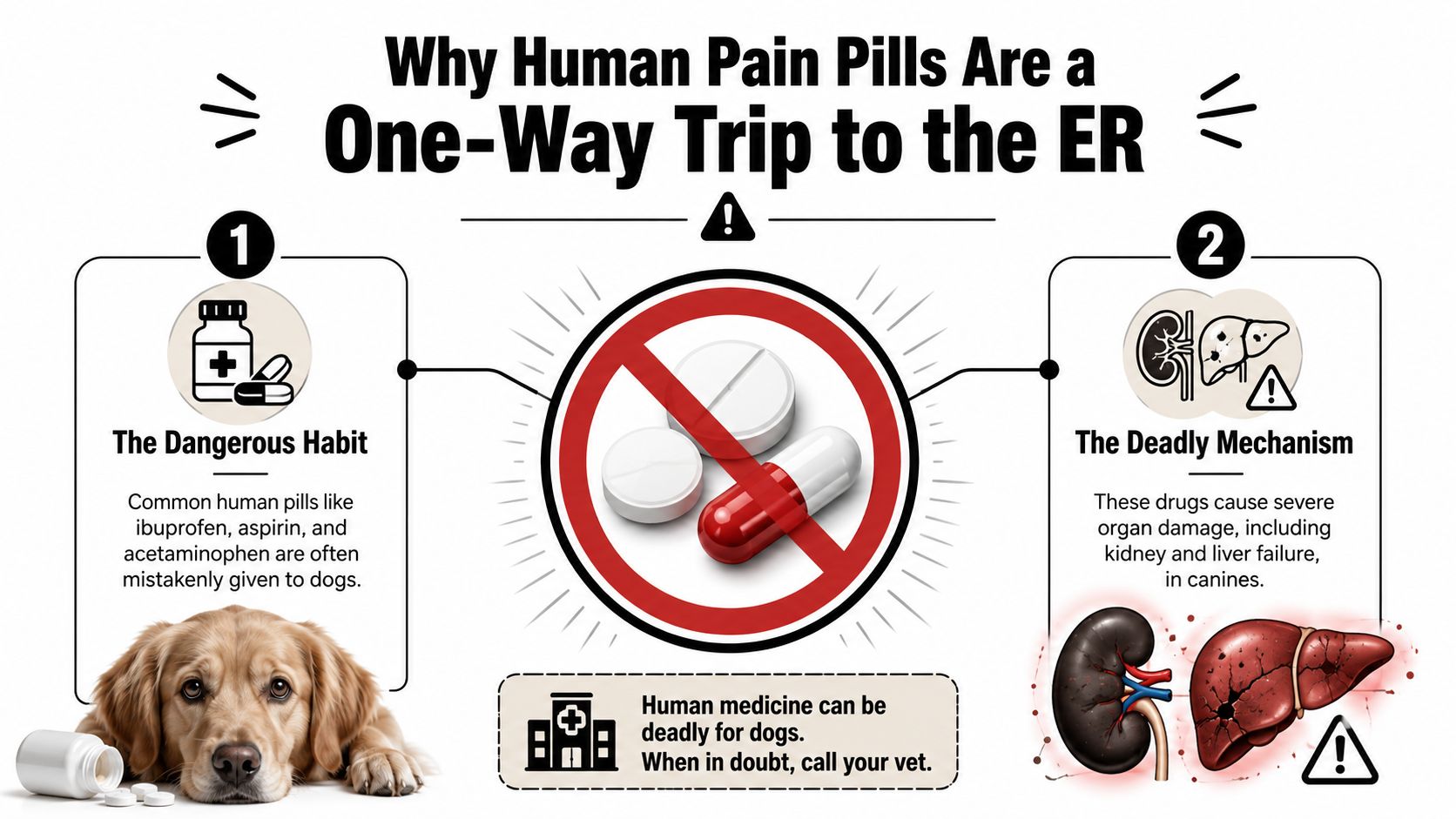
People keep reaching for human pain pills because they're familiar and they work on humans. Dogs are not small humans, and their bodies handle these drugs differently. The result can be stomach injury, kidney trouble, liver damage, or worse, and you don't get a friendly warning from the dog that it's going sideways until the signs are already obvious.
The medicine cabinet habits that get dogs hurt
The dangerous habits are always the same. Someone halves an ibuprofen, drops a baby aspirin into peanut butter, or gives acetaminophen because the dog “seems feverish.” None of that is a safe guess. The FDA warns that human OTC pain medicines such as ibuprofen and naproxen are not safe for pets, and authoritative veterinary sources warn that acetaminophen is also unsafe unless a veterinarian specifically directs it. FDA facts on pain relievers for pets
Why ibuprofen is especially dangerous for dogs
Here's the problem in plain English. These drugs can irritate the stomach lining, trigger bleeding, and stress the kidneys and liver. Owners often think a tiny human dose is harmless, but a dog's safe margin is much narrower, and weight, age, dehydration, and other meds all matter.
The signs that mean poisoning may already be happening
If a dog has already eaten a human pain pill, watch closely for vomiting, vomiting blood, black tarry stool, sudden lethargy, refusal to eat, or weakness. Those are not “wait and see” signs. They're call-the-vet-now signs.
If your dog got into your pills, don't induce vomiting unless a veterinarian or poison professional tells you to.
The smartest move is prevention by household policy. Keep ibuprofen, naproxen, acetaminophen, and aspirin out of reach, and make sure everyone in the home knows those drugs are off-limits for dogs. Panic makes people improvise. Dogs pay for that improvisation.
OTC and Pet-Aisle Options That Vets Accept
The list is shorter than people want, but it exists. Most vet-acceptable OTC and pet-aisle options are not painkillers in the human sense. They are support tools that may help with comfort, inflammation, or recovery while a veterinarian decides whether the dog needs prescription treatment. Human supplements like River of Life Capsules are not formulated for dogs and should not be used for canine pain management.
What's worth considering and what isn't
Joint chews with glucosamine and chondroitin are common for long-term mobility support. They are not rescue meds for acute pain, but they can fit into a broader plan for older dogs or dogs with stiffness. Omega-3 fish oil is another common choice, especially when inflammation and mobility are part of the picture.
MSM shows up in some joint formulas too. I treat it as a supporting ingredient, not a magic fix. If the label is vague, overloaded with marketing language, or hiding the exact amounts, I'm skeptical. Same with CBD products. Where legal, some owners use them, but quality control varies, the evidence is mixed, and you need to tell your vet exactly what you're using.
Topical sprays and balms are even narrower. They may help with superficial soreness or skin-related irritation, but they will not touch deep joint pain. If the dog can lick it, you need to be careful about what is in it.
Vet-floor standard: if a product doesn't clearly name the active ingredient, the dose, and the manufacturer, it's not ready for my trust.
Ranked by vet acceptance
Product Type | Best For | Evidence Strength | Vet Caution |
|---|---|---|---|
Glucosamine and chondroitin chews | Ongoing joint support | Modest | Not for acute pain |
Omega-3 fish oil | Mobility and inflammation support | Moderate | Watch for GI upset |
MSM-containing blends | General joint support | Limited | Check the full formula |
CBD products | Some owners use for comfort | Mixed | Quality and legality matter |
Topical comfort products | Localized skin or surface discomfort | Low to modest | Licking and ingredient safety |
Why natural pain relief gets so much attention
That last point matters. River of Life is a human dietary supplement brand, not a canine pain medication, so it does not belong in a dog dosing conversation. The right takeaway is simpler, use dog-specific products and vet guidance, not human supplements repurposed for pets.
Reading the Signs That Your Dog Is in Pain
Dogs don't usually announce pain the way people do. They adapt, compensate, and hide it until they can't. That's why a dog that just “seems a little off” could be dealing with a meaningful injury or illness.
Mild, moderate, and emergency signs
A mild case looks like a slight hitch when standing, a little stiffness after rest, or some extra licking at one joint. Those dogs still need monitoring, but they may do okay with restricted activity and a scheduled vet visit.
A moderate case is harder to ignore. Reluctance to jump, obvious limping, new irritability, a change in posture, or reduced appetite all belong in the “book the vet this week” bucket.
An emergency is different. If your dog collapses, can't bear weight, has labored breathing, a swollen abdomen, cries out when touched, or suddenly worsens, that's not a home-care situation.
What owners miss most
One of the most common misses is subtle behavior change. A dog who stops climbing the couch, avoids stairs, or keeps shifting weight off one leg is telling you something. Another miss is assuming rest alone fixes everything. Sometimes it does. Sometimes the rest period just delays care for a ligament tear, spinal issue, or abdominal problem that needs quick treatment.
A good habit is to compare your dog to their normal self, not to another dog. Eating normally, greeting you at the door, and moving with confidence are baseline behaviors. When those change, pain is on the list until proven otherwise.
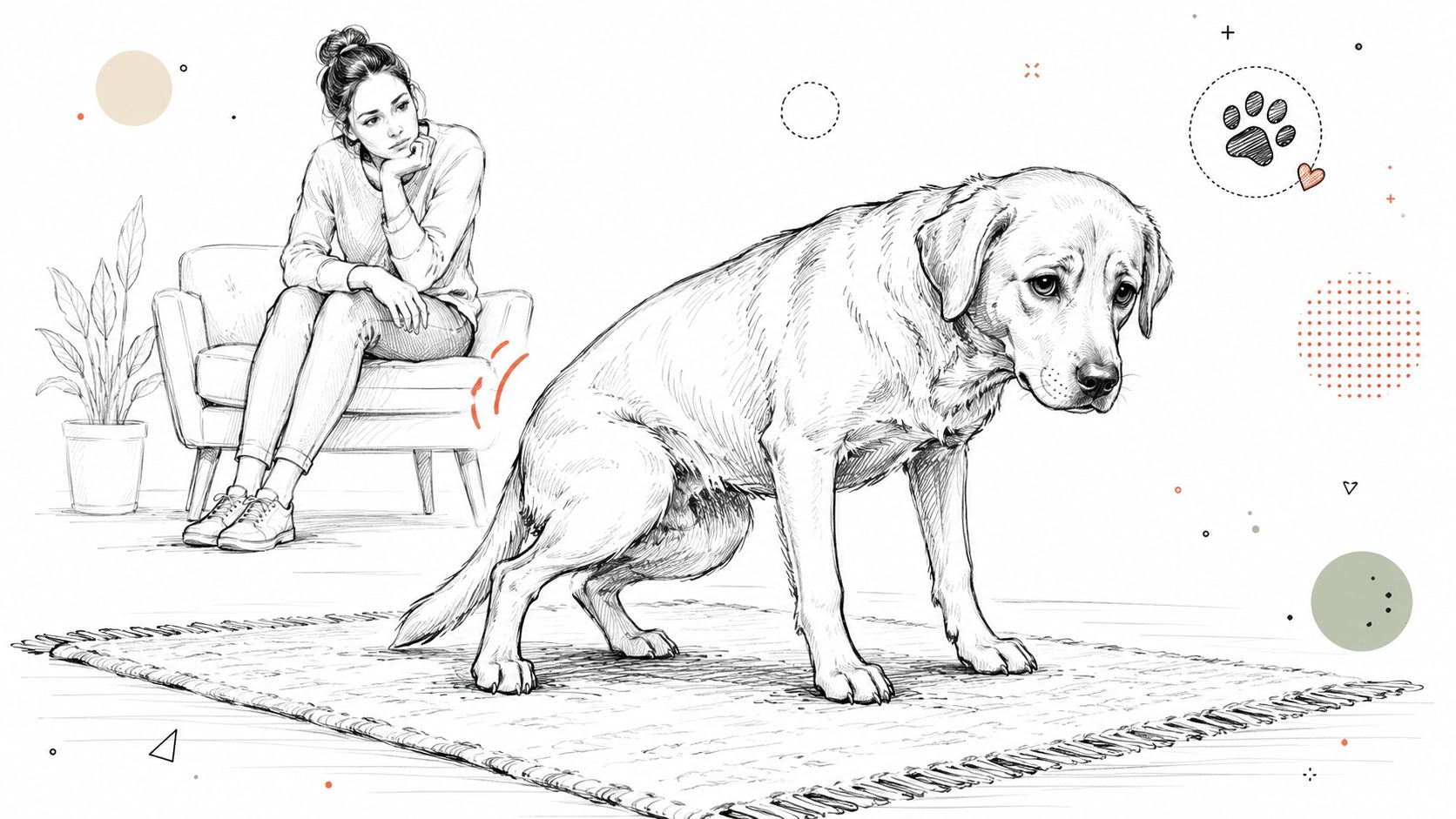
Call-now rule: severe limping, significant swelling, or pain with breathing changes doesn't wait for office hours.
That's the triage mindset I want owners to use. Don't overthink the perfect label. If the dog is clearly worse, treat it as real pain and get help.
Safe At-Home Support While You Wait for the Vet
The next 24 to 48 hours should be about making the dog safer and more comfortable, not about testing remedies. Keep the plan simple and disciplined. That helps most when you can't give a pain reliever yet.
The home protocol I'd use
Start with restricted activity. No stairs, no jumping, no rough play, and no off-leash running. Use leash-only bathroom breaks and keep the route short. If your dog hates crates, use a small quiet room instead, but the goal stays the same, remove chances to make the injury worse.
Set up a comfortable resting spot with soft bedding in a low-traffic area. If your dog seems stiff rather than swollen, a warm compress can ease discomfort. If the area looks freshly injured or puffy, use a cold compress wrapped in a towel for short intervals, and never put ice directly on skin.
For more ideas on natural pain relief for dogs, see Simple home care ideas for dogs in pain. Keep that support gentle. A dog in pain needs comfort, not a home experiment.
What not to do
No human NSAIDs or acetaminophen: Don't guess with pills from your cabinet.
No essential oils: Dogs lick, and plenty of oils are unsafe.
No forcing movement: Don't make the dog “walk it off.”
No ice on bare skin: That risks skin injury.
No old prescriptions without direction: An expired leftover isn't a plan.
If the dog has arthritis or neck stiffness, raised bowls can reduce awkward posture during meals. If the dog is overweight, don't turn the wait period into a diet overhaul overnight, but do note the issue and tell the vet. Weight adds joint stress, and the vet needs the full picture.
Here's the clean rule.
Supportive care is for keeping a stable dog comfortable while you wait. It is not a substitute for treatment when the pain is serious.
Natural Supplements Versus Prescription Pain Meds
Natural products have a place, but they sit in a different lane from prescription pain relief. I see owners make two mistakes all the time. They either expect supplements to act like a rescue drug, or they dismiss them entirely because they don't work fast enough. Both reactions miss how these tools are used.
Where supplements fit
Turmeric with BioPerine, omega-3 fatty acids, glucosamine, chondroitin, and ashwagandha are usually about support over time. They're not fast-acting enough for a dog that's in obvious pain right now, but they may help with comfort, mobility, stress-related tension, or recovery when a vet has already identified the problem and set the plan.
Prescription medications are different. NSAIDs such as carprofen and meloxicam are designed for canine inflammation and pain under veterinary supervision. Gabapentin is commonly used when nerve-related discomfort is part of the picture. Those drugs have a clearer place in acute management because they're prescribed after a diagnosis, not guessed at from the couch.
How to think about the tradeoff
Supplements tend to be slower, gentler, and more about routine support. Prescription meds tend to be faster and more potent, but they also demand closer monitoring. That's not marketing, it's just how the categories work. Many dogs end up on a combination plan, with a prescription for the immediate problem and supplements for ongoing support.
Before you give anything, tell the vet every product your dog takes. That includes chews, oils, powders, and anything from a pet store checkout aisle. Interactions matter, and hiding supplements because they feel “natural” is how owners accidentally complicate treatment.
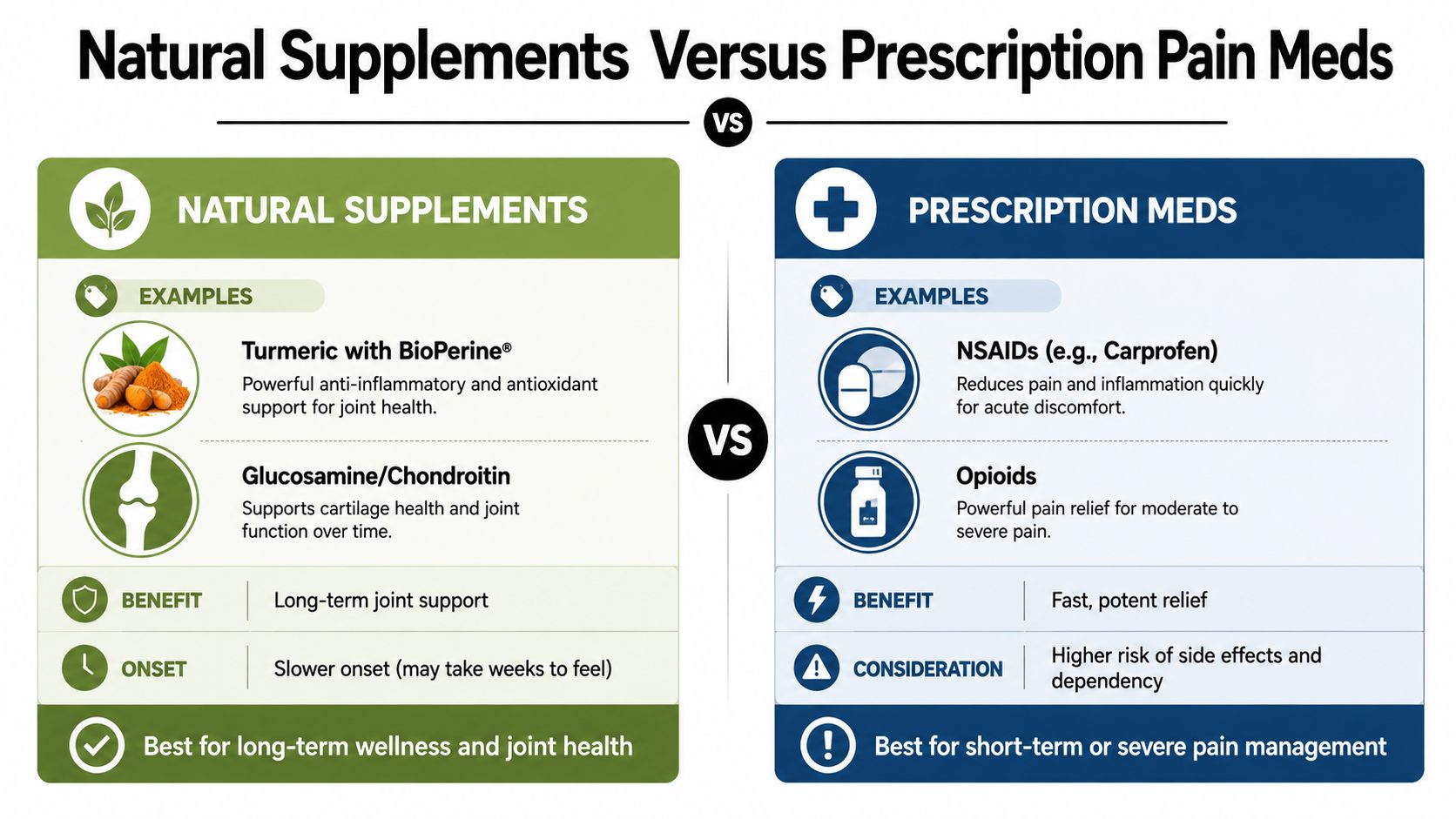
If you want one clean sentence to remember, use this one. Supplements support comfort, prescription meds treat pain. Mixing them without disclosure is asking for trouble.
Your 24-Hour Action Plan and Vet Visit Checklist
The first hour matters more than people think. If your dog looks painful, stop the activity, confine the dog, and remove access to stairs or jumping surfaces. Then decide whether this is a watchful-wait situation or a veterinary visit today.
What to do before the appointment
Write down what you saw, when it started, and whether the dog ate normally, drank normally, or reacted when touched. Bring every supplement, medication, and topical product the dog has had recently, even if you think it's irrelevant. If there was any chance of human medication exposure, say that clearly at the front desk.
Ask the vet direct questions.
What do you think is the most likely cause?
Do we need imaging or another diagnostic step?
Is this a case for a prescription NSAID or a non-NSAID option?
Could any current supplement interfere with treatment?
What changes mean I need to call overnight?
Four forum questions, answered plainly
Can I give aspirin? Not without veterinary direction.
Can I give baby aspirin? Same answer. The size of the tablet doesn't make it safe.
Can CBD oil help arthritis? Some owners try it, but quality and legality vary, so talk to your vet before using it.
Can Benadryl relieve pain? No. It's not a pain reliever.
The best next move is straightforward. Use supportive home care only, book the exam, and be ready to describe exactly what the dog is doing. If you want a practical place to keep learning about joint support, stress resilience, and recovery-minded supplement education, visit River of Life.