

Hand Arthritis Pain Reliever: A Complete Guide for 2026

You wake up, reach for a jar lid or a key, and your hand does not move the way you expect. The pain may seem minor at first, then it starts to shape the whole morning, from the mug you pick to the buttons you skip. A good hand arthritis pain reliever does more than blunt discomfort, it matches the joint, the symptom pattern, and the way you use your hands so daily tasks stay within reach.
Hand arthritis is common enough that this is not a niche problem. A 2024 review found symptomatic hand osteoarthritis in 22% of adults over 50, with broader prevalence estimates in the literature ranging from 20% to 30%, and it reported age-standardized prevalence in the United States of 44% in females and 37% in males across adults aged 28–92 years (review data). That is why a thoughtful plan matters more than grabbing the first cream, pill, or supplement that sounds promising. A consumer-friendly overview of nonprescription options is available in this natural pain relief guide, which can help frame the conversation about what “natural” relief does and does not mean for safety.
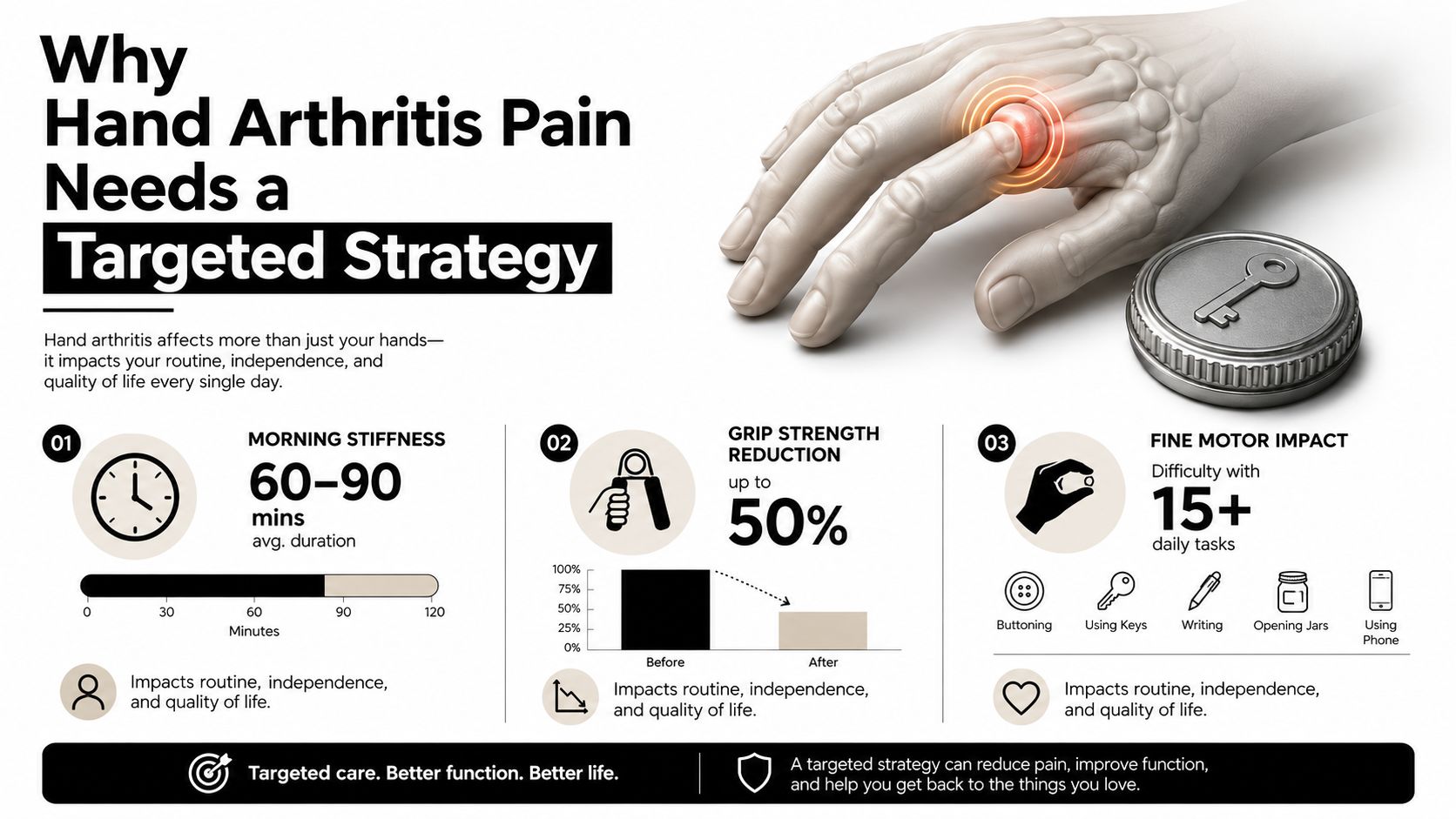
Table of Contents
Why Hand Arthritis Pain Needs a Targeted Strategy
A stiff thumb can turn a simple morning into a chain of small failures. A jar will not open, a zipper catches, a key feels awkward, and even a mug can seem harder to hold than it should. Hand joints handle fine motor work all day, so even mild swelling or stiffness can feel much larger than it would in a bigger joint. That is why a hand arthritis pain reliever has to match the joint involved, the symptom pattern, and the way you use your hands.
Hand arthritis is common enough that the problem deserves more than a quick fix. A consumer-friendly overview of nonprescription options is available in this natural pain relief guide, which is useful for sorting out what “natural” relief can mean in practice, and where safety still matters if you already take other medicines.
Why the hands are such a stubborn pain site
Hand osteoarthritis is not a rare background issue. The same 2024 review noted that it affects 22% of adults over 50, and prevalence estimates in the wider literature sit around 20% to 30%. It also reported age-standardized U.S. prevalence of 44% in females and 37% in males across adults aged 28–92 years. Those numbers help explain why so many people keep searching for relief that does not make daily routines more complicated.
Practical rule: the best option is usually the one you can use consistently, safely, and on the exact joints that hurt.
Pain in the hand also tends to repeat itself. Long-term data in that review showed that over 10 years, 25% to 29% of participants reported worsening pain, while 23% to 59% experienced deteriorating hand function. That does not mean every case follows the same path, but it does mean hand arthritis often needs a plan that can handle both flare-ups and the everyday load of using your hands.
Why “one-size-fits-all” relief falls short
A jar lid problem and a swollen thumb joint are not the same thing. A topical medicine may fit one person's pattern well because the pain stays in one place, while another person may need a different route if symptoms are broader or inflammation is more active. That is why the rest of this guide separates oral medicines, topicals, non-drug tools, and supplements instead of lumping them together.
The basic idea is simple. Localized pain calls for localized treatment when possible, and repeated pain calls for a plan that is tolerable enough to use again and again. That is the lens to keep in mind as you compare options.
How Hand Arthritis Pain Develops
A stiff, painful hand often begins with irritation inside one joint, but the experience rarely stays confined to that single spot. Once the joint lining is irritated, nearby muscles tighten, the hand moves less freely, and everyday use starts to hurt in a way that invites more guarding. That pattern can make the pain feel like it feeds on itself, especially when you keep using the hand for opening jars, gripping tools, or typing through discomfort.
Osteoarthritis and rheumatoid arthritis aren't the same problem
Osteoarthritis is the wear-and-tear pattern many people picture when they hear “hand arthritis.” Cartilage becomes thinner, the joint surfaces lose some of their smooth glide, and movement can start to feel scratchy or painful. Rheumatoid arthritis works differently. It is an autoimmune process, so the immune system attacks the joint lining and can cause swelling, warmth, and stiffness that are more inflammatory and often spread beyond one joint.
That difference shapes the choice of a hand arthritis pain reliever. A topical gel may suit a painful thumb joint in osteoarthritis because the problem stays local, while inflammatory arthritis often needs a clinician-guided systemic plan that addresses the immune process itself. A supplement may ease comfort for some people, but it does not replace disease control when immune activity is the main driver.
Why chronic pain feels different from a flare
A flare is usually easier to connect to a cause. Heavy gardening, a long bout of typing, or repetitive gripping can clearly set off pain. Chronic hand arthritis is more complicated because the joint stays sensitized, so even routine chores can trigger symptoms and the hand can seem to react to almost everything.
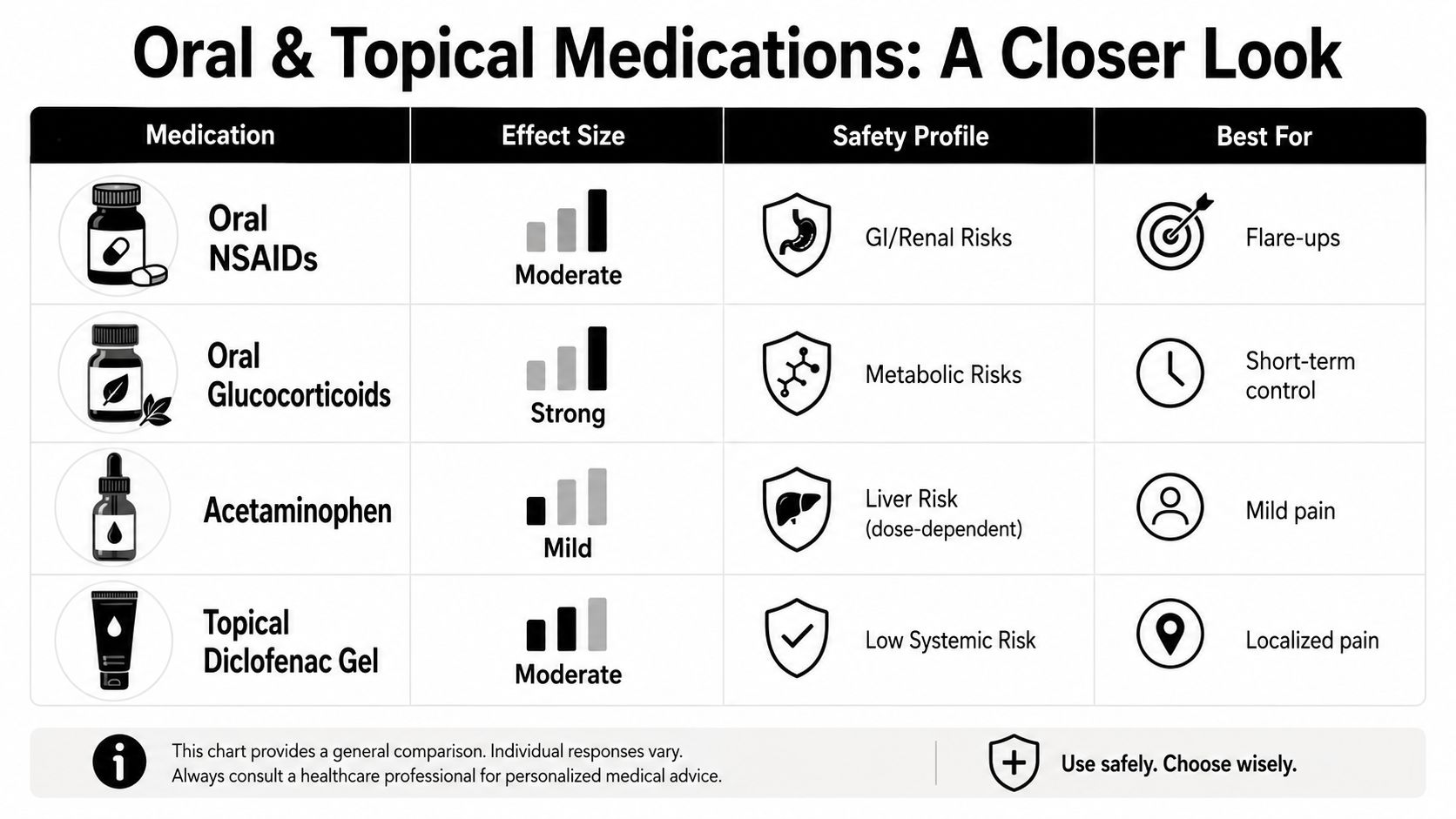
The 2023 network meta-analysis on hand osteoarthritis found that oral NSAIDs and oral glucocorticoids appear effective, while topical NSAIDs were described as questionable in that analysis (source). The mixed message reflects the wider evidence base, not a simple yes-or-no answer. Benefits are often modest, and response depends on the person, the joint involved, and how consistently the treatment is used.
Pain control in hand arthritis usually works better as a layered decision than as a single product.
Some options calm inflammation. Some reduce discomfort locally. Some help by lowering the strain on the joint so daily tasks hurt less. The hard part is matching the tool to the job, while keeping safety in view for people who may already be using common medications for blood pressure, diabetes, or other long-term conditions.
Oral and Topical Medications That Help
The medication aisle looks crowded because it is crowded. Pills, gels, and creams all promise relief, but hand arthritis research has become more selective about what belongs in a routine. The useful question is not what exists. It is what has enough evidence to justify the tradeoffs.
Oral medicines and what the evidence suggests
A 2023 network meta-analysis concluded that oral NSAIDs and oral glucocorticoids appear effective for hand osteoarthritis (source). Earlier synthesis data in the same evidence base found that oral NSAIDs versus placebo produced a pain effect estimate of SMD 0.40 with a 95% CI 0.20 to 0.60, across 695 participants in 3 trials over 2 to 4 weeks (source). That points to real but not dramatic benefit. Oral NSAIDs can help, but they are not magic, and they carry more whole-body risk than a topical option.
Acetaminophen has become a more cautious choice in modern osteoarthritis guidance, with only limited benefit in the evidence base described in the same review (source). That is why many people who try it end up wanting something more targeted.
Why topical diclofenac gets so much attention
For hand osteoarthritis, topical diclofenac 1% is one of the better-studied nonprescription options. In a randomized, double-blind, placebo-controlled trial of 385 adults with primary hand OA, self-application to both hands 4 times daily for 8 weeks reduced pain intensity by 42% to 45% and improved AUSCAN total scores by 35% to 40% versus vehicle, with statistically significant separation emerging by week 4 to 6 (source). That is a meaningful signal because the pain is happening right where the gel is applied.
The FDA-labeled regimen for diclofenac sodium 1% gel is straightforward. For each upper-body area such as the hand, users apply 2 grams per dose 4 times per day, and the product is labeled for the temporary relief of arthritis pain only in hands, wrists, elbows, feet, ankles, and knees. The label also says it may take up to 7 days to work for arthritis pain (label). That delayed onset matters because people often stop too early if they expect an immediate numbing effect.
If you want a practical consumer explanation of topical options, this topical pain reliever cream guide can help you compare the main choices.
How to think about the tradeoff
Topicals are often the better first move when pain is mostly in the fingers, thumb base, or knuckles. Oral medicines become more attractive when the discomfort is broader, more intense, or tied to inflammation that topicals do not touch well enough. The choice is not about which product is stronger in the abstract. It is about which one gives enough relief without creating a bigger problem.
Safety matters more when a person is already taking common medications for blood pressure, diabetes, or other long-term conditions. That is where the difference between a pill and a cream becomes more than convenience. A pill works like a system-wide broadcast, while a topical treatment stays much closer to the sore joint. For some people, that narrower reach is the reason topical treatment fits better into daily life.
Clinical shorthand: if the pain is local, start local when you can.
Non-Drug Therapies You Can Start This Week
Medication can help, but hand arthritis often settles down more reliably when you stop feeding the joint the same strain that keeps waking it up. “Non-drug therapy” sounds broad, yet the useful pieces are usually simple and task-specific. A thumb that hurts while opening jars does not need the same support as fingers that ache after typing, so the best approach starts with the motion that triggers the pain.
Splints, heat, and cold each do a different job
A splint can reduce pressure on a painful thumb or finger joint by limiting the movement that sends pain shooting up. Daytime splints are often useful during work, chores, or driving, while night splints give an irritated joint time off during sleep. The right choice depends on which joint is speaking up and when it tends to flare.
Heat and cold work in different ways. Heat usually helps stiffness, especially in the morning, because warm tissue moves more easily before you start using the hand. Cold is often better after a flare, when the hand feels hot or swollen. If a stiff joint is like a rubber band that has gone rigid, heat helps it loosen; if a joint feels inflamed and tender, cold helps calm that reaction.
Tools and therapy that reduce strain
Occupational therapists often focus on ergonomic handles, pacing, and dividing tasks into smaller pieces because those changes reduce the load on the small joints of the hand. The Teton Therapy guide on hand arthritis relief recommends larger grips, supportive splints, gentle range-of-motion work, heat use, and joint-protection habits for everyday tasks (source). That matches what many people learn by trial and error, but making it deliberate usually works better than waiting until the hand is already angry.
A few examples make the idea easier to use in daily life:
Use bigger handles: a wide pen, cushioned toothbrush, or jar opener spreads force across more of the hand.
Break chores into smaller rounds: a few minutes of prep, then a pause, instead of pushing through until the joint complains.
Choose softer grips when possible: less squeeze means less pressure on irritated knuckles and thumb joints.
Paraffin wax baths, warm water soaks, and gentle hand exercises can also help because they warm tissue before activity without adding much strain. The goal is not to cure arthritis with home care. The goal is to make the joint less reactive so medicines, if you use them, have a better chance of doing their part.
Practical rule: the less often you force the same painful grip, the easier it is to keep symptoms from snowballing.
Supplements Like Turmeric and Where They Fit
Supplements are often marketed as if “natural” automatically means “gentle” and “safe.” That's the part that trips people up, because safety is not guaranteed by the word natural. A supplement can be plant-based and still interact with medication, or feel mild and still be the wrong choice for your situation. Turmeric, ashwagandha, ginger, and bromelain sit in that gray zone, where the right answer depends on what else you're taking and what you want the product to do.
Bioavailability changes the turmeric conversation
Turmeric's active compounds come up often in joint comfort discussions, but turmeric by itself is not absorbed especially well. That is why some formulas pair it with BioPerine black pepper extract to improve absorption. River of Life Capsules uses that approach, along with ashwagandha root, ginger, and bromelain, in a single capsule meant to support joint comfort, stress resilience, and recovery. I'm mentioning it here as one example of a multi-ingredient routine piece, not as a substitute for treatment when you need a medication plan.
For readers who want a closer look at how turmeric is discussed for arthritis and joint pain, this turmeric and arthritis guide is a helpful next stop.
Where supplements fit in a realistic routine
Supplements make the most sense when they are part of a broader plan, not the whole plan. If your pain is mild, a daily supplement may feel like enough support alongside heat, splinting, and ergonomic changes. If your pain is stronger or more limiting, supplements can sit beside other strategies, but they should not delay more effective care.
The evidence for hand arthritis is still mixed, which is why supplements are often framed as support rather than a cure. A review in source found oral NSAIDs and oral glucocorticoids appeared effective in hand osteoarthritis, while topical NSAIDs were described as questionable in that analysis. That mixed picture is one reason people turn to supplements, but it is also why expectations need to stay grounded.
A simple way to judge whether a supplement belongs in your plan
Ask three questions. Does it fit with my medication list? Does it make sense for my symptom pattern? Can I tell whether it is helping after a fair trial? If the answer to any of those is unclear, the supplement is probably not the first thing to start.
Building Your Daily Hand Arthritis Routine
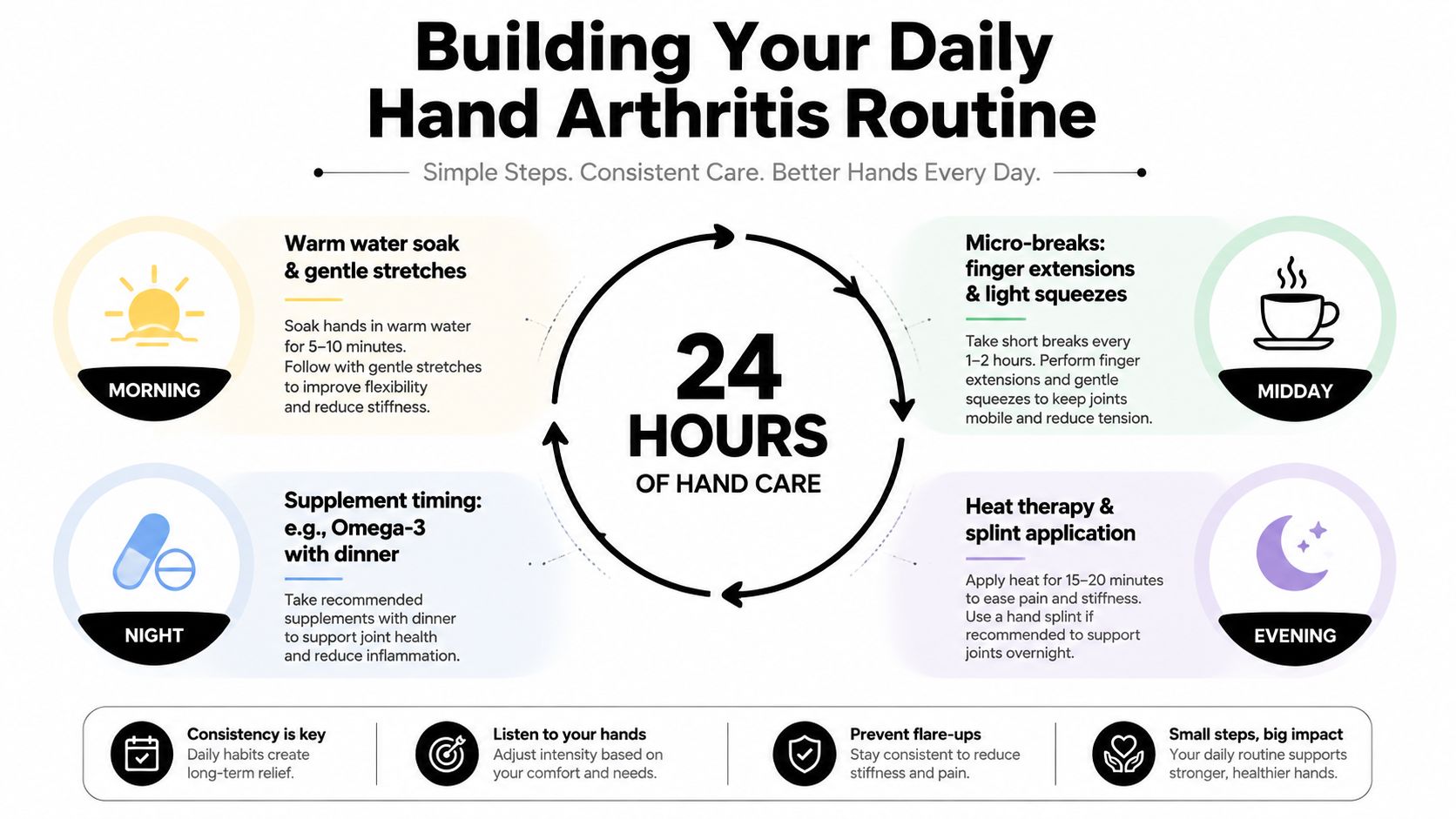
The biggest mistake in hand arthritis care is waiting for one product to carry the whole day. A better routine spreads the work across morning, midday, and evening so each joint gets relief before strain builds up. That approach works like a relay team, each tool handles a different stretch of the day, instead of asking one strategy to do everything at once.
Morning, midday, and evening each need a different tool
Morning usually brings stiffness, so heat, gentle motion, and a slower start matter more than force. A warm water soak or a few minutes of hand movement before harder tasks can make the first grip of the day less punishing. If you plan to use a topical medicine, morning is often a practical time to apply it so it has time to work while the day unfolds.
Midday is the prevention window. Micro-breaks, changing how you hold objects, and using larger grips can keep the hand from getting overloaded. If you are on the computer, cooking, or doing repeated household tasks, short pauses usually help more than waiting until the pain is already sharp.
Evening is the reset period. Heat can ease stiffness, while a splint may let an irritated joint rest after a long day of use. If you use a supplement, keep the timing steady and follow how your stomach tolerates it and how your clinician advises you to take it.
A routine works because it reduces friction in ordinary life
People often look for a perfect protocol. They usually need a repeatable one. A reasonable day might include a topical medicine in the morning, task breaks during the day, and heat or splint use at night. On flare-up days, the same plan can be simplified with less demanding hand use and more rest.
A travel day needs the same logic. Pack the tools you use, not the ones you hope to remember later. A jar opener, a topical product, and a small splint can make a hotel room or long drive much easier to manage.
What to change when symptoms are louder than usual
A flare does not mean the whole plan failed. It usually means the hand took more load than it could tolerate. Reduce gripping, use heat or cold based on the symptom, and choose the most localized relief that still feels effective.
Best routine, in plain terms: use the least disruptive tool that keeps the hand usable.
Safety First When to See a Clinician
The biggest myth around hand arthritis relief is that “natural” equals safe. That's not true enough to rely on. Oral turmeric, for example, can interact with blood thinners and diabetes medications and should be avoided in pregnancy, which is why medication review matters before starting a supplement routine (Mass General Brigham). The same caution applies to any pain strategy that gets repeated every day without anyone checking the bigger picture.

When the problem is bigger than routine arthritis care
A clinician should be involved if pain isn't controlled with over-the-counter options, if you suspect a medication interaction, or if you need diagnostic work like imaging or blood tests. That's especially true when symptoms don't match your usual arthritis pattern. Sudden severe swelling, heat, redness, fever, numbness, or unexplained weight loss need attention because they may signal something beyond typical hand arthritis.
Pregnancy and surgery deserve separate caution. A supplement or NSAID that seemed reasonable before may not be appropriate once those factors enter the picture. If you're already taking medicines for chronic conditions, bring the full list, including supplements, to the visit.
Questions worth bringing to a visit
You don't need medical jargon to have a useful appointment. Ask which joints are likely driving the pain, whether the pattern looks more mechanical or inflammatory, and whether your current pain reliever could be simplified. If you use a supplement, say exactly what's in it and how often you take it.
The point of the visit is not to prove you tried hard enough. It's to make sure the next step matches the actual problem. For some people that means adjusting a topical, for others it means prescription treatment, steroid injection discussion, or a longer-term plan.
If your hands are starting to dictate what you can open, carry, or finish, River of Life offers a supplement option built around turmeric, BioPerine, ashwagandha, ginger, and bromelain. If you want to compare a supplement-based routine with other comfort strategies, visit River of Life and review the product details alongside your current medications and symptoms.