

Aleve Guide: Dosage, Side Effects, and Safer Options

You wake up with a stiff knee, a sore back, or the kind of headache that makes coffee feel like a gamble. The bottle on the counter says Aleve, and the promise sounds simple, long-lasting relief with fewer doses than some other pain relievers. That simplicity is useful, but it can also hide the part people need most, how to use Aleve safely when pain keeps coming back.
Table of Contents
Common Side Effects and the Serious Ones You Should Not Ignore
Safer Alternatives and Smart Daily Strategies for Ongoing Pain
What Aleve Actually Is and Why People Reach for It

A lot of people meet Aleve in the same familiar moment. The alarm goes off, a knee feels stiff, the back complains before breakfast, and a tablet gets reached for because the day is already moving. What they are holding is naproxen sodium, an over-the-counter NSAID, a specific anti-inflammatory medicine rather than a vague “pain pill.”
That history matters because Aleve did not start as a casual shelf product. Naproxen had already been used in prescription form for years before it became available without a prescription. In the U.S., the FDA approved naproxen sodium for nonprescription sale in January 1994, and Aleve launched that June. At the time, it was the first new OTC pain reliever with a new analgesic ingredient approved since ibuprofen in 1984 (The New York Times). The ingredient itself had a longer clinical life before that switch, which is part of why people still trust it for pain that keeps coming back.
Why that history matters
A medicine with a long prescription past usually has a clearer track record than a brand-new remedy. That is the practical appeal of Aleve. Clinicians knew naproxen first, and everyday users later met it in a package that was easier to pick up for recurring aches, sore joints, or pain that shows up again the next morning.
The shelf story also explains why people choose it over faster, shorter-acting options. Aleve is often the medicine people reach for when they want one dose to carry them through work, errands, or a full day away from the medicine cabinet. For a plain-English comparison with another common OTC pain reliever, see this overview of ibuprofen.
How Naproxen Works and What It Treats
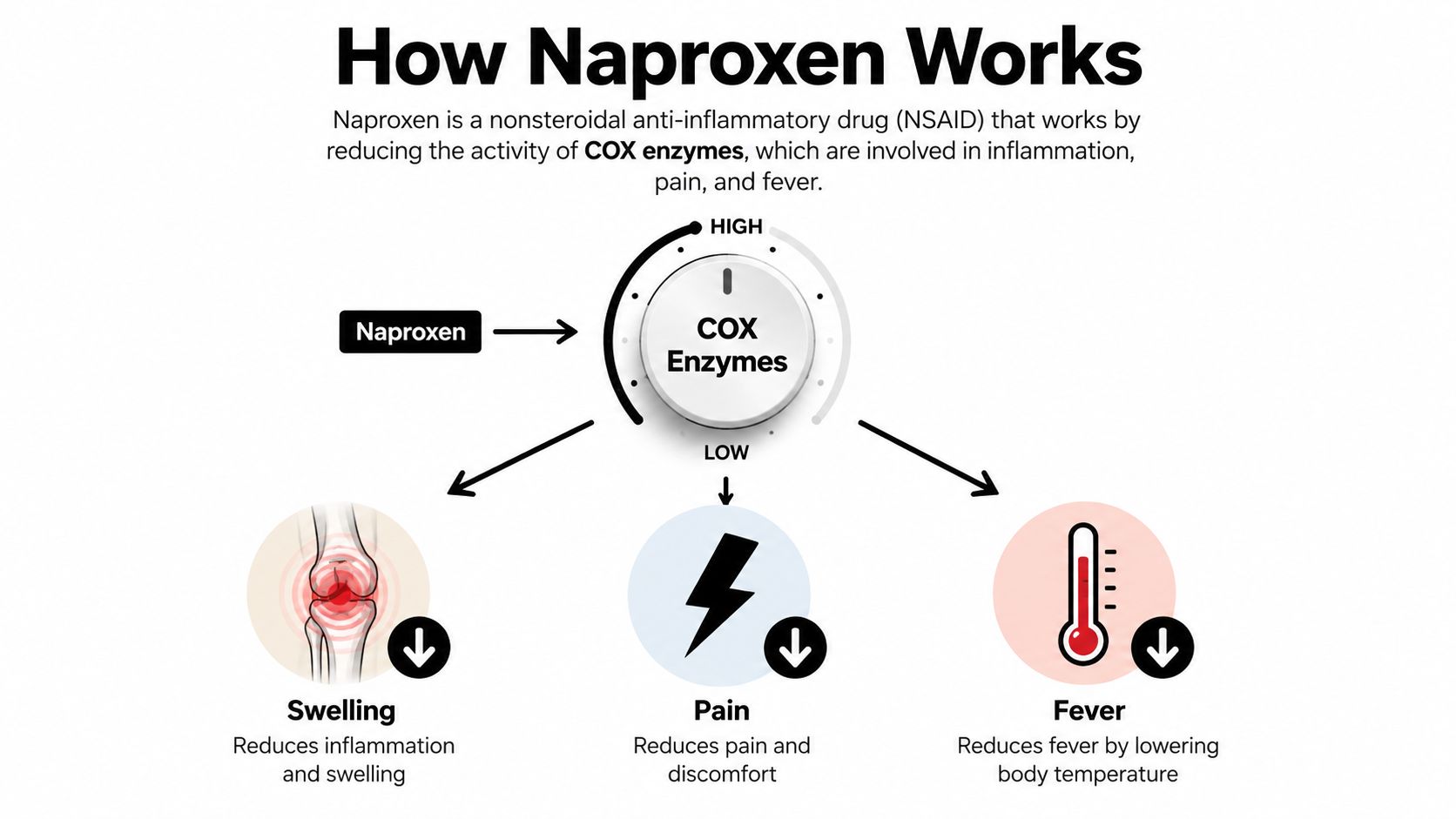
Naproxen works like a dimmer switch on the body's pain and inflammation signals. It does not shut the system off entirely. It turns down the chemical activity that helps create swelling, pain, and fever. That is why Aleve is useful when discomfort has an inflammatory piece to it, and why it can feel different from products that mainly blunt pain without addressing inflammation.
The active ingredient on the label is naproxen sodium 220 mg per tablet, which equals 200 mg naproxen (DailyMed). That is the dose most adults recognize on the shelf. The official short-term uses include headache, toothache, muscular ache, backache, menstrual cramps, minor cold-related aches, and fever (Britannica).
Why the timing feels different
Aleve's practical appeal is not just what it treats, it is how long it lasts. Britannica notes that naproxen sodium is longer-lasting and generally needs to be taken only once every 8 to 12 hours, compared with every 4 to 6 hours for aspirin, acetaminophen, or ibuprofen products discussed in the same context (Britannica). That longer interval is a convenience feature, especially for people trying to get through workdays, school events, or a night of menstrual cramps without constant reminders to redose.
The label also says absorption may be delayed with meals (Bayer professional information PDF). That does not mean you cannot take it with food. It means food can slow the pace at which the medicine reaches the bloodstream, which matters if you are taking it because you want faster relief.
Practical rule: Aleve is designed for short-term relief of common aches and fever, not as a catch-all solution for every kind of pain.
For many adults, that makes it a reasonable choice when the problem is predictable and inflammatory. For recurring pain that keeps returning, the convenience of the dosing schedule can blur into a habit, and that is where the risk picture starts to matter. For a plain-language comparison with another common OTC pain reliever, see this overview of ibuprofen.
Safe Dosing Rules and the 10-Day Limit
Aleve looks simple to use because the label is brief, and that simplicity can hide the part that matters most. For adults and children 12 and older, the OTC directions call for 1 tablet every 8 to 12 hours, with an optional 2-tablet initial dose and a maximum of 3 tablets in 24 hours. The schedule is built for spacing doses out, so the goal is steady relief, not taking extra tablets when the pain feels worse (FDA Drug Facts label).
One easy way to remember it: one tablet, wait, and do not let the day go past the daily maximum.
The line many people cross is the short-term use boundary. Consumer guidance commonly recommends self-use for no more than 10 days for pain and 3 days for fever (Ubie Health). That is the part people miss when they assume “over-the-counter” means “fine indefinitely.” It does not. It means the medicine is available without a prescription, not that repeated use is harmless.
A common real-world mistake
A person with menstrual pain may take Aleve on and off for two weeks, then use it again for a sore back, then keep it nearby for the next flare. Because the tablet lasts longer than ibuprofen or acetaminophen, it can feel like a cleaner choice. That longer duration can also make repeated use feel routine, and routine use is where people stop asking whether the pain still needs a clinician's input.
If you use it for recurring pain, a simple self-check helps.
Is this for a known, short-lived problem? If yes, OTC use may fit.
Am I still improving? If the answer is no, the medicine may be covering up a problem that needs attention.
Have I crossed the short-term window? If yes, stop treating it like a casual fix.
Am I stacking doses because the pain keeps returning? If yes, that is a sign to reassess the plan.
The 8-to-12-hour schedule is useful because it reduces dose frequency. The same feature can also make people feel safer than they are, which is why the short-term limit matters just as much as the dosing interval.
Common Side Effects and the Serious Ones You Should Not Ignore
A person can take Aleve for a sore back, a menstrual cramp, or a headache and feel only mild stomach upset at first. That is the first bucket of side effects, the everyday reactions people may notice and then dismiss. The second bucket is the one that deserves attention, because it involves problems that can turn urgent if they are ignored.
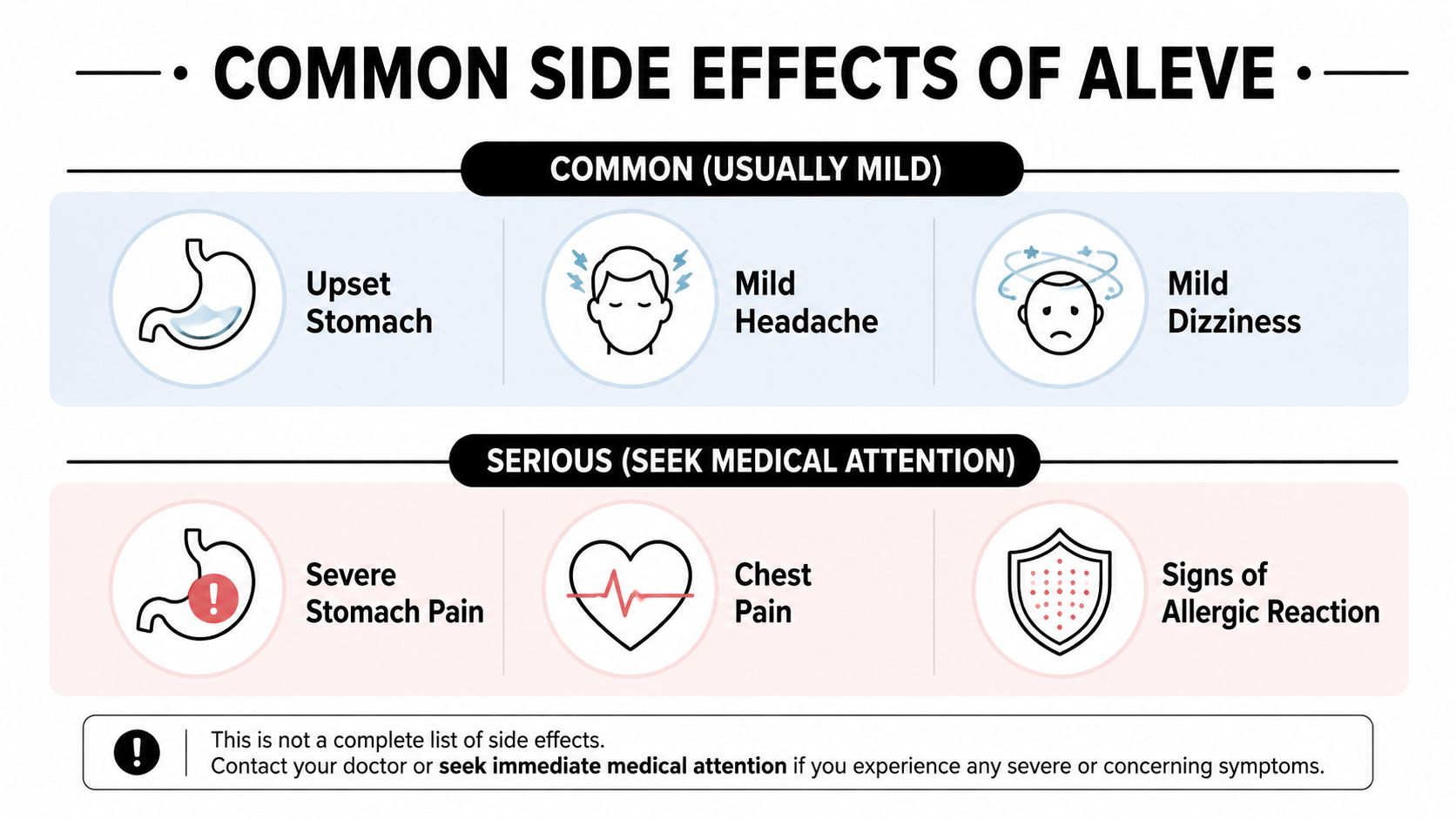
Naproxen sodium, the ingredient in Aleve, is an NSAID, so its serious risks come from the same drug class as other anti-inflammatory pain relievers. Those risks include GI bleeding, cardiovascular events, kidney injury, and liver injury. You may not feel those problems after a single tablet, but they explain why repeated use deserves more caution than a casual pain reliever.
Common symptoms versus stop-now symptoms
Cleveland Clinic notes that drowsiness, dizziness, insomnia, and vertigo can occur with naproxen (Cleveland Clinic). These reactions are usually less dramatic than bleeding or organ injury, but they still matter if you need to drive, focus at work, or get through the day without feeling off balance. If Aleve leaves you foggy, that is a signal to avoid taking more just because the pain is still there.
A few symptoms belong in a different category. Black stools can be a sign of bleeding in the digestive tract. Chest pain or shortness of breath can point to a cardiovascular problem that needs prompt care. Sudden swelling, unusual fatigue, or little or no urine can point to kidney trouble. If any of those show up, stop self-treating and get medical help.
If a side effect changes from annoying to alarming, do not wait to see whether it passes.
That warning matters because the risk is tied to the drug itself, not just the brand name. Aleve is common, so people often use it for a headache, period pain, or a sore back and then keep reaching for it because it seems to work without much drama. The problem is that harm can still build, especially when the pain keeps coming back and the medicine becomes part of the routine. For people who also use alcohol, it is smart to read a guide on what pain reliever can I take with alcohol, because stacking risks is easier than many users realize.
You do not need to panic over every stomachache. You do need to separate ordinary intolerance from a real warning sign, because that is what keeps a short-term fix from turning into a hidden problem.
Drug and Supplement Interactions That Change the Risk
Aleve is not just about what is in the tablet. It is also about what else is already in your routine. The clearest no-go is combining naproxen with other NSAIDs. That means the common mistake of taking Aleve and then reaching for another pain reliever in the same class because the first dose did not seem strong enough. The risk is simple, the side effects can stack instead of canceling out.
Some readers also ask about supplements, especially turmeric, ginger, and ashwagandha. The issue is overlap. If a supplement already affects bleeding, stomach irritation, blood pressure, or sedation, pairing it with an NSAID can push the overall risk in the wrong direction. That matters most when Aleve is becoming part of a repeat routine rather than a one-time fix.
Here is the practical version:
Turmeric or curcumin blends: often used for inflammation, but they can overlap with NSAID goals and may be harder on the stomach for some users.
Ginger products: commonly used for digestion or inflammation, yet they can add to bleeding or stomach irritation concerns.
Ashwagandha: often used for stress or sleep support, but it can matter if you are already dealing with sedation, blood pressure, or a complicated medication list.
Daily low-dose aspirin: do not assume it is a harmless add-on, especially if it is part of a heart plan.
Blood thinners, SSRIs, ACE inhibitors, and diuretics: these prescription drugs deserve a pharmacist or clinician check before you pair them with naproxen.
Drug information sources also note that naproxen can be found in breast milk, and symptoms such as drowsiness, dizziness, insomnia, and vertigo have been observed. That is why this interaction question is practical, not academic. It can affect sleep, alertness, and how your body handles other medicines.
If alcohol is part of the picture too, review this guide on pain reliever choices with alcohol before you make Aleve a regular habit alongside drinks.
Substance | Common Use | Concern with Aleve |
|---|---|---|
Other NSAIDs | Pain, inflammation | Higher risk of stacking NSAID side effects |
Low-dose aspirin | Heart protection | Bleeding concerns need a clinician check |
Turmeric or curcumin | Joint comfort, inflammation | Overlap with NSAID effects, stomach concerns |
Ginger | Nausea, inflammation support | May add to bleeding or irritation concerns |
Ashwagandha | Stress, sleep | May complicate sedation or blood pressure concerns |
The safest habit is straightforward. If you use Aleve with a supplement blend, or if you take regular prescription medicine, ask a clinician or pharmacist before making the combination part of your routine.
When to Stop Self-Treating and Talk to a Clinician
Aleve makes the most sense when the problem is short-term and familiar. If the pain is improving, the cause is obvious, and you don't have red flags, self-treatment may be reasonable. Once the pattern changes, the question changes too.
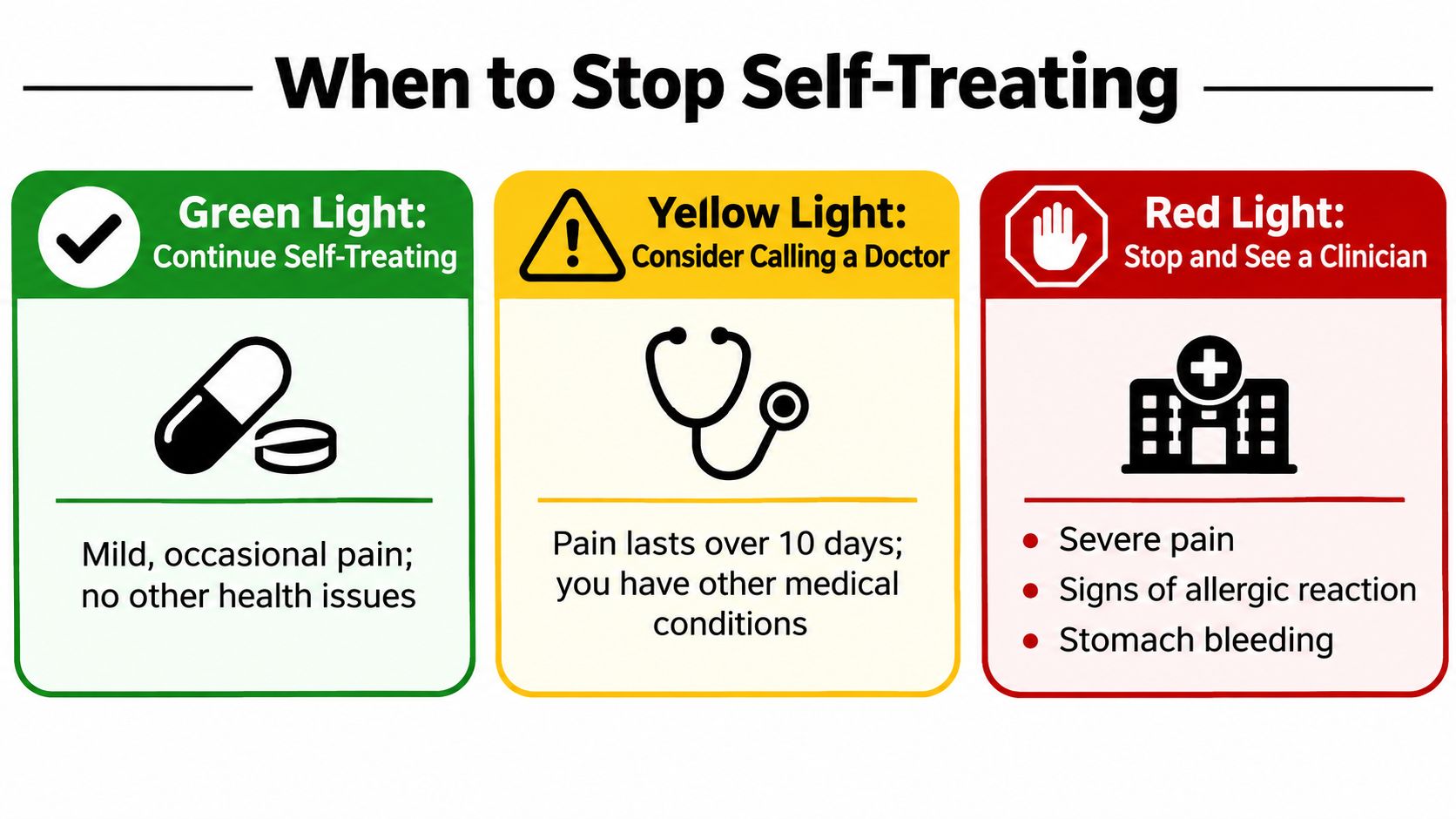
Green light, yellow light, red light
Green light means the pain is mild, occasional, and tied to something predictable like a headache, a short flare of menstrual pain, or a one-off back strain. The medicine is helping, and you're not needing it longer than intended.
Yellow light starts when you find yourself needing it beyond the short-term window, when pain is getting worse instead of better, or when you're already managing blood pressure, kidney disease, ulcers, or a complicated medication list. That's not an emergency by itself, but it's a sign to stop assuming Aleve is the answer.
Red light means stop and get care. Black stools, chest pain, shortness of breath, sudden swelling, little or no urine, unusual fatigue, or any sign of GI bleeding belong here. Pregnancy changes the picture too, and naproxen use becomes especially important to discuss starting around 20 weeks.
If you're already using a turmeric or ashwagandha blend, bring the bottle to the visit. A useful script is, “I've been using Aleve for recurring pain, and I also take this supplement. Is this still the right plan, and do any of my medicines or supplements raise my risk?” That question is practical, specific, and easy for a clinician to answer.
The goal isn't to avoid Aleve forever. It's to stop using it by default when pain has become a pattern instead of a short-lived problem.
Safer Alternatives and Smart Daily Strategies for Ongoing Pain
Aleve can be helpful when pain flares, but recurring pain usually asks for a wider plan. The safest place to begin is with the basics that lower the strain on your body. Better sleep, steady hydration, gentle movement, weight management when it matters, and ergonomic changes at a desk or in the car can all reduce how often pain pushes you toward another tablet. Those steps do not replace medicine, but they can lower the baseline burden so pain is less likely to keep cycling back.
Options that avoid the stomach
Topical choices are another path because they act where you apply them, so they do not put the same pressure on the stomach. Menthol products, lidocaine, and diclofenac gel are common options people discuss with clinicians when pain stays in one place. That can matter when the problem is a sore neck, one irritated knee, or a back area that flares after sitting too long.
For readers looking at botanicals, turmeric is the most relevant non-NSAID comparison. Reviews of natural pain relief often describe turmeric as a common option for people who want to avoid repeated NSAID use, especially when the pain is tied to joints and stiffness. Standardized turmeric extract paired with BioPerine gets attention for a simple reason, it tries to address absorption instead of relying on loose powder alone.
Key takeaway: Aleve can be a smart rescue tool, while a lower-risk daily routine may fit better when pain keeps returning.
If someone wants a supplement route that also takes stress, sleep, and recovery into account, a multi-ingredient blend may be worth discussing with a clinician. River of Life Capsules combine standardized turmeric extract with BioPerine, ashwagandha root, ginger, and bromelain, which fits the broader goal of supporting joint comfort and day-to-day function. I would still treat that as one part of a larger plan, not a replacement for medical evaluation when pain is persistent or changing.
For a broader overview of non-drug approaches, see natural pain relief.
The cleanest long-term strategy is not to avoid Aleve forever. It is to keep Aleve for the moments it fits, and use lower-risk supports when the pain is repetitive, seasonal, or tied to daily habits you can change.