


Pain Reliever for a Dog: Safe Options and What to Avoid

Your dog was fine yesterday. Today he's stiff on the stairs, won't jump onto the couch, or keeps shifting weight off one back leg, and you're standing in the kitchen wondering if there's a safe pain reliever for a dog in the medicine cabinet. That moment is stressful, and it's also where a lot of owners make the wrong call, because the same pill that helps a person can send a dog into a medical crisis.
Canine pain relief isn't a single-product decision. It's a recognition problem, a drug-selection problem, and a monitoring problem. The safest answer depends on what's hurting, how long it's been going on, and whether the treatment needs to happen at home, in the clinic, or both.
Table of Contents
Why Dog Pain Relief Is More Complicated Than It Looks
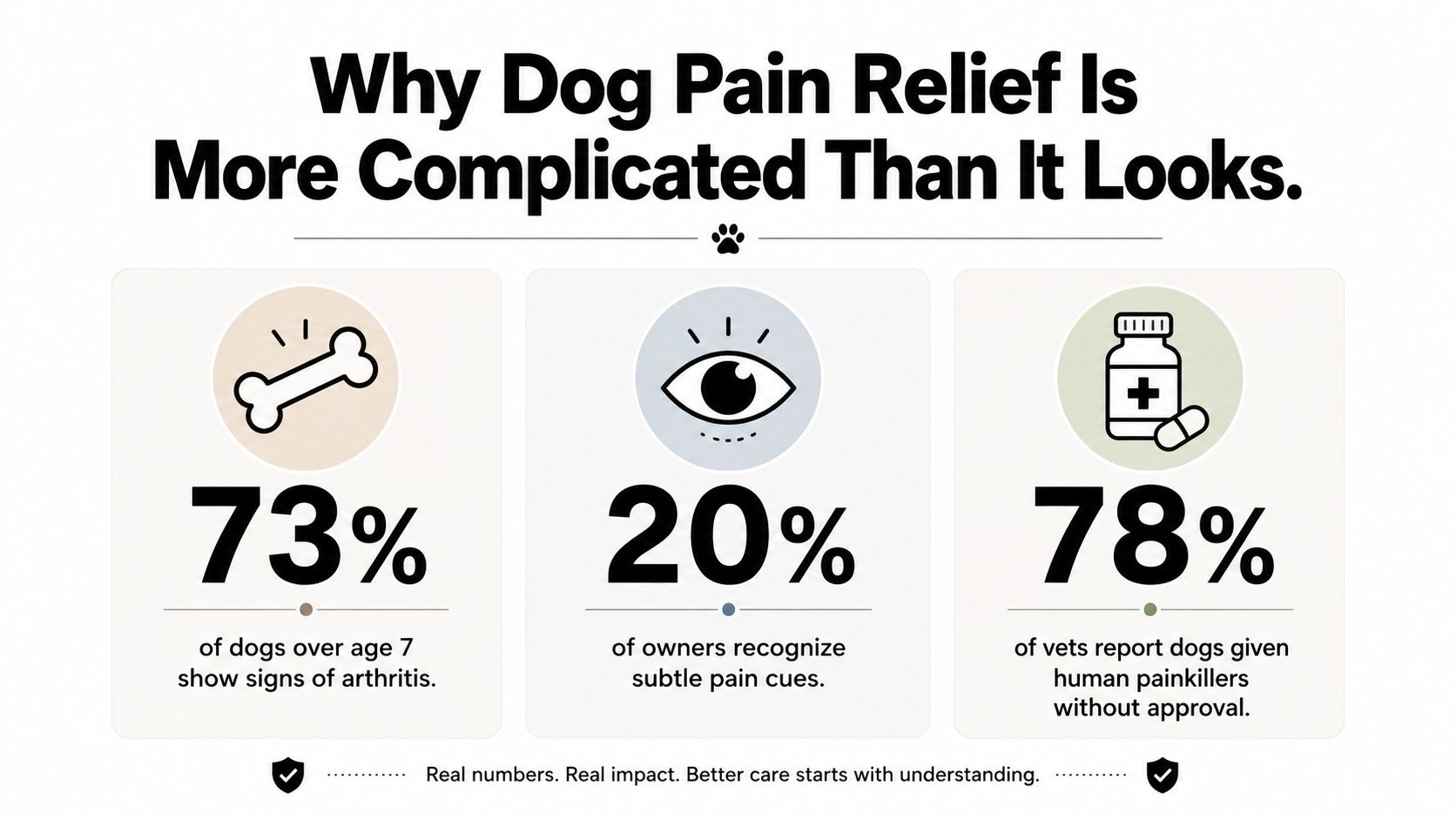
The first sign is often small. A dog that used to leap into the car pauses at the curb. An older retriever stops stretching out on the rug and starts sleeping in a tighter curl. Owners see a little stiffness and think, “Maybe he just overdid it.” Vets see something different, because pain in dogs is common, often subtle, and easy to miss until mobility drops.
That is why pain relievers for dogs became such a large part of veterinary care. Pain is not always obvious at the first visit, and it is not always limited to one joint or one injury. In one emergency-service study of 109 dogs, about 36.7% were painful at the first assessment, and among the 36 dogs confirmed painful on re-evaluation, only 53% received analgesia in the clinic, while 31% were sent home with an analgesic and 17% received none (PMC review). A broader review in the same source reported 56% pain prevalence in 317 dogs seen in an emergency service, and about 20% pain evidence in 1,153 outpatient dogs. Age makes the picture even harder to ignore, because canine osteoarthritis estimates in that review ranged from 20% in dogs older than one year to 80% in dogs over eight years.
Why the wrong medicine is such a big deal
The FDA's guidance makes the risk plain. It states that several NSAIDs are approved specifically for dogs only, including carprofen and deracoxib, while no NSAIDs are approved for long-term use in cats and repeated meloxicam doses in cats can cause kidney failure or death (FDA pet pain relievers). The same guidance warns that acetaminophen can cause dose-dependent liver damage and red blood cell damage in dogs and cats, which is exactly why human cabinet medicine is not a shortcut.
Practical rule: if the medication wasn't prescribed for that specific dog by a veterinarian, it does not belong in the dog.
That species-specific safety shift changed canine pain care. Modern treatment centers on veterinary drugs, dosing by body weight, and follow-up instead of guesswork. Pain management in real clinics usually starts with the cause, then matches the tool to the problem, because an arthritic senior, a post-op patient, and a dog with abdominal pain do not need the same approach.
How to Tell If Your Dog Is in Pain
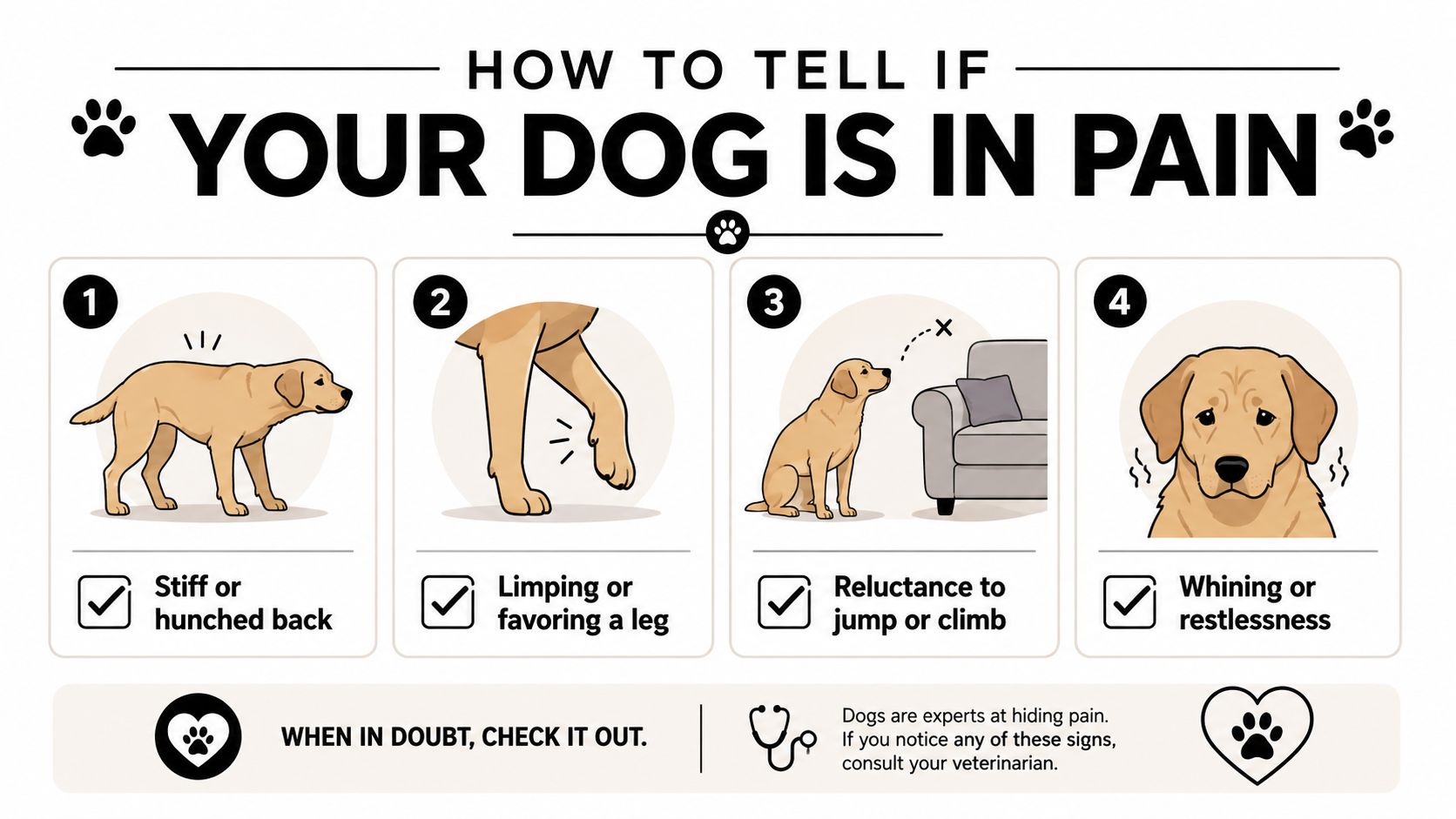
Dogs don't complain the way people do. They hide discomfort, then compensate with posture, movement, or behavior changes. If you're looking for a pain reliever for a dog, you first need to decide whether what you're seeing is pain at all, because limping is only one piece of the puzzle.
The signs owners catch too late
Start with the body. Limping, stiffness after rest, reluctance to jump, and a hunched back are all common clues. Some dogs shift weight off one limb, move more slowly getting up, or stop climbing stairs even though they can still walk across level ground. Others show the problem in motion, not at rest, by sitting strangely or taking shorter steps.
Behavior matters just as much. A dog in pain may pull away from touch, become irritable, pace at night, or seem unsettled when he used to settle quickly. Appetite can dip. Some dogs lick one joint repeatedly, pin their ears back, or sit in a guarded posture that looks like caution but is really protection.
A quick two-minute check at home
Run through this before you decide anything else.
Watch the walk: Look for limping, toe-touching, or a shortened stride.
Check movement after rest: Notice whether your dog needs extra time to stand, stretch, or orient himself.
Test one simple task: See if he hesitates before stairs, a couch, or the car.
Read the behavior: Watch for restlessness, whining, withdrawal, or irritability.
If the change is new and your dog is a senior, treat it seriously even if he's still eating.
The reason is simple. Dogs mask pain until it's significant. A new change in posture, movement, or temperament is not something to “watch for a few weeks” if the dog is older or has a history of joint trouble. Chronic pain often starts as subtle compensation and ends as obvious mobility loss.
Veterinary NSAIDs and Prescription Pain Medications
A dog with arthritis, a sprain, or pain after a procedure usually does better with a veterinary prescription than with a random bottle from the cabinet. For many musculoskeletal, orthopedic, and post-procedural cases, NSAIDs are the starting point. The FDA identifies carprofen and deracoxib as drugs approved for dogs only, and Merck's dosing table shows how exact canine dosing has to be, with examples such as carprofen 2.2 mg/kg every 12 hours or 4.4 mg/kg every 24 hours, firocoxib 5 mg/kg every 24 hours, grapiprant 2 mg/kg every 24 hours, and robenacoxib 1 to 2 mg/kg every 24 hours (FDA pet pain relievers, Merck NSAID dosing).
Why species-specific prescribing matters
A dog is not getting a generic pain pill. He is getting a drug with a weight-based dose, a timing schedule, and often follow-up bloodwork. That precision matters because the same class of medication can be tolerated in one species, harmful in another, and risky when the dose is guessed at home. Merck also notes that carprofen therapy requires monitoring hepatic enzymes because of idiosyncratic hepatotoxicity risk (Merck NSAID dosing).
That is the practical line I use in clinic. If a dog is being treated at home without species-specific dosing or lab monitoring, the plan is not matched to standard canine pain care.
What vets add beyond NSAIDs
Pain treatment often works best as part of a multimodal plan. For chronic or nerve-related pain, veterinarians may add gabapentin. For some cases they use tramadol, and for short-term post-surgical recovery they may use opioids under close supervision. The goal is not to stack medications for the sake of it. The goal is to match the drug to the pain source and the dog's overall condition.
A small dog with mild soreness may need one approach. A dog with significant orthopedic pain, guarding, or pain that is not responding may need a combination plan, plus rest and activity limits. The home-care piece changes with severity, and that is where owners often need the most guidance.
Good pain control is rarely one drug alone. The better the diagnosis, the less likely a vet is to rely on a single medication and hope for the best.
Common Veterinary NSAIDs for Dogs at a Glance
Drug | Typical Dose | Primary Use | Monitoring |
|---|---|---|---|
Carprofen | 2.2 mg/kg every 12 hours or 4.4 mg/kg every 24 hours | Musculoskeletal pain, orthopedic pain, post-procedural pain | Hepatic enzyme monitoring because of hepatotoxicity risk |
Firocoxib | 5 mg/kg every 24 hours | Canine pain and inflammation | Veterinary follow-up and tolerance checks |
Grapiprant | 2 mg/kg every 24 hours | Pain and inflammation management | Veterinary follow-up and response checks |
Robenacoxib | 1 to 2 mg/kg every 24 hours | Canine pain and inflammation | Veterinary follow-up and response checks |
Deracoxib | Veterinary-directed dosing | Dog-specific NSAID use | Veterinary monitoring based on case |
The big risk with NSAIDs is not only stomach upset, although GI trouble matters. Repeated or long-term use can also call for monitoring because the dose, interval, and duration have to fit the dog in front of you, not a generic chart. For acetaminophen, the margin for error is even less forgiving, which is why I send owners to a plain-language explanation before they ever consider it. A good overview is this acetaminophen guide. That is why the phrase pain reliever for a dog should lead to a veterinary exam when the pain is ongoing, severe, or unexplained.
Human Painkillers That Are Dangerous for Dogs
The most common mistake I see is simple. An owner reaches for the medicine cabinet because the dog looks miserable, and the bottle already looks familiar. Familiar does not mean safe, and with dogs, ibuprofen, naproxen, and acetaminophen can all cause serious harm.
The three pills people reach for first
Ibuprofen and naproxen are both NSAIDs, but they're human NSAIDs, not dog medicines. They can cause gastrointestinal ulceration and acute kidney injury at low overdoses, which means “just a little” is not a reassuring answer. The risk gets worse if the dog is dehydrated, older, already sick, or on other medications.
Acetaminophen is different, but it's not safer for dogs. The FDA warns that it can cause dose-dependent liver damage and red blood cell damage in dogs and cats (FDA pet pain relievers). That's the opposite of a casual home remedy.
Why this keeps happening
People think in human terms. We use OTC pain relievers for headaches and sore backs, so it feels logical to share them with a pet who's limping. The logic breaks because dogs metabolize and tolerate these drugs differently, and the safe dose window is not one an owner should be improvising at the kitchen counter.
A medicine that's safe for you can still be toxic for your dog, even when the dog seems “big enough.”
The FDA's approval pattern tells the story clearly. It recognizes several NSAIDs for dogs only, which is exactly what decades of veterinary safety experience should produce. If you want a deeper look at why acetaminophen is especially risky, this overview on acetaminophen safety concerns fits the broader warning.
The rule is blunt because the outcome can be blunt too. If a human medicine wasn't explicitly prescribed for that dog by a veterinarian, don't give it.
Natural and Supportive Options Worth Considering
A lot of people searching for a pain reliever for a dog aren't really asking for a pill bottle. They're asking how to help an aging dog get through the day with less stiffness, or how to support recovery after activity without overmedicating. That's where supportive options come in, but they work best as adjuncts, not replacements.
Supplements that can fit into a vet plan
Omega-3 fatty acids from fish oil are commonly used for joint inflammation support. Glucosamine and chondroitin are often chosen for cartilage support, and green-lipped mussel extract is another option people explore for joint comfort. Turmeric or curcumin is usually discussed when the goal is inflammation support, but standardized products matter because quality varies widely.
Most of these options are slow-burn tools. They don't act like an NSAID, and they usually take time before an owner notices a change. That means they're better thought of as part of a maintenance plan for chronic joint issues, not a fix for a dog who can't bear weight today.
What to ask before you buy anything
Is the product standardized? Dogs and people need predictable ingredients, not vague herbal blends.
Can the vet fit it into the medication plan? Supplements can still interact with prescriptions or muddy the picture if the dog gets worse.
Is the goal joint support or pain control? Those are not the same thing.
River of Life Capsules is a human supplement that combines turmeric extract, BioPerine, ashwagandha, ginger, and bromelain, which fits the broader joint-comfort and recovery-support conversation for people. That said, it's only relevant to dogs when a veterinarian has approved the regimen, because this topic is about canine care, not self-directed pet dosing. A broader overview of supportive strategies is covered in this natural dog pain reliever guide.
What supportive care can do well
Supportive options shine when the pain is chronic, the dog is already under veterinary care, and the owner wants to reduce reliance on a single medication. They also fit the need to do something while waiting for a recheck, provided they don't delay diagnosis.
The trade-off is honesty. Supplements may help comfort, but they don't replace diagnosis, and they don't make dangerous symptoms less dangerous. If the pain is sudden or severe, home remedies stay in the supporting role.
First-Aid and Home Care While You Wait for the Vet
If your dog is painful tonight and the appointment is tomorrow, the goal is simple, keep him from getting worse. Home care should reduce strain, reduce swelling when appropriate, and give the vet clean information the next day. It should not become a reason to delay care.
What to do right away
Restrict activity: No running, jumping, rough play, or stairs unless he has to go out to toilet.
Give a soft, non-slip rest area: A firm but cushioned bed is better than a slick floor.
Use cold compression for a fresh soft-tissue injury: Short cold-pack intervals can help swelling if the area is sore and visibly inflamed.
Switch to controlled movement: Short leashed bathroom trips only.
What to write down
Write down the time you noticed the change, what the dog was doing before it started, whether he's eating and drinking, and whether his stool has changed. If you've already given any medication, note the name, the dose, and the time. That record helps the vet decide what's going on faster and keeps the conversation focused.
Don't test the pain by making the dog climb stairs, jump into the car, or “walk it off.”
Practical environment changes matter too. Ramps instead of jumps, raised food bowls for dogs with neck stiffness, and non-slip pathways all help reduce daily strain. These are the kinds of home adjustments modern veterinary pain guidance emphasizes because subtle pain is often under-recognized until a dog's mobility drops (AAHA/AAFP pain guidelines).

When to Contact a Veterinarian Right Away
Some pain can wait for a booked appointment. Some can't. If the dog can't bear weight, yelps when touched, or suddenly worsens after a fall, jump, or rough play, that's a same-day veterinary problem. Suspected trauma and suspected toxin ingestion also belong in the clinic, not in the supplement aisle.
Red flags that need urgent care
Sudden inability to bear weight
Labored breathing or collapse
Pale gums
Bloated belly or non-productive retching
Any new pain sign in a dog already on an NSAID who has stopped eating
Those signs point to emergencies or to problems that can turn into emergencies fast. A painful dog with breathing trouble, collapse, or abdominal distention needs immediate assessment, not trial-and-error home treatment.
Bring the medication name, the timing of any doses, and a short note about what changed first. If you can tell the vet whether the issue started after trauma, exercise, a meal, or possible toxin exposure, you've already helped narrow the list of causes.
If you're debating whether it's serious enough, err on the side of calling.
A dog in this category needs a veterinarian, not another over-the-counter guess. The safest move is to go in early, before pain, dehydration, or shock make the case more complicated.
Putting It Together With Multimodal Pain Management
A limping dog, a stiff old retriever, and a puppy that screams after a bad jump do not all need the same fix. Modern canine pain care is multimodal, which means the plan uses the right prescription drug, the right environment, and the right supportive measures together instead of relying on one pill to do everything. That is why the answer to “what pain reliever can I give my dog” usually starts with diagnosis, not a shopping list.
The sequence is practical. Notice the change in your dog's behavior or movement. Rule out dangerous human painkillers. Get the dog examined and, when needed, prescribed medication from a veterinarian. Add supportive care only when it fits the problem. Keep watching for vomiting, appetite loss, sedation, diarrhea, or pain that is getting worse rather than better.
Supportive care has a place, but it is not the center of the plan. A warm resting area, controlled activity, a leash-only routine, and the right rehab or supplement strategy can help some dogs, especially when pain is mild or chronic. For a broader look at natural pain relief options, use that as background reading, then put canine decisions back in your veterinarian's hands.
The short rule I give owners is simple: the safest pain reliever for a dog is the one your veterinarian prescribed for that specific dog. If the drug, dose, or timing came from a guess, the risk starts before the relief does.
River of Life shares practical education on joint comfort, inflammation support, and recovery-focused supplementation, and you can review that approach at River of Life. If your dog is hurting, that information only helps when it is paired with an exam, because the right plan starts with the right diagnosis.