


Acetaminophen Guide: Safe Dosing, Risks & Alternatives

You wake up congested, achy, and running a fever. You take acetaminophen for the headache. Later, you grab a cold and flu product for your stuffy nose. Before bed, you take a nighttime sleep medicine because you feel miserable.
That routine feels normal. It's also where many people get into trouble.
Acetaminophen is one of the most common medicines people keep at home. It works well for pain and fever, and for many people it feels familiar enough to seem harmless. But familiar isn't the same as risk-free. The biggest real-world problem usually isn't someone trying to take too much on purpose. It's someone taking more than one product that all contain acetaminophen and not realizing the doses add up.
This guide is built to make that problem easier to spot. If you've ever stood in front of a medicine cabinet reading tiny labels while tired or sick, this is for you.
Table of Contents
What Is Acetaminophen and How Does It Work
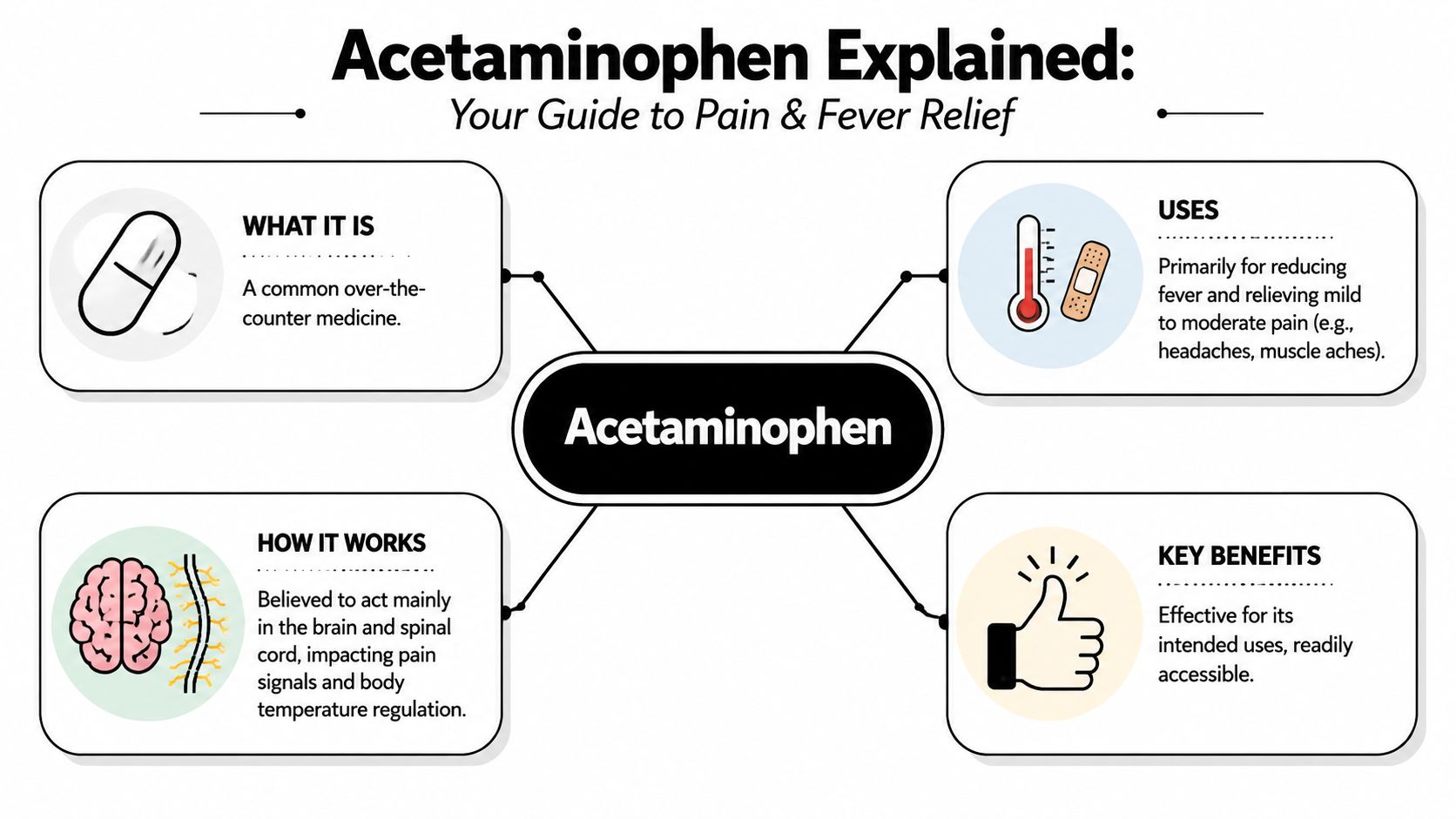
Acetaminophen is a pain reliever and fever reducer. People commonly use it for headaches, muscle aches, minor body pain, and fever. It's sold on its own and also tucked into many multi-symptom products.
What it treats
A helpful way to place acetaminophen in your mind is this: it's mainly for pain and fever, not for reducing swelling in the same way as an NSAID such as ibuprofen. If your problem is a fever, a tension headache, or general body aches from a cold, acetaminophen is often the medicine people reach for first.
If you're trying to understand the difference between the two types of medicine, this plain-language guide to ibuprofen and related pain relief topics can help put acetaminophen in context.
Practical rule: Acetaminophen turns down pain and fever. It isn't usually the first thing people mean when they talk about treating inflammation itself.
How it works in plain English
Think of acetaminophen like a volume knob for pain signals in the brain. It doesn't go to the sore knee or the pounding forehead and physically “remove” the problem. Instead, it seems to work mostly in the brain and spinal cord, where it affects how pain is processed and how body temperature is regulated.
That's why it can be useful when you feel miserable with a fever or a general all-over ache. It helps lower the intensity of what your nervous system is broadcasting.
It also works fairly quickly when you take it by mouth. DrugBank notes that acetaminophen has high oral bioavailability of about 88% and reaches peak plasma concentration at about 90 minutes after ingestion in oral form, while rectal dosing is slower, reaching a peak at about 3 hours and only about half the oral peak concentration according to DrugBank's acetaminophen monograph. In plain language, that means oral acetaminophen is usually the faster and more predictable route.
That speed is part of why it feels so approachable. You take it, and relief often starts soon enough that the medicine seems simple.
But “simple” is where people get fooled. The mechanism is straightforward for daily use. The safety part is not, especially when acetaminophen is hiding in more than one product.
A Clear Guide to Safe Acetaminophen Dosing
Dosing matters more than many people realize because acetaminophen is so common. In the United States, about 23% of adults, or roughly 52 million people each week, use an acetaminophen-containing medicine, and a diary-based study of 14,434 users found that 6.3% exceeded the labeled 4 g/day maximum at least once during a given week according to the Consumer Healthcare Products Association summary of acetaminophen use and dosing safety.
The number to remember
For adults and children 12 years and older, the FDA says the maximum total amount in 24 hours should not exceed 4,000 mg.
That limit includes everything you took in that same 24-hour window, not just one bottle. If you take a regular pain reliever in the morning, a cold medicine at lunch, and a nighttime formula before bed, all of those milligrams count together.
Here's a simple reference table:
Patient Group | Typical Single Dose | Maximum in 24 Hours |
|---|---|---|
Adults and children 12 years and older | Follow the product label for the specific medicine you're using | 4,000 mg |
Children under 12 | Use the child's product label and weight-based directions, or ask a clinician/pharmacist | Use the labeled pediatric limit for that product |
This table looks basic because it should. The safest dosing advice is always tied to the exact product label you have in your hand.
A simple way to think about doses
Instead of memorizing every formulation, use this checklist:
Find the active ingredient first. Verify the medicine contains acetaminophen.
Check the milligrams per dose. Don't assume two products contain the same amount.
Write down the time. A phone note works.
Add the total for the day. Count all products together.
Stop before you hit the ceiling. Don't treat 4,000 mg as a target.
Many people get confused by “regular strength” versus “extra strength,” or by liquid, capsule, and combination products. The important point isn't the marketing name. It's the milligram amount per dose and your running 24-hour total.
Sick-day dosing goes wrong when people track bottles instead of milligrams.
If you're giving acetaminophen to a child, use the pediatric label carefully and dose from the child's labeled instructions by weight when available. Don't guess, and don't use an adult product as a shortcut.
Understanding Overdose Risks and Liver Safety
Acetaminophen is effective at recommended doses. It can also seriously injure the liver when people take too much. That's why the dose ceiling exists.
Why the liver matters
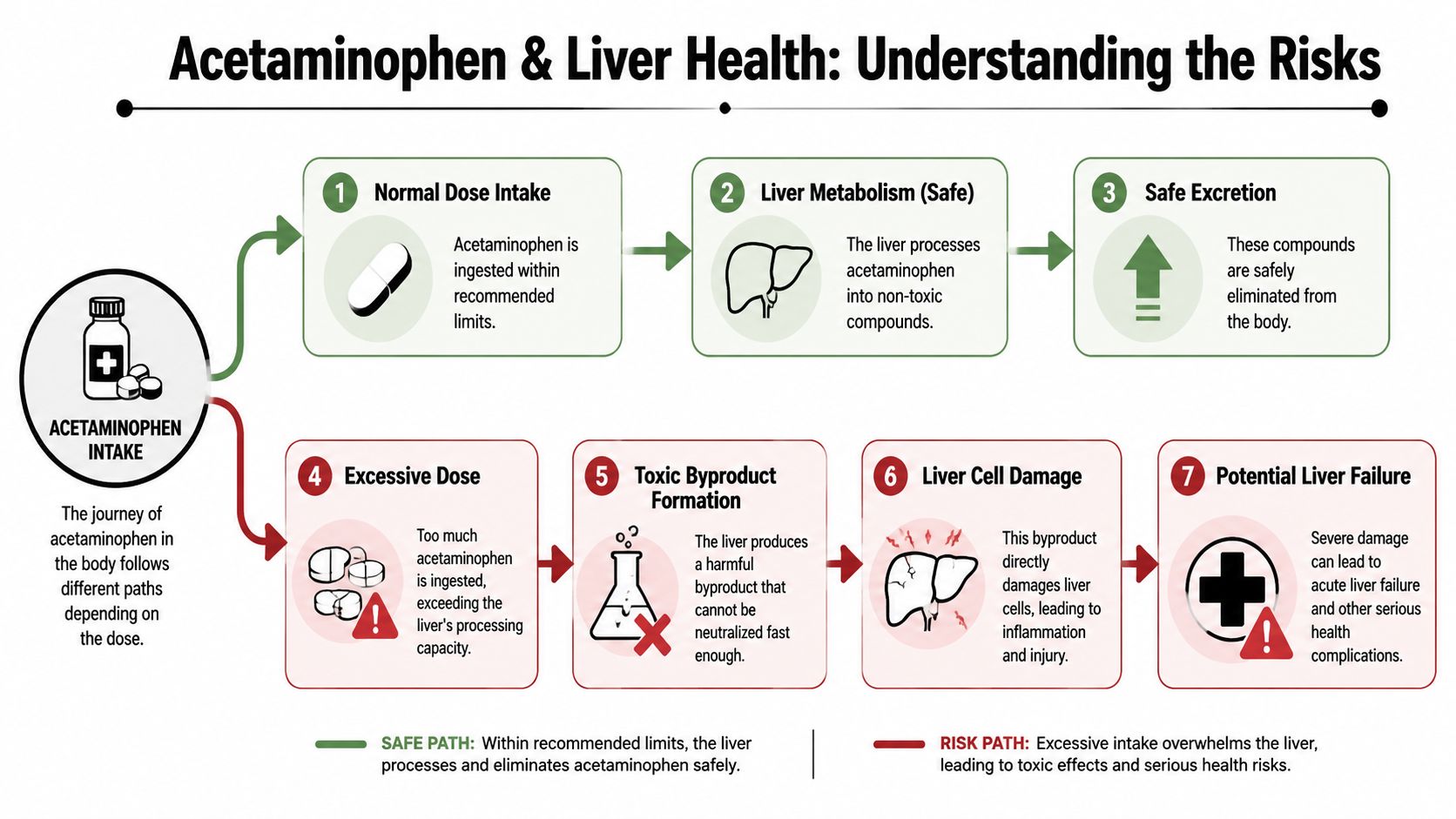
Your liver is the body's chemical processing center. When you take acetaminophen, the liver breaks it down so your body can clear it safely.
At normal amounts, that process usually works as intended. At excessive amounts, the liver's normal handling pathways can get overwhelmed. When that happens, a harmful byproduct can build up faster than the body can neutralize it. That's the point where liver cells can get injured.
You don't need to memorize biochemistry to use this safely. You just need the right mental model: the liver can process only so much at a time.
Why overdose can turn serious
Health Canada states that acetaminophen overdose in the United States is linked to approximately 50,000 emergency department admissions, 26,000 hospitalizations, and 500 deaths each year, and public health guidance warns that excessive intake can lead to liver failure and death according to Health Canada's acetaminophen safety page.
Those numbers matter because they push acetaminophen out of the “ordinary household item” category and into the “common medicine that still demands respect” category.
A lot of overdoses are not dramatic, immediate, or intentional. They often start with ordinary decisions:
Morning cold symptoms: Someone takes a daytime cold medicine.
Afternoon headache: They add a separate pain reliever.
Nighttime misery: They take a sleep or nighttime flu product.
Missed connection: They never realized all three contained acetaminophen.
The dangerous part of acetaminophen overdose is how ordinary the setup can look at first.
Liver injury may not announce itself right away in a way that feels obvious. That's one reason it's so important to avoid “stacking” products in the first place instead of trying to fix the mistake later.
How to Avoid Accidental Overuse from Hidden Sources
This is the skill many individuals need most.
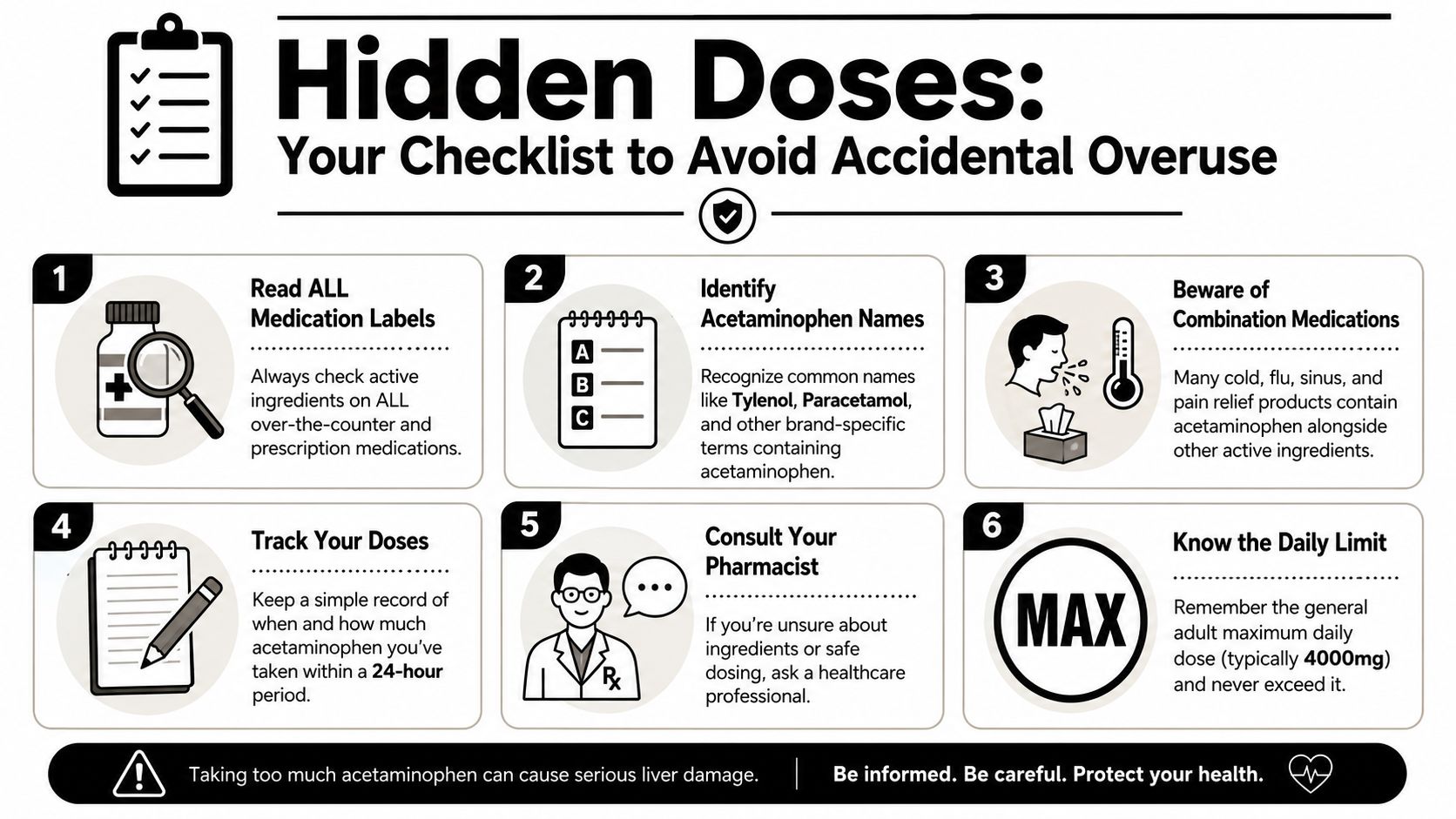
Acetaminophen isn't just in a bottle labeled “pain reliever.” It's found in more than 600 prescription and over-the-counter medicines, and a key safety strategy is to practice medication reconciliation at home by checking the Active Ingredients on every label, as explained by BeMedWise's acetaminophen-containing medicines guide.
Where hidden acetaminophen shows up
People most often miss hidden acetaminophen in products meant for multiple symptoms. Watch closely with:
Cold and flu products that combine pain relief with cough, congestion, or fever support
Nighttime medicines marketed for sleep and symptom relief
Sinus formulas that treat pressure plus pain
Allergy combination products that add pain relief
Prescription combination medicines where acetaminophen is paired with another drug
The label may make the brand name large and the active ingredients small. That's why brand recognition can mislead you. Two products can look completely different on the front and still share acetaminophen as an ingredient.
How to become a medicine cabinet detective
Use a simple five-step routine every time you're sick:
Line up every product you might take. Include prescription medicines, cough syrups, capsules, sleep aids, and liquids.
Read only one place first. Go straight to Active Ingredients.
Circle the overlap mentally. If more than one product says acetaminophen, assume the doses will stack.
Track total milligrams in a note. Write the time, product name, and amount.
Ask before mixing if you're unsure. A pharmacist can often solve this faster than an online search.
Here's a practical home checklist:
Check the front, then ignore it. The front of the box sells the symptom story. The active ingredient panel tells the safety story.
Use one acetaminophen product at a time when possible. Simpler routines create fewer mistakes.
Keep a running 24-hour total. This is the habit that prevents accidental overuse.
Watch family medicine sharing. A spouse's cold medicine or an older prescription can complicate the count quickly.
This short video can help reinforce the habit of label checking before you mix products.
If you're sick enough to be foggy, you're sick enough to write your doses down.
That one habit can be more protective than trying to remember everything in your head.
Guidance for Pregnancy Older Adults and Liver Conditions
People often want a simple yes-or-no answer here. Real life is messier.
Pregnancy and confusing headlines
The FDA has said that some studies suggest a possible association between acetaminophen use in pregnancy and later ADHD or autism diagnoses, but causality has not been established. The American College of Obstetricians and Gynecologists continues to state that acetaminophen is one of the only available options for treating pain and fever during pregnancy and that strong data does not support a causal link, according to the FDA statement on acetaminophen use during pregnancy and neurodevelopment concerns.
That difference matters. An association means two things were seen together in observational research. It does not prove one caused the other.
So what should a pregnant person do? Use the question your own clinician would likely ask first: Do the benefits of treating this pain or fever outweigh the risks of leaving it untreated? Fever itself can matter in pregnancy, and that's part of why this conversation can't be reduced to a scary headline.
Pregnancy decisions often come down to the lowest effective dose, the shortest necessary use, and a clinician who knows your situation.
Older adults and people with liver concerns
Older adults often take more medications overall. That alone raises the odds of duplicate ingredients. If several bottles are in play, label review becomes even more important.
People with liver disease or a history of liver problems should be especially cautious. Standard consumer advice may not fit everyone in that group, because the organ responsible for processing acetaminophen is already under strain. The safest move is to ask a clinician or pharmacist for a personalized plan before using it.
If joint pain is part of the bigger picture and you're trying to reduce how often you reach for medication, some people also look into broader lifestyle support such as sleep, movement, and evidence-informed supplements. This overview of supplements for joint stiffness is one place to compare that approach.
A good rule for any higher-risk group is simple: don't self-manage for long if the symptom pattern is unusual, persistent, or escalating.
Natural Alternatives for Pain and Inflammation
Acetaminophen mainly helps with pain and fever signaling. NSAIDs are different because they're commonly used when people want help with inflammation as well. That distinction is useful when you're deciding what kind of relief you need.
Pain relief versus inflammation relief
If your main issue is fever or a straightforward headache, acetaminophen may fit the moment. If your problem feels more like swelling, stiffness, or irritation after exertion, people often start looking beyond acetaminophen and ask whether anti-inflammatory strategies make more sense.
That's also where non-drug approaches enter the conversation. Heat, rest, hydration, gentle movement, physical therapy strategies, and better sleep can all matter depending on the cause of pain.
Where natural options may fit
Some adults prefer to build a broader routine around botanicals and recovery habits rather than relying only on occasional pain medicine. Common examples include turmeric, ginger, and ashwagandha. These aren't replacements for urgent medical care, and they aren't the right answer for every type of pain, but they can fit into a wider plan focused on daily comfort and resilience.

For readers who want a non-pharmaceutical angle, natural pain relief strategies can include topical approaches, movement work, and supplements. One example in that category is River of Life Capsules, which the company describes as a multi-ingredient supplement with turmeric extract, BioPerine black pepper, ashwagandha root, ginger, and bromelain aimed at supporting joint comfort, stress resilience, sleep quality, and mental clarity.
The key is to match the tool to the problem. Pain relief, inflammation support, and long-term recovery aren't always the same job.
Conclusion When to Stop and See a Doctor
Acetaminophen can be a helpful medicine. It can also become risky when people treat it casually or forget to count hidden doses from multiple products.
Stop self-treating and get medical advice if any of these apply:
You may have doubled up by mistake. If you think you took more than one acetaminophen-containing product, don't guess. Call a pharmacist, poison center, or doctor promptly.
Your symptoms are lasting or worsening. Pain or fever that doesn't improve should be reassessed.
You develop warning signs. Yellowing skin or eyes, severe vomiting, confusion, unusual sleepiness, or significant weakness need prompt medical attention.
You're pregnant, have liver disease, or take many medications. Don't rely on general package advice alone.
You're treating a child and aren't sure of the dose. Pause and confirm before giving more.
The safest way to use acetaminophen is simple: read the active ingredients, track the milligrams, and never assume two products are safe together just because they treat different symptoms.
River of Life offers River of Life as part of its broader educational focus on joint comfort, stress, sleep, and wellness routines. If you're trying to reduce day-to-day discomfort while being more thoughtful about when you use medicines like acetaminophen, their blog and product education may give you more options to discuss with your healthcare professional.