


What Pain Reliever Can I Take with Alcohol? a 2026 Guide
You get home with a pounding headache. Maybe it's from a long shift, a hard workout, a tense argument, or simple dehydration. Dinner is on the way, and you're also thinking about a beer, a glass of wine, or a cocktail to take the edge off. Then the very common question hits: what pain reliever can I take with alcohol?
Such inquiries are not typically made with reckless intent. Instead, the aim is to reach a practical decision within real-life contexts. The problem is that “pain reliever” is a broad category, and alcohol doesn't interact with each one the same way. One combination stresses the liver. Another strips protection from the stomach. Another can slow breathing in a way that turns dangerous fast.
That's why blanket advice often misses what you need. You need to know which medicine creates which risk, what trade-offs matter most, and when the safest answer is to wait, skip the drink, or call a pharmacist.
Table of Contents
The Common Dilemma A Drink or a Painkiller
A lot of medication questions come from ordinary moments, not emergencies. Someone twists a shoulder at the gym, gets a sinus headache after work, or wakes up sore and still wants to join friends for dinner. They don't want a lecture. They want a safe answer.
The hard part is that labels like Tylenol, Advil, Aleve, and aspirin sit on the same pharmacy shelf, but they don't behave the same once alcohol is involved. That's where people get into trouble. They assume “over the counter” means “low risk.” It doesn't.
In practice, I tell patients to think less about the symptom and more about the collision point in the body. If the medicine and alcohol both strain the liver, the danger looks one way. If they both irritate the stomach, it looks different. If the medicine also sedates the brain and slows breathing, the risk changes again.
Practical rule: The right question isn't only “Can I take something?” It's “Which organ is being asked to absorb the damage if I do?”
That shift helps people make better decisions. A tension headache before one drink is not the same scenario as regular nightly drinking plus repeated Tylenol use. A sore knee after a beer is not the same scenario as taking tramadol and then having cocktails.
Here's the short version. If you're looking for the safest broad answer, there isn't a pain reliever that becomes “safe” just because the dose is common and the drink is social. There are only options with different risks, and those risks depend on the drug, your drinking pattern, your liver and stomach history, your age, and whether you take that medicine often.
How Your Body Processes Alcohol and Pain Relievers
Your body doesn't see alcohol and pain medicine as two separate errands. It sees them as two jobs that often arrive at the same factory at the same time.
The liver is a crowded processing plant
The liver is that factory for many drugs and for alcohol. It breaks substances down, neutralizes some byproducts, and sends others onward for elimination. If you load that system with alcohol and a medicine that also needs liver processing, traffic builds up. Some compounds hang around longer. Some get converted into more irritating byproducts. Protective systems get used up.
The stomach is another key checkpoint. Some pain relievers, especially NSAIDs like ibuprofen and naproxen, reduce the stomach's natural protective barrier. Alcohol can also irritate the stomach lining. Put them together and you're not just adding irritation. You're removing defenses at the same time.
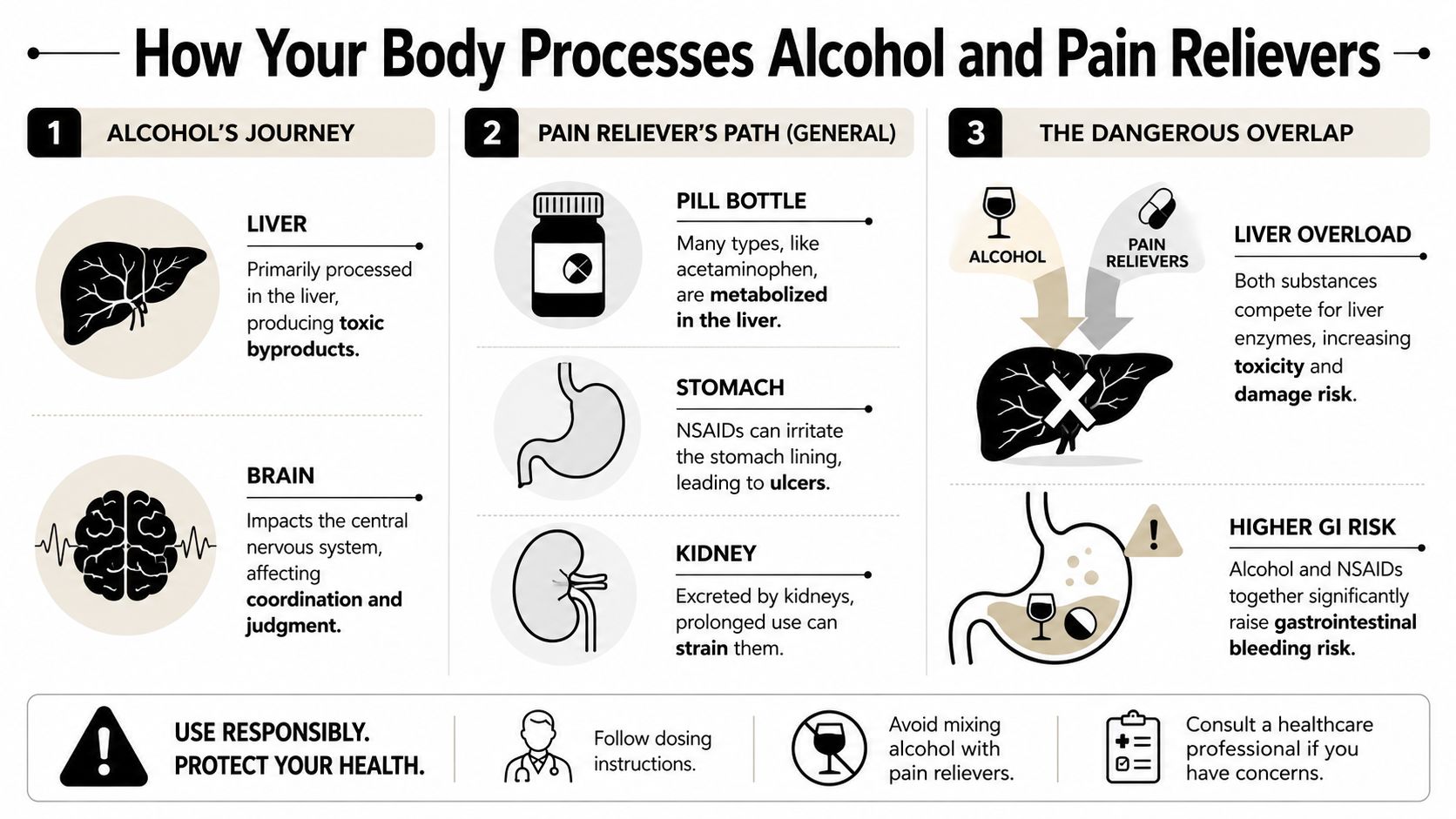
A third issue involves the brain and breathing drive. Alcohol is a depressant. Some prescription pain medicines are also depressants. That overlap can make a person much more sleepy, less coordinated, and in the worst case, less able to breathe normally.
Pain Reliever and Alcohol Risk Summary
Pain Reliever Type | Primary Organ at Risk | Main Danger |
|---|---|---|
Acetaminophen | Liver | Toxic liver injury and possible acute liver failure |
Ibuprofen | Stomach and kidneys | Stomach irritation, GI bleeding, added kidney strain |
Naproxen | Stomach and kidneys | Higher chance of stomach irritation and GI bleeding |
Aspirin | Stomach and blood clotting system | Bleeding risk, especially in the stomach |
Prescription opioids | Brain and lungs | Excess sedation and slowed breathing |
That's why the answer to what pain reliever can I take with alcohol can't be one-size-fits-all. You have to match the medicine to the main risk.
Alcohol and pain medicine can affect different body systems, but the dangerous part is the overlap. The overlap is what changes an everyday choice into a medical problem.
A simple way to think about it is this:
If the medicine is hard on the liver, alcohol usually makes that a bad pairing.
If the medicine is hard on the stomach, alcohol often adds to that irritation or bleeding risk.
If the medicine causes sedation, alcohol can magnify it fast.
Acetaminophen Tylenol A High Risk for Your Liver
If there's one over-the-counter pain reliever people underestimate with alcohol, it's acetaminophen, sold under brand names like Tylenol. People often think of it as the “gentler” option because it doesn't usually irritate the stomach the way ibuprofen can. That part is true. But with alcohol, the main concern shifts sharply to the liver.

Why Tylenol is different
Acetaminophen is processed in the liver. So is alcohol. When both arrive together, the liver has to split its attention. That competition matters because acetaminophen can generate a toxic byproduct called NAPQI, and your body relies on glutathione to neutralize it. Alcohol use can deplete that protective buffer.
The result is a setup where toxic byproducts can build up and injure liver cells. The National Institute on Alcohol Abuse and Alcoholism explains the alcohol and acetaminophen interaction clearly: mixing acetaminophen with alcohol significantly increases the risk of kidney disease by 123% and can cause acute liver failure.
That's the part many people miss. The danger isn't always something you feel right away. Early liver stress can be silent. A person may assume they're fine because they don't have immediate pain or vomiting.
For a deeper plain-language breakdown of the medication itself, this overview of acetaminophen basics and safety considerations is a useful companion read.
When people get caught off guard
The common trap is not one huge mistake. It's layering. Someone has a few drinks, takes Tylenol for a headache, then also takes a nighttime cold medicine that contains acetaminophen without realizing it. Or they use it repeatedly because they're sore for several days after drinking.
Another reason this pairing is risky is false reassurance. Some guidance notes that moderate alcohol use with recommended acetaminophen doses may be tolerated by many adults, but that is not the same as saying the combination is harmless. Once alcohol intake climbs, dosing gets sloppy, or liver risk factors enter the picture, the safety margin narrows fast.
What I tell patients: If you've been drinking and you need a pain reliever, Tylenol is not the one I want you reaching for casually.
This short video helps illustrate why that liver burden matters in real life.
Watch for warning signs such as nausea, vomiting, unusual fatigue, upper abdominal pain, yellowing of the skin or eyes, or dark urine. Those symptoms don't prove liver injury on their own, but they are not something to brush off after mixing alcohol and acetaminophen.
NSAIDs Advil Aleve The Risk to Your Stomach
If acetaminophen is the liver problem, NSAIDs are the stomach problem. This class includes ibuprofen (Advil, Motrin), naproxen (Aleve), and aspirin, though aspirin deserves its own separate caution because of bleeding. Many people switch to ibuprofen after hearing that Tylenol and alcohol are a bad combination. That switch can trade one danger for another.
Why the stomach takes the hit
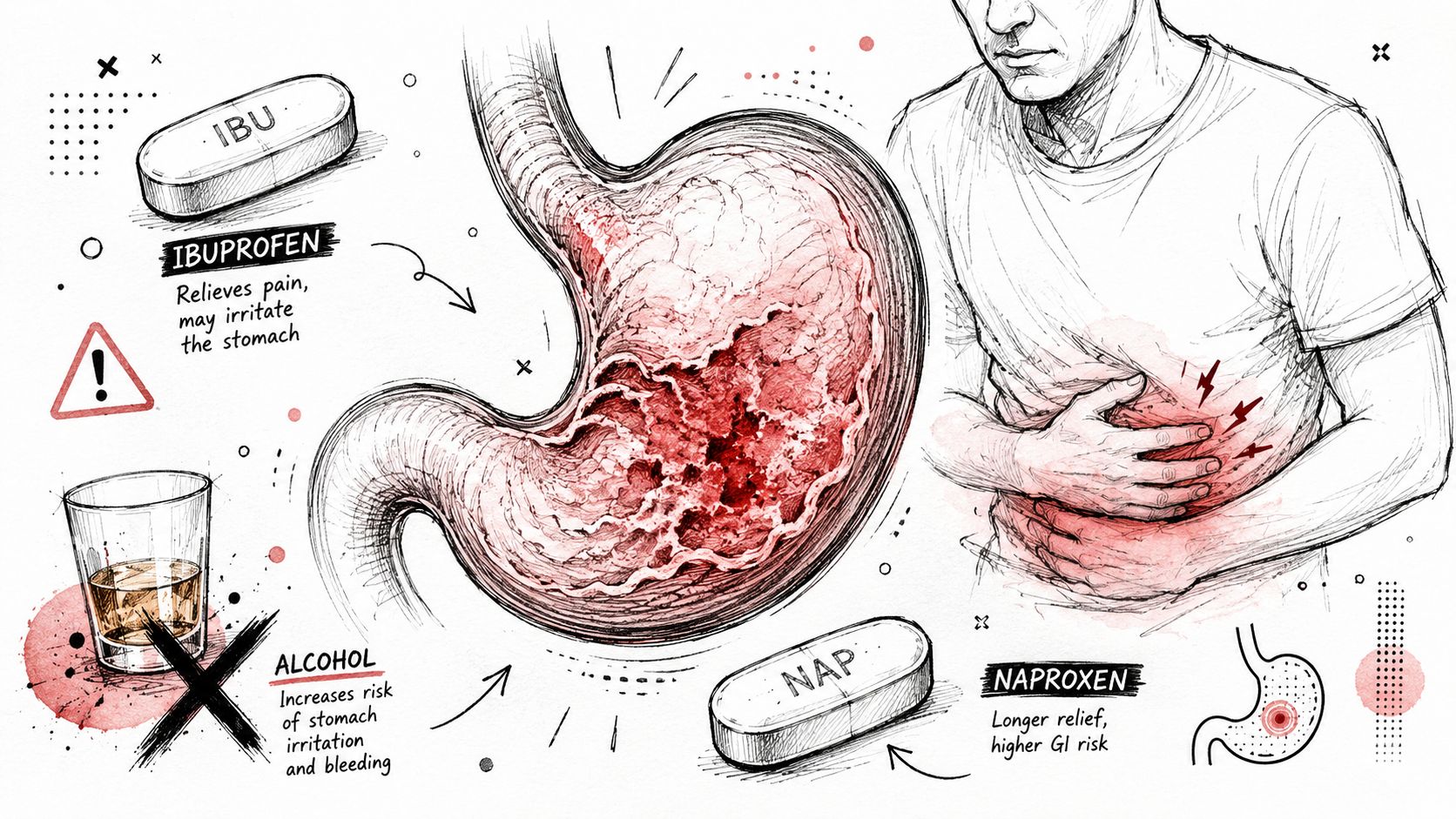
NSAIDs work in part by blocking enzymes involved in inflammation and pain. The trade-off is that those same pathways also help protect the stomach lining. Alcohol can irritate that lining too. When you combine the two, you remove protection and add irritation at the same time.
The Drugs.com review of pain medications and alcohol interactions notes that NSAIDs like ibuprofen and naproxen, when combined with alcohol, dramatically increase the risk of gastrointestinal bleeding and stomach irritation, and that waiting at least 10 hours after taking ibuprofen before drinking is often recommended to reduce that danger.
That's not just about heartburn or a sour stomach. GI bleeding can start with symptoms people dismiss, such as burning pain, nausea, dark stools, or vomiting material that looks like coffee grounds.
What works in real life and what does not
There is some nuance here. A healthy adult who rarely drinks and rarely takes ibuprofen may get through an occasional overlap without obvious harm. But that should not be mistaken for a recommendation. Risk rises if you drink more, use NSAIDs regularly, are older, have a history of ulcers or gastritis, or already have kidney or liver problems.
The NIAAA resource on alcohol medication interactions adds one concrete point: consuming up to one drink per day increases NSAID-associated GI bleeding risk by approximately 37%.
If you use ibuprofen often, this guide to ibuprofen uses and precautions can help you think more carefully about when it fits and when it doesn't.
Here's the practical hierarchy I use with patients:
Best choice if you plan to drink: Skip the pain reliever unless you've checked with your clinician or pharmacist.
Better than repeating doses: If you already took ibuprofen, delay alcohol rather than stacking them close together.
Worst pattern: Using NSAIDs repeatedly through a day or weekend while also drinking regularly.
The fact that ibuprofen may feel “safer” than Tylenol after alcohol doesn't mean it's safe. It often just means the injury moves from the liver to the stomach.
Aspirin and Prescription Opioids A Critical Warning
These two categories deserve separate attention because the danger profile changes again.
Aspirin is not just another over the counter pill
Aspirin belongs to the NSAID family, but it also affects how blood clots. That matters because alcohol can irritate the stomach, and aspirin can make bleeding easier to start and harder to stop. So the concern is not only irritation. It's bleeding layered on top of irritation.
A person might notice stomach pain, indigestion, or nausea and think it's mild. But with aspirin in the mix, even a small stomach injury can become more serious. If someone already has a history of ulcers, reflux, gastritis, or takes aspirin routinely, alcohol makes the trade-off much less forgiving.
Aspirin also catches people by surprise because they may not take it for pain at all. Some take it because a clinician advised it for another reason. They don't think of it as a “painkiller question,” but the alcohol interaction still matters.
Opioids and alcohol should not be mixed
Prescription opioids are different from Tylenol, ibuprofen, naproxen, or aspirin. The immediate danger is less about the stomach or liver and more about the brain's control over alertness and breathing. The combination can cause marked drowsiness, poor coordination, and dangerously slowed breathing.
The verified guidance is direct here. Prescription opioids such as tramadol and morphine require complete abstinence from alcohol due to amplified sedative effects and overdose risk.
If your prescription combination product contains hydrocodone or oxycodone, remember that some of those products also contain acetaminophen. That means a person can be facing both sedation risk and liver risk, depending on the exact medication.
If you're taking an opioid for pain, don't try to negotiate with the alcohol warning. Treat it as a hard stop.
Call for urgent medical help if someone who mixed opioids and alcohol is hard to wake, breathing slowly, turning blue, confused, or collapsing. That is not a “sleep it off” situation.
Can Natural Supplements Like Turmeric Help
Some readers asking what pain reliever can I take with alcohol are really asking a broader question. They don't just want a one-night answer. They want fewer nights where they need to make this choice at all.
That's where natural approaches can be useful, with the right expectations.
Where supplements fit and where they do not
Supplements such as turmeric, ginger, and ashwagandha are not direct substitutes for an acute pain reliever when you have a sudden migraine, dental pain, injury, or fever. They also aren't permission slips to drink freely. But they may fit into a longer strategy aimed at supporting joint comfort, inflammation balance, stress resilience, and recovery.

That matters because many people don't have one isolated headache. They have a pattern. Tight shoulders from stress. Repeated knee soreness after activity. Poor sleep that makes pain feel louder the next day. In those cases, a long-term support plan can reduce how often someone reaches for ibuprofen or acetaminophen in the first place.
A helpful place to start is this guide to natural pain relief approaches.
A safer mindset for recurring aches
The safer way to use supplements is to think of them as part of a routine, not as an emergency fix before a drink. The routine might include better hydration, meal timing, sleep support, stretching, physical therapy, exercise changes, and targeted supplement use that matches your goals.
A few practical points matter:
Turmeric: Often used by people looking for general inflammation support over time.
Ginger: Commonly used in wellness routines that focus on recovery and digestive comfort.
Ashwagandha: More often discussed for stress resilience and sleep support than for sudden pain relief.
Any supplement mix: Still deserves a medication review if you take prescriptions, have liver disease, are pregnant, or have a bleeding disorder.
This is also a good place for honesty. “Natural” does not automatically mean harmless for everyone. Herbal products can still interact with medications, and product quality varies. But compared with taking an NSAID while drinking or taking Tylenol after heavy alcohol use, a clinician-guided long-term wellness plan is often the smarter path for recurring discomfort.
FAQ Your Practical Questions on Timing and Safety
Common questions patients ask
What pain reliever can I take with alcohol if I already started drinking?
The safest answer is usually none until you've checked the specific drug and your own health factors. If the options on hand are acetaminophen or an NSAID, each carries a different risk, and neither is a casual green light.
I took Tylenol this morning. Is wine with dinner okay?
Maybe, maybe not. The answer depends on the dose, how much alcohol you plan to have, how often you drink, and whether you have other liver risk factors. If you use acetaminophen often or drink heavily, don't guess.
How long should I wait after ibuprofen before drinking?
A commonly cited conservative rule is to wait at least 10 hours after taking ibuprofen before drinking, based on the guidance referenced earlier in this article. That doesn't guarantee safety for everyone, but it's more cautious than taking them close together.
Is one beer with Advil a big deal?
It can be for some people. The person with a history of ulcers, gastritis, kidney issues, or regular NSAID use has a very different risk profile from the person who rarely uses the drug.
Warning signs that need attention
Don't wait around if you notice symptoms that suggest a serious interaction.
Possible stomach bleeding: Black stools, vomiting blood, vomiting material that looks like coffee grounds, sharp stomach pain, dizziness.
Possible liver trouble: Yellowing of the eyes or skin, severe nausea, unusual fatigue, dark urine, pain in the upper abdomen.
Possible dangerous sedation: Trouble staying awake, confusion, slurred speech, very slow breathing.
If symptoms look severe, or if opioids and alcohol were involved, urgent care is not overreacting.
A few closing rules make daily decisions easier:
Don't mix alcohol with opioids.
Avoid acetaminophen if drinking is regular, heavy, or recent enough that you're not sure.
Treat ibuprofen, naproxen, and aspirin as stomach and bleeding risks, not “safe alternatives.”
If you drink often and need pain relief often, ask a pharmacist or clinician for a plan instead of repeating the same gamble.
The best answer to what pain reliever can I take with alcohol is often not a product name. It's a safer sequence: hydrate, eat, pause the alcohol, use non-drug measures first, and get individualized advice when pain is recurring enough that this question keeps coming up.
If you're trying to rely less on frequent over-the-counter pain medicine and build a steadier daily routine for joint comfort, stress support, and recovery, take a look at River of Life. It offers educational resources and a supplement approach built around ingredients like turmeric, ginger, bromelain, and ashwagandha for people who want a more consistent wellness strategy.