

Digestive Enzymes and Probiotics: Your Gut Health Guide

You're probably here because your gut feels unpredictable. Maybe you eat a healthy lunch and still end up bloated by mid-afternoon. Maybe dinner sits heavily in your stomach, or your digestion seems “off” ever since a round of antibiotics. And if you also deal with stiff joints, post-workout soreness, or lingering inflammation, it's easy to wonder whether your digestive symptoms and the rest of your body are connected.
That confusion makes sense. Digestive enzymes and probiotics are often sold side by side, talked about as if they do the same thing, and recommended without much context. But they don't solve the same problem, and in some cases, they make the most sense together.
This guide is for the person who wants a clear answer to a practical question: what should I take, when should I take it, and what does it mean for the symptoms I'm feeling right now?
Table of Contents
The Gut Health Puzzle Enzymes vs Probiotics
A lot of people assume all digestive support works the same way. If a supplement is “for gut health,” it should help with bloating, bowel regularity, food tolerance, and maybe even inflammation. That sounds reasonable. It just isn't how these products work.
Think about two common situations. One person feels uncomfortable right after meals, especially with dairy, rich foods, or larger portions. Another person doesn't link symptoms to a specific meal at all. Their digestion feels unsettled more generally, and they may also feel thrown off after stress, travel, or antibiotics. Those are different patterns, so they call for different tools.
That's where the mix-up starts. Enzymes are tied closely to the food in front of you. Probiotics are tied more to the environment inside your gut over time. One acts like meal support. The other acts like ecosystem support.
If your symptoms show up quickly after eating, enzymes are often the first thing to think about. If your digestion feels out of balance day after day, probiotics may fit better.
There's another layer that often gets missed. Some people don't just want less bloating. They want to feel less inflamed overall. That's especially true for adults dealing with chronic joint pain or lingering soreness after activity. In that group, digestion isn't always just a stomach issue. It may be part of a bigger body-wide picture.
So the question isn't “Which is better?” It's “What job needs to be done?” Once that's clear, digestive enzymes and probiotics stop being competing options and start making sense as separate tools that can sometimes work well together.
What Are Digestive Enzymes and Probiotics
Some health concepts get easier the moment you stop using technical language. This is one of them.
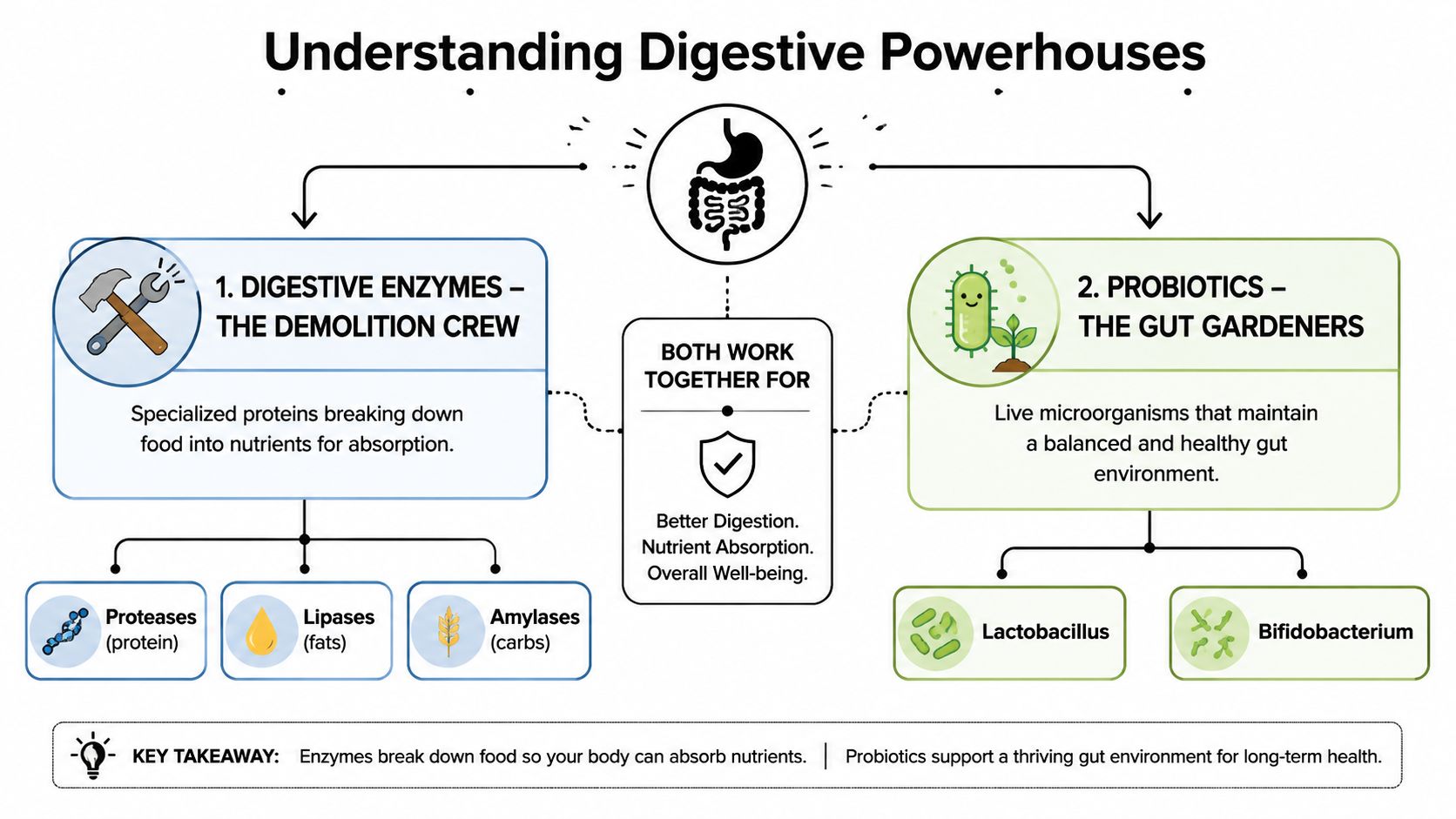
The demolition crew
Digestive enzymes are your food-breakdown workers. They help chop food into pieces small enough for your body to absorb. A concise explanation from Lemme's overview of digestive enzymes, probiotics, and prebiotics describes them this way: digestive enzymes are specialized proteins that catalyze the hydrolysis of macronutrients, including protease for proteins, amylase for carbohydrates, lipase for fats, cellulase for plant fibers, and lactase for dairy sugars, into absorbable monomers.
That sounds scientific, but the practical meaning is simple. If food isn't broken down well, your body has a harder time handling it smoothly.
A few enzyme examples make this easier to remember:
Amylase helps with carbohydrates.
Protease helps with proteins.
Lipase helps with fats.
Lactase helps with dairy sugar.
Cellulase helps with plant fibers.
If you've ever said, “I'm fine until I eat something heavy,” you're thinking in enzyme territory.
The gardeners
Probiotics do a different job. They aren't food-cutting tools. They're live microorganisms used to support a healthier balance in the gut environment. If enzymes are the demolition crew at the worksite, probiotics are the gardeners taking care of the soil.
They don't “digest your lunch” in the direct way enzymes do. Instead, they support the broader setting your digestive system depends on. That's why people often think of probiotics for overall gut balance, regularity, or recovery after something disrupts the microbiome.
Here's the easiest way to separate the two:
Tool | Main role | Best mental image |
|---|---|---|
Digestive enzymes | Break down food you're eating | Workers with tools |
Probiotics | Support gut balance over time | Gardeners tending soil |
Practical takeaway: Enzymes help with the mechanics of digestion. Probiotics help with the condition of the digestive environment.
When people confuse digestive enzymes and probiotics, they usually expect one product to do both jobs. Sometimes a combination plan helps, but it's important to know which role you're trying to support.
Different Jobs Different Timelines
You eat a heavier dinner, and within an hour your stomach feels tight, gassy, or unsettled. That pattern points to one kind of support. A different pattern is when your digestion has felt off for weeks, your bathroom habits are inconsistent, and the problem does not seem tied to one meal. That points to another.
What happens when you take enzymes
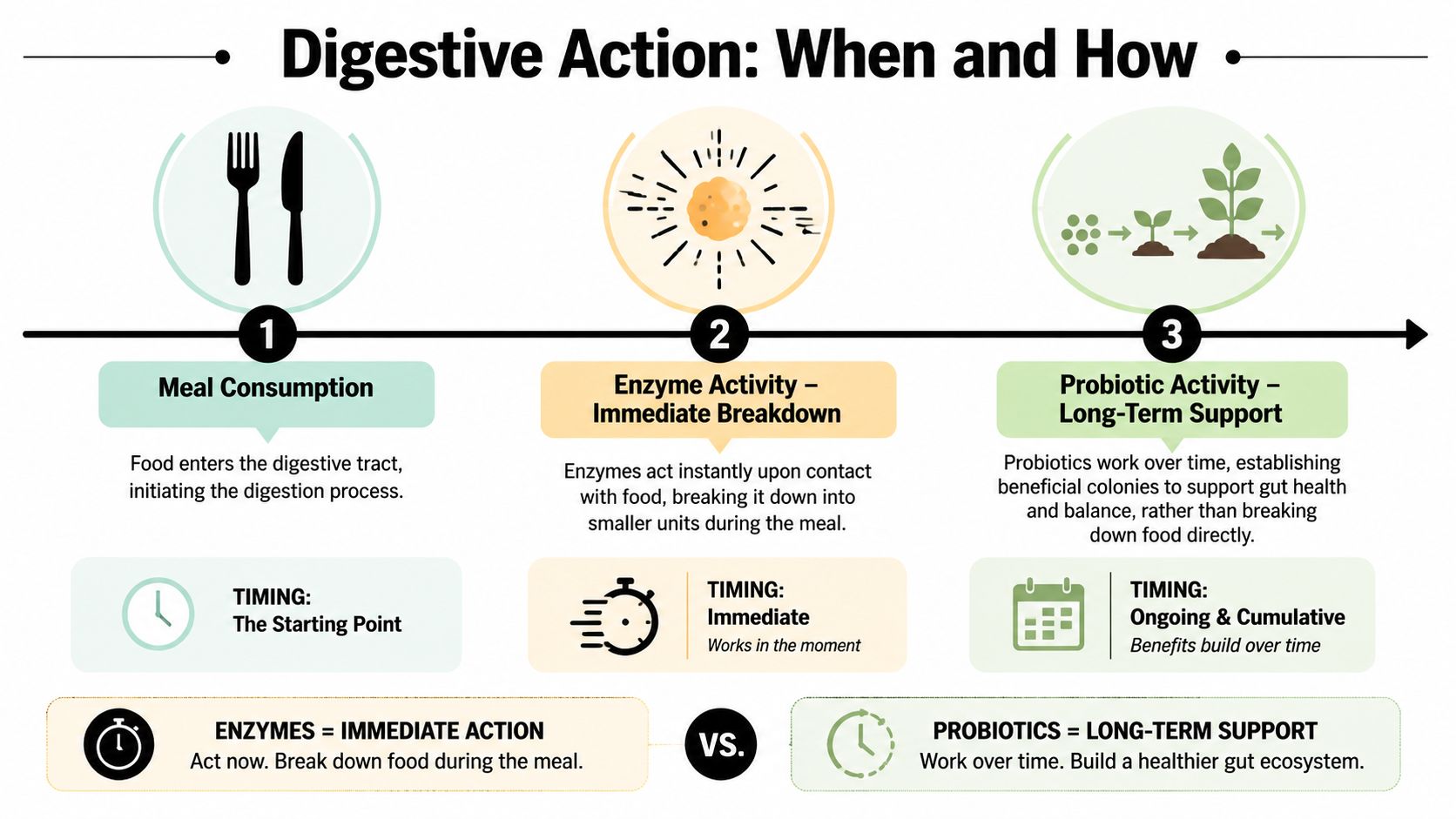
Digestive enzymes work on the food in front of them. They act during the meal and shortly after, which is why people often notice their effects much sooner than probiotic effects.
That quick timing matters in real life. If symptoms show up soon after eating, enzymes often fit the problem better than a supplement meant to shape the gut environment gradually. This can be especially useful with rich meals, dairy, or foods that you already know tend to leave you bloated or uncomfortable.
A helpful way to picture it is kitchen prep versus garden care. Enzymes are the kitchen tools used right when the meal is being handled. They are there for the immediate task.
Some enzyme formulas also include ingredients such as bromelain. Bromelain is an enzyme from pineapple that is often discussed for digestion, but it gets attention for another reason too. It has also been studied for broader inflammatory support, which is one reason people with digestive complaints and joint discomfort sometimes ask whether one product could support both concerns. That does not mean every enzyme supplement will help with every kind of pain. It means the ingredient list matters, and your goal matters too.
For some people, stool form and regularity are part of the bigger picture, not just post-meal discomfort. In that case, organic psyllium husk support for gut regularity may be another useful topic to review with a clinician.
What happens when you take probiotics
Probiotics usually require more patience because they are meant to support the gut environment over time, not process the meal you just ate. The changes are often gradual, and consistency matters more than speed.
That slower pace does not make probiotics less useful. It tells you they have a different job. If enzymes are more like helping with tonight's dinner, probiotics are more like tending the soil so the whole garden grows better over time.
This difference helps set expectations clearly:
Choose enzymes if your symptoms reliably show up during or soon after meals.
Choose probiotics if your digestion has felt off more broadly and you want longer-term microbiome support.
Consider both if you want meal-time help now and steadier gut support over time.
For many people, the best clue is timing. Fast symptoms after food often point toward enzymes. A slower, ongoing pattern often makes probiotics more relevant. If you deal with both, a combined plan may make more sense than treating this like a simple enzymes-versus-probiotics choice.
Digestive Enzymes vs Probiotics Compared
Some readers don't need another explanation. They need a clean side-by-side view.
Digestive Enzymes vs. Probiotics Key Differences
Feature | Digestive Enzymes | Probiotics |
|---|---|---|
Primary function | Break down food into absorbable nutrients | Support a healthier balance in the gut microbiome |
Main focus | The meal you're eating | The gut environment over time |
Speed of action | Fast, typically used around meals | Gradual, usually taken consistently over time |
Best fit for | Food-related discomfort, heavy meals, certain intolerances, known enzyme insufficiency | Gut imbalance, support after antibiotics, general microbiome support |
What they are | Specialized proteins | Live microorganisms |
Typical timing | Before or with meals | As directed, usually daily |
What they don't do well | They don't rebuild the microbiome | They don't directly break down fats, proteins, or carbs in the meal |
A simple test can help. Ask yourself, “Is this about what I just ate, or is this about how my gut has been functioning overall?”
If the answer is “what I just ate,” enzymes move to the front of the line.
If the answer is “my gut has felt off for a while,” probiotics become more relevant.
Digestive enzymes and probiotics are easiest to understand when you stop asking which one is stronger and start asking which one matches the problem.
People also wonder whether they have to choose only one. In practice, that isn't always necessary. A person might want meal-time support for digesting certain foods and also want ongoing microbiome support. The comparison matters because it helps you combine tools thoughtfully instead of guessing.
Who Benefits from Enzymes Probiotics or Both
A useful way to sort this out is to notice when your body complains.

If you feel fine until you eat, then get bloated, overly full, gassy, or uncomfortable soon after, enzymes are usually the first thing to look at. If your digestion feels unpredictable all week, even when meals are simple, probiotics often make more sense. And if you have both patterns, one tool may not cover the whole problem.
When enzymes make sense
Digestive enzymes are most relevant when the issue seems tied to food breakdown. That can look like discomfort after dairy, trouble with rich meals, or the heavy, stuck feeling some people get after eating before they feel they should.
A simple analogy helps here. Enzymes work like the kitchen prep team. They help break big pieces of food into smaller pieces your body can use. If that prep work is slow or incomplete, the rest of digestion can feel rough.
They also matter for people with known enzyme insufficiency or reduced digestive capacity. In those cases, adding enzyme support around meals may reduce symptoms because the extra help shows up at the exact time the body needs it.
Enzymes can also be part of a broader conversation for people dealing with joint discomfort. Bromelain is a good example. It is a proteolytic enzyme, meaning it helps break down proteins, but it is also commonly discussed in the context of recovery and inflammation support. For someone whose concerns include both digestion and sore joints, that combination is worth paying attention to.
When probiotics make sense
Probiotics fit a different pattern. They are often a better match when symptoms are ongoing rather than meal-specific.
You might consider probiotics if your gut has felt off for a while, if you recently took antibiotics, or if you are trying to support a healthier microbial balance over time. People with IBS-type symptoms often ask about probiotics for this reason, especially after a clinician has ruled out other causes.
The gut microbiome works more like a garden than a single meal problem. You are not helping with one bite of food. You are trying to support the environment those microbes live in, so the results usually build gradually rather than all at once.
When both may be worth considering
Some people clearly sit in the overlap.
You may benefit from both if:
You react to certain meals, but your digestion also feels inconsistent from week to week.
You want help on two levels, including breaking down food now and supporting gut balance over time.
You deal with bloating plus soreness or joint discomfort, and you suspect your gut health is part of a bigger inflammation picture.
That combined approach often makes practical sense. Enzymes can help with the immediate workload of a meal. Probiotics can support the longer-term gut environment. They do different jobs, so using both is not automatically redundant.
Bromelain adds an interesting layer here because it connects digestive support with whole-body concerns that many people do not initially link to the gut. If your question is, "Why do my stomach issues and achy joints seem to show up together?" this is one reason a broader supplement strategy may come up in conversation with a clinician.
People building a wider wellness plan sometimes explore personalized nutrition approaches for turmeric and ashwagandha alongside digestive support. The bigger takeaway is simple. Match the tool to the pattern, and do not be surprised if the best answer is both.
How to Choose and Use Supplements Safely
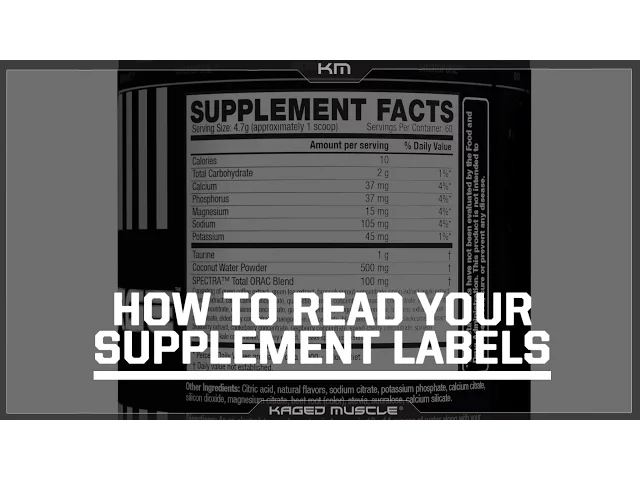
A supplement label can feel like reading the back of a machine part. Long ingredient names, numbers, and claims compete for your attention. The goal is simpler than it looks. You are checking whether the product fits your symptoms, your routine, and your health history.

What to check on an enzyme label
Start with the ingredient panel, not the promises on the front. An enzyme formula should tell you what kind of food breakdown support it offers.
A broad-spectrum product may include protease for protein, amylase for carbohydrates, lipase for fats, cellulase for plant fibers, and lactase for dairy sugar. That list matters because enzymes work like meal-specific tools. If the tool is missing, the product may not help with the problem you have.
Use a few practical checks:
Match the formula to your eating pattern. If dairy causes trouble, look for lactase. If large or rich meals leave you uncomfortable, a broader blend may fit better.
Check timing instructions carefully. Enzymes usually work best before or with meals because they need to meet the food while digestion is starting.
Start with the meals that usually cause symptoms. That gives you a cleaner test than changing your whole routine at once.
Bromelain deserves a closer look here. It is a digestive enzyme, but people also use it in formulas aimed at recovery and inflammation support. That overlap matters if your gut symptoms tend to travel with joint aches or post-exercise soreness. In that case, the question is not only, “Will this help me digest lunch?” It may also be, “Could this ingredient belong in a broader plan for both digestion and whole-body comfort?”
What to check on a probiotic label
Probiotic labels ask a different question. You are not checking for food-breaking enzymes. You are checking for the right microbes, in the right amount, with clear instructions for use.
Two details matter most. Strain identity and CFU count.
According to Prime Health Denver's review of digestive enzymes and probiotics, clinical guidelines recommend daily probiotic doses of at least 1 to 10 billion CFU for common IBS symptoms. The same review notes that some clinically studied options use 30 billion live cultures, including Lactobacillus plantarum 299v.
That does not mean the highest number wins. It means the label should be specific enough for you and your clinician to judge whether the product makes sense.
Look for:
A named strain, not only a general category like Lactobacillus.
A clearly listed CFU amount, so potency is not a mystery.
Directions that support consistent use, because probiotics are usually judged over time, not meal by meal.
If you take medications or several supplements at once, review ashwagandha interactions and supplement timing considerations with a healthcare professional before adding more to the mix.
Here's a quick visual primer before going further:
How to time them
Timing affects how well these products match their job.
Supplement type | Timing principle | Why it matters |
|---|---|---|
Digestive enzymes | Take before or with meals | They need to be present while food is being broken down |
Probiotics | Take consistently as directed | Their effect depends more on steady routine than on one meal |
A few safety habits also help keep things straightforward:
Expect a settling-in period sometimes. Some people notice mild temporary digestive changes when starting a new supplement.
Get medical guidance for ongoing or concerning symptoms. Pain that persists, unexplained weight loss, bleeding, major bowel changes, or severe discomfort should be evaluated.
Check for fit, not just popularity. “Natural” does not automatically mean safe for every person, especially if you have health conditions or take other products.
A good supplement choice is specific. It matches the pattern you are trying to solve, whether that means meal-related support, longer-term gut balance, or a combination approach that also considers inflammation and joint discomfort.
Common Questions About Enzymes and Probiotics
Can I take digestive enzymes and probiotics together
Yes, many people can take them together because they do different jobs. Enzymes support food breakdown during meals. Probiotics support the gut environment over time. If you need both kinds of support, using both may make sense.
Do I need a prescription for either one
Not always. Many digestive enzymes and probiotics are available over the counter. But that doesn't mean self-diagnosis is always the best move. If symptoms are persistent, severe, or changing, it's worth speaking with a healthcare professional before relying on supplements alone.
Are digestive enzymes only for people with severe digestive problems
No. Some people use them for known digestive insufficiency, while others use them more situationally for meal-related discomfort or trouble with specific foods. The key is whether the symptom pattern fits.
Are probiotics only for people who took antibiotics
No. Antibiotic recovery is one common use, but not the only one. Some people use probiotics for broader gut balance or for ongoing digestive irregularity that isn't tightly tied to specific meals.
How long should I try a probiotic before deciding whether it helps
Give it time and stay consistent. Probiotics don't work like a fast-acting meal aid. They're better judged over steady daily use rather than after just a few doses.
Can bromelain really belong in a gut health conversation
Yes. Bromelain is an enzyme, specifically one that works on proteins. That makes it relevant to digestion. It also comes up often in broader discussions about comfort and inflammation, which is why people with joint concerns may hear about it even if they weren't originally shopping for digestive support.
What if I'm not sure which one I need
Start by tracking the pattern:
Right after meals points more toward enzymes.
Ongoing imbalance points more toward probiotics.
A mix of both may justify asking about a combined approach.
If your body gives the same signal repeatedly, believe the pattern. Supplement choices are much easier when you stop guessing and start observing.
If you're looking for a broader wellness approach that connects digestion, recovery, and everyday comfort, River of Life offers educational resources and a multi-ingredient capsule that includes bromelain alongside turmeric, ginger, and ashwagandha. It's a practical next stop for readers who want to explore how digestive support may fit into a bigger picture of joint comfort, stress resilience, sleep, and clarity.