

Best Turmeric Supplement for Arthritis 2026: What to Buy

The best turmeric supplement for arthritis is usually a standardized curcumin formula paired with piperine or another absorption enhancer. One review notes that 20 mg of piperine can raise curcumin bioavailability about 20-fold, while arthritis studies commonly used around 1,000 mg of curcumin per day.
You've probably reached the frustrating part of shopping: several bottles claim to support joint comfort, yet each uses a different extract, serving size, and “advanced absorption” phrase. One label lists turmeric powder, another lists curcuminoids, and a third adds black pepper without saying how much. It's reasonable to wonder why products with similar milligram claims can feel so different.
The answer starts with absorption reliability, not the biggest number on the front of the bottle. Plain curcumin is poorly absorbed, so the formula needs a credible delivery system, a transparent dose, and sensible safety information. Here's how I'd evaluate the best turmeric supplement for arthritis in 2026, without getting distracted by brand hype.
Table of Contents
Why Picking the Right Turmeric for Arthritis Matters in 2026
How Curcumin Works and What the 2024 Evidence Actually Shows
Comparing Formulation Types From Plain Extract to Multi-Ingredient Blends
Safety Interactions and Who Should Get Medical Clearance First
A Case Study River of Life Capsules as an Evidence-Forward Example
Subscription Versus One-Time Buying and What to Check Before You Order
Why Picking the Right Turmeric for Arthritis Matters in 2026
The reader I'd want to help is standing in front of a shelf, or scrolling through a marketplace, comparing two bottles. The first says “turmeric complex” in large type. The second says “standardized curcuminoids,” but hides the actual amount inside a proprietary blend. Both sound promising. Neither label answers the most important question: how much usable curcumin does the product deliver?
A turmeric root powder and a standardized curcumin extract aren't interchangeable. A product can contain plenty of turmeric material on paper while providing little information about its curcuminoid content or absorption. Independent medical guidance from University College London Hospitals on turmeric explains why swallowed curcumin generally reaches the bloodstream poorly without an absorption strategy.
The decision framework I use
I'd rank a product using these criteria:
What to inspect | Why it matters | What I want to see |
|---|---|---|
Extract identity | “Turmeric” can mean powder, extract, or a curcuminoid concentrate | A clearly named standardized extract |
Curcuminoid amount | Total turmeric weight can obscure the active fraction | The actual curcuminoid dose, not just root weight |
Absorption support | Native curcumin is poorly absorbed | Piperine, a lipid carrier, micellization, or another named system |
Formula transparency | Hidden blends make comparison difficult | Ingredient amounts listed individually |
Safety information | Greater absorption can also increase exposure | Clear cautions for medication users and long-term use |
The most useful 2026 purchase criterion is therefore simple: can you verify what form of curcumin is present and how the product is designed to make it available? Third-party verification matters too, but a testing seal can't rescue a label that conceals the active dose.
Practical rule: Don't pay extra for “maximum strength” until you know whether the bottle identifies the curcuminoid amount and the absorption method.
Arthritis users notice this gap quickly because their goal is practical. They want easier morning movement, more comfortable walking, or support alongside a clinician's treatment plan. A product that looks impressive but gives no useful exposure information is a poor buying decision, regardless of its packaging.
How Curcumin Works and What the 2024 Evidence Actually Shows
If knee pain makes mornings stiff or walking less comfortable, curcumin is worth examining, but only within the limits of the evidence. Turmeric research focuses mainly on osteoarthritis, particularly knee osteoarthritis, rather than every type of joint discomfort. Osteoarthritis and rheumatoid arthritis involve different disease processes, so evidence for one does not automatically apply to the other.
The strongest 2024 findings support curcumin as a symptom-support option. They do not support replacing diagnosis, medical care, or disease-modifying treatment. A 2024 umbrella review covering 11 included meta-analyses found significant improvements in osteoarthritis pain and stiffness, including VAS, WOMAC-total, WOMAC-pain, WOMAC-function, and WOMAC-stiffness. The reported significance levels ranged from p ≤ 0.007 to p ≤ 0.001. A related network meta-analysis covering 23 studies, 7 countries, and 2,175 knee-osteoarthritis patients found lower pain, lower total WOMAC scores, and less rescue-medication use with curcumin-based approaches, including curcumin combined with NSAIDs, as reported in Phytotherapy Research.
What the numbers say
The network analysis reported a pain difference of MD -1.63 on the visual analogue scale and a total WOMAC difference of MD -18.85 versus placebo. Rescue-medication odds were as low as 0.17 for curcumin alone and 0.01 for curcumin plus NSAIDs. Those results are encouraging, but they describe studied formulations, not every turmeric capsule on a retail shelf.
Study | Population | Curcumin dose | Comparator | Outcome |
|---|---|---|---|---|
2024 umbrella review | Osteoarthritis evidence across 11 included meta-analyses | Formulations varied | Placebo and other comparators | Significant improvements in pain and stiffness outcomes |
2024 network meta-analysis | 2,175 knee-osteoarthritis patients across 23 studies and 7 countries | Formulations varied | Placebo, curcumin, and combination approaches | Lower VAS pain, lower total WOMAC, and less rescue-medication use |
2016 systematic review | Arthritis trials | Typically 1,000 mg/day for 8 to 12 weeks | Ibuprofen and diclofenac sodium in some comparisons | Symptom improvements similar to those comparators in the reviewed evidence |
2021 dose comparison | Curcuminoid trials | Doses above and below 1,000 mg/day | Higher-dose versus lower-dose curcuminoids | Higher doses did not show superior pain relief |
Earlier research moved from small trials toward standardized-extract reviews. The 2016 systematic review of turmeric extracts and arthritis reported symptom improvements with standardized extracts. Later dose comparisons suggested that merely raising the raw dose does not guarantee better relief.
Curcumin may help manage symptoms, but it is not proven to reverse arthritis or replace rheumatoid arthritis treatment.
My buying conclusion is direct: prioritize consistent absorbed delivery over an impressive turmeric number. Evidence for osteoarthritis pain, mobility, and stiffness is promising, but formulations differ and some findings remain uncertain. Judge the supplement by its disclosed delivery system and usable active dose, not by yellow powder in a capsule.
Comparing Formulation Types From Plain Extract to Multi-Ingredient Blends
There are four broad formulation categories worth separating. They aren't equal, and the most expensive option isn't automatically the right one for every shopper.
Plain standardized extract is the simplest. It can make sense when the label identifies the curcuminoid content and the user wants a single ingredient. The problem is that curcumin remains poorly absorbed on its own, so a large-looking dose may not translate into meaningful exposure.
Piperine-combined curcumin is the practical budget upgrade. Piperine, commonly sourced from black pepper, is used to increase absorption. The medical guidance cited earlier describes poor native absorption, while the review evidence reports that 20 mg of piperine may raise curcumin bioavailability about 20-fold. That makes piperine useful, but it also means the formula deserves more careful interaction screening.
Lipid-based and phytosomal systems use fats, phospholipids, or related delivery approaches to improve uptake. They can appeal to people who want a named delivery technology without adding several botanicals. The label should still state the actual curcuminoid content and identify the delivery system clearly.
Multi-ingredient blends combine curcumin with botanicals or enzymes such as ginger, boswellia, or bromelain. These formulas can offer broader joint-support coverage, but they're harder to assess. If the product uses a proprietary blend, you may not know whether each supporting ingredient appears at a meaningful amount.
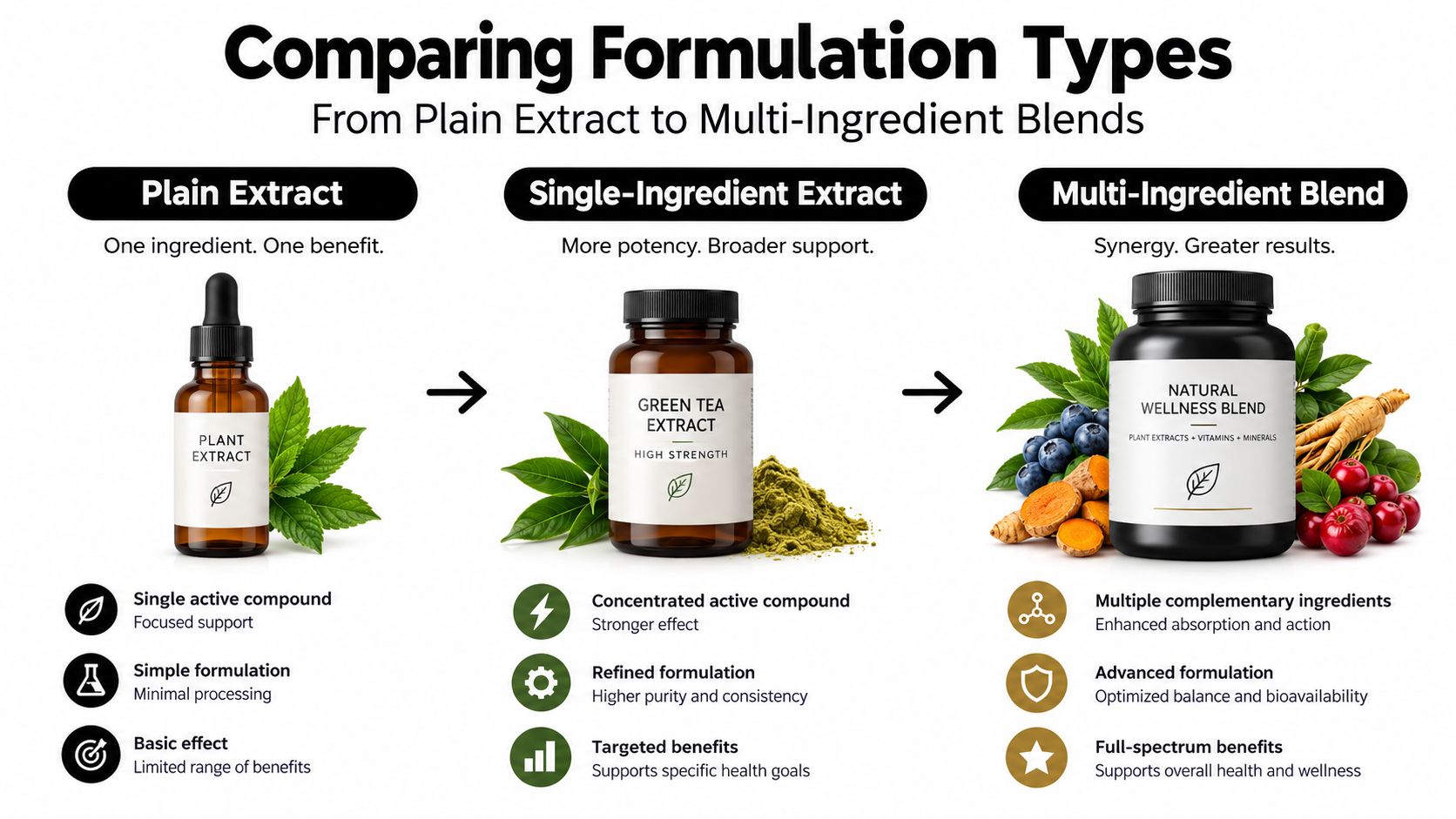
A useful curcumin bioavailability explanation should leave you with a clear trade-off: piperine is straightforward and often economical, while a lipid or multi-ingredient formula may prioritize delivery or broader coverage at a higher cost.
My preference is a transparent piperine formula for mild, occasional stiffness and a carefully labeled multi-ingredient product when someone wants joint support plus complementary wellness ingredients. I wouldn't pay for a blend that hides every dose, and I wouldn't assume that more ingredients mean more clinical benefit.
Reading a Turmeric Label Like a Practitioner
A bottle can promise “maximum strength” while leaving the useful details unclear. Start with the Supplement Facts panel. The goal is to identify the extract, the actual curcuminoid amount, the serving size, and the method used to support absorption.
The label scan
Find the extract description. “Turmeric powder” tells you little about standardization. A named curcumin or curcuminoid extract gives you a clearer basis for comparing products with the arthritis research.
Separate turmeric weight from curcuminoid weight. Total extract weight and active curcuminoid content are different figures. If the label lists only the first, you cannot judge how much active material you are buying.
Look for a realistic active dose. Clinical studies have used substantial curcumin doses, but a larger number does not automatically mean better pain relief. A dose comparison found no clear advantage from taking higher amounts over lower amounts. Judge the formula by its stated actives, delivery system, and transparency, not by the biggest number on the front.
Identify the absorption driver. Look for piperine, a phospholipid carrier, micellization, or another named delivery method. “Enhanced absorption” without an explanation is advertising, not useful formulation information.
Check the serving size. If the product requires multiple capsules, calculate the total daily curcuminoid amount. Comparing one capsule from one brand with a full serving from another produces a misleading result.
Inspect inactive ingredients. Unnecessary fillers, colors, and undisclosed processing aids make a product harder to assess. Check the capsule material too if you avoid animal-derived gelatin.
Reject proprietary concealment. A proprietary blend that hides individual amounts prevents a serious comparison. For a multi-ingredient joint product, every meaningful active should have a clearly stated quantity.
Treat unsupported claims as a warning. “Clinically studied” should identify the ingredient or extract and explain what was studied. A badge or vague phrase does not establish that the finished product matches the research.
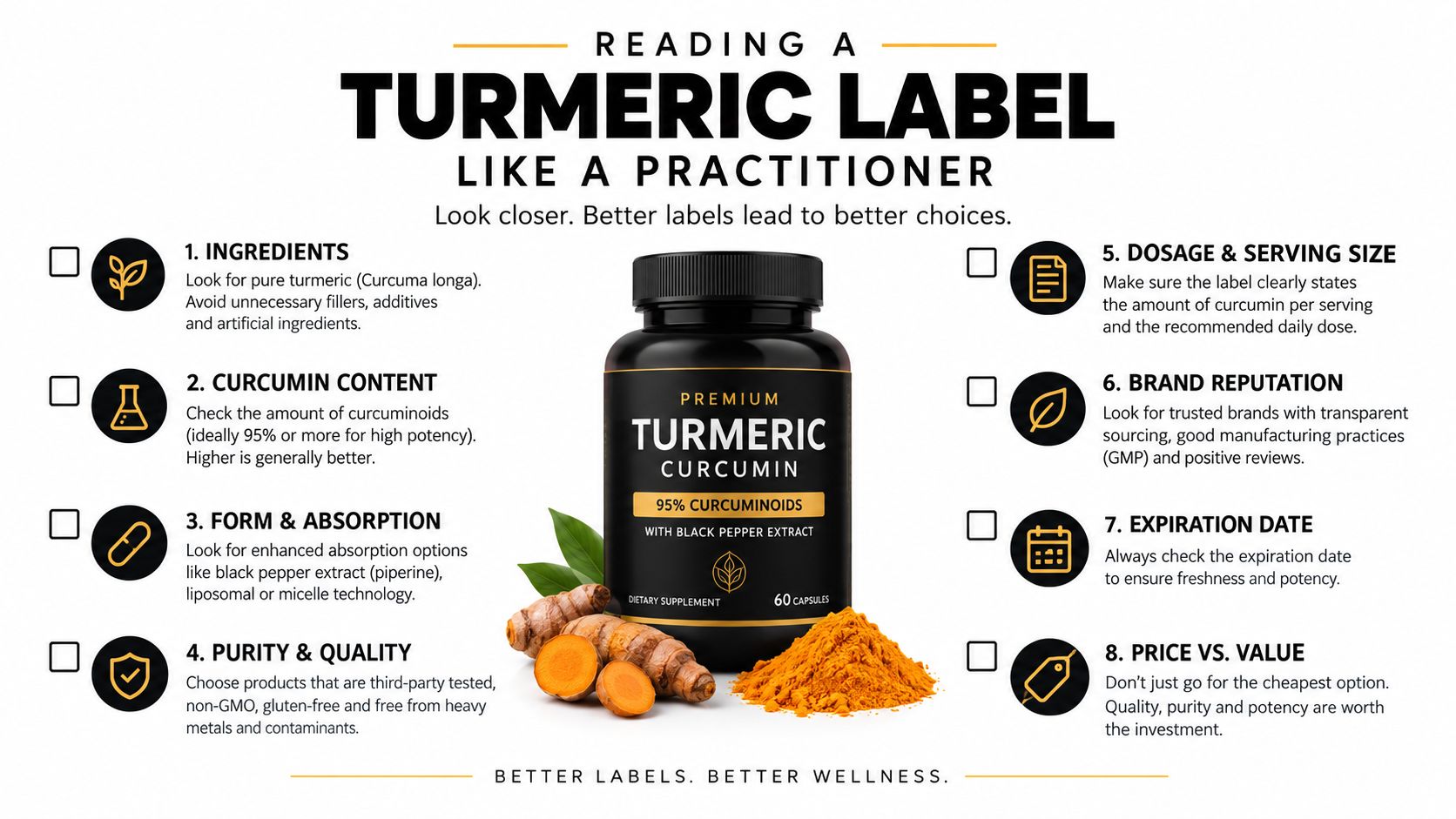
The supplement facts label guide from River of Life explains the mechanics of reading a panel. Apply that method to every brand. I would choose a modestly dosed product with identifiable actives over a “maximum strength” bottle that hides its extract details. That is how you buy formulation transparency rather than brand hype.
Safety Interactions and Who Should Get Medical Clearance First
“More absorbable” sounds automatically better. It isn't. If a formula increases systemic exposure, it may also increase the importance of medication interactions and individual risk factors.
The available safety literature describes rare liver-injury concerns, particularly with high-bioavailability formulations. It also notes that piperine can increase curcumin exposure, which is exactly why people taking medication shouldn't treat a concentrated turmeric formula like ordinary food seasoning. Anyone with a history of liver problems, gallbladder disease, active ulcer symptoms, or an upcoming procedure should ask a clinician before starting.
Who should pause before purchasing
Category | Specific examples | Why caution is needed |
|---|---|---|
Prescription medication users | Blood-thinning, glucose-lowering, immune-modifying, or other regular medicines | Absorption and systemic effects may alter the safety profile |
Liver or gallbladder concerns | Previous liver injury, gallbladder disease, or unexplained digestive symptoms | Concentrated extracts may not be appropriate without individual advice |
People planning a procedure | Anyone preparing for surgery or another invasive procedure | A clinician can advise whether and when supplements should be stopped |
Rheumatoid arthritis patients | People using disease-modifying treatment or managing active flares | Curcumin should be considered adjunct support, not a substitute for rheumatology care |
Sensitive stomachs | Anyone who develops nausea, reflux, abdominal discomfort, or diarrhea from supplements | A different formulation, lower exposure, or discontinuation may be needed |
Don't rely on a marketplace review to answer an interaction question. Make a complete list of prescriptions, over-the-counter medicines, and supplements, then ask a pharmacist to check the combination. Start conservatively and stop if you notice new digestive symptoms, unusual fatigue, dark urine, yellowing of the skin, or other concerning changes.
A piperine-enhanced product may be a better delivery system, but it isn't automatically a safer system for every person.
The evidence supports a balanced approach. Curcumin has a plausible role in symptom support and may reduce inflammatory markers, including CRP and TNF-alpha, but the research also includes small studies, mixed formulations, and areas of low certainty. That's enough to justify careful use, not enough to justify self-treating a serious inflammatory disease.
A Case Study River of Life Capsules as an Evidence-Forward Example
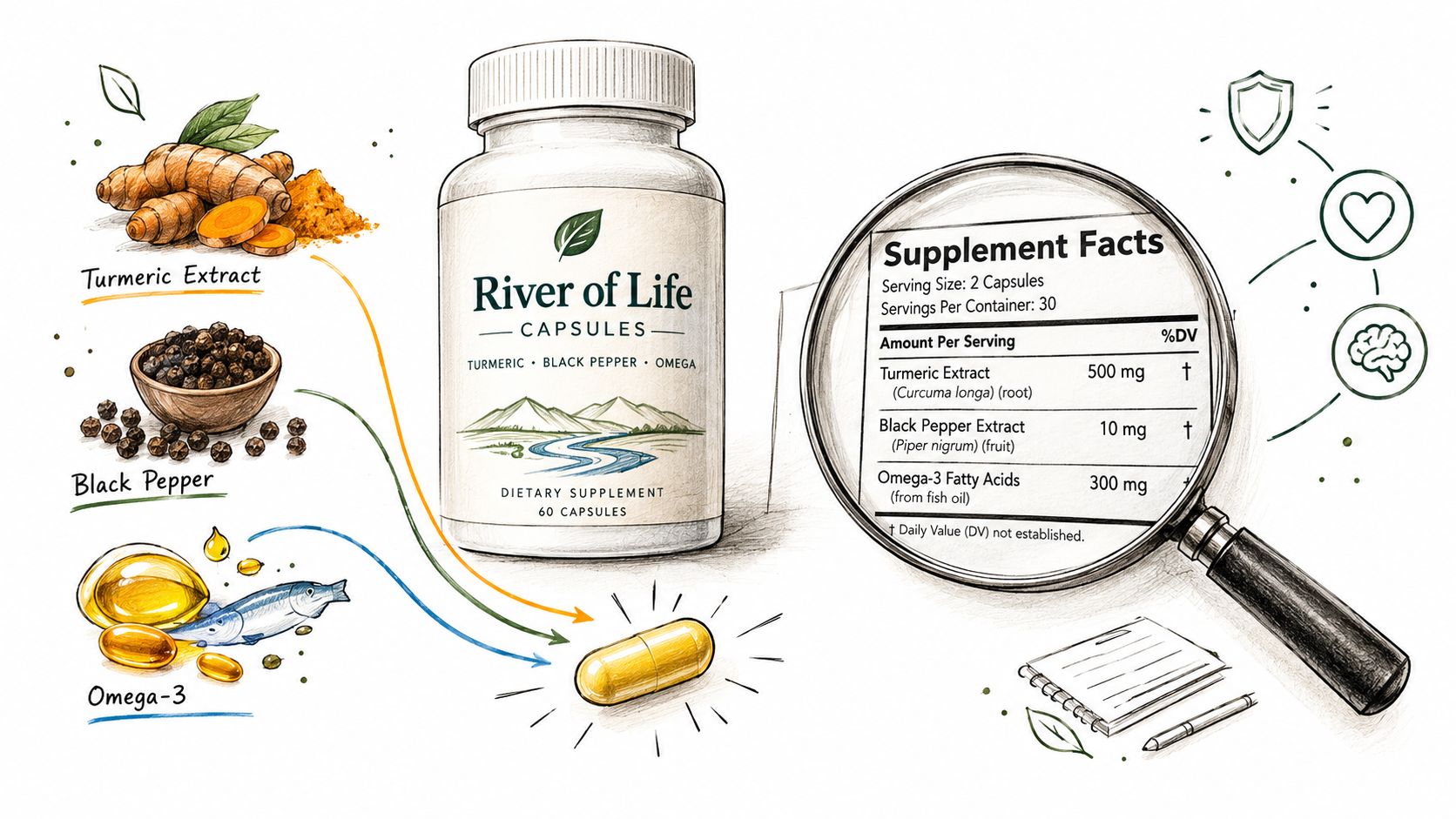
A useful example of formulation transparency is River of Life Capsules, a vegan, multi-ingredient product built around standardized turmeric extract and BioPerine black pepper. Its listed formula also includes ashwagandha root, ginger, and bromelain, so it isn't a single-ingredient curcumin product. That distinction matters because the buyer is paying for a broader combination, not only for a turmeric dose.
The formulation logic is straightforward. Turmeric supplies the central curcuminoid component, BioPerine is included as the absorption enhancer, and the additional botanicals and enzyme are positioned as complementary ingredients for joint comfort and wider wellness support. The product description presents the ingredients individually rather than placing the entire formula behind one unnamed blend, and the capsules are vegan.
Where this type of formula fits
Consider a 58-year-old with knee osteoarthritis who wants daily supplement support alongside physical therapy. A multi-ingredient capsule could be convenient if that person values one routine and has already checked the formula with a healthcare professional. It shouldn't replace movement work, medical evaluation, or a plan for persistent pain.
Now consider a 45-year-old with early rheumatoid arthritis symptoms. That person should involve a rheumatology team before adding an absorbable curcumin product, especially if prescription treatment is already in use. The formula may be considered adjunct support, but it isn't a disease-modifying therapy.
The trade-off is clear. A multi-ingredient capsule usually costs more than a basic piperine-and-curcumin product, and bundled ingredients may not each appear at the standalone trial levels used in separate studies. This is a convenience-plus-coverage choice, not a budget pick or proof that every ingredient will improve arthritis symptoms.
For buyers who want to inspect the purchasing format, the 30-day subscription option can be compared with a one-time bottle before committing. I'd still verify the current Supplement Facts panel and testing information before ordering.
Subscription Versus One-Time Buying and What to Check Before You Order
A subscription can make sense for someone who has already tolerated a product and wants regular replenishment. It can also create unnecessary lock-in when the buyer hasn't checked the label, assessed side effects, or decided whether the formula fits their arthritis type.
I'd start with a one-time purchase whenever possible. Use that period to confirm three things: the capsule is comfortable to take, the product's ingredients match the listing, and the routine fits alongside your medications and appointments. If the formula suits you, a flexible subscription becomes a convenience rather than a gamble.
Inspect the buying terms
Cancellation controls: Look for a clear pause, skip, and cancel process. A subscription that requires customer service contact for every change deserves extra scrutiny.
Return conditions: Check whether the seller accepts only unopened bottles, how long the return window lasts, and who pays return shipping. A refund promise isn't useful if the conditions are buried.
Fulfillment details: Confirm where the product ships from, whether international delivery is available, and whether climate-resistant packaging is used. These details matter more for products traveling through hot or humid conditions.
Bottle quantity: Calculate how many capsules the daily serving requires. A low bottle price can be misleading if the serving size is larger than expected.
Testing documentation: Ask for a batch-specific Certificate of Analysis, not merely a statement that the product was “tested for purity.”
Verify the evidence behind the seal
A credible testing claim should identify the laboratory, the batch or lot number, and the substances tested. If a company references seals such as USP, NSF, Informed Sport, or ConsumerLab, confirm that the claim applies to the exact product you're buying rather than to a different manufacturing facility or ingredient.
When the bottle arrives, compare its lot number with the Certificate of Analysis and save a screenshot or copy before opening the seal. This small step gives you a record of what was represented at purchase. It also separates transparent documentation from vague trust signals.
I'm skeptical of any product that uses “clinically studied” as its main proof while hiding the extract type, curcuminoid amount, or absorption method. A supplement can be perfectly legitimate without a flashy badge, but it shouldn't be difficult to identify what you're buying.
Matching the Right Turmeric to Your Arthritis Profile
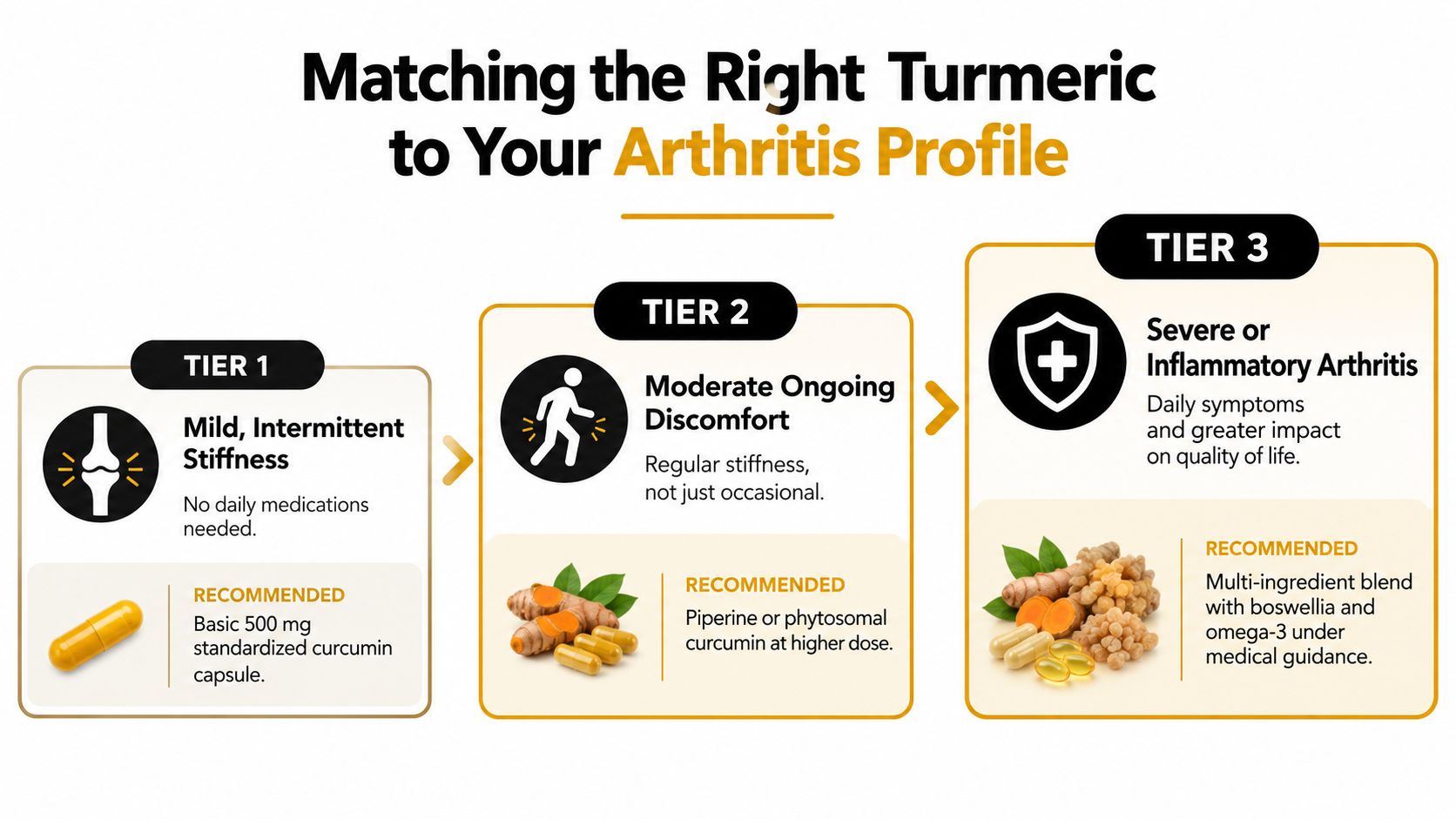
The best turmeric supplement for arthritis 2026 isn't one universal bottle. It depends on the type of arthritis, symptom intensity, medication use, and how much formulation complexity you need.
Tier one is mild, intermittent stiffness. If you aren't taking daily medication and mainly want a simple starting point, choose a clearly labeled standardized curcumin capsule with piperine or another named absorption aid. A basic formula is easier to evaluate, usually costs less, and avoids paying for ingredients you don't need.
Tier two is ongoing osteoarthritis discomfort or an active lifestyle. If stiffness regularly affects walking, exercise, or morning mobility, a multi-ingredient formula may be worth considering. Ginger, boswellia, or a lipid-based curcumin system can make sense when the label identifies every ingredient and you understand the trade-off between broader coverage and a higher price.
Tier three is rheumatoid arthritis, autoimmune symptoms, or regular medication use. Get medical clearance first. This includes people taking blood thinners, immune-modifying medicines, glucose-lowering medication, or other prescriptions where interaction questions matter. A clinician may prefer a more controlled curcumin delivery system, or may advise against adding it.
Give a product a fair, consistent trial only if your healthcare situation allows it, and track morning mobility, flare patterns, digestive tolerance, and any medication changes. If nothing improves, or if new symptoms appear, don't keep escalating the dose just because the bottle advertises higher strength.
Pregnant or breastfeeding users, people with liver or gallbladder history, anyone preparing for surgery, and people with unexplained joint swelling should speak with a healthcare professional before buying. For everyone else, the sensible order is clear: choose a transparent standardized extract, prioritize reliable absorption, check interactions, and judge the product by fit rather than hype.
If you want a vegan multi-ingredient option built around standardized turmeric extract and BioPerine, River of Life offers capsules with additional botanical ingredients for broader daily wellness support. Review the formula and purchasing terms, then visit River of Life to decide whether its absorption-focused approach fits your arthritis-support routine.