

Best Pain Reliever for Dental Pain: A 2026 Guide

You're awake, your tooth is pulsing, and every heartbeat seems to hit the same nerve. You want the best pain reliever for dental pain, not a lecture, and you definitely don't want to guess wrong at 2 a.m. The straight answer is this, for most healthy adults, ibuprofen is the first move, and ibuprofen plus acetaminophen is usually the strongest evidence-based OTC option for temporary dental pain relief when it's safe for you to take both (ADA oral analgesics guidance, systematic review and meta-analysis).
That said, a pill only buys time. Dental pain is often a signal that the tooth, gum, or surrounding tissue needs treatment, not just suppression. If the pain is tied to swelling, infection, a cracked tooth, or a recent extraction, the right drug matters, but the right dental fix matters more.
Table of Contents
Ibuprofen, Acetaminophen, or the Combo: What the Evidence Shows
Non-Drug Measures and Adjuvants That Actually Move the Needle
When Your Tooth Throbs at 2 a.m. and the Pharmacy Is Closed
The classic scene is simple. You are half-asleep, one hand on the jaw, one hand on your phone, trying to decide whether this is take-something-and-wait pain or call-someone-now pain. You do not need heroics. You need triage.
Start with the most likely reality
Most nighttime tooth pain is not fixed by reaching for the strongest thing in the cabinet. It is usually inflammation, pressure, or irritation around a tooth that needs a dentist, not just a larger dose of pain medicine. That is why NSAIDs such as ibuprofen and naproxen are the guideline-level first-line choice for acute dental pain, and why the ADA-endorsed guidance favors nonopioid medications, especially NSAIDs alone or combined with acetaminophen, over opioids for temporary toothache management and post-extraction pain in adolescents, adults, and older adults (ADA oral analgesics guidance).
Check whether the pain is inflammatory and whether you have NSAID contraindications.
If you are sitting there with a throbbing molar, the practical question is simple. Is this likely an inflammatory tooth problem, like pulpitis, gum inflammation, or extraction pain. Do you have a reason you should not take an NSAID, like a history of ulcers, kidney disease, heavy alcohol use, pregnancy concerns, anticoagulants, or another medication issue.
Practical rule: for most healthy adults, the first OTC plan is ibuprofen, and if the pain is more than mild, ibuprofen plus acetaminophen is usually the better answer than either one alone.
Think in terms of the problem, not just the symptom
A painkiller can lower the volume, but it cannot remove infection, repair a cracked tooth, or close an extraction site. Nighttime dental pain deserves short-term control, but the ultimate fix still depends on the dental problem underneath it.
If the pain is severe, persistent, or comes with swelling, fever, trouble swallowing, or trouble opening your mouth, self-treatment stops being the main plan. A dentist needs to see you, and quickly.
Why Dental Pain Feels Different From Other Aches
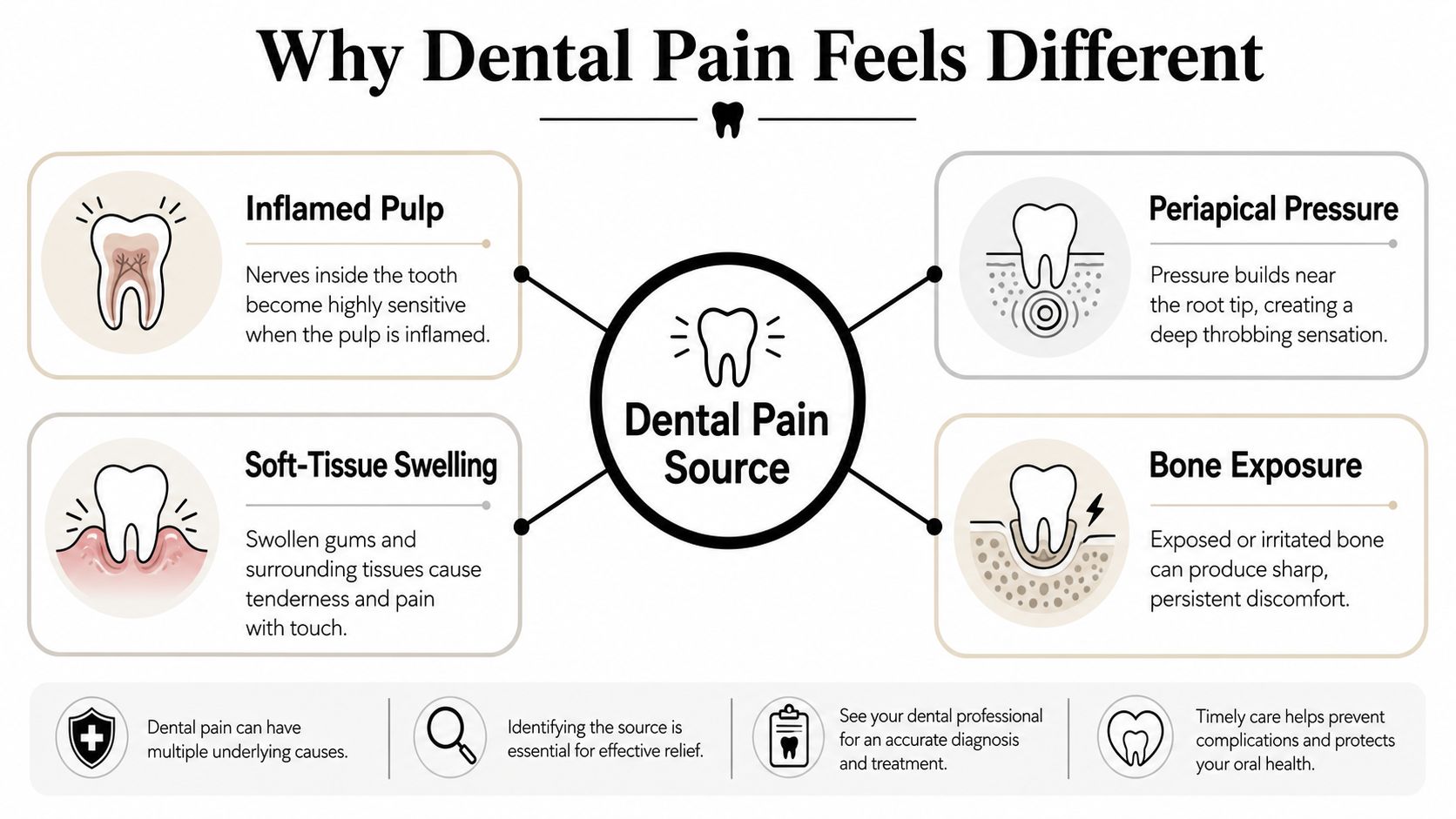
Dental pain is frustrating because it often feels sharper and more relentless than a sore back or a strained muscle. That's not in your head. Teeth sit in a cramped, rigid space, and when tissue inside or around them gets inflamed, pressure has nowhere easy to go.
The source of the pain changes the best drug choice
Inflamed pulp behaves differently from a simple sore jaw. So does pressure around the root, soft-tissue swelling around a partially erupted tooth, and the exposed bone pain that can follow an extraction. The common thread is inflammation, and that's exactly where NSAIDs have the clearest advantage, because they address the inflammatory side of the pain signal rather than only muting the sensation.
That's also why a drug that works reasonably well for a headache may feel underwhelming for a bad tooth. The tooth problem isn't just “pain,” it's a local process with pressure, swelling, and tissue irritation mixed together. The more inflammation is involved, the more likely an NSAID will help.
Different dental problems, different pain behavior
A cracked tooth with cold sensitivity often behaves like an irritated sensor. A partially erupted wisdom tooth can create gum pain, swelling, and trapped debris. A dry socket after extraction can produce an ugly, deep ache because the bone is exposed and irritated. Those are not identical problems, so they don't respond identically.
That's why “best pain reliever” is the wrong question by itself. The better question is, what kind of dental problem is this, and what level of analgesia is appropriate while I get it treated.
Bottom line: dental pain is usually a triage problem, not a pure symptom problem. The analgesic helps, but the tooth still needs a plan.
Ibuprofen, Acetaminophen, or the Combo: What the Evidence Shows
If you want the short answer, here it is. For most adults with dental pain, ibuprofen plus acetaminophen is the strongest OTC option in the evidence base, ibuprofen alone is the next sensible default, and acetaminophen alone is usually the weaker stand-alone choice for inflammatory dental pain.
What the pain scores actually show
The 2024 systematic review and meta-analysis found that ibuprofen may reduce pain intensity at 4 hours by only a trivial amount versus acetaminophen, with a mean difference of 0.27 points and a 95% CI of −0.13 to 0.68. That gap is small. The key advantage comes from pairing an NSAID with acetaminophen, because the two drugs work through different pathways and usually give better relief than either one by itself.
The ADA guidance puts typical adult dosing at 200 to 400 mg of ibuprofen every 4 to 6 hours for mild pain, with 400 to 600 mg for more significant pain. It also caps acetaminophen at 3 to 4 g/day in healthy adults and ibuprofen at 3.2 g/day. Those ceilings matter because people often stack products and accidentally overshoot acetaminophen.
For general context on ibuprofen, this guide covers the basics: ibuprofen use.
First-line dental analgesics at a glance
Analgesic | Typical adult dose | Daily ceiling | Best-fit scenario | Key caution |
|---|---|---|---|---|
Ibuprofen | 200 to 400 mg every 4 to 6 hours for mild pain, 400 to 600 mg for stronger pain | 3.2 g/day | Inflammatory tooth pain, swelling, post-extraction discomfort | Avoid or ask first if you have ulcer history, kidney disease, anticoagulant use, or similar risks |
Acetaminophen | Use as directed within standard adult limits | 3 to 4 g/day in healthy adults | When NSAIDs are not a good fit, or as part of the combo | Watch for duplicate acetaminophen in cold, flu, and combination products |
Ibuprofen plus acetaminophen | Commonly paired within adult label limits | Stay under both ceilings | Moderate to severe dental pain when both are safe | Do not stack extra acetaminophen from other medicines |
My recommendation
For a healthy adult with uncomplicated dental pain, I would start with ibuprofen, then move to the ibuprofen plus acetaminophen combination if the pain is moderate or the first dose is not enough. I would not reach for opioids first, because the ADA guidance steers routine dental pain care toward nonopioid medications instead.
The practical point is simple. Match the drug to the problem, then keep an eye on safety. If you have liver disease, kidney disease, ulcers, anticoagulants, or pregnancy-related concerns, that changes the plan and you should ask a clinician instead of guessing.
Topical Benzocaine, Clove Oil, and Prescription Options
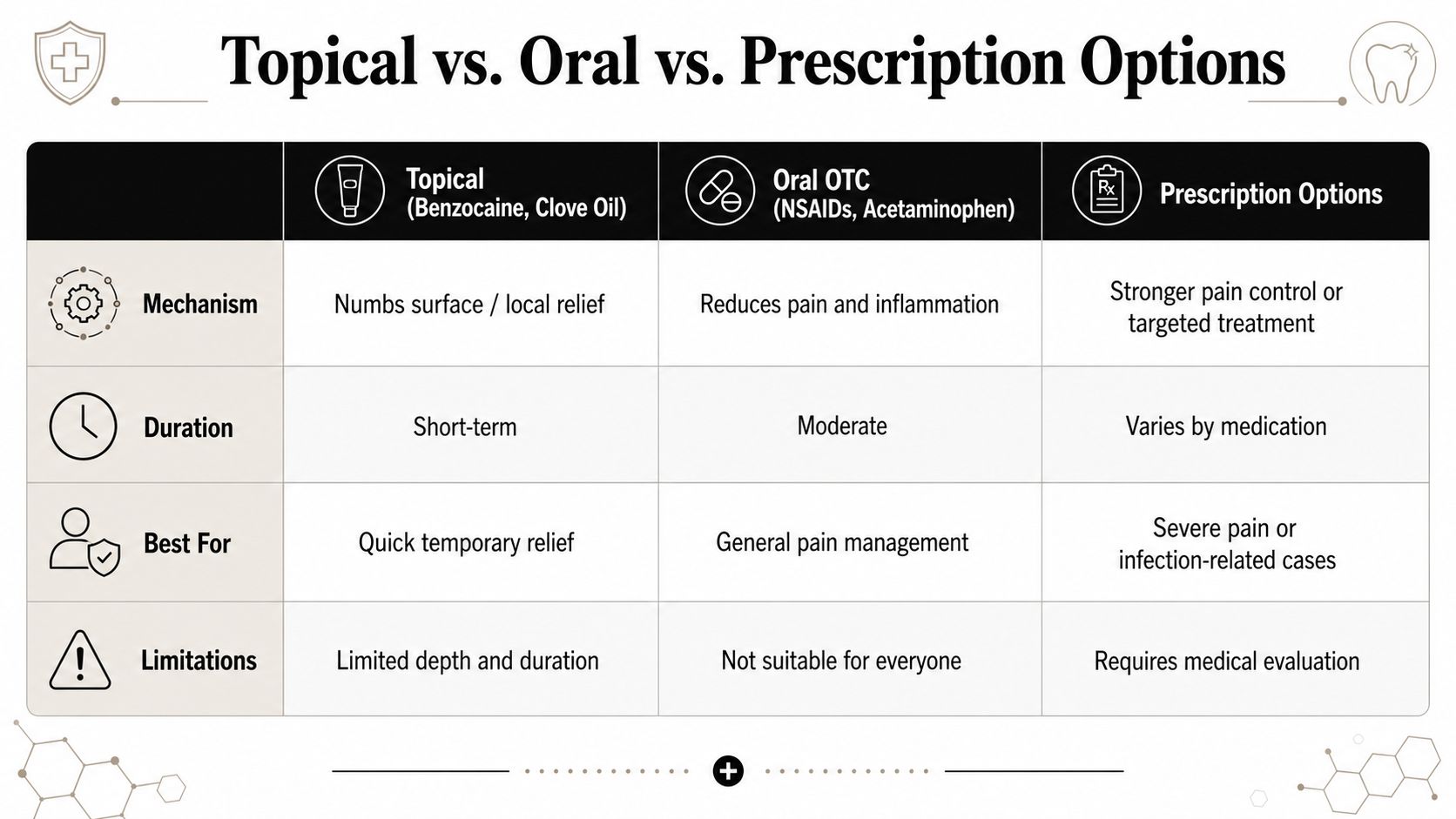
A lot of people want relief that feels local and immediate, not a pill that has to work through the whole body. That makes sense. The catch is simple. Topical products mostly numb the surface, while the core issue may sit deeper in the tooth.
Where topicals help, and where they don't
Benzocaine gels can help with short-lived surface numbing, especially gum irritation or a sore spot near the tooth edge. They do not reach a true throbbing tooth very well. Use them for temporary comfort, not as a substitute for dental treatment.
Clove oil has a real analgesic reputation because of eugenol, and some people do get mild relief from it. I'd treat it as a small add-on, not a replacement for an NSAID or a dentist. The same goes for other “natural” products. They may soothe, but they usually do not match inflammatory dental pain well.
If you want a broader look at surface-based relief, this guide on topical pain reliever cream explains the basic logic behind local numbing products.
The prescription ladder is not a trophy case
When NSAIDs are not a fit, dentists may choose prescription options that better match the patient's medical profile. In select situations, a dentist might consider a COX-2 selective option or another prescription strategy, especially when traditional NSAIDs are a poor fit. The exact choice depends on the procedure, the medical history, and the cause of the pain.
Opioids are not the default answer for routine dental pain. The ADA guidance points in a clear direction, nonopioid medications come first. That isn't a soft preference. It's the evidence-based route.
Clinical reality: if a patient needs stronger and stronger medication just to stay afloat, the tooth problem itself needs attention, not another round of pill escalation.
What to Take for Your Specific Situation
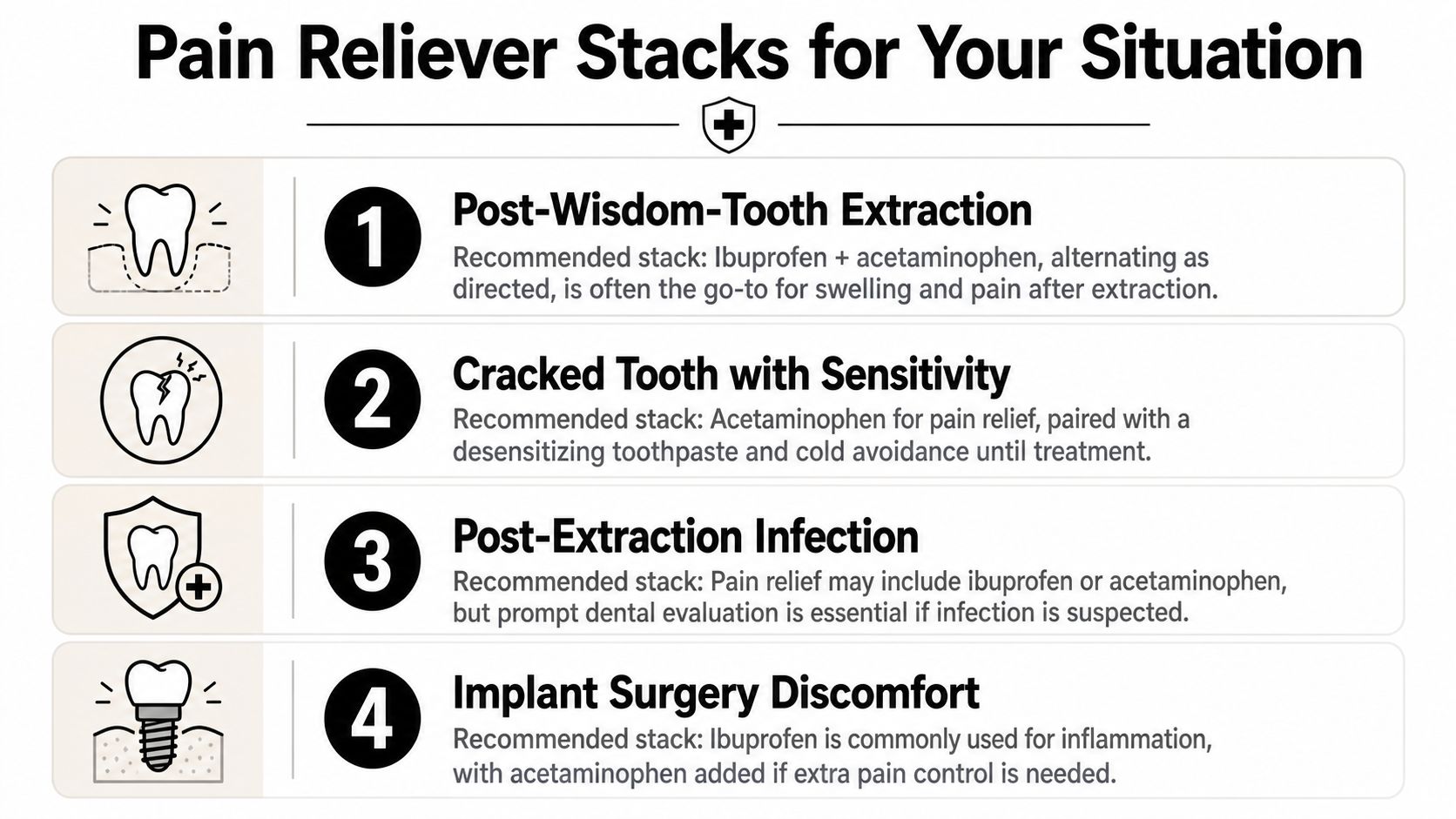
The right stack depends on the problem. If you copy someone else's plan blindly, you may under-treat the pain or choose the wrong drug for the wrong kind of tissue problem.
Post-wisdom-tooth extraction day 1 to 3
Swelling and surgical soreness are common here, so I'd favor ibuprofen plus acetaminophen if both are safe for you. That combination fits the kind of inflammation-heavy pain people feel after extraction better than acetaminophen alone. Keep the dosing inside the adult ceilings already listed, and don't add random extra acetaminophen from other products.
Cracked tooth with cold sensitivity before you can see a dentist
This is often a mechanical problem with nerve irritation, not just swelling. Start with ibuprofen, then add acetaminophen if needed and safe. Avoid chewing on that side, and don't keep testing the tooth with cold drinks just to see if it still hurts.
Gum pain around a partially erupted tooth or pericoronitis
This tends to be a soft-tissue inflammation problem, so ibuprofen is usually the best first drug. Add acetaminophen if the pain stays high. Rinsing gently and keeping the area clean matters here because trapped debris can keep the irritation going.
Post-root-canal tenderness
Mild tenderness after endodontic work is often managed well with ibuprofen, with acetaminophen as the add-on if needed. If pain is getting worse instead of settling down, that's no longer routine soreness. It needs dental follow-up.
Non-Drug Measures and Adjuvants That Actually Move the Needle
People dismiss home measures because they sound too simple. That's a mistake. The right non-drug steps can make the difference between a night of misery and a night you can get through.
The basics that help more than people expect
A cold compress on the outside of the cheek can reduce swelling and blunt pain for a while. Keeping your head raised at night can also help when throbbing worsens lying down. Soft foods reduce chewing stress, and avoiding extreme hot or cold temperatures keeps irritated teeth from flaring.
Saltwater rinses are gentle and useful for some gum irritation, especially when food debris is part of the problem. They won't fix a bad tooth, but they can lower the background irritation enough to keep you within safe OTC limits.
Don't confuse adjuvants with replacements
I wouldn't oversell supplements or background inflammation strategies as a quick fix for acute dental pain. They may help your overall comfort, but they won't compete with a properly chosen analgesic when a tooth is actively inflamed. If you're already using an OTC plan, the point of adjuvants is to reduce the pain enough that you don't have to escalate.
For a broader natural-comfort overview, this piece on natural pain relief is a decent companion read.
Simple rule: if a non-drug measure helps you sleep and keeps you from redosing too early, it's doing real work.
Red Flags That Mean Stop Self-Treating and Call a Dentist
A painkiller can be useful and still be the wrong answer if the infection or swelling is spreading. I get blunt. Some symptoms mean you need a dentist, urgent care, or the ER, not another tablet.
These signs change the plan
Facial swelling crossing the jawline can mean the infection is spreading beyond a simple toothache.
Fever over 101°F points toward a systemic response, not just local soreness.
Difficulty swallowing or breathing is an emergency, not a watch-and-wait situation.
Inability to open the mouth well, or trismus, can signal significant inflammation or spread.
Pus or a foul taste in the mouth often points to drainage from infection.
Severe, throbbing pain not relieved by medication means the current plan isn't enough and the underlying cause needs care.
What to do next
If you have any breathing trouble, worsening swelling, or swallowing difficulty, go to the ER now. If the problem is severe but not airway-related, get same-day dental care or urgent evaluation. If bleeding won't stop after an extraction, that also needs prompt attention.
Antibiotics are not routine for ordinary tooth pain, and they're not a substitute for drainage, repair, or extraction when those are needed. The clinical rule is simple, use medication for comfort, but don't let medication delay treatment.
Your One-Page Dental Pain Decision Framework
Start with the symptom, then pick the medicine. A steady, typical toothache in a healthy adult usually starts with ibuprofen, because it targets the inflammatory piece of dental pain. If the pain is still breaking through and you can safely take both, ibuprofen plus acetaminophen is the stronger OTC combination, as noted earlier in the article.
Use a different approach when the problem is not a simple ache. Pain tied to swelling, a recent extraction, or irritated gums usually responds better to an NSAID than to acetaminophen alone. If you have liver disease, kidney disease, ulcers, take anticoagulants, or have pregnancy-related concerns, do not guess at the usual OTC plan. Get clinician advice first.
Here is the part people skip. A pill can buy time, but it should not become the whole plan when the tooth is escalating.
Quick decision check
Typical throbbing toothache, no red flags: start with ibuprofen if you can take it.
Pain still strong after that, and you can safely use both meds: use ibuprofen plus acetaminophen within adult dosing limits.
Swelling, drainage, or pain after extraction: focus on anti-inflammatory relief and arrange dental care.
Liver disease, kidney disease, ulcers, anticoagulant use, or pregnancy concerns: ask a clinician before taking the usual OTC choice.
Facial swelling, fever, trouble swallowing, trouble breathing, or worsening pain: get urgent dental or medical care.
For a printable one-page version, keep this rule in mind: choose the safest nonopioid you can take, match it to the problem pattern, and stop self-treating when the tooth stops acting like a routine ache. For most adults, the best pain reliever for dental pain is not the strongest drug. It is the right nonopioid drug, at the right dose, with a clear cutoff for getting dental treatment.
If you are trying to hold a painful tooth together through the night, use the safest first-line OTC option you can tolerate, then make the dental appointment instead of trying to tough it out.