

Turmeric Curcumin Spice: Benefits, Bioavailability, and Use

You might be standing in your kitchen right now, staring at a jar of turmeric and wondering whether it's worth adding to tonight's soup, or whether that capsule bottle on the counter is the smarter move. That confusion is normal. Turmeric curcumin spice lives in two very different worlds, one is the pantry, the other is the supplement aisle, and the label doesn't always make the difference obvious.
Turmeric has been used for centuries as a spice and a household remedy, but modern science focuses on curcumin, its best-known bioactive compound. That matters because the way turmeric behaves in a curry is not the same as the way a standardized curcumin extract behaves in a capsule. The whole plant story is simple enough for cooking, but the supplement story gets technical fast.
Table of Contents
Why Turmeric Deserves a Spot in Your Kitchen and Your Routine
A spoonful of turmeric in a pot of rice, a mug of golden milk before bed, a bottle of capsules beside the coffee maker, those are the everyday places people meet turmeric curcumin spice. The kitchen version feels familiar and flexible. The supplement version feels more precise, and that difference shapes what each one can realistically do.
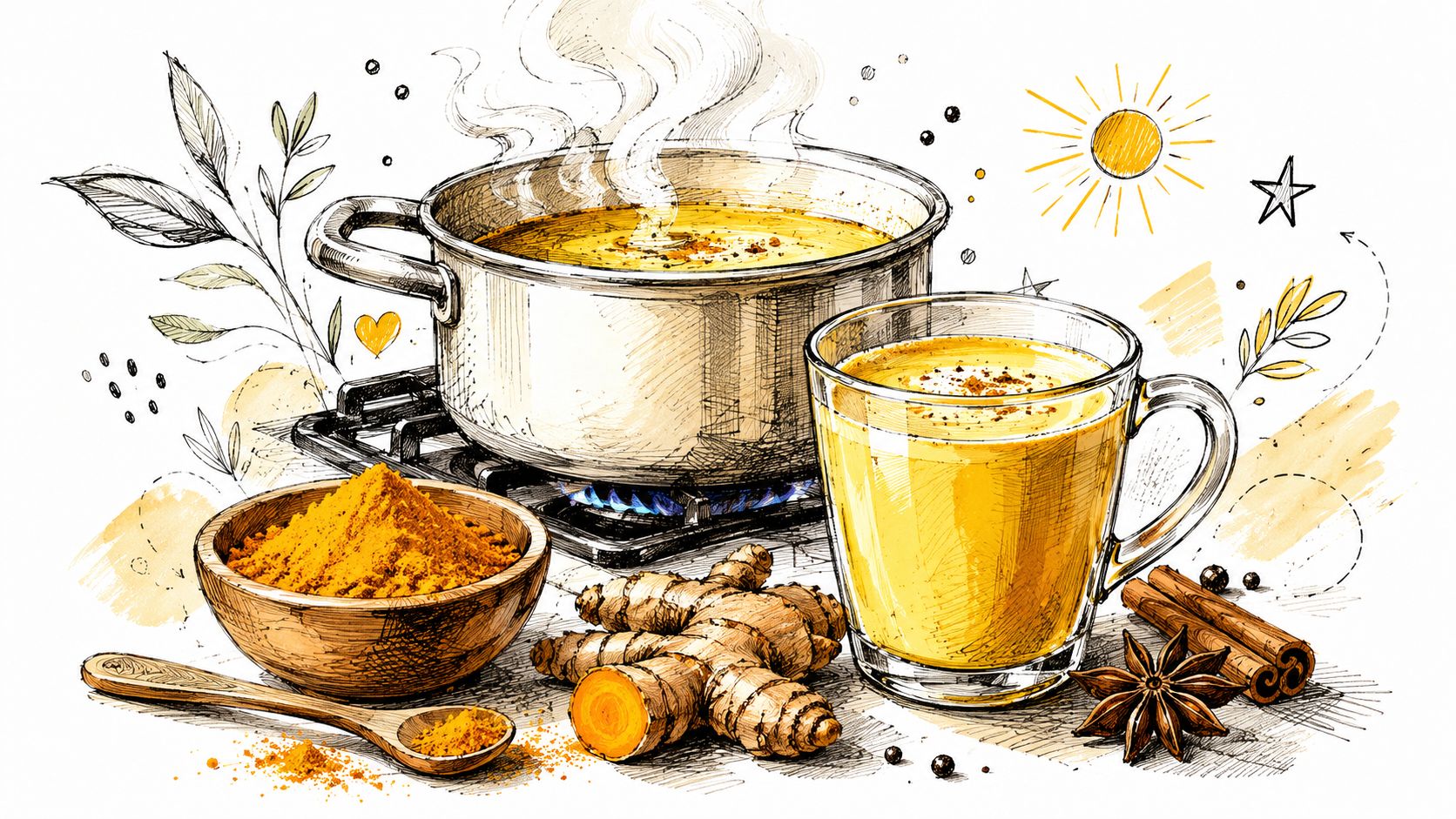
Turmeric itself is the dried ground rhizome of Curcuma longa L. In food, that usually means a whole-root powder, which brings color, flavor, and a smaller, less concentrated dose of curcuminoids than an extract. In supplements, the same plant can be refined into a standardized ingredient built to deliver a much more concentrated curcumin payload.
Practical rule: If you're cooking with turmeric, think flavor and routine. If you're shopping for a capsule, think concentration and label accuracy.
That split is why people get mixed results when they compare a dinner habit with a supplement habit. A curry with turmeric is still valuable as part of an overall eating pattern, but it's not the same tool as a standardized extract designed for daily intake. Once you know which form you're holding, the rest of the science gets much easier to read.
Understanding What Turmeric and Curcumin Actually Are
The easiest way to keep the terms straight is to compare turmeric to an orange and curcumin to one of the important compounds inside it. Turmeric is the whole source, curcumin is the best-known active compound, and curcuminoids are the broader family that includes curcumin plus related compounds. Linus Pauling Institute notes that curcumin typically accounts for about 75% of total curcuminoids in turmeric, with demethoxycurcumin and bisdemethoxycurcumin making up much of the rest, as described in the FDA's turmeric-derived curcumin GRAS notice (FDA GRAS notice.pdf)).
Why the label matters
A jar labeled turmeric powder usually means a culinary ingredient you'd sprinkle, stir, or simmer. A supplement labeled curcumin extract usually means the manufacturer concentrated the curcuminoids, often to improve consistency from batch to batch. That difference affects color, potency, and price, because you're not paying for the same thing.
The label terms can be confusing, but they're not random. “Turmeric root powder” usually points to the whole spice. “Standardized extract” signals a measured curcuminoid content. “Full-spectrum turmeric” suggests the product tries to retain more of the plant's natural mixture rather than isolating only one compound.
What to look for on a panel
If you want to decode a product quickly, check these details first.
Source form: Root powder, extract, or blended formula.
Curcuminoid standardization: A sign the product is not just kitchen spice in a capsule.
Added black pepper extract: Often included because curcumin is hard to absorb on its own.
Third-party testing: A useful trust signal when quality matters.
Serving context: One capsule can be very different from another, even if both say “turmeric” on the front.
A product can be “turmeric” in name and still deliver very different amounts of active compound depending on whether it's raw powder or a concentrated extract.
The Health Benefits the Evidence Actually Supports
The strongest human interest in turmeric curcumin spice comes from joint comfort, but that doesn't mean every claim is equally solid. The evidence is promising in some places and still thin in others. A balanced reading matters, because turmeric has picked up a reputation for helping with almost everything, and the data don't support that kind of blanket claim.
What looks most useful
For adults dealing with everyday stiffness or discomfort, curcumin is most often discussed as a supportive, condition-specific option, not a cure-all. The U.S. National Cancer Institute says early-phase curcumin trials are promising but still not enough to recommend curcumin products for cancer treatment, which is a good reminder that “interesting in research” and “ready for broad medical claims” are not the same thing (NCI curcumin PDQ).
That same cautious standard applies outside oncology too. Turmeric and curcumin are commonly explored for inflammation-related concerns, but the evidence is not universal across all uses. Some people report meaningful day-to-day comfort, while others notice little change, especially if the product is under-dosed or poorly absorbed.
What to keep in perspective
The big mistake is treating every turmeric claim as equally proven. Mood support, skin benefits, and longevity talk can sound compelling, but those areas are still much less settled than the joint-comfort conversation. The honest position is simple, turmeric curcumin spice may fit best for people who want a gentler, food-adjacent routine or a targeted supplement strategy, not for anyone expecting broad medical results from a spice alone.
If you're already using it for mobility support, the more realistic goal is often modest improvement in comfort, stiffness, or recovery, not dramatic change. That framing keeps expectations aligned with what the evidence can bear, and it helps you notice whether a product is doing enough to justify keeping it in your routine. For a deeper look at that use case, see this arthritis-focused turmeric guide.
Why Bioavailability Changes Everything
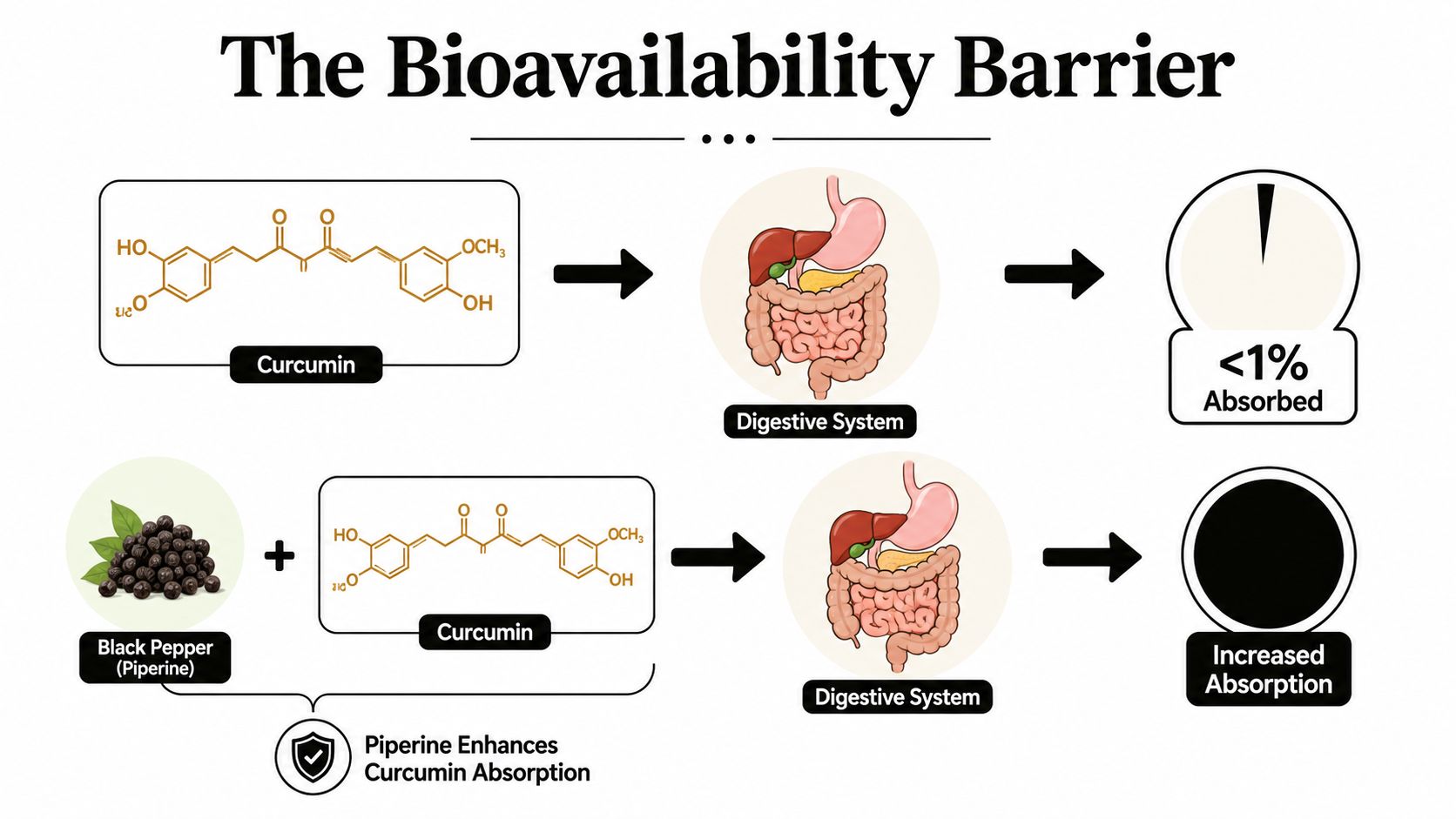
Curcumin's biggest challenge is that it doesn't move through the body very well after you swallow it. That's the whole reason so many supplement labels now mention black pepper, piperine, or “enhanced absorption.” The ingredient may be familiar, but the delivery problem is not.
The absorption barrier
Think of curcumin as a guest who arrives at the party but can't get past the bouncer. It can be in the capsule, but still fail to reach circulation in useful amounts. The National Cancer Institute reports oral curcumin peak serum concentrations ranging from 47 ng/mL at 200 mg/day to 1,380 ng/mL at 8,000 mg/day, which shows how hard it is to raise systemic exposure with standard oral formulations (NCI curcumin PDQ).
That poor oral bioavailability is why formulators started combining curcumin with piperine, the compound from black pepper. A review notes that curcumin's benefits are best achieved when it's combined with agents such as piperine, which increase bioavailability significantly (PMC review on curcumin and piperine). In practical product design, that means black pepper isn't just a flavor add-on. It's part of the absorption strategy.
What the pairing changes
A human study described in a recent review used 500 mg/day turmeric plus 5 mg/day piperine for 120 days and found significant reductions in fasting plasma glucose, HbA1c, HOMA-IR, and triglycerides (PMC review on turmeric plus piperine). That doesn't turn turmeric into a universal metabolic fix, but it does show why formulation matters.
The takeaway is straightforward. If a supplement claims to support joints, inflammation, or recovery, the formula has to do more than list turmeric on the front. It needs a delivery system that helps enough curcumin survive digestion to matter.
Plain-English version: Standardized extract plus black pepper is a pharmacokinetic strategy, not just a marketing flourish.
For a supplement example built around that logic, see curcumin with black pepper.
Practical Ways to Use Turmeric Every Day
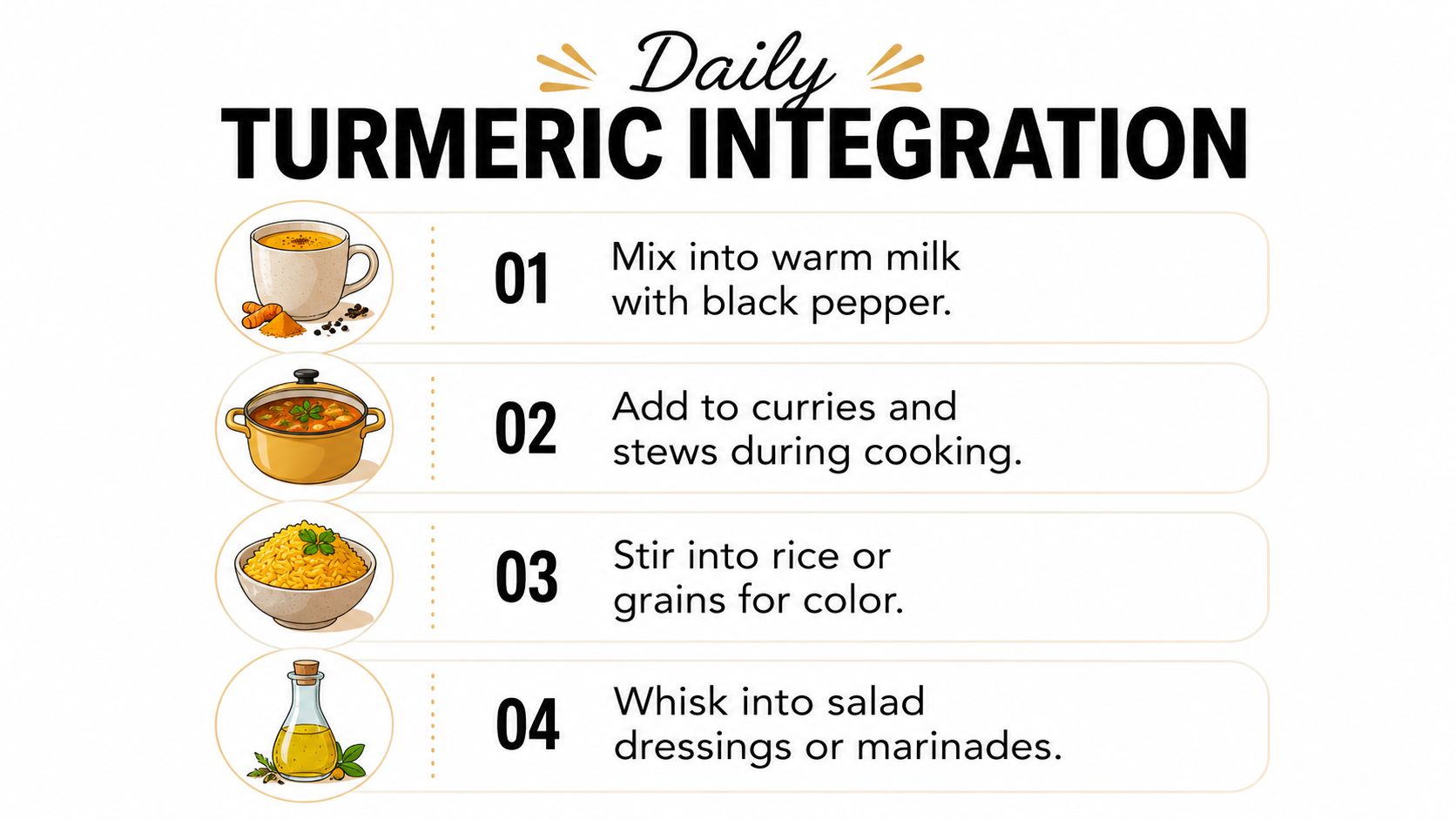
The easiest way to use turmeric is still a common method: cook with it. Stir it into soups, simmer it with rice, or whisk it into warm milk with a bit of fat and black pepper. That approach won't mimic a high-dose supplement, but it does fit naturally into real meals.
Kitchen habits that make sense
Turmeric tends to play well in savory dishes because its earthy flavor blends into other spices instead of dominating them. Curries, stews, roasted vegetables, and marinades are the obvious places, but it also works in grain bowls and salad dressings when you want color without a sharp taste. A little fat in the meal helps it behave better as a food ingredient, and a pinch of black pepper keeps the flavor profile familiar to people who already cook with spice blends.
Here's a simple routine that doesn't require a recipe overhaul.
Golden milk: Stir turmeric into warm milk or a milk alternative with black pepper.
Cooked dishes: Add it while simmering curries, soups, or lentils.
Grains: Mix a small amount into rice or quinoa for color.
Dressings and marinades: Whisk it into oil-based mixes so it disperses evenly.
When a capsule makes more sense
If your goal is daily, measurable intake, a capsule may be easier to keep consistent than a kitchen habit. That's especially true for adults who want a routine they can repeat without changing every meal. A multi-ingredient option such as River of Life Capsules combines standardized turmeric extract with BioPerine, along with ashwagandha, ginger, and bromelain, so the turmeric piece is part of a broader daily formula rather than a standalone spice habit.
A short video can also help if you're learning the timing and texture of a kitchen-based approach.
For more on a capsule-style turmeric routine, see ginger turmeric capsules.
How to Choose a Turmeric Supplement Worth Trusting
Turmeric sounds simple until you try to buy it. The quality issue is real, because a scoping review estimated adulteration in 20.0% of turmeric products overall, including 20.4% of turmeric sold as spice and 22.0% of turmeric sold as dietary or food supplements (scoping review on turmeric adulteration). That means “real turmeric” is not a safe assumption just because the label says turmeric.
What a trustworthy label usually shows
A good product tells you what kind of turmeric you're buying, not just that turmeric appears somewhere in the formula. Standardized extract is different from root powder, and a piperine pairing is different from a plain capsule. If a brand hides those basics, it's harder to know whether the product is designed for meaningful absorption or just for shelf appeal.
Use this as a quick shopping filter.
Standardized ingredient disclosure: Look for curcuminoid content or extract type.
Transparent sourcing: Brands should identify where the turmeric comes from.
Third-party testing: Important for a spice ingredient with adulteration risk.
Piperine pairing: Useful if the product is meant for absorption support.
Clear dosing: You should know what one serving provides.
How to compare product types
Whole turmeric root powder is the most kitchen-friendly option and usually the least concentrated. Standardized curcumin extract is the most direct route when you want a supplement with a clear active-compound target. Full-spectrum blends sit in between, often appealing to people who want more of the plant matrix while still improving delivery.
If a turmeric product doesn't tell you what form you're buying, you're guessing at potency.
That's why product trust should come before trendiness. A cleaner label, a clear extract profile, and an absorption strategy tell you much more than a front-panel wellness claim.
Safety, Dosing, and Who Should Be Cautious
Turmeric has a strong safety story in culinary use, but supplements deserve more caution. A major review notes that curcumin has been found safe in animals and humans at doses up to 8 g/day, and it was declared GRAS by the U.S. FDA. The same body of evidence also reports FDA, JECFA, and EFSA safety evaluations, plus an acceptable daily intake of 0 to 3 mg/kg body weight for curcumin (turmeric curcumin safety review).
Culinary use and supplement use are not the same
NCCIH says conventional turmeric is likely safe for 2 to 3 months at recommended amounts, while increased-bioavailability products are a different category with less certainty about long-term safety (NCCIH turmeric overview). That distinction matters because a capsule with piperine can behave very differently from the spice you stir into dinner.
The same NCCIH source also notes that enhanced-bioavailability products have been linked to reported liver damage in some people. That doesn't mean everyone will have a problem. It does mean the strongest absorption formula isn't automatically the safest choice for indefinite use.
Who should pause and ask a clinician
People taking blood thinners should be careful because curcumin can complicate bleeding risk discussions. Anyone with gallbladder issues should also get medical input before using concentrated turmeric products. The same caution applies if you're planning long-term daily use, especially at higher doses or with black pepper extracts that increase absorption.
If your goal is simple cooking, turmeric stays in the food category. If your goal is chronic symptom support, the dosing and duration conversation belongs with a clinician, especially if you're already managing other medications or liver-related concerns.
Your Turmeric Curcumin Spice Decision Framework
The simplest way to decide is to match the form to the goal. If you want flavor, color, and a gentle daily habit, use turmeric in food. If you want a supplement with more predictable curcumin exposure, choose a standardized extract with a piperine source. If you want turmeric inside a broader daily formula, a multi-ingredient option may fit better than a single-ingredient capsule.
Three practical paths
Home cook path: Use turmeric as a spice in curries, rice, soups, and warm drinks.
Targeted supplement path: Choose standardized curcumin with black pepper when absorption matters.
Multi-ingredient path: Consider a formula that combines turmeric extract with other botanicals if you want a broader routine, not just turmeric alone.
Each path serves a different person. The cook wants ease. The active adult wants recovery support. The person managing ongoing joint discomfort wants consistency and a product they can trust. The right choice is the one that matches the job you need it to do.
Turmeric is useful, but it's not magically the same in every form. Read the label, check the source, and decide whether you want a spice, an extract, or a formula designed around absorption and quality control.
A CTA for River of Life.