

Best Pain Reliever for a Toothache: 2026 Guide

The kind of toothache that sends people searching for the best pain reliever for a toothache usually doesn't arrive politely. It shows up as a dull pulse that turns into a hammering throb, or as a sharp stab that makes chewing, talking, and even breathing through your mouth feel like work. When that happens, you don't need theory first, you need a safe way to get through tonight and a plan that points to a lasting solution.
The right medicine depends on what kind of pain you're dealing with. If the tooth is angry because the tissue around it is inflamed, an NSAID like ibuprofen or naproxen usually makes the most sense because it targets inflammation, not just the pain signal. If NSAIDs aren't a good fit, acetaminophen can still calm the pain pathway. And if one medicine isn't enough, the evidence-backed option is often to combine ibuprofen with acetaminophen within the guideline dose ranges, not to jump to stronger drugs on your own American Dental Association oral analgesics guidance.
Table of Contents
The Unmistakable Agony of a Toothache
A toothache has a way of taking over the whole room. You try to drink water, and the nerve fires. You try to lie down, and the pain gets louder. You try to ignore it during work or dinner, and it keeps tapping your attention until you can't think about anything else.
That's because tooth pain usually isn't random. It's a signal that the tooth, the gums, or the tissue around the root is irritated, often by decay, inflammation, a crack, or infection. Pain relief can quiet the signal for a while, but it doesn't remove the source, which is why the relief can feel temporary and unreliable.
Practical rule: use the next 24 to 48 hours to reduce pain safely, but treat that window as a bridge to dental care, not a cure.
This is also why the question isn't just, “What stops tooth pain fastest?” The better question is, “What helps this kind of tooth pain?” A swollen, throbbing tooth often behaves differently from a sensitive tooth that aches without much swelling. The first responds better to anti-inflammatory medicine, while the second may be calmer with pain relief that doesn't rely on inflammation control.
The good news is that there are sensible first steps. Ibuprofen, naproxen, acetaminophen, topical numbing gels, and simple supportive home care can all help you get through the acute phase. The key is matching the tool to the problem, using it within safe limits, and recognizing when the pain has crossed the line from annoying to urgent.
Choosing Your Over-the-Counter Pain Reliever

A toothache with swelling usually points to inflammation, so NSAIDs often make the most sense first. They work by reducing the chemicals that drive swelling and soreness. Acetaminophen works differently, it lowers pain signaling in the brain, so it can help when the pain is there but inflammation is not the main problem.
That difference matters in a real toothache. A tooth that throbs, feels hot, or seems pressurized often responds better to an anti-inflammatory medicine. A tooth that aches without much swelling may still improve with acetaminophen, especially if an NSAID is not a good fit for you.
Why ibuprofen usually gets the first look
For many toothaches, ibuprofen is the strongest over-the-counter starting point because it targets inflammation directly. The American Dental Association guidance on acute dental pain recommends nonopioid analgesics, especially ibuprofen or naproxen, for temporary toothache relief and after extraction, with dose ranges that include ibuprofen 200 to 400 mg every 4 to 6 hours for mild pain and 400 to 600 mg every 6 hours for mild-to-moderate pain ADA guidance. A separate review also lists naproxen 500 mg, or 550 mg sodium, every 12 hours as a moderate-pain option PMC review. For a closer look at how ibuprofen is used in everyday pain care, see this ibuprofen guide.
That anti-inflammatory effect is why ibuprofen often helps most when the tooth feels swollen, hot, or pulsing. The pain is coming from irritated nerve tissue, but it is also coming from inflamed tissue that adds pressure around the area. If inflammation is part of the problem, an NSAID usually has a better target.
If your pain comes with visible swelling or a pressure feeling, an NSAID is often the smarter first choice.
Where acetaminophen fits
Acetaminophen still has a place, especially when NSAIDs are not appropriate. The ADA guidance includes acetaminophen 325 to 650 mg every 6 hours for mild pain, and the review notes a maximum daily dose of 3 to 4 g in healthy adults ADA guidance, PMC review. It does not work as an anti-inflammatory drug, but it can still quiet the pain you feel.
That makes acetaminophen the better fallback when NSAIDs are not a safe option. Some people do better with it when an NSAID upsets the stomach or does not fit their health history. The trade-off is straightforward, it is less focused on swelling, so it can feel weaker when inflammation is driving the pain.
The combination that often works best
A 2024 evidence review found that acetaminophen plus ibuprofen probably reduces pain intensity more than either drug alone ADA guidance. That is why combination therapy often becomes the standard for stronger temporary relief when one medicine alone is not enough.
The ADA's dose example for more significant pain is ibuprofen 400 to 600 mg plus acetaminophen 500 mg every 6 hours ADA guidance. The logic is simple. One drug lowers inflammation, the other helps quiet the pain pathway. You are using two different mechanisms together instead of trying to force one medicine to do everything.
Option | Best use | Typical guideline range | Safety note |
|---|---|---|---|
Ibuprofen | Swelling, throbbing, inflammatory pain | 200 to 400 mg every 4 to 6 hours, or 400 to 600 mg every 6 hours | Stay within the 3.2 g/day ceiling for healthy adults ADA guidance, PMC review |
Naproxen | Longer-acting NSAID option | 500 mg, or 550 mg sodium, every 12 hours | Use only if it fits your health profile PMC review |
Acetaminophen | Pain relief when NSAIDs are not suitable | 325 to 650 mg every 6 hours | Keep total daily intake within 3 to 4 g in healthy adults ADA guidance, PMC review |
Ibuprofen plus acetaminophen | Stronger temporary relief | 400 to 600 mg ibuprofen plus 500 mg acetaminophen every 6 hours | A common evidence-backed combination for severe temporary pain ADA guidance |
A practical way to choose is simple. Use ibuprofen when inflammation is obvious, use acetaminophen when NSAIDs are not a good fit, and use the combination when one drug alone is not enough. The limit matters because more medicine is not automatically better. With both ibuprofen and acetaminophen, the goal is to stay inside the evidence-based range and avoid preventable side effects PMC review.
Topical Anesthetics for Immediate Numbing

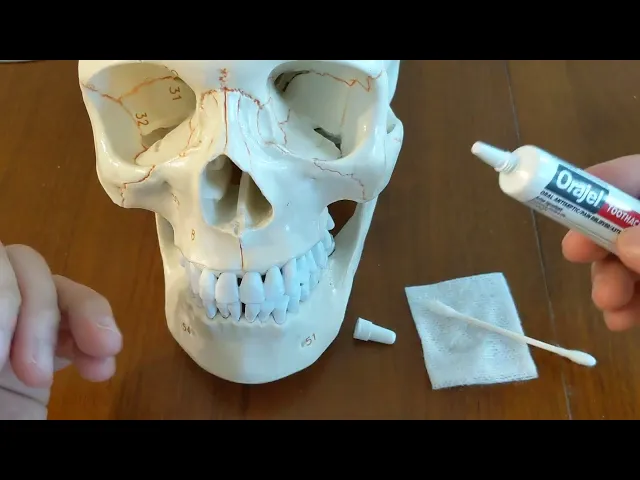
Topical numbing gels are the quickest way to take the edge off a very specific spot. They don't solve the tooth problem, but they can dull the surface sensation long enough for an oral medicine to start working or for you to eat, drink, or rest more comfortably.
Benzocaine gels are the common example. They work locally, so the effect is short-lived and limited to the area where they're applied. That makes them useful as a bridge, not a replacement for a pill or a dental visit.
Use them as a bridge, not a plan
A topical anesthetic makes the most sense when the pain is sitting close to the surface, such as an irritated gum line or a tooth that feels extra sensitive to touch. Apply only as directed on the product label, and keep expectations realistic. If the pain is deep, throbbing, or spreading, numbing gel may barely touch it.
The safety warning matters too. Benzocaine products should not be used in children under two because of the risk of methemoglobinemia, a rare but serious condition. That warning is especially important for parents who reach for anything that promises quick relief without reading the age instructions carefully.
Use case: topical anesthetics are for short-term, surface-level relief while you wait for oral medication or dental care.
What to pair it with
Topical numbing works best when it sits inside a broader comfort plan. A cold compress on the outside of the cheek can help reduce sensation, while an oral medicine handles the deeper pain. If you want a more detailed look at the category, this topical pain reliever cream resource gives a useful starting point for understanding where topical relief fits and where it falls short.
The key limitation is simple. A numbing gel can quiet the alarm, but it doesn't repair the wire that's triggering it. If you need repeated applications just to keep going, that's a sign the tooth needs professional attention, not more masking.
Supportive Home Remedies for Temporary Comfort

Home remedies belong in the temporary comfort category. They can make the pain easier to live with while you wait for medicine to kick in or for the dentist to open, but they won't fix decay, infection, or a cracked tooth.
Simple things that can actually help
A warm saltwater rinse is one of the most useful first moves because it can help clean the area and soothe irritated tissue. A cold compress applied to the cheek can numb the area a little and help with swelling. And clove oil, which contains eugenol, may dull surface pain in a way that feels similar to a light topical anesthetic. These are practical, low-cost support tools, not cures.
Soft, room-temperature foods can also matter more than people expect. Hot, icy, crunchy, or very sweet foods can keep re-triggering the nerve, which means your pain relief keeps getting interrupted. If chewing hurts, don't keep testing it.
A small comfort routine helps
The point of home care is to lower the background noise while you wait for real treatment to do its job. A simple routine can help you feel less trapped by the pain, especially in the evening when toothaches tend to feel louder. For a broader look at natural supportive options, see this natural pain relief guide.
A toothache often feels worse at night because lying flat increases pressure around the area, so propping your head up can help.
There's also one thing not to do. Don't place aspirin directly on the gum. It can burn the soft tissue instead of relieving the tooth. Swallowing a pain reliever as directed is very different from holding it against the sore spot.
If you want the cleanest takeaway, it's this. Use home remedies to stay comfortable, use medication to reduce pain, and use the dentist to solve the cause.
When You Must See a Dentist Immediately
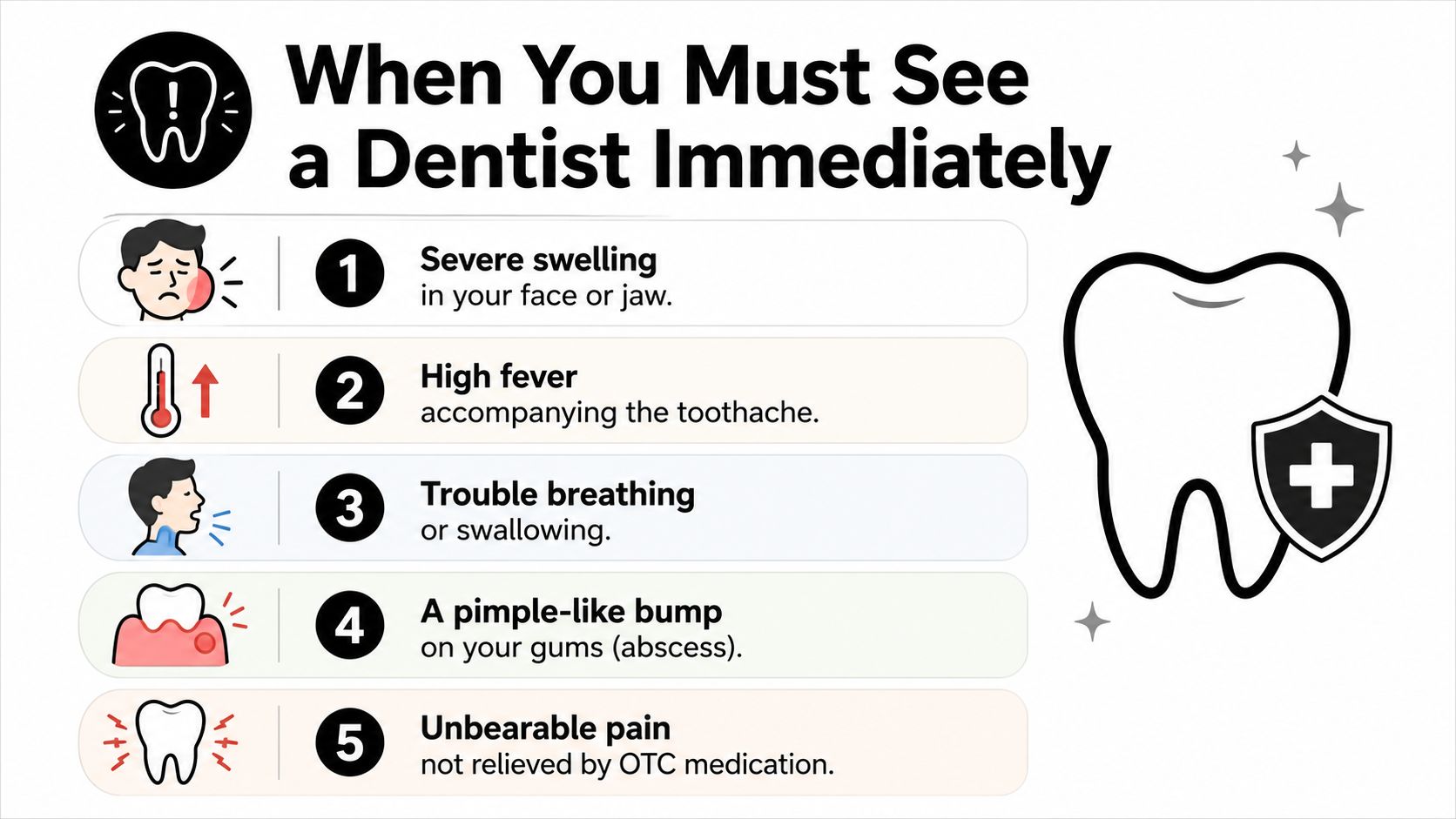
A toothache becomes urgent when it stops looking like a simple pain problem and starts looking like an infection or a spreading dental emergency. At that point, the question isn't which pill is best. The question is how fast you can get seen.
Red flags that need prompt care
Severe swelling in the face or jaw. Swelling means the problem may be moving beyond the tooth itself.
A fever with tooth pain. That combination raises concern for infection.
Trouble breathing or swallowing. This is an urgent medical situation, not something to watch at home.
A pimple-like bump on the gums. That can be a sign of an abscess.
Pain that doesn't respond to over-the-counter medicine. If standard relief isn't touching it, the problem likely needs professional treatment.
Pain that lasts more than two days is also a strong reason to book care quickly, especially if it's getting worse instead of better. A bad taste in the mouth can point to drainage from an abscess, which is another reason not to wait and hope it settles on its own.
Direct rule: swelling, fever, swallowing trouble, or worsening pain means it's time to stop self-treating and call a dentist.
The reason to move fast is simple. Dental infections can spread, and self-care doesn't remove the source. If the tooth is abscessed or the tissue around it is infected, delaying care can turn a manageable appointment into a more complicated one.
If you're unsure, err on the side of calling. A dentist can tell you whether you need an urgent visit, a same-day evaluation, or immediate medical help. If breathing or swallowing is affected, don't wait for a dental slot, seek urgent medical care right away.
Your Toothache Action Plan From Pain to Relief
Start with the pattern of the pain. If the toothache feels throbbing or the area is swollen, an NSAID is usually the first medicine to consider because it targets inflammation, which is often part of the problem. If NSAIDs are not safe for you, acetaminophen is the better fit, since it helps with pain relief without acting on inflammation the same way.
If one medicine does not take the edge off, the combination of ibuprofen plus acetaminophen is often the stronger short-term option, as long as you stay within the recommended ranges and read the label carefully. That combination can help when pain comes from both tissue irritation and nerve signaling, which is common with a bad toothache.
Then add support. A cold compress, a saltwater rinse, a topical numbing gel if appropriate, and soft foods can make the waiting period easier to manage. These are support tools, not the fix itself, and they work best when you use them alongside the right pain reliever rather than instead of it.
The next step is to make the appointment. Book a dentist visit even if the medicine helps, because relief does not mean the problem is gone. The tooth still needs a diagnosis, and getting seen sooner usually makes treatment simpler.
If the pain comes with swelling, fever, trouble swallowing, or a gum bump, stop waiting and get urgent care. Pain relievers are a bridge, not the destination. The goal is a dental exam that treats the source before the problem gets worse.
A CTA for River of Life.