


Arthritis Pain Reliever for Dogs Vet Guide to Relief

The first clue is usually small. Your dog pauses before the stairs, shifts weight off one back leg, or takes a few stiff steps after getting up from a nap, and by the time you notice it, the problem can already be part of daily life. Arthritis pain reliever for dogs isn't really one decision, it's a care plan, and the dogs I see do best when owners think in sequence, diagnosis first, then the right prescription, then adjuncts, movement, home setup, and follow-up.
Table of Contents
Why Arthritis Pain Hits So Many Dogs
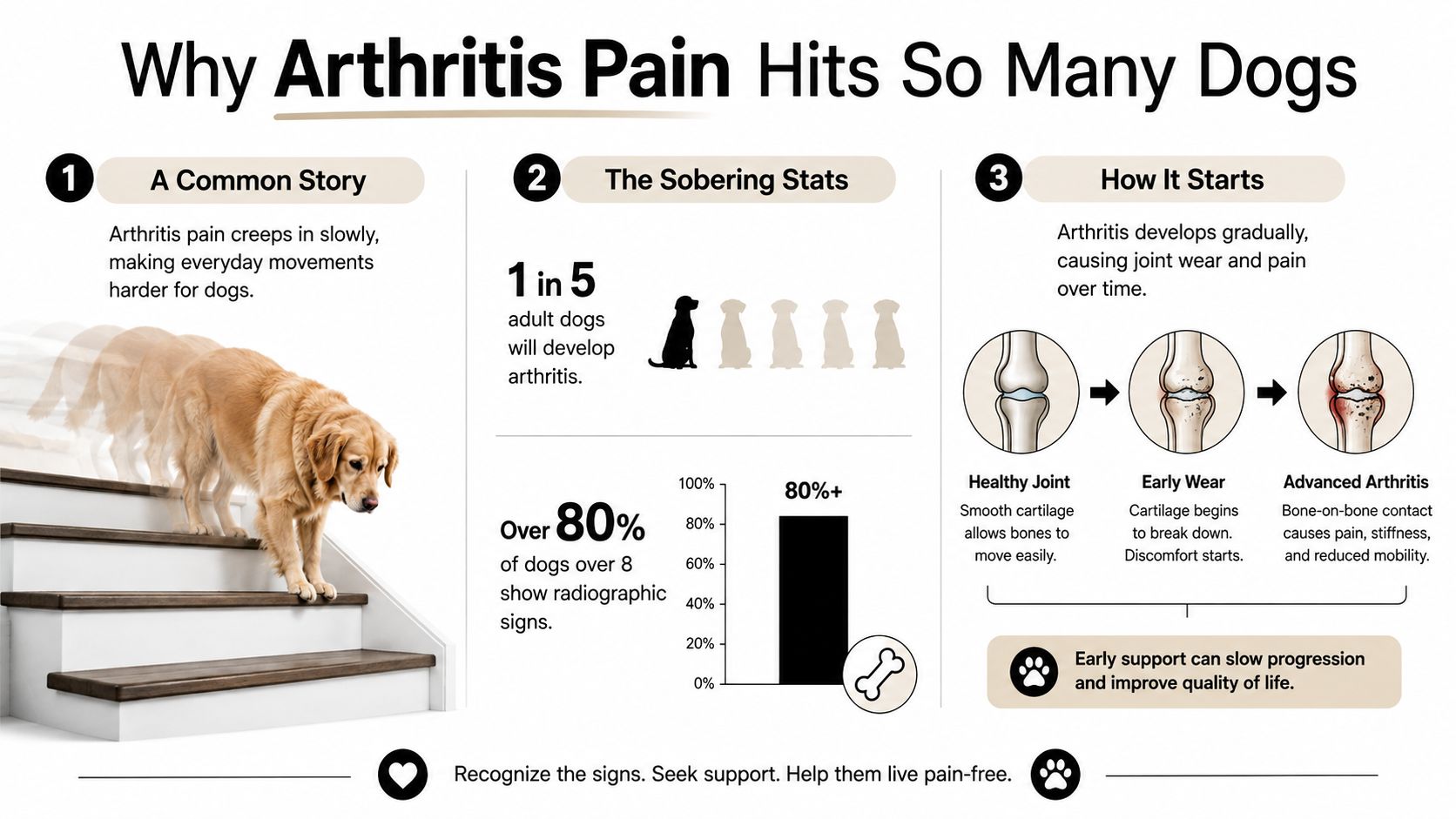
A dog that once bounded onto the couch may start pausing instead. Owners often read that as aging, slowing down, or plain stubbornness, but in clinic it usually looks like a dog adjusting to joint pain while trying not to show it. That is why arthritis is easy to miss early, and why families often notice it only after stiffness has become part of the morning routine.
The size of the problem changes how seriously you plan for it. About 20% of dogs, often summarized as 1 in 5 dogs, are estimated to develop osteoarthritis or joint disease in their lifetime, and the AAHA mobility resource notes some estimates place degenerative joint disease or osteoarthritis at 20% or higher in dogs AAHA mobility resource. In the United States alone, the Morris Animal Foundation estimates about 14 million adult dogs are affected with osteoarthritis. This is not rare, and it is not something owners caused by missing one walk or one treat.
What that means at home
Pain usually shows up in everyday choices, not dramatic injury. A dog may stop greeting you at the door, lie down sooner on walks, or choose the floor over the bed because getting up hurts less on a stable surface. Those changes are easy to normalize until they add up.
Practical rule: if your dog is changing how they move, rest, or climb, think joint pain before you assume it is just personality.
That is also why relief is rarely one pill and done. The better plan is layered. A veterinarian decides whether a prescription reliever is appropriate, and home changes make the medicine easier to work. The rest of the care plan follows that sequence, diagnosis first, then the right prescription, then adjuncts, movement, home setup, and follow-up so you can see whether each step is helping.
Spotting Early Signs and Getting a Proper Diagnosis

A lot of owners notice the first sign in motion, not in pain. The dog still eats, still wags, still follows the family around, but there's a short pause before jumping in the car or a slower rise after a nap. That's exactly why arthritis is so often undercalled at home.
Signs worth writing down before the visit
The most useful history is specific. Note whether your dog is stiff after rest, reluctant on stairs, slower to sit or stand, licking a joint, less playful, or more irritable when touched. A simple note like “trouble getting up after lunch, better after walking a little” helps more than “seems old.”
A vet visit usually starts with questions about when the problem began, how it changes through the day, and what activities make it worse. Then comes a gait check, palpation of the joints, and often imaging if the exam suggests arthritis or another joint problem. The goal is to separate soreness from instability, injury, or another condition that can look similar but needs a different plan.
Practical rule: don't guess at the cause, and don't borrow human pain medicine. A dog's safe option depends on the joint involved, other health issues, and what the exam shows.
What to bring to the appointment
A short symptom log: Write down which leg seems off, when stiffness appears, and whether the dog improves after moving.
A video clip: A few seconds of walking, standing up, or using stairs can show what a clinic exam might miss.
A medication list: Include supplements, flea products, and anything already being given, even if it seems harmless.
Questions about next steps: Ask how the diagnosis was made, whether pain scoring will be used at recheck, and what changes should trigger a call.
That last part matters because reliever choice is only as good as the diagnosis behind it. If the pain is coming from osteoarthritis, the plan is usually different from a soft tissue injury, and if another disease is present, the vet may change the order of treatment or avoid some drugs entirely.
Veterinary Prescription Relievers and Safe Medication Choices
A dog limping after a walk, stiff at bedtime, or slow to rise in the morning often needs a prescription plan, not guesswork. For canine osteoarthritis pain, the strongest drug evidence still sits with NSAIDs, and the FDA-approved options for dogs include carprofen, deracoxib, firocoxib, grapiprant, meloxicam, and robenacoxib systematic review of canine OA treatments. These are veterinarian-prescription only, and the FDA states there are no over-the-counter NSAIDs approved for dogs and cats systematic review of canine OA treatments. That prescription-only rule matters because the wrong product, the wrong dose, or the wrong combination can do real harm.
How the common options compare
Drug | Approval Note | Evidence Signal |
|---|---|---|
Carprofen | FDA-approved for dogs by prescription | Supportive evidence in reviews |
Deracoxib | FDA-approved for dogs by prescription | Supportive evidence in reviews |
Firocoxib | FDA-approved for dogs by prescription | Supportive evidence in reviews |
Grapiprant | FDA-approved for dogs by prescription | Trial data shows measurable benefit |
Meloxicam | FDA-approved for dogs by prescription | High level of comfort for efficacy |
Robenacoxib | FDA-approved for dogs by prescription | Short-term use approved for soft tissue surgery pain up to 3 days |
In one randomized placebo-controlled trial, 48.1% (63/131) of dogs on grapiprant met success criteria at day 28, compared with 31.3% (41/131) on placebo, a difference of 16.8 percentage points FDA pain reliever facts. That kind of result is useful because it shows what a realistic trial period can look like before a vet decides whether the drug is pulling its weight in a given dog.
The practical workflow stays simple. Confirm osteoarthritis pain, rule out reasons an NSAID may be unsafe, start one FDA-approved NSAID, then recheck for GI, kidney, or liver issues and adjust if mobility does not improve. Reviews also found meloxicam had a high level of comfort for efficacy, but no one licensed NSAID was consistently superior in safety or effectiveness systematic review of canine OA treatments. That is why the “best” NSAID is usually the one your dog tolerates and your vet can monitor well.
Practical rule: never combine NSAIDs, and never assume a human NSAID is a safe substitute.
One useful way to frame prescription relievers is by fit, not hype. A dog with vomiting, dehydration, kidney disease, liver disease, or a history that makes NSAIDs a poor choice may need a different plan or a slower, more cautious sequence of care. For a broader owner-facing overview of the same prescription-first approach, see this dog pain reliever guide.
Supplements and Adjunct Support That Actually Help
Supplements can help, but only when they sit inside a plan with diagnosis, the right prescription option, movement changes, and a way to track whether the dog is moving better. I tell owners to treat them as support pieces, not the main pain reliever.

A 2022 systematic review of OA nutraceuticals found clear analgesic benefit for omega-3-enriched diets and omega-3 supplements, but only weak efficacy for collagen and a marked non-effect for chondroitin-glucosamine nutraceuticals in canine and feline OA pain. The same review found turmeric extract (P54FP) had weak or no evidence for OA modification in dogs. That does not mean these products are never used. It means the evidence is uneven, so owners should judge them by how the dog moves, rises, and settles over time, not by marketing.
What tends to be worth a trial
Omega-3 supplements or diets: This is the most evidence-backed nutrition adjunct, and it is the one I am most comfortable pairing with prescription care.
Green-lipped mussel functional foods: Reviews rated these with a moderate level of comfort, so they can be reasonable add-ons when the rest of the plan is in place.
Collagen products: The signal is weak, so expectations should stay modest.
Glucosamine-chondroitin blends: Controlled reviews did not show reliable pain relief, so I do not want owners to lean on them as the main answer.
Turmeric extracts: Interesting, but the evidence for OA modification in dogs remains weak or absent in the review data above.
A practical trial needs one product at a time, a clear start date, and a simple log. Track stiffness after rest, ease on stairs, willingness to walk, and how long it takes your dog to settle after activity. Give the product a fair run of several weeks before deciding whether it is helping, and stop sooner if it causes stomach upset, changes stool quality, or seems to make the dog feel off.
Practical rule: if pain is moderate or severe, supplements belong beside proven analgesics, not in place of them.
If you want a consumer-facing supplement roundup that is easy to compare with the evidence, this joint support supplement guide is a useful companion read. The main thing to remember is that “natural” does not automatically mean disease-modifying, and stacking more products together does not equal better care.
Daily Movement Weight and Home Comfort Plan
Medication helps more when the rest of the day is easier on sore joints. The practical wins are usually the ones owners can repeat, a calmer walk routine, better footing indoors, and a resting spot that does not force a dog to brace on slippery floors.
Make the house easier to move through
Start with traction. Put down non-slip rugs where your dog turns, add a ramp for cars or couches if jumping is hard, and give them an orthopedic bed that lets them rise without sinking into a soft pit. Raised bowls can help some dogs stay more comfortable at meal time, especially if bending down has started to look awkward.
Exercise still matters, but the shape of it matters more. Keep it to short, frequent leash walks on soft surfaces, not rough play that ends in a painful evening. Swimming or other low-impact movement can help if your dog likes water and your veterinarian says it is appropriate.
Keep the body and routine steady
Weight control is one of the biggest parts of the plan because extra load makes every step harder on painful joints. The goal is a lean body condition, not a crash diet, and your vet can help set the food plan. If your dog is already on a prescription reliever, the movement plan should be adjusted around that medication response rather than pushed through pain.
A simple weekly rhythm helps families stay consistent.
Morning check: Watch how your dog rises, then note stiffness before breakfast.
Midday movement: Do a short walk, and stop before fatigue turns into limping.
Evening setup: Make the sleep area warm, quiet, and easy to reach.
Quick note: Write down any swelling, reluctance, or better-than-usual days.
The YouTube walk-through below is a practical supplement to that routine, especially if you are trying to make the house safer without overcomplicating things.
If you are comparing non-drug options, this natural pain reliever guide for dogs helps show how movement, home comfort, and adjuncts fit together. One practical note from daily life, dogs often show progress first in easier rising, better turn-in-doors, or more interest in short walks, not in a dramatic overnight change.
Tracking Progress and Knowing When to Seek Urgent Help
A solid arthritis plan needs checkpoints. Without them, owners end up guessing whether a treatment is helping, causing side effects, or doing nothing at all. I keep the tracking simple, because simple notes are the ones people use, and they make rechecks far more useful when the vet asks what changed.
What to track over the next few weeks
Write down three things, mobility, pain interference, and side effects. Mobility can be as plain as “used the stairs once today” or “stood up faster after nap,” while pain interference is whether the dog is skipping walks, avoiding play, or struggling to settle. Side effects matter just as much, especially after a new prescription, because a dog that feels off on a medicine needs a different plan, not more waiting.
Rechecks over the next 2 to 8 weeks are where those notes matter most. That is usually enough time to see whether the current plan is helping, whether the dose needs adjustment, or whether the dog needs a different medication class or a stronger multimodal approach. Prescription NSAIDs are still the usual first-line choice for canine osteoarthritis, but some dogs need another oral option or an add-on pain reliever other oral pain medications for dogs. For that reason, treatment works best as a sequence, diagnosis first, then prescription choices, then adjunct support, movement, home setup, and tracking. Independent veterinary sources also discuss other oral pain medicines, which is why a vet may change course instead of forcing one drug to do everything other oral pain medications for dogs.
Practical rule: if the dog is worse on a medicine that is supposed to help, stop guessing and call the clinic.
Get urgent help right away if you see
Sudden non-weight bearing: A dog that will not put the leg down may have more than routine arthritis.
Marked swelling or heat: That can point to a flare, injury, or another problem that needs prompt attention.
Vomiting, black stools, or severe lethargy after NSAIDs: Those are not signs to monitor at home.
A rapid change in behavior: Refusing food, hiding, or collapsing needs immediate veterinary advice.
River of Life offers a supplement capsule built for adults who want a single daily product for joint comfort, stress resilience, sleep quality, and mental clarity. If you are trying to understand how a plant-based adjunct can fit into a broader pain-support routine, visit River of Life and review the product details with the same practical, evidence-first mindset.