


Pain Reliever for Rheumatoid Arthritis: What Actually Works

The most common advice is to find the best pain reliever for rheumatoid arthritis. That framing can send you in the wrong direction. RA pain usually reflects active inflammation inside the joint, so a tablet that dulls discomfort without controlling the disease may make the day easier while the underlying synovitis continues.
A safer approach combines disease-modifying treatment, carefully selected short-term relief, movement, and supportive habits. Rheumatoid arthritis carries a substantial worldwide burden. The Global Burden of Disease Study 2021 estimated an age-standardized prevalence of 208.8 cases per 100,000 people in 2020, or about 0.21% of the population (Cochrane's evidence summary on corticosteroids and NSAIDs in RA). That makes symptom control important, but it also makes the treatment target clear: reduce inflammation rather than chase pain.
Table of Contents
Why One Pain Reliever Rarely Solves Rheumatoid Arthritis
RA pain isn't the same as the discomfort caused by an isolated strain or ordinary mechanical wear. The immune system drives inflammation in the synovium, the tissue lining the joint. That inflammation produces swelling, warmth, stiffness, tenderness, and sometimes pain that spreads across several joints at once.
An analgesic can alter how strongly you feel pain. An NSAID can reduce inflammatory signalling. A corticosteroid can suppress inflammation rapidly. None of those options, used alone as routine long-term treatment, reliably changes the immune process that keeps RA active.
Pain control and disease control are different jobs
This distinction explains why someone may take a painkiller and still wake with stiff hands, swollen knuckles, or worsening fatigue. The medicine may provide temporary symptom relief, but it doesn't necessarily prevent ongoing synovitis or protect function.
Historical treatment patterns show how often symptom-focused medicines have been used. One U.S. observational study reported NSAID use in 41.5% of people with RA and glucocorticoid use in 75.3% during the study period (Cochrane's review background on corticosteroids and NSAIDs). Those figures don't mean these medicines are inappropriate. They show that pain and inflammation relief has long been part of RA care, often alongside treatment aimed at the disease itself.
Practical rule: If pain keeps returning, ask whether inflammation is controlled before asking for a stronger painkiller.
Bridging relief has a legitimate role
Short-term treatment can be very useful when a new DMARD hasn't taken effect or when a flare suddenly increases swelling and stiffness. This is called bridging therapy. Its purpose is to get you through the active period while a disease-modifying medicine begins working, not to become the permanent foundation of care.
The long-term objective is less inflammation, better movement, and protection of the joints. A reasonable plan therefore asks two questions at once: “How can we make today more tolerable?” and “What will reduce the chance that this pain keeps returning?”
Disease-Modifying Drugs That Reduce Pain at the Source
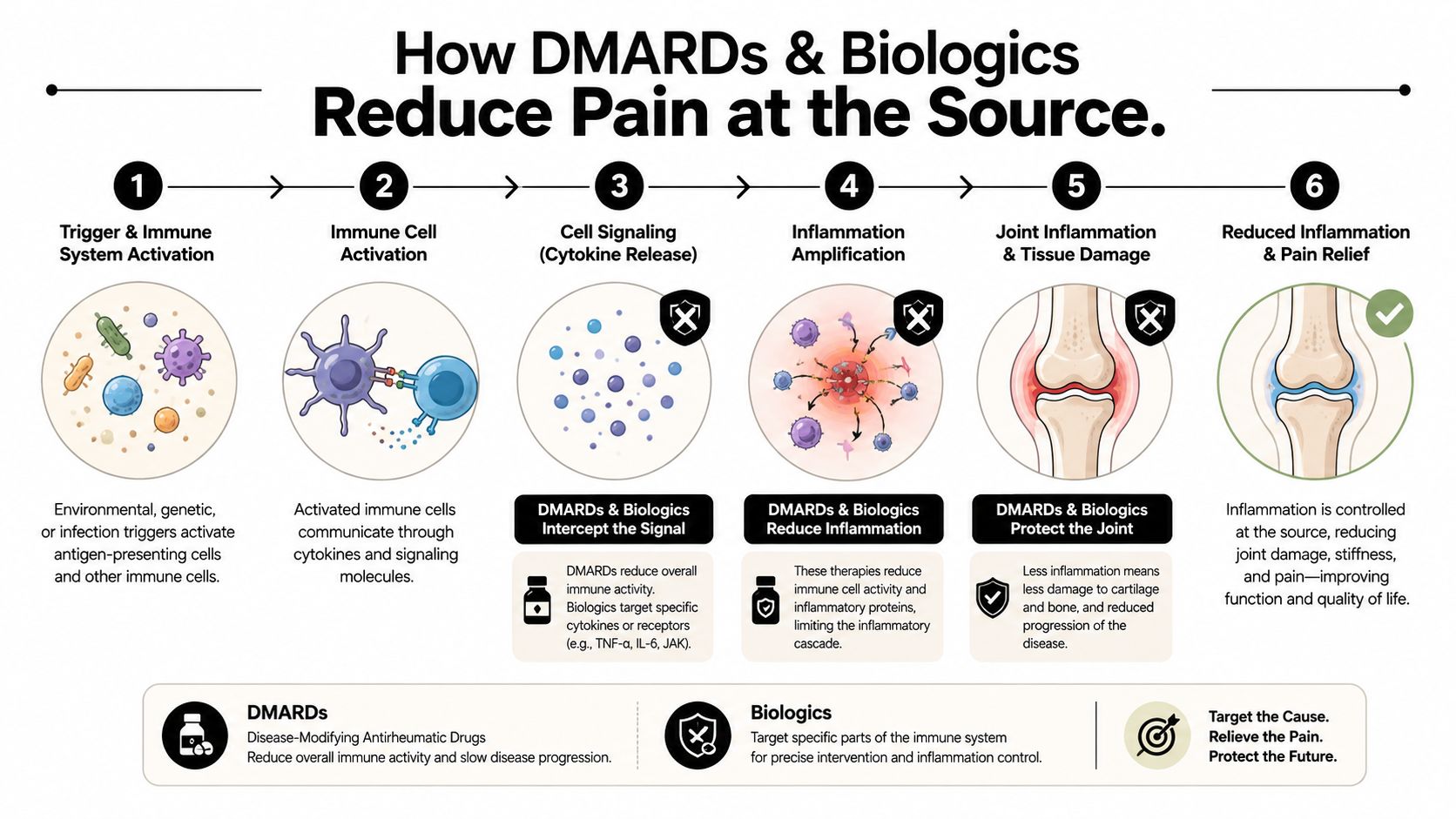
Disease-modifying antirheumatic drugs, or DMARDs, are the main long-term strategy for reducing RA pain. They act on the immune activity driving joint inflammation, rather than only changing how pain feels. Conventional synthetic DMARDs include methotrexate, sulfasalazine, hydroxychloroquine, and leflunomide. Biologic DMARDs target specific immune pathways, while targeted synthetic medicines, including JAK inhibitors, interfere with inflammatory signalling inside cells.
Why methotrexate changed RA care
Methotrexate helped shift RA treatment toward controlling disease activity. Early evidence related to aminopterin appeared in 1951. A later report in 1972 described positive effects from low-dose methotrexate in 29 RA patients receiving 10 to 15 mg per week. The first placebo-controlled methotrexate study in RA appeared in 1985, comparison with another treatment followed in 1987, and the U.S. Food and Drug Administration approved methotrexate for RA in 1988 (the historical review of methotrexate in RA).
That history matters in practice. Methotrexate is a disease-modifying treatment designed to suppress the process causing pain, swelling, and stiffness. Symptom medicines can still provide useful relief, while the DMARD works on the underlying inflammation.
What to expect after starting treatment
DMARDs usually take time to reduce disease activity. Your clinician may use a short bridge during that interval, then adjust treatment based on joint swelling, stiffness, function, blood tests, and your overall response.
If methotrexate does not control inflammation or causes unacceptable problems, your rheumatology team may consider another conventional DMARD, a biologic, or a targeted synthetic option. The choice depends on your disease pattern, other health conditions, infection history, laboratory results, and previous treatment response.
Symptomatic treatment often accompanies DMARD therapy, as noted earlier. The practical goal is to make current pain manageable while checking that active inflammation is steadily coming under control. Persistent swelling, recurring flares, or declining function should prompt a treatment review rather than repeated reliance on symptom relief alone.
NSAIDs, Steroids, and Analgesics for Short-Term Relief
NSAIDs, glucocorticoids, and simple analgesics serve different purposes in rheumatoid arthritis. NSAIDs can reduce pain and inflammation, but they require safety screening. Steroids often act quickly during a flare and should usually be used as a short bridge. Acetaminophen may ease pain, although its RA-specific benefit is limited.
NICE recommends an NSAID at the lowest effective dose for the shortest possible time, with attention to gastrointestinal, liver, and cardio-renal risks (NICE guidance on rheumatoid arthritis management). Before recommending one, your clinician may review ulcer history, kidney function, blood pressure, cardiovascular risk, other medicines, and age.
Comparing the main short-term options
Medication Class | Onset of Relief | Typical Duration Limit | Key Risks |
|---|---|---|---|
NSAIDs | Often relatively prompt symptomatic relief | Shortest practical course, at the lowest effective dose | Gastrointestinal, liver, kidney, cardiovascular, and blood-pressure concerns |
Glucocorticoids | Rapid suppression of inflammatory symptoms | Short bridge, often limited to flare management | Infection risk, effects on bones, glucose, blood pressure, mood, and weight |
Acetaminophen and other simple analgesics | Pain relief without meaningful anti-inflammatory action | Depends on the individual product and medical advice | Liver toxicity with excessive use or unsafe combinations |
Opioid analgesics | Can reduce pain perception | Avoid routine long-term use for RA pain | Dependence, sedation, constipation, tolerance, and limited disease-specific evidence |
A 2025 systematic review and meta-analysis found measurable analgesic effects for selected NSAIDs in RA pain. Etodolac produced significant pain reduction on a 5-point scale, while celecoxib at 200 mg twice daily ranked most effective in one 100-point pain subgroup (the 2025 NSAID review). These findings do not make one NSAID suitable for everyone. The choice still depends on your gastrointestinal, kidney, cardiovascular, and blood-pressure risks.
For a practical overview of ibuprofen's uses and precautions, review this guide to ibuprofen, then ask whether it is appropriate for you. Persistent swelling needs assessment rather than repeated self-treatment.
Why steroids are a bridge
The 2026 British Society for Rheumatology guideline recommends short-term glucocorticoids for active RA to reduce pain while DMARDs become effective. NICE also advises short-term oral, intramuscular, or intra-articular glucocorticoids during flares or when starting a new conventional synthetic DMARD (the British Society for Rheumatology RA guideline).
Repeated or prolonged steroid exposure raises concerns involving infection, bones, glucose, blood pressure, mood, and weight. The clinical guidance linked above describes steroid use as generally short term, typically no longer than three to six months. Repeated courses signal the need to reassess disease control with your rheumatology team.
Natural Supplements That Support Joint Comfort
Supplements can fit into an RA plan, but they shouldn't be presented as disease-modifying treatment. The strongest practical role is supportive: helping with general joint comfort, complementing movement, or providing a routine that doesn't displace prescribed therapy.
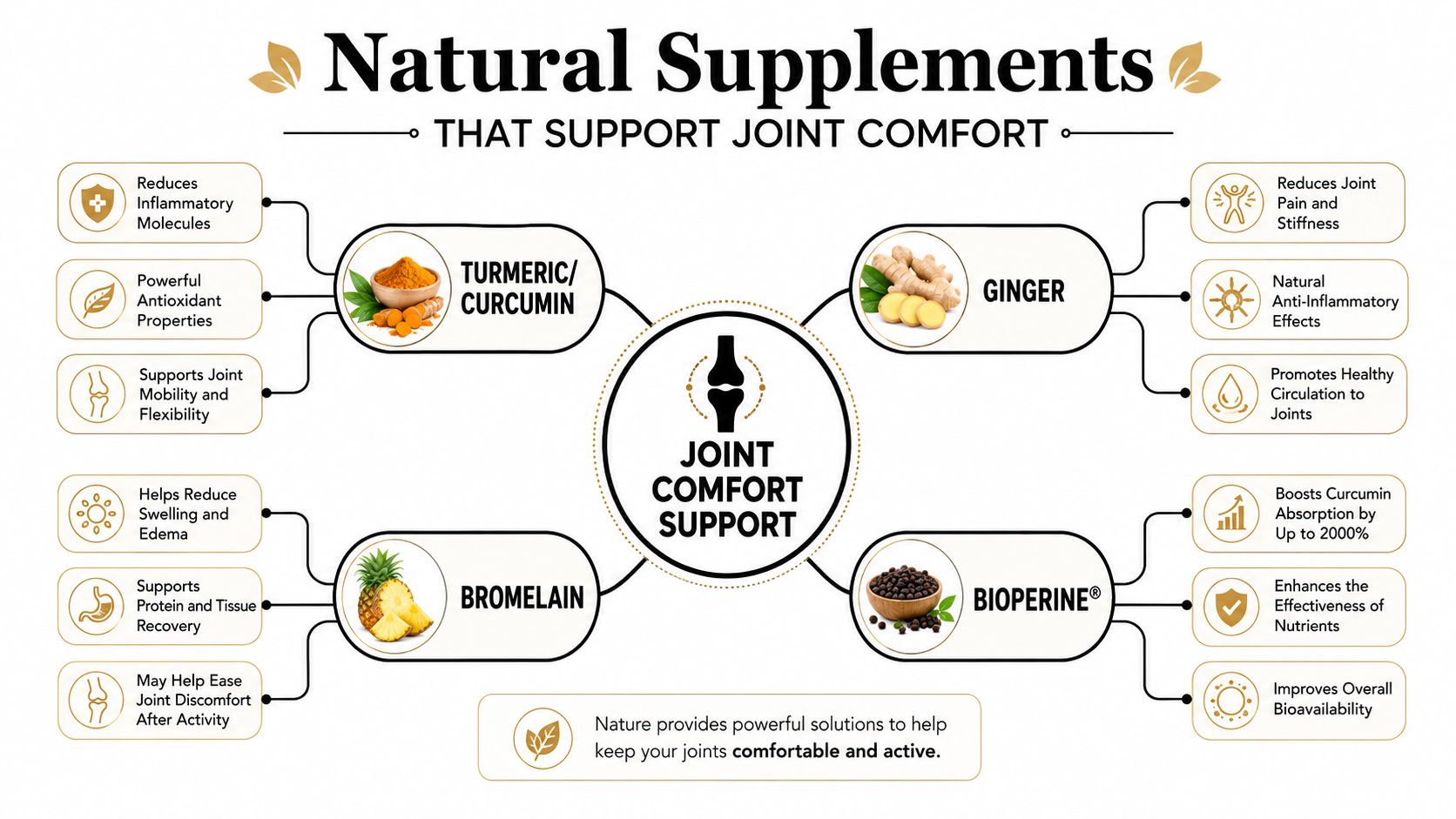
A commonly discussed combination includes turmeric or curcumin, ginger, bromelain, and BioPerine, a black pepper extract used to improve curcumin absorption. Each ingredient has a different proposed role, but the presence of several botanicals doesn't prove that the combination will control active RA.
What each ingredient can and can't do
Turmeric contains curcuminoids associated with inflammatory pathways. Curcumin alone has limited absorption, which is why formulations may pair it with an absorption enhancer such as BioPerine. That formulation choice can affect how much compound becomes available, but it doesn't turn a supplement into a substitute for methotrexate, a biologic, or another DMARD.
Ginger is used traditionally for digestive comfort and may offer supportive anti-inflammatory effects. Bromelain is an enzyme blend often included in joint-comfort products. Evidence for supplements in RA is not equivalent to the evidence supporting disease-modifying treatment, so judge any benefit by your actual symptoms and review the product with your clinician.
Safe integration matters more than a long ingredient list
Before adding a supplement, check for possible interactions with blood thinners, diabetes medicines, blood-pressure treatment, or your RA medicines. Tell your rheumatology team what you take, including powders, teas, and concentrated extracts. Stop and seek advice if you develop unusual bruising, allergic symptoms, worsening stomach problems, or other unexpected effects.
The River of Life article on turmeric and curcumin for arthritis joint pain offers product-focused education about turmeric and curcumin. If you choose a multi-ingredient capsule, look for transparent labeling, clear serving instructions, and a manufacturer that states what the product is intended to support. Take it consistently as directed, usually with food if the label recommends that, but keep the prescribed DMARD schedule separate in your mind: supplements support the routine, while DMARDs address the disease.
Non-Drug Strategies That Move the Needle
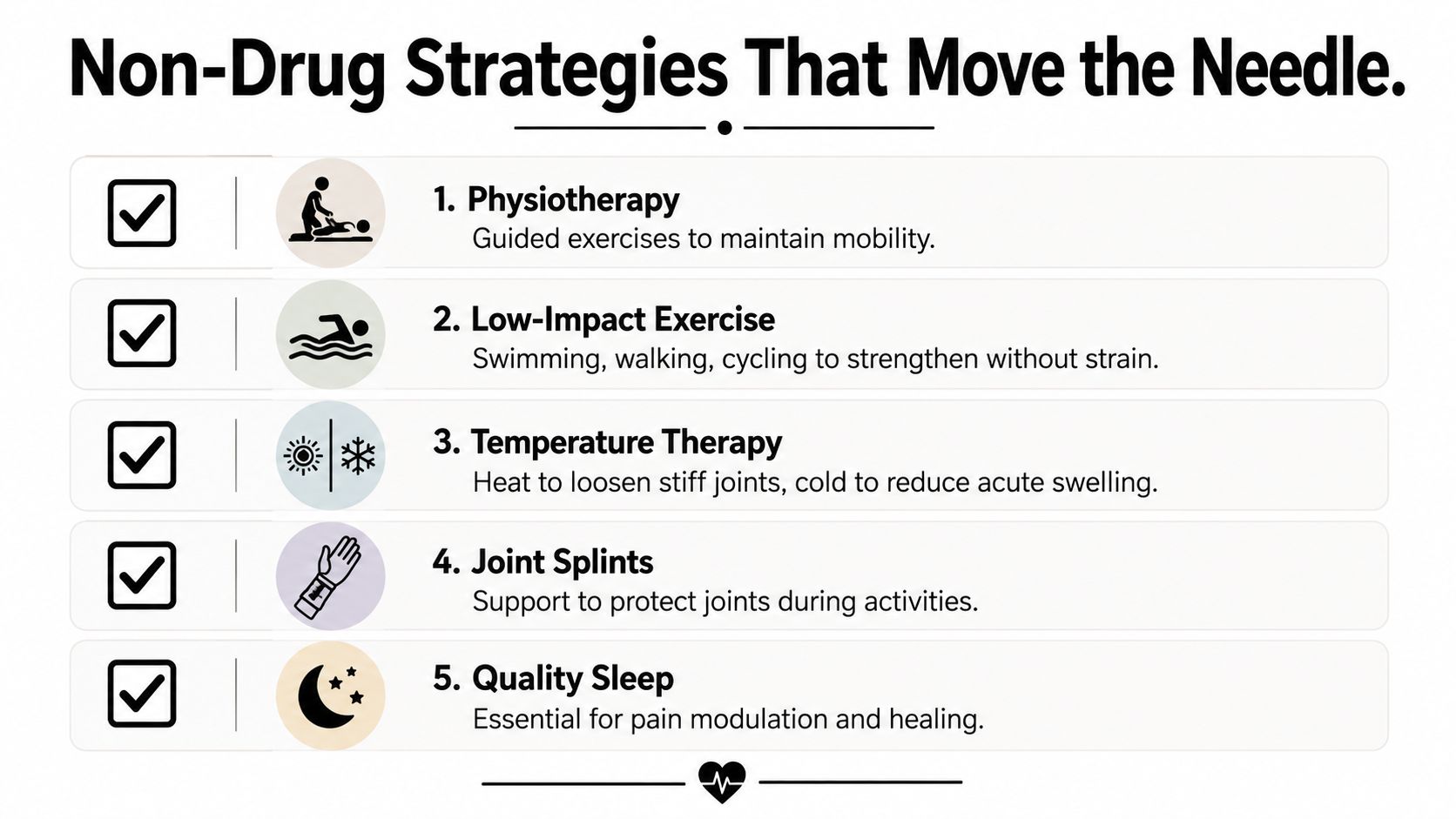
Non-drug care works best when it has a specific purpose. Physiotherapy can preserve movement and build support around vulnerable joints. Heat can make stiff tissues easier to move, while cold can be more comfortable when a joint feels swollen and hot. These tools won't replace inflammatory treatment, but they can improve the way you function between appointments.
A 2025 review found that few non-pharmacologic studies were designed specifically around RA pain, and many reported pain only as a secondary outcome. A meta-analysis of five trials involving 307 participants found a statistically significant reduction in pain with physiotherapy, although the effect was modest and the authors called for better trials (the 2025 review of non-pharmacologic RA pain interventions).
Match the tool to the symptom
Morning stiffness: Use a warm shower, heating pad, or gentle range-of-motion work before demanding tasks. Move slowly, and stop if a joint becomes sharply painful.
Acute swelling: Try cold therapy for comfort, protecting the skin with a barrier and following the timing recommended by your clinician or therapist.
Reduced strength: Ask a physiotherapist for a plan involving mobility, strengthening, and pacing. A program should reflect which joints are inflamed and how active your disease is.
Task-related strain: An occupational therapist can suggest splints, larger-grip tools, keyboard changes, and joint-protection techniques.
Persistent inactivity: Choose low-impact movement such as walking, swimming, or cycling at a level you can repeat consistently.
Protect sleep and pace your energy
Poor sleep can make pain feel louder and can leave you less able to exercise or prepare meals. Keep a regular wind-down routine, reduce stimulating activity before bed, and discuss ongoing insomnia with your clinician rather than relying on sedating products without review.
Stress management doesn't need to be elaborate. A short breathing exercise, a quiet walk, gentle stretching, or a planned pause between demanding tasks can make your routine more sustainable. For additional ideas, see this resource on natural pain relief approaches, and treat it as a supplement to medical care, not a replacement for it.
Red Flags and When to Escalate Care
Persistent RA pain can signal active inflammation or inadequate control of your current treatment. A stronger analgesic may provide temporary relief, while a clinical review addresses the reason symptoms are continuing.
Contact your rheumatology team when your usual pattern changes, especially with:
New or increasing swelling: A visibly puffy, warm, or tender joint may indicate active synovitis.
Prolonged morning stiffness: Stiffness lasting over an hour warrants attention, particularly across several mornings.
Unrelenting fatigue: Fatigue that does not improve with rest can accompany active inflammatory disease or another medical problem.
Night pain: Pain that repeatedly wakes you should be recorded and discussed rather than masked indefinitely.
Reduced function: Difficulty dressing, gripping, walking, or climbing stairs helps your clinician assess how disease affects daily activities.
Keep a short symptom record before your appointment. Note which joints swell, how long stiffness lasts, which activities increase symptoms, whether medication helps, and whether you have fever or other signs of infection. Bring a complete list of prescriptions, over-the-counter medicines, and supplements.
Sudden severe joint pain with fever needs urgent medical assessment. In a person taking immune-modifying treatment, infection must be considered promptly.
Do not stop a DMARD or begin repeated steroid courses without medical advice. Your clinician may examine the joints, order blood tests, review medication safety, or adjust the disease-modifying plan. Chronic opioid prescribing remains common despite low-quality or unsupported evidence for opioids, acetaminophen, and other analgesics in RA pain, as discussed in the 2025 narrative review of RA pain treatment. Long-term opioid use also requires careful review of benefit, side effects, dependence risk, and whether ongoing pain reflects uncontrolled inflammation.
Escalate promptly when a painful, swollen joint is accompanied by fever, marked illness, or rapidly worsening function. Do not wait for a routine appointment if infection is possible, particularly while taking immune-modifying treatment.
Building Your Daily Pain-Management Routine
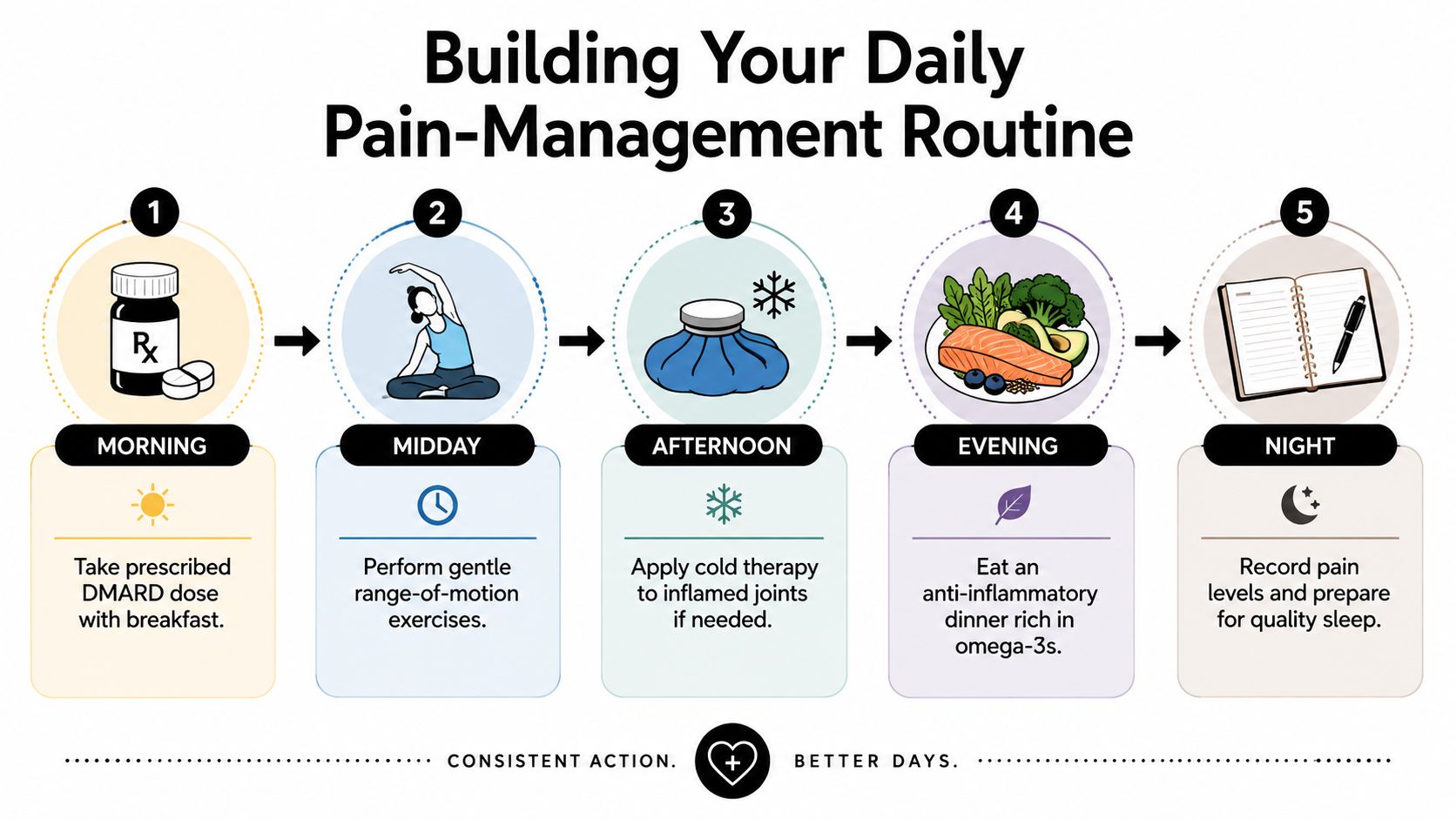
A workable routine should be simple enough to follow during a busy week. In the morning, take your prescribed DMARD exactly as directed, use warmth if stiffness limits movement, and perform a few gentle range-of-motion exercises. Don't change the dose because you feel better for a day or worse for a morning without speaking with your clinician.
At midday, break up long periods of sitting with brief movement. If a joint becomes acutely swollen, use the flare plan your care team has provided, which may include a short-term medicine or local treatment. Take any supplement according to its label and your clinician's advice, rather than adding several products at once.
In the evening, choose a comfortable activity you can repeat, prepare a balanced meal, and record three things: pain, stiffness duration, and energy. This record helps distinguish an isolated difficult day from a pattern that may require treatment adjustment.
A travel day or stressful period doesn't require perfection. Pack medicines in their original containers, keep movement gentle, protect sleep where possible, and use your symptom notes to communicate clearly if a flare develops. Consistency matters more than completing every supportive step every day.
River of Life offers a vegan, multi-ingredient capsule containing turmeric extract with BioPerine, along with ginger, bromelain, and ashwagandha, positioned to support joint comfort and daily wellbeing. If you want to consider a supplement as one layer of your RA routine, review the formula and practical details at River of Life, then discuss it with your rheumatology team before starting.