


Natural Pain Reliever for Dogs: Safe, Effective Solutions

You may be reading this because your dog still wants to be part of family life, but something has changed. Maybe the morning bounce is gone. Maybe your dog hesitates before getting up, avoids stairs, stops halfway through a walk, or turns their head when you touch a shoulder, hip, or back.
That change is hard to watch. Dogs often hide pain, so by the time you notice stiffness, limping, restlessness, or a shorter temper, discomfort may already be affecting daily life.
The good news is that a natural pain reliever for dogs usually isn't just one thing. The best results often come from a toolkit. One tool helps calm inflammation. Another supports joints over time. Another helps during flare-ups. Another improves comfort without adding more pills. When owners think this way, pain care becomes more practical and less overwhelming.
Table of Contents
Recognizing Pain in Your Dog and Seeking Natural Solutions
One of the most common stories I hear goes like this. “He's getting older.” Sometimes that's partly true. But just as often, what looks like normal aging is pain changing a dog's behavior.
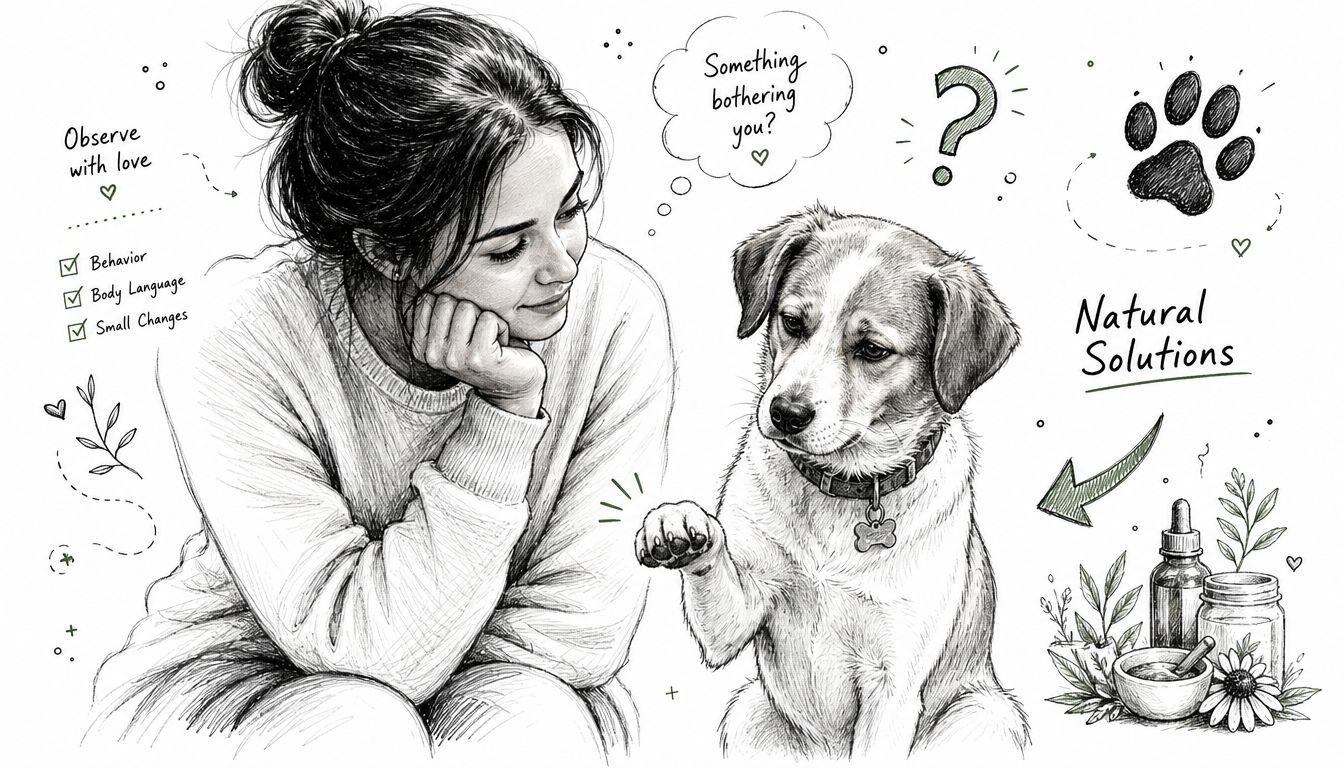
A dog in discomfort may not cry or yelp. More often, pain shows up as small daily changes. Your dog may lag behind on walks, stop jumping into the car, sit crooked, lick one joint, pant at rest, or seem irritable when touched. Some dogs sleep more. Others pace because they can't settle.
Clues Owners Often Notice First
Movement changes: Slower rising, shorter stride, limping, reluctance on stairs, or stopping before a usual jump.
Posture changes: Hunched back, tucked body, shifting weight off one leg, or standing with tension.
Mood changes: Less playful, less patient, more clingy, more withdrawn, or reactive during handling.
Routine changes: Sleeping in unusual places, reduced appetite, less interest in walks, or trouble getting comfortable at night.
Dogs rarely say “my hip hurts.” They say it with hesitation, posture, and behavior.
Natural support can help, especially when pain is chronic and linked to inflammation, arthritis, overuse, muscle tension, or recovery after injury. The key is to stop looking for a single miracle fix. Think in layers instead. A dog with sore joints may need one tool for daily background support, one for mobility work, and one for bad days.
That mindset gives you choices. It also helps you use natural pain relief more responsibly, because what works for a mild stiff senior dog may not be enough for a dog with nerve pain, a fresh injury, or advanced arthritis.
The Root of the Problem Pain and Inflammation in Dogs
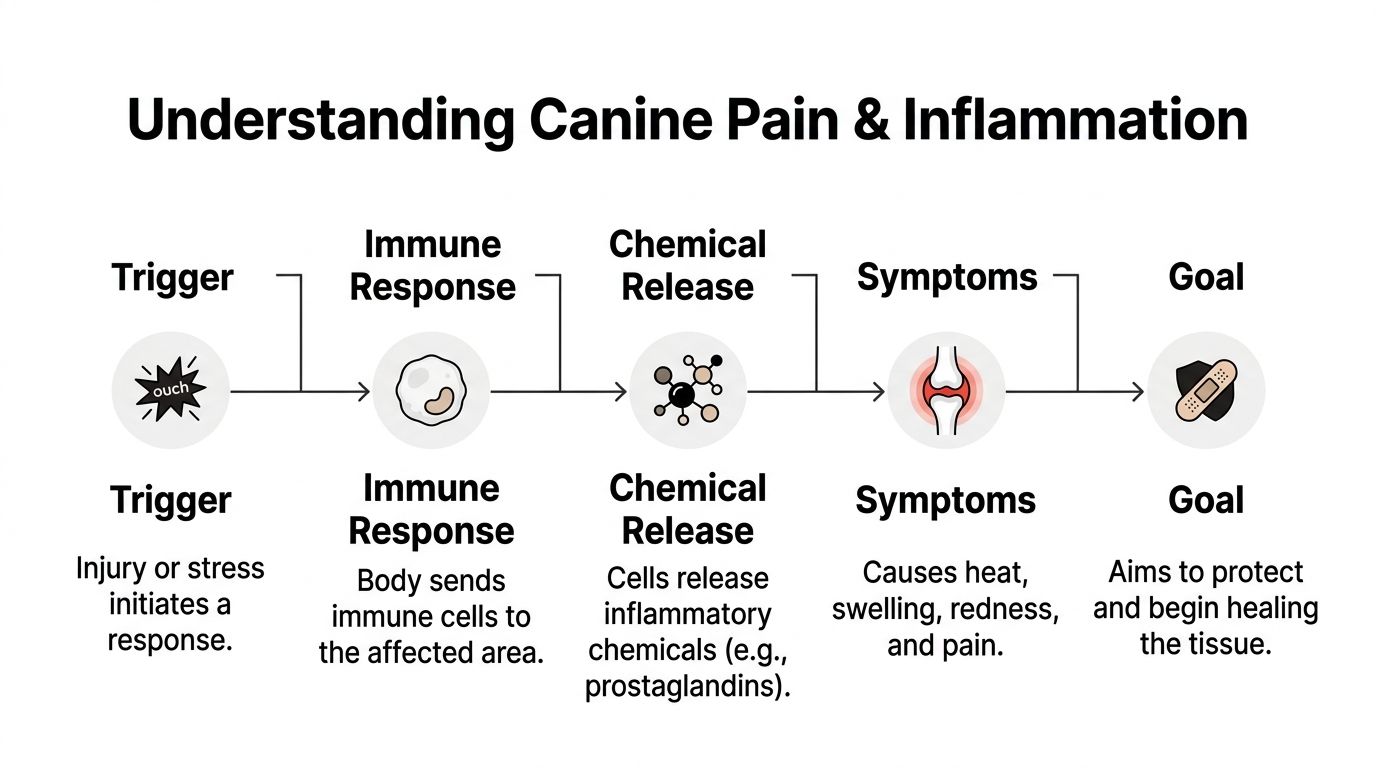
Pain usually has a purpose at first. It tells the body to slow down, protect an area, and start repair. That's useful when a dog twists a leg, strains a muscle, or has surgery.
Trouble starts when the alarm keeps ringing after the urgent problem has passed. Chronic inflammation acts a lot like a faulty fire alarm. It was supposed to alert the system briefly. Instead, it keeps blaring and making everything feel worse than it should.
Acute Inflammation Versus Chronic Inflammation
Acute inflammation is the short-term, helpful response. A paw gets injured, the body sends help, blood flow changes, and chemicals signal repair. You may see swelling, warmth, tenderness, or limping. In the right amount, that response protects tissue.
Chronic inflammation is different. It lingers. In dogs with arthritis, worn joints can keep triggering irritation. Nearby muscles tighten to guard the area. Movement drops, which weakens support around the joint. Then the dog moves less comfortably, which can create more stiffness and more pain.
Why Natural Tools Can Help
Many natural strategies target one part of that cycle.
Some tools calm inflammatory signaling: These are often used for ongoing joint soreness and stiffness.
Some support mechanics: Massage, rehab exercises, and traction support can reduce strain on overworked tissues.
Some change pain processing: Acupuncture and similar therapies may help when pain has become persistent and more complex.
Some improve day-to-day function: Better footing, easier access to beds or cars, and gentler activity reduce repeated aggravation.
Practical rule: If your dog feels worst after rest but loosens up with gentle movement, chronic inflammation is often part of the picture.
A useful toolkit asks simple questions. Is this a flare-up or a daily problem? Is the issue mostly joint, muscle, or nerve-related? Does your dog need anti-inflammatory support, mechanical support, or both?
Those questions matter because natural pain relief works best when it matches the job. A soothing herb won't fix a torn ligament. A good supplement won't replace a slippery floor runner or a ramp. But the right combination can make a dog more comfortable, steadier, and more willing to move.
Your Dog's Natural Medicine Cabinet Key Supplements
Supplements are often where owners start, and that makes sense. They're easy to add, they can fit into a routine, and some dogs do very well with them. But each supplement belongs in a different slot of the toolkit.
How to Match the Tool to the Job
Curcumin is one of the more useful options when inflammation is part of the problem. WebMD's overview of dog pain medications notes that 30 milligrams of curcumin per day produces a mild but measurable anti-inflammatory effect in dogs, and that combining curcumin with palmitoyl glucosamine may improve nerve pain relief and swelling more effectively than either compound alone. That's helpful when a dog has both stiffness and a more sensitive pain picture.
Curcumin isn't a rescue remedy. Think of it as a background support tool. It may fit dogs with ongoing joint discomfort better than dogs who need immediate relief after an acute injury. Absorption also matters. A supplement that sounds good on the label but isn't formulated for uptake may disappoint in practice.
Glucosamine and chondroitin belong in a different category. They aren't usually chosen because owners expect a quick change. They're more often used as joint support tools for dogs with wear-and-tear patterns, especially when stiffness is becoming a regular part of life. If I use an analogy in clinic, this is the “maintenance crew” rather than the “fire extinguisher.”
Omega-3 fatty acids are often used as broad anti-inflammatory support. They can fit nicely into a long-term plan for dogs with generalized stiffness, age-related soreness, or inflammatory joint disease. They don't target one specific joint the way a local therapy might, but they can be useful as part of the base layer.
CBD gets a lot of attention, but expectations should remain grounded. Some owners report that it helps their dogs relax, settle, or move more comfortably. Product quality, consistency, and dosing are major variables, and that's exactly why this choice should be discussed with your veterinarian rather than bought on marketing claims alone.
For a broader overview of supportive options for stiffness, this guide on supplements for joint stiffness gives a helpful layperson's overview.
Comparing Natural Supplements for Dog Pain
Supplement | What It Does | Best For | Key Consideration |
|---|---|---|---|
Curcumin | Supports an anti-inflammatory response | Daily joint discomfort, mild swelling, ongoing stiffness | Formulation matters because absorption can vary |
Glucosamine and Chondroitin | Supports joint structure and cartilage health | Long-term joint support | Usually better as a steady maintenance tool than a fast-acting option |
Omega-3 Fatty Acids | Provides broad inflammatory support | Older dogs, generalized stiffness, inflammatory patterns | Product quality and tolerance matter |
CBD | May help some dogs with comfort and relaxation | Dogs where pain and tension seem to overlap | Quality control and medication interactions need veterinary review |
A practical way to think about supplements is this. If your dog needs help every day, start with a foundation tool. If your dog only struggles after activity, your plan may need less supplement emphasis and more recovery support, movement control, and physical therapies.
Powerful Plants Herbal Remedies for Pain Relief
Herbs can be useful, but they need the same respect you'd give any active treatment. “Natural” doesn't mean casual. A plant can soothe, irritate, interact, or be the wrong match for the problem.
Herbs Need the Same Respect as Drugs
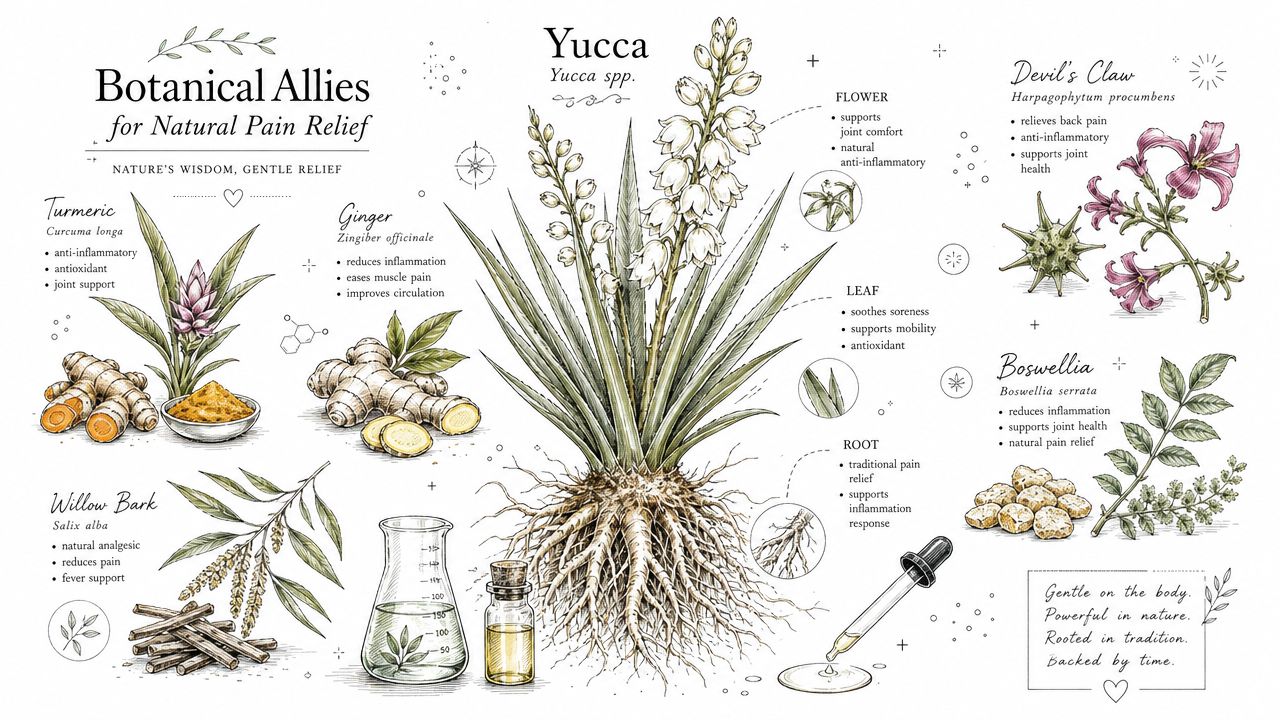
Yucca is one herb often discussed in comprehensive pain management plans for dogs with arthritic discomfort. According to Dogs Naturally Magazine's review of herbs for natural pain relief, veterinary professionals specializing in integrative care report a 50% to 80% success rate for yucca in easing pain and inflammation associated with osteoarthritis and rheumatoid conditions in dogs. The same source gives practical dosing guidance: ½ to 1 teaspoon of dried yucca herb per pound of food, or 1/8 teaspoon of low-alcohol tincture per 20 pounds of body weight daily.
That sounds straightforward, but owners may encounter difficulties by guessing. The form matters. The dose matters. The dog's stomach tolerance matters. A dog with digestive sensitivity may not handle an herb the same way another dog does.
Where Each Herb Fits
Yucca is often used when inflammation and joint pain are front and center. In toolkit terms, it sits closer to the “daily anti-inflammatory support” slot than the “emergency flare” slot.
Boswellia is another herb many animal health professionals consider for inflammatory discomfort. It often comes up in dogs with mobility issues where owners want a non-drug support option. What matters most is choosing a product made for pets and reviewing it with your veterinarian before combining it with other therapies.
Ginger is familiar to many owners because it's common in human wellness. In dogs, it may be considered when a plan calls for gentle botanical support, but dose and preparation still matter. A little culinary ginger in the wrong context is not the same as a properly selected veterinary supplement.
If you'd like a plain-language look at one of the most commonly discussed plant compounds for joint discomfort, this explainer on how turmeric curcumin helps with arthritis and joint pain is a reasonable place to start.
A short demonstration can make herbal use feel less abstract:
Start herbs one at a time. If you change three things at once, you won't know what's helping and you won't know what's causing side effects.
What doesn't work well is random stacking. Owners sometimes mix several herbs, a chew, and a tincture because each one sounds promising. That's how dogs end up with upset stomachs and owners end up with no clear answer. A cleaner plan usually works better.
Hands-On Healing Physical Therapies That Work
Some of the best pain tools don't go into the food bowl at all. They change how the body moves, how muscles guard painful joints, and how the nervous system processes discomfort.

Clinic-Based Tools
Acupuncture has moved well beyond the “alternative” label. In ToeGrips' review of natural pain relief for dogs, acupuncture is described as equally effective as NSAIDs or opioids for managing chronic pain in dogs, with trials showing significant pain score reductions after 4 to 6 weeks of weekly sessions. The same source also describes red light therapy as showing 85% of dogs with improved gait and reduced stiffness within 2 to 4 weeks of daily 10-minute home applications.
Those details matter because they help owners set realistic expectations. Acupuncture usually isn't one visit and done. It tends to work best as a course of care, especially for arthritis, chronic back pain, or pain patterns that involve nerve sensitivity and muscle guarding.
Red light therapy is appealing because it can fit home life more easily than frequent clinic visits. For many dogs, that's an advantage. A treatment that owners can do consistently often beats a more ambitious plan that never settles into routine.
At-Home Support That Adds Up
Massage can be a very practical tool when pain causes muscle tension on top of joint discomfort. Dogs with sore hips often tighten the low back and thighs. Dogs with neck pain may brace the shoulder area. Gentle, well-taught massage can help those tissues relax.
Hydrotherapy and structured therapeutic exercise are especially useful when a dog needs to rebuild support around a painful area. Water can reduce joint load while allowing controlled movement. Targeted exercises can improve balance, muscle use, and confidence.
Here's where these tools often fit best:
Acupuncture: Useful when pain is chronic, recurring, or not fully controlled by supplements and routine care.
Red light therapy: Useful for owners who want a non-invasive home tool for stiffness and arthritis support.
Massage therapy: Useful when your dog feels tight, guarded, or sore in the muscles around a painful joint.
Hydrotherapy and rehab exercise: Useful when weakness, poor conditioning, or altered movement is feeding the pain cycle.
For owners trying to think in a more complete way, this article on natural pain relief approaches is a good reminder that comfort usually improves when you combine methods that do different jobs.
A dog with arthritis often doesn't need “more rest.” That dog usually needs better-managed movement.
What doesn't work is relying on passive care alone. Massage without strength work can fall short. A supplement without traction support on slippery floors can fall short. Acupuncture without a plan for daily movement can fall short. The body responds best when the toolkit is balanced.
The Most Important Step Working with Your Vet
If I could choose only one piece of advice for concerned owners, it would be this. Don't build a natural pain plan without a diagnosis.
Pain is a symptom, not a final answer. A dog may look stiff because of arthritis, but similar behavior can come from a torn ligament, spinal disease, a paw injury, dental pain, or an abdominal problem. If you assume it's “just aging,” you can lose valuable time.
Why Diagnosis Comes First
A veterinarian helps answer the questions natural remedies can't answer on their own.
Where is the pain coming from: Joint, muscle, spine, nerve, paw, mouth, or internal organ.
How urgent is it: Mild chronic soreness needs a different response than sudden inability to bear weight.
What should be avoided: Some supplements, herbs, or over-the-counter products can interfere with medications or aggravate other conditions.
What can be tracked: Weight-bearing, mobility, sleep quality, appetite, and tolerance all matter.
How to Build a Safe Plan
Bring a list of everything your dog gets. That includes chews, powders, tinctures, oils, joint treats, and topicals. Owners often forget half of it during the appointment, and those details matter.
Then ask your veterinarian to help you organize care into three buckets:
Foundation support: Daily tools for inflammation, joint support, body weight, bedding, traction, and routine.
Flare-up support: What to do when your dog has a bad day, overdoes activity, or wakes up clearly stiffer.
Escalation rules: Signs that mean the plan isn't enough and your dog needs reevaluation.
This is not a barrier to natural care. It's what makes natural care safer and more effective. A good veterinary partnership turns guessing into a plan.
Your Questions Answered
Can I Give My Dog Human Pain Medicine
No. Don't give ibuprofen, acetaminophen, naproxen, or other human pain medicines unless a veterinarian has specifically directed you to use a particular product in a particular way. A medication that seems mild for people can be dangerous for dogs.
If your dog seems painful enough that you're tempted to reach for the family medicine cabinet, that's a sign your dog needs veterinary guidance, not improvisation.
How Long Do Natural Options Take to Work
It depends on the tool.
Some changes, like better footing, rest from overexertion, or skilled massage, may help fairly quickly. Other options are slower. Joint-support supplements and many herbal approaches usually need consistency. Acupuncture and physical rehabilitation also tend to work over a series of treatments, not as instant fixes.
A better question is this: What job is this tool supposed to do? Fast comfort and long-term support are different goals.
Can I Combine Supplements Herbs and Physical Therapies
Usually, yes, but the combination should be intentional. That's the whole idea behind a toolkit. One tool reduces inflammation. Another improves strength. Another helps a dog move with less guarding. Another supports day-to-day comfort.
The mistake is combining too many new things at once. Start cleanly, track changes, and work with your veterinarian so you can tell what's helping.
How Do I Know Something Isn't Working
Watch your dog, not the label.
These signs usually mean the plan needs adjustment:
Comfort isn't improving: Your dog still struggles with rising, walking, settling, or being touched.
Function is dropping: Walks are shorter, stairs are harder, or your dog opts out of normal activities.
Side effects show up: Vomiting, diarrhea, appetite changes, unusual sedation, or agitation.
The pain pattern changes: A mild stiffness picture becomes sudden limping, crying out, or refusal to bear weight.
If you're not sure, keep a simple daily log. Note appetite, energy, ease of rising, walk tolerance, and sleep. Patterns become much easier to spot when they're written down.
A thoughtful natural pain reliever for dogs isn't about avoiding conventional medicine at all costs. It's about using the right tools, in the right order, for the right problem, with your veterinarian helping you steer.
If you're exploring natural wellness support for inflammation, recovery, and daily comfort in your own routine, River of Life offers a turmeric-based capsule formula with BioPerine, ginger, bromelain, and ashwagandha. You can learn more through the company's educational resources and product details on their website.