

What Is the Strongest Natural Pain Reliever (2026 Guide)

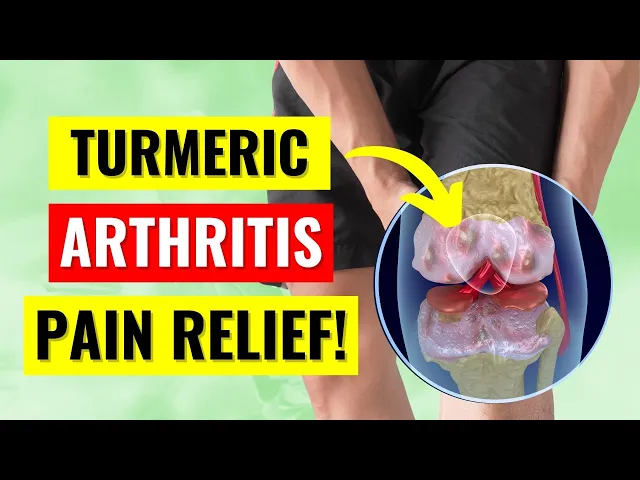
You've bought the turmeric capsules, used them faithfully, and still wake up with the same stiff knee. Or perhaps you're dealing with burning nerve pain, a sore shoulder after training, or an aching back that doesn't behave like inflammation at all. Searching for what is the strongest natural pain reliever feels as if it should produce one clear answer, but the body doesn't work that way.
The better answer depends on where the pain comes from, whether it's localized or widespread, which symptom matters most, and whether the active compound is absorbed effectively. Curcumin may be a strong fit for chronic joint discomfort, capsaicin may make more sense for one painful area, and cannabinoids may have a role in difficult neuropathic pain, although their side effects matter.
Table of Contents
The Question Most Natural Pain Relief Articles Get Wrong
A reader with knee osteoarthritis often wants a single name. They may see turmeric, Boswellia, ginger, fish oil, and several combination products competing for attention, then choose the bottle with the boldest claim. If the product contains a weak extract, the wrong ingredient for the pain pattern, or a form the body absorbs poorly, the disappointing result can make every natural option seem ineffective.
That conclusion is too broad. “Strongest” isn't a permanent ranking. It's a match between a pain mechanism and a treatment format. A topical compound can work directly on nerve endings near the skin, while an oral botanical must survive digestion, enter circulation, and reach the relevant tissues. Those are different jobs.
Start with the pain pattern
Consider three people:
A person with chronic knee stiffness may need an oral anti-inflammatory botanical that can support pain, movement, and stiffness over continued use.
A person with burning pain in one foot may need an approach that quiets overactive peripheral nerve endings rather than a general joint supplement.
A person with widespread post-exercise soreness may be looking for support around muscle discomfort and recovery, where a single joint ingredient may not cover the whole experience.
These examples don't prove that one ingredient will work for every individual. They show why a useful answer must identify the target first.
The sharper question is: Which natural ingredient has the strongest evidence for my type of pain, in a form my body can use?
Comparative evidence supports that conditional approach. Recent research suggests Boswellia may rank highest for some knee osteoarthritis pain and stiffness outcomes, while curcumin and ginger also show benefit, with no supplement clearly dominating every outcome. The comparative review of natural products for osteoarthritis therefore points toward matching the ingredient to the symptom rather than crowning a universal winner.
For chronic joint pain, curcumin is a sensible default because its clinical evidence is broad. For a single painful area, capsaicin has a mechanism that makes topical use logical. For refractory neuropathic pain, cannabinoids may be considered as an adjunct, not an automatic first choice. The rest of the decision comes down to evidence, safety, and formulation.
How Pain Signals and Inflammation Actually Work
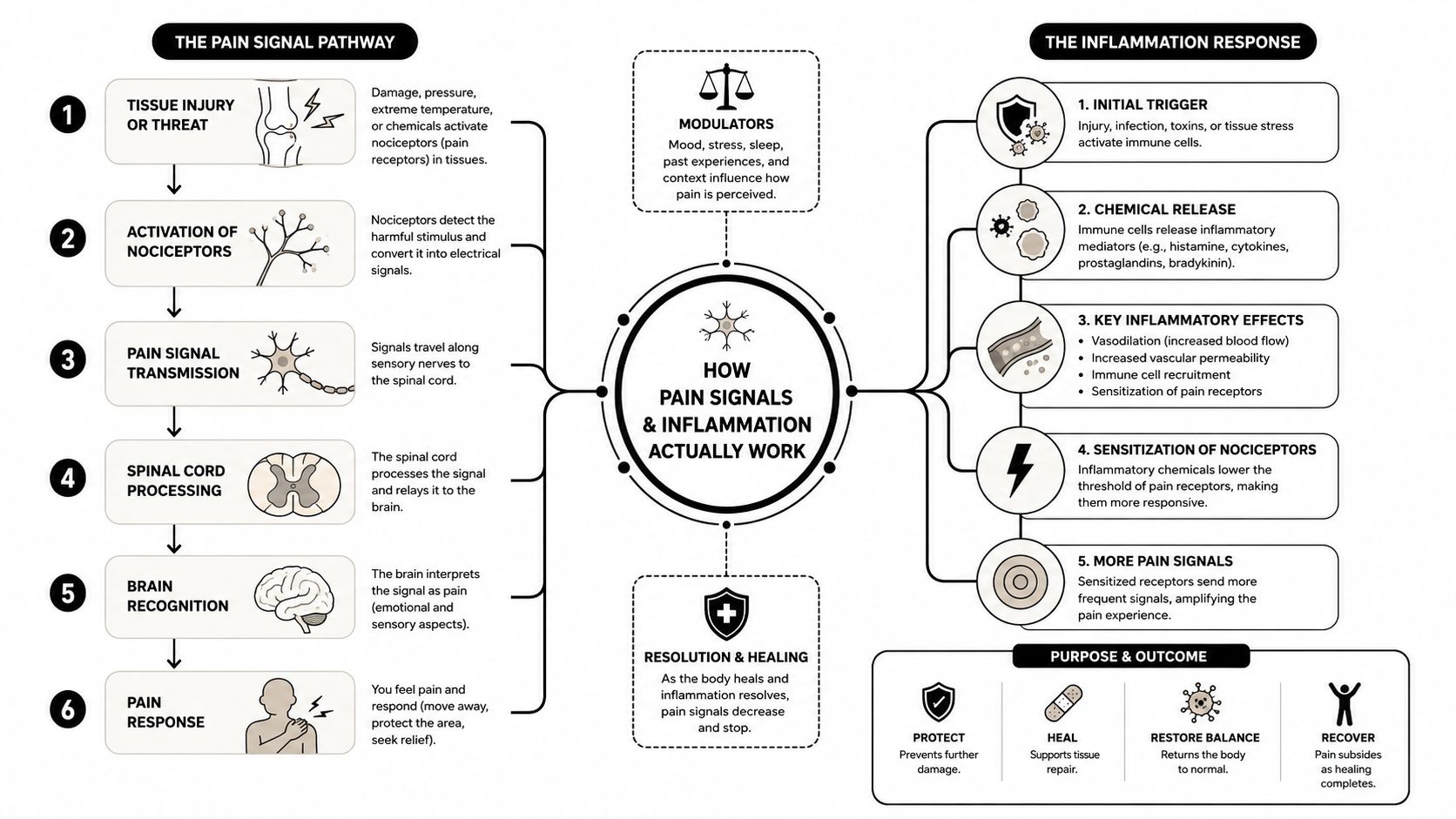
Pain begins as information. Specialized nerve endings called nociceptors detect potentially damaging heat, pressure, chemical irritation, or tissue stress. They send electrical messages through peripheral nerves to the spinal cord and then to the brain, where the signal becomes the experience you recognize as pain.
Inflammation can increase the volume of that signal. Injured or irritated tissue releases chemical messengers, including prostaglandins and cytokines. Prostaglandins can make nociceptors more sensitive, so an ordinary movement may feel painful. Cytokines help coordinate immune activity, but persistent inflammatory signaling can keep the pain system activated after the original trigger has passed.
A useful analogy is a fire alarm. Nociceptors are the alarm sensors, inflammation is part of the chemical environment that can make them more sensitive, and the brain interprets the incoming warning. A pain reliever might reduce the inflammatory “smoke,” lower the sensitivity of the sensor, or change how the nervous system processes the alarm.
Why the target changes the answer
Many anti-inflammatory medicines influence pathways related to COX enzymes, which help produce prostaglandins. Natural compounds don't all act in the same way or with the same intensity, but the general categories are useful:
Anti-inflammatory botanicals aim to moderate chemical signals associated with irritated tissue.
Nerve-desensitizing topicals act closer to the pain sensor itself.
Endocannabinoid modulators influence signaling involved in pain perception, mood, and other nervous-system functions.
Omega-3-derived mediators are studied for their role in resolving inflammatory responses rather than blocking every inflammatory signal.
This explains why a topical treatment can be sensible for one aching knee but less practical for pain affecting many joints. It also explains why an oral extract may be chosen for a broader inflammatory pattern. The route of administration should fit the location and biology of the problem.
Curcumin has been studied especially in osteoarthritis. A systematic review of standardized turmeric extracts found that use over 8–12 weeks at about 1,000 mg per day could reduce arthritis symptoms, mainly pain and inflammation, with improvements similar to ibuprofen and diclofenac sodium in the reviewed trials. That doesn't mean turmeric is interchangeable with prescribed treatment, but it does show why researchers examine it as more than a general wellness ingredient.
Comparing the Top Natural Pain Relievers Side by Side
A person with a stiff knee, a burning foot, and soreness after exercise may describe all three as pain. Their biology is different, so the ingredient that helps one may disappoint with another. The useful comparison asks: Which pain pattern does this ingredient fit, and what trade-offs follow?
Ingredient | Best-Fit Pain Type | Evidence Strength | Time-to-Effect | Key Safety Note |
|---|---|---|---|---|
Curcumin | Chronic joint pain and osteoarthritis symptoms | Broad clinical evidence for knee osteoarthritis | Usually assessed over continued use rather than as an instant remedy | Review medication interactions and product formulation |
Capsaicin | Localized peripheral nerve, muscle, or joint pain | Clear mechanism-based support for topical use | Repeated use may be needed over 4–8 weeks according to reviews from the clinical literature on capsaicin | Burning, redness, or irritation can occur |
Omega-3s | General inflammatory and exercise-related support | Measurable but condition-dependent evidence | Not an immediate analgesic | Fish and krill products require attention to allergies and medication interactions |
Ginger | Joint discomfort and musculoskeletal soreness | Supportive evidence, but not a universal winner | Often requires consistent use | May aggravate digestive symptoms and deserves caution with bleeding risk |
Willow bark | Pain patterns where salicylate-like activity is relevant | More limited practical fit than curcumin for chronic joint pain | Variable | Salicylates make medication and allergy history important |
Boswellia | Knee osteoarthritis pain and stiffness | Comparative evidence suggests strong performance on some endpoints | Continued use is generally the relevant frame | Check compatibility with medicines and medical conditions |
Cannabinoids | Difficult neuropathic pain that hasn't responded adequately to simpler options | Low- to moderate-strength evidence with modest benefit | Short-term treatment evidence covers 1–6 months | Dizziness, sedation, and nausea are important risks |
The table shows why “strongest” depends on the target. A topical product places capsaicin near the painful area, while an oral ingredient must be absorbed and distributed through the body. Curcumin and Boswellia therefore fit broader joint symptoms more naturally than a topical nerve desensitizer. Omega-3s, ginger, and willow bark may support selected inflammatory or musculoskeletal complaints, but their usefulness depends more heavily on the condition.
Cannabinoids require a separate level of caution. A living systematic review found small to moderate pain improvement, mainly for neuropathic pain, alongside moderate to large increases in adverse events such as dizziness, sedation, and nausea during short-term treatment. That makes them a possible adjunct when simpler options have not worked, rather than a default first choice. The full safety evidence belongs in the safety discussion below.
Match the ingredient to the complaint
For chronic joint pain, curcumin and Boswellia deserve the closest consideration. For one painful surface area, capsaicin's local action matches the problem more directly. For neuropathic pain, cannabinoids may be relevant, but their modest benefit and side-effect profile make professional guidance sensible.
Formulation also changes practical strength. Two products with the same plant name may deliver different absorbed amounts, so the label alone cannot predict the experience. The best match still depends on the diagnosis, medicines, route of use, and symptom you want to change.
Why Curcumin Is the Default Choice for Joint Pain
If knee pain makes stairs, walking, or exercise harder, curcumin is a reasonable starting point because its evidence is tied to those everyday osteoarthritis problems. Its place as the default choice comes from a repeatable clinical signal in osteoarthritis, not from the assumption that every turmeric product works equally well.
Trials and pooled analyses have measured pain, stiffness, and physical function. A 2021 meta-analysis found turmeric extracts reduced knee pain compared with placebo, with a standardized mean difference of -0.82, and improved physical function, with an SMD of -0.75. Another pooled analysis of 16 randomized controlled trials involving 1,810 adults reported treatment efficacy similar to NSAIDs. The review of turmeric and osteoarthritis trials summarizes these findings.
What the numbers mean in daily life
A standardized mean difference places results from different studies on a shared scale. It cannot promise that each person will feel the same change, or convert directly into a set number of pain-free days. It does show that turmeric extract performed meaningfully better than placebo across the analyzed trials.
Other pooled findings point in the same direction. A 2024 network meta-analysis reported that curcumin lowered visual analogue scale pain scores by 1.63 points versus placebo and reduced total WOMAC scores by 18.85 points. A separate 2022 meta-analysis found turmeric extract lowered knee osteoarthritis pain by an SMD of -1.60 versus placebo. In that evidence summary, nearly one in five treated patients achieved at least 50% improvement in WOMAC pain, function, and stiffness, while a smaller group reached at least 70% improvement.
Those results support curcumin as a strong candidate, while leaving one practical question: what form will the body absorb? Plain turmeric root powder and a standardized curcumin extract are different products. Active content, delivery system, and tolerability can change how much reaches circulation and whether the person notices an effect. This guide to how turmeric and curcumin may support arthritis and joint pain offers a practical explanation.
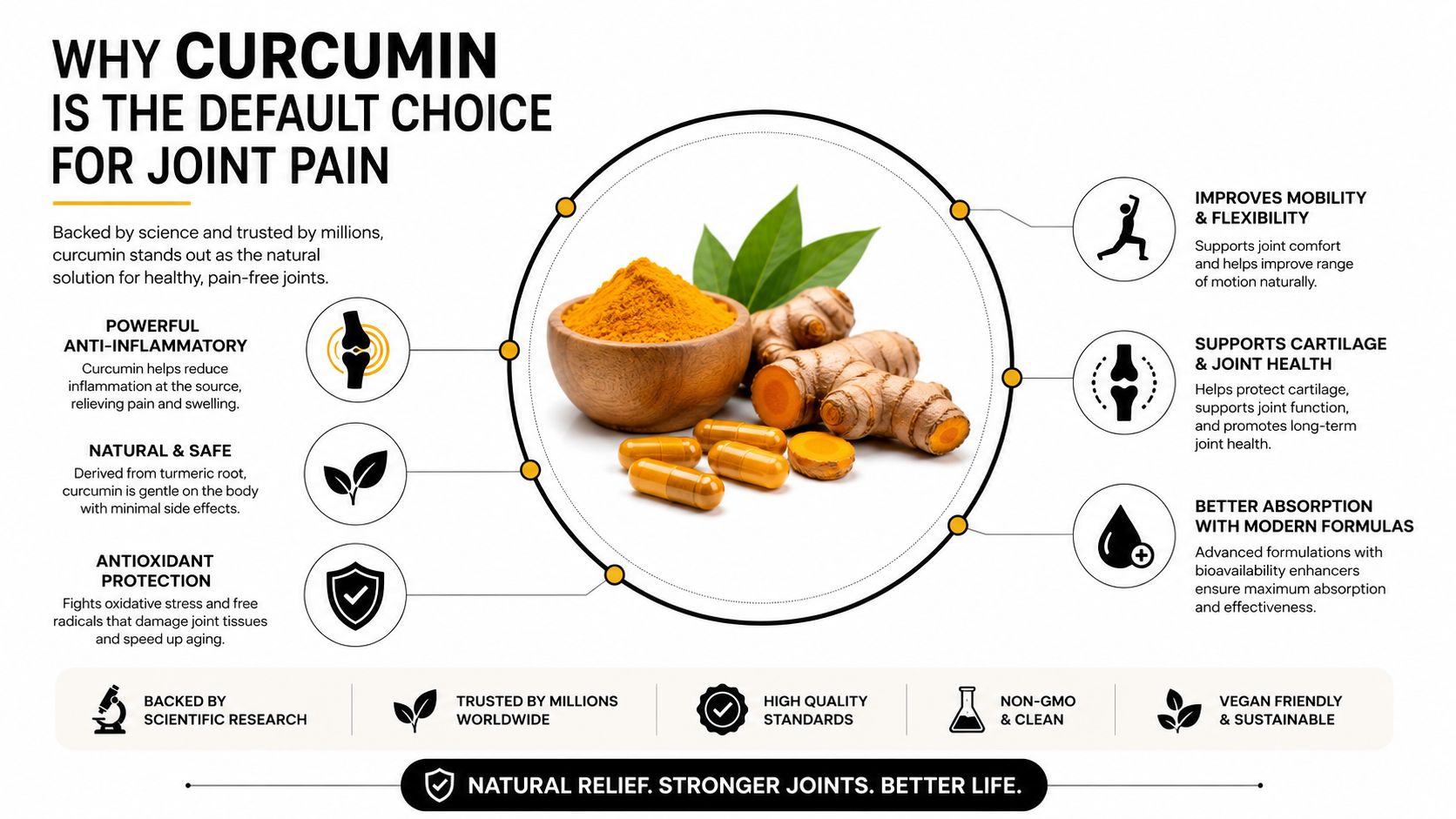
Curcumin's evidence makes it a useful default for joint pain, not a substitute for diagnosis or medical care. Judge the product by its formulation as well as its ingredient name.
Why Topical Capsaicin Wins for Localized Pain
A single aching knee calls for a different strategy than pain spread across several joints. Capsaicin, the compound that gives chili peppers their heat, fits the first situation because it acts where the discomfort is felt. Its effect goes beyond a temporary warming sensation.
Capsaicin activates TRPV1 receptors on nociceptive nerve endings. These receptors detect heat and irritating chemicals, including capsaicin. The first applications may therefore cause warmth, stinging, or burning. With repeated use, those nerve endings become less responsive, pain fibers fire less readily, and signaling gradually quiets in the treated area.
Why local action matters
Repeated application over 4–8 weeks can contribute to desensitization through calcium influx, neuropeptide depletion, and reduced pain signaling, as explained in the mechanistic review of capsaicin. The result is a treatment aimed at one painful region rather than an oral ingredient distributed throughout the body.
Capsaicin may fit especially well for:
One aching knee: Apply it to the painful area instead of exposing the whole body to an ingredient that must circulate broadly.
Peripheral nerve pain: A superficial burning or hypersensitive pattern may respond differently from deep, widespread inflammatory pain.
A stubborn muscle region: Local treatment can be practical when discomfort centers on one trigger point or muscle group.
Capsaicin is not automatically stronger than curcumin. The better choice depends on the pain pattern. Someone with several stiff joints may need broader support, while someone with one painful knee may prefer a site-specific cream. Some people pair topical treatment with an internal supplement, but medication compatibility and skin tolerance still need attention.
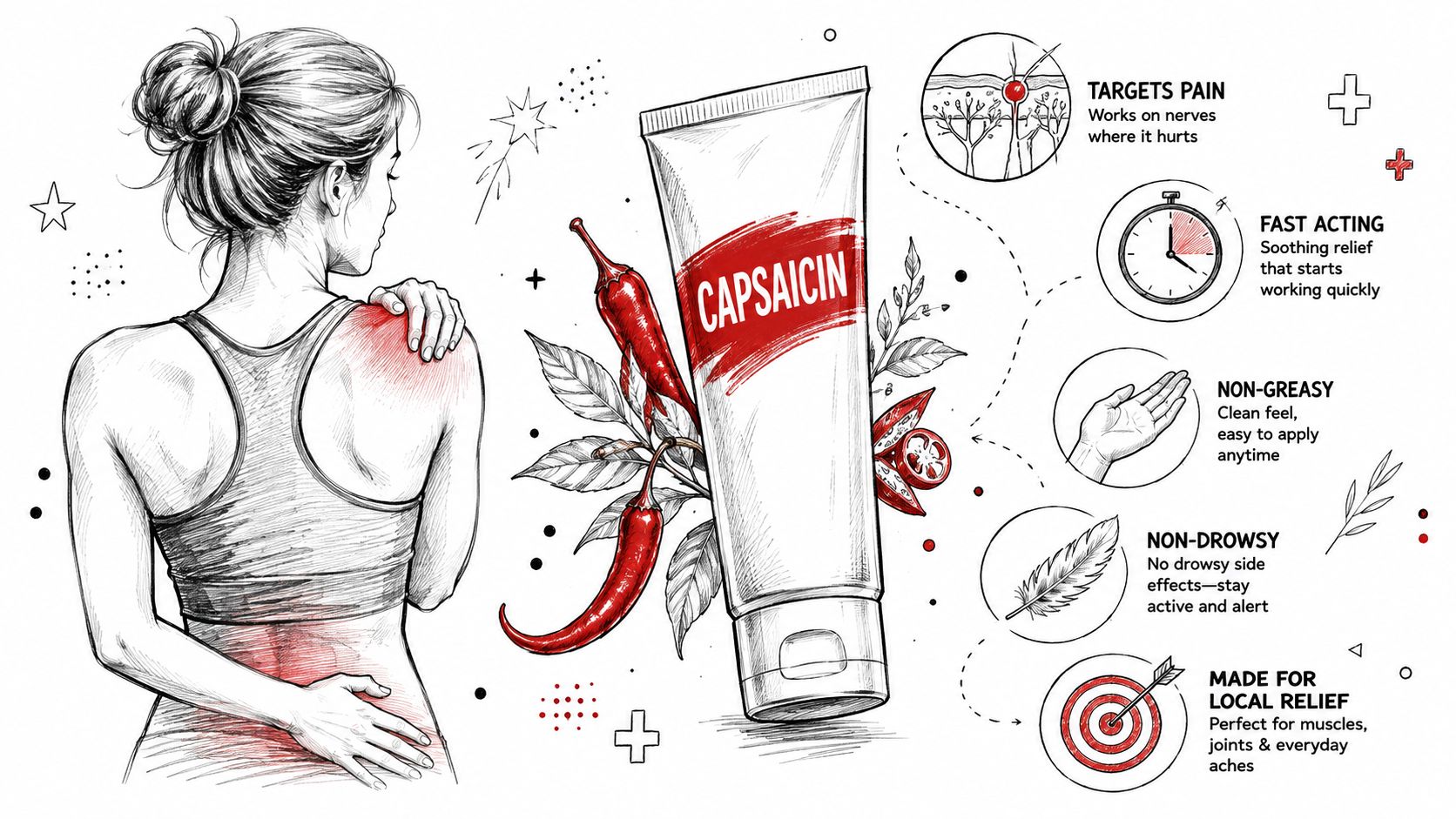
For practical guidance, read this explanation of choosing and using a topical pain reliever cream, particularly when you are unsure whether your discomfort is localized enough for capsaicin.
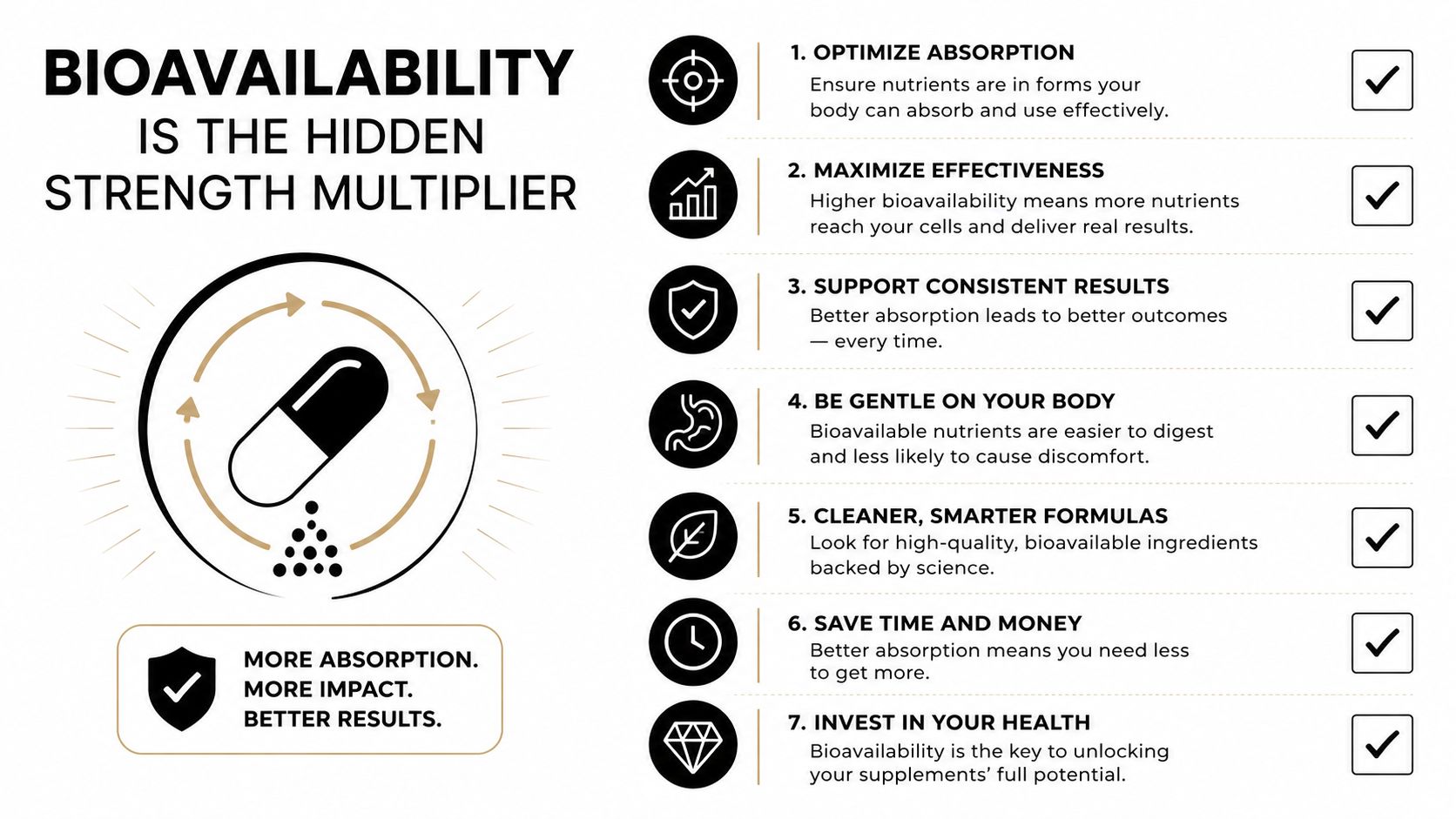
Bioavailability Is the Hidden Strength Multiplier
A supplement can contain a promising ingredient and still produce little noticeable benefit if the body absorbs only a small amount. Bioavailability describes how much of a compound becomes available for the body to use after you take it. For curcumin, this is a central product-quality question.
Plain turmeric powder is not the same as an absorption-enhanced curcumin extract. Digestion, metabolism, and limited uptake can reduce the amount that reaches circulation. That's why a label listing “turmeric” tells you less than many shoppers assume.
Read the label in the right order
Start with the active ingredient, not the front-of-bottle marketing. Look for:
A named extract or standardized curcumin content, rather than turmeric root powder alone.
A delivery approach, such as piperine, a phytosomal format, or another enhanced system.
A transparent serving size, so you can tell how much active material the manufacturer provides.
Clear ingredient disclosure, rather than a proprietary blend that hides individual amounts.
Black pepper extract, often labeled piperine or BioPerine, is used to improve curcumin absorption. ConsumerLab's 2025 turmeric review specifically highlights absorption-enhanced products and formats as an important decision point.
Absorption also changes safety questions
Piperine can alter how the body handles some substances, so “more absorption” isn't automatically better for everyone. A person taking prescription medicines should ask a clinician or pharmacist before using an enhanced formulation.
For a focused explanation of the pairing, read about curcumin with black pepper. The practical lesson is simple: compare the form and delivery system, not just the herb name. A well-absorbed standardized extract may be more relevant than a larger-looking capsule filled mainly with unstandardized powder.
Why Combination Formulas Often Beat Single Herbs
The single-ingredient mindset is easy to understand. One bottle, one active compound, one expected outcome. Pain biology is less tidy. Joint discomfort can involve inflammation, stiffness, altered nerve sensitivity, reduced movement, and the consequences of avoiding activity.
Comparative evidence reinforces that no single supplement dominates every osteoarthritis outcome. Boswellia may rank highest for some knee pain and stiffness measures, while curcumin and ginger also show benefit, according to the comparative analysis of natural products. That result changes how a thoughtful formula should be judged.
Look for complementary roles
A combination can make sense when each ingredient has a distinct job:
Curcumin with piperine: The first supplies the primary botanical focus, while the second addresses absorption.
Ginger: This adds another traditional and studied botanical approach for discomfort and inflammatory symptoms.
Bromelain: This enzyme is often included in formulas aimed at musculoskeletal recovery and tissue-related discomfort.
Ashwagandha: Its role is broader, with formulas using it for stress resilience and related recovery support rather than treating it as a direct analgesic.
Boswellia: This may be considered when stiffness and knee osteoarthritis are the main concerns, particularly if a curcumin-only approach hasn't matched the symptom pattern.
The formula still matters more than the ingredient count. A long list can hide tiny amounts, unclear extracts, or unnecessary additions. A shorter blend with transparent, standardized ingredients may be easier to evaluate.
River of Life Capsules is one product example that combines turmeric extract, BioPerine, ginger, bromelain, and ashwagandha in a vegan capsule format. It's positioned as a multi-ingredient supplement for joint comfort and broader stress and recovery support, so readers should compare its label and suitability with other products rather than treating any blend as a guaranteed solution.
Safety, Interactions, and When to See a Clinician
Natural pain relievers can affect the body powerfully enough to cause problems. Curcumin and ginger may matter for people using medicines that influence bleeding, while curcumin may also be relevant for people taking antidiabetic medicines. Willow bark contains salicylate-related compounds, so it deserves particular caution in people with aspirin sensitivity, bleeding concerns, or medicines that already contain salicylates.
Capsaicin commonly causes local warmth, burning, redness, or irritation. Don't apply it to broken skin, and wash your hands carefully after use. Cannabinoids require extra caution because the living systematic review of cannabinoid safety found moderate to large increases in adverse events such as dizziness, sedation, and nausea during short-term treatment lasting 1–6 months.
Use a short safety checklist
Before starting a supplement or topical product, ask:
Do you take prescription medicines? A pharmacist can screen for interactions more reliably than a product label alone.
Are you pregnant, breastfeeding, preparing for surgery, or managing liver, kidney, bleeding, or gallbladder problems? Get individualized medical advice before self-treating.
Is the pain diagnosed? A supplement shouldn't delay evaluation of an injury, infection, nerve problem, or inflammatory disease.
Can you identify a clear stop point? Stop a product and seek advice if you develop a concerning reaction, worsening symptoms, or new systemic effects.
Some pain needs assessment rather than another capsule. Contact a clinician for unexplained pain that lasts more than two weeks, pain with numbness, a sudden severe headache, swelling after an injury, or pain that wakes you from sleep. Seek urgent care for severe or rapidly worsening symptoms.
The safest answer to what is the strongest natural pain reliever is therefore conditional: match curcumin or Boswellia to chronic joint symptoms, capsaicin to localized pain, and cannabinoids only with careful consideration for difficult neuropathic pain. Choose a transparent formulation, review interactions, and use professional guidance when the pattern doesn't fit ordinary soreness.
River of Life offers a vegan capsule combining turmeric extract with BioPerine, ginger, bromelain, and ashwagandha for people evaluating a multi-ingredient approach to joint comfort and recovery support. Visit River of Life to review the formula and decide whether it fits your symptoms, medications, and healthcare plan.