


Natural Pain Relievers: Science for Lasting Relief

You wake up stiff. Your knees complain when you stand. Your back tightens after a short walk, a workout, or even an afternoon at your desk. By evening, you're doing the same thing you did yesterday. Reaching for quick relief and hoping tomorrow feels different.
That cycle wears people down. Not just physically, but mentally too. Pain shrinks your world. You skip activities, move less, sleep worse, and then your body feels even more sensitive the next day.
A good natural pain reliever plan isn't about pretending pain away. It's about building a system that supports your body from more than one angle. That can include evidence-backed supplements, smarter movement, better sleep, anti-inflammatory food choices, and targeted topical relief. The goal isn't a miracle fix. The goal is steadier comfort, fewer flare-ups, and more control over your day.
Table of Contents
Moving Beyond Temporary Fixes for Pain
Temporary relief has its place. Sometimes you need to get through a workday, a long drive, or a rough night. But if pain keeps coming back, the core question changes from “What can I take right now?” to “What keeps pushing my body into this state?”
That's where people often get stuck. They think natural options are either weak, slow, or too vague to trust. In reality, a well-built natural pain reliever strategy can be practical and grounded in biology. The point isn't to reject conventional tools. It's to stop relying on symptom masking alone.
Pain often behaves like a repeating loop. Irritation leads to stiffness. Stiffness changes how you move. Compensating strains other tissues. Poor sleep lowers your resilience. Stress makes everything feel louder. You don't need one magic ingredient. You need a plan that lowers the overall load.
Practical rule: If your routine only reacts to pain after it spikes, you're always playing defense.
That plan usually starts with two shifts in mindset:
Think support, not suppression. Some natural compounds help calm the inflammatory pathways tied to pain instead of only covering the sensation.
Think consistency, not rescue. Natural approaches usually work better like brushing your teeth than like using a fire extinguisher.
Think system, not single product. Supplements matter, but so do sleep, movement, food, and the way you use your body all day.
If you've only compared natural options to a fast-acting pill, you may be using the wrong standard. A better comparison is this. One tool turns the volume down for a while. Another helps make the room less noisy in the first place. If you want a helpful reference point for how one common over-the-counter option works, this guide on ibuprofen and what to know before using it regularly is worth reading.
How Natural Compounds Address Pain at the Source
Pain often feels like it comes out of nowhere. In many cases, though, there is a pattern underneath it. Tissues get irritated. The immune system sends chemical signals. Nerves become more sensitive. Then ordinary movement starts to feel louder than it should.
Chronic inflammation is part of that pattern. It helps the body protect and repair itself, but it can also stay switched on longer than needed. When that happens, the body keeps producing signals linked to swelling, tenderness, and lingering soreness.

The body's inflammation volume controls
Researchers often focus on two pathways: COX-2 and NF-κB. The names sound intimidating, but the basic idea is simple. These pathways help control how strongly the body responds to irritation.
When activity in those pathways stays high, pain can become easier to trigger and harder to calm down. That is why some natural compounds matter. They may help lower the biochemical “volume” behind the pain signal rather than only covering up the sensation for a short time.
Curcumin is a good example. It is the best-known active compound in turmeric, and it has been studied for its effects on inflammatory pathways tied to joint discomfort. If you want a plain-English look at that mechanism, this guide on how turmeric curcumin helps with arthritis and joint pain breaks it down clearly.
This is the bigger point. A natural pain reliever plan works best when you treat supplements as one part of a system. The compound helps calm the chemistry. Your sleep, movement, stress load, and food choices help determine how often that chemistry gets pushed in the wrong direction again.
Why “natural” doesn't always mean effective
A strong ingredient still has to reach the bloodstream and tissues where it can do useful work. That is where bioavailability comes in. Bioavailability means how much of a compound your body can absorb and use.
Curcumin is a common example of this problem. A label can show plenty of turmeric or curcumin, but poor absorption may limit the result. Formulas often try to solve that by pairing curcumin with piperine from black pepper or by using forms designed for better uptake.
That helps explain why two products with similar front labels can feel very different in real life.
Factor | What it means in plain English | Why it matters for pain |
|---|---|---|
Target | Which pathway the compound affects | Better odds it addresses the biology linked to soreness |
Absorption | Whether your body can use the ingredient well | Weak absorption can make a promising compound feel disappointing |
Consistency | Taking it regularly instead of occasionally | Steady support gives the body time to settle an irritated system |
A helpful way to picture this is a home repair job. Good tools matter. Using them the right way, often enough, matters just as much.
Natural compounds work more like repair support than mute buttons. The goal is to calm an overreactive system so flare-ups become less intense and less frequent over time.
That is why this approach asks for patience. It is also why it can be more sustainable. You are not only chasing the pain spike. You are building conditions that make spikes less likely.
The A-List of Evidence-Backed Botanicals
A good pain formula works like a well-built toolkit. Each ingredient should have a clear job. One may help calm irritated pathways. Another may support recovery after strain. Another may help if stress and poor sleep keep your nervous system stuck on high alert.
That is the standard to use here. Skip trendy labels. Look for botanicals that either have direct evidence for pain-related use or support the daily habits that make relief more sustainable.
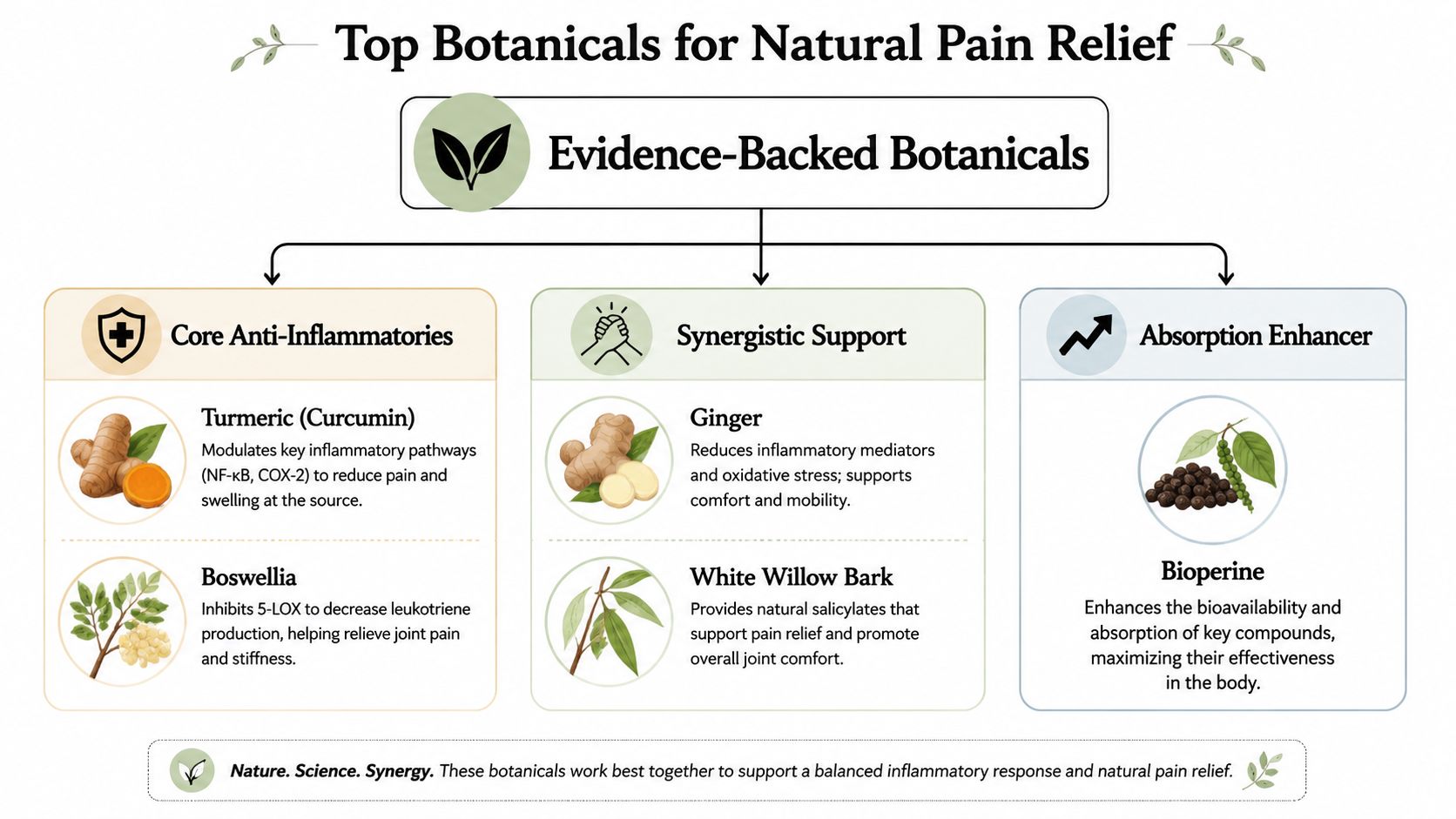
Turmeric and curcumin
Turmeric often sits at the center of natural pain support plans. The main reason is curcumin, the best-studied active compound in turmeric, especially for joint discomfort linked to knee osteoarthritis.
A review in the NIH database describes clinical research in which oral turmeric extract reduced pain and lowered inflammatory markers in people with knee osteoarthritis. The same review also found turmeric extract performed similarly to NSAIDs in some osteoarthritis research, though the authors recommended it as an add-on rather than a full replacement for standard medication. You can read that evidence in this NIH review on turmeric extract and osteoarthritis pain.
One detail matters a lot here. Curcumin is hard to absorb. A formula that pairs it with black pepper extract, or uses a form designed for better uptake, often makes more sense than a product that merely lists a big turmeric number on the front label.
If you want a clearer breakdown of that pairing, this guide on how turmeric curcumin helps with arthritis and joint pain explains it in plain English.
Ashwagandha
Ashwagandha plays a different role. It is not usually the first herb people choose for a sore knee or stiff back. It fits better as part of the support system around pain.
Here is why that matters. Pain is louder when the whole system is stressed. Poor sleep, muscle tension, and constant mental strain can turn the volume up on everyday aches. Ashwagandha is commonly used to support stress resilience, which may help some people recover better and feel less wound up.
That makes it useful in a holistic plan. A calmer body often sleeps better. Better sleep can improve recovery. Better recovery gives your anti-inflammatory tools a fair chance to do their job.
Ginger
Ginger is one of the easiest botanicals to understand because it sits so close to everyday life. People use it in tea, food, capsules, and recovery blends. It is familiar, but familiarity should not make us overlook it.
Research has linked ginger to support for muscle soreness and short-term pain relief in certain settings, including exercise-related discomfort and recovery. That makes it a practical choice for people whose pain flares after workouts, yard work, long walks, or physically demanding days.
Ginger often works best as steady background support. It may not feel dramatic overnight. It can still earn its place by helping reduce the wear-and-tear feeling that builds up over the week.
Bromelain
Bromelain is less famous, but it shows up often in recovery-focused supplements for a reason. It is an enzyme complex, usually sourced from pineapple, and is commonly included to support tissue comfort after physical strain.
The evidence base here is not as clear-cut as it is for curcumin, so it helps to be precise. Bromelain makes the most sense as a supporting ingredient in a broader formula, especially one aimed at soreness, post-activity recovery, or general physical wear.
A simple way to sort the roles:
Turmeric and curcumin support joint-focused and inflammation-related pain plans.
Ginger fits well for day-to-day soreness and recovery after exertion.
Ashwagandha supports the stress, sleep, and tension side of the pain picture.
Bromelain is often used to support tissue comfort after activity.
A strong blend is not about cramming in more ingredients. It is about building a small, sensible system. Each part should solve a different piece of the problem.
Use that filter when you compare labels. Ask what each ingredient is doing. Ask whether the formula supports only the pain spike, or whether it also helps your body recover, sleep, and settle down between flare-ups.
Complementary Relief From Topicals and Diet
You tweak your back lifting a laundry basket. The ache is sharp in one spot, but by dinner your whole body also feels worn down. That is a common pain pattern. One part is local. The other is your overall baseline.
Topicals and food help with those two layers in different ways. A cream or patch targets the sore area you can point to with one finger. Daily eating habits shape the internal setting your body runs on, like adjusting the thermostat instead of just opening a window.
Topicals that target one sore spot
Topicals fit best when pain is specific and easy to locate. A knee. A wrist. A patch of tight muscle near the shoulder blade. They are not meant to do the whole job. They are a useful support tool inside a larger pain plan.
Capsaicin is one of the better-known options. It comes from chili peppers and is used in creams, gels, and patches. Many people use it for joint discomfort or stubborn sore spots because it works right where you apply it.
That local approach is the main advantage. If your whole system does not need more support, or one area is bothering you more than the rest, a topical can make more sense than reaching for another oral product.
A few times topicals tend to fit well:
Single-joint flare-ups: helpful when one area is more irritated than the rest of your body
Evening discomfort: easy to work into a bedtime routine when stiffness builds later in the day
After activity: useful for the sore, overworked feeling that shows up after exercise, yard work, or long hours standing
If you want help comparing formats, ingredients, and use cases, this guide to topical pain reliever cream and how it fits into a pain plan walks through the basics.
Food choices that support a calmer baseline
Food rarely acts like a fast pain switch. It works more like repeated small votes. Each meal can push your body toward a calmer state or a more irritated one.
That is why diet matters in a sustainable pain system. Supplements may give targeted support. Topicals may help one hot spot. Food is the background pattern that either helps those tools work better or keeps adding friction.
A simple approach works for many people. Build more meals around foods that are close to their natural form and rich in nutrients linked with a healthier inflammatory response. Examples include fatty fish, walnuts, flaxseeds, beans, olive oil, herbs, and colorful fruits and vegetables. At the same time, cutting back on heavily processed foods, frequent fried foods, and sugar-heavy meals may help some people feel less puffy, achy, or sluggish.
Ginger fits here in a practical way. It is not only a supplement ingredient. It can become a daily habit through tea, soups, stir-fries, or smoothies. That matters because pain relief is often less about one heroic ingredient and more about steady inputs your body can count on.
If supplements are tools, your diet is the workbench. A steadier workbench makes every tool easier to use.
Topicals and diet support different parts of the same problem. One helps the sore spot. The other helps the body you bring to that sore spot every day. Used together, they can make your overall plan feel more stable and easier to stick with.
Lifestyle The Most Powerful Pain Reliever of All
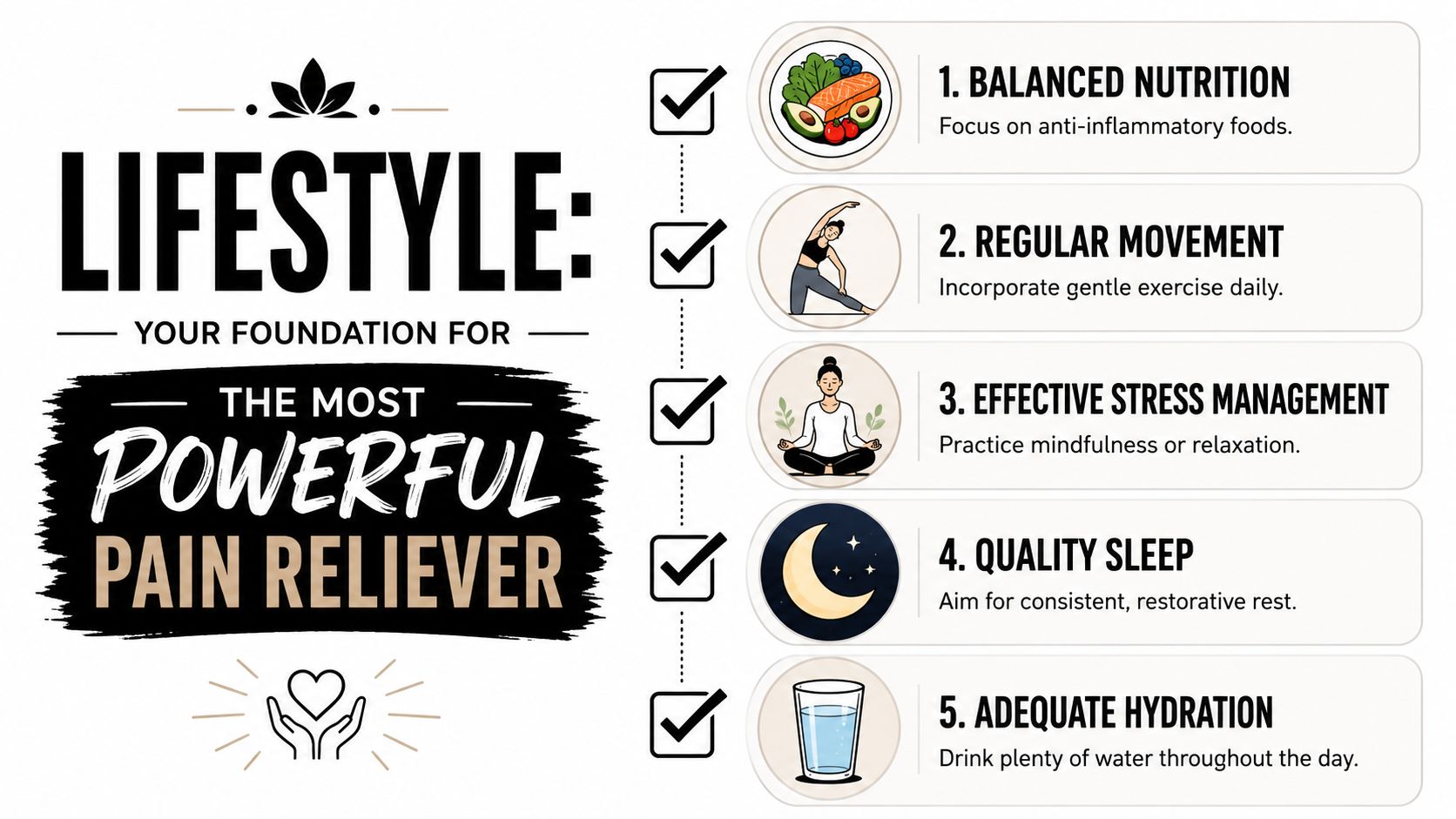
No supplement can outwork a lifestyle that keeps adding stress, stiffness, poor sleep, and irritation every day. If your habits keep turning the alarm back on, even a good natural pain reliever won't perform at its best.
That's why lifestyle isn't the “extra.” It's the foundation.
Movement that lubricates instead of aggravates
Many people respond to pain by moving less. That feels logical, but too much stillness often backfires. Joints stiffen. Muscles weaken. The body gets less tolerant of normal activity.
Gentle, regular movement usually works better than heroic effort. Walking, easy cycling, light mobility work, chair yoga, and basic strength exercises can all help you stay functional without pushing into a flare.
A good test is simple. You should feel looser after movement, not wrecked the next day.
For morning stiffness: Try a short walk or a few minutes of joint circles before sitting down with coffee.
For desk-bound pain: Stand up at regular intervals and reset your posture before discomfort builds.
For workout soreness: Choose recovery movement instead of complete inactivity.
Sleep that helps your body calm down
Poor sleep and pain are a rough pair. When you sleep badly, the body feels less resilient. When you hurt, you sleep worse. That loop can keep going for a long time if you don't interrupt it.
A better evening routine can matter as much as a better supplement. Keep your bedtime more consistent. Dim lights earlier. Reduce late heavy meals and endless scrolling. If pain spikes at night, pair your internal routine with a topical option or gentle stretching before bed.
This short practice can also help some readers add calm movement to their routine:
Eating patterns that lower the daily load
You don't need a perfect diet. You need a pattern that stops pouring fuel on the fire.
That usually means simpler meals, more protein and fiber, more colorful plants, and fewer foods that leave you feeling swollen, sluggish, or inflamed. If extra body weight is adding stress to your knees, hips, or back, even gradual progress can improve daily comfort. The point isn't punishment. It's reducing friction.
A few swaps make this easier:
Usual habit | Better pain-supporting swap |
|---|---|
Sugary snack when energy crashes | Fruit, nuts, or yogurt |
Heavy takeout most nights | A simple protein, vegetables, and a whole-food carb |
Skipping meals and overeating later | More regular meal timing |
Low fluid intake | Carry water and drink steadily through the day |
Ergonomics that stop adding fuel to the fire
Pain isn't only about what you take. It's also about what you repeatedly ask your body to do. A bad chair, poor lifting mechanics, slumped shoulders, or a phone held at chest level for hours can keep tissues irritated.
Pay attention to the movements you repeat most. That's where a lot of hidden aggravation lives.
Small mechanical stress adds up. Fixing posture, work setup, and movement habits can lower pain without buying a single supplement.
Try one upgrade at a time. Raise your screen. Support your feet. Keep frequently used items within reach. Hinge at the hips when you lift. Use both straps on a bag instead of hanging it off one shoulder. These changes seem boring, but boring is often what works.
Building Your Regimen and Choosing the Right Supplement
A good regimen is simple enough to follow when life gets busy. If it's too complicated, discontinuation frequently occurs before learning what helps.
The smartest approach is to build from the ground up. Start with your baseline habits. Add a few ingredients that make sense together. Then stay consistent long enough to judge the result fairly.
What to look for on a supplement label
The label tells you more than the front-of-bottle marketing ever will. Look for signs that the formula was built with function in mind.
Use this checklist:
Standardized extracts: These help you know the ingredient is being used in a more intentional form, not just as a vague plant powder.
Absorption support: This matters especially for turmeric. If a formula uses curcumin or turmeric extract, black pepper extract such as BioPerine can be a meaningful addition.
Clean formulation: Fewer unnecessary fillers usually makes the product easier to trust and compare.
Logical pairing: Ingredients should work like teammates, not random guests at the same table.
Clear usage directions: If a company wants daily consistency, the instructions should be straightforward.
One more point matters. Don't expect a supplement to prove itself in a day or two. Natural compounds often work more like training a habit than flipping a switch. You're trying to change the body's background state over time.
How to build a routine you'll actually follow
The best plan is the one you'll keep doing. Most readers do better with a repeatable daily rhythm than with an elaborate stack that changes every week.
A simple framework looks like this:
Pick your foundation. Many individuals begin with a combined botanical formula or a short list of individual supplements.
Add one support habit for movement. Keep it small. A daily walk, mobility flow, or chair yoga session counts.
Add one support habit for sleep. Bedtime consistency often beats fancy sleep gadgets.
Use topicals strategically. Save them for targeted flare-ups or end-of-day stiffness.
Track patterns, not perfection. Notice whether mornings are easier, activity recovery improves, or flare frequency changes.
Readers often ask whether they should buy separate products or use a blended formula. The answer depends on how much complexity you want to manage. Separate products offer flexibility. Combined formulas offer convenience and may improve consistency.
One example of a combined formula
A blended product can make sense when the ingredients have distinct jobs and fit the broader system you're building. One example is River of Life Capsules, which combine turmeric extract with BioPerine, plus ashwagandha root, ginger, and bromelain in one capsule-based formula. That setup aligns with the general principles above by pairing a core anti-inflammatory ingredient with absorption support and additional ingredients often used for stress resilience, recovery, and day-to-day comfort.

Whether you choose a combined formula or build your own stack, stay practical:
If you want convenience: A multi-ingredient product reduces the number of bottles and decisions.
If you want tighter control: Individual supplements let you adjust one variable at a time.
If you're sensitive to supplements: Start lower and introduce changes gradually.
If you take medications or manage a health condition: Talk with your clinician before adding supplements, especially for ongoing pain.
The bigger lesson is this. Relief usually improves when your routine has layers. One layer calms inflammation. Another supports recovery. Another reduces the mechanical and lifestyle triggers that keep pain cycling. That's how a natural pain reliever strategy becomes sustainable instead of frustrating.
If you want a simpler way to put that system into practice, River of Life offers a capsule-based formula built around turmeric extract with BioPerine, plus ashwagandha, ginger, and bromelain. It's one option for people who'd rather use a combined supplement than manage several separate products while they work on the lifestyle habits that support longer-lasting relief.