
Natural Supplement for Anti Inflammatory: How

The single best-studied natural supplement for lowering systemic inflammation is standardized turmeric extract (curcumin), but only when paired with a bioavailability enhancer like BioPerine black pepper extract. Without it, most curcumin passes through the body unused. That formulation issue matters more than the word “turmeric” on the front of a bottle.
A supplement can contain a familiar ingredient and still deliver very little of the compound your body needs to use. I've seen people abandon natural options after trying an under-dosed turmeric capsule, then assume the ingredient itself failed. Their skepticism is understandable. The question isn't which natural supplement for anti-inflammatory support sounds promising. It's whether the product is designed to absorb, what outcome you're targeting, and whether the formula fits your health situation.
Table of Contents
The Science Behind the Top Natural Anti-Inflammatory Ingredients
How to Take Natural Anti-Inflammatory Supplements Effectively
Why Your Natural Supplement Might Not Be Working
A turmeric supplement can fail before it has a chance to help. Standardized curcumin paired with BioPerine is a practical starting point, yet the delivery system determines how much of the compound remains available after swallowing. Curcumin has poor oral absorption and is rapidly metabolized. Independent reviews describe human bioavailability in some studies as roughly 0.16% to 1%, while noting that newer delivery systems may increase exposure without proving better effects in tissue (review of curcumin bioavailability).
That explains a common experience. You choose a bottle because it says turmeric, take it consistently, and wait for a change in knee discomfort, hand stiffness, or post-workout soreness. When nothing happens, the empty bottle can seem like proof that natural remedies are placebo.
The conclusion may be wrong. The product choice was often the problem. Turmeric root powder does not tell you how much curcuminoid the capsule provides. A proprietary blend can conceal the dose, while a formula without an absorption strategy may deliver very little of an ingredient with promising clinical evidence.
The label can conceal the core problem
Curcumin must survive digestion and enter circulation in a usable form. A long ingredient list cannot compensate when that process fails. Black pepper extract, phospholipid complexes, liposomal systems, and nanoparticle preparations each address the absorption bottleneck differently. They are not interchangeable, and improved dissolution does not automatically establish better systemic exposure.
Practical rule: Judge the formulation, not the front-label ingredient. Look for standardized curcuminoid content and a clearly identified absorption technology.
Your goal determines whether the product makes sense. Occasional soreness after training may call for recovery support. Persistent joint discomfort requires a more disciplined plan, and supplements should not delay evaluation of an undiagnosed condition.
Symptoms such as widespread pain, swelling, fever, unexplained fatigue, or rapidly worsening discomfort warrant medical assessment rather than a larger supplement stack.
A useful buying decision separates a clinically studied compound from a decorative ingredient list. It also requires knowing where ginger may fit and recognizing when a natural option is reasonable support, not an all-purpose fix.
What Inflammation Really Is and Why It Matters
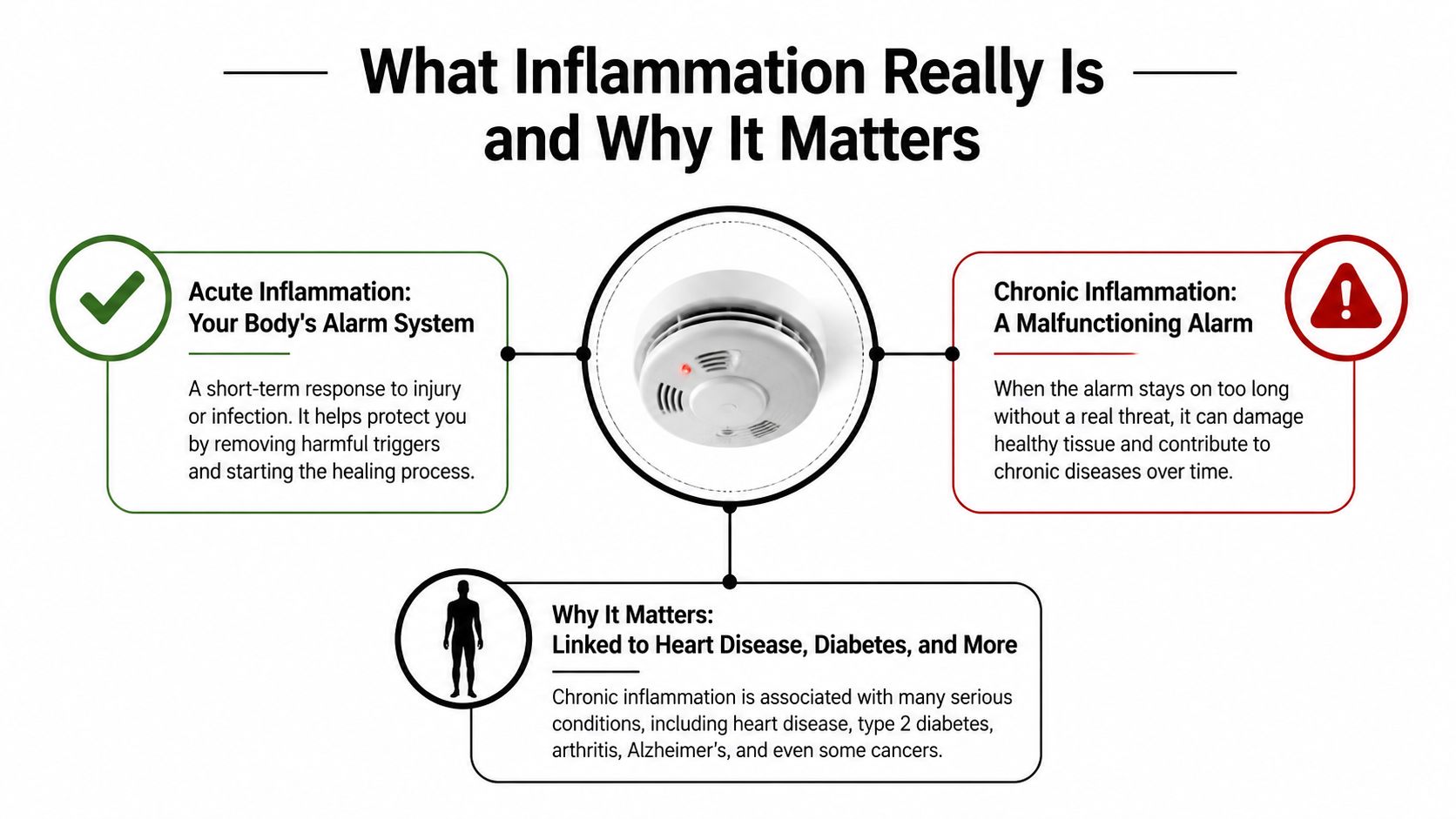
Inflammation is your body's alarm system. When tissue is injured or threatened, immune signals increase blood flow, recruit protective cells, and begin repair. That short-term response can cause heat, swelling, tenderness, and reduced movement, but it serves a purpose.
The problem starts when the alarm remains active after the original danger has passed. Chronic, low-grade inflammation can keep signaling tissues without producing the obvious redness or swelling associated with an acute injury. That's why someone may describe stiff knees, lingering soreness, poor sleep, or mental fog without seeing one clear source.
Acute protection versus a persistent signal
An acute response resembles a smoke alarm that activates when there's a real problem, then switches off after the danger is handled. Chronic inflammation is closer to a malfunctioning alarm that keeps disturbing the house. It consumes attention and resources, disrupts normal routines, and can affect healthy tissue when the system never settles.
This mental model helps explain why a supplement shouldn't be judged only by whether it creates immediate numbness. Anti-inflammatory support may involve changing signaling patterns over time, not producing the rapid sensation associated with a painkiller. It also explains why a person's baseline inflammatory burden can affect how noticeable any benefit feels.
Why biomarkers matter
Researchers commonly track markers such as C-reactive protein, interleukin-6, and tumor necrosis factor alpha when evaluating systemic inflammation. CRP provides a broad signal of inflammatory activity, while IL-6 and TNF-α participate in immune communication that can influence pain, tissue stress, and recovery.
These markers aren't a complete diagnosis, and a supplement result on paper doesn't guarantee that every person will feel better. Still, they offer a more meaningful way to evaluate an ingredient than vague promises about “detoxifying” the body. Persistent symptoms can also reflect arthritis, injury, autoimmune disease, metabolic problems, sleep disruption, or medication effects, so the symptom's cause matters.
Inflammation is a biological process, not a single disease. The right response depends on why the alarm is active.
That distinction keeps supplement use grounded. A formula may support joint comfort or recovery, but it shouldn't be marketed as a replacement for appropriate care when symptoms are severe, persistent, or unexplained.
The Science Behind the Top Natural Anti-Inflammatory Ingredients
Curcumin has the strongest human evidence among the ingredients discussed here, but the label alone does not determine its value. A 2023 umbrella meta-analysis of randomized clinical trials included 10 studies and 5,870 participants and found statistically significant reductions in CRP, IL-6, and TNF-α with curcumin supplementation (2023 curcumin umbrella meta-analysis).
The pooled effect sizes were ES = −0.74 for CRP, ES = −1.07 for IL-6, and ES = −1.92 for TNF-α. The review also reported substantial variation among studies for CRP and IL-6, meaning the response was not identical across trials. The ingredient has evidence behind it, yet the product still needs a formulation that helps the body absorb it.
A separate review examined standardized turmeric extract, commonly used at 1,000 mg daily for 8 to 12 weeks. Included studies reported reduced arthritis-related pain and inflammation discomfort, with improvements comparable to ibuprofen and diclofenac sodium in those trials (turmeric and curcumin systematic review). This does not make turmeric a direct substitute for prescription treatment. It does show that curcumin has been evaluated in human symptom studies rather than discussed only as a theoretical antioxidant.
Why BioPerine changes the buying decision
Curcumin's main limitation is pharmacokinetic. Oral curcumin is poorly absorbed, and the body rapidly processes much of what is swallowed. BioPerine, a black pepper extract containing piperine, is included in some formulas to improve absorption.
That formulation choice changes how a buyer should read the label. “Turmeric” alone does not tell you the curcuminoid content, delivery method, or whether the ingredient is likely to reach circulation in a useful form. Look for transparent dosing, standardized curcuminoids, and product testing. An absorption enhancer can improve a formula's design, but it does not automatically validate every capsule.
The practical standard is standardized curcuminoids plus a documented delivery approach. The form may affect absorption, circulation, and how consistently the product performs. Readers comparing joint formulas can also use this evidence-based review of joint-pain supplement options to compare curcumin with other approaches.
Ginger adds a different pathway
Ginger offers complementary evidence. A 2020 systematic review and meta-analysis of randomized controlled trials reported significant reductions in CRP, high-sensitivity CRP, and TNF-α after ginger supplementation (ginger inflammation meta-analysis). Its role is broader than quick pain relief. Ginger appears relevant to inflammatory and oxidative-stress pathways, which may make it useful in formulas intended to support recovery and inflammatory load.
Ashwagandha belongs to a different category. It is an adaptogenic herb used to support the body's response to stress, not a primary inflammation-targeting compound. That distinction matters when discomfort and poor recovery occur alongside restlessness, disrupted sleep, or sustained stress.
Bromelain is a proteolytic enzyme often included in recovery-focused formulas. It may suit periods after exercise or tissue stress, but its appropriate use depends on the product, dose, and individual health context. It is not a universal answer for chronic pain.
Ingredient | Primary mechanism | Best use case |
|---|---|---|
Standardized curcumin | Influences inflammatory signaling and measurable markers | Joint comfort and broader inflammatory support |
BioPerine black pepper extract | Supports curcumin absorption | Formulation enhancement |
Ginger extract | Combines inflammatory and oxidative-stress support | Complementary support for soreness and recovery |
Ashwagandha root extract | Adaptogenic stress support | Stress-related recovery and sleep concerns |
Bromelain | Proteolytic enzyme activity | Recovery-oriented support after physical strain |
The key buying question is not how many ingredients appear on the label. It is whether the formula is designed to absorb and deliver them consistently.
How to Take Natural Anti-Inflammatory Supplements Effectively
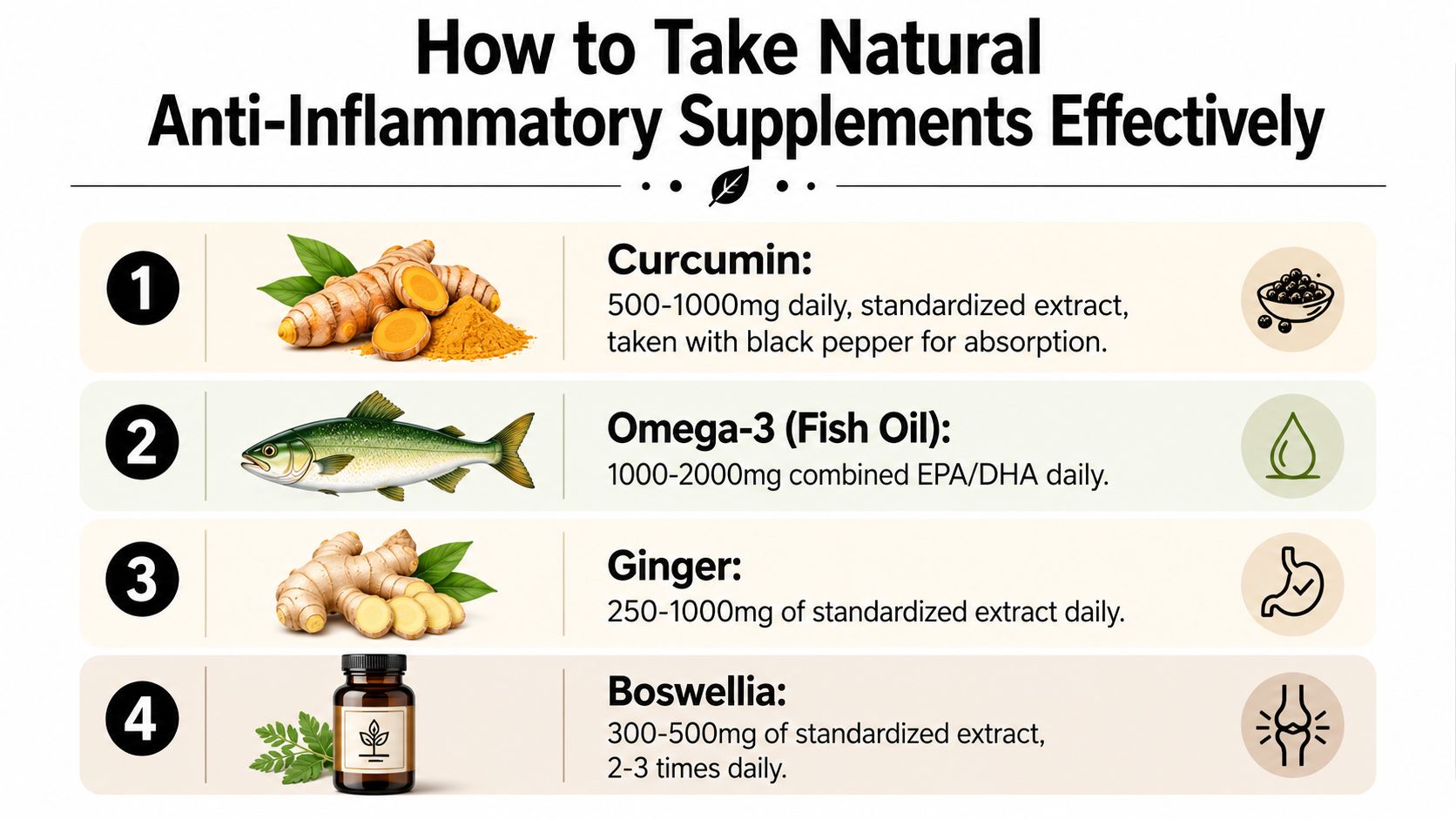
The most useful dose is the one printed clearly on the label and appropriate for your health history. Research protocols commonly use standardized curcumin extracts in the range of 500 to 1,000 mg of curcuminoids daily, while BioPerine amounts are often listed around 5 to 10 mg in product formulations. These ranges are practical reference points, not personal prescriptions.
Ginger extracts are commonly discussed around 500 to 1,000 mg daily, ashwagandha root extracts around 300 to 600 mg daily, and bromelain around 200 to 500 mg daily. Because supplement labels vary in extract strength and standardization, the milligram number alone doesn't tell the entire story.
Match timing to the ingredient
Curcumin and ginger are often easier to tolerate with food. Taking curcumin alongside a meal that contains some healthy fat may support digestion and align with the formulation's absorption strategy. Don't assume that taking more capsules will compensate for poor delivery.
Bromelain is commonly taken between meals when the intended goal is systemic support rather than digestive enzyme activity. That timing advice is general, and people with medication concerns should confirm the plan with a pharmacist or clinician.
A simple routine can look like this:
With a main meal: Take a standardized curcumin product with its stated absorption enhancer.
With food if sensitive: Use ginger alongside a meal to reduce the chance of stomach irritation.
Between meals when appropriate: Take bromelain according to the label and professional advice.
At a consistent time: Use ashwagandha at the time that best fits your response, especially if it affects alertness or relaxation.
The reason to combine ingredients is not to create a crowded label. It's to address different contributors. Curcumin focuses on inflammatory signaling, ginger adds complementary botanical support, ashwagandha addresses stress resilience, and bromelain is positioned around enzyme-based recovery.
River of Life Capsules provides one real-world example of this multi-ingredient approach, combining turmeric extract with BioPerine, ashwagandha root, ginger, and bromelain in a vegan capsule. Product details should still be compared against your own needs, medication list, and tolerance. The company's explanation of curcumin with black pepper covers the absorption rationale behind that pairing.
Give the routine enough time to judge
Don't evaluate a formula after one unusually active day or one poor night of sleep. Track the outcome you care about, such as morning stiffness, post-exercise recovery, or comfort during ordinary movement. Keep other variables reasonably stable so you can tell whether the supplement is contributing anything.
Stop if you develop concerning symptoms, and don't use a supplement routine to delay evaluation of swelling, weakness, injury, or unexplained persistent pain.
Safety, Interactions, and What to Watch For
“Natural” describes an origin, not a safety guarantee. Concentrated extracts can affect digestion, medication metabolism, bleeding risk, thyroid function, or sedation. The practical question is whether the ingredient, dose, and formulation suit your health history and current medicines.
Curcumin may interact with blood-thinning medicines. Ginger may also strengthen anticoagulant effects, so combined formulas deserve review with a healthcare professional if you take warfarin, antiplatelet medication, or another medicine that affects clotting. A product engineered for better absorption can still increase exposure to active ingredients, which makes the label and your medication list important.
Ashwagandha needs separate consideration. It may interact with thyroid medicines and sedatives, and people with thyroid conditions should not add it casually. The relevant issue is how it affects your treatment, alertness, and tolerance, not just whether it feels calming. For a closer review, see this guide to ashwagandha interactions. Bromelain may cause gastrointestinal upset, particularly when the dose or formulation does not suit you.
Situations that require extra caution
Speak with a clinician or pharmacist before starting a new anti-inflammatory supplement if you:
Take prescription medicines: Interactions may affect bleeding, sedation, thyroid treatment, or other medication effects.
Have an autoimmune condition: Immune-active herbs may not fit your treatment plan.
Are pregnant or breastfeeding: Safety evidence for concentrated combinations may be limited.
Expect surgery: Discuss supplements in advance because several ingredients can affect bleeding or medication management.
Have persistent or severe symptoms: A supplement should not replace diagnosis or appropriate treatment.
The NIH guidance on nutritional approaches for musculoskeletal pain and inflammation takes a cautious position. Evidence for natural products remains limited overall, and benefits supported for some options are generally modest. That standard is more useful than a promise that one capsule will fix every form of inflammation.
Safety boundary: A well-formulated supplement can support a care plan. It cannot identify the cause of pain, control an autoimmune flare, or replace prescribed treatment.
Product quality affects safety as well as absorption. Clear ingredient amounts, sensible serving instructions, contaminant testing, and an accessible manufacturer provide more useful information than a long proprietary blend. If the company will not disclose each serving's contents, you cannot properly judge either value or risk.
How to Choose a Quality Anti-Inflammatory Supplement
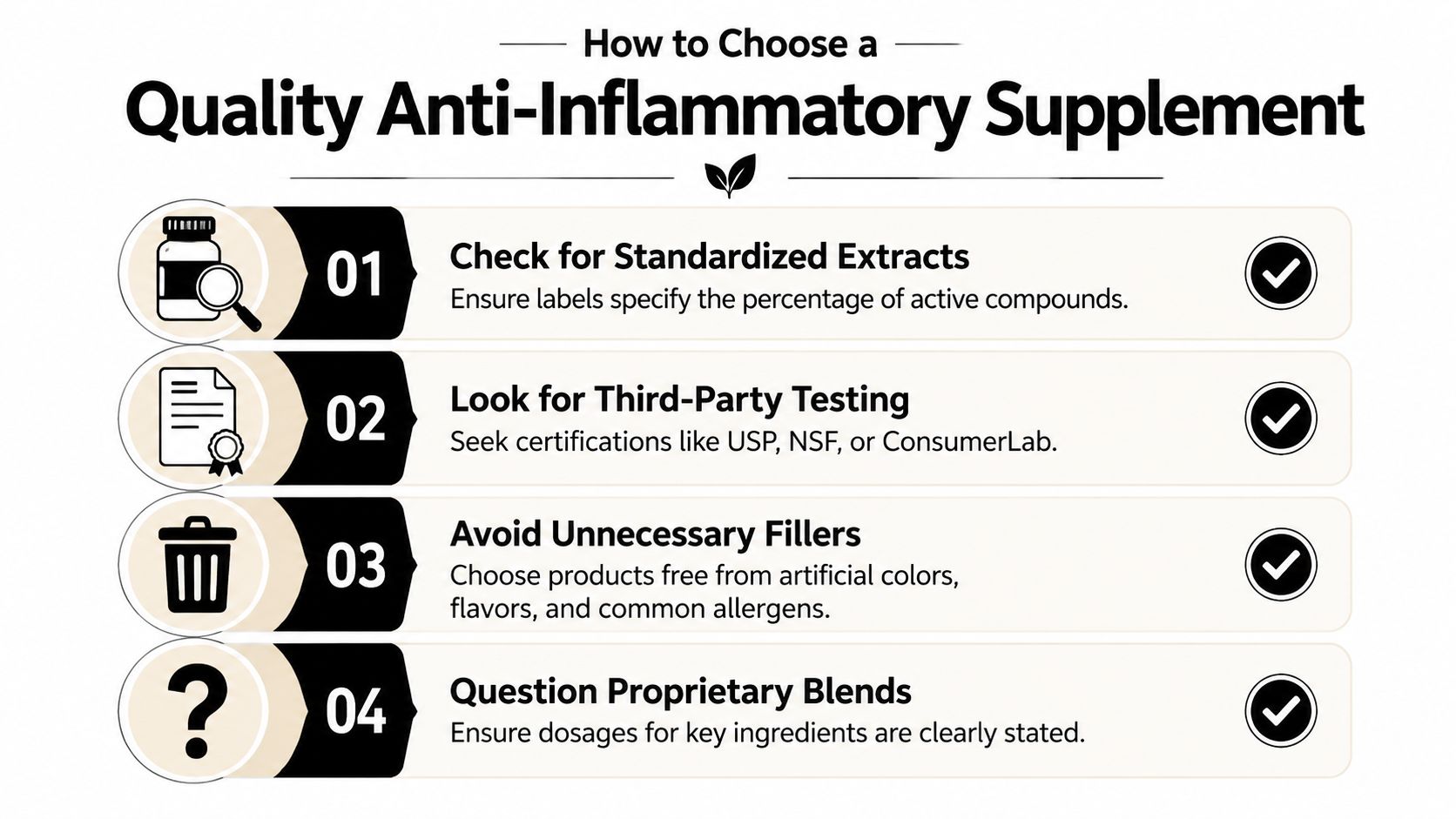
Start with the active compound, not the plant name. A label that says “turmeric root powder” may not tell you the standardized curcuminoid content. Look for a declared amount of standardized turmeric or curcumin, a named absorption system such as BioPerine, and a complete serving size.
Use a label-based filter
Check standardization: Confirm that the label identifies the active curcuminoid content rather than relying only on the word turmeric.
Verify testing: Look for credible third-party testing for heavy metals, contaminants, and manufacturing quality.
Reject hidden dosing: Avoid proprietary blends that prevent you from seeing the amount of each major ingredient.
Question disease claims: A supplement should support a healthy inflammatory response, not promise to cure arthritis or replace medical treatment.
A multi-ingredient formula may suit someone who wants joint comfort, stress support, and exercise recovery in one routine. A single-ingredient product may be better if you're testing tolerance, managing several medications, or trying to determine which ingredient affects you.
Use three questions at the point of purchase:
What active compound am I getting?
How is absorption addressed?
Can the brand show transparent dosing and quality controls?
River of Life Capsules is one option that combines standardized turmeric extract and BioPerine with full-spectrum turmeric root, root-only ashwagandha, ginger, and bromelain in a vegan capsule. The brand sells directly online, offers one-time and subscription purchasing, ships internationally, and provides a 30-day return policy for unopened bottles according to its product information.
Choose the formula that matches your goal, disclose it to your healthcare professional, and track a specific outcome instead of chasing a broad promise. If you want a single capsule built around turmeric absorption plus complementary support for joint comfort, stress resilience, and recovery, visit River of Life to review the ingredients and purchase options. Start with the label, confirm that it fits your health situation, and use it consistently enough to make a fair assessment.