


Joint Support Supplements That Actually Work in 2026

You wake up, put your feet on the floor, and wait for your knees to catch up with the rest of you. The first few steps feel stiff. Your knuckles complain when you lift the kettle. By afternoon, you're searching for joint support supplements and wondering whether any of them can do more than decorate a label with impressive-sounding ingredients.
The honest answer is more useful than a simple yes or no. Some ingredients have meaningful evidence for symptom relief, while others remain promising but uncertain. The important question isn't only which ingredient appears in a capsule. It's what the ingredient is designed to do, whether the dose and form resemble those studied, and whether your body can absorb it.
Table of Contents
What Joint Support Supplements Are Really Designed to Do
A joint support supplement usually aims at one or more of three practical targets.
First, it may help modulate inflammation-related discomfort around the joint. Osteoarthritis involves more than worn cartilage. The surrounding tissues, including the synovial lining, can contribute to pain, stiffness, and swelling. Botanical ingredients such as curcumin, ginger, and Boswellia are generally positioned around this symptom-management goal.
Second, a formula may provide compounds associated with structural support. Glucosamine, chondroitin, and undenatured type II collagen are marketed in this category because they relate to components of cartilage or the tissues around a joint. That doesn't mean swallowing them regrows damaged cartilage. The evidence is more appropriately discussed in terms of comfort, function, and maintenance than reconstruction.
Third, a supplement may target daily function. You might notice that stairs feel easier, morning stiffness fades sooner, or a walk becomes more comfortable. Those outcomes matter, but they're different from changing the physical structure of a joint.
Practical rule: Judge a supplement by the outcome it can plausibly support, not by the biggest promise on the front of the bottle.
Three questions to ask before buying
Is the goal inflammation modulation? Look for a well-characterized botanical and a form that addresses absorption when necessary.
Is the goal structural support? Examine the exact form and amount of compounds such as glucosamine or chondroitin, while keeping expectations measured.
Is the goal short-term comfort? Choose a product you can evaluate consistently through changes in stiffness, movement, and activity.
Supplements aren't drugs, and they shouldn't replace an evaluation for persistent pain, marked swelling, instability, or loss of function. They also work best as one layer of a broader plan that includes movement, strength, sleep, nutrition, and appropriate medical care.
The most useful way to compare ingredients is therefore not a popularity list. It's an evidence map. Some compounds have stronger support for symptom relief, some may be useful as adjuncts, and some remain difficult to judge because studies use different preparations or don't answer the absorption question clearly.
The Core Ingredients and Their Evidence Strength
The strongest botanical evidence in this group currently belongs to curcumin, the principal active family in turmeric. A recent umbrella review found statistically significant improvements in osteoarthritis pain and WOMAC joint-function scores compared with placebo. Some analyses described effects as comparable to NSAIDs, with better tolerability in the available trials, although that doesn't make curcumin interchangeable with prescribed treatment (Frontiers in Medicine umbrella review).
The major limitation is delivery. Plain curcumin has poor oral bioavailability, so a large label dose may not equal a large absorbed dose. That's why the extract form, delivery system, and use of an enhancer can matter as much as the headline milligram figure.
Glucosamine and chondroitin sit in a more complicated category. Research has produced mixed findings, with outcomes varying by preparation, population, and study design. Glucosamine sulfate and chondroitin sulfate are the forms most commonly discussed in clinical research, while an over-the-counter product may use a different salt, combination, or dose. Treat these as a cautious trial for symptoms, not a guaranteed cartilage strategy.
MSM is often described as a sulfur donor and is included in formulas aimed at comfort and mobility. Human evidence remains modest and variable, so it's difficult to make a confident stand-alone recommendation.
Ginger may have a supporting role. One 2020 meta-analysis found modest, statistically significant reductions in osteoarthritis pain and disability, with pain SMD -0.30 and disability SMD -0.22 (PubMed review). Another review found insufficient evidence for knee osteoarthritis relief versus placebo. An umbrella review still reported high-grade evidence of a small, significant reduction in pain severity and pain-related disability across more than 700 osteoarthritis cases, which makes ginger more credible as an adjunct than as a complete solution.
Bromelain and Boswellia serrata are common in botanical blends. Bromelain has a shorter and less consistent track record for joint-specific outcomes. Boswellia is promising, but the trials are generally smaller, and product standardization matters.
BioPerine and similar compounds aren't primary joint-support ingredients. They're adjuvants, meaning they're added to help another ingredient, such as curcumin, reach circulation.
Ingredient | Primary Role | Evidence Strength | Typical Daily Range |
|---|---|---|---|
Curcumin | Symptom and inflammation modulation | Strongest botanical evidence in this group | Varies by extract and delivery form |
Glucosamine sulfate | Structural and symptom support | Mixed | Use the form and amount studied on the label |
Chondroitin sulfate | Structural and symptom support | Mixed | Check the exact form and disclosed amount |
MSM | Comfort support | Modest and uncertain | Product-specific |
Ginger | Adjunct symptom support | Mixed, with some encouraging findings | Product-specific |
Boswellia serrata | Comfort and stiffness support | Promising but limited | Standardized extract preferred |
Bromelain | Botanical adjunct | Less established for joint outcomes | Product-specific |
BioPerine | Absorption support | Adjuvant, not a joint active | Paired with the primary ingredient |
For readers comparing collagen products, the distinction between collagen types matters. This guide to undenatured type II collagen can help clarify why a collagen label isn't automatically interchangeable with a glucosamine or chondroitin formula.
Why Absorption Can Matter More Than the Label Dose
A bottle can display a large curcumin number and still deliver less than you expect. Curcumin is fat-soluble, poorly absorbed, and rapidly metabolized. Much of the compound may never reach the bloodstream in a meaningful form, which helps explain why two turmeric products with similar labels can feel very different.
Consider the difference between quantity purchased and quantity delivered. A plain extract may contain a substantial amount of curcumin, but the body has to dissolve it, transport it across the gut, and prevent rapid breakdown. If those steps fail, the label dose says little about the exposure your tissues receive.
Manufacturers use several approaches to improve delivery:
Food or fats: Taking a fat-soluble compound with a meal containing fat may support dissolution.
Piperine: Black pepper extract can increase exposure, but it may also affect how the body handles certain medicines.
Phytosomal delivery: Phospholipids can help package curcumin in a way designed to improve passage through the digestive system.
Enhanced formulations: Newer systems aim to produce substantially higher plasma exposure than unformulated curcumin.
A 2025 systematic review notes that enhanced curcumin formulations were designed to improve absorption by roughly 7 to 20 times compared with unformulated curcumin, while also noting that pharmacokinetic data remain insufficient to determine the exact absorbed dose in blood (2025 evidence-based guide to joint supplements). Earlier human data found curcumin concentrations were extremely low or undetectable after oral dosing, reinforcing why on-label potency doesn't guarantee a consistent experience.
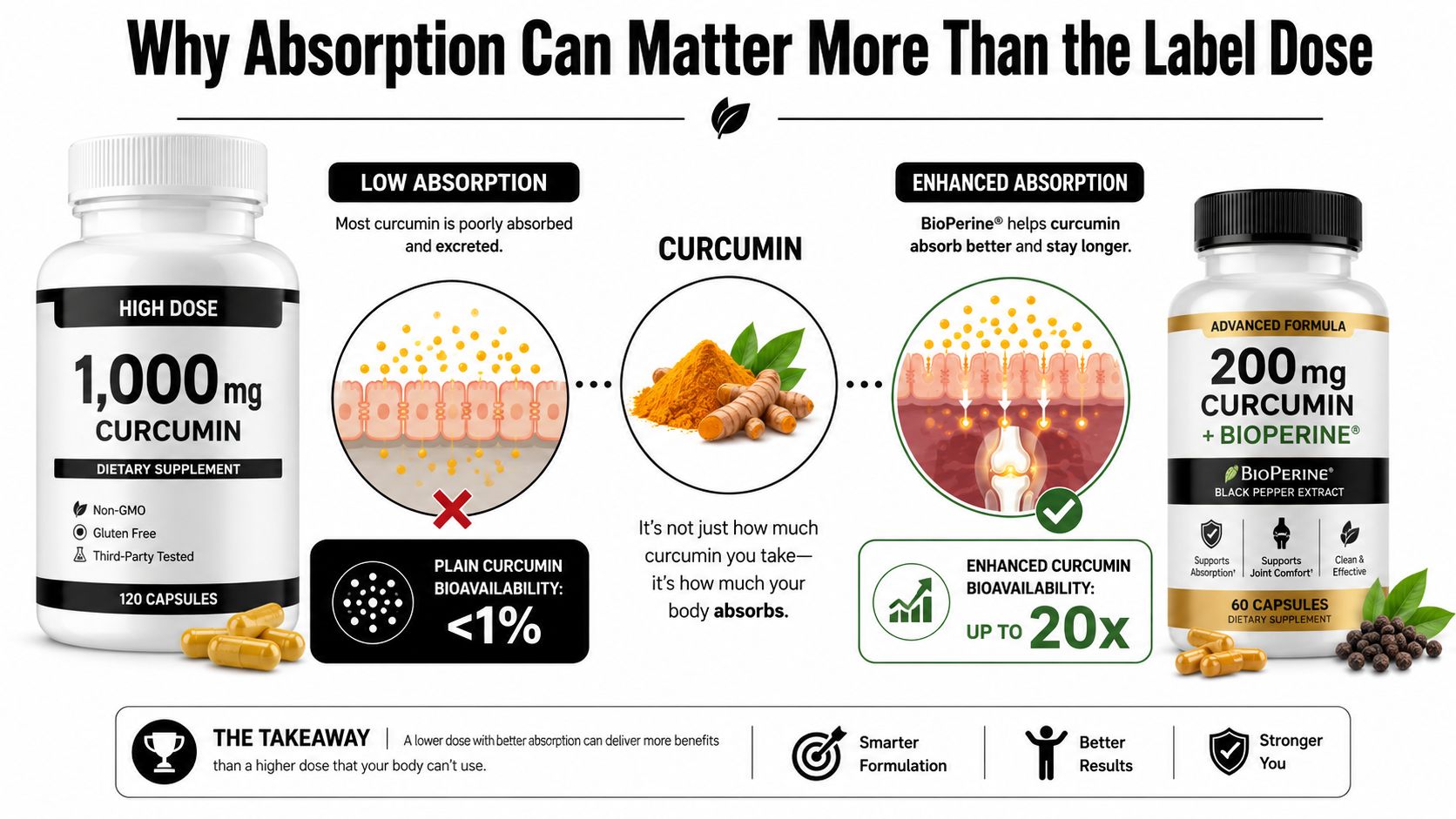
The practical takeaway is simple: a delivered dose matters more than a printed dose. A smaller, studied delivery system may be more relevant than a larger amount of poorly absorbed powder. For a plain-language look at the relationship between turmeric and black pepper, see how curcumin with black pepper works.
How to Read a Joint Supplement Label Like a Pro
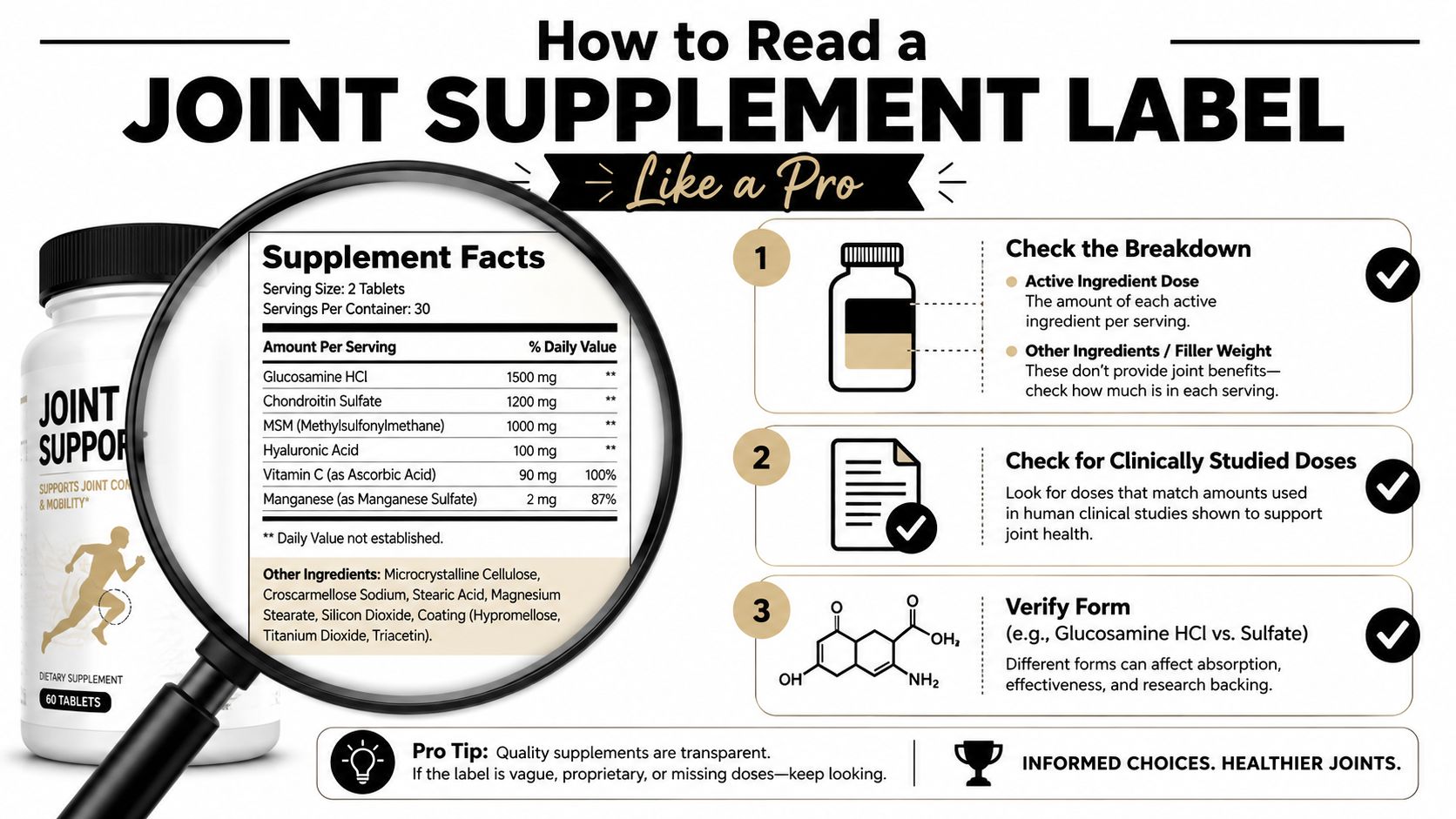
Start with the Supplement Facts panel, not the front of the bottle. The front may emphasize a total blend weight, while the facts panel shows whether the product discloses the amount of each active compound.
Look for a separate line for every meaningful ingredient. If turmeric, ginger, bromelain, and Boswellia appear in a proprietary blend with one combined weight, you can't tell how much of each you're taking. That makes comparison difficult and prevents you from matching the product to the preparations used in research.
Read the form, not just the name
A label that says “glucosamine” leaves an important question unanswered. Is it glucosamine sulfate or glucosamine hydrochloride? Does the product identify the source of chondroitin? Is the glucosamine shellfish-derived, or is it suitable for someone avoiding shellfish?
Curcumin labels also need closer attention. “Turmeric root” and “curcuminoids” aren't interchangeable descriptions. Check whether the product identifies an extract, a standardized curcuminoid content, or a delivery system such as a phytosome or piperine combination.
Use a quick label audit
Dose transparency: Each active should have its own disclosed amount.
Research alignment: The form should resemble the form used in the evidence you're relying on.
Quality controls: Look for credible third-party programs such as USP, NSF, ConsumerLab, or Informed Choice when available.
Manufacturing: A company should identify appropriate GMP or cGMP manufacturing standards.
Allergen clarity: Shellfish, soy, dairy, gluten, and other relevant allergens should be disclosed clearly.
Goal matching: A formula for botanical symptom support won't necessarily serve the same purpose as one built around structural ingredients.
Red flags include underdosed actives, hidden stimulants, vague proprietary blends, missing allergen information, and a curcumin product that says nothing about delivery. A clean label isn't automatically an effective label, but an opaque label makes an informed decision much harder.
What to Expect and How Long It Takes
A supplement trial should have a defined observation period. Otherwise, a good day can look like proof and a bad day can look like failure.
Botanical ingredients aimed at symptom modulation may produce subtle changes in stiffness or comfort before you notice a broader difference in daily movement. Ginger's evidence is mixed, while curcumin has stronger support among common botanicals. Boswellia may also be considered an adjunct, particularly when a product identifies a standardized extract.
Glucosamine and chondroitin require a different mindset. When they help, the effect is usually gradual rather than immediate. A person might notice that getting out of a chair feels easier or that a regular walk requires less adjustment, rather than experiencing a sudden change after one capsule.
Use the outcome, not the marketing promise
Ingredient | Earliest Noticeable Effects | Full Response Window | Type of Benefit |
|---|---|---|---|
Curcumin | Gradual change in comfort may appear during a consistent trial | Allow enough time to judge tolerance and response | Symptom modulation |
Ginger | Possible subtle comfort change, but response is inconsistent | Evaluate as an adjunct rather than a sole solution | Pain and disability support |
Boswellia | May support stiffness and comfort during a sustained trial | Requires consistent use and product-specific assessment | Symptom and function support |
Glucosamine | Usually not an immediate effect | Longer trial needed before judging | Gradual symptom and mobility support |
Chondroitin | Usually not an immediate effect | Longer trial needed before judging | Gradual symptom and mobility support |
MSM | Response varies | Use a defined trial and track changes | Comfort support |
No oral supplement reliably rebuilds osteoarthritic cartilage. That distinction protects you from judging a product by an outcome it was never realistically positioned to deliver.
Track one or two practical markers each week. Note morning stiffness, stair comfort, walking tolerance, swelling, and whether you're changing your usual pain-management routine. Keep other habits reasonably stable, and stop treating the label as the measurement. Your daily function is the more useful scoreboard.
Safety, Interactions, and Who Should Be Cautious
“Natural” doesn't mean risk-free. The safest approach is to screen the formula before you start, rather than waiting for an interaction or side effect to force the conversation.
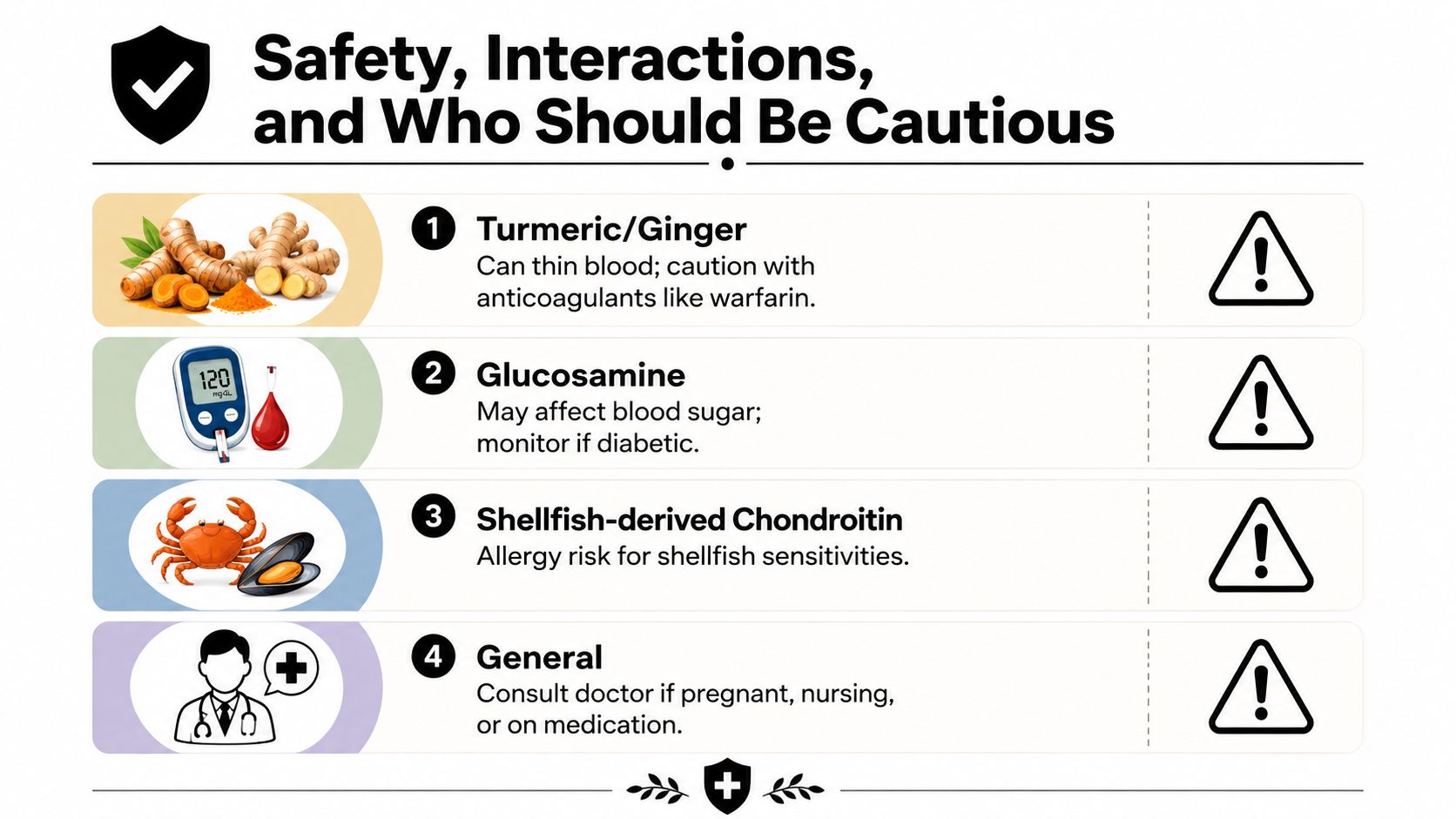
Turmeric and ginger may affect bleeding, which matters if you take warfarin, antiplatelet medicines, or other anticoagulant therapy. Chondroitin can raise similar concerns. Piperine may alter medication handling, so a curcumin product with black pepper deserves a medication review rather than an automatic green light.
Glucosamine is often shellfish-derived, creating an allergy concern for sensitive individuals. It may also affect blood sugar management, so people with diabetes should discuss its use with a clinician and monitor according to their care plan. MSM is generally tolerated by many people, but gastrointestinal upset can occur, particularly when someone takes a product their body doesn't tolerate well. Boswellia may also irritate the gut.
Use this pre-purchase checklist
Medication review: Ask a pharmacist or clinician about anticoagulants, antiplatelet drugs, diabetes medicines, and chemotherapy.
Surgery timing: Tell your surgical team about supplements before a planned procedure.
Pregnancy and nursing: Get professional guidance before using concentrated botanical formulas.
Allergen check: Verify whether glucosamine or chondroitin comes from shellfish.
Stacking risk: Don't combine several blood-thinning or anti-inflammatory botanicals casually.
Stop signals: Seek advice for unusual bruising, persistent stomach problems, rash, or any unexpected reaction.
People often compare supplements with over-the-counter pain relievers, but those aren't interchangeable decisions. This overview of ibuprofen and joint pain considerations can help frame why medication and supplement choices deserve separate safety discussions.
If you take regular medication, have a chronic condition, are pregnant or nursing, or have surgery planned, ask before starting. A short conversation can prevent a long and confusing problem.
Lifestyle Habits That Make Supplements Work Better
A capsule can't compensate for a joint that receives no appropriate movement, a body that doesn't recover, or a daily routine that repeatedly overloads the same tissue. Supplements make more sense when they support habits that already improve mobility and reduce avoidable strain.
Movement is the primary joint nutrient. Walking, cycling, and swimming provide low-impact loading that keeps you active without demanding the same impact as repeated jumping or hard running. Strength training matters because stronger muscles can help support and stabilize the joints they surround. Mobility work adds another piece by helping you maintain comfortable range of motion.
Sleep affects how well you recover from activity and how you experience discomfort. A consistent sleep routine won't repair cartilage overnight, but poor sleep can make ordinary aches feel more intrusive and can undermine your ability to exercise consistently.
Build a supportive daily pattern
Choose repeatable activity: A manageable walk or swim that you can sustain is more useful than an ambitious routine you abandon.
Train the support system: Strengthen the muscles that protect the knees, hips, shoulders, or spine, ideally with guidance if pain changes your movement.
Eat for overall resilience: Include omega-3 sources, colorful produce, and fiber, while reducing reliance on ultra-processed foods and excess alcohol.
Manage mechanical load: Body weight, posture, footwear, and work setup can all influence how much stress a joint experiences.
Hydrate consistently: Adequate fluid intake supports normal body function, even though hydration alone isn't a treatment for osteoarthritis.
River of Life Capsules is one example of a vegan, multi-ingredient capsule containing turmeric extract, BioPerine, ginger, bromelain, and ashwagandha. Its one-time and subscription options are designed around regular replenishment, which can function as a consistency tool for someone who has already decided that a daily botanical routine fits their needs. The formula still deserves the same label, interaction, and expectation checks as any other joint support supplement.

The best choice is rarely the product with the longest ingredient list. It's the formulation that matches your goal, identifies its active forms, addresses absorption where needed, and fits safely into your medication and movement plan. Start with one change, track what happens, and reassess instead of stacking products indefinitely.
If you're looking for a vegan capsule that combines turmeric extract with BioPerine, ginger, and bromelain, visit River of Life to review the formula and choose between a one-time purchase or a subscription designed to support consistent use. Compare the label with your personal goal and speak with a clinician if you take medication or have a condition that could affect safety.