

Hormone Balance Supplement Guide for Stress and Sleep

You know the feeling. You made it through the day on coffee, rushed meals, and a full inbox, and now your body still won't power down. You're tired, but you're also wired, maybe a little irritable, maybe craving sugar, and maybe noticing your sleep, cycle, or mood isn't as steady as it used to be. That's the moment many people start looking for a hormone balance supplement, hoping for something that can take the edge off without adding another complicated routine.
The right way to think about that kind of supplement is simple, it's a support tool, not a diagnosis. Symptoms like poor sleep, cravings, fatigue, and cycle changes can come from stress, nutrition gaps, medication effects, life stage shifts, or endocrine conditions, and the fix is rarely one neat answer. A supplement can sometimes help with a pressure point in that web, especially stress response or sleep quality, but it can't reliably “balance” every hormone at once, and it shouldn't replace medical care when symptoms are persistent or severe.
Table of Contents
When Hormones Feel Off and Why a Supplement Might Help
The most common mistake is assuming the body is sending one clear message. In real life, it's usually a pileup. A person who's sleeping badly for weeks, skipping lunch, and juggling work stress may notice irritability, cravings, lighter energy, or a cycle that feels less predictable, then assume hormones are the whole story.
That assumption can be partly true and still incomplete. Hormonal wellbeing sits inside a much wider system, where stress, sleep, food intake, movement, illness, medications, and life stage all pull in different directions. A hormone balance supplement may be useful when the biggest gap is sleep quality, calm, or recovery, but it works best alongside steadier meals, daylight, movement, and a real wind-down routine.
A supplement can support one pressure point
Think about the person who lies in bed exhausted but mentally stuck on tomorrow's tasks. In that case, the problem isn't a missing personality trait, it's a stressed nervous system that never got the message to downshift. A supplement may help with that transition, especially if it contains ingredients aimed at relaxation, sleep onset, or stress resilience.
Practical rule: If a product changes nothing after a realistic trial, the body may not need that ingredient, that dose, or that category at all.
Track sleep quality, morning energy, mood, cravings, and cycle patterns for several weeks before deciding whether a product is helping. One or two doses don't tell you much, and a quick reaction can be misleading because stress, meals, and sleep vary from day to day. If symptoms are severe, new, or keep coming back, that's a sign to get evaluated rather than guessing with supplements.
What Hormone Balance Actually Means
Hormonal balance isn't a perfect score, and it's definitely not a fixed 50/50 state. It's a moving relationship between hormone levels, timing, and how your tissues respond. The endocrine system reacts to sleep, food, stress, exercise, medications, illness, and major life stages, so “balance” is really about coordination, not perfection.
Why stress and sleep sit at the center
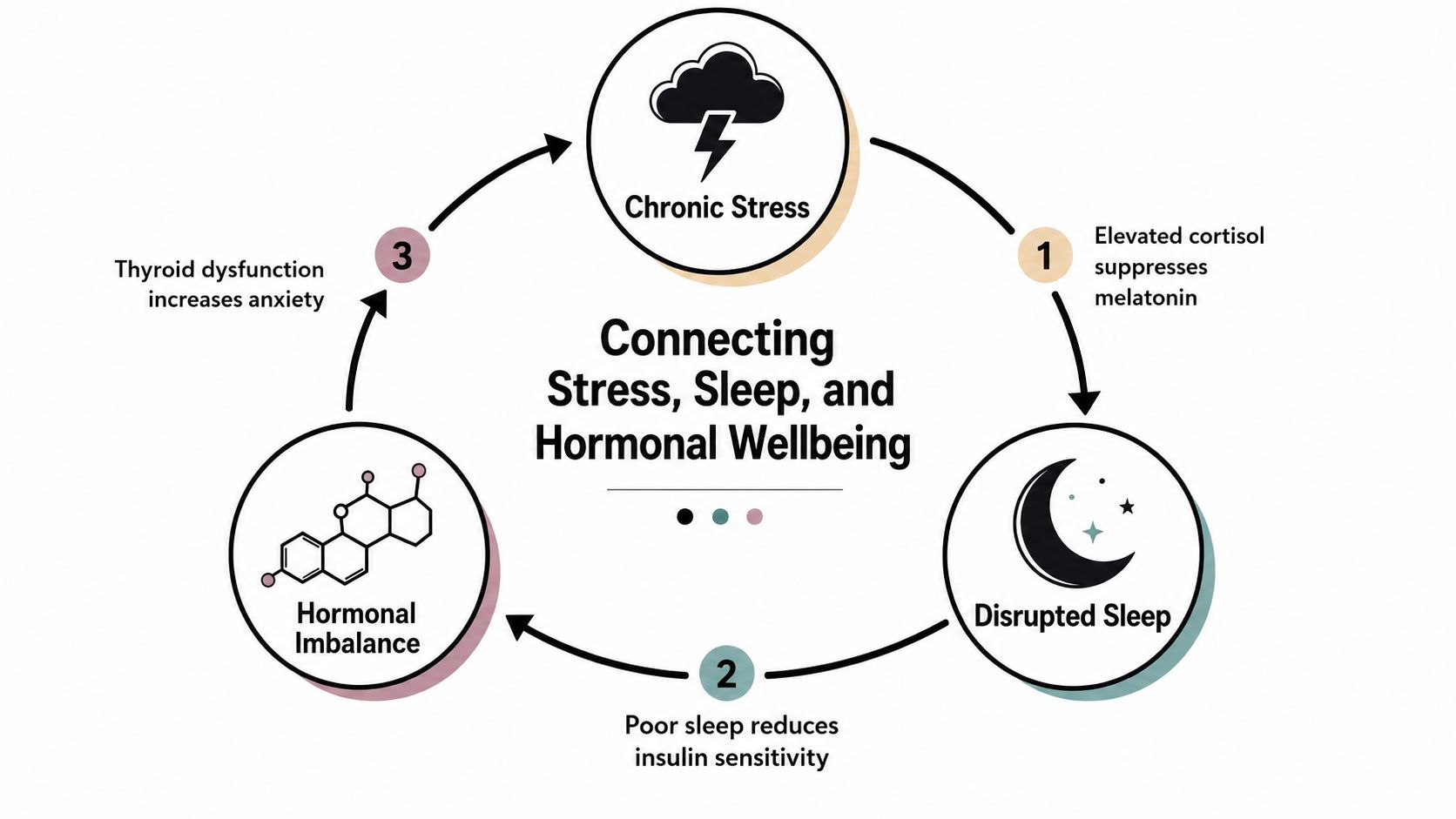
Cortisol normally follows a daily rhythm, and reproductive hormones naturally rise and fall across the menstrual cycle. When stress stays high, falling asleep can get harder, and when sleep stays short or irregular, appetite, mood, insulin sensitivity, and cycle regularity can all shift too. That's why people often describe themselves as feeling tired but wired, not just “hormonal.”
Nutrition matters too, but it has limits. Food provides the raw material the body uses for energy and hormone production, yet no capsule can make up for chronic under-eating or a diet that leaves someone under-fueled day after day. A supplement belongs in the same conversation as meals and sleep, not above them.
Symptoms aren't hormone-specific
Fatigue, weight changes, anxiety, low libido, and cycle changes can point in many directions. They're not proof of one hormone being too high or too low. That's why testing and medical history matter more than trying to diagnose yourself from symptoms alone.
Hormonal wellbeing is a system problem, so the best support is usually system-aware. A supplement can help one part of the loop, but it can't replace a full picture of what your body is doing.
If you're using a hormone balance supplement, think in terms of inputs. The ingredient, dose, timing, and your actual symptom pattern all matter. The same capsule can feel useful for one person and flat for another because the core issue may be sleep debt, not stress alone, or stress alone, not a reproductive hormone issue.
Common Active Ingredients and How They Work
A lot of hormone-support formulas look similar on the front of the bottle, but the ingredients usually map to different jobs under the hood. Some work more on calm and sleep, some on energy and fatigue, and some on timing signals that help the body know when to rest. The label matters because it tells you whether the product is trying to support the stress response, nighttime rhythm, or broader nutritional needs.
Ingredients that support calm, timing, and recovery
Ashwagandha is the best-known adaptogen in this category. It's studied for stress support and can help some people feel less overwhelmed, but it doesn't act like a universal hormone normalizer. If your main issue is a racing mind at night, it may be more relevant than a product built around energy alone. For a deeper look at that ingredient family, see River of Life's article on adaptogens for anxiety.
Magnesium is widely used for relaxation and sleep, especially when the form is chosen well. Magnesium glycinate is often preferred when the goal is calming support, while other forms may be better suited to different needs. L-theanine may promote calm without heavy sedation, and glycine is often discussed in sleep-focused routines because of its role in nighttime recovery.
Melatonin works differently. It's a timing signal, not a broad hormone-balancing compound, so it makes the most sense when sleep timing or circadian rhythm is the issue. B vitamins support energy metabolism and neurological function, but they're not stimulants when used appropriately. Vitamin D is a hormone precursor with established roles in bone, muscle, and immune health, although any supplementation should reflect diet, sun exposure, and lab needs.
Quick comparison of common ingredients
Ingredient | Proposed role | Main support target | Key caution |
|---|---|---|---|
Ashwagandha | Adaptogen, stress support | Calm, sleep, resilience | May not suit everyone with thyroid or medication concerns |
Magnesium | Mineral involved in many enzyme processes | Relaxation, sleep quality | Form matters, and benefits are clearer if intake is low |
L-theanine | Calm without strong sedation | Stress relief, sleep wind-down | Can feel too subtle if the issue is severe insomnia |
Glycine | Sleep-related amino acid support | Sleep quality, nighttime cooling | Response can be individual |
Melatonin | Nighttime timing signal | Circadian rhythm, sleep onset | Best for timing problems, not all sleep complaints |
Vitamin D | Hormone precursor nutrient | General hormonal wellbeing | Supplement should match real need |
Rhodiola | Adaptogen for fatigue and stress | Stress resilience, low energy | Evidence and safety vary by person |
The key point is straightforward. A multi-ingredient capsule can make sense when the goal is to support overlapping stress and sleep pathways, while a single megadose often misses the bigger pattern. That's one reason many formula designers now think in terms of daily rhythm rather than one isolated symptom.
What the Clinical Evidence Really Shows
The strongest human data in this category tends to focus on stress, sleep, and a few related markers, not on making every reproductive hormone behave the same way. That's a good thing, because it keeps the evidence tied to real-world outcomes people can feel, like being less tense at night or falling asleep more easily.
Ashwagandha has the clearest stress and sleep signal
A randomized, double-blind, placebo-controlled study published in 2019 found that ashwagandha root extract reduced perceived stress at both 250 mg/day and 600 mg/day, with statistical significance at both doses, and also improved sleep quality over eight weeks (PMC review of the 2019 study and related trials). That same body of research also includes a later controlled trial using 700 mg daily in healthy college students to examine sleep, stress, and food cravings, plus a 10-week insomnia study using 300 mg twice daily that improved sleep onset latency, sleep efficiency, PSQI scores, and anxiety measures versus placebo (same review).
Those findings don't prove ashwagandha is right for everyone. They do show why it keeps showing up in products aimed at stress-related sleep disruption. The clinical story is less about “fixing hormones” and more about reducing the strain that keeps the body from settling down.
Evidence is useful, but it's not complete
Rhodiola is often used for fatigue under stress, and maca is often discussed for subjective energy and libido, but those ingredients don't have the same consistency across studies as ashwagandha in the material provided here. Most supplement studies are still short-term, and many are small or tied to ingredient suppliers. That means readers should look for a clear symptom target, not broad promises.
The most practical way to read the evidence is to ask three questions. What was studied, how long was it studied, and what improved? If a formula says “hormone support” but the evidence is mostly about sleep onset, that's still useful, as long as you know what problem it's really meant to help.
Ingredient | Studied Dose | Trial Length | Participants | Primary Outcome |
|---|---|---|---|---|
Ashwagandha root extract | 250 mg/day and 600 mg/day | Eight weeks | Human participants in a randomized, double-blind, placebo-controlled study | Reduced perceived stress and improved sleep quality |
Ashwagandha root extract | 700 mg/day | Controlled trial duration not specified in the verified data | Healthy college students | Sleep, stress, and food cravings |
Ashwagandha extract | 300 mg twice daily | 10 weeks | Participants with insomnia | Better sleep onset latency, sleep efficiency, PSQI scores, and anxiety measures |
Other common ingredients like rhodiola, magnesium glycinate, L-theanine, and maca | Varies | Varies | Varies | Often studied for stress, sleep, or energy outcomes |
For a formulation mindset that prioritizes symptom fit, the ingredient philosophy discussed in River of Life's herbal supplement for stress is a useful reference point. The core lesson is that evidence should guide the symptom target, not the marketing label.
How to Read a Hormone Balance Supplement Label
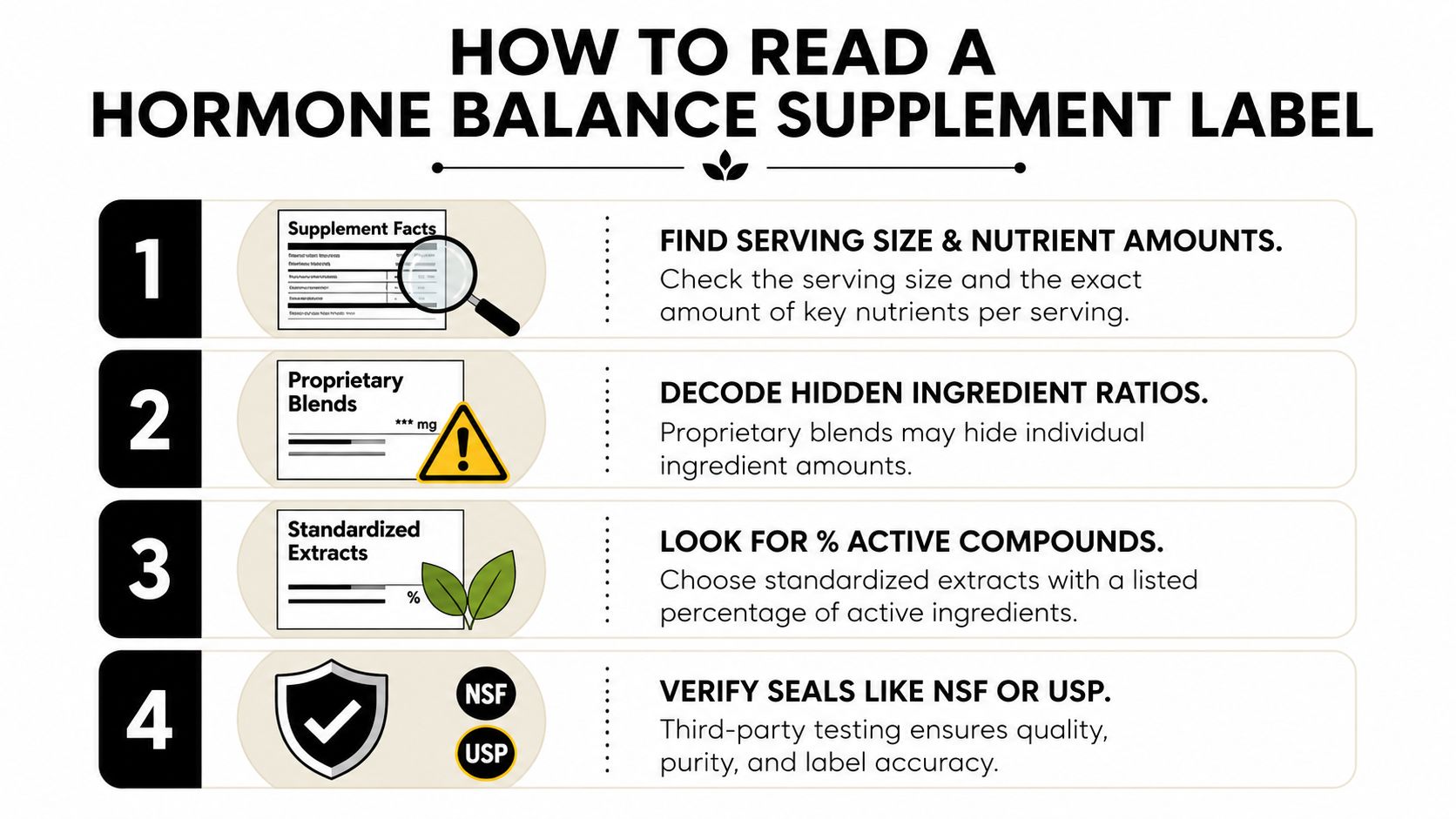
A label can tell you a lot before you ever buy the bottle. The trick is knowing what matters and what's just decorative branding. The Supplement Facts panel is where the actual decision-making starts, because that's where serving size, active ingredients, and dose transparency show up.
What to check first
Start with the ingredient form, not just the ingredient name. Ashwagandha labeled as a trademarked or standardized form is usually more reproducible than vague “root powder,” because you know the formula is aiming for consistency. The same goes for magnesium, where the form tells you whether the product is being built more for relaxation, digestion, or something else.
Check the Serving Size: Find how many capsules, tablets, or scoops make up one dose.
Look for Standardization: Standardized extracts give you a clearer sense of what's in the formula.
Watch for Proprietary Blends: These can hide exact ratios, which makes it harder to judge whether the formula is meaningful.
Look for Third-Party Testing: Seals such as NSF or USP help verify quality controls and product identity.
Why multi-ingredient formulas can make sense
A single large dose of one ingredient isn't always better than a smaller formula that addresses several pathways at once. A person who's stressed, sleeping lightly, and dragging through the afternoon may need a combination that targets calm, nighttime signaling, and energy support together. That's the logic behind many multi-ingredient capsules, including formulas designed around daily use rather than acute relief.
The other details matter too. Check allergen statements, fillers, capsule type, and whether the company offers a certificate of analysis. If a product is meant for everyday use, consistency and purity matter as much as potency. A well-made hormone balance supplement should read like a careful formulation, not a guess in capsule form.
Connecting Stress, Sleep, and Hormonal Wellbeing
The loop is easier to understand when you see it in daily life. A stressful week pushes cortisol higher, sleep gets lighter, the body feels less recovered in the morning, and then appetite, mood, and energy start to wobble. Over time, the person feels stuck in a cycle that looks like “hormone trouble,” but the loop is being driven by stress and sleep loss too.
Why multi-ingredient support is often more practical
A thoughtful capsule can target the parts of that loop that people feel first. An adaptogen like ashwagandha may help modulate stress, while magnesium glycinate and L-theanine can support sleep onset and relaxation. Supporting nutrients then fill in the edges, so the formula addresses the pattern rather than chasing a single number on a lab report.
That's why many people respond better to a product that feels boringly steady than to something dramatic. If a formula helps you fall asleep more easily, wake less often, or feel less tense by late afternoon, that can be more meaningful than a bottle making a sweeping hormonal promise. The result people want is usually not “more hormones,” it's fewer symptoms that get in the way of daily life.
Judge the product by the part of your day it improves first. If evenings are calmer, sleep is deeper, and mornings are less foggy, that's a useful outcome even before anyone talks about hormones.
A good hormone balance supplement should therefore be treated like a daily stress and sleep tool first, and a hormonal label second. That framing keeps expectations realistic and helps you focus on the symptoms that disrupt your wellbeing.
Safety, Interactions, and When to See a Clinician
Natural doesn't mean automatic. People who are pregnant or nursing need extra caution with herbal products, and so do those taking thyroid medication, antidepressants, sedatives, or other sleep-related drugs. Autoimmune conditions also deserve a careful conversation before starting any new adaptogen-heavy formula.
The main interaction risks to think about
Ashwagandha can be a concern for people with thyroid issues because it may amplify thyroid hormone levels. Melatonin and L-theanine can also interact with sleep medications, which is why timing and co-use matter. If you're taking prescription drugs, a pharmacist or clinician should review the full list before you start a new supplement.
For a focused discussion of interaction questions, River of Life's article on ashwagandha interactions is a useful place to cross-check common concerns. The point isn't to scare people off adaptogens, it's to make sure the ingredient choice matches the person's actual health context.
Red flags that deserve medical evaluation
Sudden weight changes
Hair loss
Irregular cycles
Persistent fatigue
Mood shifts lasting more than two weeks
If any of those are present, supplementation shouldn't be the only plan. Lab work and diagnosis matter because symptoms can come from thyroid disease, anemia, perimenopause, medication effects, or other conditions that need specific care. A supplement can sit alongside that care, but it can't replace it.
Building Your Daily Routine and Quick FAQs
Start with a third-party tested product, take the lowest effective dose at a consistent time, and pair it with real sleep habits, balanced meals, and movement. Track stress, sleep, and energy for about 30 days, then decide whether to continue, adjust, or stop. If the product doesn't change how you feel in a measurable way, it may not be the right fit.
How fast do these supplements work? Often gradually, over weeks, not after one dose.
Can I take them long term? Sometimes, but only if they stay useful and remain appropriate for your health profile.
Should I stack multiple adaptogens? Not automatically, because more ingredients can make side effects and interactions harder to track.
If you want a formula built around the daily symptoms that usually drive hormonal stress in the first place, River of Life focuses on practical, multi-ingredient support with standardized botanicals and absorption-minded formulation. Visit River of Life to explore a capsule-based approach designed for people who want steadier days, calmer evenings, and a simpler routine.