

Can Ashwagandha Reduce Stress and Anxiety? Key Facts

Yes, for some adults it can, with anxiety scores on the Hamilton Anxiety Rating Scale falling by 3.52 points versus placebo after 8 weeks. That's a modest reduction in anxiety and perceived stress over about 8 weeks, not a guaranteed or immediate fix.
Popular advice often treats ashwagandha as a natural switch you flip on a stressful afternoon. The trials don't support that picture. They tested consistent daily use for weeks, measured several different outcomes, and produced results that don't always move together. That gap between a lab marker and a lived experience is where most misleading claims start.
Table of Contents
Short Answer and What the Trials Show
The research points to a modest reduction in anxiety and perceived stress for some adults, not a guaranteed or instant fix. If you're asking can ashwagandha reduce stress and anxiety, the strongest pooled answer is a qualified yes for ongoing, non-emergency stress, judged over weeks rather than days.

What Each Measure Actually Captures
The Hamilton Anxiety Rating Scale rates anxiety symptoms such as tension, worry and physical complaints. The Perceived Stress Scale asks how unpredictable, uncontrollable and overwhelming life has felt. Serum cortisol is different again, it's a body-based stress marker tied to the hypothalamic, pituitary and adrenal stress system, not a report of how you feel.
Keeping those three separate matters. A supplement can move one without moving the others by the same amount, and a point change on a questionnaire isn't the same as resolving an anxiety disorder.
The Pooled Numbers
A systematic review and meta-analysis in BJPsych Open reported that supplementation reduced Hamilton Anxiety Rating Scale scores by approximately 3.52 points versus placebo after 8 weeks (95% CI: −6.00 to −1.04; p=0.0053). Perceived Stress Scale scores declined by approximately 4.88 points (95% CI: −7.84 to −1.91; p=0.0013), and cortisol showed an estimated between-group effect of −2.36 (95% CI: −3.26 to −1.46; p<0.0001).
Outcome | Measure | Effect versus placebo | Time frame |
|---|---|---|---|
Anxiety | Hamilton Anxiety Rating Scale | About 3.52 points lower (95% CI -6.00 to -1.04) | 8 weeks |
Perceived stress | Perceived Stress Scale | About 4.88 points lower (95% CI -7.84 to -1.91) | 8 weeks |
Stress biomarker | Serum cortisol | Between-group effect -2.36 (95% CI -3.26 to -1.46) | 8 weeks |
The wider pooled picture behind these figures comes from a 2025 review in PubMed Central covering 15 studies involving 873 participants. That's a reasonable base for a signal, but it's not a large, long-term evidence base, and the studies varied in extract type, dose and participant characteristics.
Practical reading: Treat ashwagandha as a possible add-on to discuss for ongoing stress, not as a replacement for psychotherapy or prescribed treatment.
Confidence intervals that wide tell you the average effect is real but imprecise. Some adults likely noticed more, others little. Because effects generally appeared over 6 to 8 weeks, occasional dosing before a hard meeting doesn't match how the supplement was tested.
Why Lower Cortisol Does Not Always Mean Feeling Calmer
The common assumption is simple, lower cortisol means lower stress. Cortisol is better thought of as a smoke alarm's sensor reading. Worry, sleep, workload and daily functioning are what the household lives through, and the sensor can quieten while the house still feels tense.

A 2025 systematic review and meta-analysis in Nutrition and Health reported a statistically significant cortisol reduction of 1.16 µg/dL, yet found no significant improvement in perceived stress (standardized mean difference −0.355; 95% CI −1.188 to 0.470; p=0.40). In other words, the biomarker moved and the felt experience, on average, didn't reliably follow.
Three Things Readers Often Merge
Stress physiology: Hormone patterns and physical activation, such as a racing pulse during a heavy deadline week.
Subjective stress: How overwhelmed you feel, including ongoing worry that disrupts sleep or concentration.
Clinical anxiety: A diagnosable condition, such as panic disorder, that needs professional assessment and treatment.
A 2023 randomized, double-blind, placebo-controlled study in Medicine reported that morning cortisol decreased in 64% of participants taking standardized ashwagandha extract, compared with 24% receiving placebo. That supports a physiological effect. It doesn't, by itself, prove those participants felt calmer, worried less or functioned better at work.
Trials also use different cortisol sampling methods and different validated questionnaires. That makes cross-study comparisons messy, and it's one reason pooled reviews can reach different conclusions from overlapping evidence.
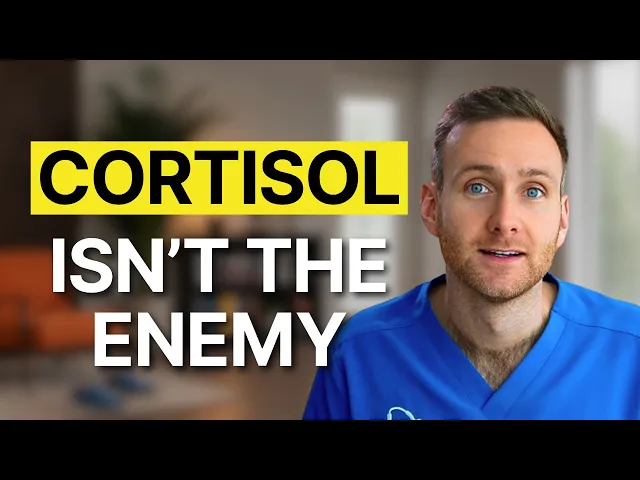
The short video below is useful background on how stress responses are discussed beyond a single hormone reading.
Cortisol changes are a supporting signal, not proof that you feel calmer or that an anxiety condition has improved.
Judge any trial, and any product claim, by whether sleep, irritability, rumination and daily functioning improve too. A cortisol claim alone answers only part of the question.
Who Should Check With a Doctor First
Safety screening comes before dose shopping. The National Center for Complementary and Integrative Health page on ashwagandha reports that short-term use may be safe for up to three months, that evidence is insufficient to establish long-term safety, and that rare cases of liver injury have been reported. The same source advises against use before surgery and in people with autoimmune or thyroid disorders.

Run This Screening Pass Line by Line
Situation | Why it matters | Action before starting |
|---|---|---|
Pregnancy or breastfeeding | Ashwagandha should be avoided during pregnancy or breastfeeding | Ask a clinician before starting |
Thyroid disease or thyroid medicine | May change TSH, T3 and T4 levels | Ask a clinician; thyroid tests may be needed |
Sedatives, sleep medicine or anti-anxiety drugs | May add to sedative effects | Ask before taking together |
Blood thinners, diabetes or blood pressure medicine | Possible interactions | Ask before use |
Immunosuppressants or anticonvulsants | Possible interactions | Ask before use |
Autoimmune or liver disease | Caution advised; rare liver injury reported | Clinician review before use |
Upcoming surgery | Use is advised against before surgery | Tell the surgical team and follow their advice on stopping |
Unexplained jaundice or severe stomach symptoms | Possible sign of liver injury | Stop and seek medical care |
Thyroid issues deserve first attention because shifting TSH, T3 and T4 can affect both symptoms and medication dosing. Sedation is next. Ashwagandha may add to the effect of sedatives, so ask a doctor before combining it with melatonin or sleep medication.
The same screening logic applies on our side. The River of Life product page advises talking to a doctor before use if you take thyroid, blood-thinning or diabetes medication, or you are pregnant or breastfeeding, and that rule extends to antidepressants, anti-anxiety medication and sedatives. For a focused look at combinations, see our guide to common ashwagandha interactions.
Before the first dose: Bring your full medication and supplement list to the conversation, not just your prescriptions.
Multi-ingredient formulas raise the stakes because every ingredient adds its own interaction possibilities. River of Life uses full-spectrum, root-only ashwagandha alongside turmeric with black pepper, ginger and bromelain, so the screening pass should cover the whole formula rather than one ingredient. And if unexplained jaundice or severe stomach symptoms appear after starting, stop and seek medical care rather than waiting to see if they pass.
Studied Doses and What Labels Should Show
A studied regimen gives you something concrete to compare a bottle against. The NIH Office of Dietary Supplements fact sheet on ashwagandha summarizes randomized trials involving 491 adults, generally lasting 6 to 8 weeks, in which ashwagandha outperformed placebo on validated stress and anxiety measures, sleep-related symptoms, fatigue, and serum cortisol. Trial data commonly used approximately 300 to 600 mg/day of an extract.
Regimen | Dose | Duration | What it showed |
|---|---|---|---|
Twice-daily regimen | 300 mg twice daily (600 mg per day) | 8 weeks | Improved stress and anxiety outcomes |
Daily regimen | 600 mg per day | 6-8 weeks | Lower perceived stress, anxiety and insomnia scores and cortisol versus placebo |
Typical trial range | 300-600 mg per day of extract | 6-8 weeks | Outperformed placebo on validated stress and anxiety measures |
Short-term safety window | Not a studied dose | Up to 3 months | May be safe short term; long-term safety not established |
One reported regimen of 300 mg twice daily for 8 weeks was associated with improved stress and anxiety outcomes. Another trial using 600 mg/day reported reductions in perceived stress, anxiety and insomnia scores, and cortisol relative to placebo. That hints at a dose-response pattern for some outcomes, but it doesn't establish that higher doses are better or safer.
A Five-Item Label Checklist
Plant part: Root, leaf, or a blend, stated explicitly.
Extract and standardization: The extract type and what it's standardized to.
Amount per serving: Milligrams of extract, not just capsule weight.
Suggested serving: How many capsules, how often.
Total daily amount: The full daily figure you can compare with the table.
Our breakdown of daily ashwagandha dosage walks through how those label figures add up. Use it alongside the checklist rather than relying on a front-of-bottle claim.
A bottle that lists only undifferentiated ashwagandha root can't be matched to the trials. A milligram figure for raw root isn't interchangeable with a standardized study dose of extract, even when the numbers look similar.
Compare the label row by row against the studied regimens, then check whether the daily total falls inside the 300 to 600 mg trial range.
Consistency matters more than intensity here. The trials ran daily for weeks, so doubling up on a bad day and skipping the rest of the week is a different pattern from anything tested.
How Long Results Take and How to Track Them
Timing is where expectations usually break. A placebo-controlled trial in PubMed Central of a concentrated, full-spectrum ashwagandha root extract in adults experiencing chronic stress reported significantly lower scores on every stated stress-assessment scale than placebo by day 60, with statistical significance reported as p<0.0001.
That's roughly two months, for one specific high-concentration extract in one study population. It isn't proof that every product produces the same benefit, but it does set a fair test window. Judging any supplement after four days tells you almost nothing.
Build a Simple Tracking Log
Start with a baseline week before your first dose, while your routine is still unchanged. Then record the same entries daily, at roughly the same time, so the pattern is comparable.
Stress and worry: A 0 to 10 rating for each, scored in the evening.
Sleep: Hours slept plus a short quality note, such as broken or settled.
Irritability and rumination: Yes or no, with one brief example if yes.
Daily functioning: One line on work, social plans or exercise completed.
Say your baseline week averages worry at 7, sleep at six broken hours, and two cancelled evening plans. Eight weeks later, worry averaging 5 with steadier sleep and no cancellations is a meaningful pattern. One unusually calm Saturday isn't.
Our timeline for when ashwagandha starts working can help you set check-in points instead of reassessing daily.
How to Read What You've Recorded
A steady trend across 6 to 8 weeks carries more weight than any single day. A worsening pattern, new symptoms or declining functioning are reasons to contact a clinician, not reasons to raise the dose on your own.
A dated log also gives your clinician a timeline they can use. Discuss any dose change, or a decision to stop, with them rather than adjusting based on a good or bad week.
Talk to Your Clinician Before Your First Dose
Ashwagandha is at most an adjunct worth discussing for ongoing, non-emergency stress. Therapy and prescribed treatment remain the core approach for ongoing anxiety, and a supplement doesn't substitute for either.
What to Bring to the Visit
Your full list: Every medicine and supplement you take, with doses.
Your reason: The specific problem you hope ashwagandha might help with, stated plainly.
Your tracking log: Baseline ratings for stress, sleep and functioning, started before any dose.
Then ask four direct questions. Does this stress pattern need prompt assessment rather than self-management? Does any medicine or condition on your list rule ashwagandha out? If it's reasonable to try, which extract amount and duration fit your situation? And which results, side effects or warning signs should mean stopping?
Those answers turn a vague intention into a monitored trial with an end point. They also protect you from the most common failure mode, indefinite daily use with no baseline, no review date and no clear idea whether anything changed.
If you're comparing products, run the label checklist against each product's listed plant part, extract amount, standardization and daily total before choosing. Ashwagandha root is an ingredient in the formula we make, so apply the same scrutiny to our label as to any competitor's, and don't accept ingredient claims the trial evidence doesn't support.
Severe, persistent or safety-related symptoms need professional care now, not an eight-week supplement trial. Panic that disrupts daily life, inability to work or sleep, or thoughts of harming yourself are reasons to seek help promptly.
The honest conclusion most coverage skips is this. The evidence supports a modest, gradual benefit for some adults, measured inconsistently across hormone and questionnaire outcomes, within a short safety window. That's enough to justify a careful conversation with your clinician. It isn't enough to justify a promise.
If you've cleared ashwagandha with your clinician and want a single daily capsule that includes ashwagandha root alongside turmeric and other botanicals for stress, sleep and comfort support, explore the formula, label details and subscription options at River of Life. Check the ingredient list against your medication list first, and choose the supply option that matches the monitored trial period you and your clinician agreed on.