

Which Pain Reliever Is Best for Headaches

Which pain reliever is best for headaches if the headache keeps returning, the pain feels unlike your usual pattern, or your medical history makes the obvious choice unsafe? The answer isn't always the strongest tablet on the shelf. It depends on whether you're dealing with a tension-type headache, migraine, or a recurring pattern that needs prevention rather than another dose.
A tense, end-of-day ache behind the eyes calls for a different strategy from a one-sided, throbbing attack with light sensitivity. A headache that returns whenever medication wears off raises a different concern altogether. The practical rule is simple: identify the headache pattern, check for danger signs, then match the medicine to your health profile.
Table of Contents
How to Choose the Right Headache Pain Reliever
Consider three people reaching for the medicine cabinet.
The first has a dull pressure across the forehead after a long day at a screen. There's no vomiting, aura, or major sensitivity to light. An occasional dose of ibuprofen or acetaminophen may be reasonable, provided there are no relevant contraindications.
The second has one-sided throbbing pain, nausea, and a strong urge to lie in a dark room. That pattern sounds more like migraine. An NSAID taken early may help, but repeated failure with over-the-counter treatment should prompt a conversation about a migraine-specific prescription.
The third takes a pain reliever whenever symptoms appear, only to develop another headache as the effect fades. That person shouldn't search for a stronger product. Frequent acute-medication use can become part of the problem, a concern discussed in global burden research on medication-overuse headache (PubMed analysis of headache-related disability).
Start with the headache pattern
Ask whether the pain feels like pressure or tightness, or whether it throbs and comes with nausea, light sensitivity, or sound sensitivity. Don't label every headache a “sinus headache” because it occurs near the face. Nasal congestion, facial pressure, and an underlying infection need a different assessment from a primary headache disorder.
Check for warning signs
A sudden, severe headache that reaches maximum intensity quickly needs urgent medical evaluation. The same applies to headache with fever, stiff neck, confusion, weakness, numbness, seizure, vision loss, head injury, or a new neurological symptom.
A new headache during pregnancy, a first headache later in life, or a progressively worsening pattern also deserves clinician review rather than repeated self-treatment.
Review your personal risk profile
Before choosing an NSAID such as ibuprofen or naproxen, consider ulcers, gastrointestinal bleeding, kidney disease, blood thinners, aspirin use, and pregnancy. Before choosing acetaminophen, check for liver disease, heavy alcohol use, or other products that already contain acetaminophen.
Practical rule: The best headache medicine is the one that fits the headache and doesn't create a larger risk for you.
Understanding Common Pain Reliever Options
Headache medicines fall into a few practical groups. Acetaminophen reduces pain and fever but doesn't reduce inflammation. NSAIDs, including ibuprofen and naproxen, reduce pain while also suppressing inflammation, which can make them useful for tension-type pain and some migraine attacks.
Aspirin is also an NSAID, but it deserves separate caution because it can increase bleeding risk. Low-dose aspirin may be prescribed for cardiovascular reasons, but that doesn't mean a person taking it should add full-dose aspirin for a headache without checking with a clinician.
Common options in plain language
Acetaminophen, sold as Tylenol and other brands, is often easier on the stomach than NSAIDs. Its central safety issue is the liver. People can accidentally double-dose when they combine a headache product with a cold or flu medicine containing the same ingredient. For practical ingredient guidance, see this acetaminophen pain-relief overview.
Ibuprofen, sold as Advil and Motrin, often works well for ordinary tension-type headache and can be effective in migraine. Its trade-offs include stomach irritation, bleeding, kidney stress, and possible blood-pressure concerns, particularly in people with existing risk factors.
Naproxen, sold as Aleve, lasts longer than some shorter-acting options, but its longer action doesn't make it automatically safer. It carries the same broad NSAID concerns and shouldn't be combined casually with ibuprofen or another NSAID.
Combination products may contain acetaminophen, aspirin, and caffeine, as in Excedrin Migraine. Caffeine can enhance relief for some attacks, but combination products make ingredient tracking harder and can encourage frequent use. Butalbital combinations carry additional dependence and overuse concerns, so they aren't a sensible default for routine headaches.
Prescription options include triptans for migraine, newer CGRP-targeting acute medicines, and preventive therapies for people with frequent or disabling attacks. A 2025 systematic review for the American College of Physicians found triptans were more effective than acetaminophen and NSAIDs for several migraine pain outcomes, while triptan and NSAID combinations had the greatest net benefit among the compared strategies (American College of Physicians migraine recommendations).
Common Headache Pain Relievers at a Glance
Medication | Class | How It Works | Best Suited For | Key Cautions |
|---|---|---|---|---|
Acetaminophen | Analgesic and fever reducer | Reduces pain signaling and fever | Mild headache, people who should avoid NSAIDs | Liver injury risk, especially with duplicate products or alcohol |
Ibuprofen | NSAID | Reduces pain and inflammatory signaling | Tension-type headache and some migraine attacks | Ulcers, bleeding, kidney disease, blood pressure, pregnancy concerns |
Naproxen | NSAID | Reduces pain and inflammatory signaling with longer action | Migraine or tension-type headache when an NSAID is appropriate | NSAID stomach, kidney, bleeding, and cardiovascular cautions |
Aspirin | NSAID and antiplatelet drug | Reduces pain and inflammation, also affects clotting | Some migraine combination products and selected pain situations | Bleeding, ulcers, interactions, children and teenagers with viral illness |
Acetaminophen, aspirin, and caffeine combinations | Combination analgesic | Combines pain relief with caffeine's activating effect | Selected migraine attacks | Duplicate ingredients, caffeine effects, medication overuse |
Triptans | Migraine-specific prescription | Acts on migraine-related serotonin pathways | Migraine that is disabling or doesn't respond to OTC options | Cardiovascular history, interactions, prescription assessment |
For a broader ingredient comparison, consult this over-the-counter pain reliever guide. The table is a starting point, not a universal ranking. Headache type determines which row deserves priority.
Comparing Relief by Headache Type
Tension-type headache
Does the pain feel pressing or tightening rather than distinctly throbbing? Tension-type headache often affects both sides of the head and usually lacks the marked nausea or sensitivity to light and sound associated with migraine.
For this pattern, ibuprofen and acetaminophen are both reasonable first choices when the person can take them safely. A methodological review found similar two-hour pain-free results for paracetamol 1000 mg and ibuprofen 400 mg (review of oral treatments for tension-type headache). Both can help, but neither guarantees complete relief after one dose.
A 2024 Bayesian network meta-analysis ranked ibuprofen highest for the two-hour pain-free rate among simple analgesics for episodic tension-type headache. Acetaminophen performed better than placebo, while naproxen ranked below several other common simple analgesics in that comparison (BMJ network meta-analysis).
For a mild, occasional tension-type headache, skip combination products. Choose one suitable medicine, then address the trigger with a cool or warm compress, posture correction, food, water, or a screen break. If the headache keeps returning, another dose is not the whole plan.
Acute migraine
Could the headache be migraine rather than a simple end-of-day tension headache? One-sided throbbing, nausea, light or sound sensitivity, and worsening with routine activity point toward migraine.
For mild-to-moderate migraine, ibuprofen, naproxen, or aspirin-based caffeine combinations generally have a stronger evidence position than acetaminophen alone. A JAMA systematic review and meta-analysis found that NSAIDs and acetaminophen were associated with short-term pain improvement, with moderate to high strength of evidence (JAMA systematic review of acute migraine medicines). Acetaminophen can still work for some people. When NSAIDs are safe, they usually deserve priority for this pattern.
Ibuprofen ranked among the more efficacious drug interventions for sustained pain freedom in acute migraine in the 2024 BMJ network meta-analysis. Migraine-specific options, especially triptans, can be a better fit when attacks disable normal activity or repeatedly break through over-the-counter treatment.
Mixed and recurring patterns
Menstrual-related attacks, predictable triggers, and headaches that keep returning require a plan rather than repeated experimentation. An NSAID may suit some people at symptom onset, while clear migraine features may justify a clinician-prescribed, targeted triptan strategy.
Do not alternate casually between ibuprofen, naproxen, aspirin, and combination products. Track timing, symptoms, medicine, response, sleep, meals, and menstrual timing in a headache diary. This record can show whether treatment is helping or merely delaying the next attack. Review ibuprofen use and headache relief for general product education, but seek individual assessment for recurring headaches, frequent medication use, or a pattern that is changing. When symptoms are mild and a known trigger is present, non-drug care may be the better next choice than another dose.
Using Pain Relievers Safely
Read the active-ingredient panel before taking anything. Follow the product label for the exact strength, interval, and daily maximum. “One tablet” isn't a reliable dosing instruction because different products contain different amounts and sometimes combine several medicines.
Acetaminophen requires particular attention to total daily exposure. Don't combine separate acetaminophen-containing products without calculating the total, and ask a pharmacist or clinician for guidance if you have liver disease, regularly drink alcohol, or take several prescription medicines.
NSAIDs require a different safety check. Ibuprofen, naproxen, and aspirin can irritate the stomach and increase bleeding risk. They can also stress the kidneys, especially when a person is dehydrated or already has kidney disease. Don't take ibuprofen and naproxen together, and don't add aspirin for pain without checking whether your existing low-dose aspirin plan or other medicines make that unsafe.
Headache Pain Reliever Safety at a Glance
Medication | Key Safety Risks | Major Contraindications | Notable Interactions | Population Cautions |
|---|---|---|---|---|
Acetaminophen | Liver injury from excessive total exposure | Severe liver disease or duplicate ingredient exposure | Alcohol and other acetaminophen products | Children need weight-based guidance; older adults may use multiple products |
Ibuprofen | Stomach bleeding, kidney stress, blood-pressure effects | Active ulcer, significant kidney disease, certain cardiovascular risks | Anticoagulants, antiplatelet drugs, other NSAIDs, some antidepressants | Avoid late pregnancy unless specifically directed |
Naproxen | Stomach bleeding, kidney stress, cardiovascular concerns | Active ulcer, bleeding risk, kidney disease, certain cardiovascular risks | Anticoagulants, antiplatelet drugs, other NSAIDs, some antidepressants | Pregnancy and older age require professional review |
Aspirin | Bleeding, stomach irritation, impaired clotting | Bleeding disorders, active ulcer, allergy, selected viral illnesses in young people | Anticoagulants, antiplatelet drugs, NSAIDs, alcohol | Don't give aspirin to children or teenagers with viral illness |
Combination analgesics | Duplicate ingredients, caffeine effects, overuse | Depends on every ingredient in the product | Alcohol, other acetaminophen or aspirin products, interacting prescriptions | Use extra caution when several medicines are taken |
Triptans | Medication-specific cardiovascular and interaction risks | Certain cardiovascular or vascular conditions | Some antidepressants and other migraine medicines | Requires clinician selection, especially with complex medical history |
Pregnancy changes the decision. A new headache during pregnancy should be discussed with a healthcare professional, particularly if severe or accompanied by visual symptoms, swelling, high blood pressure, or neurological changes. NSAIDs become especially problematic later in pregnancy, and no pregnant person should rely on repeated self-treatment for a new or escalating pattern.
Breastfeeding, older age, childhood, kidney or liver disease, uncontrolled hypertension, anticoagulant use, antiplatelet therapy, and multiple prescriptions all justify pharmacist or clinician input. Alcohol deserves attention because it can increase the danger of acetaminophen-related liver injury and may worsen sedation or poor judgment with combination products.
Before taking a second product, check three things: the active ingredients, your total daily amount, and whether another medicine changes the risk.
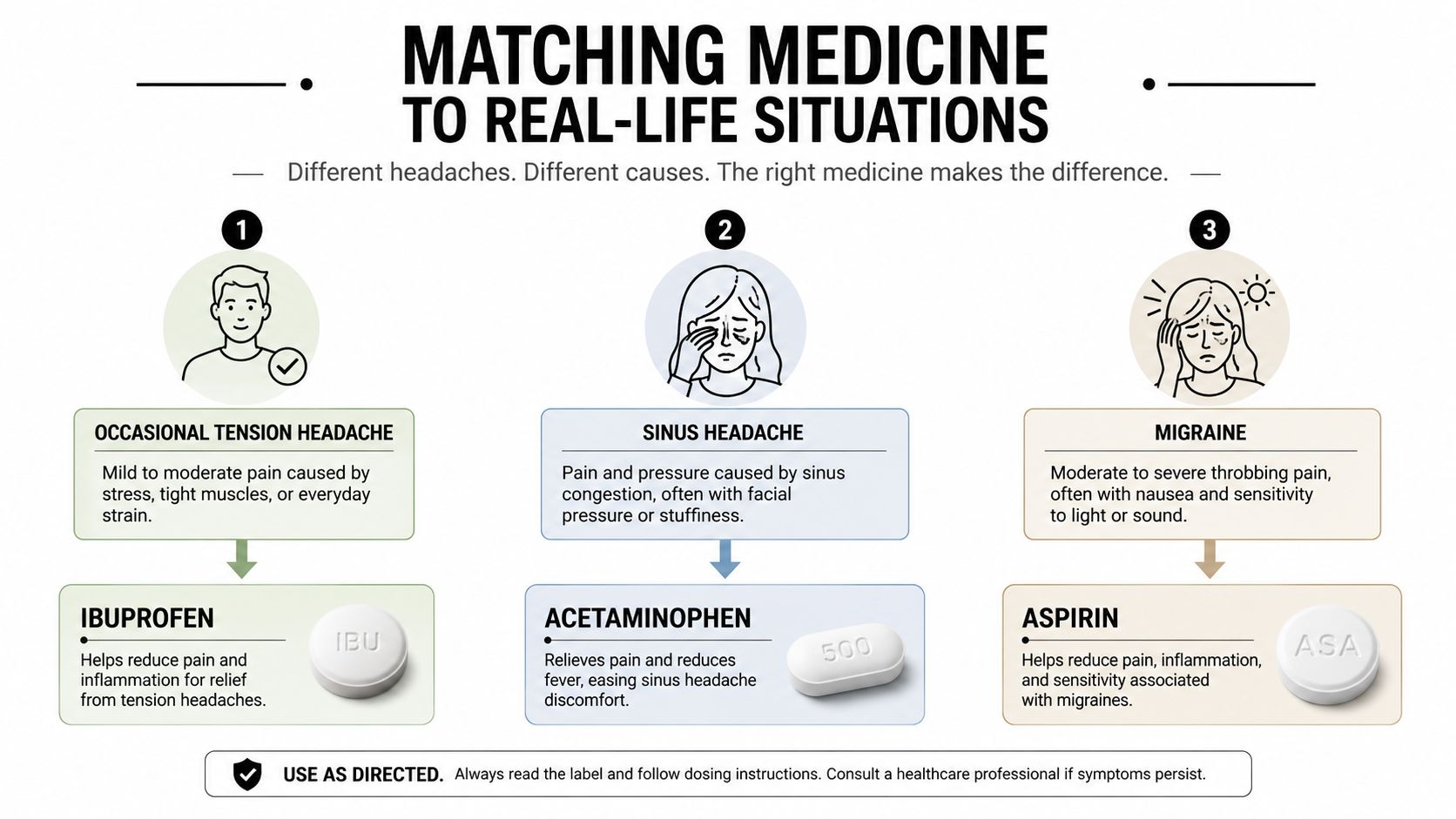
Matching Medicine to Real-Life Situations
Two people can describe “a headache” and still need completely different advice. The most useful starting point is the person's pattern, response history, and medication list.
Six practical examples
Occasional tension-type headache in a healthy adult: Ibuprofen or acetaminophen is a reasonable starting point if the person has no relevant risk factors. If the headache follows prolonged screen use, missed food, or poor posture, address that trigger rather than automatically adding another dose.
Frequent migraine that responds to an OTC option: Use the product that reliably helps and remains safe for that person, taken according to the label. Keep a record of attack days and medication days so successful short-term relief doesn't become a frequent-use pattern.
Chronic or disabling migraine: Repeated OTC failure is a reason to discuss a triptan, a CGRP-pathway medicine, or preventive treatment. Escalation is more sensible than cycling through increasingly complex combination products.
Adult with hypertension or blood thinners: Don't assume ibuprofen or aspirin is harmless because it's sold without a prescription. Acetaminophen may be a more suitable discussion point, but the correct choice depends on liver health, other medicines, and the reason for anticoagulation.
Pregnant person in the second trimester with a new headache: Contact a clinician rather than choosing a medicine solely from an online ranking. The new symptom and pregnancy context matter more than whether ibuprofen has helped in the past.
Older adult with arthritis who takes daily low-dose aspirin: Adding ibuprofen, naproxen, or full-dose aspirin may increase bleeding, kidney, or cardiovascular concerns. A pharmacist should review the complete medication list before the person self-treats repeatedly.
A short demonstration can make the decision path easier to follow:
The key lesson is that a generic ranking can't account for ulcers, kidney function, pregnancy, migraine symptoms, or existing prescriptions. Your previous response matters, but your current safety profile matters more.
Preventing Overuse and Supporting Recovery
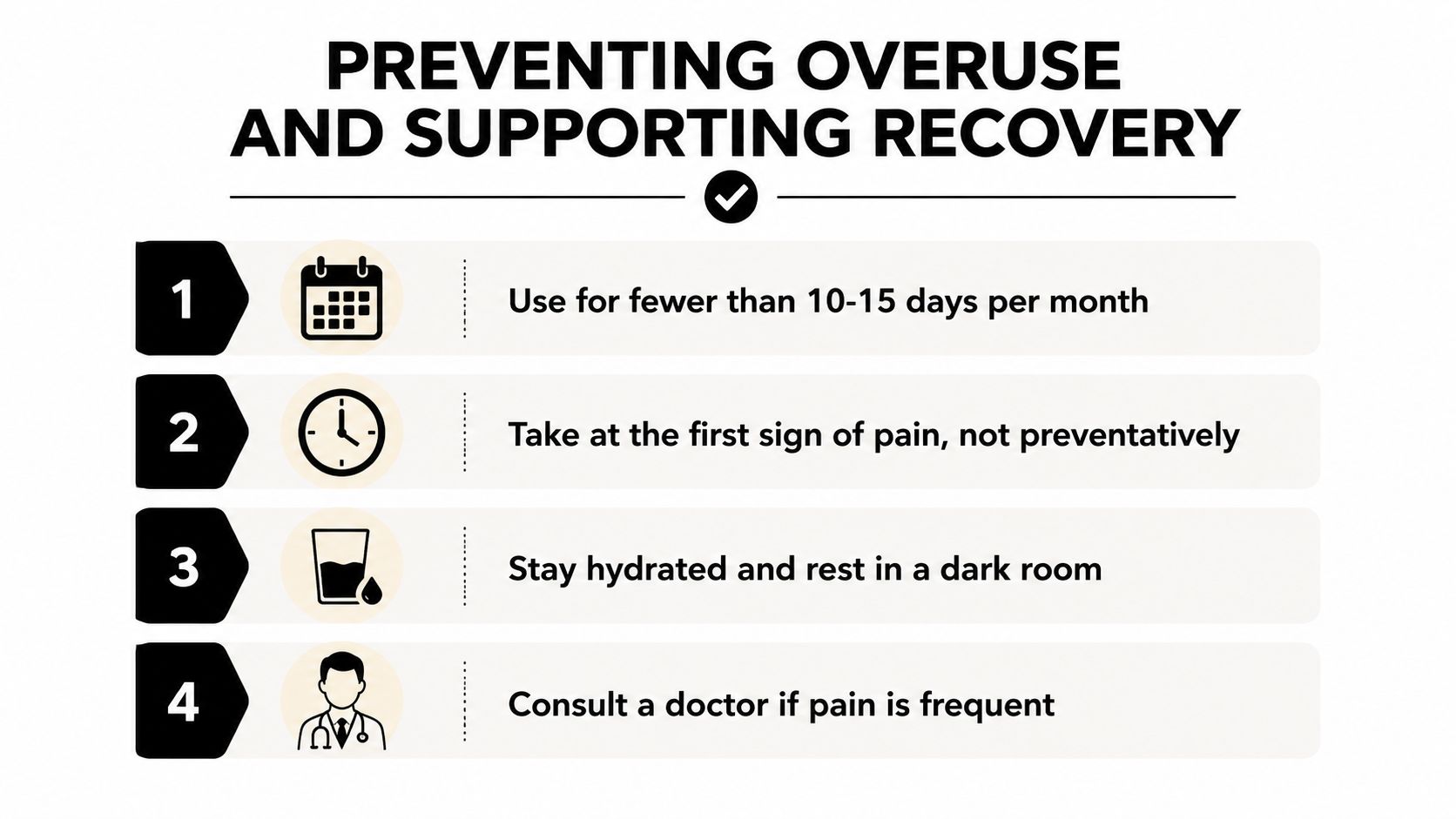
A pain reliever can help today and still worsen headaches when used too often. Medication-overuse headache can sustain a cycle of recurring head pain. Global analyses have linked medication overuse with a substantial share of disability from tension-type headache and migraine, with the burden varying by sex and headache type (global analysis of medication-overuse headache).
The risk depends on the medicine and the pattern of use. Frequent treatment, roughly 10 to 15 days per month depending on the medication, calls for a medication review rather than automatic continuation. Combination analgesics, opioids, and butalbital products require particular caution because repeated use can become difficult to control.
Build recovery around fewer rescue doses
Set a steady routine: keep sleep timing consistent, eat regular meals, drink enough fluids, and take screen and posture breaks. If neck tension contributes, gentle movement, warmth, or physical therapy may help more than another tablet. During migraine recovery, a dark, quiet room and a cold pack can support relief while the medicine takes effect.
Keep a simple headache record. Note skipped meals, disrupted sleep, stress, menstrual timing, prolonged screen use, alcohol, and sensory exposure. These patterns help a clinician decide whether behavioral support, physical therapy, prescription acute treatment, or prevention fits your situation.
A sustainable headache plan has two goals: relieve the current attack and reduce the number of attacks that require medicine.
Frequent or disabling headaches may require preventive care, such as a beta-blocker, an anticonvulsant, or a CGRP-pathway therapy. These options need a diagnosis and medical review. They do not replace emergency assessment for a sudden, severe, or neurologically unusual headache.
Use the lowest effective amount for the shortest reasonable duration, record whether it worked, and contact a clinician when headaches become frequent or rescue doses keep increasing. Non-drug care and preventive treatment can reduce reliance on another dose. A four-step guide also summarizes practical ways to prevent medication overuse and support recovery.
Clear Recommendations and Medical Warning Signs
For an occasional tension-type headache, choose acetaminophen or ibuprofen first, provided your health history makes the selected medicine appropriate. For an acute migraine, ibuprofen, naproxen, aspirin, or an acetaminophen-plus-caffeine product may help, with NSAIDs generally favored over acetaminophen alone when they can be used safely. If migraine disables normal activity or repeatedly defeats OTC treatment, ask about a prescription triptan or another migraine-specific option.
Opioid and butalbital combinations aren't sensible first-line choices for routine headache. They can complicate treatment and increase the risk of medication overuse.
Seek same-day medical care for a headache with:
Sudden severe pain: Especially a new headache that reaches peak intensity quickly.
Neurological changes: Weakness, numbness, confusion, vision loss, seizure, or trouble speaking.
Infection signs: Fever or stiff neck.
Trauma: Headache after a head injury.
A changed pattern: New headache during pregnancy, onset after age 50, or progressive worsening.
Don't keep escalating doses when the headache's frequency or character changes. Use the lowest effective dose, for the shortest duration, and escalate to professional care when the pattern stops behaving like your usual headache.
River of Life offers a vegan capsule containing turmeric extract with BioPerine, ashwagandha, ginger, and bromelain for adults interested in a supplement approach to broader joint comfort, stress, sleep, and recovery support. Visit River of Life to review the formulation and purchase options, and speak with a clinician before adding it alongside headache medicines or other treatments.