


Best Pain Reliever Over the Counter: A Practical Guide

You're standing in the pharmacy aisle with a headache, sore knee, or pulled back, staring at Tylenol, Advil, Aleve, Bayer, and Aspercreme. The familiar boxes look interchangeable, but they aren't. Choosing by brand, price, or whatever a family member grabbed last can put the wrong medicine in your hands.
The best pain reliever over the counter depends on three questions: What kind of pain is this? What health conditions and medicines do you have? How long will you need relief? Those questions matter more than the logo on the package. Use the guide below to answer them before you reach for a pill.
Table of Contents
What Reaching for an OTC Pain Reliever Looks Like
A headache before work, cramps during the day, or a swollen knee after exercise can make the nearest familiar bottle tempting. Tylenol, Advil, Aleve, and aspirin are not interchangeable. The active ingredient determines how each product works and which risks it brings.
Name the pain before naming the medicine. A tension headache, fever, menstrual cramps, pulled muscle, swollen joint, and localized arthritis pain call for different choices. Inflammatory pain usually favors an NSAID, while acetaminophen may be the cleaner first option for a headache or fever.
Your health profile narrows the field further. High blood pressure, heart failure, kidney disease, stomach ulcers, liver disease, pregnancy, older age, blood thinners, and regular alcohol use can change the recommendation. A medicine suitable for a healthy adult may be a poor choice for someone taking anticoagulants or living with reduced kidney function.
Duration matters too. A single dose and short-term self-care are different from a daily plan. Follow the label, and do not use OTC medicine to mask unexplained pain indefinitely. Persistent or recurring pain needs medical evaluation, not a stronger product from the same shelf.
Situation | Usually the most sensible starting point | What to remember |
|---|---|---|
Headache or fever | Acetaminophen | Check other products for duplicate acetaminophen |
Sprain, cramps, or inflamed muscle | Ibuprofen | Avoid or limit it with kidney, heart, or GI risks |
Longer-lasting musculoskeletal pain | Naproxen | Longer action doesn't remove NSAID risks |
Localized joint pain | Topical analgesic | Targets the painful area with less whole-body exposure |
Chronic low-grade joint discomfort | Discuss a daily adjunct | Supplements aren't substitutes for acute pain treatment |
Pharmacist rule: Choose by active ingredient, pain pattern, and personal risk. The brand name comes last.
A turmeric-based supplement may fit as a daily adjunct for ongoing, low-grade joint discomfort, but it does not replace an acute pain reliever or medical assessment. Match the product to the pain, then screen the choice against your age, conditions, medicines, and intended duration.
How the Main OTC Pain Relievers Work
Acetaminophen changes how the nervous system processes pain and lowers fever. It has little meaningful anti-inflammatory action in joints, so it can be useful for headaches, fever, and general aches but is a weaker match for a swollen sprain or inflammatory arthritis.
Ibuprofen and naproxen belong to the NSAID family. They block COX enzymes involved in producing prostaglandins, chemical messengers that contribute to pain, fever, and inflammation. That mechanism explains why NSAIDs generally beat acetaminophen for osteoarthritis pain and function measures. A review covering 15 randomized trials and 5,986 patients found NSAIDs significantly better for pain at rest and at night, with a trend toward better relief after activity. See the Cochrane-based review of NSAIDs and acetaminophen for osteoarthritis for the evidence and limitations.
Ibuprofen tends to suit fast-moving problems such as cramps, a fresh strain, or an inflamed muscle. Naproxen lasts longer, which can make it more convenient when pain returns throughout the day. Neither is automatically safer because it works better. NSAIDs can affect the stomach, kidneys, blood pressure, and cardiovascular system.
Aspirin is also an NSAID, but it has an additional effect on platelets, the blood components involved in clotting. That blood-thinning effect is one reason aspirin is rarely the first choice for ordinary pain today. It can irritate the stomach and interact with anticoagulants, so don't treat it as interchangeable with ibuprofen.
Local treatment deserves more attention
Topical products take a different route. Diclofenac gel delivers an NSAID to a painful joint through the skin, while menthol creates a cooling or warming sensation, lidocaine numbs local nerve endings, and capsaicin alters pain signaling after repeated use. These products make the most sense when the pain is concentrated in one knee, hand, shoulder, or small muscle area.
Topicals don't eliminate every risk, and they aren't right for broken skin or every diagnosis. Still, they can be a sensible first trial when you want to limit exposure to an oral medicine.
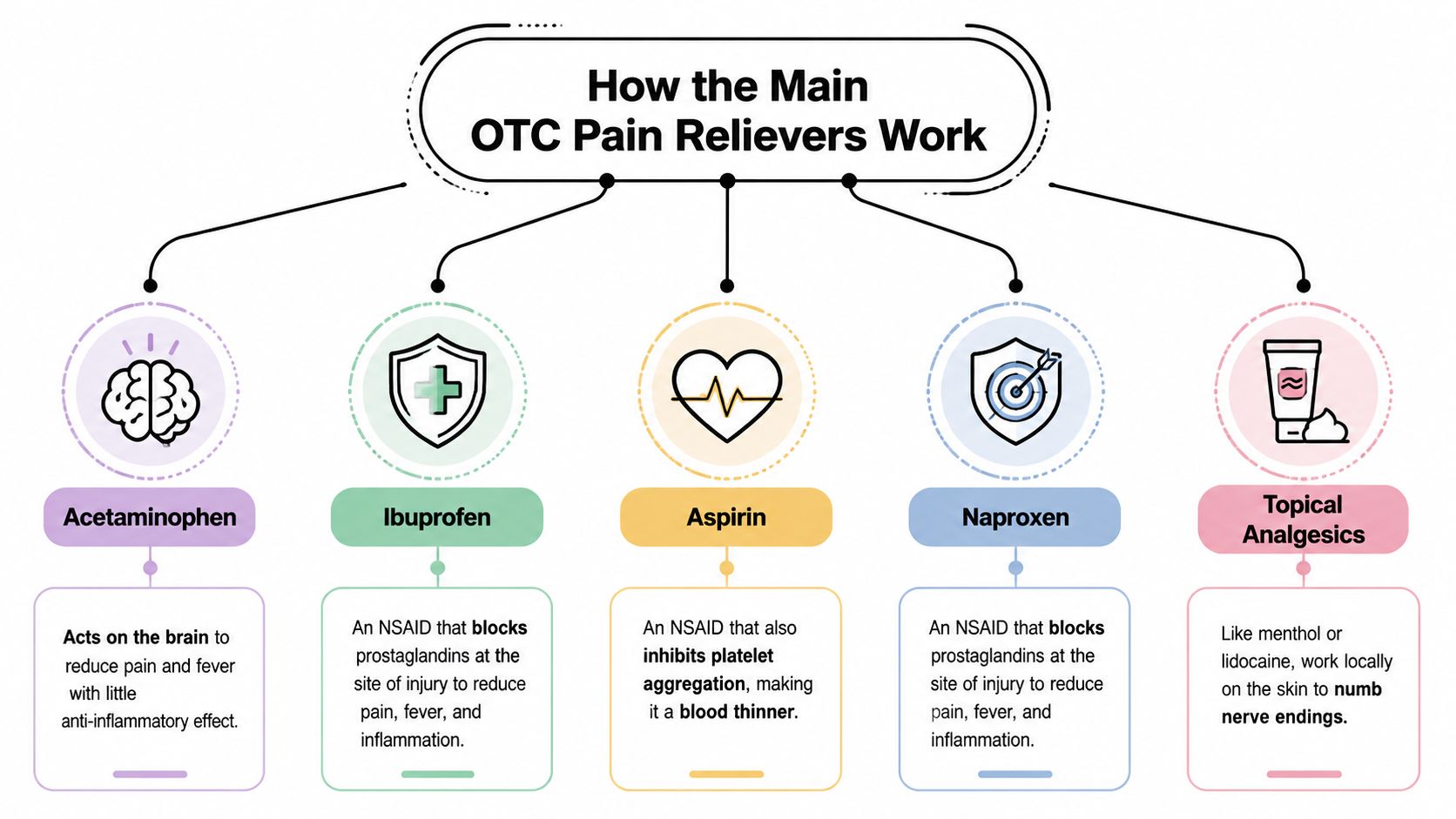
For a practical explanation of ibuprofen's uses and cautions, review this ibuprofen guide. The useful takeaway is simple: acetaminophen works mainly through central pain processing, oral NSAIDs reduce inflammatory signaling throughout the body, and topical products focus treatment closer to the painful area.
Acetaminophen, Ibuprofen, Naproxen, Aspirin, and Topicals Compared
The right comparison isn't “Which brand wins?” It's “Which active ingredient gives me the needed benefit with the fewest risks for my situation?” The table below gives a practical starting point, but the package label and your medical history still control the final decision.
Reliever | Typical Adult Dose | Duration | Best For | Key Risks |
|---|---|---|---|---|
Acetaminophen | 325 to 1,000 mg | Several hours | Headache, fever, general aches | Liver injury with excessive dosing, alcohol, or liver disease |
Ibuprofen | 200 to 400 mg | Several hours | Cramps, strains, inflammatory pain | Stomach bleeding, kidney problems, blood pressure and cardiovascular effects |
Naproxen | 220 mg | Longer-lasting, often through much of the day | Arthritis, back pain, menstrual cramps | GI, kidney, blood pressure, and cardiovascular risks |
Aspirin | Varies by purpose | Several hours | Limited pain use, prescribed cardiovascular prevention | Bleeding, stomach irritation, drug interactions |
Topical diclofenac, menthol, or lidocaine | Follow the product label | Local and product-dependent | One painful joint or muscle area | Skin reactions, inappropriate use on damaged skin, some systemic exposure |
The practical winners
Choose acetaminophen first for fever or a straightforward headache when you don't have liver-related concerns and aren't already taking it in another product. It's generally gentler on the stomach than oral NSAIDs, but that doesn't make unlimited use acceptable.
Choose ibuprofen for a short, inflammatory flare when your kidneys, stomach, heart, blood pressure, and medicine list don't create a problem. It's the most useful all-rounder for many otherwise healthy adults because it addresses pain and inflammation together.
Choose naproxen when duration matters. Evidence summarized in a randomized comparison found naproxen provided greater relief than acetaminophen within 30 minutes and outperformed both acetaminophen and ibuprofen at 6 hours. The naproxen acute-pain review supports its strong duration profile. The trade-off is that longer action also means the medicine remains in your system longer.
Treat aspirin as a special case. Don't start daily aspirin for heart protection on your own, and don't assume its cardiovascular role makes it ideal for a backache or headache.
Use a topical first for a small, accessible painful area. Topical diclofenac is a particularly reasonable option for osteoarthritis in a knee, hand, or other localized joint, especially when oral NSAIDs present avoidable risks.
Adult Dosing and the Most Common Mistakes
Dosing errors cause more trouble than many people realize, especially when shoppers combine products without checking active ingredients. Use the smallest amount that controls the pain, follow the label, and stop treating self-care as routine once the problem continues.
Medication | Single Dose | Max Daily Dose | OTC Duration Limit |
|---|---|---|---|
Acetaminophen | Follow the product label | 3,000 to 4,000 mg, depending on liver risk | Don't exceed label directions |
Ibuprofen | 200 to 400 mg | 1,200 mg OTC | No more than 10 days for pain without medical advice |
Naproxen | 220 mg | 660 mg OTC | No more than 10 days for pain without medical advice |
Aspirin | Product and purpose dependent | Up to 4,000 mg for pain, but cardiovascular doses are much lower | Follow the label and clinician guidance |
The acetaminophen ceiling needs the most caution. People with liver disease, regular alcohol exposure, or multiple acetaminophen-containing products may need a lower limit or should avoid self-directed use. Cold and flu products are common culprits because they can contain acetaminophen even when the front label emphasizes congestion or cough.
Mistakes to eliminate
Duplicate ingredients: Check every multi-symptom product before adding acetaminophen.
Two NSAIDs at once: Ibuprofen plus naproxen, or ibuprofen plus aspirin, increases risk without creating a smart pain plan.
Clock confusion: Naproxen lasts longer than ibuprofen, so taking repeat doses too soon can create unnecessary accumulation.
Dose escalation: Taking more doesn't guarantee faster relief. Benefit can plateau while stomach, kidney, liver, and cardiovascular risks rise.
Improper aspirin handling: Don't crush enteric-coated aspirin unless a pharmacist or clinician specifically tells you to do so.
If pain still requires regular oral medication after the short OTC window, stop improvising. A clinician can determine whether the diagnosis, medicine, or treatment plan needs to change.
Choosing Based on Your Health, Not Just Your Pain
A universal ranking fails because the safest choice changes with the person taking it. Updated geriatric guidance recommends that older adults use oral NSAIDs rarely or with extreme caution because of cardiovascular, kidney, and gastrointestinal harms, while acetaminophen remains a common first-line option for mild-to-moderate pain. The geriatric pain guidance summary also highlights that NSAIDs can worsen heart failure and blood pressure and may interfere with aspirin's cardioprotective effect.
Use your health history as a filter
Hypertension or heart failure: Start by asking whether acetaminophen or a topical option can address the pain. Oral NSAIDs can raise blood pressure and worsen fluid or cardiovascular problems.
Kidney disease: Don't casually use chronic oral NSAIDs. Reduced kidney reserve changes the risk calculation and calls for professional guidance.
Ulcer or GI bleeding history: Avoid treating oral NSAIDs as harmless. Acetaminophen or a localized topical product may be more appropriate, depending on the pain and your broader history.
Liver disease or regular alcohol use: Acetaminophen may need to be avoided or strictly limited. Ask a pharmacist to review your total daily exposure.
Blood thinners: Aspirin and NSAIDs can increase bleeding concerns or interact with the treatment plan. Don't add either without checking.
Older age: Age-related vulnerability makes routine oral NSAID use a poor default, even when the pain is inflammatory.
Pregnancy and children: NSAIDs require special caution, and children shouldn't receive aspirin because of serious safety concerns. Pregnant people, particularly later in pregnancy, should ask a clinician before using an NSAID.
One newer concern deserves attention. Acetaminophen isn't risk-free, and observational work summarized in the cited review has raised concern about peptic ulcers and bleeding, challenging the idea that it's always the safest option. That doesn't make NSAIDs preferable by default. It means every medicine deserves a context-specific review.
Ask yourself: What hurts, what else am I taking, and what conditions do I have? If any answer is complicated, take the package to a pharmacist instead of guessing.
Where Turmeric and Natural Supplements Fit In
Turmeric and ginger belong in a different category from ibuprofen, naproxen, and acetaminophen. They're not sensible replacements for fast relief from a severe headache, acute injury, or sudden dental pain. Their realistic role is as a daily adjunct for ongoing, lower-grade joint discomfort, particularly when someone wants a broader plan alongside movement, physical therapy, heat, or other non-drug measures.
Curcumin, turmeric's best-known active component, has shown a modest and fairly consistent benefit for knee osteoarthritis pain in research, but it acts much more slowly than an oral analgesic. Expecting a supplement to behave like ibuprofen is the wrong comparison. A supplement plan requires consistency and patience, and it may not provide enough relief for an acute flare.
Formulation matters
Standard turmeric powder is poorly absorbed. Products may add piperine, the active component of black pepper, or use a phospholipid formulation to improve absorption. Better absorption doesn't automatically mean better clinical results, so evaluate the whole product, its dose, ingredient transparency, and your medication interactions.
River of Life Capsules are one example of a combined botanical formula containing standardized turmeric extract with BioPerine, along with ashwagandha, ginger, and bromelain. Its intended role is daily support for joint comfort and related wellness goals, not immediate replacement of an OTC analgesic. You can read more about the distinction in this guide to natural pain relief options.
Safety check: Turmeric may affect bleeding at high doses and can interact with anticoagulants or diabetes medicines. Ask a pharmacist before adding it to a complex medication regimen.
Use supplements as part of a plan, not as permission to ignore worsening pain. A swollen joint, declining function, or pain that keeps returning needs diagnosis and a strategy beyond self-treatment.
Matching the Right Reliever to Your Situation
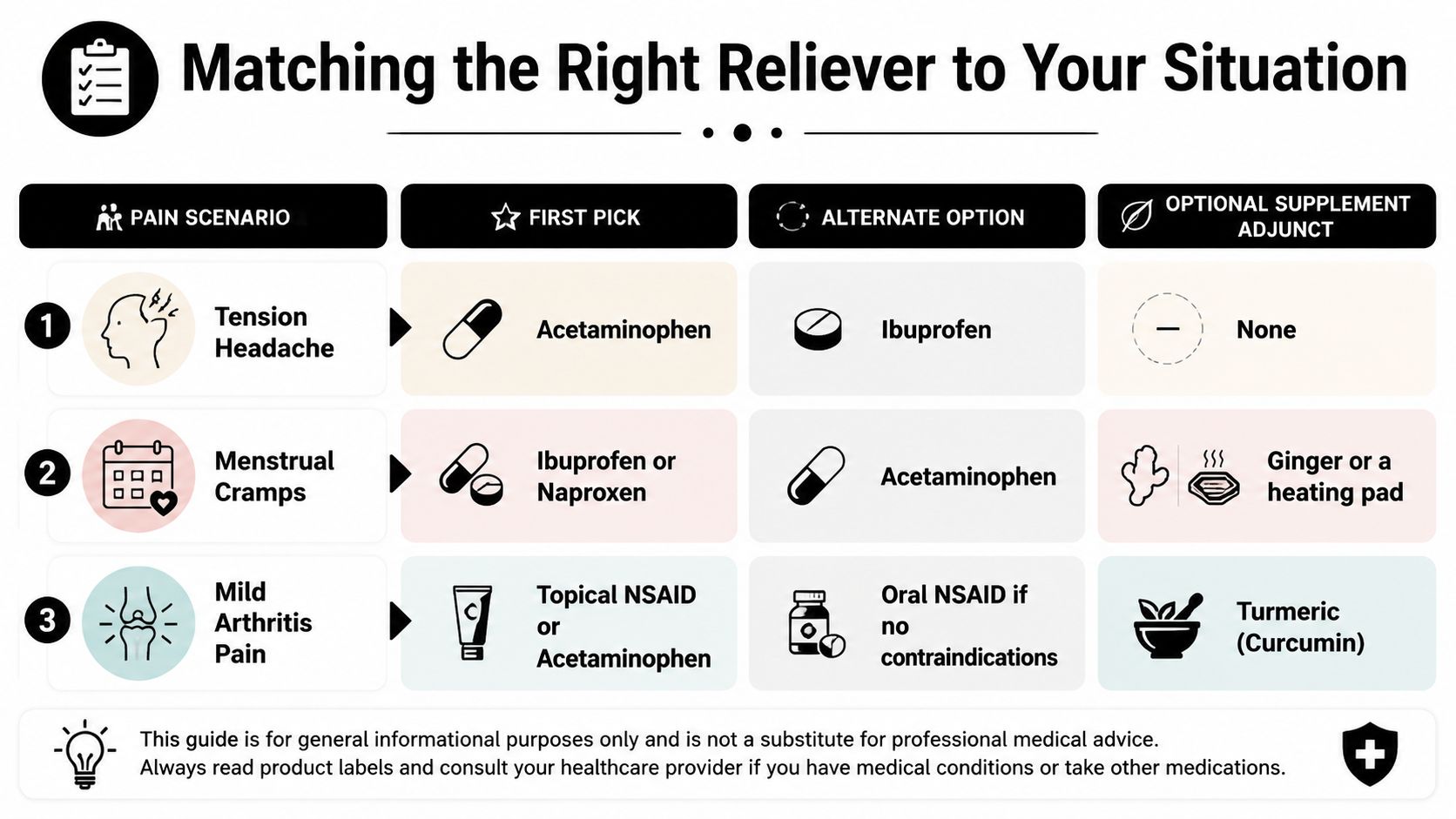
The pain pattern should determine the starting point, but your health profile can override that choice. These are practical defaults for an otherwise suitable adult who has checked the label and has no relevant contraindication.
Pain situation | First pick | Alternate option | Optional adjunct |
|---|---|---|---|
Tension headache | Acetaminophen | Ibuprofen | None needed |
Menstrual cramps | Ibuprofen or naproxen | Acetaminophen | Ginger or a heating pad |
Muscle strain | Ibuprofen plus a topical option | Acetaminophen | Rest and gradual movement |
Back-pain flare | Naproxen for longer coverage | Ibuprofen | Heat and activity modification |
Cold or flu aches | Acetaminophen | Ibuprofen if appropriate | Fluids and rest |
Post-dental pain | Ibuprofen and acetaminophen may be combined only with proper guidance | Ask the dentist or pharmacist | Follow dental instructions |
Mild arthritis | Topical diclofenac | Oral NSAID if no contraindications | A daily turmeric product may be considered |
Make the choice concrete
For a tension headache, start with acetaminophen if it fits your health profile. Use ibuprofen instead when inflammation, neck muscle soreness, or another NSAID-responsive feature is part of the picture.
For menstrual cramps, ibuprofen or naproxen usually makes more sense than acetaminophen because cramps involve inflammatory signaling. A heating pad and ginger may serve as adjuncts, but neither should be expected to replace prompt relief during severe pain.
For a knee that aches in one defined spot, try a topical NSAID before reaching for repeated oral doses. If the pain persists, limits walking, or keeps returning, get the joint assessed rather than extending self-treatment.
For back pain, naproxen may offer more convenient coverage, but new weakness, numbness, loss of bladder or bowel control, fever, or trauma changes the urgency. Pain that lasts beyond 10 days should be evaluated instead of managed indefinitely with OTC products.
Safety Questions People Ask but Rarely Get Answered
Can you combine ibuprofen and acetaminophen? Sometimes, but only when the dosing schedule, total daily amounts, health conditions, and other medicines have been checked. Never combine two NSAIDs, such as ibuprofen and naproxen, as a shortcut to stronger relief.
Is ibuprofen safe after drinking? It isn't a smart combination because alcohol can add to stomach and bleeding concerns. Acetaminophen also deserves caution with alcohol because of liver risk. For a more detailed review, use this guide to pain relievers and alcohol.
Can you take naproxen every day? Only at the lowest effective dose and with medical supervision if use continues beyond the OTC limit. Daily pain means the underlying problem needs attention, not just another dose.
Does aspirin prevent heart attacks? Low-dose aspirin may be appropriate for some people, but it should be started only on a doctor's explicit recommendation. Don't repurpose a pain-dose aspirin routine for cardiovascular prevention.
Stop the medicine and seek urgent care for black stools, vomiting blood, yellowing skin, severe or unfamiliar headache, chest pain, serious allergic symptoms, or sudden weakness. Those signs are not “wait and see” symptoms.
River of Life offers a turmeric-based daily capsule formula with BioPerine, ginger, ashwagandha, and bromelain for people exploring adjunctive support for ongoing joint discomfort. Review the ingredients and medication cautions, then visit River of Life if that type of supplement fits your broader pain-management plan.