

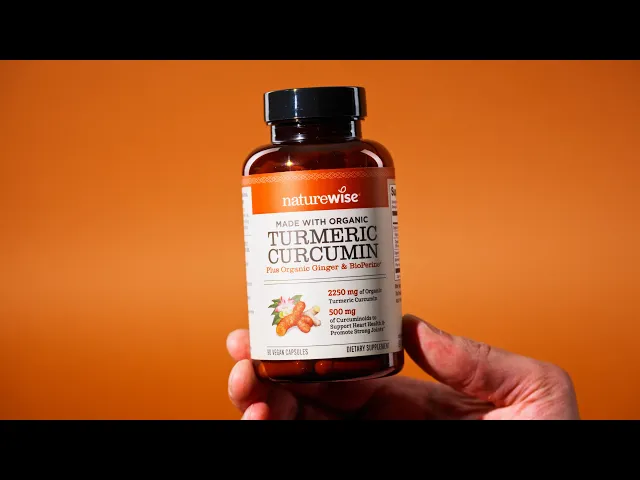
Turmeric Curcumin and BioPerine: A Practical Evidence Guide

You're probably looking at a turmeric bottle right now, or scrolling through one online, and seeing the same promise repeated in slightly different words. Turmeric, curcumin, BioPerine, better absorption, joint support, inflammation support. One label says black pepper makes all the difference. Another says its extract is advanced. A third throws in a big absorption percentage and expects that number to settle the question.
That's where most shoppers get stuck. They're not really asking whether turmeric exists or whether black pepper is a spice. They're asking two practical questions. Does BioPerine change what your body gets from curcumin, and does that change lead to the outcomes people care about, like joint comfort, recovery, sleep, or steadier mood?
Those are not the same question, and supplement labels often blur them together. A bigger absorption claim can sound like proof of better results, even when the science is more complicated than that. If you understand that gap, you'll read turmeric labels very differently.
Table of Contents
Why Turmeric Curcumin and BioPerine Keep Showing Up Together
How Curcumin and BioPerine Fit With Other Joint and Mood Ingredients
Why Turmeric Curcumin and BioPerine Keep Showing Up Together
A common shopping moment goes like this. You pick up one bottle that says “turmeric root.” Then another that says “curcumin 95%.” Then another that adds BioPerine, a branded black pepper extract. The prices jump around, the claims get more confident, and suddenly you're trying to decode whether the black pepper is a meaningful ingredient or just a marketing accessory.
The reason these ingredients travel together is simple. Curcumin is the compound researchers often focus on, but curcumin on its own is hard for the body to keep in circulation after you swallow it. That's why companies started pairing it with piperine, the active compound from black pepper, and why BioPerine became a familiar name on labels.
The real shopper question
Few shoppers buy a turmeric supplement to admire a pharmacokinetic graph. They buy it because their knees feel stiff after a walk, their hands ache late in the day, or they're trying to support recovery and feel less worn down.
That's where confusion starts:
Absorption claim: A label suggests more curcumin gets into the system.
Outcome hope: The shopper hears, “This should help my joints or recovery.”
Missing middle step: The label rarely explains whether the absorption measure reflects the form of curcumin that matters most, or whether the studied formula matches the capsule in your hand.
Practical rule: When you see a large absorption number on a turmeric product, treat it as the start of your questions, not the end of them.
Why the pairing matters, and why it can mislead
There is a real scientific basis for pairing curcumin with piperine. It didn't appear out of thin air. But there's a difference between saying “this pairing has a research history” and saying “every turmeric plus BioPerine capsule will produce the benefits you want.”
That distinction matters because the supplement aisle mixes together very different products:
plain turmeric powder
concentrated turmeric extracts
curcumin-heavy formulas
products with piperine
products using other delivery systems
If you don't separate those categories, every label starts to sound equally convincing. They're not.
A useful starting point is this. Turmeric curcumin and BioPerine belong to a supplement category with meaningful research behind it, but the label still needs to tell you what form you're getting, how much, and what the absorption claim means.
What Curcumin and BioPerine Actually Are
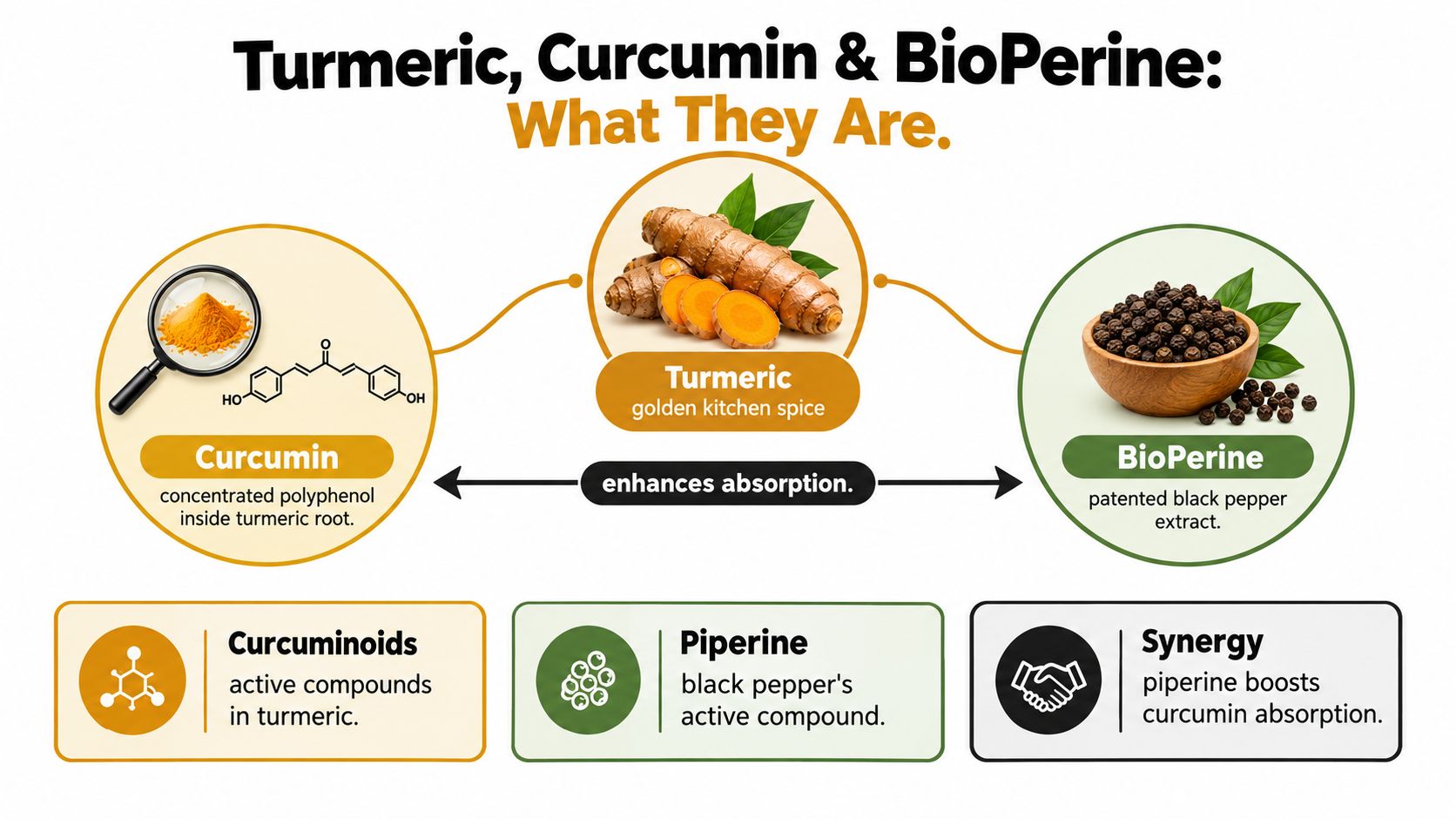
Turmeric is the golden spice used in cooking. It comes from the root of Curcuma longa. Fresh turmeric looks a bit like ginger on the outside, with a deep yellow-orange interior. But the whole root is a mixture, not a single substance. In supplement discussions, the focus usually narrows to curcuminoids, especially curcumin.
That difference matters more than labels often suggest.
Curcumin is the compound group researchers usually examine when they study turmeric's biological activity. It is not the same thing as the whole turmeric root. So a bottle labeled “turmeric” and one labeled “curcumin” may be talking about related ingredients, but not identical ones. If you want a clearer explanation of that split, this guide on curcumin and turmeric explains the terminology in plain language.
Why curcumin doesn't stay around easily
Swallowing curcumin and getting sustained exposure from curcumin are not the same event. That is the part many labels skip.
After curcumin reaches the gut, the body processes it quickly. Enzymes in the intestinal wall and liver transform it fast, so less of what you swallowed remains in circulation for long. This helps explain curcumin's reputation for poor oral bioavailability. The question is not just how much went into the capsule. The harder question is how much survives digestion and metabolism in a form that may matter biologically.
That point also helps explain why big absorption claims can confuse shoppers. A rise in measured curcumin-related compounds is not automatically the same as proving better clinical results. Those are related ideas, but they are not interchangeable.
Where BioPerine fits
BioPerine is a branded black pepper extract standardized around piperine, the alkaloid that gives black pepper its familiar bite. In a supplement, it is used as an absorption helper.
The basic idea is straightforward. Piperine may slow some of the enzyme activity that normally clears curcumin, allowing more curcumin-related compounds to circulate. That helps explain why BioPerine appears so often beside turmeric extracts on labels.
What shoppers are actually deciding
A useful way to read the bottle is to separate the ingredient from the delivery strategy. BioPerine is not the main joint ingredient by itself. It is there to influence exposure. The turmeric or curcumin ingredient still does the main nutritional work the product is trying to deliver.
A careful shopper asks three questions:
What turmeric or curcumin ingredient is in this bottle?
Is there a stated amount of piperine or BioPerine?
Does the label explain standardization, or does it rely on vague wording such as "turmeric extract"?
If those basics are unclear, the label is still telling only part of the story.
How BioPerine Boosts Curcumin Bioavailability
The historical reason people keep citing black pepper alongside curcumin comes from a small but influential human study published in Planta Medica in 1998. In that randomized crossover experiment, 10 healthy male volunteers received 2 grams of curcumin either alone or together with 20 milligrams of piperine. Curcumin by itself produced very low or undetectable blood concentrations. When piperine was added, serum concentrations were substantially higher between 15 and 60 minutes, with statistical significance at 15 minutes, 30 minutes, and 60 minutes, and the researchers calculated a 2,000% increase in relative curcumin bioavailability in humans. The same paper also reported a 154% increase in rats and proposed inhibition of glucuronidation in the gut wall and liver as the likely mechanism, with no adverse effects reported at the tested doses in the human arm of the study (1998 Planta Medica curcumin-piperine trial on PubMed).
That study matters. It gave the supplement industry a real scientific anchor. It also created a phrase that now gets repeated so often that many shoppers hear it as a universal law.
What the 2,000% figure does and doesn't mean
The key word is relative. The study measured a change under a specific setup, with a specific dose, in a small group, over a short observation window. It did not prove that every turmeric supplement with black pepper will reproduce the same increase. It also didn't prove that a larger absorption figure automatically means better clinical outcomes.
That's why product pages need a second filter. This explainer on curcumin bioavailability helps, but the most important idea is simple enough to keep in your head while shopping.
Blood exposure isn't the same as tissue effect
A metabolite reading isn't necessarily the same as active unconjugated curcumin
A pharmacokinetic result isn't the same as less pain, better sleep, or improved mood
A capsule can produce a bigger number on an absorption chart without proving a bigger benefit in daily life.
Why newer data complicates the story
A 2025 independent crossover study in nine healthy men compared several enhanced-bioavailability formulations, including curcumin with and without piperine. Under those testing conditions, plasma unconjugated curcumin remained below 2 nM in most participants, even after high-dose curcumin and piperine, and the study found no piperine benefit in that setting. The authors also warned against leaning too heavily on measurements driven by conjugated metabolites rather than the unconjugated form most relevant to pharmacokinetic interpretation (2025 crossover study on unconjugated curcumin and piperine).
That doesn't erase the older study. It does change how careful you should be with labels.
A good reading of the evidence is this:
the 2,000% result is historically important
it is not a universal promise
shoppers should ask what the brand measured, standardized, and matched to human research
What the Research Actually Shows for Joints, Sleep and Mood
Once you move past absorption, the next question is the one people care about. Does turmeric curcumin and BioPerine help with real-life outcomes? For joints and musculoskeletal comfort, there is a meaningful body of research. For sleep and mood, the picture is more indirect when the product in question is specifically a turmeric-curcumin-piperine formula.
A 2023 systematic review and meta-analysis of turmeric and curcumin supplements for musculoskeletal health analyzed 21 prospective randomized clinical trials, with 7 focused on skeletal muscle outcomes and 14 focused on joint health. The review reported substantial heterogeneity, with Cochran's Q of 29.3765 for muscle studies and 3666.80 for joint-health studies, both P < 0.0001, which means the trials did not all behave the same way. The same evidence overview also notes an earlier synthesis of 19 randomized controlled trials on inflammatory markers, including 5 turmeric trials with 356 participants and 14 curcumin or curcuminoid trials with 988 participants. A broader 2023 meta-analysis of 66 randomized controlled trials found statistically significant average reductions in C-reactive protein of 0.58 mg/L, tumor-necrosis factor-alpha of 3.48 pg/mL, and interleukin-6 of 1.31 pg/mL (2023 review of musculoskeletal outcomes and inflammatory markers).
How to read those results without overselling them
Those data points support something important. Turmeric-curcumin is not an evidence-free trend. It's a researched botanical category with repeated interest in joint health, muscle recovery, and inflammatory markers.
But the same paper also gives you the caution label. The heterogeneity was large. That usually means the studies varied in important ways:
Preparation differences, such as turmeric powder versus concentrated curcuminoids
Absorption strategy, including piperine or other delivery methods
Dose and duration
Participant type, from generally healthy adults to people with specific joint concerns
Outcome measure, because “joint health” can mean pain scores, stiffness, function, or lab markers
So the honest takeaway isn't “turmeric works for everything.” It's closer to this. Some trials show useful signals, but the result depends heavily on the exact formula and the exact person taking it.
Joints are better supported than sleep and mood
For joints and musculoskeletal comfort, the research base is clearly stronger than it is for claims like better sleep or calmer mood from turmeric plus piperine alone. That doesn't mean people never notice broader benefits. It means those outcomes are harder to assign specifically to curcumin-BioPerine unless the product was tested that way.
If your main goal is joint support, evidence in this category is more aligned with what you're shopping for. If your goal is sleep continuity or emotional steadiness, a multi-ingredient formula may be aiming at those outcomes through other ingredients rather than through turmeric alone. For a consumer-oriented look at joint-focused use, this piece on how turmeric curcumin helps with arthritis and joint pain is a useful companion.
Here's a compact way to compare the evidence.
Study Scope | Trials | Participants | Headline Result |
|---|---|---|---|
Musculoskeletal review | 21 prospective randomized clinical trials | Not stated as a single pooled participant count in the verified data | Joint and muscle research exists, but results were highly heterogeneous |
Inflammatory-marker synthesis | 19 randomized controlled trials | 356 in turmeric trials, 988 in curcumin or curcuminoid trials | Evidence base spans both turmeric and curcumin products |
Broad inflammatory meta-analysis | 66 randomized controlled trials | Not stated in the verified data | Average reductions in CRP, TNF-alpha, and IL-6 were statistically significant |
What matters most: Match the marketed capsule to the studied extract, dose, absorption enhancer, and population. Category-level evidence is useful, but it's not product-specific proof.
How Curcumin and BioPerine Fit With Other Joint and Mood Ingredients
A turmeric plus BioPerine supplement rarely lives in a vacuum. Many formulas combine it with other botanicals or enzymes because shoppers often want more than one thing at once. They may want joint comfort, but they may also want less post-activity soreness, steadier stress handling, or better sleep.
That's where formulation logic becomes more useful than ingredient hype.
A focused formula versus a broader blend
A focused turmeric-curcumin-BioPerine product makes sense when your main interest is curcumin exposure and joint-related support. It keeps the interpretation cleaner. If you feel different, you're less likely to wonder which ingredient did what.
A broader formula makes more sense when your goals overlap. Someone with stiff joints may also have poor sleep because discomfort keeps them restless. Someone training regularly may want both recovery support and calmer stress reactivity.
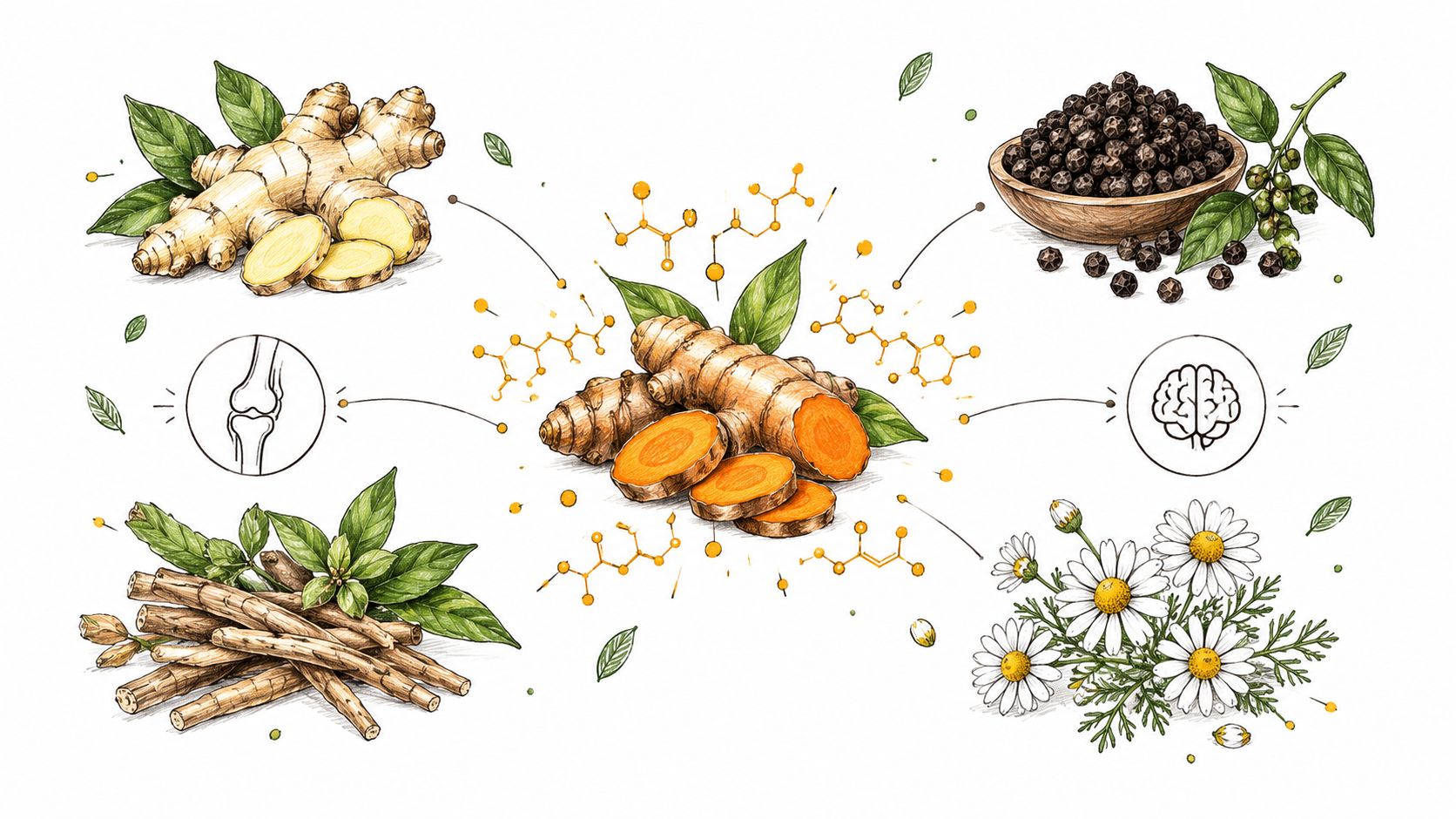
That's why brands often pair turmeric and BioPerine with ingredients like:
Ashwagandha root, when the formula is trying to speak to stress resilience or sleep support
Ginger, when the formulation stays in a botanical lane and wants another familiar root ingredient
Bromelain, when the product leans toward post-activity recovery and enzymatic support
How this differs from over-the-counter pain relief
Some shoppers compare turmeric formulas with over-the-counter NSAIDs. That's understandable, but they don't play the same role. NSAIDs are drugs used for a direct, short-term pain-relief purpose. A turmeric-curcumin-BioPerine supplement is usually positioned as a slower, routine support strategy. That makes it less of a substitute and more of a different category altogether.
A real-world example is River of Life Capsules, a vegan multi-ingredient product that combines standardized turmeric extract with BioPerine alongside ashwagandha root, ginger, and bromelain, and the brand also notes physician familiarity with the formula in its materials. That kind of blend is aimed at overlapping goals rather than a single narrow endpoint.
A quick walkthrough helps show how these multi-ingredient products are framed in practice.
If your main question is, “Will this help my joints?” a simpler product may be easier to judge. If your real question is, “I feel inflamed, tense, stiff, and run down,” a broader formula may fit your daily reality better.
The point isn't that one format is better for everyone. It's that ingredient stacks should match goals. Turmeric curcumin and BioPerine often earn their place as the absorption-aware joint-support core, while other ingredients are there to address adjacent concerns.
Practical Dosing and Label Guidance
Once you understand the science gap between absorption claims and clinical outcomes, the next skill is reading the bottle without getting distracted by front-label marketing.
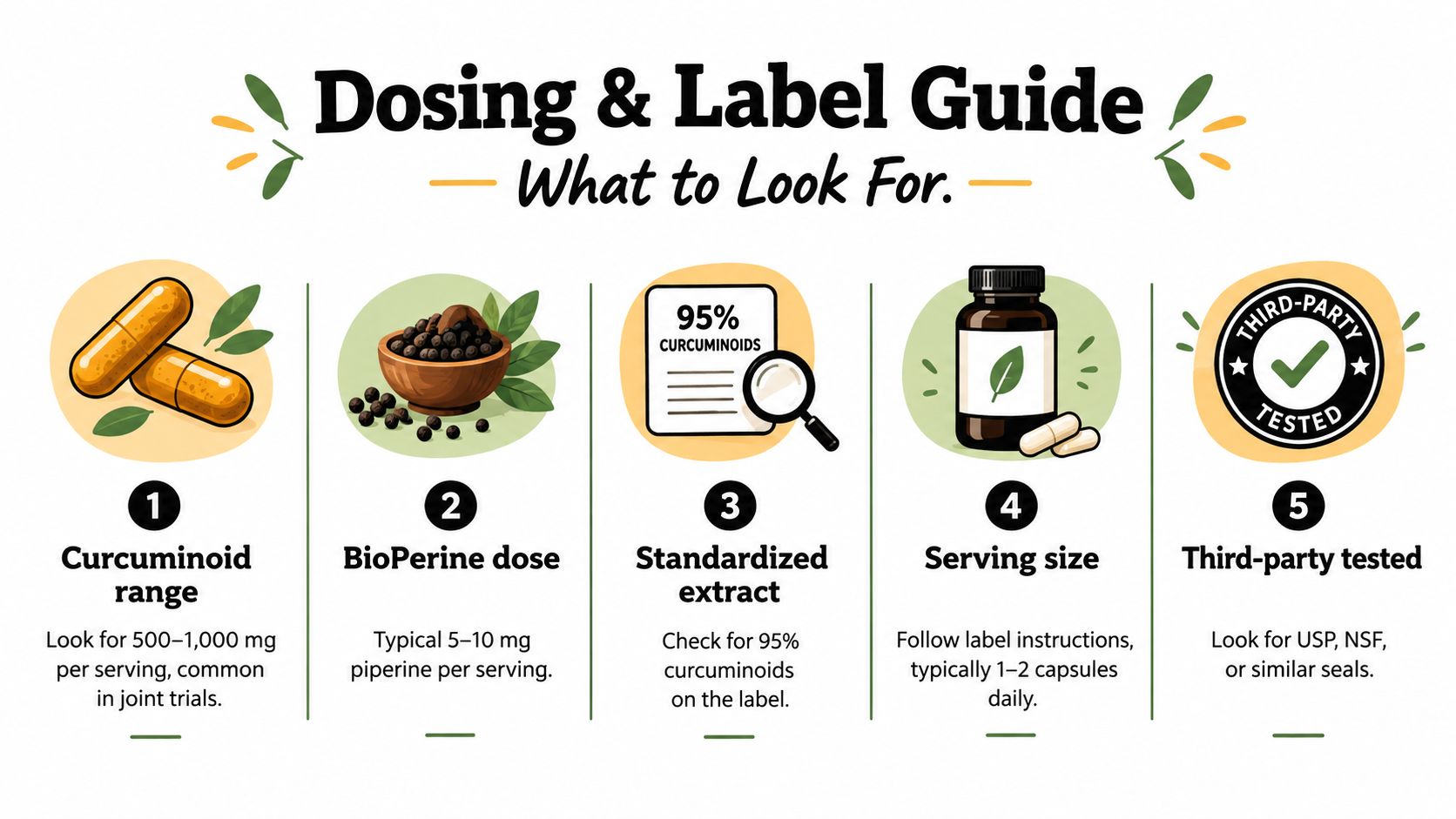
Start with the ingredient panel, not the slogan. A meaningful turmeric supplement should tell you whether it contains plain turmeric powder, a standardized extract, or a curcuminoid-heavy ingredient. If it includes BioPerine or another black pepper extract, the label should state the amount clearly. The verified safety guidance from NIH also stresses that a formulation should disclose standardized curcuminoid content and piperine quantity, because vague “turmeric extract” wording doesn't tell you the pharmacologically relevant exposure (NIH LiverTox monograph on turmeric and curcumin safety).
What to check before you buy
Use a label checklist like this:
Name the turmeric form: "Turmeric extract" is not enough on its own. Look for language that tells you whether curcuminoids are standardized.
Find the black pepper amount: BioPerine only helps you if the brand tells you it's there, and how much.
Notice the serving size: Some labels make a formula look stronger than it is by spreading the ingredient across multiple capsules.
Separate root language from extract language: "Full-spectrum root" and "standardized curcuminoids" are not interchangeable claims.
Look for a simple formula panel: If a brand says it avoids fillers, the supplement facts should make that easy to verify.
How to think about dosing without pretending every bottle is equivalent
People often want a universal number. The evidence doesn't support a single magic dose that applies to every product because studies vary in extract type, absorption technology, and target population. The better approach is to match the product's ingredient form and labeled amount to the kind of research the brand is implicitly referencing.
A few practical habits help:
Take the product with a meal, because curcumin is often discussed as fitting better with food than on an empty stomach.
Follow the serving instructions on the actual bottle, not a number copied from a social post.
Be wary of formulas that shout a benefit but hide the actual standardization details.
If a brand gives you a dramatic front-label promise and a fuzzy supplement facts panel, the problem isn't your reading comprehension. The label is doing less work than it should.
The most useful shift is this. Don't ask only, “How many milligrams?” Ask, “Milligrams of what, standardized how, paired with what absorption strategy?”
Safety, Interactions and When to Talk to a Clinician
People often treat “natural” as shorthand for “low risk.” That's too casual for concentrated curcumin products, especially enhanced-bioavailability formulas.
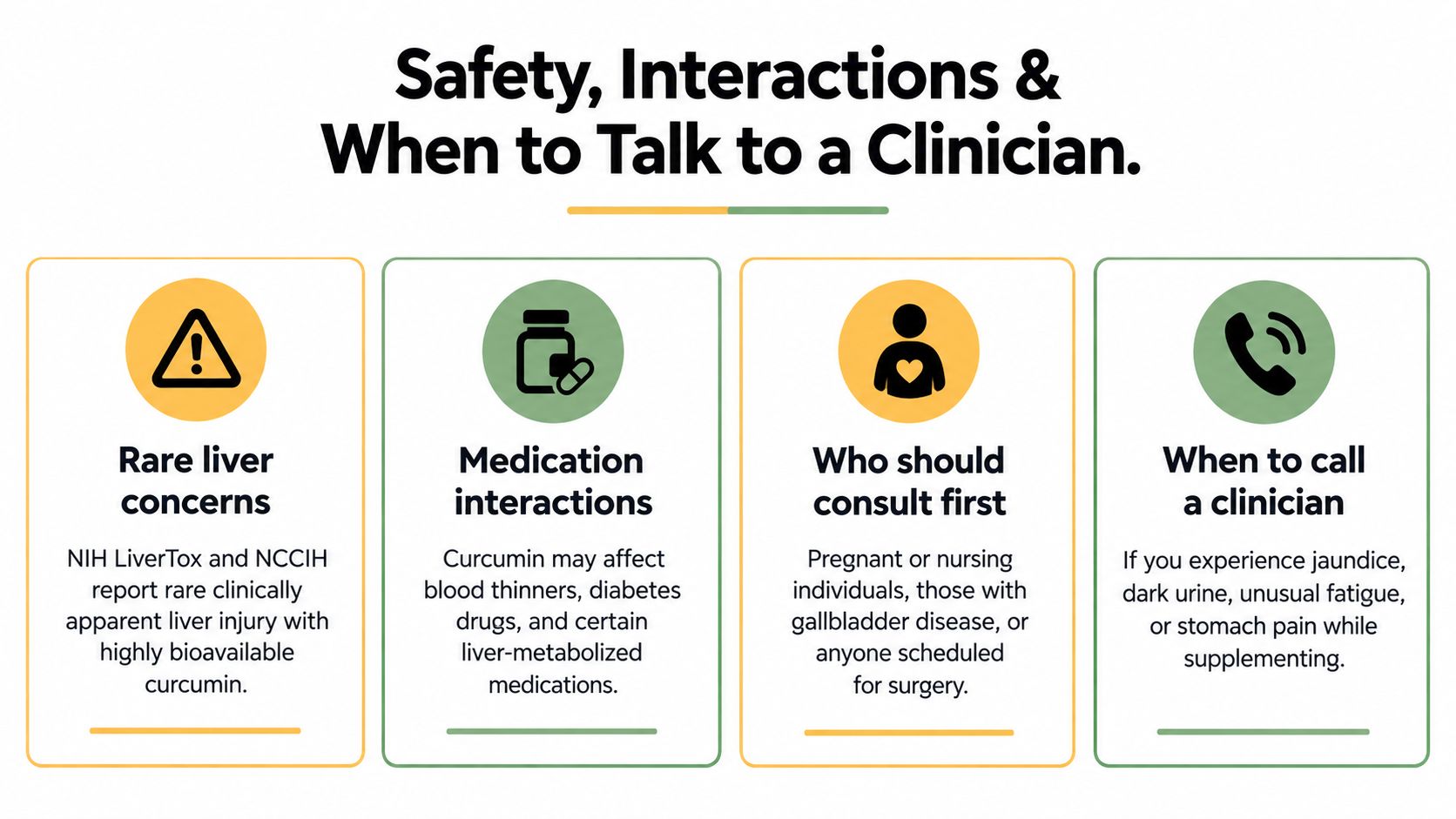
According to NIH's LiverTox and the National Center for Complementary and Integrative Health, highly bioavailable curcumin products, including formulations that use piperine, have been associated with rare cases of clinically apparent liver injury. Reported onset has ranged from several weeks to roughly eight months, and the estimated incidence is considered very low. The same safety sources support practical precautions for people with current liver disease, prior supplement-related hepatitis, or unexplained jaundice, and advise stopping use and seeking medical evaluation if symptoms such as fatigue, dark urine, itching, nausea, or yellowing of the skin appear. NCCIH also notes that curcumin products vary substantially in composition and that piperine is used to increase bioavailability, while a recent review it cites raises concern that curcumin and piperine can inhibit drug-metabolizing enzymes such as CYP3A4, potentially increasing exposure to some medicines and altering the bioavailability of multiple drugs (NCCIH turmeric safety overview).
Who should slow down before starting
This doesn't mean turmeric-curcumin-BioPerine products are broadly unsafe. It means some people should treat them more like a decision than an impulse purchase.
That includes people who:
Take multiple prescriptions, especially medicines with narrow dosing windows
Have current liver disease or a history of supplement-related hepatitis
Notice jaundice or unexplained dark urine
Are pregnant, because that's a category where “ask first” is the safer rule
Use medication for cardiovascular, seizure, or anticoagulation needs, where interaction questions deserve clinician input
What symptoms deserve quick attention
The most important warning signs are easy to remember because they're the sort of changes people notice in ordinary life:
Dark urine
Yellowing of the skin or eyes
New fatigue that feels unusual
Itching
Nausea that begins after starting the supplement
Don't “push through” those symptoms to finish a bottle. Stop and get medical advice.
One small crossover study found that short-term curcumin-piperine use did not meaningfully alter probe-drug exposure for midazolam, flurbiprofen, or acetaminophen, but that does not rule out interactions with all medicines or with longer-term use, which is exactly why the risk conversation shouldn't be reduced to one reassuring sentence in marketing copy.
The safest way to think about turmeric curcumin and BioPerine is balanced and boring. It's a researched supplement category with plausible benefits and real safety management considerations. That's not fear-mongering. That's what honest supplement education sounds like.
If you want a formula that applies these ideas in a single capsule, River of Life offers a vegan blend that pairs standardized turmeric extract with BioPerine and includes ashwagandha root, ginger, and bromelain for people shopping across joint, stress, and recovery goals. Read the label closely, compare the ingredient logic to your own needs, and use the science in this guide to decide whether that style of formula fits your routine.