


Stress Resilience Supplements: What Actually Works

If a supplement lowers a stress hormone, does that mean you'll feel less stressed? That's the gap worth examining before you buy a product promising calm, better sleep, or greater resilience. A change on a laboratory test and a meaningful improvement in daily life aren't necessarily the same thing.
Stress resilience supplements deserve an evidence-first approach, not an all-or-nothing verdict. Some ingredients have encouraging clinical research, but that research doesn't automatically validate every capsule containing them. The practical question is whether a particular formula has relevant evidence, transparent labeling, and an acceptable safety profile for you.
Table of Contents
What Are Stress Resilience Supplements
Think of stress resilience as your ability to regain your footing after a demanding day. A supplement marketed for resilience is presented as an extra support, not a way to remove the demands themselves. The label describes an intended purpose, not a guaranteed result.
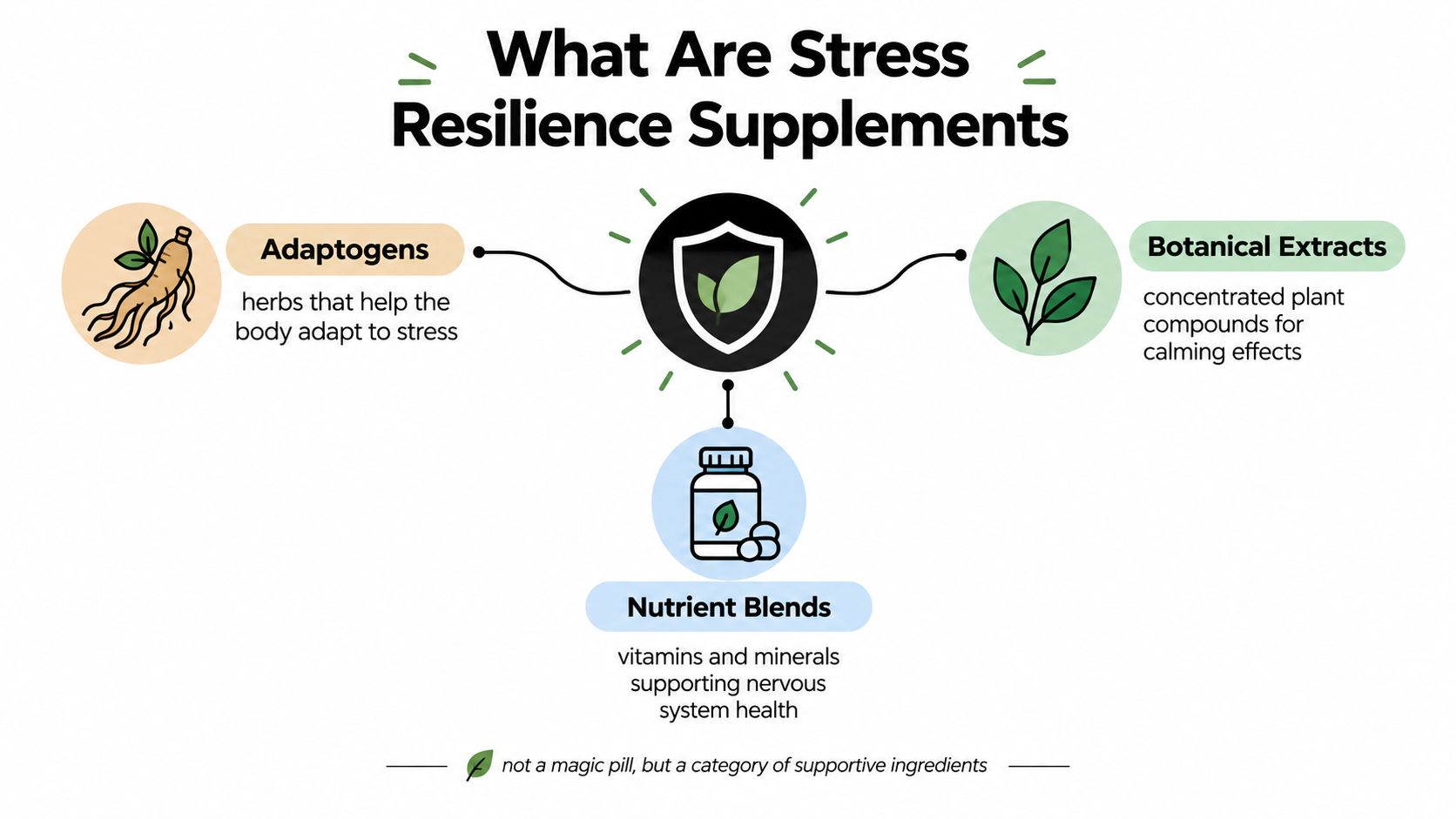
Stress resilience supplements are a marketing category rather than a single, consistently studied treatment. Products may contain botanical extracts, ingredients described as adaptogens, nutrient blends, or combinations that also include enzymes. Their contents can differ substantially, so sharing a category name doesn't make them interchangeable.
What the category does and doesn't mean
The term adaptogen commonly appears in this category as shorthand for an ingredient intended to support adaptation to stress. Treat that description as a starting point for questions, not proof that every adaptogen improves stress symptoms. Likewise, a botanical ingredient's presence doesn't establish that the finished product has been clinically tested.
These products shouldn't be evaluated as substitutes for prescription anxiety treatment. Nor should you assume that a stress-focused blend serves the same purpose as a general multivitamin. Ask what specific outcome the manufacturer intends to support and what evidence addresses it.
The infographic maps common ingredient categories. Its descriptions summarize intended roles, not established benefits for every ingredient or formula.
Separate popularity from proof
During August 2021–August 2023, 60.2% of U.S. adults aged 20 and older reported using at least one dietary supplement in the previous 30 days, according to the National Center for Health Statistics report on supplement use. That statistic concerns supplements generally, not stress products or ashwagandha specifically.
Popularity tells you that supplement use is common. It doesn't tell you whether a particular stress formula works.
When reading claims, distinguish these outcomes:
Perceived stress describes how overwhelmed or able to cope a person feels, ideally measured using a validated questionnaire.
Biological markers are laboratory measurements, such as serum cortisol.
Patient-important outcomes concern changes that matter in life, such as sleep quality, fatigue, and day-to-day functioning.
A useful product claim identifies which outcome improved. A vague promise to support balance leaves too much unanswered.
Key Ingredients and the Evidence Behind Them
An ingredient list can look persuasive because it is long. A more useful approach is to examine each ingredient separately, then ask whether anyone has studied the combination. Evidence for an ingredient is not automatically evidence for the finished formula.
Ashwagandha has the clearest evidence, with limits
Among the ingredients considered here, standardized ashwagandha extracts have the strongest direct clinical support for stress-related outcomes, although that support remains limited. A 2021 systematic review summarized by the NIH Office of Dietary Supplements' professional ashwagandha fact sheet included 7 clinical studies involving 491 adults, all conducted in India, with participants randomized to ashwagandha or placebo for 6–8 weeks; the studies generally found statistically significant improvements in stress and anxiety measures, alongside reductions in sleeplessness, fatigue, and serum cortisol.
Those findings justify cautious interest. They don't establish that every person will benefit, that benefits persist indefinitely, or that all products labeled ashwagandha are equivalent.
The participants had self-reported high stress or anxiety, or a diagnosed anxiety disorder. That matters because results in people experiencing substantial symptoms may not apply in the same way to someone who just wants to feel a little more productive.
Ingredient Comparison at a Glance
Ingredient | Primary Role | Evidence Strength | Key Consideration |
|---|---|---|---|
Standardized ashwagandha extract | Stress and sleep-related support | Strongest direct support among these ingredients, but limited | Match the actual extract and studied outcome |
Turmeric or curcumin | Often included for physical comfort positioning | Direct stress benefit isn't established by the evidence discussed here | Don't substitute an inflammation claim for a stress outcome |
BioPerine black-pepper extract | Included as an absorption-focused formulation component | Its presence doesn't establish stress efficacy | Ask for evidence relevant to the complete formulation |
Ginger | Botanical component in broader wellness blends | Direct stress benefit isn't established here | A familiar ingredient name isn't clinical validation |
Bromelain | Enzyme component in combination products | Direct stress benefit isn't established here | Evaluate its proposed purpose separately |
Other adaptogens | Stress-adaptation positioning | Must be assessed ingredient by ingredient | Category membership doesn't transfer ashwagandha findings |
Turmeric, curcumin, ginger, and bromelain may appear in formulas aimed at several wellness goals. But without relevant stress trials, it would be misleading to rank them as proven stress treatments or assume that they strengthen ashwagandha's effects.
The same caution applies to claims about synergy. Combining ingredients can be a formulation strategy, but a plausible reason to combine them isn't the same as a demonstrated advantage over an individual ingredient.
Practical rule: Ask whether the research tested the ingredient, the exact extract, or the finished product. Those are different levels of evidence.
For a multi-ingredient supplement, the most honest conclusion may be that an ingredient has encouraging research while the combination remains uncertain. That's more useful than either dismissing the entire category or treating the label as proof.
How These Ingredients Work in the Body
Mechanism claims often sound more definitive than outcome claims. A manufacturer might describe cortisol regulation, inflammation pathways, or enzyme activity, then imply that you'll cope better with a difficult day. The missing step is evidence that the proposed action produces a benefit you can notice.
The diagram illustrates the stress-signaling pathway commonly used to explain ashwagandha. Read language about regulation or balance as a simplified mechanistic explanation, not proof that a supplement will normalize your hormones.

A pathway isn't a patient outcome
The hypothalamic-pituitary-adrenal axis, often shortened to HPA axis, is the signaling pathway referenced in many stress-supplement explanations. For product evaluation, however, a detailed pathway illustration can't replace a trial measuring how people feel and function.
A 2025 systematic review and meta-analysis of randomized trials requiring at least 2 weeks of oral ashwagandha at 250 mg/day or higher found a statistically significant cortisol reduction of 1.16 micrograms per deciliter, but no statistically significant improvement in perceived stress, according to the published analysis of ashwagandha, cortisol, and perceived stress.
That finding doesn't prove that ashwagandha can't help anyone. It shows why cortisol reduction alone isn't enough to substantiate a claim about feeling less stressed. It also shouldn't be read as a universal dosing recommendation.
A laboratory change can be real without demonstrating a noticeable improvement in daily life.
Follow the claim all the way through
Consider a hypothetical capsule advertised around cortisol, physical recovery, and calm. Even if a manufacturer offers a plausible explanation for each ingredient, you still need to know whether the formula improved the outcome you care about.
Useful questions include:
What was measured? A blood marker, a validated stress questionnaire, sleep quality, or fatigue?
What was compared? The finished supplement against placebo, or a different extract in another population?
What changed for participants? Look beyond the proposed mechanism to the reported outcome.
For curcumin and bromelain, a discussion of inflammation pathways or enzyme activity doesn't, by itself, establish improved emotional resilience. Keep those proposed roles separate unless the manufacturer provides relevant clinical evidence.
For an additional explanation of the stress-response pathway, the following video provides another visual format.
Use explanations like these to understand the hypothesis. Use clinical outcomes to judge whether the hypothesis translates into practical benefit.
Safety, Interactions, and Who Should Be Cautious
The question to ask before “Will this work?” is “Is this appropriate for me?” A plant-based ingredient still needs a medication and health-condition review. Natural origin isn't a substitute for safety screening.
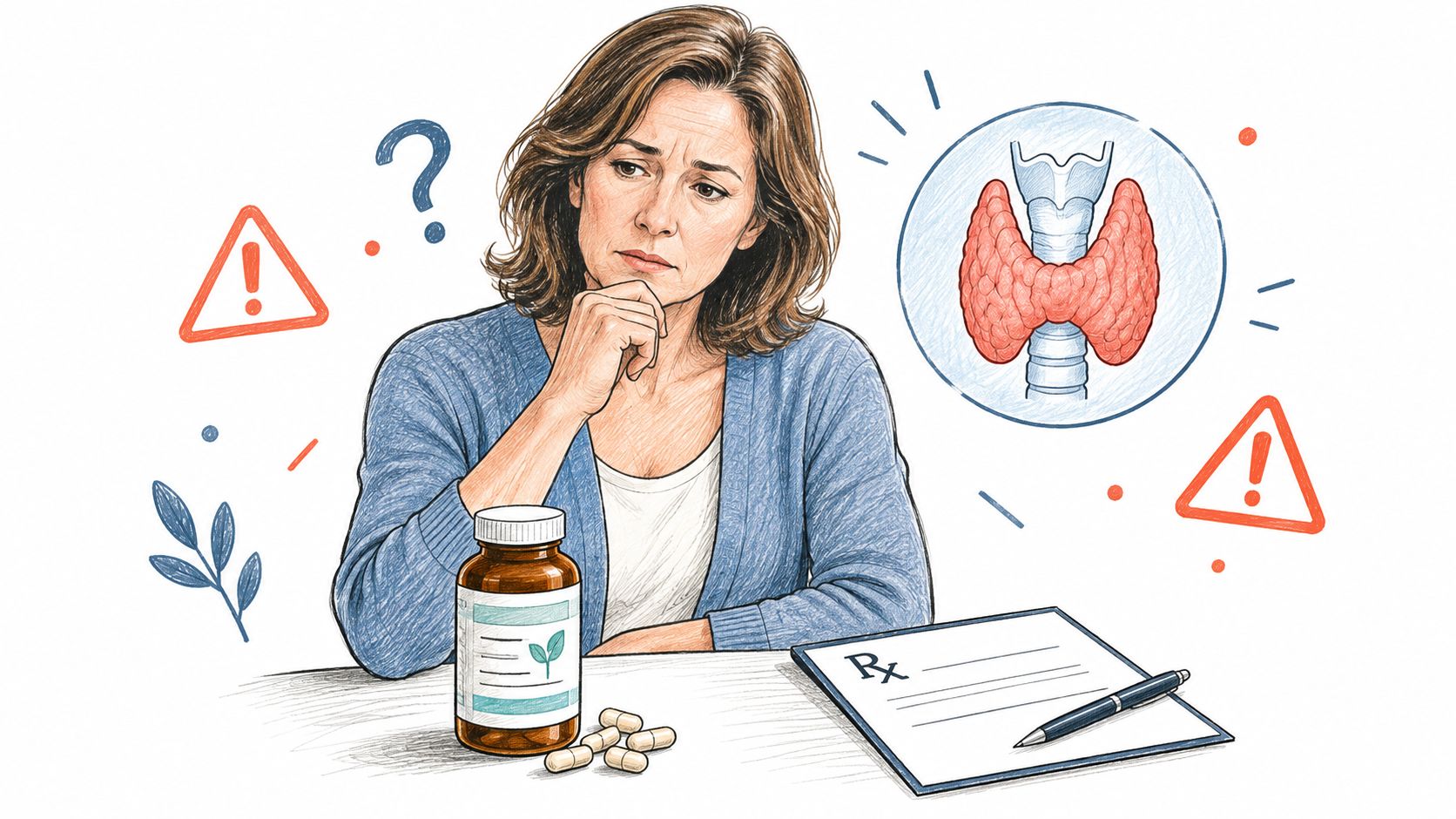
The NIH consumer guidance on ashwagandha safety reports potential effects on thyroid function, interactions with several medication classes, and rare cases of liver injury; it also identifies pregnancy, breastfeeding, autoimmune or thyroid disorders, and upcoming surgery as situations requiring avoidance or medical review.
Screen before starting
Bring the complete supplement label to your pharmacist or prescribing clinician if you take medicines in these categories:
Thyroid medicines: Ask whether ashwagandha is appropriate given your thyroid condition and treatment.
Diabetes or blood-pressure medicines: Request a review of possible overlapping effects and monitoring needs.
Sedatives: Discuss whether adding the formula could duplicate sedating effects.
Immunosuppressants or anticonvulsants: Get an individualized interaction assessment rather than relying on general wellness advice.
If you're pregnant, avoid ashwagandha. If you're breastfeeding, have an autoimmune or thyroid disorder, or have surgery planned, seek clinician guidance before considering a formula that contains it.
A medication list should include prescriptions, nonprescription products, and other supplements. For additional preparation, the guide to ashwagandha interactions can help you organize questions, but it shouldn't replace an individualized review.
Know when to stop and ask for help
If you develop jaundice, meaning yellowing of the skin or eyes, or unusual fatigue after starting a supplement, stop taking it and seek prompt medical advice. Don't assume that a new symptom is a normal adjustment or a sign that the product is working.
With a combination capsule, it may be difficult to identify which ingredient is responsible for a problem. Keep the packaging and ingredient list available so a clinician can review exactly what you took.
Bring the bottle, not just the product name. A clinician needs the full formula, serving instructions, and your other medicines to assess suitability.
Ask specific questions during that conversation: Is any ingredient inappropriate for my conditions? What symptoms should prompt me to stop? Does my existing treatment require monitoring if I add this product?
Don't stop a prescribed medicine to make room for a supplement. If stress, anxiety, or sleep difficulties are disrupting daily life, discuss those symptoms directly rather than treating supplement selection as the entire solution.
How to Choose a Quality Formulation
A useful label should let you reconstruct what you're taking. If you can identify the ingredients but not their individual amounts, forms, or extract specifications, you can't make a meaningful comparison with clinical research.
Start with transparency, then evaluate evidence and manufacturing information separately. An attractively presented label can still leave important questions unanswered.
Read the ingredient details
Look for the plant part, preparation, amount per serving, and any stated standardization. Standardized means the extract is specified against a particular constituent or set of constituents; the word alone doesn't establish that it matches a clinically studied preparation.
A raw powder and a concentrated extract shouldn't be treated as interchangeable because they share a plant name. Likewise, a prominently displayed blend amount doesn't tell you how much of each component you'll receive.
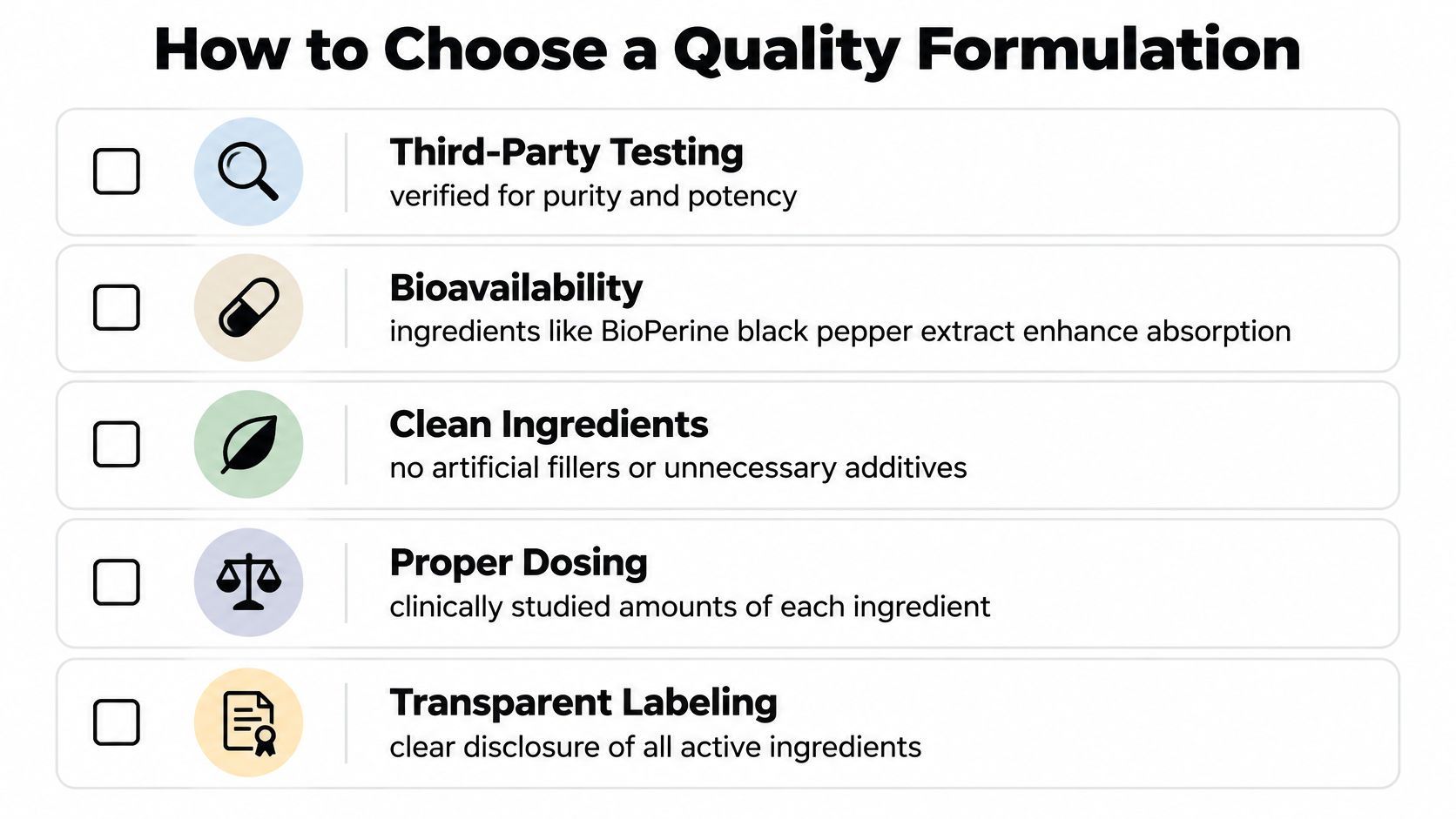
Use this checklist as a set of questions to verify, not as a promise that a product meeting them will work.
Check what each claim actually establishes
Extract identity: Ask for enough detail to compare the product with the preparation used in relevant research. A shared ingredient name isn't sufficient.
Bioavailability: If BioPerine or black-pepper extract is included to support turmeric absorption, ask what evidence supports that particular formulation. Better absorption and better stress outcomes are separate claims.
Testing documentation: Request evidence of independent testing and clarify its scope. Ask whether it addresses ingredient identity, declared amounts, or contaminants rather than assuming a testing badge answers every question.
Dietary preferences: If vegan suitability matters, examine the capsule shell and the complete ingredient list, not just the main botanicals.
Label clarity: Look for understandable serving instructions and disclosure of all active ingredients. Ask the manufacturer to explain anything you can't interpret.
The guide to reading Supplement Facts labels can help you compare serving sizes, ingredient amounts, and blend descriptions before purchasing.
Claims such as clean label, premium, or clinically referenced deserve follow-up questions. Ask what the term means in practical terms and what documentation is available.
Finally, separate product quality from clinical effectiveness. Testing can help answer questions about what's in a capsule, while an appropriate clinical trial addresses what that capsule does. A thoughtful purchase decision considers both without confusing them.
Using Supplements Alongside Lifestyle Strategies
A supplement decision makes more sense when it starts with a real-life goal. “I want greater resilience” is difficult to assess. “I want to feel less overwhelmed after work and settle more comfortably into my evening” gives you something concrete to discuss and observe.
Treat the following scenarios as planning examples, not reports of supplement results.
Match the plan to the problem
A busy professional might be tempted to add a capsule while continuing to answer messages throughout the evening. A more complete plan would also address the work boundary: when to stop checking messages, how to protect bedtime, and whom to ask for help with an unmanageable workload.
An active adult might be shopping for a blend marketed for both recovery and calm. That person should first clarify whether the main concern is physical discomfort, poor sleep, or emotional strain, rather than assuming a broad formula addresses all of them equally.
For an older adult seeking mobility and calm, medication review may be the most important starting point. A product advertised for several wellness goals still needs to fit the person's existing care plan.
Make the goal observable: Record what you hope will change before you add a supplement, rather than deciding afterward what counts as success.
Keep the routine manageable
Choose supportive habits you can realistically maintain, such as a consistent wind-down routine, enjoyable movement, regular meals, and a brief mindfulness practice. Don't make the supplement responsible for solving an overloaded schedule or replacing needed professional care.
If you and your clinician decide to try a product, keep a simple record:
Your target: Note the specific concern, such as difficulty unwinding.
Your experience: Record relevant changes and any unwanted symptoms.
Your context: Note major changes in workload, sleep routine, or other treatments.
The earlier clinical research involved repeated use over a study period, not proof of immediate relief from a single capsule. Follow the reviewed product instructions rather than taking extra when a difficult day arrives.
The broader guide to stress and resilience can help you connect supplement questions with a more complete daily plan.
Frequently Asked Questions
How long should I wait for results?
Use a review window agreed with your clinician and informed by the research discussed earlier. Don't interpret the absence of an immediate effect as a reason to increase the amount or continue indefinitely.
Can I take a stress supplement with food?
Follow the instructions for the specific product. If the label is unclear, ask a pharmacist or the manufacturer rather than assuming all botanical blends have the same requirements.
Can I take it with my medications?
That requires a review of the complete formula and your medication list. Separating doses by a few hours isn't a substitute for checking whether an interaction makes the combination inappropriate.
Is root-only ashwagandha better than full-spectrum?
Root-only identifies the plant part, while full-spectrum needs clarification from the manufacturer. Neither term alone establishes superiority; the relevant questions are what the extract contains and whether its evidence matches your intended use.
Are results guaranteed?
No. Encouraging ingredient research doesn't guarantee an individual response or validate an untested combination. Decide beforehand what benefit would justify continuing, and prioritize tolerability and safety.
River of Life offers a vegan multi-ingredient capsule combining turmeric extract, BioPerine, ashwagandha root, ginger, and bromelain, positioned to support stress resilience and other everyday wellness goals. Visit River of Life to review the formula, then bring the complete label to your pharmacist or clinician to discuss whether it fits your needs.