


Ginger Anti Inflammatory Properties: How It Works

Can ginger ease joint pain without changing the inflammation behind it? That question matters because people often use “anti-inflammatory” as if it describes one single result. In practice, ginger may affect pain, physical function, and objective inflammation markers differently.
A person might feel less sore, move more comfortably, and still see little change in a blood test. Another person might show a favorable biomarker change without noticing meaningful day-to-day relief. Understanding these outcomes separately makes ginger's potential easier to judge without overstating what the evidence can support.
Table of Contents
Why Ginger Gets Called Anti-Inflammatory
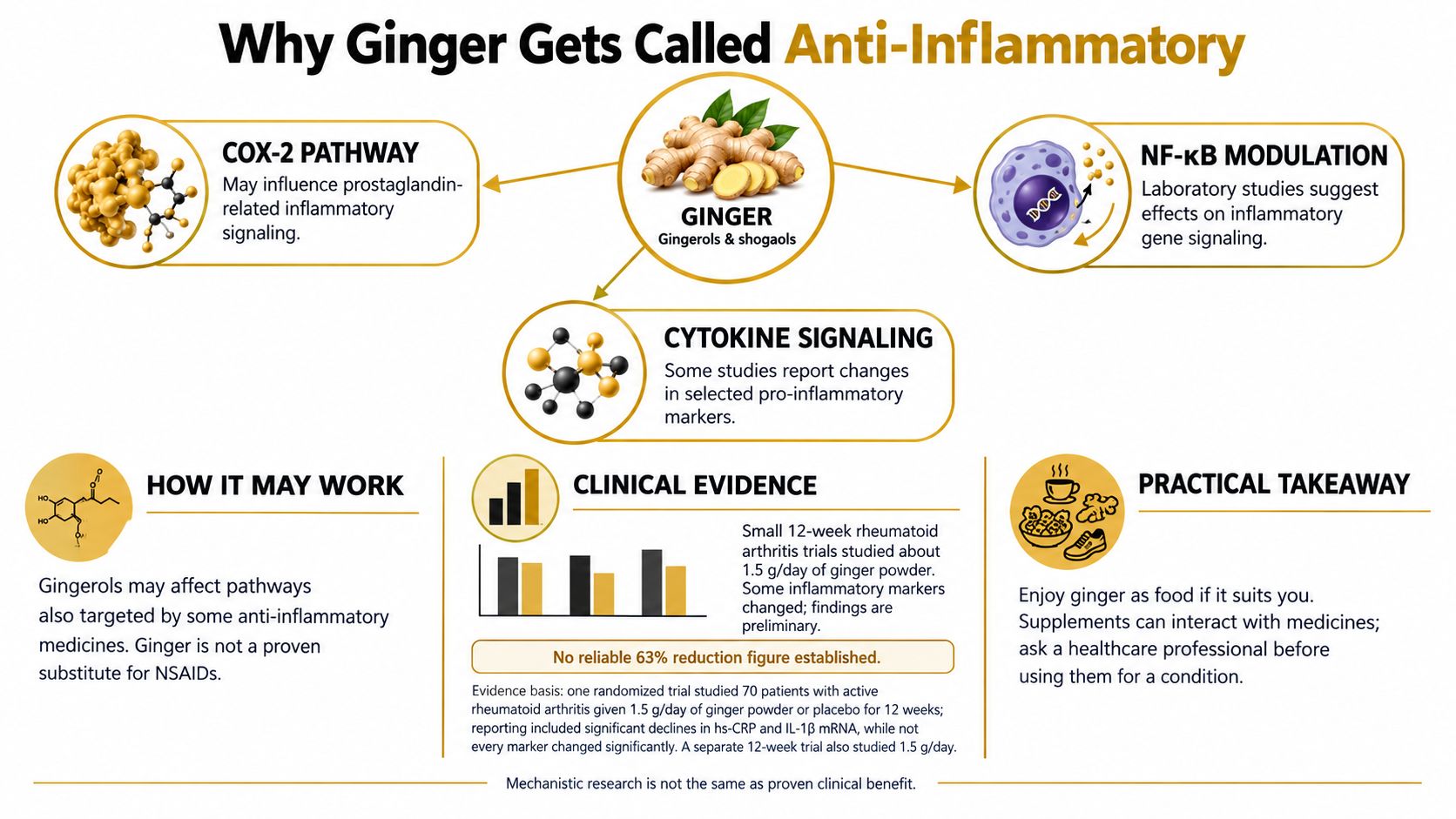
Ginger gets its anti-inflammatory reputation from two sources. First, laboratory research suggests that compounds in ginger can influence biological pathways involved in inflammatory signaling. Second, human studies have reported improvements in joint pain, disability, and some inflammation-related measures, although the findings aren't uniformly positive.
The simplest way to evaluate ginger is to separate three questions:
Pain: Does the joint feel less sore or tender?
Function: Can you walk, climb stairs, exercise, or complete daily tasks more comfortably?
Objective inflammation: Do blood tests or joint-related biomarkers change?
These outcomes overlap, but they aren't interchangeable. Pain is a personal experience influenced by inflammation, nerves, muscle tension, sleep, mood, and movement habits. Function reflects what your body can do. Biomarkers such as C-reactive protein and erythrocyte sedimentation rate provide measurable clues about inflammatory activity, but they don't capture every reason a joint may hurt.
A useful rule: Feeling better is valuable, but it doesn't automatically prove that ginger has reduced inflammation in the joint.
This distinction explains why ginger anti inflammatory properties can sound stronger in marketing than they look in clinical research. Ginger may offer modest symptom support, especially for joint discomfort, while its effect on underlying inflammatory activity remains less certain and may depend on the preparation, dose, and condition being studied.
For someone with osteoarthritis, the practical question isn't just, “Does ginger fight inflammation?” A better question is, “Which outcome am I trying to improve, and how will I measure it?” Tracking pain, stiffness, walking comfort, and medical biomarkers separately creates a more honest picture.
The Bioactive Compounds Behind Ginger Benefits
The compounds most often discussed in ginger research are gingerols and shogaols. They belong to a group of phenolic constituents that give ginger much of its pungency and may influence inflammatory signaling.
Fresh ginger contains gingerols in particular abundance. Drying, heating, or processing can change the chemical profile, with some gingerols converting into shogaols. That means fresh root, dried powder, cooked ginger, and concentrated extracts aren't chemically identical. A teaspoon of kitchen ginger shouldn't automatically be treated as equivalent to a standardized capsule.

The COX and LOX pathways
One way to picture the biology is to imagine inflammatory enzymes as switches in a kitchen. Cyclooxygenase, or COX, and lipoxygenase, or LOX, help convert arachidonic acid into signaling molecules such as prostaglandins and leukotrienes. Those molecules can contribute to pain, swelling, and other inflammatory responses.
Laboratory and review evidence associates gingerols and shogaols with suppression of COX and LOX activity. That doesn't mean ginger works exactly like a prescription or over-the-counter anti-inflammatory medicine. It means certain ginger compounds may turn down parts of the signaling process under particular experimental conditions.
The NF-κB signaling route
Ginger compounds have also been studied for their influence on NF-κB, a transcription pathway that helps regulate inflammatory mediators. Research links this pathway to signals including tumor necrosis factor-α, interleukin-1β, prostaglandin E2, and nitric oxide. If the kitchen analogy continues, NF-κB is closer to a control panel that coordinates several burners at once.
These mechanisms help explain why ginger is biologically interesting, but mechanisms aren't clinical proof. A compound can affect a pathway in a laboratory and still produce a small, inconsistent, or condition-specific effect in people. Preparation, dose, absorption, and the amount of gingerols or shogaols delivered all matter, so labels should identify the ginger ingredient and quantity rather than treating every ginger product as equivalent.
What Human Studies Say About Joint Pain and Inflammation
Most human evidence for ginger and joint health focuses on knee osteoarthritis. The results are encouraging enough to justify interest, but not strong enough to support replacing established medical care.
A 2015 systematic review and meta-analysis combined five studies involving 593 participants. Ginger supplementation was associated with a statistically significant reduction in pain, with a standardized mean difference of -0.30 and a confidence interval from -0.50 to -0.09. The same analysis found a significant improvement in disability, with a standardized mean difference of -0.22 and a confidence interval from -0.39 to -0.04. Between-study inconsistency was low for both pain and disability. These results support a measurable but moderate clinical signal, not a definitive treatment effect. (2015 systematic review and meta-analysis)
Pain and function aren't the whole story
A later 2022 meta-analysis examined nutritional supplementation in osteoarthritis and identified three ginger studies involving 166 participants receiving ginger and 164 receiving placebo. The analysis reported lower pain measured with a visual analogue scale and favorable changes in systemic inflammation, including erythrocyte sedimentation rate and C-reactive protein. These findings are relevant because they look beyond how participants felt and include measurable biological markers. (2022 osteoarthritis supplementation meta-analysis)
A separate double-blind, placebo-controlled trial followed 120 people with knee osteoarthritis for three months. The ginger group showed reductions in both measured cytokines relative to placebo after the intervention. Yet the evidence doesn't move in one direction every time. An eight-week trial assigning 60 participants to 1 gram of powdered ginger daily or placebo found no significant improvement in knee pain, symptoms, daily activities, sports activities, or quality of life. (Clinical review of ginger and osteoarthritis)
Ginger looks more like a possible adjunct for joint comfort than a guaranteed anti-inflammatory treatment.
A clinical-trial review covering nine randomized studies and 964 knee-osteoarthritis patients also reported pain-related benefits while highlighting differences in preparations and study quality. Taken together, the findings suggest that ginger may help some people with pain and function, and it may improve certain biomarkers in some settings. The size and consistency of that effect remain limited, and a favorable blood marker shouldn't be treated as proof that cartilage damage has been reversed.
For a broader discussion of how supplements may fit into joint-care decisions, see this guide to dietary supplements for joint pain.
Fresh Ginger, Extracts, Powders, and Supplements Compared
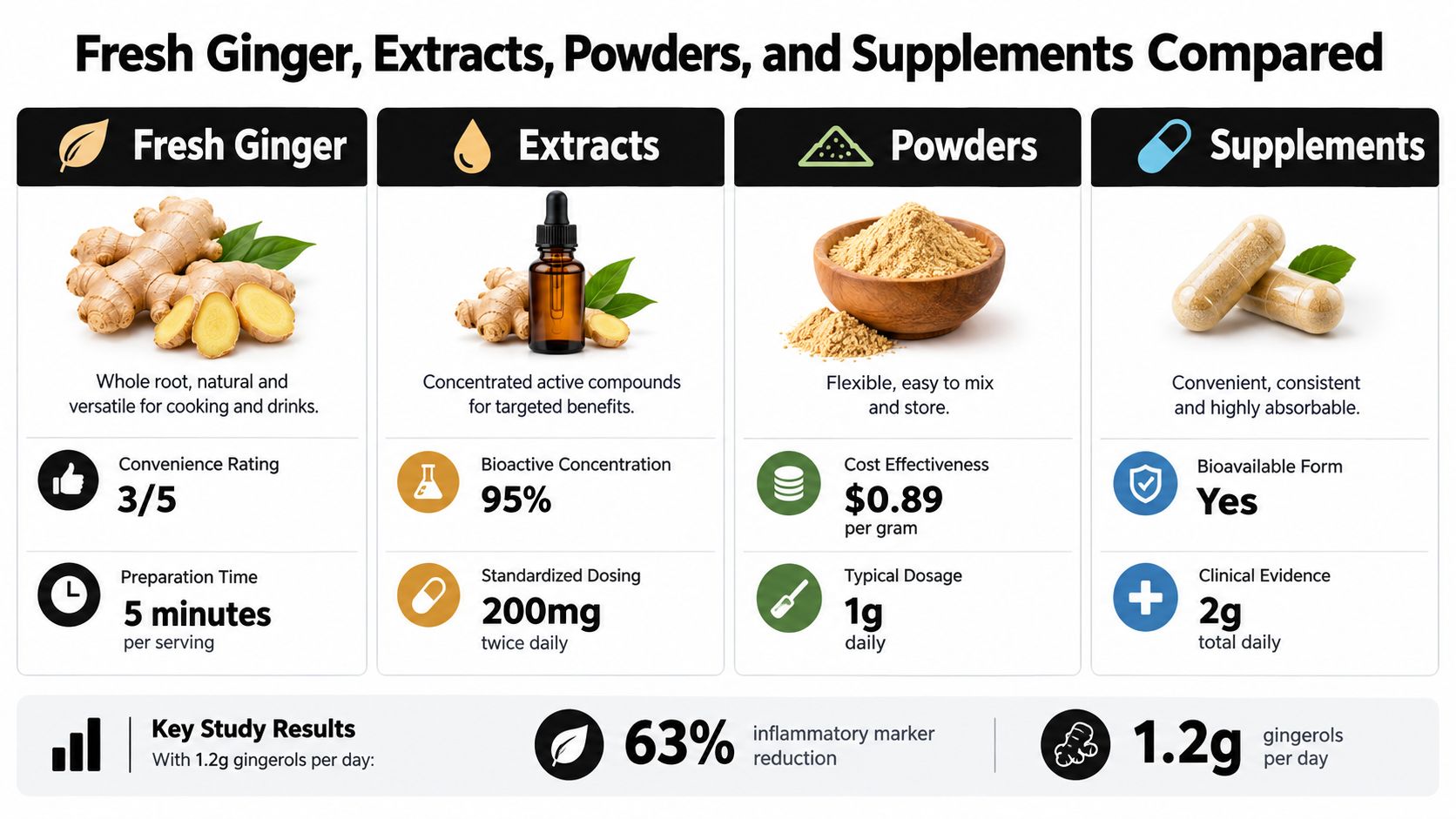
The best ginger form depends on what you want from it. Fresh root works well as a food ingredient, tea, or cooking spice, but its active compound content can vary and it doesn't provide the same dosing precision as a labeled supplement. Powder is easier to measure, although source, storage, and processing influence what it delivers.
Extracts and capsules offer more consistent serving information when the manufacturer identifies the extract type and amount. That convenience can be useful for someone tracking symptoms over several weeks, but concentrated products also deserve more careful medication and side-effect review.
Form | Practical advantage | Main limitation |
|---|---|---|
Fresh ginger | Flexible, food-based, and easy to add to meals or drinks | Difficult to standardize for active compound content |
Powdered ginger | Convenient and measurable | Composition varies with processing and source |
Extract | May provide more controlled dosing | Concentration and extraction methods differ |
Multi-ingredient supplement | Combines several researched botanicals in one routine | It becomes harder to identify ginger's independent effect |
What to check on a label
Look for the botanical name or clearly identified ginger ingredient, the amount per serving, serving instructions, and testing information. A standardized extract may be easier to compare from one product to another than an unlabeled powder. Third-party testing can add useful information about identity and contaminants, although it doesn't guarantee that a product will improve your symptoms.
Ginger is often combined with turmeric, bromelain, and black pepper extract such as BioPerine. These combinations may be designed to support absorption or provide complementary biological activity, but they also make it difficult to determine which ingredient is responsible for a benefit or side effect. If you want to isolate ginger's effect, a single-ingredient product offers a cleaner personal experiment.
For readers considering a combined formula, ginger and turmeric capsules provide an example of how ginger may appear alongside other botanicals. The practical choice is the form you'll use consistently, can tolerate, and can discuss clearly with a healthcare professional.
How to Use Ginger for Everyday Joint Comfort
Start with your goal, not with a product. Culinary ginger may suit general wellness or everyday use, while a measured powder or standardized extract may make more sense if you're trying to track changes in osteoarthritis symptoms. Someone focused on post-exercise soreness may also prefer a food-based routine, whereas someone comparing symptom patterns may value a clearly labeled serving.
Clinical studies have tested different preparations and amounts. One trial used 1 gram of powdered ginger daily for eight weeks, while another knee osteoarthritis trial used 1 gram per day for 12 weeks. Those findings don't establish a universal dose for everyone, but they show why label directions and professional guidance matter. (Clinical evidence review for ginger in osteoarthritis)

Build a simple tracking routine
Ginger isn't an instant analgesic, and it shouldn't be treated as a disease-modifying therapy. If you try it for joint comfort, give yourself a consistent observation period and record the outcomes separately:
Pain: Rate soreness during a familiar activity, such as walking or climbing stairs.
Stiffness: Note how your joint feels after waking or sitting.
Function: Record whether a daily task feels easier, unchanged, or harder.
Tolerance: Watch for heartburn, loose stools, stomach discomfort, or other changes.
Take ginger with food if it irritates your stomach. Avoid changing several supplements, exercises, and medications at the same time, because you won't know what caused an improvement or problem. A short symptom note is often more useful than relying on memory.
A product containing ginger alongside turmeric, BioPerine, ashwagandha, and bromelain, such as River of Life Capsules, is one multi-ingredient option, but its combined formula means ginger's individual contribution can't be isolated. Anyone using a concentrated supplement should review the label with a pharmacist or clinician, particularly when prescription medicines are involved.
Consistency matters more than chasing a quick sensation. If pain is severe, a joint is hot and visibly swollen, symptoms develop suddenly, or mobility is deteriorating, seek medical evaluation rather than relying on ginger.
Safety, Side Effects, and Medication Interactions
“Natural” describes an origin, not a guarantee of safety. Ginger is generally well tolerated as a food, but concentrated powders, extracts, capsules, and shots deliver a different exposure from the small amounts commonly used in cooking.
The most common practical concern is gastrointestinal discomfort. Heartburn, stomach upset, or loose stools can occur, especially at higher supplemental amounts. Ginger can also affect platelet aggregation, which creates a bleeding concern for some people.
Medication questions deserve individual answers
Speak with a clinician or pharmacist before using concentrated ginger if you take:
Anticoagulants: Ginger may increase concern about bleeding when combined with medicines such as warfarin.
Antiplatelet medicines: Effects on platelet aggregation may matter when ginger is combined with these prescriptions.
Diabetes medication: Ginger may potentially increase the risk of low blood sugar.
Several prescriptions: A multi-ingredient formula can create combined effects that aren't predictable from ginger alone.
People with bleeding disorders, gastrointestinal sensitivity, or planned surgery should be especially cautious. Food-level use is generally less concerning than concentrated supplementation, but individual risk depends on the product, amount, health history, and medication schedule. The NCCIH ginger safety information provides a useful starting point for discussing these questions with a healthcare professional.
Before surgery: Tell your surgical team about ginger supplements rather than assuming a food-based ingredient doesn't matter.
Don't use ginger to replace prescribed treatment without medical advice. If you're comparing ginger with common pain medicines, this overview of ibuprofen and its role in pain care can help frame the discussion, but a clinician or pharmacist should guide decisions about combining, stopping, or substituting medicines.
Product quality matters too. Check the exact ginger amount, other botanicals, serving instructions, and any warnings. If the label hides the quantity inside a proprietary blend, you can't confidently compare it with clinical research or identify which ingredient may be causing a reaction.
Making Ginger Work Realistically in Your Routine
Ginger may be useful when you define success precisely. If your goal is less pain, track soreness during the same activity. If your goal is better function, note walking, stairs, grip, or another daily task. If your goal is lower inflammation, discuss appropriate blood tests with a healthcare professional rather than assuming symptom relief proves a biomarker change.
The biological rationale is plausible. Gingerols and shogaols may influence COX, LOX, and NF-κB-related signaling, while human studies suggest modest benefits for some people with osteoarthritis. The clinical signal is still mixed, and preparation, dose, consistency, and personal health factors all shape the result.
A realistic decision path looks like this:
Clarify the outcome: Choose pain, function, or an objective medical measure.
Choose a manageable form: Use culinary ginger, powder, extract, or a combination product based on your needs and tolerance.
Track consistently: Record symptoms and function instead of relying on occasional impressions.
Review safety: Ask a pharmacist or clinician about anticoagulants, antiplatelet medicines, diabetes treatment, surgery, and digestive symptoms.
Keep the wider plan: Movement, sleep, weight management, and appropriate medical care remain important parts of joint support.
Ginger can fit into a broader routine for everyday comfort, but it isn't an immediate analgesic and it doesn't replace diagnosis or established arthritis treatment. Used with realistic expectations, it may offer a practical botanical option while you pay attention to what your body does.
River of Life offers a vegan capsule formula combining ginger with turmeric extract, BioPerine black pepper, ashwagandha, and bromelain for people seeking a multi-ingredient approach to joint comfort and everyday wellness. Review the ingredients and purchase options at River of Life, and discuss the formula with a healthcare professional if you take prescription medication.