

Organic Psyllium Husk: Benefits & Usage Guide 2026

You may be staring at a tub of organic psyllium husk right now, wondering whether it's useful or just another wellness product with big promises and fuzzy instructions. Maybe you want help with digestion. Maybe your bigger concern is blood sugar, appetite, or cholesterol. Or maybe you've heard psyllium can help, but every guide seems to stop at “mix with water” and move on.
That's where people get stuck. Psyllium is simple, but using it well isn't always obvious.
Think of it as a sponge for your gut. Once it meets water, it swells, thickens, and changes the texture of what's moving through your digestive tract. That basic physical action helps explain why one fiber can support regularity, steadier digestion, and broader metabolic health at the same time.
Table of Contents
Your Natural Path to Better Digestive Wellness
A lot of people reach for fiber when something feels off. You're irregular, meals leave you sluggish, or your appetite feels harder to manage than it used to. Often, the advice you get is either too basic or too complicated.
Organic psyllium husk sits in a useful middle ground. It's not exotic, and it doesn't need a complicated routine. Used properly, it can become a steady daily tool that supports digestion and, for many people, much more than digestion.
What makes it different from the usual “eat more fiber” advice is how it behaves. Psyllium doesn't just add bulk. It forms a thick gel when mixed with liquid, and that changes how food moves through the gut. That shift can help with stool consistency, fullness after meals, and the pace of nutrient absorption.
Practical rule: The best results usually come from consistency, not from taking a large amount once in a while.
If you're interested in a broader natural wellness approach, River of Life's article on the plant-based wellness boom and why turmeric and ashwagandha are must-haves in 2025 gives helpful context on how people are building simple supplement routines around foundational ingredients.
Many readers also get confused by product labels, purity claims, and dosing instructions. That confusion matters. With psyllium, details like organic certification, purity, how much water you use, and when you take it in relation to medications can make a real difference.
So before tossing a spoonful into a smoothie and hoping for the best, it helps to understand what it is, why it works, and how to use it without creating new problems.
What Exactly Is Organic Psyllium Husk
You buy a bag labeled “organic psyllium husk,” stir a spoonful into water, and within moments it thickens. That quick change tells you what this ingredient really is. It is a fiber-rich part of a plant seed that absorbs water fast and turns it into a soft gel.
Organic psyllium husk comes from Plantago ovata, a small shrub grown mainly for its seeds. The husk is the seed's outer layer. That outer coat is the part used in supplements and powders because it contains the soluble fiber that swells when it meets liquid.
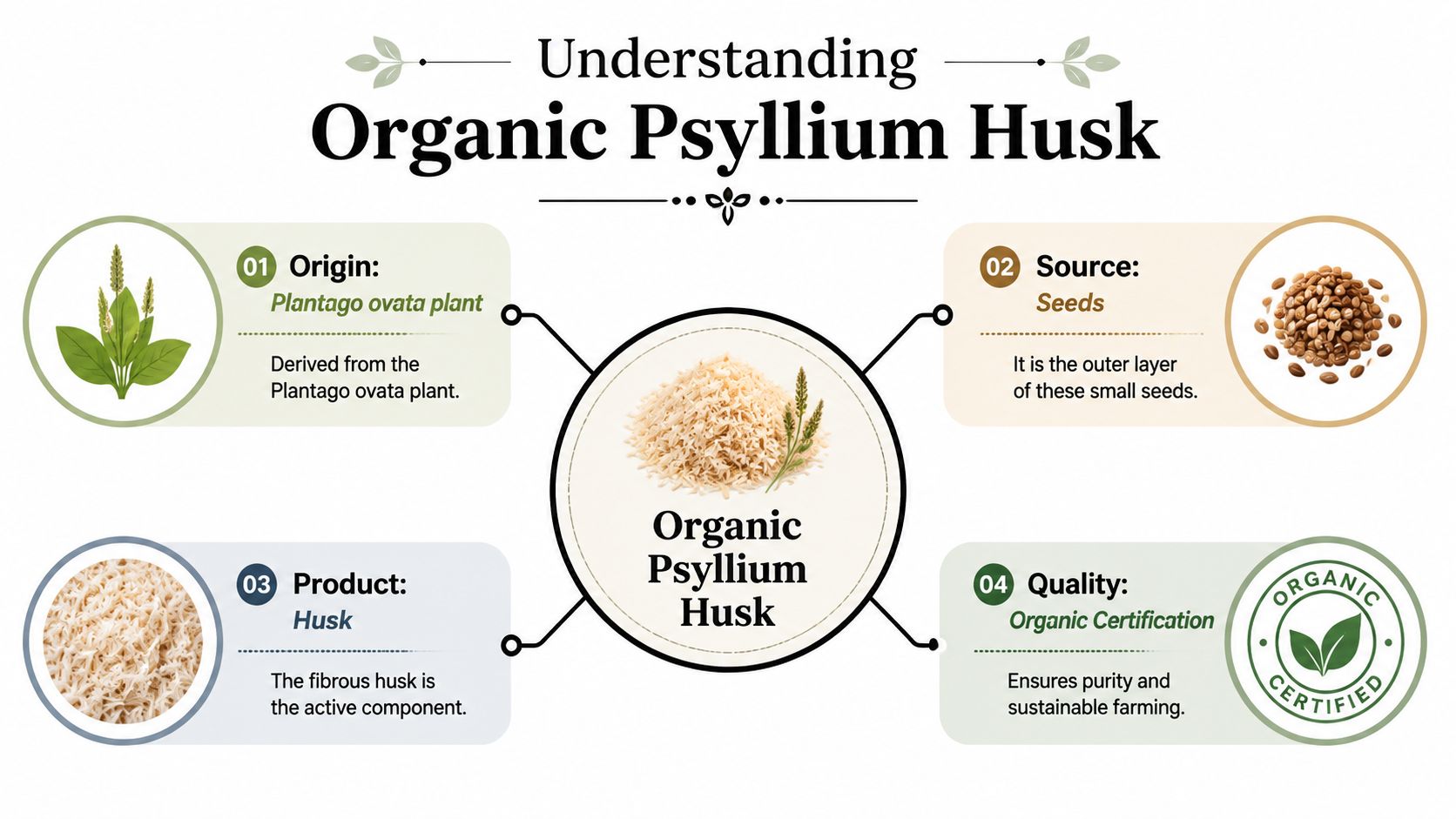
The plant behind the husk
The key substance in psyllium is mucilage, a type of soluble, non-digestible carbohydrate. Mucilage works like a sponge in your gut. It pulls in water, expands, and creates a thicker mixture than plain water alone.
That physical change matters more than the ingredient's name. The gel can affect how material moves through the digestive tract, how soft or formed stool becomes, and how quickly nutrients mix with digestive fluids. This is one reason psyllium shows up in discussions about blood sugar, cholesterol, fullness, and even gut-brain signaling, not just bathroom regularity.
Why organic matters for a daily supplement
If you use psyllium often, the farming and processing standards become more relevant. “Organic” generally means the crop was grown under certified organic rules, with restrictions on synthetic pesticides and fertilizers. For a product that may become part of a daily routine, that gives many readers a cleaner baseline.
Labels also deserve a quick check. Plain psyllium husk or plain psyllium powder is usually easier to judge than flavored mixes, gummies, or drink blends with sweeteners, colors, or added fibers. Fewer ingredients usually means fewer surprises.
Why purity changes how it performs
Purity is one of the easiest label details to miss. It also affects what you get in each spoonful. A higher-purity product contains more actual husk fiber and less extra plant matter or inert material.
In practical terms, that often means three things:
More fiber per serving
More consistent thickening in water
More predictable dosing from day to day
That last point matters if you are using psyllium for a specific goal, such as improving stool consistency, supporting post-meal fullness, or following a clinician's advice on fiber intake. A product with fewer extras tends to behave more consistently, which makes it easier to use safely and to time properly around medications. That timing piece is easy to overlook, but it matters because the same gel that helps in the gut can also interfere with how some medicines are absorbed.
So at its core, organic psyllium husk is simple. It is the water-loving outer coat of a seed. But once you understand that gel-forming behavior, the bigger picture becomes clearer. You are not just adding “more fiber.” You are using a tool that changes the physical environment inside the gut.
The Science-Backed Health Benefits of Psyllium
You eat a normal breakfast, but an hour later you already want a snack. Or your energy rises fast, then drops. Psyllium can help change that pattern because it changes the texture of digestion itself.
Once psyllium absorbs water, it forms a thick gel in the gut. That gel works like a sponge and a soft barrier at the same time. It slows how quickly food moves, changes how some nutrients meet the intestinal wall, and helps create steadier conditions inside the digestive tract.
Here's the visual summary first.
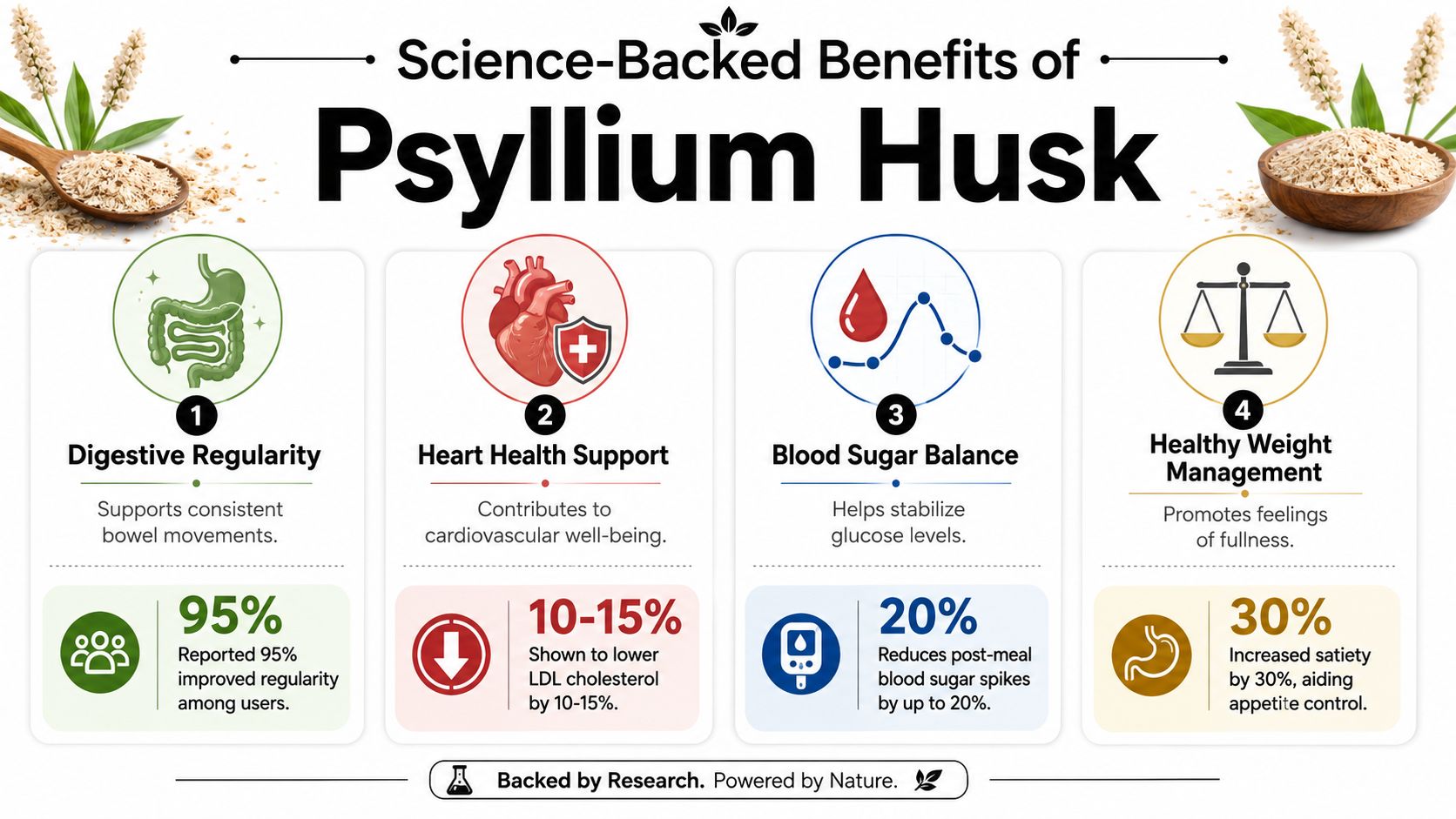
Blood sugar support starts with slower absorption
One of psyllium's best-studied effects is how it slows carbohydrate absorption after a meal. The gel increases viscosity in the small intestine, so glucose enters the bloodstream more gradually instead of all at once.
The U.S. National Library of Medicine review on psyllium and metabolic health describes psyllium as a soluble, gel-forming fiber that can improve glycemic control, especially when used regularly as part of a meal pattern.
That matters for more than diabetes. Smoother blood sugar swings can also mean steadier energy, fewer sharp hunger rebounds, and better adherence to healthy eating habits. If you are interested in broader nutrition strategies that support long-term brain and metabolic health, this guide to brain-health-focused longevity supplements adds helpful context.
A video can help make these mechanisms easier to picture:
Cholesterol support begins in the intestine
Psyllium's effect on cholesterol is mechanical before it is chemical. In the gut, the gel can bind some bile acids, which are made from cholesterol. When more bile leaves the body in stool, the liver may pull cholesterol from circulation to make more.
The FDA's authorized health claim for soluble fiber from psyllium husk reflects evidence that psyllium, used as part of a diet low in saturated fat and cholesterol, may reduce the risk of coronary heart disease.
That is a useful reminder. Some heart-supportive effects begin with what happens in the intestine, not just with what happens in the bloodstream.
Fullness can make healthy eating easier
Psyllium can also support weight management in a practical way. Because it thickens with water, it can help you feel full sooner and stay satisfied longer after a meal.
The Mayo Clinic overview of soluble fiber explains that soluble fiber can slow digestion and help with satiety, which is one reason high-fiber eating patterns are often easier to maintain.
This point is easy to misunderstand. Psyllium does not melt fat or replace food quality. It helps by lowering the odds that hunger will push you into overeating an hour later.
Regularity is only part of the story
Psyllium is still widely used for bowel regularity, and for good reason. It pulls in water, softens dry stool, and can also add form to loose stool. That balancing effect is one reason clinicians often describe it as a normalizing fiber rather than a one-direction remedy.
The Cleveland Clinic's psyllium overview notes that psyllium is commonly used to relieve constipation by increasing bulk in the stool.
The bigger takeaway is that regularity is not its only benefit. Psyllium also reaches into metabolic health, appetite control, and the gut environment that influences how you feel after you eat.
Use still matters as much as science. Too much too soon, or too little water, can turn a helpful tool into an uncomfortable one. Timing matters too, especially with medications, because the same gel that helps slow absorption of nutrients can also interfere with how some drugs are absorbed.
A Prebiotic Powerhouse for Your Gut and Brain
The newer conversation around psyllium is more interesting than the old “fiber for constipation” story. Organic psyllium husk can also act as a prebiotic, meaning it helps feed beneficial gut bacteria.
That changes the lens completely. You're not only changing stool texture. You're influencing the environment those microbes live in.
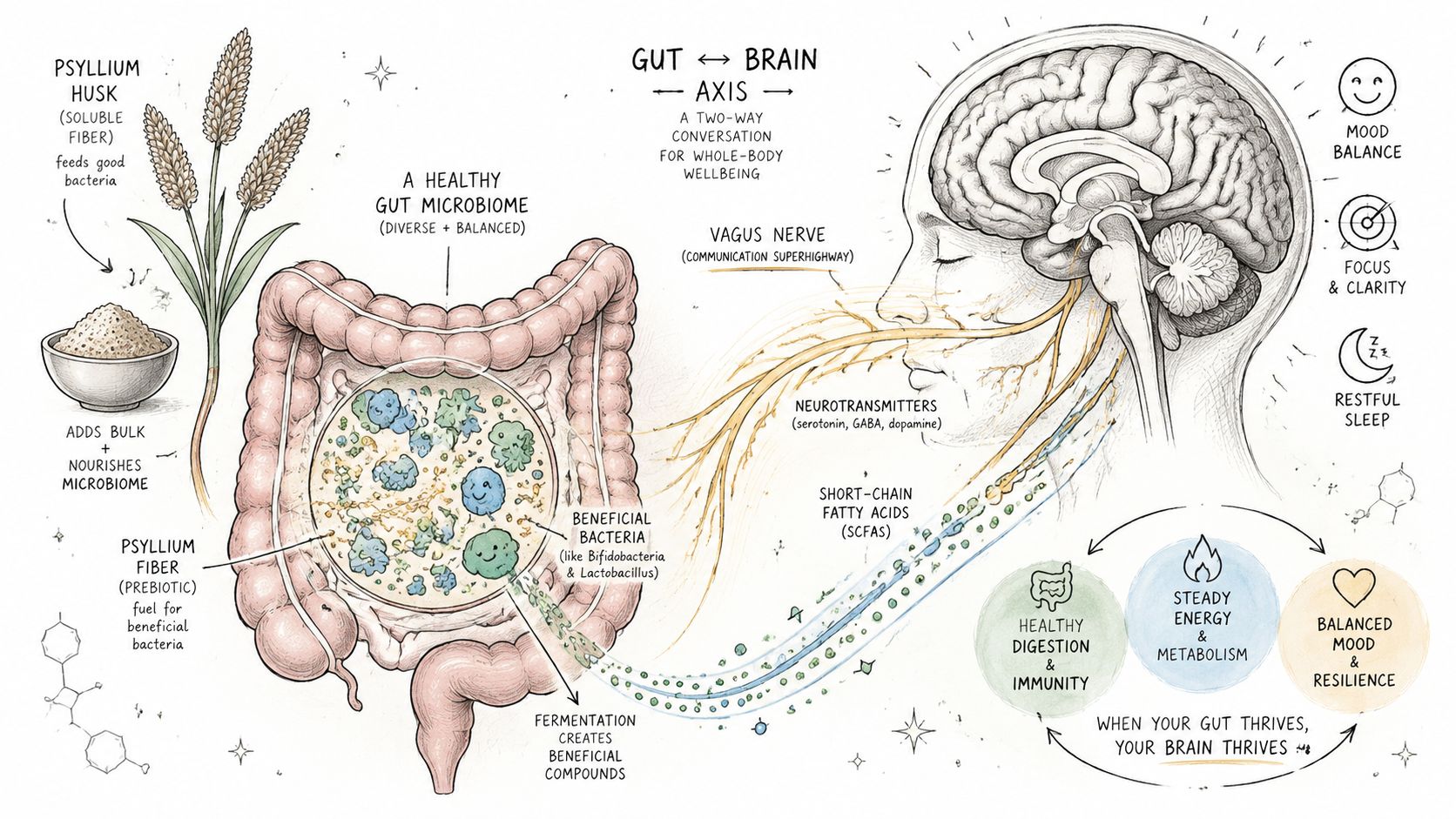
Prebiotic means you feed the good microbes
A prebiotic isn't a probiotic. Probiotics are the live organisms. Prebiotics are the fuel. Psyllium helps nourish beneficial bacteria already living in the gut.
According to WebMD's overview of psyllium husk use, recent studies confirm psyllium's prebiotic effect feeds beneficial gut bacteria, improves insulin sensitivity, lowers LDL by ~5–10% after 3 weeks of 10g/day use, and reduces colon cancer risk markers, highlighting its role in managing systemic inflammation through microbiome modulation.
That's why psyllium is gaining attention among people focused on metabolic health, not just bowel habits.
Why the gut-brain axis matters here
The gut-brain axis is the communication loop between the digestive system and the brain. It involves nerves, immune signals, hormones, and microbial activity. When the gut environment is healthier, many people notice broader effects on how steady they feel after meals and across the day.
This doesn't mean psyllium is a mood supplement. It means gut support can ripple outward. Better microbial balance may support steadier digestion and metabolic function, and those things often influence how you feel physically and mentally.
Some readers who are exploring long-term wellness habits may also like River of Life's piece on longevity supplements trending in 2025 and brain health support with turmeric and ashwagandha, which looks at the broader connection between daily supplement choices and cognitive support.
A simple analogy helps here. Your gut is more like a garden than a pipe. If you only think about clearing traffic, you miss the bigger job, which is supporting the ecosystem.
How to Use Psyllium Husk Safely and Effectively
You stir psyllium into a glass, take a few swallows, and head out the door. An hour later, you realize you also took your morning medication. That small timing mistake is one of the easiest ways to use psyllium poorly.
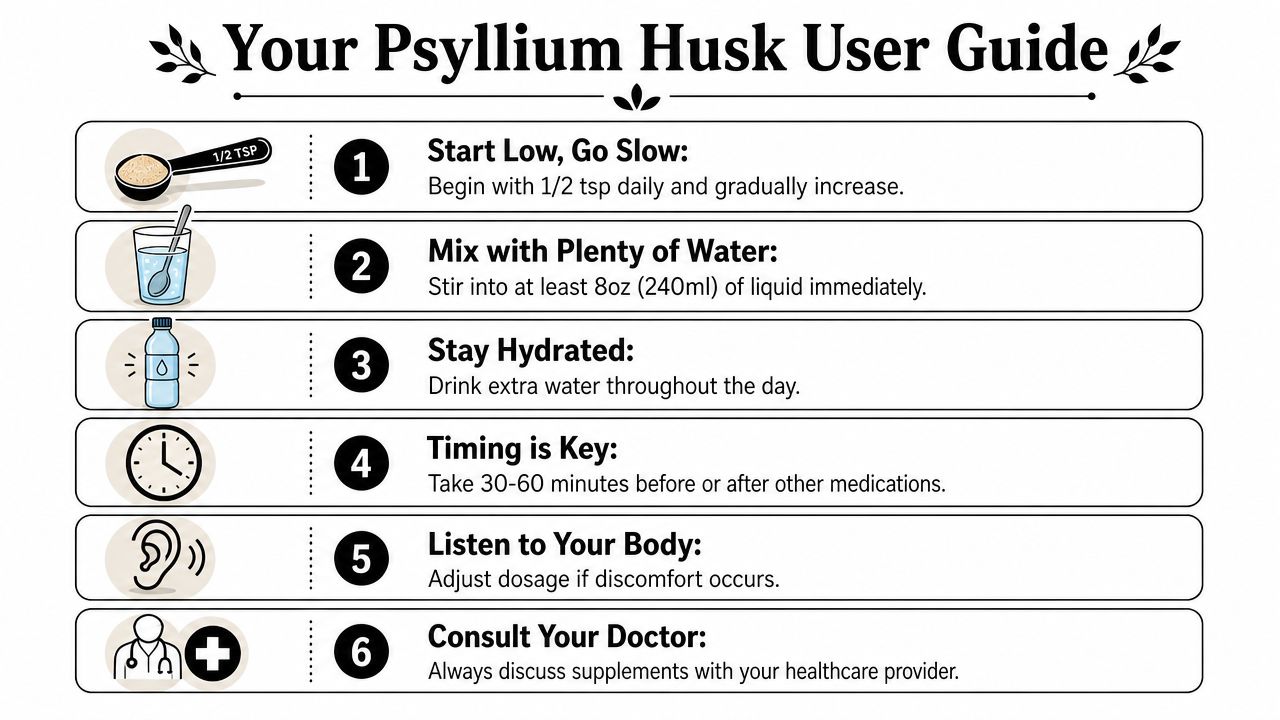
Psyllium can be very helpful, but it works best when you treat it less like a casual powder and more like a fiber tool with rules. The two rules are simple. Use enough liquid. Keep it away from medications and supplements.
The two rules that matter most
Psyllium works like a sponge in the gut. It absorbs water, swells, and forms a gel. That gel is part of why it can support regularity, cholesterol balance, and steadier blood sugar responses. It is also why dry psyllium is a bad idea.
The YouTube guidance on psyllium timing and safety explains a practical rule of thumb. For every 5 grams of psyllium, use 8 ounces of water. It also recommends taking psyllium 1 hour before or 2 to 4 hours after other medications to reduce the chance that the fiber will interfere with absorption.
That second rule deserves more attention than it usually gets. A gel-forming fiber can slow or reduce how well some medicines and supplements are absorbed. This is one of the biggest safety gaps in basic psyllium advice.
If you remember one habit, keep psyllium and medications on separate schedules.
A simple routine that works in real life
You do not need a perfect system. You need one you will follow.
A practical routine looks like this:
Start with a small amount: Give your digestive system time to adjust.
Mix and drink right away: Psyllium thickens quickly, so do not let it sit too long in the glass.
Drink more water later: One glass with psyllium helps, but your total fluid intake through the day still matters.
Choose a medication-safe time: Mid-morning or mid-afternoon often works well for people who take medicines with breakfast or dinner.
Here is a simple way to think about timing. If your medicines are anchored to meals, psyllium often fits best between meals. That spacing is easier to repeat, and repeatable habits are what make fiber work.
If you want psyllium for appetite support, taking it before a meal may make sense. If your goal is regular bowel habits, the exact hour matters less than taking it consistently and safely.
Who should be extra cautious
Some people should pause before adding psyllium and get medical guidance first. This includes people with swallowing problems, a history of bowel obstruction, or conditions that narrow the esophagus. Psyllium expands when it meets liquid, so the same property that helps in the gut can become a problem if it is swallowed improperly or gets stuck.
The U.S. National Library of Medicine's MedlinePlus advises taking psyllium with a full glass of water and warns that it can cause choking if taken without enough liquid. MedlinePlus also notes that psyllium may affect how the body absorbs some medicines.
That means psyllium is not something to swallow casually in dry form. It should always be taken with enough liquid.
Check with a clinician first if you:
Take prescription medications: Your dosing schedule may need spacing adjustments.
Have swallowing issues: Thickening fiber can increase choking risk.
Have a history of bowel blockage: Bulk-forming fiber may not be appropriate without guidance.
Manage diabetes closely: Psyllium can change post-meal glucose response, which may affect monitoring or medication timing.
Used carefully, psyllium is a practical daily tool. Used carelessly, it can create problems that are easy to prevent.
Easy Ways to Add Psyllium to Your Daily Diet
Psyllium doesn't have to feel like medicine. Once you understand its texture, it becomes easier to fit into foods you already enjoy.
The trick is respecting its thickening power. A little can go a long way, especially in recipes with limited liquid.
Use it in foods you already eat
Some of the easiest options are the least glamorous.
Smoothies: Add a small amount to a smoothie if you want extra thickness and a more filling texture. Drink it soon after blending so it doesn't turn overly gelled.
Oatmeal: Stir it into warm oats with enough extra liquid. It blends in well and can make breakfast more satisfying.
Yogurt bowls: Mix thoroughly and let it sit briefly. If it gets too thick, add more liquid or fruit.
Soups: A small amount can slightly thicken a blended soup, though this works best when you want a heartier texture.
Gluten-free baking: Psyllium is often used as a binder because it helps hold moisture and structure.
Here's a quick real-life example. If your breakfast is a berry smoothie and you usually feel hungry an hour later, adding psyllium can make that meal feel more substantial. If your breakfast is already very thick, though, psyllium may push it past the point of pleasant texture unless you add more liquid.
Kitchen tips that prevent common mistakes
Most kitchen frustration with psyllium comes down to timing and liquid balance.
Keep these points in mind:
Add slowly: Sprinkle rather than dump. This helps prevent clumps.
Mix immediately: Psyllium thickens fast.
Use more liquid than you think: If a recipe is already dense, increase the fluid.
Start with plain recipes: Learn the texture first, then experiment.
Don't overdo it: More isn't always better. Too much can turn food gummy.
The easiest way to like psyllium is to treat it as a texture ingredient, not just a supplement.
If you try it in food and dislike the mouthfeel, capsules or a quick water mix may suit you better. There's no prize for forcing yourself to love it in pudding, muffins, and shakes all at once.
Choosing the Best Psyllium and Fiber Alternatives
You are standing in the supplement aisle, holding two nearly identical psyllium containers. One says "natural." The other says "organic." Then you turn them around and find sweeteners, flavors, anti-caking agents, and serving sizes that make comparison harder than it should be.
The best choice usually becomes clear once you ignore the front label and read the ingredient panel like a short checklist.
What to look for on the label
Start with the simplest version you can find. Plain psyllium is easier to judge, easier to dose, and less likely to bring along ingredients that change how it works in your routine.
A practical checklist looks like this:
Organic certification: Useful if you want psyllium grown under organic standards.
High purity: A more purified product is usually easier to evaluate because there are fewer unknowns.
Minimal ingredients: Plain psyllium husk or psyllium powder keeps things simple.
No added sugars, flavors, or fillers: This matters if you are using psyllium to support appetite control, blood sugar steadiness, or cholesterol goals.
A form you will use: Powder works well for flexible dosing. Capsules are convenient if you dislike the texture.
Powder gives you more control. Capsules give you more convenience. The better option is the one you will use consistently and safely, with enough water and proper spacing from medications.
That last point matters more than many articles admit. A fiber product is not just a pantry add-on. Because psyllium forms a gel, it can also slow or reduce absorption of some medications and supplements if taken too close together. If you want a routine built around your own health needs and habits, this guide to personalized nutrition and customizing your wellness routine is a helpful next read.
Psyllium husk vs other popular fibers
Psyllium stands out because of how much gel it forms in water. That gel is the feature behind many of its benefits. It works like a sponge in the gut, holding water, slowing digestion, and giving gut microbes material to work with. Chia and flax can still be useful, but they behave differently.
Attribute | Organic Psyllium Husk | Chia Seeds | Ground Flaxseed |
|---|---|---|---|
Main fiber style | Mostly gel-forming soluble fiber | Mixed fiber with strong water absorption | Mixed fiber with fiber plus natural seed oils |
Texture in liquid | Thickens quickly into a gel | Swells into a pudding-like texture | Thickens lightly and can feel grainier |
Best everyday use | Digestive regularity, fullness, blood sugar support, mixing into drinks or recipes | Puddings, smoothies, breakfast bowls | Oatmeal, baking, smoothies |
Cooking role | Useful binder and thickener, especially in gluten-free baking | Texture booster and topping | Texture booster with a nuttier flavor |
Taste impact | Mild and fairly neutral | Mild | More earthy and noticeable |
If your main goal is stronger gel-forming fiber for bowel regularity, fullness, or metabolic support, psyllium usually does that job better. If you want a whole-food seed that adds texture, fats, and a different nutrition profile, chia or flax may fit better.
Some readers also wonder whether one fiber is "best" for gut health. A better way to frame it is this: psyllium is often the better tool when you want predictable gel-forming action. Chia and flax are useful foods, but they do not always replace psyllium well if your target is stool consistency, appetite support, or careful blood sugar response after meals.
Store psyllium in a cool, dry place with the lid sealed tightly. Moisture makes it clump and changes the texture fast.
Choose a product with a short ingredient list, use the form that fits your routine, and respect medication timing. That is how psyllium becomes more than a constipation remedy. It becomes a practical tool for digestion, metabolism, and gut-brain support.