

Betaine HCl Pepsin: Restore Gut Health

A lot of people who end up searching for Betaine HCl with Pepsin are in the same spot. They eat a solid meal, often something healthy and protein-heavy like chicken, steak, eggs, or fish, and then feel oddly worse instead of better. Their stomach sits there like a rock. They burp, bloat, and feel full for hours.
In practice, that pattern often points people in the wrong direction. They assume the meal was too rich, too heavy, or that their stomach is making too much acid. Sometimes the issue is the opposite. The stomach may not be making enough acid to start digestion well in the first place.
That's where Betaine HCl with Pepsin can be useful. It's not a cure-all and it's not right for everyone. But when low stomach acid is part of the picture, it can be a very targeted tool. One of the most useful parts, and one that many guides skip, is that the supplement can also be used as a practical self-titration test. The mild warmth some people feel isn't always just a side effect. It can help you find your personal dose.
Table of Contents
That Heavy Feeling After Meals Could Be a Clue
A common story goes like this. Breakfast is light and manageable. Lunch is okay. Then dinner includes a real serving of protein, and within a short time the person feels overfull, gassy, and uncomfortable. Not sharp pain, just that dragging, heavy sensation that makes it seem like the meal is still sitting there.
That doesn't automatically mean low stomach acid, but it is a clue worth taking seriously. Protein digestion starts in the stomach, and it depends on an acidic environment. If stomach acid is too low, the body can struggle to break that meal down efficiently.
I see people get tripped up by this all the time. They'll say, “I can handle toast, fruit, or soup, but meat makes me feel awful.” That pattern often makes more sense when you look at stomach acid function, not just food sensitivity.
Practical rule: If symptoms show up most clearly after protein-rich meals, it's worth asking whether the stomach is underperforming at the first stage of digestion.
Low stomach acid is called hypochlorhydria. It can be overlooked because its symptoms don't always look dramatic. People may describe fullness, bloating, burping, or the sense that food just sits too long. They may also notice that they don't feel strong or well-nourished even when their diet looks good on paper.
Betaine HCl with Pepsin stands out. It's designed to support one very specific job. It helps create the acidic stomach environment needed to start protein digestion properly. When it fits, it tends to work best as a focused digestive tool, not as a general “gut health” supplement for every complaint.
What Is Betaine HCl with Pepsin
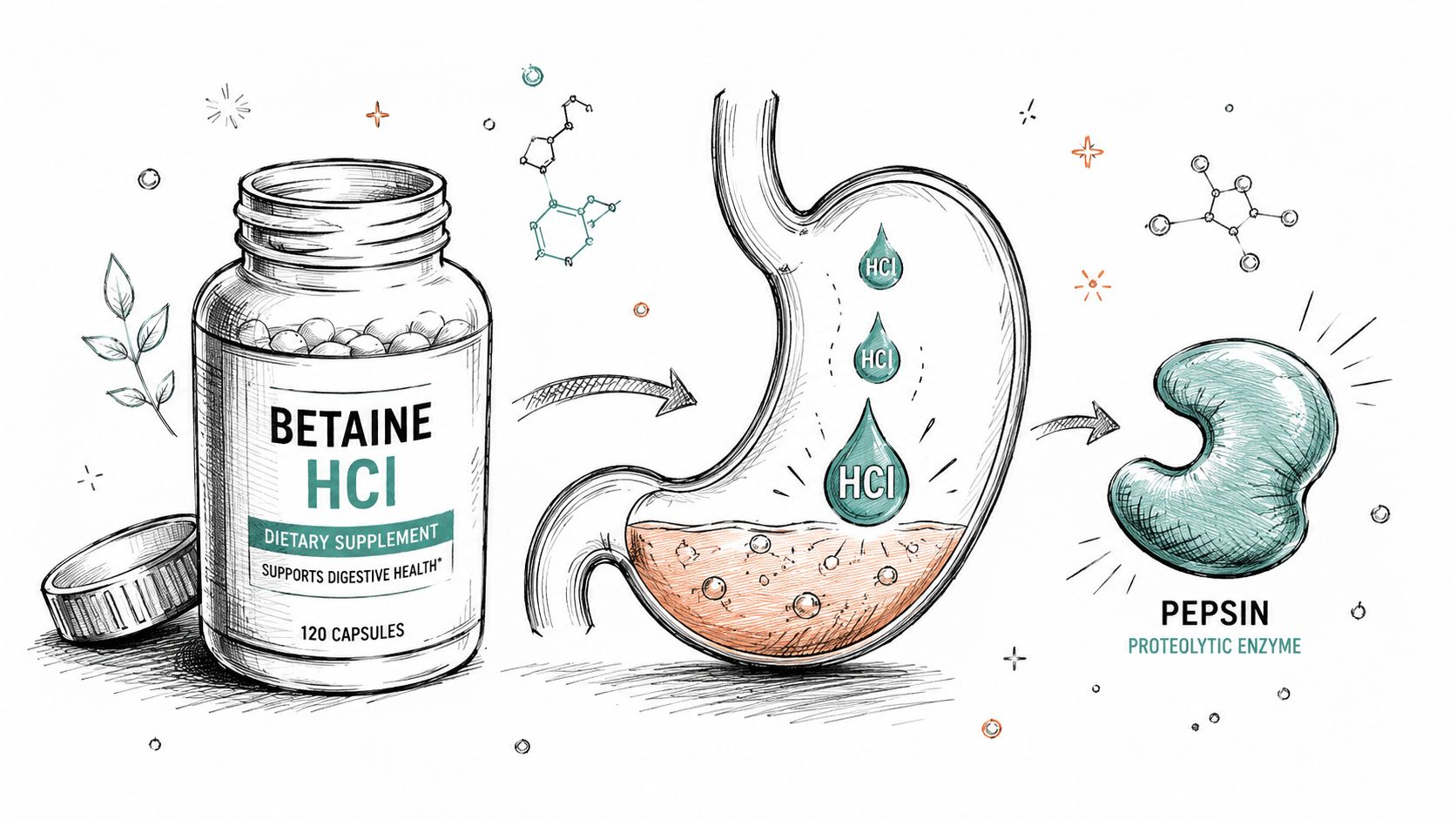
Betaine HCl with Pepsin is a two-part supplement. Each part has a separate role, and the benefit comes from the way they work together.
Betaine HCl is supplemental hydrochloric acid. Think of it as the starter signal that tells the stomach environment to become acidic enough for digestion to begin. Pepsin is the enzyme that does the first major breakdown of protein in that acidic setting.
Why the combination matters
A lot of people understand enzymes but miss the acid piece. That's the gap.
Betaine HCl provides the acidic environment needed to convert inactive pepsinogen into active pepsin, which is essential for initiating protein digestion. Standard high-potency formulas often contain 520 mg of Betaine HCl and 260 mg of pepsin to support that synergy, as described on the Pure Encapsulations Betaine HCl Pepsin product page.
Without enough acid, pepsin doesn't do its job well. So if someone takes enzymes but their stomach environment is still too weakly acidic, the result can be incomplete support.
A simple way to think about it
The easiest analogy is a one-two punch.
Betaine HCl changes the environment. It helps make the stomach acidic.
Pepsin performs the breakdown. It starts cutting protein into smaller pieces.
Together they support early digestion. That can make a high-protein meal feel easier to handle.
Betaine HCl is not the same thing as a broad digestive enzyme formula. It supports stomach acidity first, then allows protein digestion to begin more effectively.
This also explains why the supplement is so meal-dependent. If there isn't a substantial protein-containing meal to work on, taking it doesn't make much sense. In that situation, you're adding acid without giving it a useful digestive job.
The Science of How It Boosts Digestion
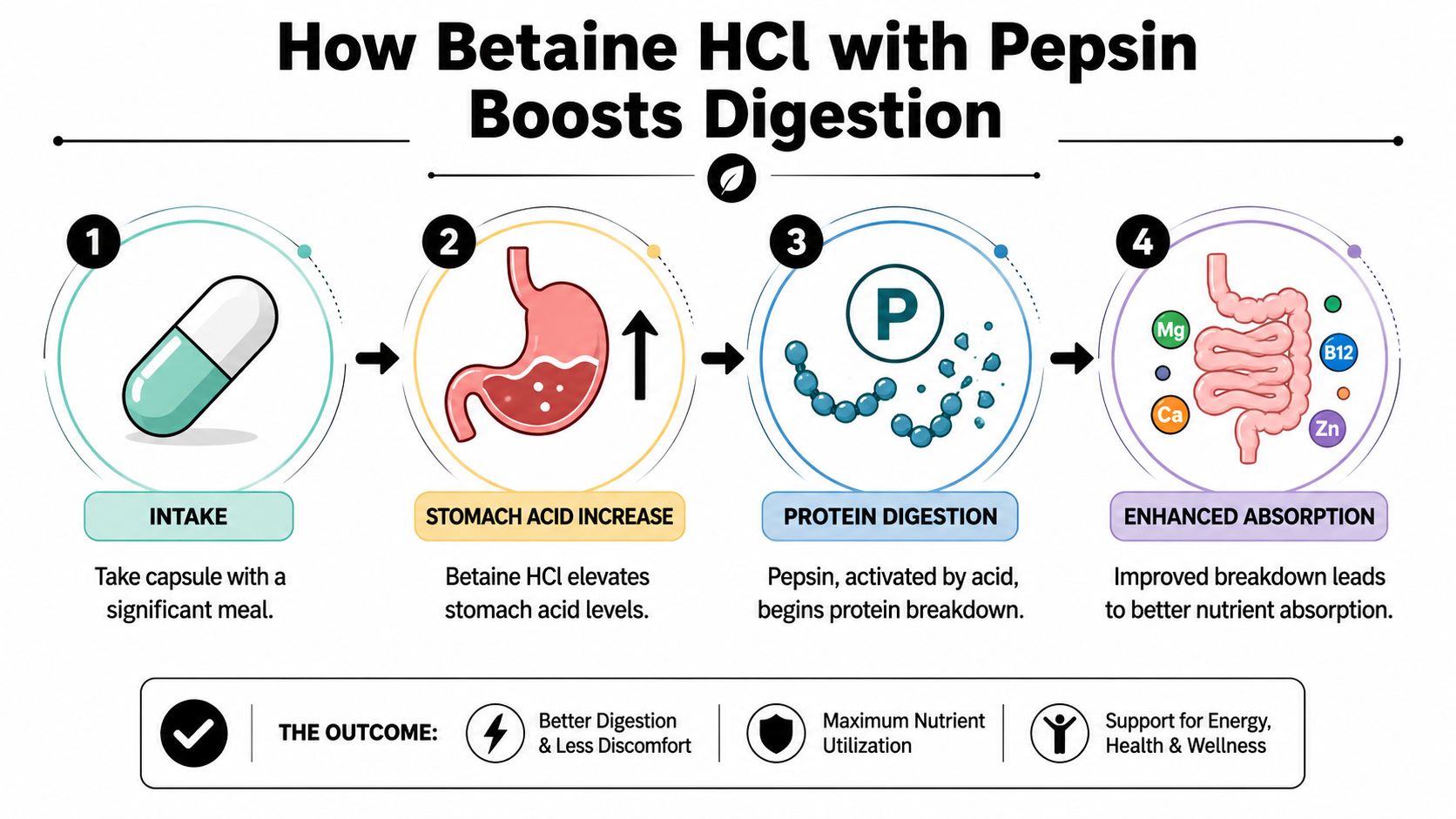
The mechanism is straightforward. You take the capsule with a meal. The Betaine HCl lowers stomach pH. That acidic shift activates the protein-digesting process. Pepsin can then get to work on the meal.
What happens after you swallow the capsule
Here's the practical sequence.
You take it with a substantial meal.
The stomach becomes more acidic.
Pepsin gets activated.
Protein starts breaking down more effectively.
The rest of digestion has a better starting point.
That last point matters. The stomach is the first major checkpoint. If food isn't handled well there, the rest of the digestive tract has to manage a harder job.
What the clinical study showed
This effect isn't just theoretical. In healthy volunteers with pharmacologically induced hypochlorhydria, 1500 mg of betaine HCl lowered gastric pH by an average of 4.5 ± 0.5 units, from 5.2 ± 0.5 to 0.6 ± 0.2 within 30 minutes, with a pH below 1 maintained for over 60 minutes. The mean time to reach a pH below 3.0 was 6.3 minutes in the 2014 pilot study published at PubMed Central.
That tells you something important. Betaine HCl can create a meaningful acid shift, and it can do it quickly.
The goal isn't to “make your stomach stronger.” The goal is to recreate the acidic conditions that normal stomach digestion depends on.
If you're also trying to sort out whether you need enzymes, probiotics, or acid support, this guide on digestive enzymes and probiotics can help clarify the differences. They solve different problems.
Signs You Might Need More Stomach Acid
Some people know right away that this topic fits them. Others don't connect the dots until they see the pattern laid out.
The pattern to notice
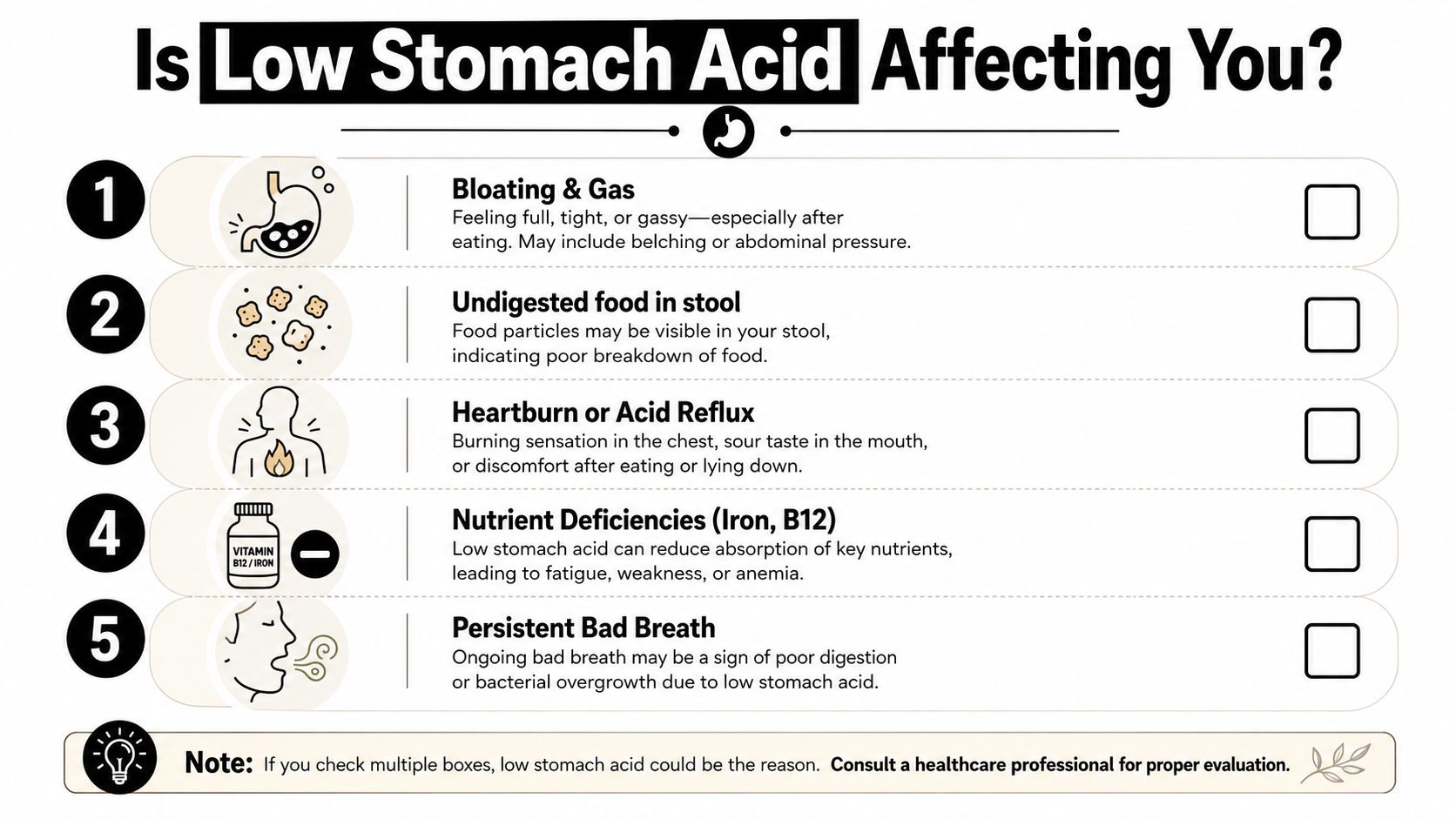
Low stomach acid often shows up as inefficient digestion, especially around meals that should be satisfying and nourishing. Instead, those meals feel difficult.
Common clues include:
Bloating after meals that seems worse with protein
Burping soon after eating
Feeling full very quickly
A heavy stomach for hours
Undigested food in stool
Low iron, folate, calcium, or B12 status despite a decent diet
Bad breath or a sour, stagnant feeling after meals
Not every person with these symptoms has hypochlorhydria. But when several show up together, it's worth exploring.
Why age and stress matter
One reason this issue becomes more common over time is that stomach function isn't fixed. Gastric acidity and pepsin production are particularly vulnerable to chronic stress and age-related decline, making Betaine HCl with Pepsin a targeted option in those settings, according to Integrative Therapeutics product guidance.
That means the person under constant stress, eating fast, sleeping poorly, and noticing their digestion changing with age may not be imagining it. Their stomach may be producing a less effective digestive environment.
If you're also dealing with sluggish digestion and irregularity, some people benefit from adding fiber support separately. This article on organic psyllium husk covers that side of the equation. It's a different tool for a different job.
When symptoms cluster around protein meals, stress load, and getting older, low stomach acid becomes a more plausible root cause.
Your Guide to Safe and Effective Dosing
Dosing problems usually start with timing, not capsule strength. Betaine HCl with Pepsin is meant for real meals. If you take it on an empty stomach, with coffee, or with a small snack, you can irritate your stomach and learn nothing useful from the response.

Start with the meal, not the capsule
The meal sets the stage. Its effectiveness depends on meal composition. It should be taken just before or during a substantial protein-rich meal of 500+ calories, and taking it with low-calorie foods provides no benefit and may cause irritation, as noted in this review hosted at PubMed Central.
That means a full meal with protein works best. Chicken, beef, fish, eggs, or a mixed meal with enough substance gives the supplement something to do. Fruit alone, broth, black coffee, or a slowly sipped shake is a poor test meal.
I tell patients to treat the first few uses as an experiment with rules. Keep the meal type similar. Keep the capsule strength the same. Change one variable at a time so the feedback is useful.
How the warmth titration protocol works
The warmth titration protocol is the practical step many articles skip. It turns the supplement into a self-check, not just a digestive aid. The goal is to find whether added acid support changes how you handle a protein meal, and if so, how much you need.
A common starting point is one capsule with the first bites of a protein-rich meal. If that meal sits well and you feel no warmth, some practitioners increase by one capsule at a later similar meal until mild warmth appears. Then the usual working dose is one capsule less than the amount that caused that warmth.
Use the process like this:
Pick one solid protein meal. Dinner is often easiest because it is usually larger and easier to repeat.
Start with one capsule. Take it right before eating or with the first few bites.
Pay attention over the next 10 to 20 minutes. You are watching for gentle warmth in the stomach area.
If there is no warmth or discomfort, test one more capsule at the next similar meal.
Stop at mild warmth. Your regular dose is usually the previous lower amount.
If you feel burning or pain, stop. Do not push through it.
This method matters because the right dose is personal. One person feels clear improvement with one capsule. Another needs more with a larger protein meal. A third is not a good candidate at all, and the protocol helps reveal that early.
Key point: Mild warmth is useful feedback. Burning, pain, reflux, or sharp irritation means the dose is too high, the timing is wrong, or the supplement is not appropriate for you.
If you prefer a visual walkthrough, this short video can help make the dosing logic clearer.
When you should not use it
Betaine HCl with Pepsin is not a casual supplement. It can be helpful, but it is the wrong tool in some situations.
Do not use Betaine HCl with Pepsin if any of these apply:
Peptic ulcer disease
Active NSAID use, such as ibuprofen or similar drugs
A history of stomach burning that worsens with acid
You develop pain or a burning sensation after taking it
Use extra caution if you have known gastritis, significant reflux, or you are taking acid-lowering medication unless your clinician has given you a clear plan. In practice, the safest approach is simple: start low, test only with substantial protein meals, and stop as soon as the response suggests irritation rather than support.
If a careful trial does not improve how you tolerate meals, do not keep increasing the dose. Reassess the plan.
How to Choose a High-Quality Supplement
A good Betaine HCl with Pepsin formula should be easy to evaluate from the label. If the label is vague, I'd pass.
What to look for on the bottle
A solid formula usually tells you the amount of both ingredients clearly. Useful products often provide Betaine HCl in the 500 to 650 mg range per capsule, and stronger formulas may use a benchmark similar to the one mentioned earlier with 520 mg Betaine HCl and 260 mg pepsin.
Look for these details:
Clear Betaine HCl amount so you can titrate predictably
Pepsin listed separately instead of hiding it inside a proprietary blend
Pepsin activity information if provided
Simple inactive ingredients with fewer fillers
Allergen awareness, especially if you're sensitive to common additives
Third-party testing when available
What usually doesn't work well
I'm cautious with formulas that combine a tiny amount of Betaine HCl with a long list of “digestive support” extras. That often makes dosing muddy. If you're using the warmth titration protocol, you want to know what you're adjusting.
A cleaner, more transparent product gives you better feedback and fewer surprises.
Frequently Asked Questions
Is Betaine HCl with Pepsin the same as digestive enzymes
They do different jobs. Betaine HCl raises stomach acidity, and pepsin helps break down protein in that acidic environment. Digestive enzyme blends usually work later in the process, mostly in the small intestine, so they can be used together but should not be treated as substitutes.
Can low stomach acid feel like reflux
Yes, it can. A common pattern is heaviness after a protein-rich meal, pressure in the upper abdomen, then a burning or burping feeling that looks like reflux on the surface.
That said, reflux has several possible causes. The warmth titration protocol can give useful clues, but it is not a diagnosis. If reflux is frequent, severe, or paired with trouble swallowing, chest pain, or unexplained weight loss, get medical care before trying acid support.
How long should someone take it
Usefulness should guide duration. Some people use Betaine HCl with pepsin for a short stretch while they improve meal size, chewing, stress load, or overall digestive function. Others keep it on hand just for heavier meals.
In practice, I tell patients to watch for a simple pattern. If the supplement improves that heavy, slow-to-digest feeling and the dose is confirmed by the warmth titration approach, it may be worth using for a period. If it starts causing burning, irritation, or no longer seems helpful, stop and reassess.
Is it safe for everyone
No. Betaine HCl with pepsin is not a fit for people with active ulcers, gastritis flares, or significant stomach irritation. It also needs caution if you use NSAIDs regularly, take steroids, or have a history of reflux that is already painful or inflamed.
It should not be used casually.
If you are unsure whether your symptoms point to low stomach acid or to something that could be irritated by acid, review the details on the River of Life FAQ page and speak with a qualified healthcare professional before starting.